Inspiration
In an emergency, people often waste valuable time searching for basic first-aid information. MediBridge AI was created to provide clear, immediate guidance when people are stressed, have limited connectivity, or cannot easily navigate complicated information.
What it does
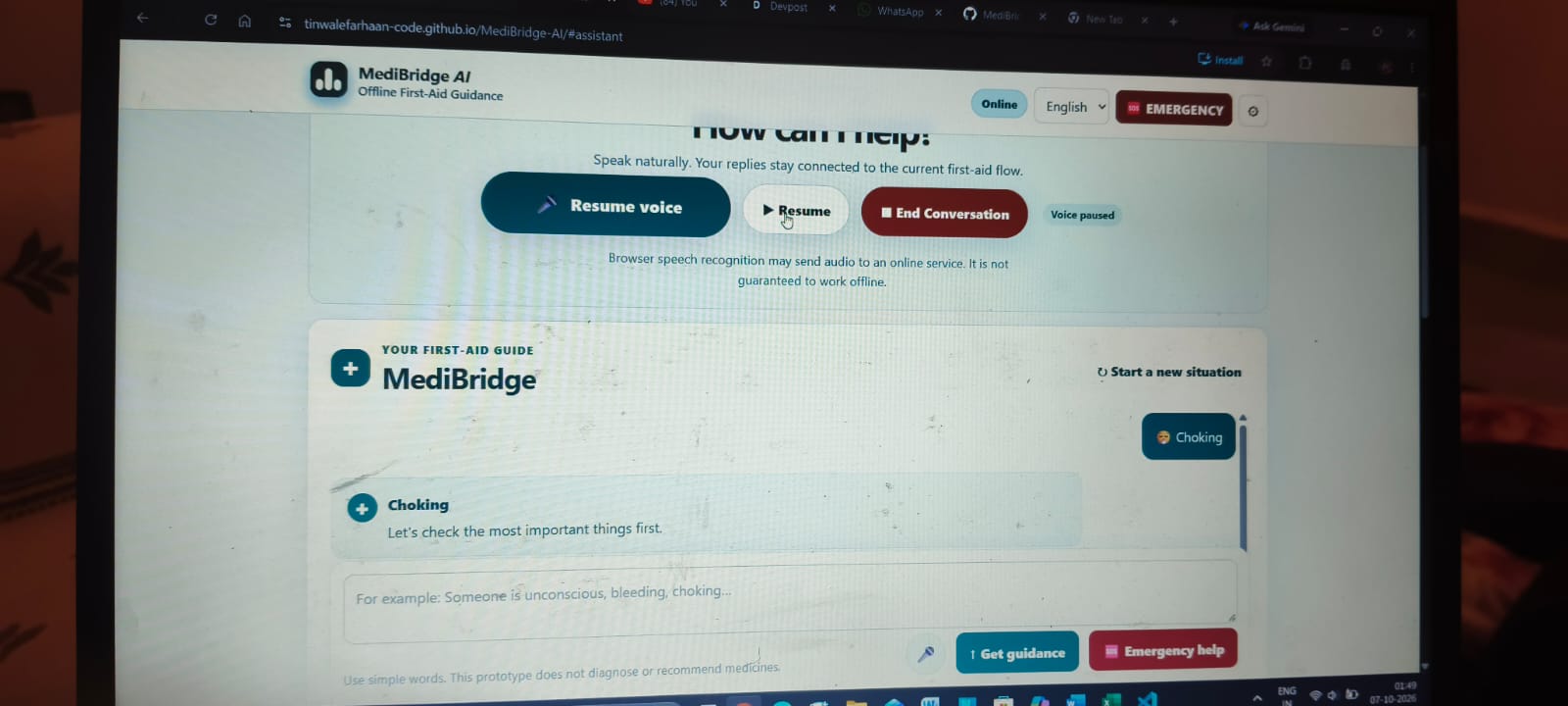
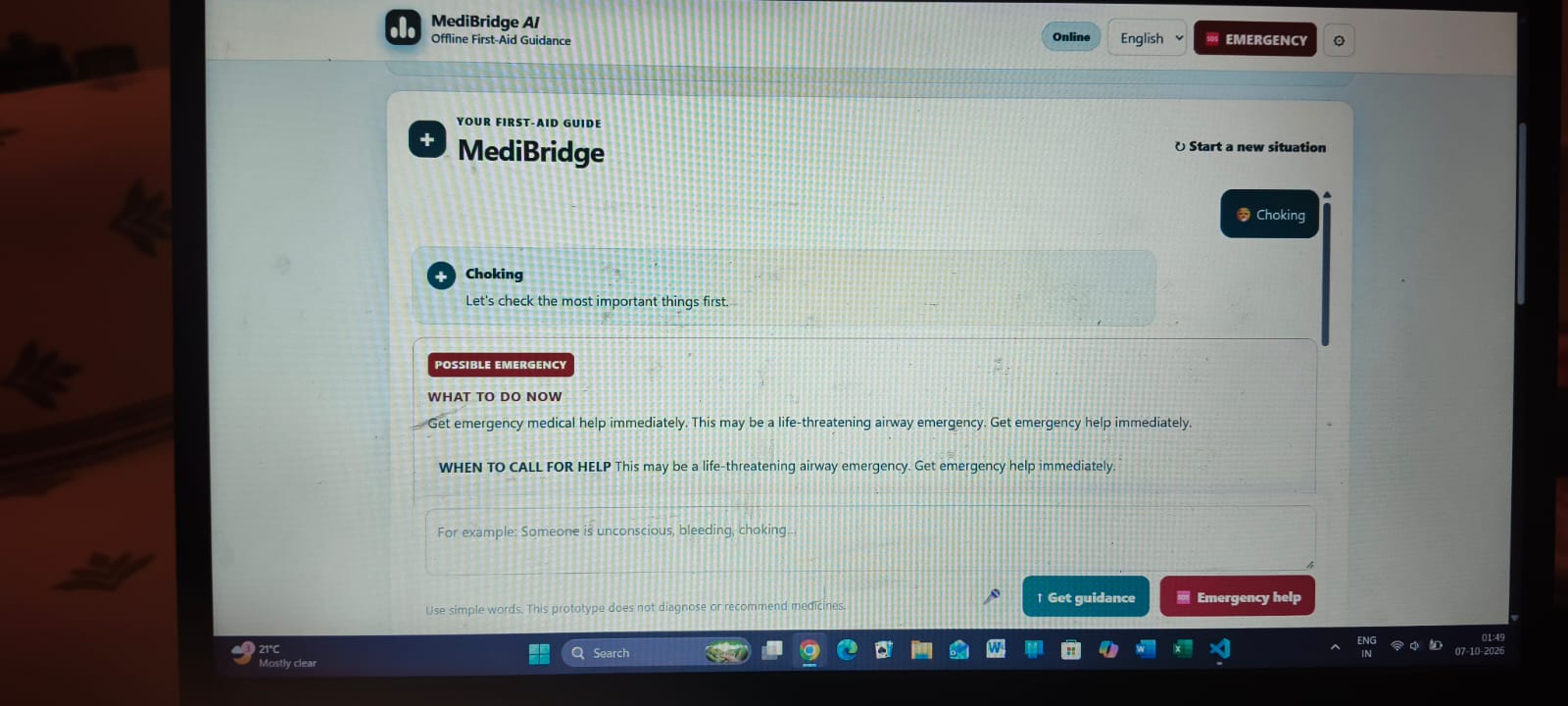
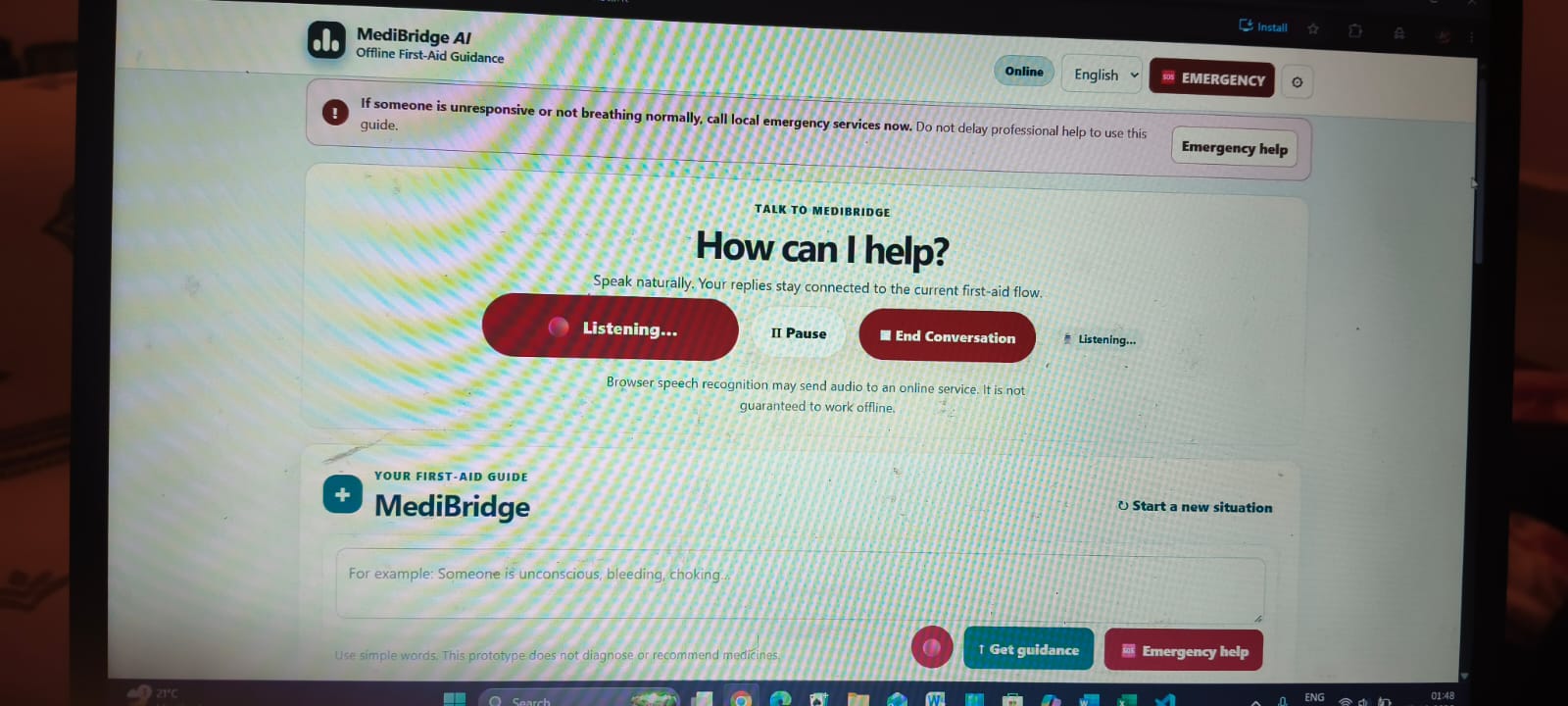
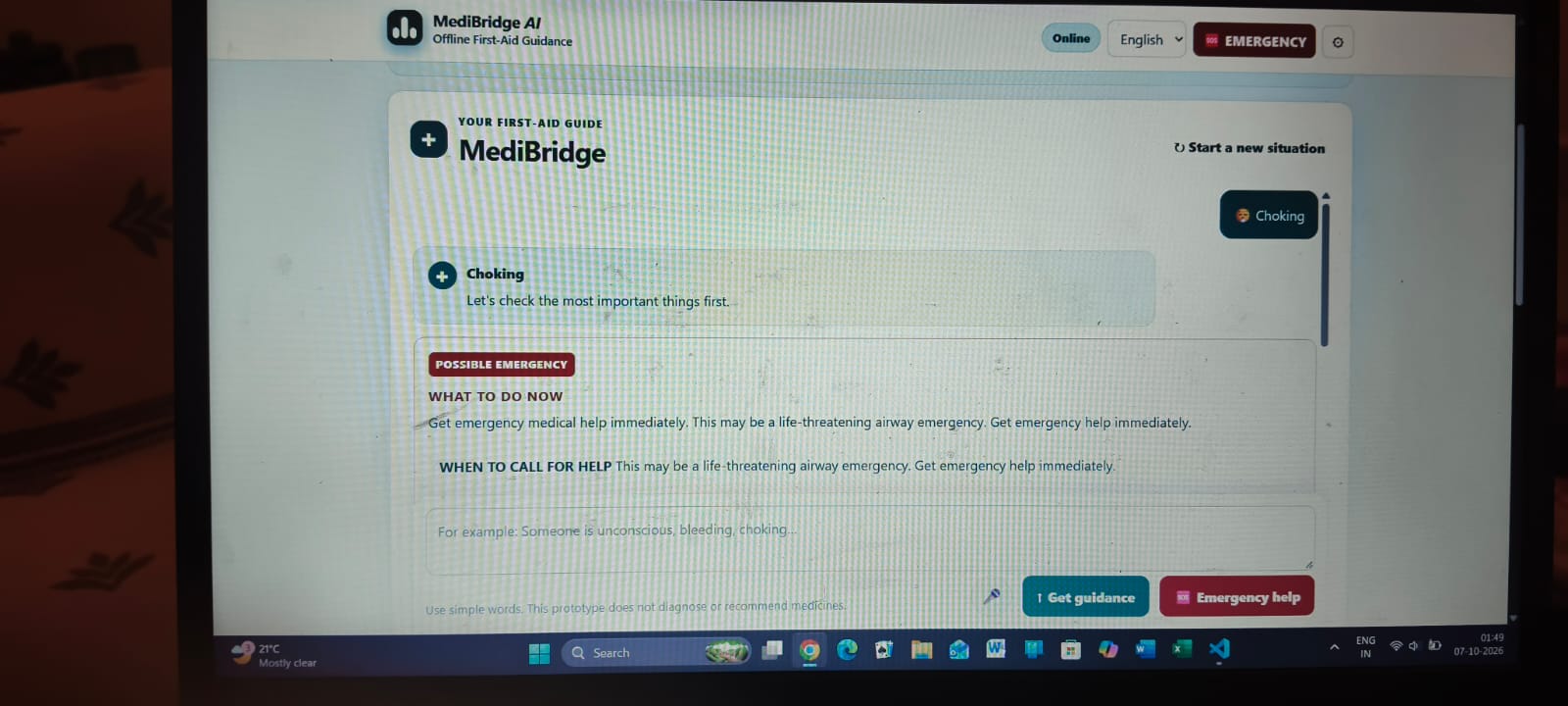
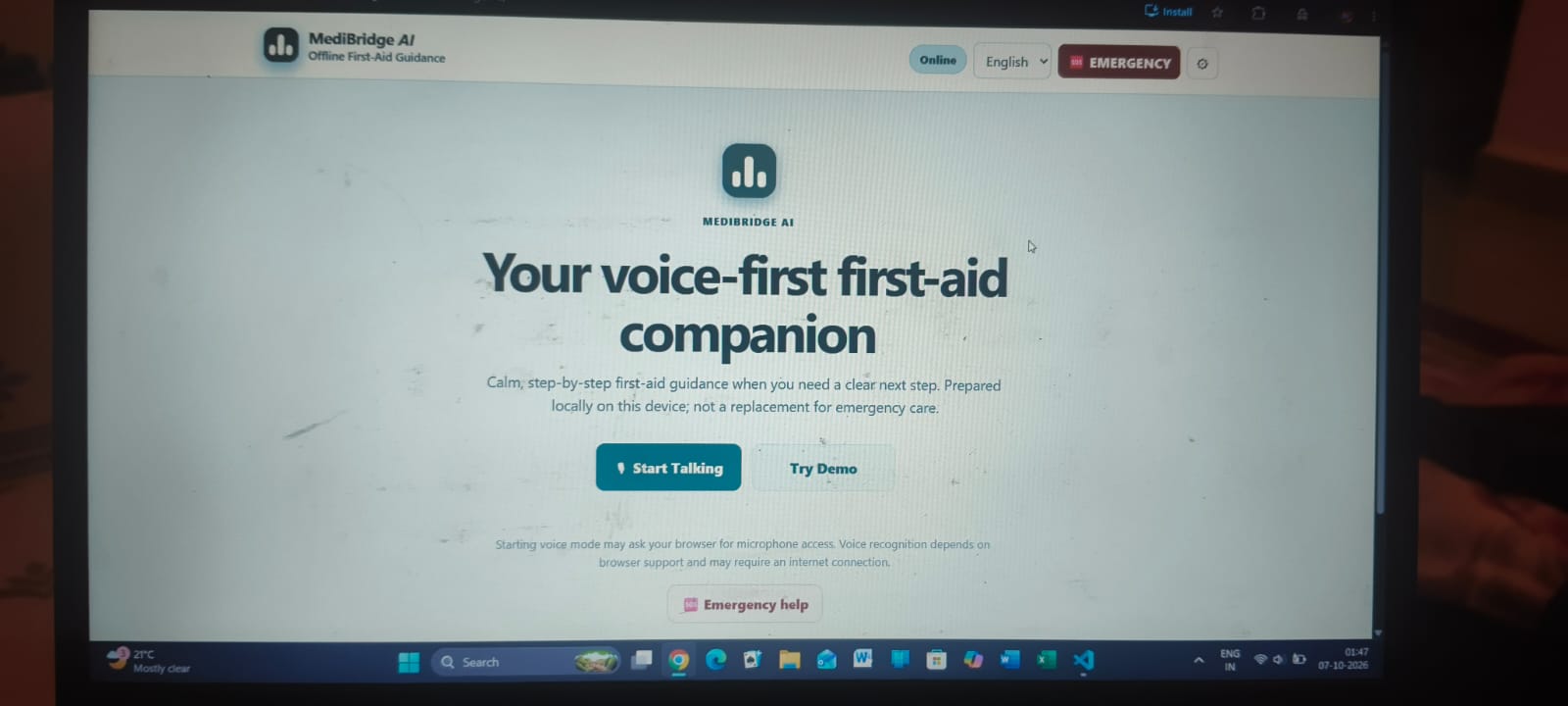
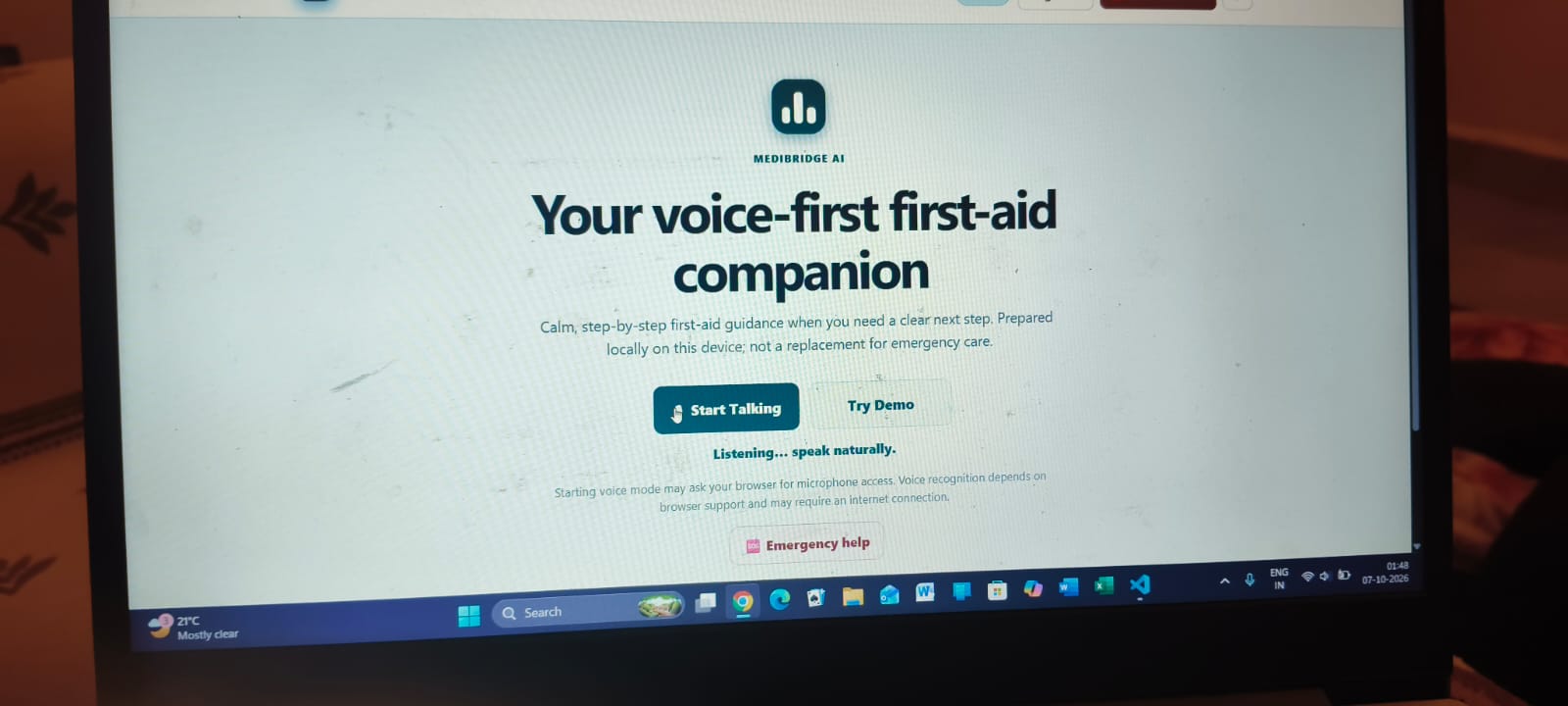
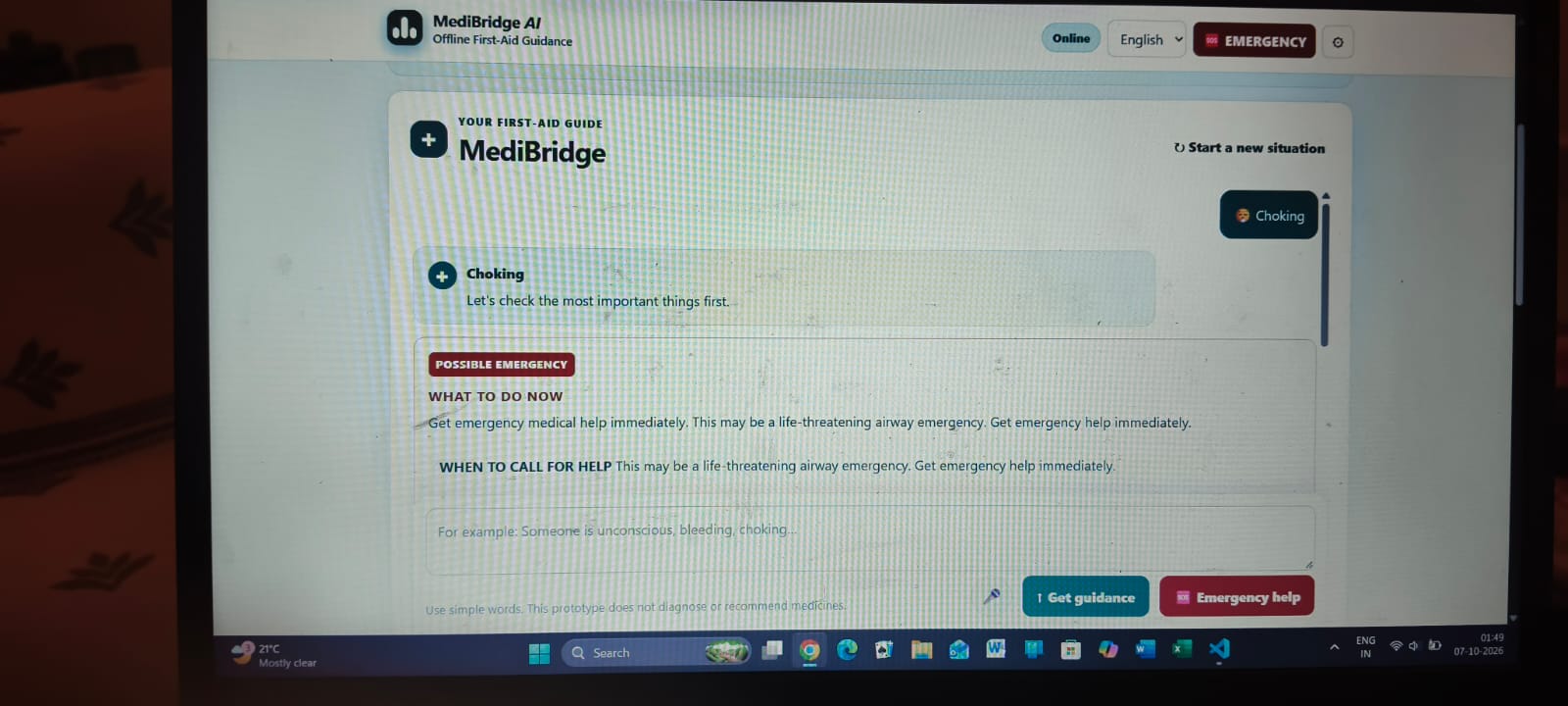
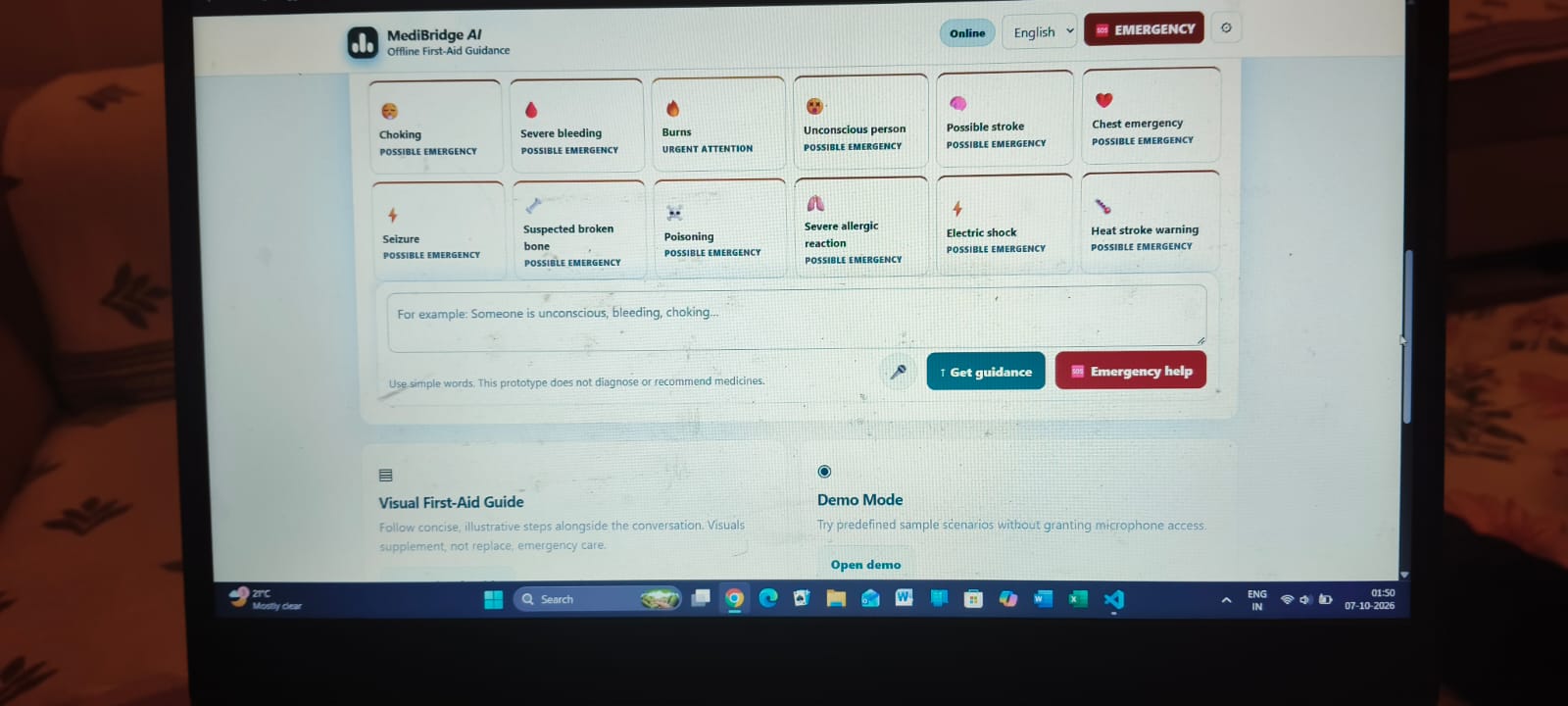
MediBridge AI is an offline-first, voice-guided first-aid assistant. Users can describe an emergency naturally, such as choking, burns, bleeding, or fainting, and MediBridge provides relevant first-aid guidance through a conversational interface.
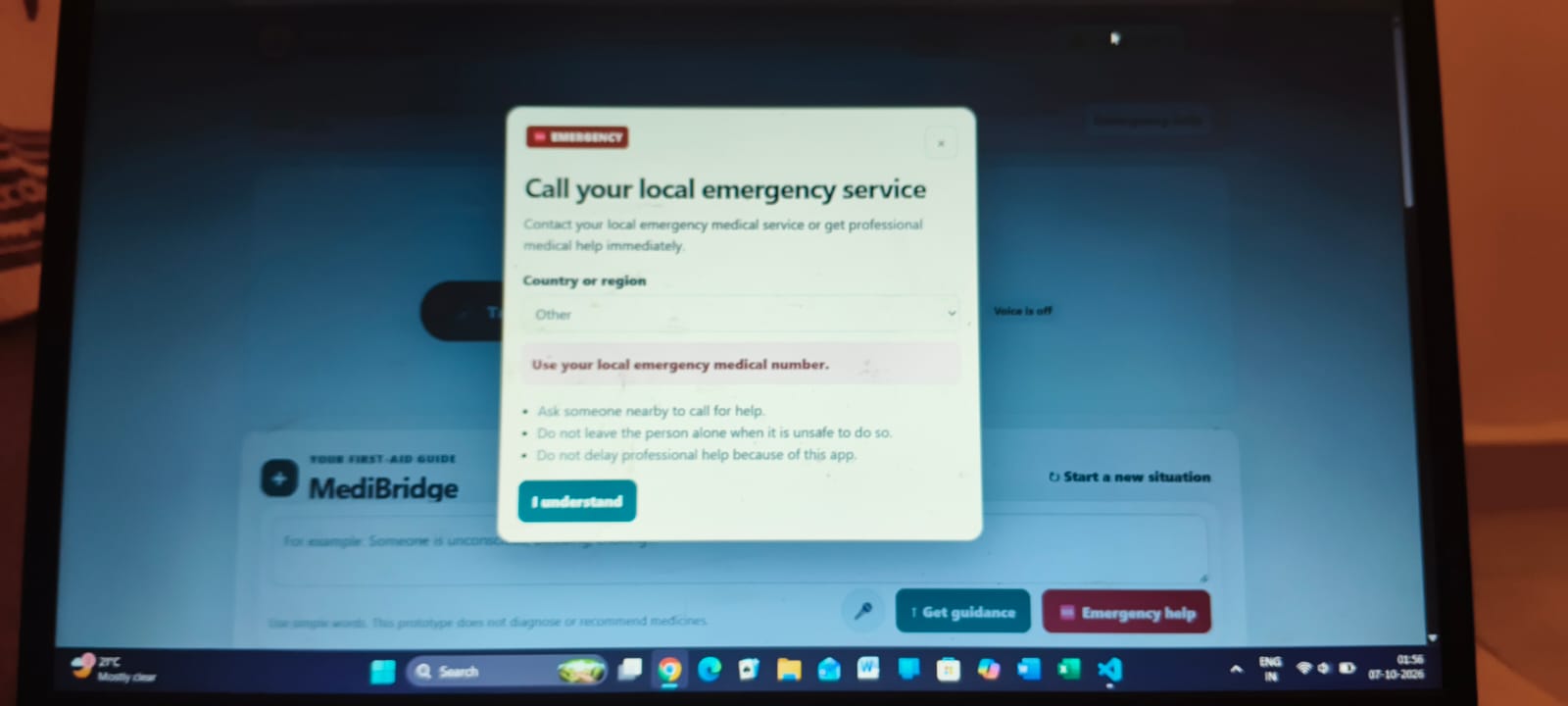
It focuses on what to do, what to avoid, and when to seek professional medical help. It does not diagnose conditions or recommend medicines.
How we built it
MediBridge is built as a lightweight web application using HTML, CSS, and JavaScript. Core first-aid information is structured locally so essential guidance can remain available without relying entirely on an internet connection.
The application uses a Progressive Web App structure, local first-aid data, service-worker support, voice interaction, multilingual content, and a conversational interface.
Challenges we ran into
Our biggest challenge was making emergency interaction feel natural instead of forcing users through a long questionnaire. We designed MediBridge so users can describe what is happening in their own words and continue the conversation naturally.
We also had to balance helpful guidance with safety, making sure the system does not present itself as a doctor or replace professional emergency care.
Accomplishments that we're proud of
We built a working first-aid assistant from the ground up and made the core experience voice-oriented and offline-first.
We are especially proud of creating an interface designed for stressful situations, where users should be able to communicate naturally instead of searching through large amounts of information.
What we learned
We learned that building an AI-health project requires more than making a chatbot. Safety, clarity, accessibility, offline availability, and responsible communication are equally important.
We also learned how to build and test a web application, use Git and GitHub for version control, and turn an idea into a working prototype.
What's next for MediBridge AI
Future versions could add more verified first-aid scenarios, stronger multilingual speech support, improved offline speech capabilities, accessibility features, better visual guidance, and partnerships with healthcare and emergency-response organizations.
Our long-term goal is to make reliable first-aid guidance more accessible when and where people need it most.
Built With
- api
- app
- css3
- html5
- javascript
- progressive
- service
- speech
- web
- workers


Log in or sign up for Devpost to join the conversation.