-
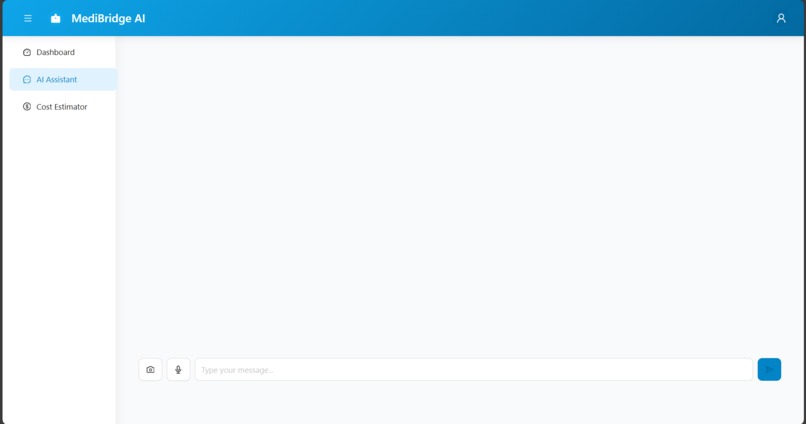
AI Assistant
-
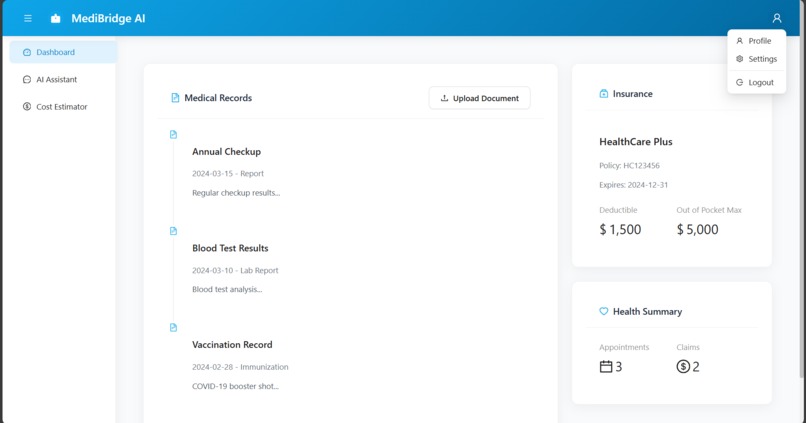
Dashboard
-
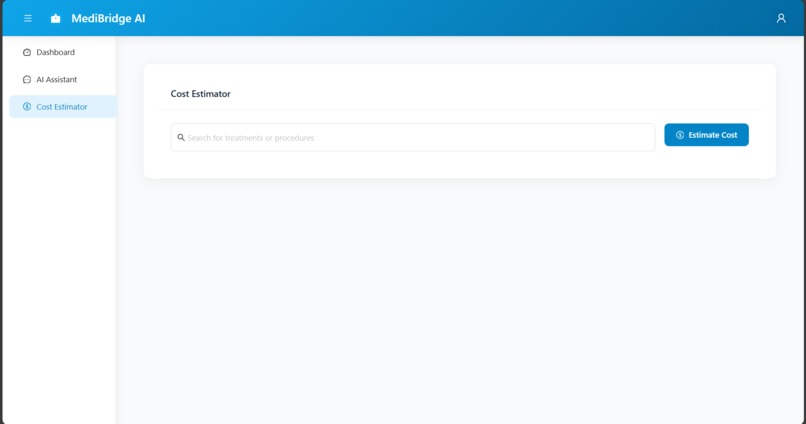
Cost Estimator
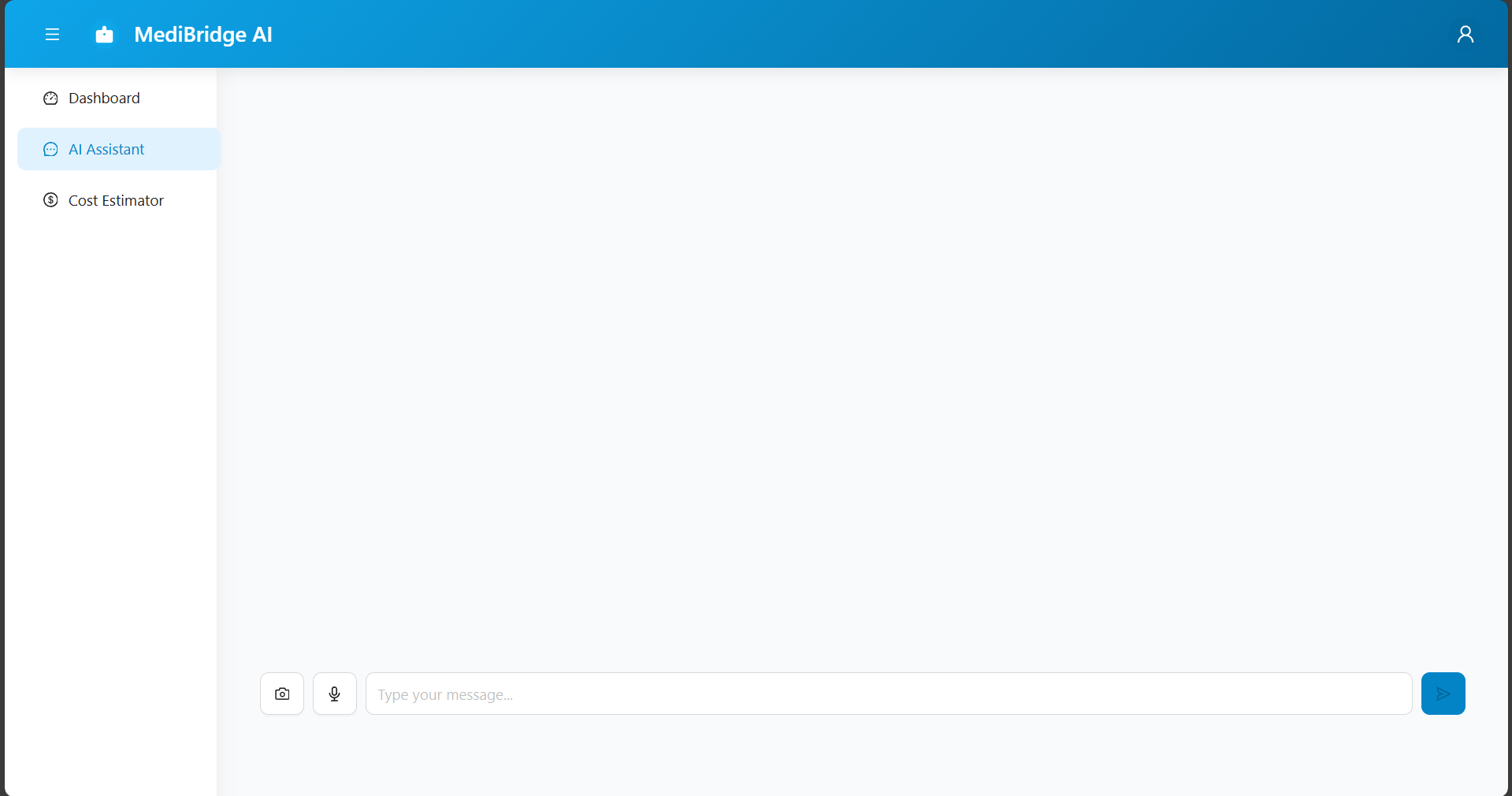
MediBridge AI: Revolutionizing Healthcare Management
Inspiration
The inspiration for MediBridge AI arose from witnessing the challenges that family and friends faced with healthcare management, particularly highlighted during the COVID-19 pandemic. These challenges included:
- Difficulty coordinating care between multiple healthcare providers
- Uncertainty in understanding insurance coverage and associated costs
- Inconsistent access to medical records
- Complex appointment scheduling
- Slow responses to health-related queries
This experience revealed a significant gap in the healthcare system and the need for a unified platform that makes healthcare management more accessible and efficient for everyone.
What It Does
MediBridge AI is a comprehensive healthcare management platform designed to:
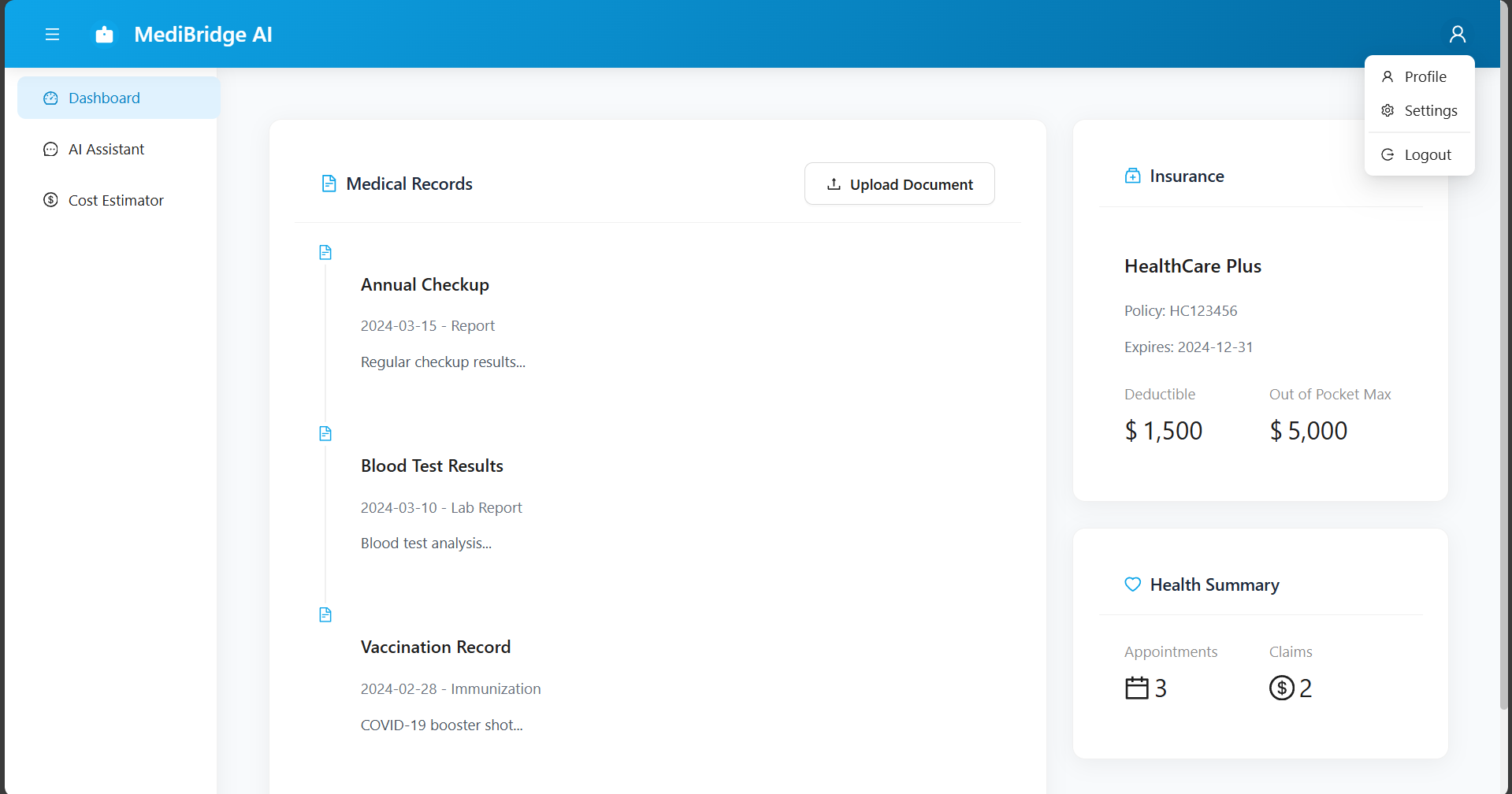
- Provide personalized health metrics on a user-friendly dashboard
- Enable efficient appointment scheduling and management
- Offer an AI-powered chatbot for symptom analysis
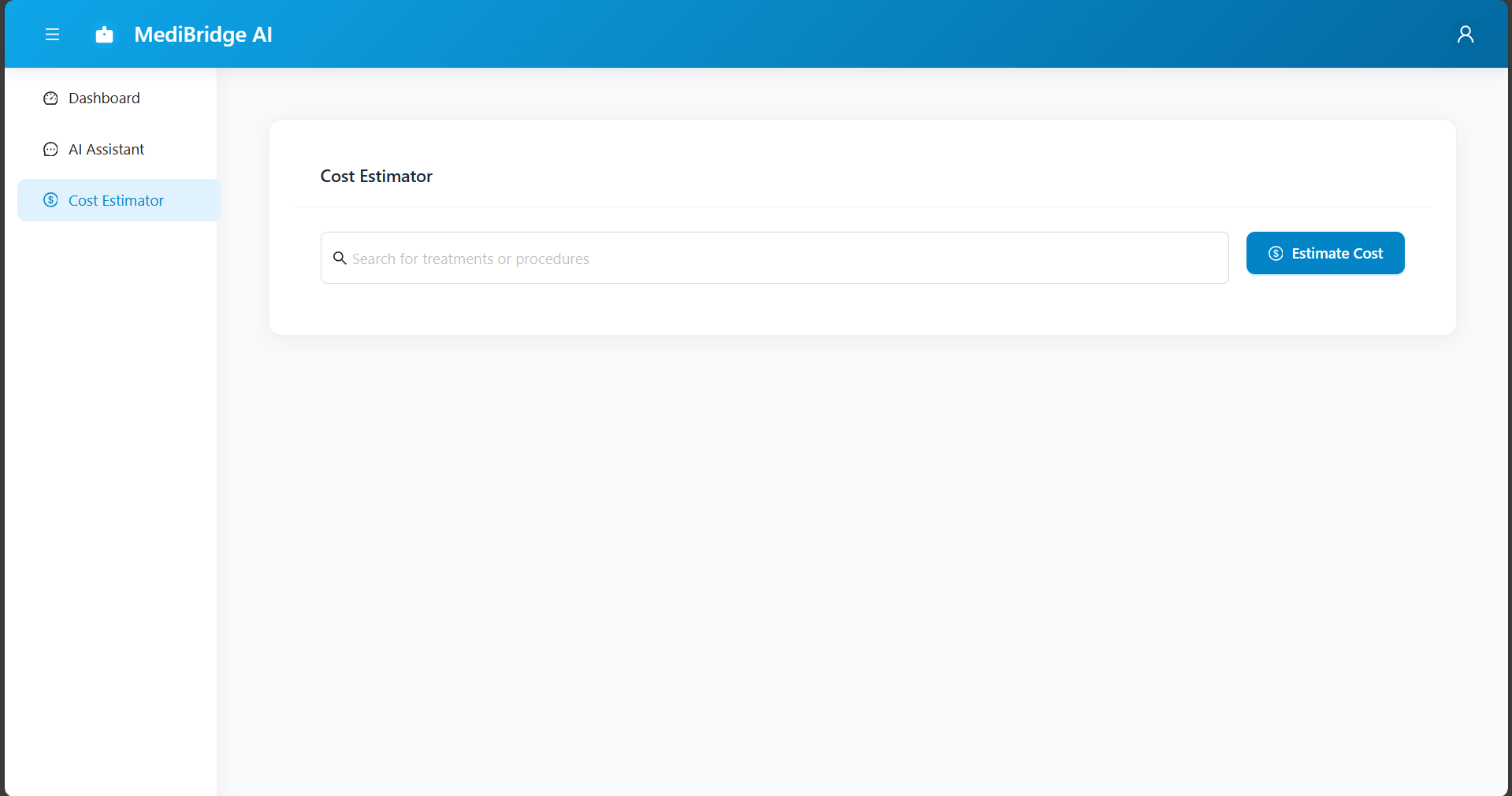
- Estimate healthcare costs based on the user's insurance status
- Manage health records and medical history securely
- Provide health tips, recommendations, and lifestyle advice
- Streamline insurance information management
How We Built It
The platform was built using a modern and robust tech stack:
- Frontend: React with TypeScript, integrated with Ant Design UI components for a responsive and modern interface.
- Backend: Node.js with Express for building scalable server-side functionality.
- Database: MongoDB for handling healthcare data efficiently.
- Authentication: Secure JWT-based authentication system to protect user data.
- API Integration: RESTful APIs to interact with external healthcare services and providers.
Key features were developed incrementally, starting with user authentication and progressing to:
- A personalized user dashboard
- Appointment scheduling functionality
- Health records management
- AI-driven symptom analysis and insurance cost estimation
- A chatbot for answering health-related queries
Challenges We Ran Into
Technical Challenges:
- Implementing secure authentication systems
- Managing complex state and ensuring consistency in frontend components
- Ensuring real-time updates and synchronization across different parts of the app
- Maintaining secure, scalable data management
Healthcare Domain Challenges:
- Navigating the complexity of medical terminology and ensuring medical accuracy
- Implementing HIPAA-compliant data security measures
- Developing reliable insurance cost estimation algorithms
- Ensuring the AI-powered symptom analysis tool provided accurate recommendations
User Experience Challenges:
- Designing an intuitive, user-friendly interface for non-technical users
- Ensuring accessibility compliance for a wide range of users
- Providing clear and helpful feedback for user actions, especially during errors or failures
- Ensuring ease of navigation and functionality across all device types
Accomplishments We're Proud Of
- User Experience: Designed a simplified, intuitive interface that reduces complexity for users managing their health
- Security: Successfully implemented a secure authentication system and protected sensitive healthcare data
- AI Functionality: Built an AI-powered chatbot capable of analyzing symptoms and offering initial guidance
- Insurance Integration: Developed accurate cost estimation based on insurance plans
- Accessibility: Ensured the platform meets accessibility standards, making it usable by a diverse range of individuals
- Cross-Device Compatibility: Developed a responsive design that functions seamlessly on desktops, tablets, and mobile devices
What We Learned
Healthcare System Insights:
- Understanding the intricacies of insurance policies and coverage
- Gaining a deeper knowledge of healthcare data privacy regulations (e.g., HIPAA)
- The importance of accurate medical information and the need for reliable systems in healthcare management
Technical Growth:
- Full-stack development using React and Node.js
- Secure authentication best practices
- Responsive and accessible UI/UX design
- Leveraging TypeScript for more reliable, maintainable code
User Experience Design:
- Designing interfaces that are both intuitive and accessible to users with various needs
- Creating meaningful error messages and clear feedback loops
- Implementing a responsive design that adapts across devices
What's Next for MediBridge AI
Enhanced AI Features:
- Improved symptom analysis with greater accuracy
- Personalized health recommendations tailored to individual users
- Predictive healthcare insights to help prevent health issues before they arise
Platform Expansion:
- Connecting with additional healthcare providers and services
- Expanding insurance coverage integration to include more plans and providers
- Adding telehealth capabilities for virtual consultations
User Experience Enhancements:
- Mobile app development to complement the web platform
- Offline functionality to allow users to manage health data without internet access
- Multi-language support for a global audience
- Further accessibility improvements to meet the needs of all users
New Features:
- Medication tracking and reminders to help users stay on top of prescriptions
- Virtual consultations for real-time doctor interactions
- Health goal setting and progress tracking
- Family health management tools to track and manage multiple family members’ health
- Emergency contact integration for quick access to critical information in case of emergency
Built With
- antdesign
- axios
- docker
- eslint
- express.js
- jwt
- mongodb
- node.js
- npm
- react
- reactrouter
- typescript

Log in or sign up for Devpost to join the conversation.