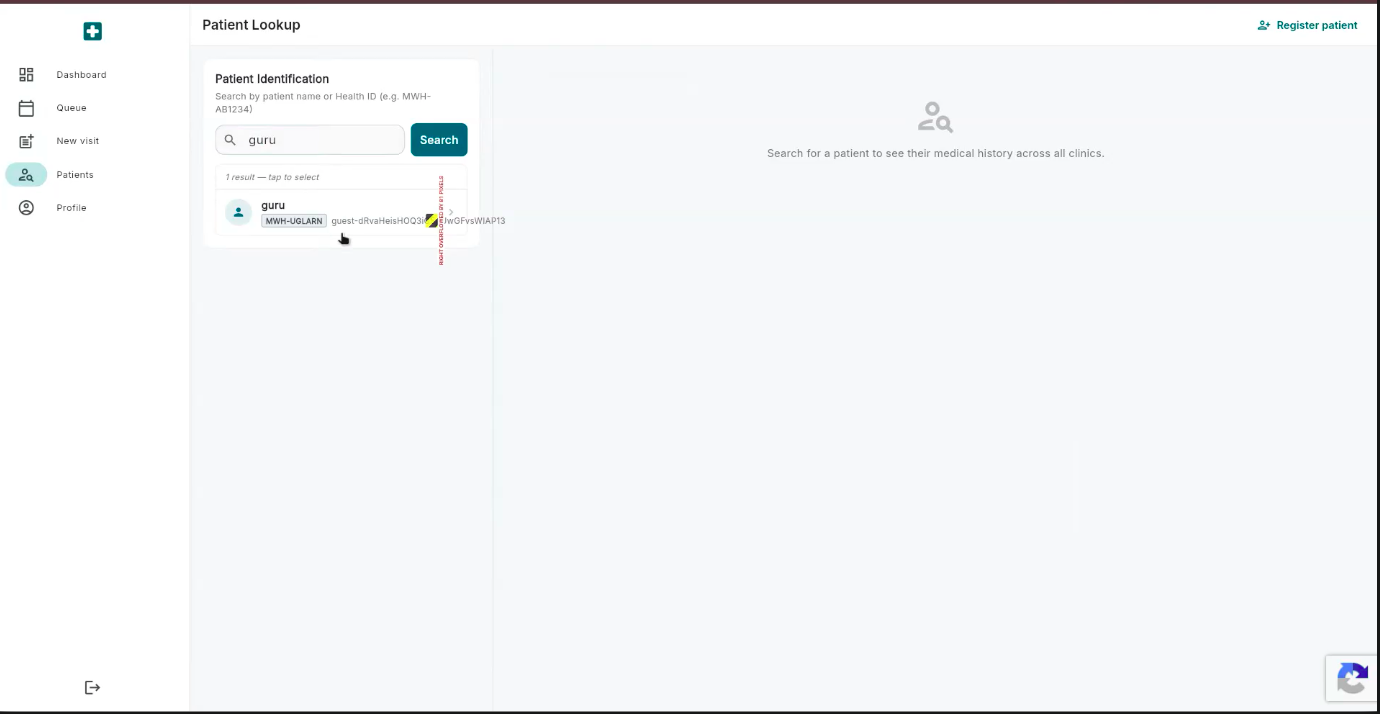
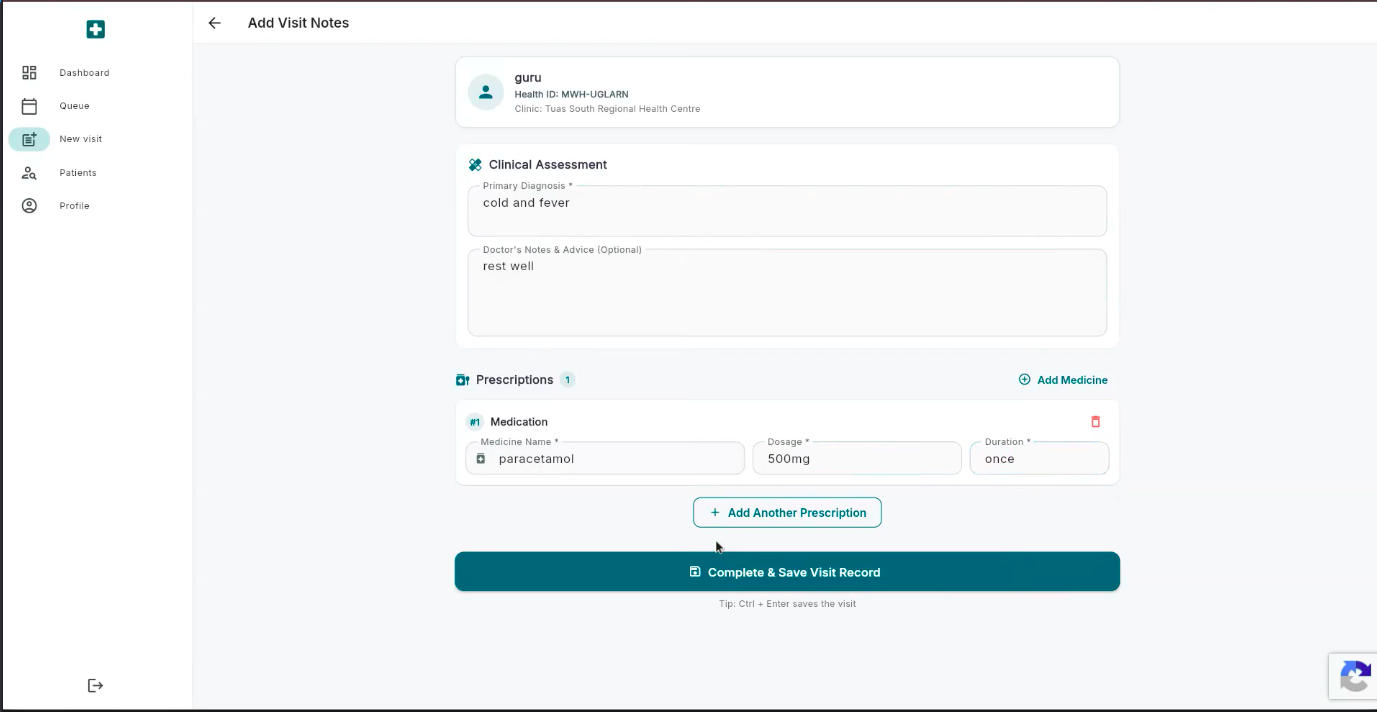
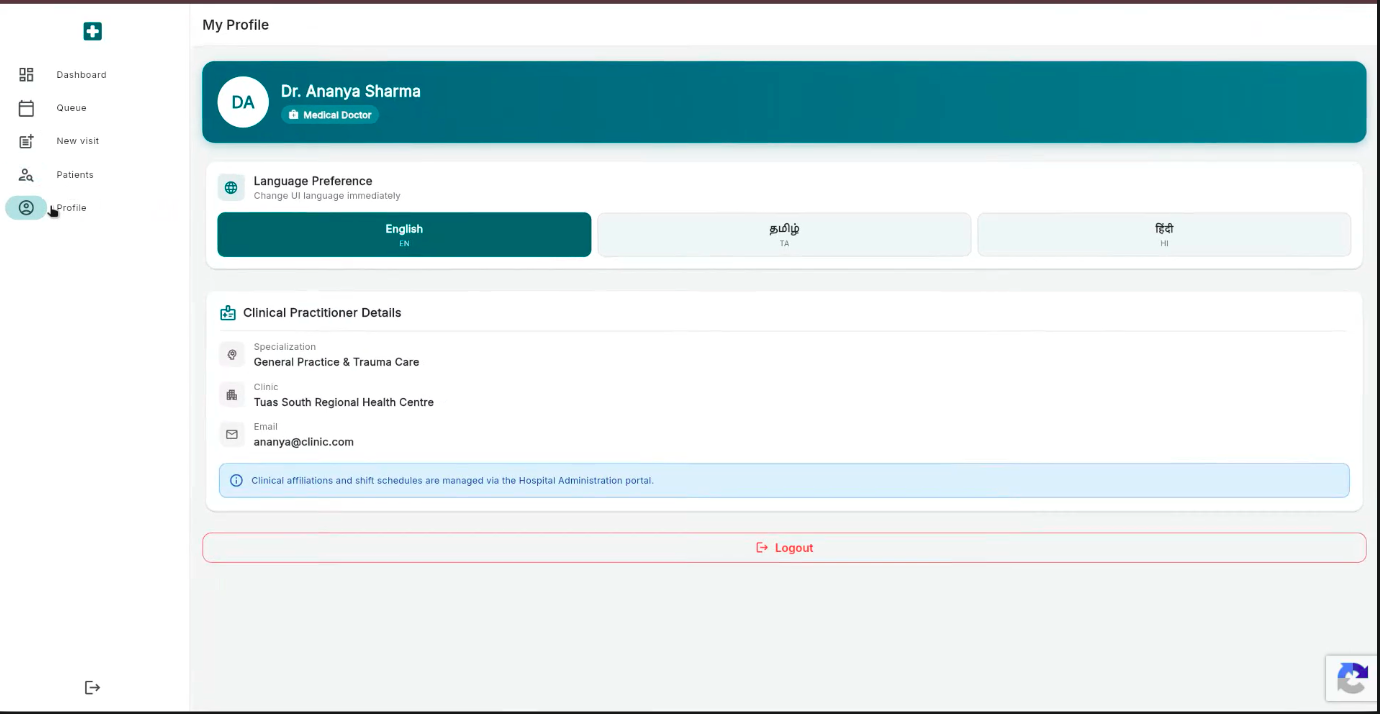
MediBridge – AI-Powered Cloud Healthcare Platform
Inspiration
Millions of migrant workers move between cities in search of employment, but their medical history rarely moves with them. Every visit to a new clinic often starts from scratch because previous diagnoses, prescriptions, vaccination records, and reports remain locked within the clinic where they were created. This leads to repeated tests, medication errors, increased costs, and fragmented healthcare.
We wanted to build a system where a patient's health record is portable, secure, and accessible from any participating clinic while ensuring that the patient remains in control of who can access their data.
What it does
MediBridge is a cloud-based healthcare platform that provides:
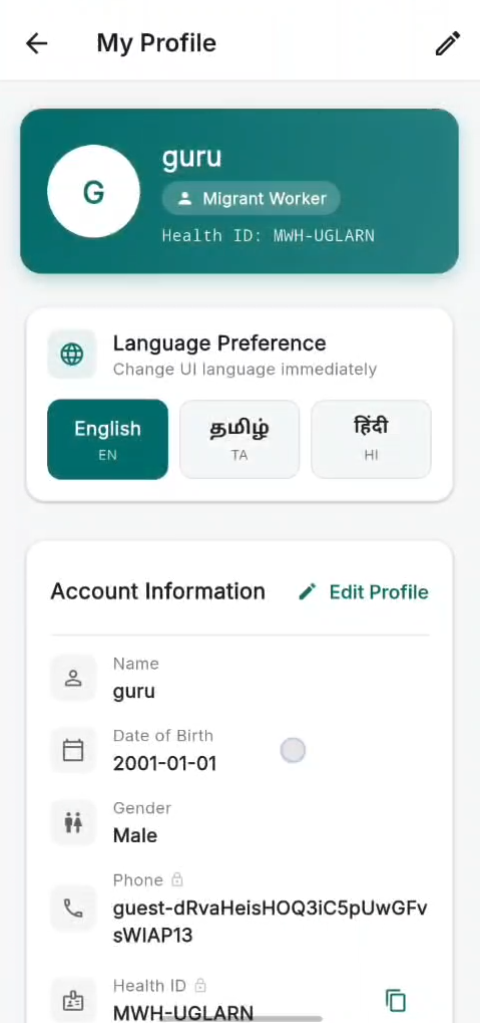
- Portable digital health records
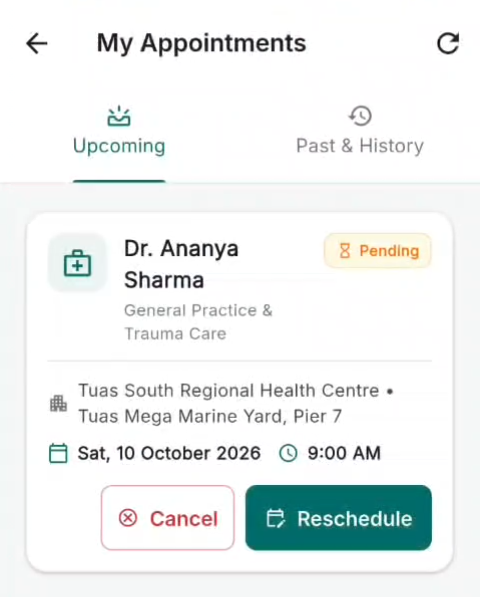
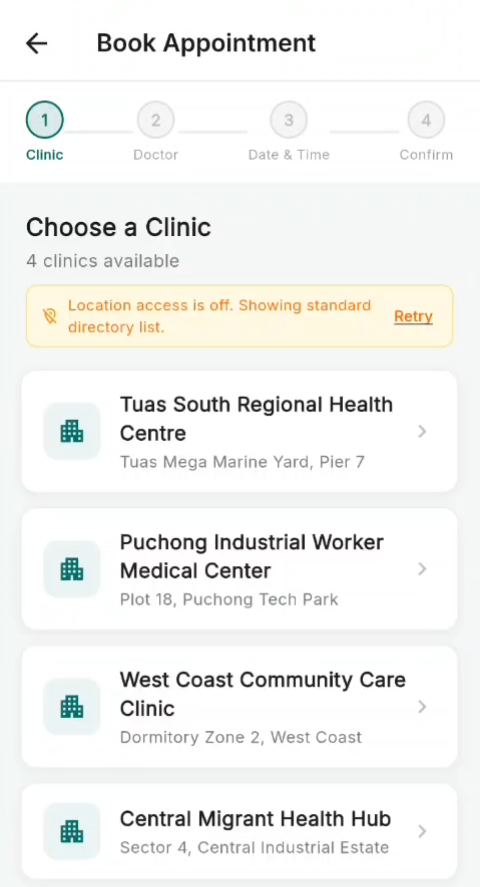
- Multi-clinic appointment management
- Secure consent-based record sharing
- AI-assisted drug interaction analysis
- Emergency access with complete audit logging
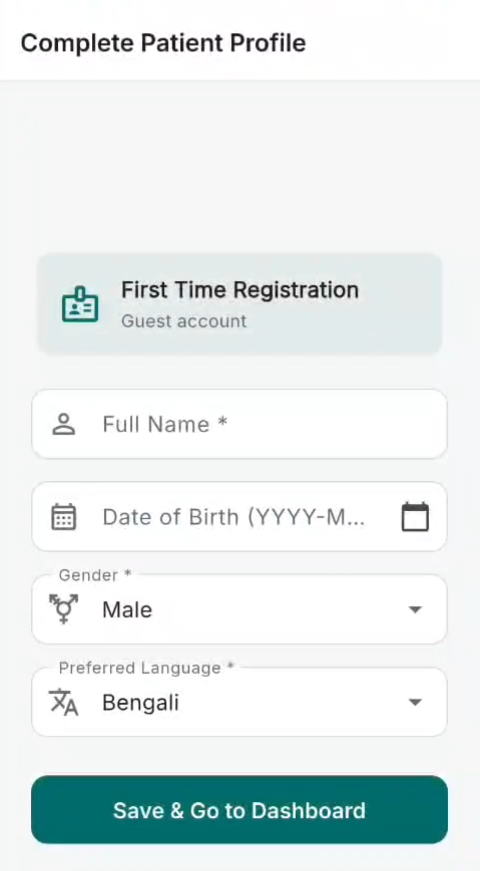
- Role-based portals for patients, doctors, receptionists, and administrators
Doctors can instantly access a patient's complete medical history (with consent), reducing duplicate treatments and improving continuity of care.
How we built it
The application follows a modern cloud architecture.
Frontend
- Flutter
- Riverpod
- go_router
- Dio
- Hive
Backend
- Node.js
- Express.js
- Prisma ORM
- PostgreSQL
Authentication
- Firebase Authentication
- Phone OTP
- Google Sign-In
- Email Authentication
Cloud
- Docker
- Amazon RDS
- Amazon S3
- Amazon ECS Fargate
- Amazon ECR
- GitHub Actions CI/CD
AI Integration
The platform includes an AI-assisted medication safety module.
Before a prescription is saved, the system:
- checks the patient's active medications across every connected clinic,
- detects known drug interactions,
- can query an AI model for additional clinical reasoning,
- allows doctors to override warnings with a mandatory explanation,
- stores every interaction check for auditing.
The AI component acts as a clinical decision support tool, helping doctors identify potentially unsafe prescriptions while keeping the final decision under medical supervision.
Security & Privacy
Healthcare data is highly sensitive, so security was a major focus.
Features include:
- Consent-based access requests
- One-time patient sharing codes
- Emergency access with mandatory justification
- Complete access audit logs
- Role-Based Access Control (RBAC)
- Firebase identity verification
- Secure API authorization
- Private S3 storage using pre-signed URLs
Patient privacy always takes priority.
Challenges we ran into
Some of the biggest challenges included:
- Designing a database that could support multiple independent clinics while sharing patient records securely.
- Implementing a consent system that balanced accessibility with privacy.
- Managing different user roles and permissions.
- Integrating cloud services while keeping the architecture scalable.
- Building an AI-assisted prescription checker that complements, rather than replaces, clinical judgment.
- Ensuring uploaded medical reports remain secure using temporary pre-signed URLs.
What we learned
This project provided hands-on experience with:
- Cloud computing architectures
- REST API design
- Authentication and authorization
- Multi-tenant system design
- Database modeling with Prisma
- Containerization using Docker
- CI/CD pipelines
- Secure healthcare application development
- AI integration into real-world software systems
It also demonstrated how cloud technologies and AI can work together to improve healthcare accessibility for underserved communities.
Future Improvements
Planned enhancements include:
- AI-powered clinical recommendations using larger medical language models
- Offline synchronization for low-connectivity regions
- Push notifications
- Infrastructure as Code using Terraform
- Analytics dashboards for clinics
- Voice-based multilingual patient interaction
- Predictive healthcare insights using machine learning
System Architecture
Flutter App
      │
      ▼
Node.js + Express API
      │
 ┌────┴─────┐
 ▼          ▼
PostgreSQL  Amazon S3
      │
      ▼
 AI Drug Interaction Engine
Mathematical Model
Medication interaction risk can be represented as
$$ Risk = \sum_{i=1}^{n}\sum_{j=i+1}^{n} I(d_i,d_j) $$
where
- $d_i$ represents a prescribed drug,
- $I(d_i,d_j)$ returns the severity of an interaction,
- $n$ is the number of prescribed medications.
The system evaluates every pair of medications before allowing a prescription to be saved.
Impact
MediBridge demonstrates how cloud computing, secure authentication, and AI-assisted clinical decision support can provide continuous healthcare for migrant workers by ensuring that their medical history travels with them—not just their job.

Log in or sign up for Devpost to join the conversation.