The problem Medibook solves
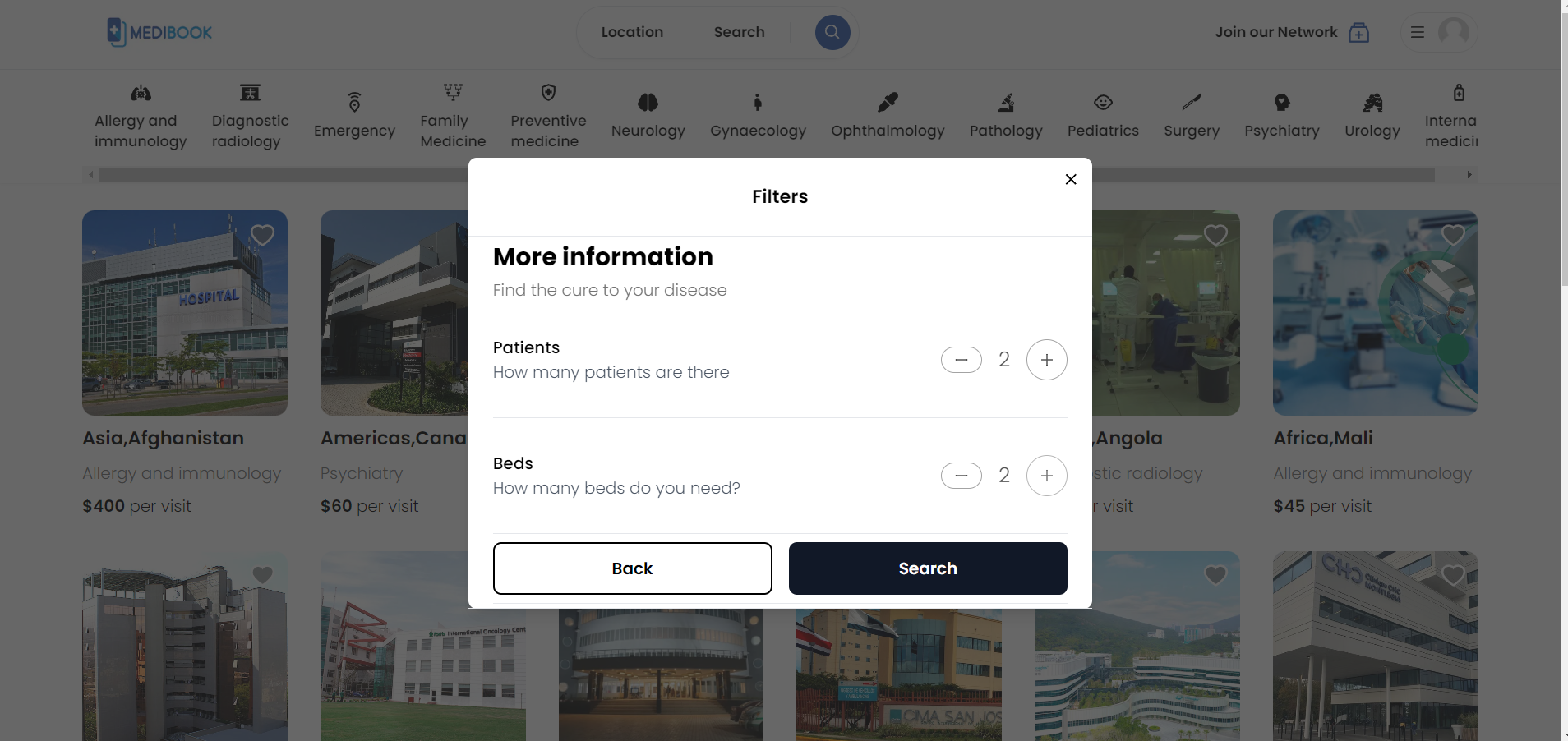
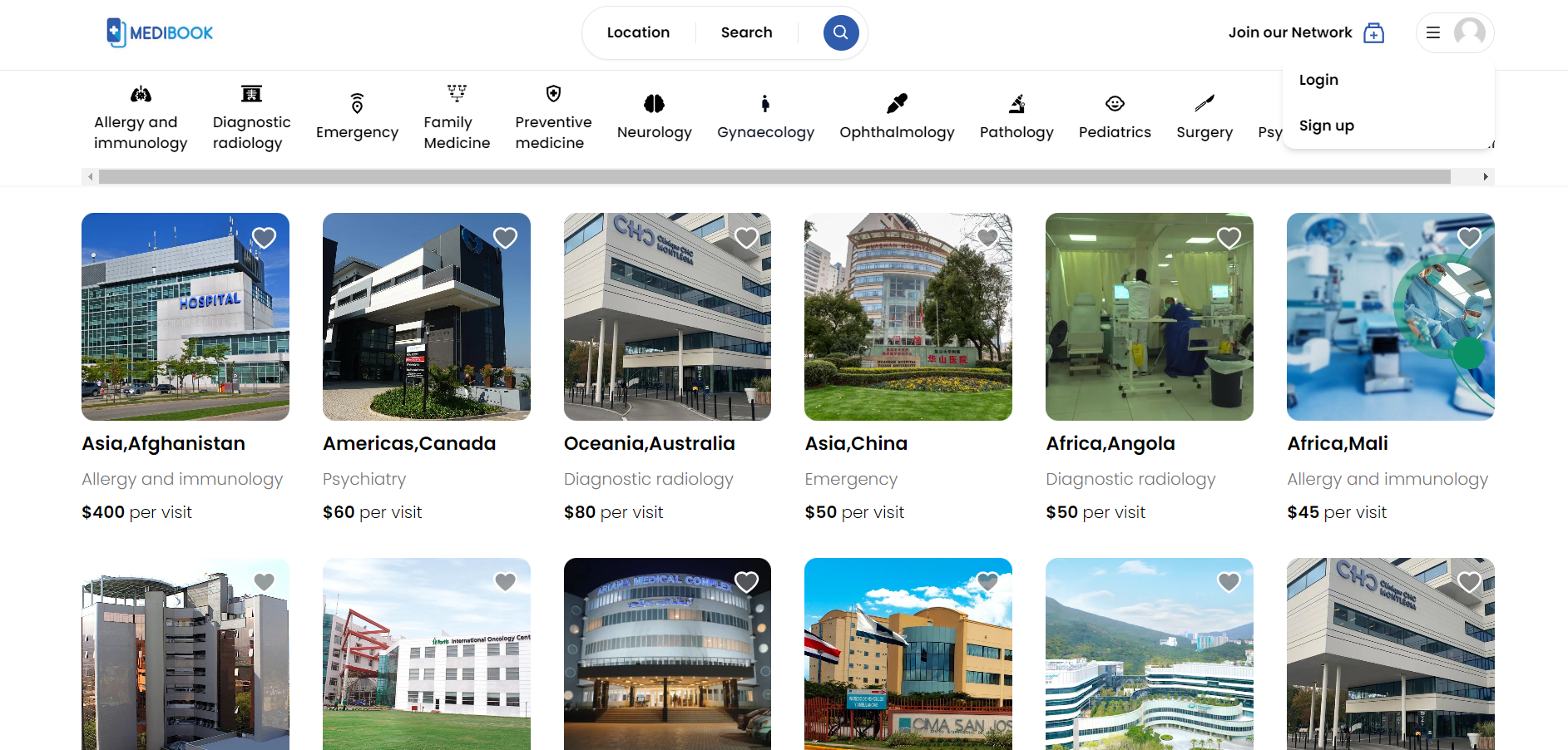
- Streamlined hospital management: Doctors can effortlessly create and showcase their hospitals, providing essential details like bed counts, availability, cost per visit, and patient capacity.
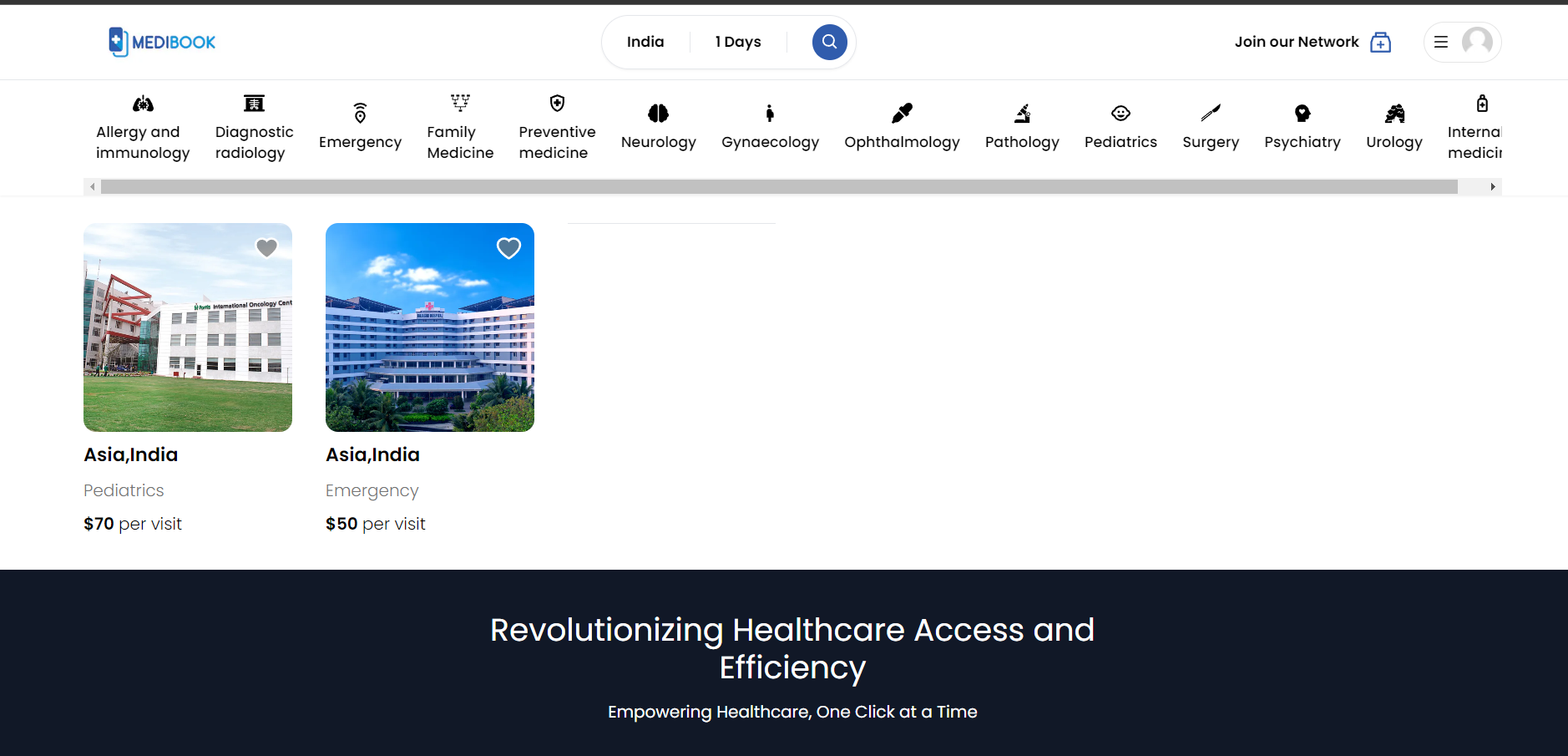
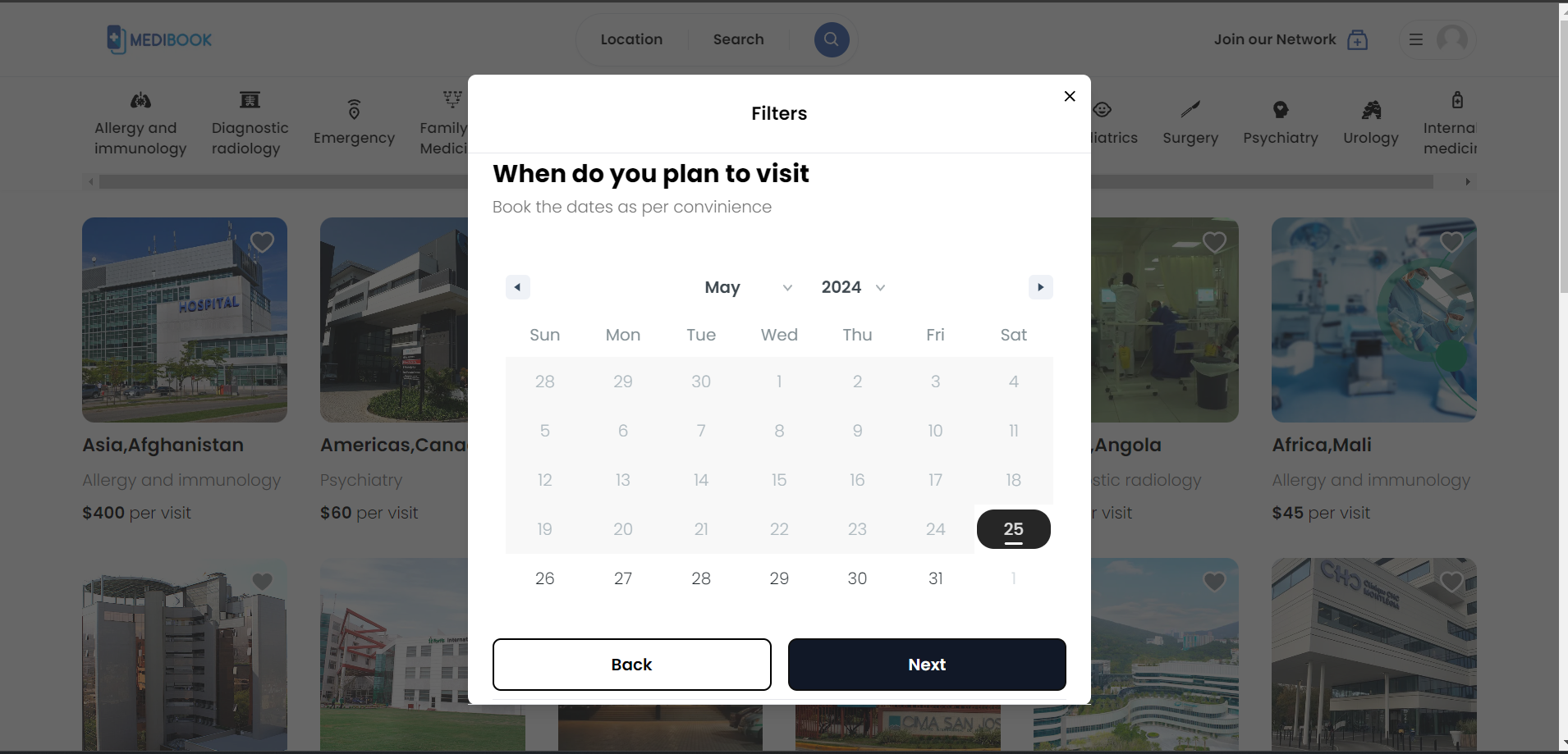
- Simplified appointment booking: Patients can explore hospitals by region, check doctor availability, and seamlessly book appointments without scheduling conflicts.
- Comprehensive hospital information: Patients can access detailed hospital profiles, including specialization, address, and transparent cost per visit, empowering them to make informed healthcare decisions.
- Dynamic cost calculation: Our system calculates and displays the cost of visits based on consultation duration, enabling patients to plan their healthcare expenses accurately.
- Efficient reservation management: Doctors can easily manage reservations, ensuring a smooth patient experience and optimizing hospital workflow.
- Visit history and favorites: Patients have access to their visit history and can mark favorite hospitals for future reference.
- Hassle-free cancellation: Patients can cancel appointments when necessary, freeing up slots for others and promoting flexibility.
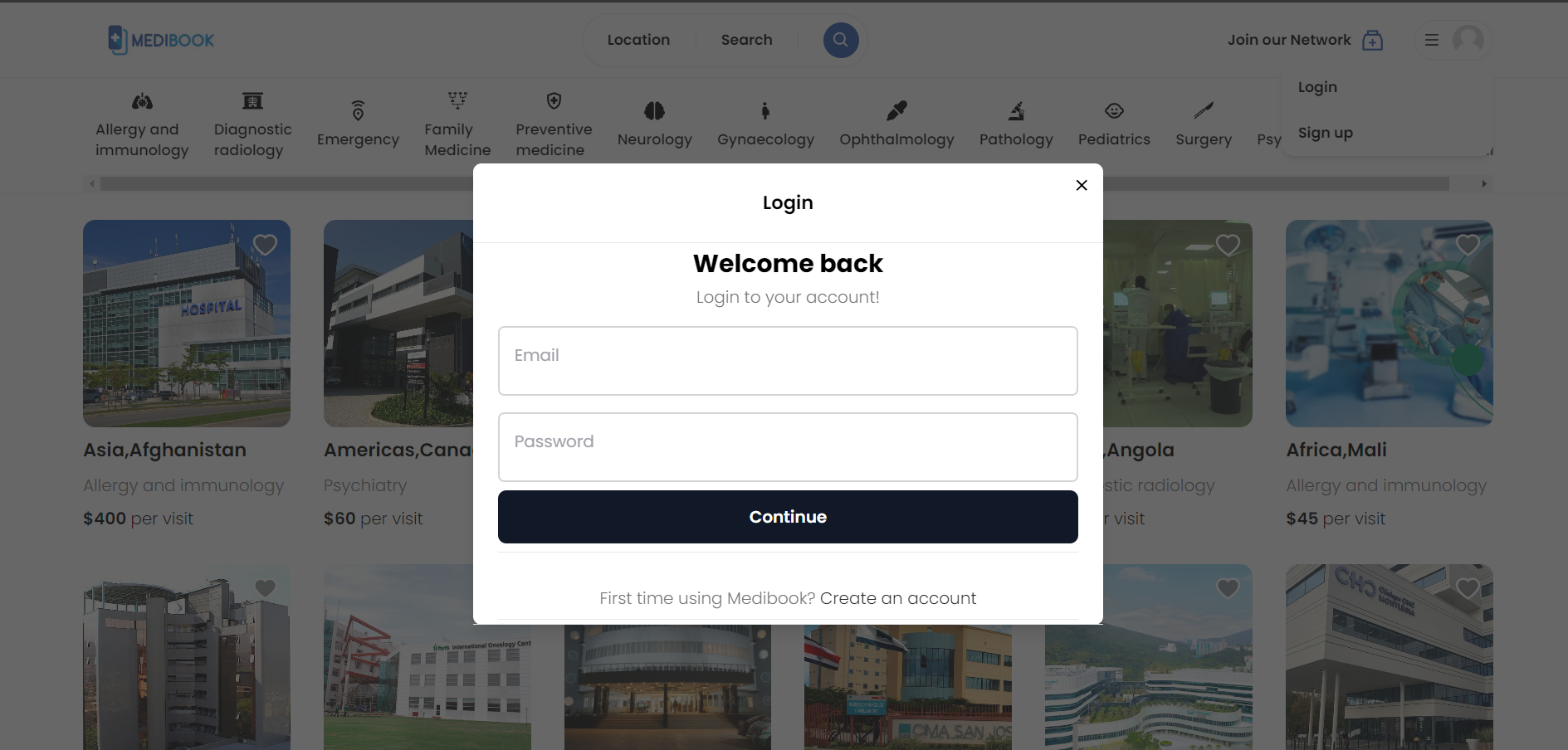
- Secure registration and login: Our platform offers a seamless registration and login functionality, ensuring the privacy and security of user information.
Challenges I ran into
- Data management: Handling and organizing large amounts of hospital data, including bed counts, availability, and patient information, can be complex and require efficient data management strategies.
- User authentication and security: Implementing a robust authentication system and ensuring the security of user data, such as login credentials and personal information, is crucial to protect user privacy.
- Integration of third-party services: Integrating services like Cloudinary for image upload or payment gateways for online transactions may require thorough understanding and seamless integration with your application.
- Search functionality: Implementing an efficient search algorithm to enable patients to find hospitals based on region, availability, and specialization can be challenging, especially when dealing with large datasets.
- Real-time availability tracking: Ensuring that the availability of doctors and time slots remains up-to-date and synchronized in real-time can be a technical challenge that requires careful consideration.
- Scalability: Designing and developing the project to handle a growing number of hospitals, doctors, and patients while maintaining performance and responsiveness can be challenging. Planning for scalability from the early stages is essential.
- User experience: Creating a user-friendly interface and seamless navigation for both doctors and patients to ensure a positive user experience requires careful design and usability testing.
Testing and bug fixing: Thorough testing of the application, identifying and fixing bugs, and ensuring overall system stability and reliability is an ongoing challenge throughout the development process.
What's next for Medibook
Enhanced Analytics: Implementing advanced analytics to provide insights on patient visits, doctor performance, and hospital efficiency.
Telemedicine Integration: Adding support for virtual consultations to provide remote healthcare services, especially useful during pandemics or for patients in remote areas.
Multi-language Support: Expanding the platform to support multiple languages to cater to a diverse user base.
AI-powered Recommendations: Using AI to recommend doctors and hospitals based on patient history and preferences.
Mobile App Development: Creating dedicated mobile apps for both iOS and Android to provide a seamless and accessible user experience on-the-go.
Integration with Health Insurance: Collaborating with health insurance providers to streamline the process of insurance claims and payments.
Feedback and Rating System: Implementing a feedback and rating system for patients to review doctors and hospitals, enhancing transparency and trust.
Improved User Interface: Continuously improving the UI/UX based on user feedback to ensure an intuitive and engaging experience.
Automated Notifications: Adding automated SMS and email notifications for appointment reminders, confirmations, and cancellations.
Community Features: Developing community features like forums and support groups to foster patient engagement and support.
Expanded Search Filters: Enhancing search functionality with more filters, such as treatment type, doctor specialty, and hospital facilities, to help users find the best match for their needs.
Blockchain for Security: Exploring the use of blockchain technology to further enhance data security and integrity.
Partnerships with Pharmacies: Integrating with local pharmacies for prescription management and medication delivery services.
Advanced Reporting Tools: Providing hospitals with advanced reporting tools for better resource management and operational insights.
Personalized Health Plans: Offering personalized health and wellness plans based on patient data and health history.
Built With
- cloudinary
- mongodb
- nextjs
- node.js
- prisma
- react
- tailwindcss


Log in or sign up for Devpost to join the conversation.