Inspiration
The healthcare industry has greatly benefited from recent advancements in artificial intelligence, particularly through the development of Large Language Models (LLMs). These models have improved communication between humans and machines, making interactions more seamless and effective. Our goal is to tailor these models specifically for healthcare to meet unique clinical needs and enhance the patient-physician relationship. We are developing a robust LLM application that promotes better health management and adherence to medical guidance, minimizing miscommunication and improving self-care. This is particularly valuable in remote areas with limited medical facilities, where our application can bridge the gap by leveraging widespread internet access to bring healthcare closer to those in need.
What it does
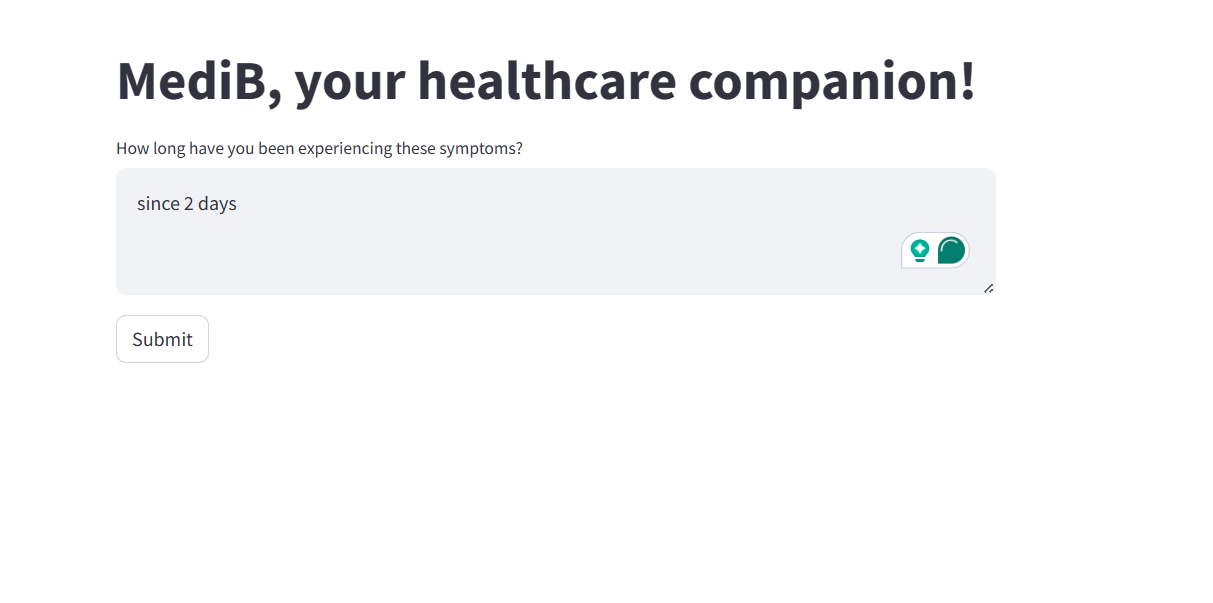
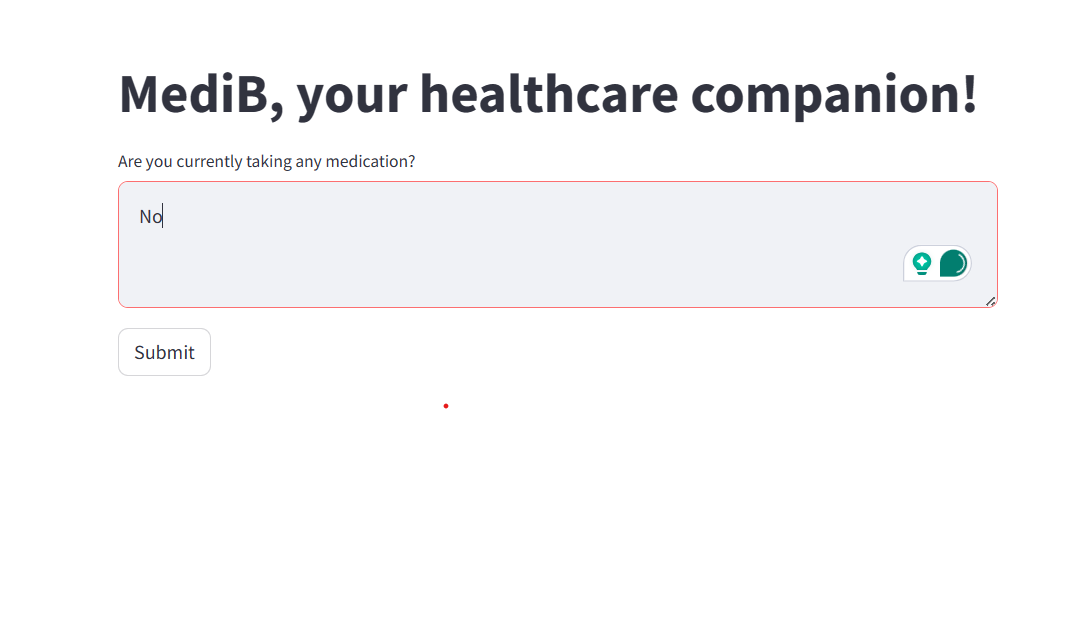
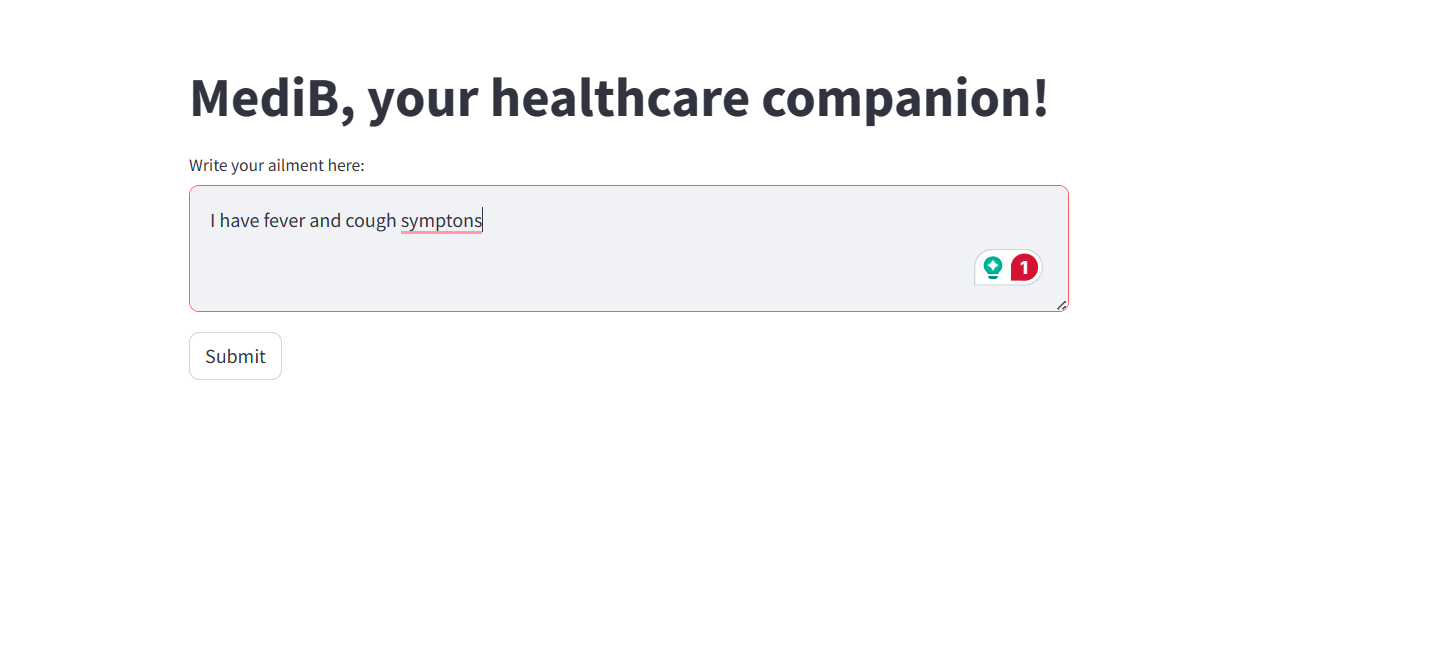
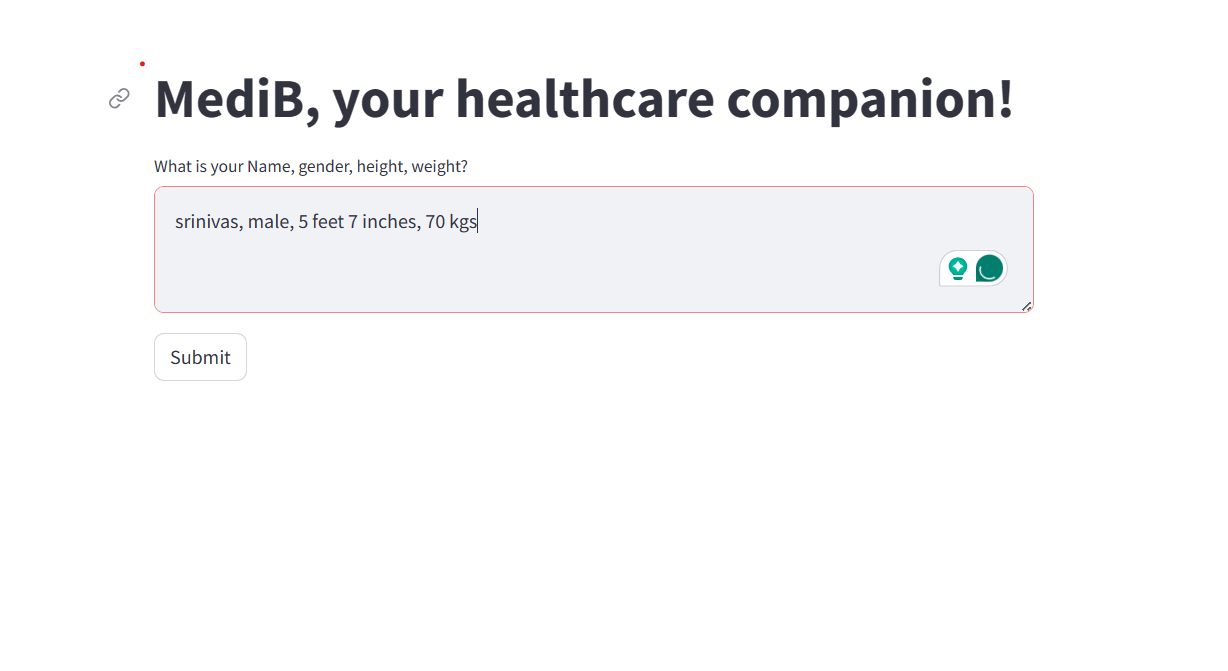
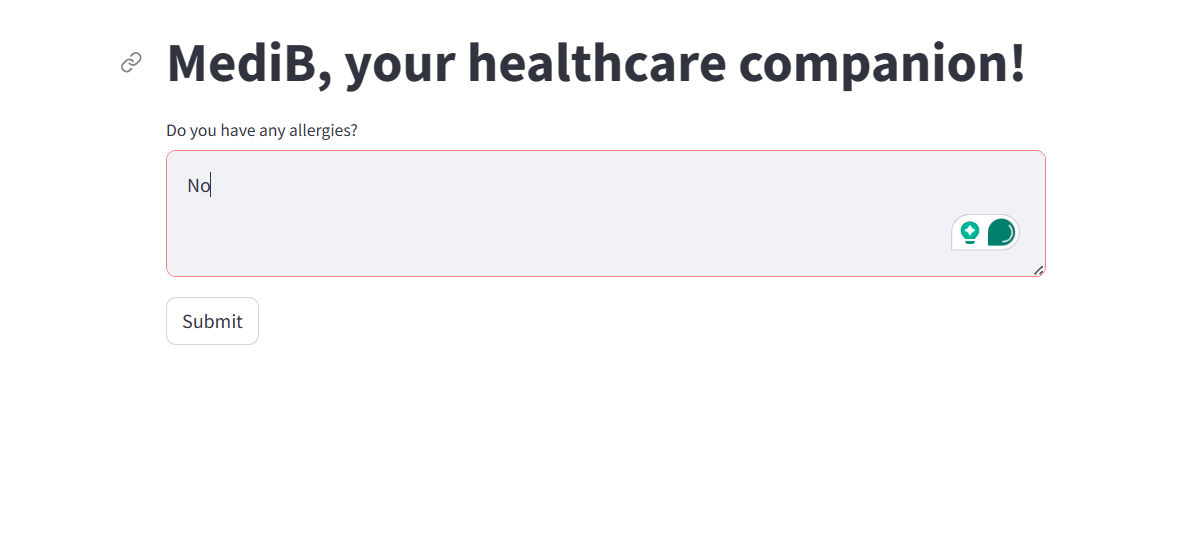
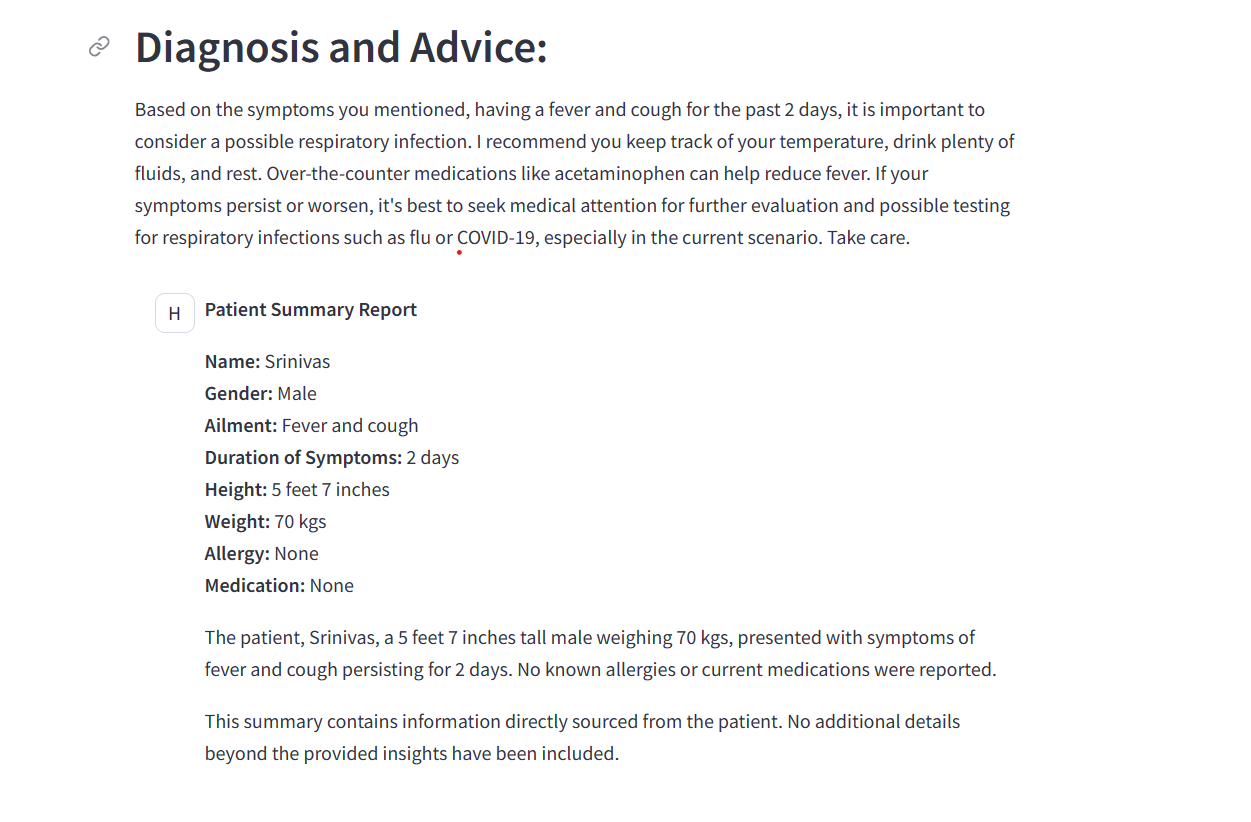
MediB is an advanced healthcare consultation application that offers intelligent and convenient communication for patients with medical queries. With this app, users can interact with a machine much like they would with a doctor, sharing their concerns and seeking advice and suggestions. The app processes patient queries by gathering information such as age, previous medications, and current symptoms. It then identifies the potential medical condition affecting the patient and provides recommendations for home remedies or suggests a doctor or hospital visit. Additionally, MediBee tracks previous conversations to monitor symptom progression, which helps in identifying if the condition has evolved or led to other diseases.
How we built it
using langchain, RAG, stream lit, pinecone, open ai api
Challenges we ran into
One of the challenges we faced was finding a dataset containing conversations between patients and doctors that included symptoms. Once we found this dataset, we extracted the symptoms and results from these conversations. It was even more challenging to match these extracted vectors with the patient queries from our interface and then combine them to send to OpenAI's ChatGPT. However, through diligent research and the use of reliable resources, we were able to successfully overcome these challenges and ultimately produce the results we wanted.
Accomplishments that we're proud of
While working on this project, we were able to complete our research, select the necessary components, design an efficient system to reduce delays in the recommendation process, and ultimately produce results that help people with limited access to healthcare services.
What we learned
One of the challenges we faced was finding a dataset containing conversations between patients and doctors that included symptoms. Once we found this dataset, we extracted the symptoms and results from these conversations. It was even more challenging to match these extracted vectors with the patient queries from our interface and then combine them to send to OpenAI's ChatGPT. However, through diligent research and the use of reliable resources, we were able to successfully overcome these challenges and ultimately produce the results we wanted. Accomplishments that we're proud of While working on this project, we were able to complete our research, select the necessary components, design an efficient system to reduce delays in the recommendation process, and ultimately produce results that help people with limited access to healthcare services.
What's next for MediB( A healthcare companion)
During the 24-hour hackathon, we attended several workshops where we learned about various Large Language Models (LLMs) and their specific applications. This knowledge led us to discover Langchain, which we later implemented in our project. Langchain helps our system remember previous conversations and generate current responses by analyzing past queries and results.
Built With
- fastapi
- langchain
- openai
- pinecone
- python
- rag

Log in or sign up for Devpost to join the conversation.