-
-
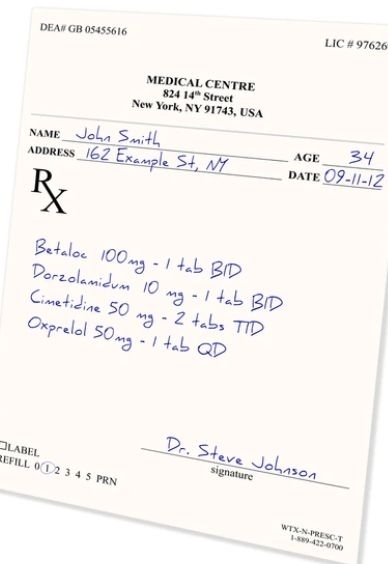
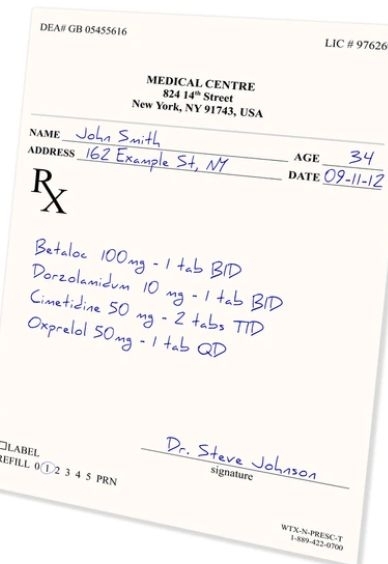
Sample prescription
-
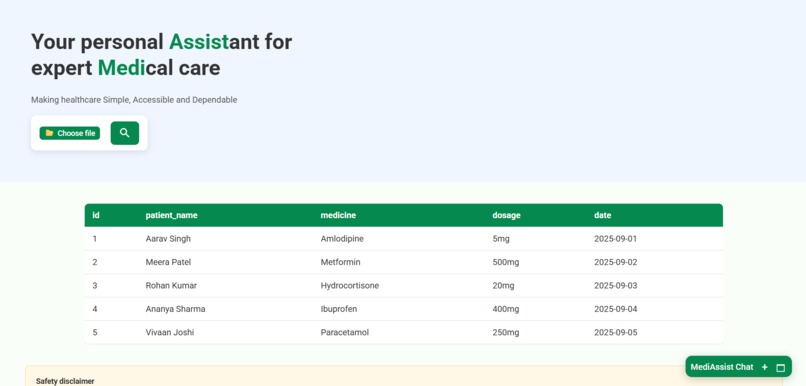
UI_5
-
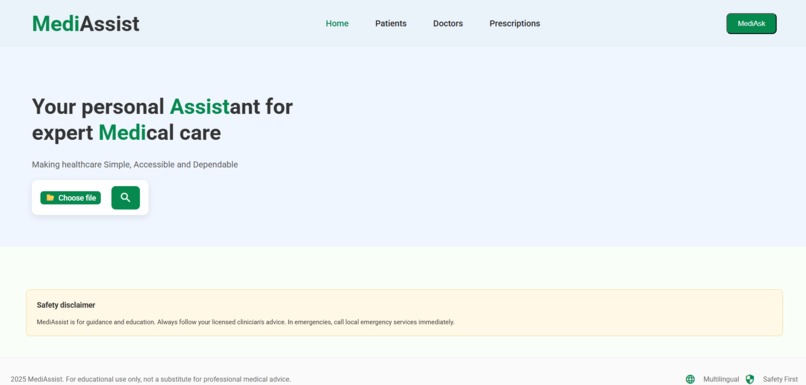
UI_1
-
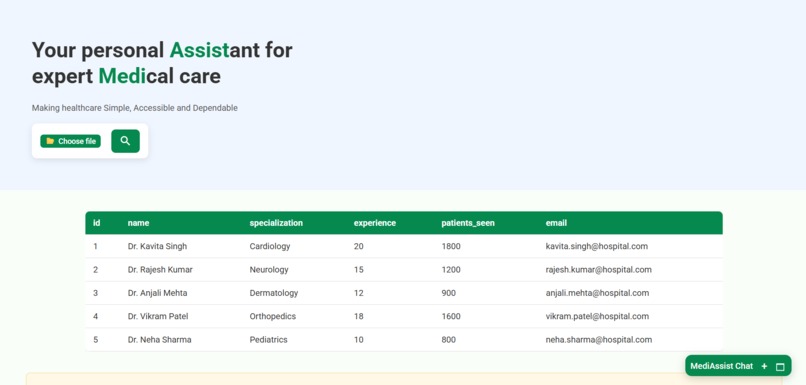
UI_4
-
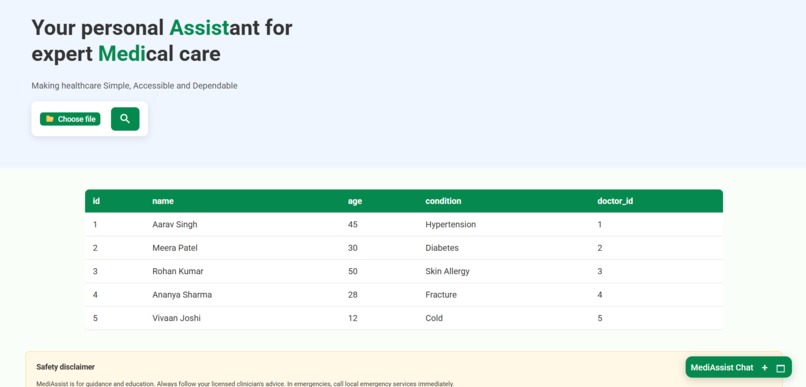
UI_3
-
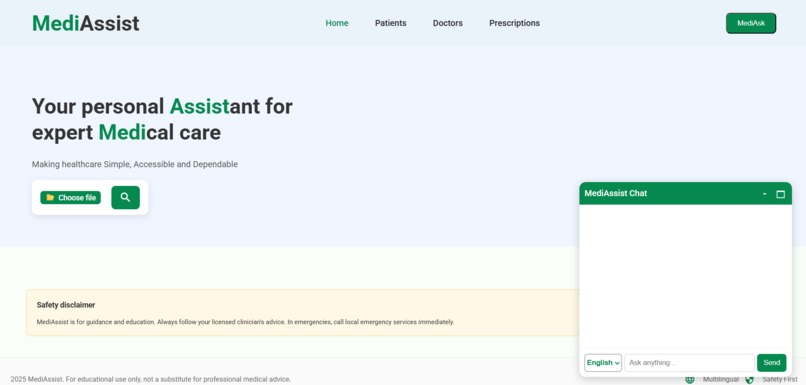
UI_2
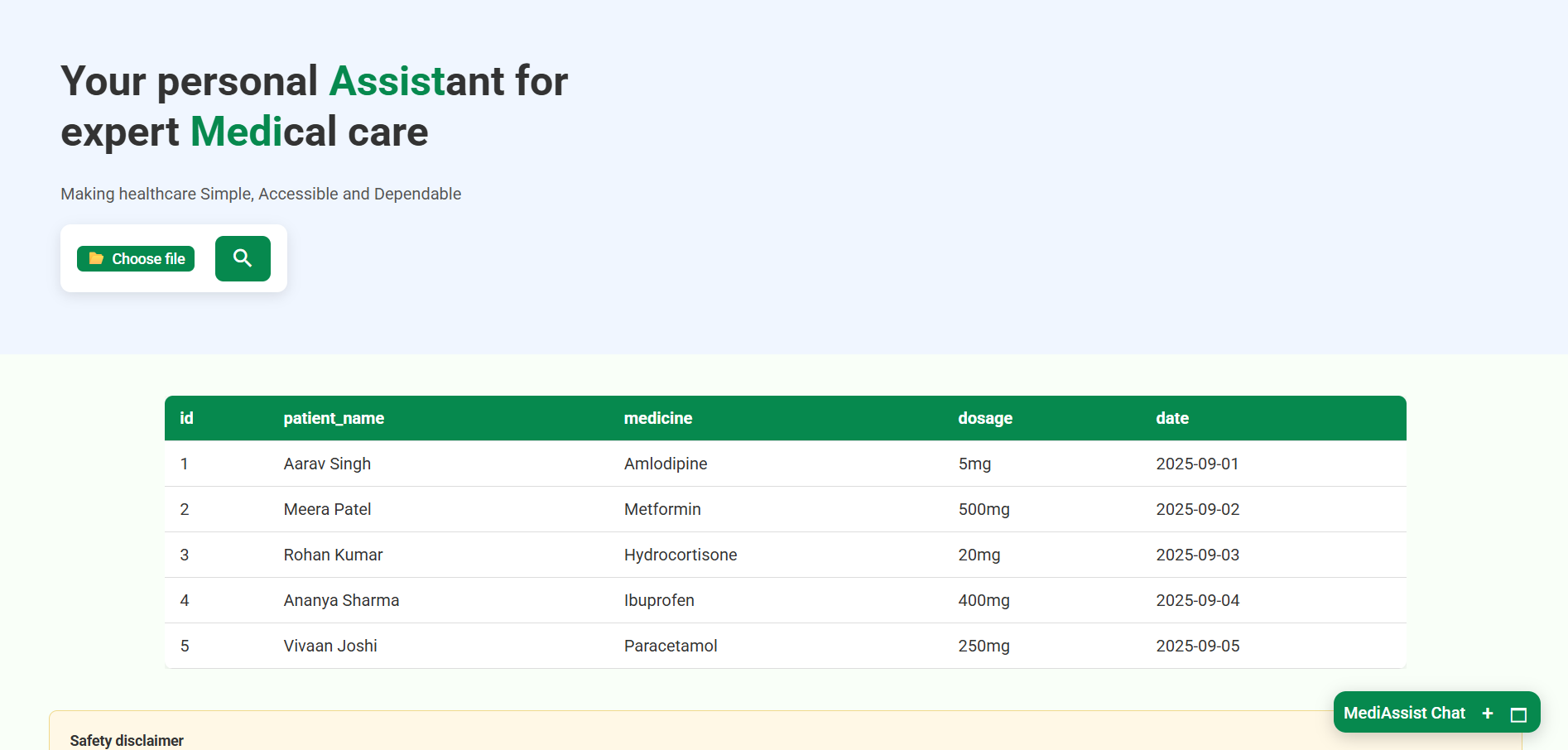
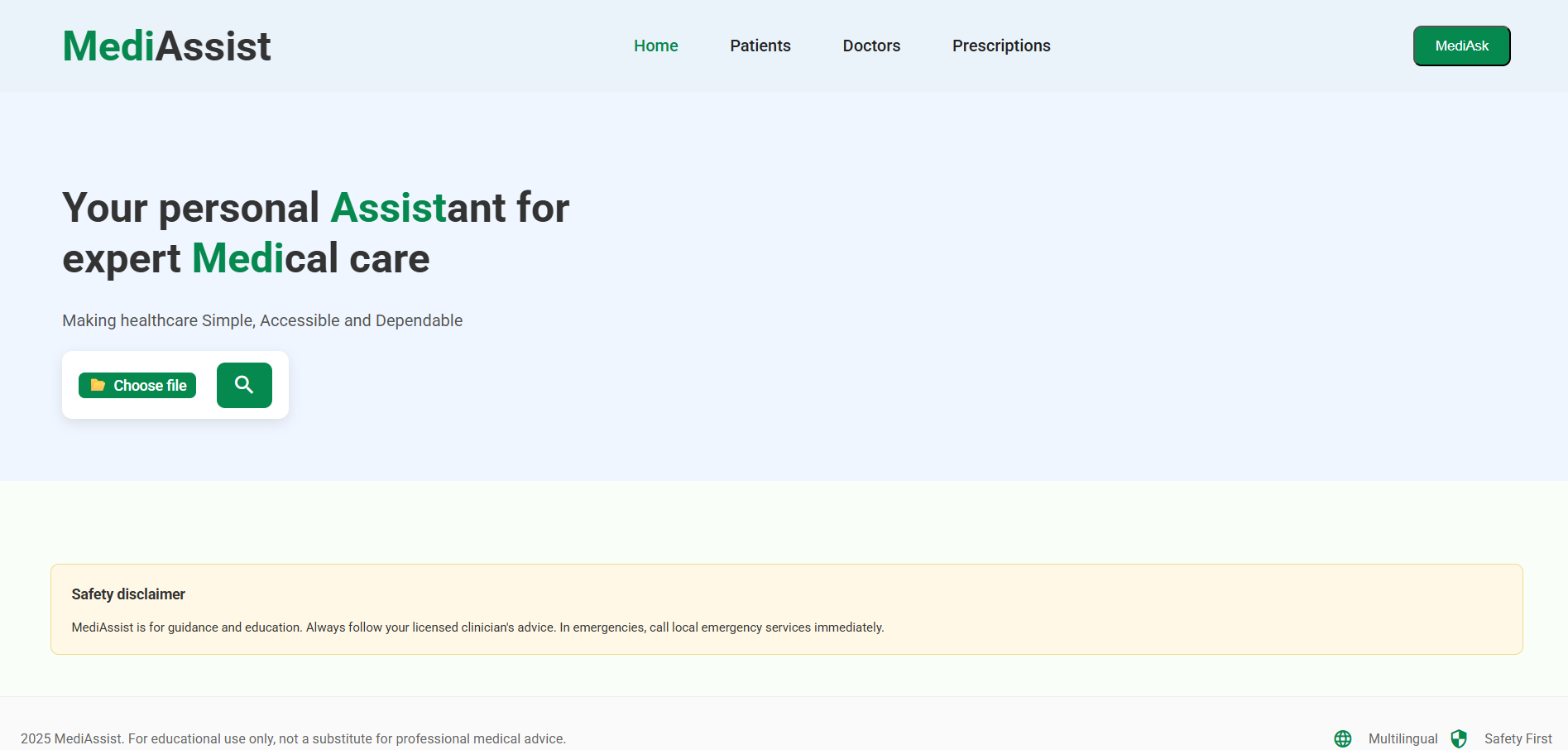
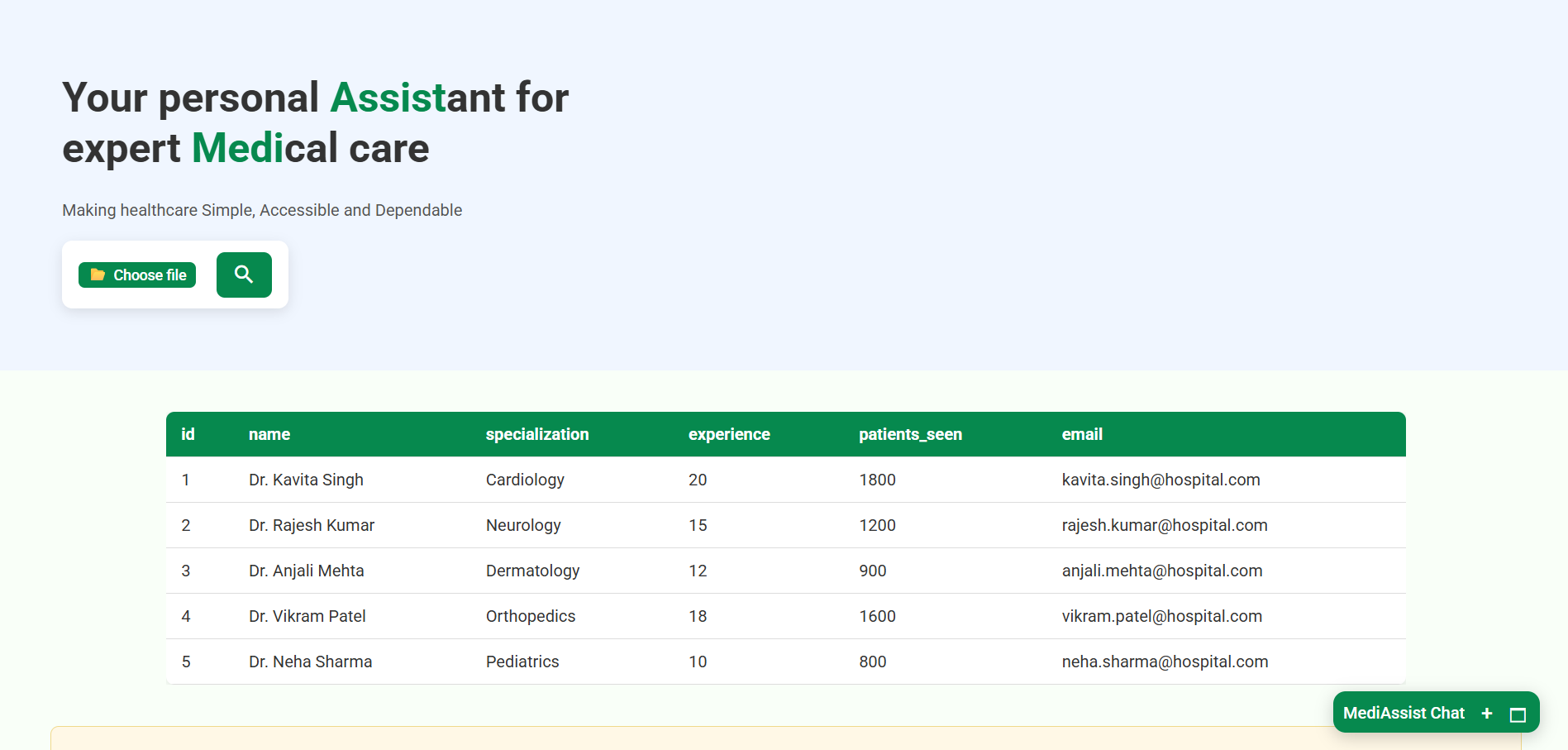
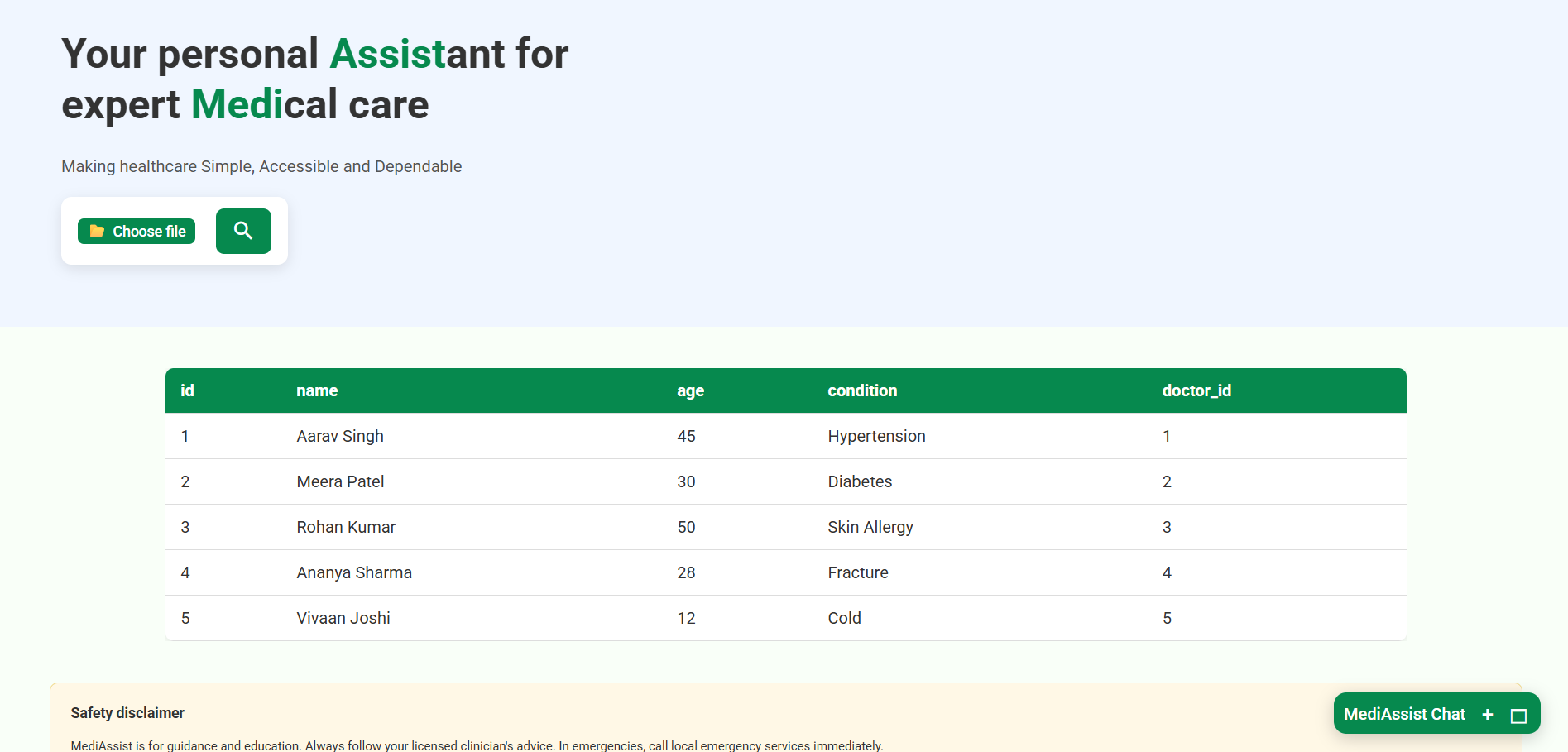
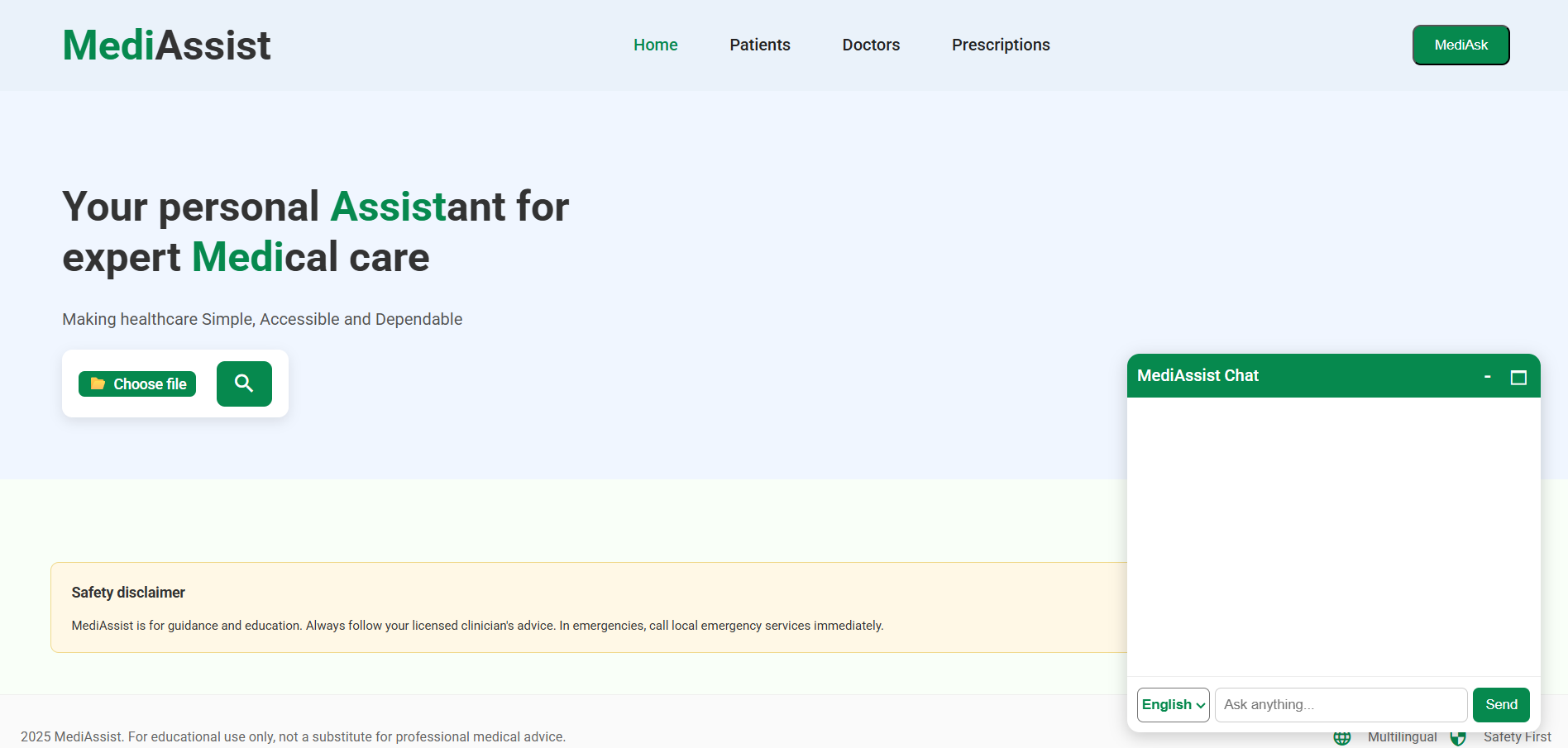
Inspiration
In rural India, access to healthcare is often limited by language barriers and difficulty in understanding handwritten prescriptions. Many patients cannot easily manage or track their medical records. MediAssist was built to provide a simple tool that bridges the gap between patients and doctors, making healthcare information more accessible. We created MediAssist to simplify, enhance, and make healthcare more accessible by combining OCR, databases, and a clean, intuitive dashboard.
What it does
- Patients can upload prescriptions from their local device
- OCR using Tesseract.js extracts prescription text automatically
- Uses an offline database for lightweight data storage
- Provides a basic and easy-to-use dashboard for both patients and doctors
How we built it
- Frontend with HTML, CSS, and JavaScript for simplicity and offline use
- Backend with Node.js for handling API requests
- SQLite database to keep it lightweight and runnable without internet
- Tesseract.js for recognising text in prescriptions
Challenges we ran into
- OCR accuracy with poor-quality or handwritten prescriptions is common in rural areas
- Ensuring the system works without heavy infrastructure or internet dependency
- Making the UI simple enough for first-time digital users
- Handling database initialisation and data consistency
- Running the model on weak computer systems with limited CPU and no GPU made processing slow
Accomplishments that we are proud of
- Developed a working system that integrates OCR with patient records
- Built it to run with minimal setup, suitable for rural clinics
- Created a reusable database initialisation process with setupdb.js
- Designed a dashboard that is simple but effective
What we learned
- How OCR can be applied in real-world healthcare use cases
- The importance of lightweight solutions like SQLite for rural contexts
- Challenges of designing for users who may not be tech-savvy
- How to bridge frontend and backend seamlessly in Node.js
What’s next for MediAssist – Smart prescription assistant
- Support for regional languages in OCR
- Offline-first mobile app for village health workers (ASHA workers)
- AI-based drug interaction checks for safer prescriptions
- Integration with government health schemes and rural clinics
- Scalable deployment for small hospitals and PHCs (Primary Health Centres)
Built With
- css
- database
- html
- javascript
- node.js
- ocr-terminal
- ollama
- sqlite


Log in or sign up for Devpost to join the conversation.