Inspiration
Our inspiration was seeing elderly people who forget or are incapable of taking their medication. We wanted to make an easy to use accessory for this problem.
What it does
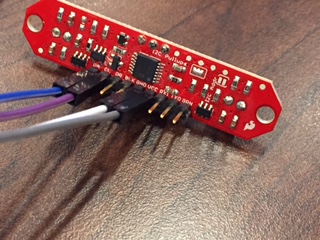
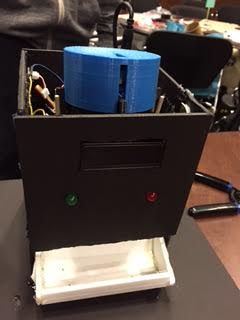
Here is how it works... The caregiver will be able to input times for pill use for up to three times a day via a web-interface. At the time(s) the caregiver inputs, the rotary system will send out a pill through a chute onto a tray. There are 21 pill slots in one capsule. Three pills a day. We predicted that there might be a desire for long term use, so the MediAssist was designed for that in mind. You can place additional “capsules” on top of another, easily adding more pills. This is designed for a pharmacist to put in the pill so there is no confusion on how to put it in. There is a motion sensor to be able to tell if the patient has picked up the pill, if not, the caregiver receives a notification (on the phone, computer) concerning this issue. We also have a beeper so if the person is in another room they will be able to hear the beep and will know that a pill is waiting for them. We even added an LCD screen to show the recipient of the pill steps on how to get the pill.
How we built it
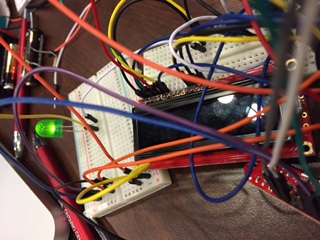
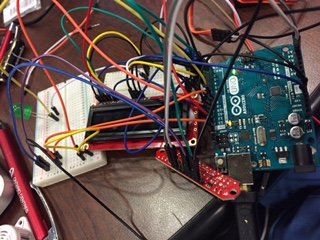
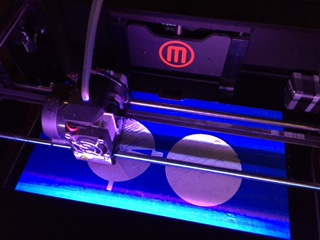
We used an Arduino Uno, an IR distance censor, LCD and other Arduino accessories (Sparkfun), 3D printed parts.
Challenges I ran into
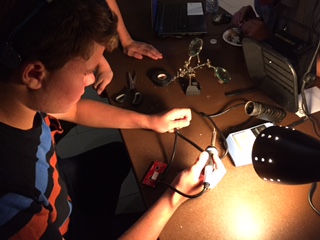
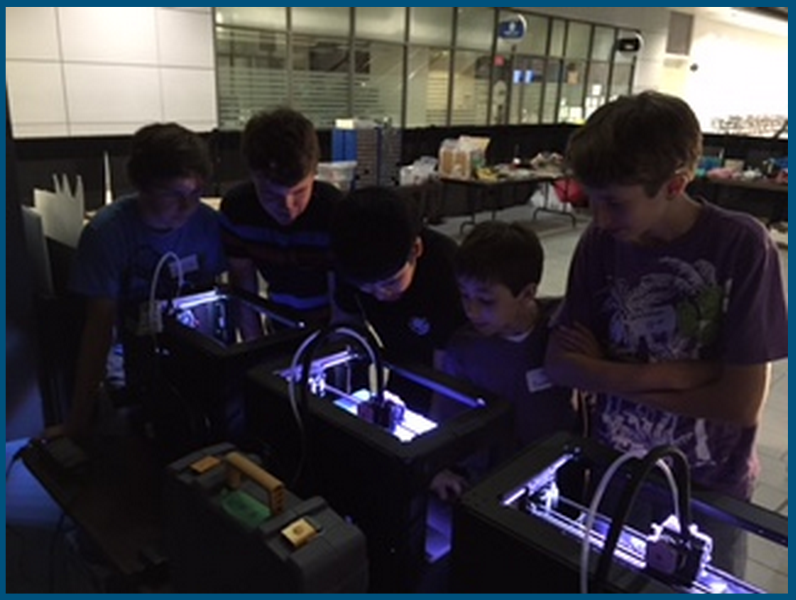
Having some difficulty with the 3D printer. Some coding problems.
Accomplishments that we are proud of
The 3D printing. Coding the accessories for the Arduino Uno (motion sensor, LCD, etc.)
What we learned
How to use 3D printers, motion sensors, Arduino. Allocate sufficient time for creating parts as sometime 3D printers do not produce the expected outcome.
What's next for MediAssist
Hope to have a successful future in the market.


Log in or sign up for Devpost to join the conversation.