AI for Preventive & Accessible Healthcare
Our project crosses multiple tracks, so we propose a new category: AI for Preventive & Accessible Healthcare. MediAid empowers patients to understand their symptoms, reduces hospital overload, and enables smarter telehealth — all with a single AI-powered assistant.
Inspiration
Millions of people struggle to understand whether their symptoms need urgent care or just rest. Hospitals are often overcrowded, and patients waste valuable time trying to self-diagnose with unreliable online sources. We wanted to create a fast, simple, and AI-powered triage assistant that helps people make smarter health decisions while reducing unnecessary ER visits.
What it does
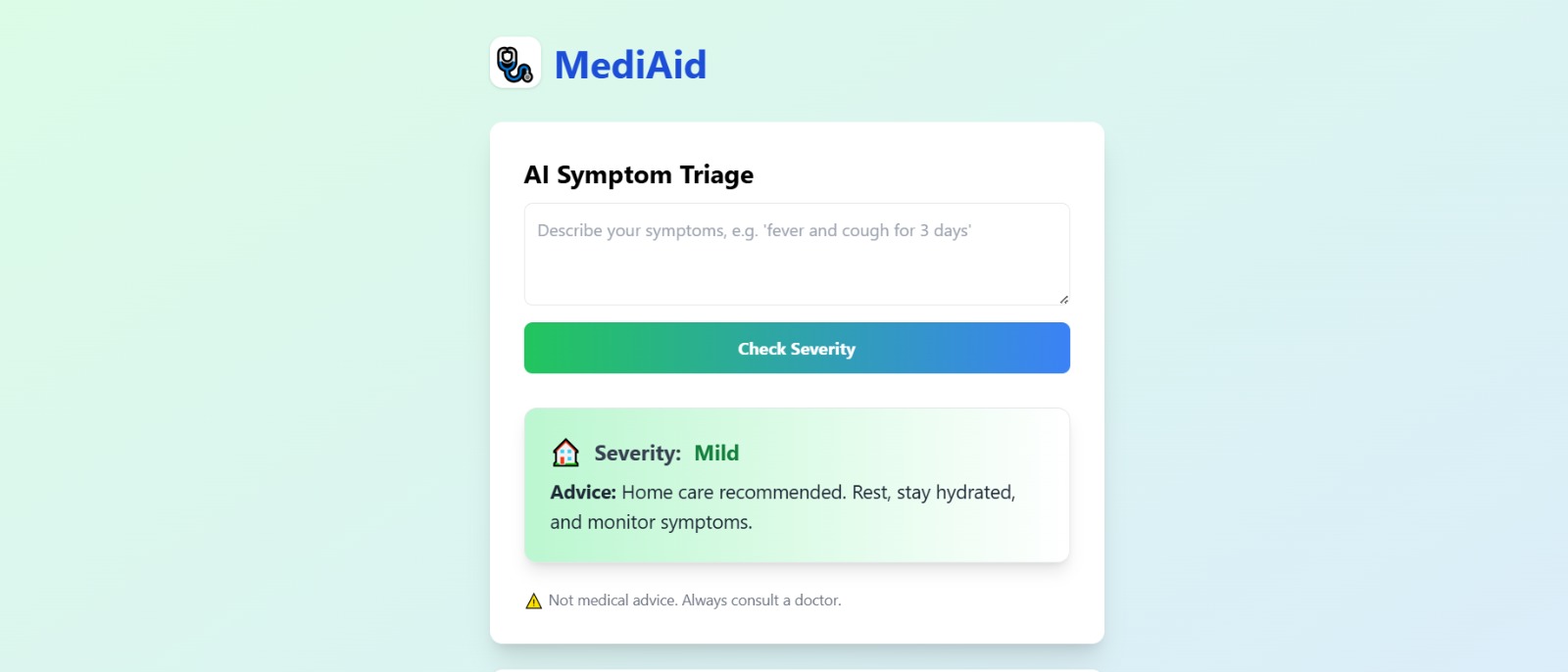
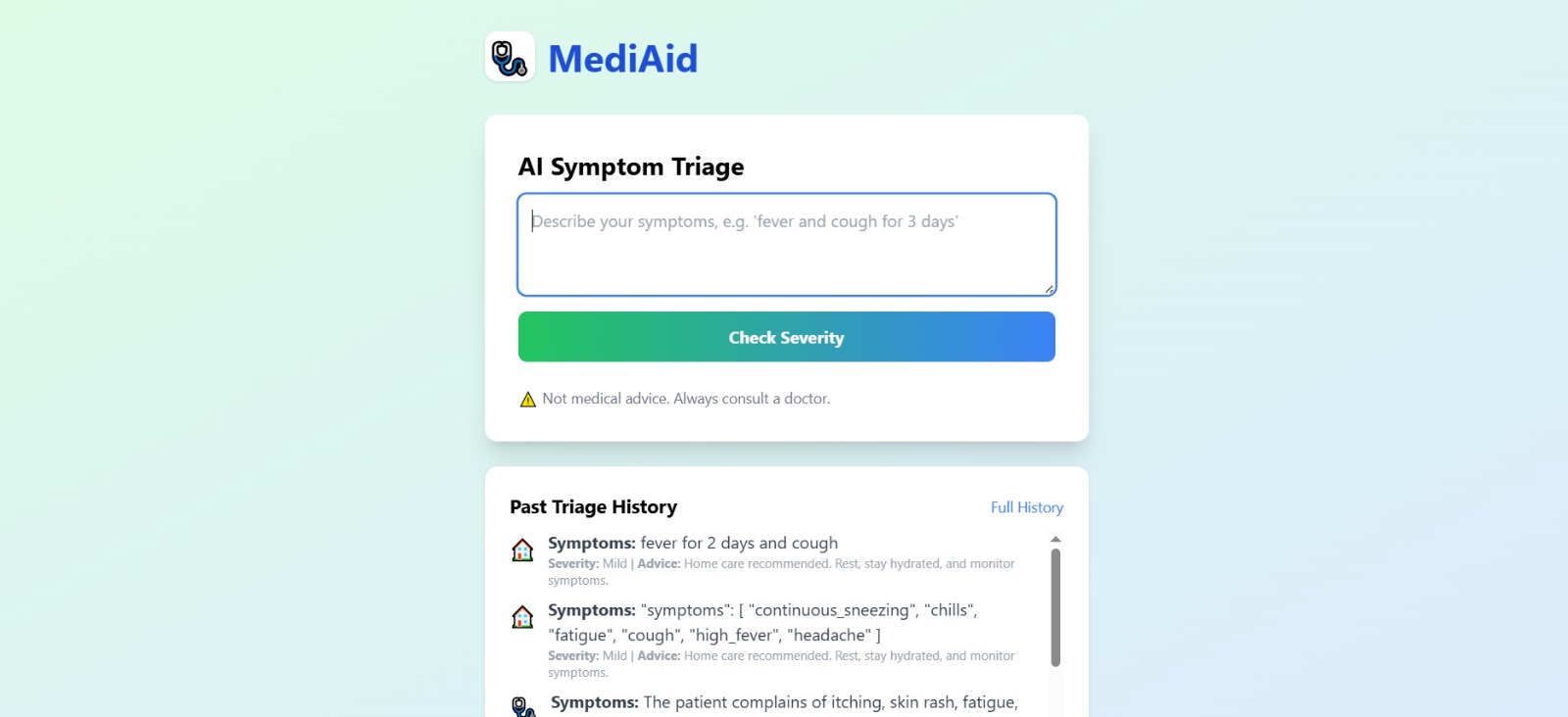
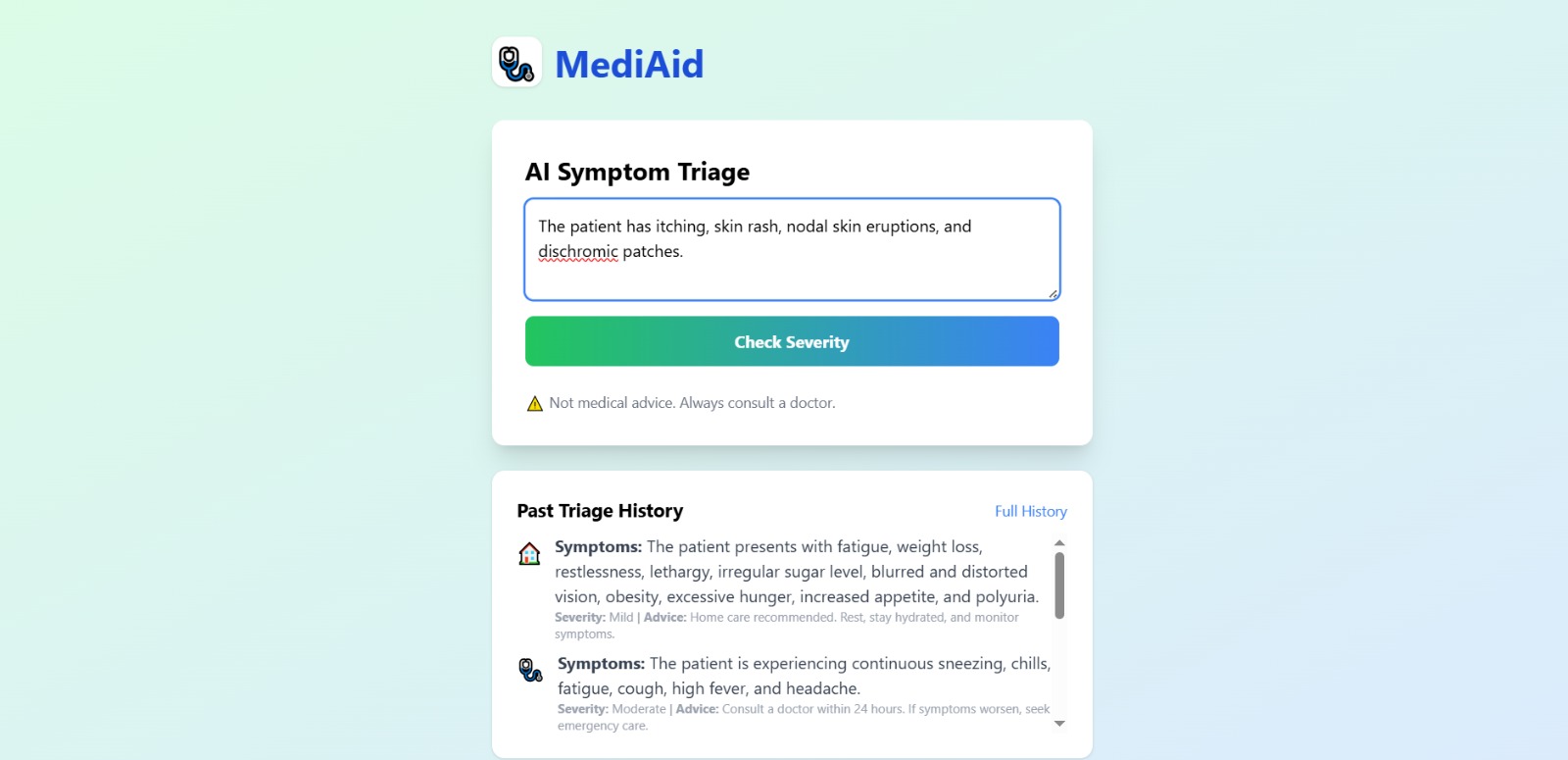
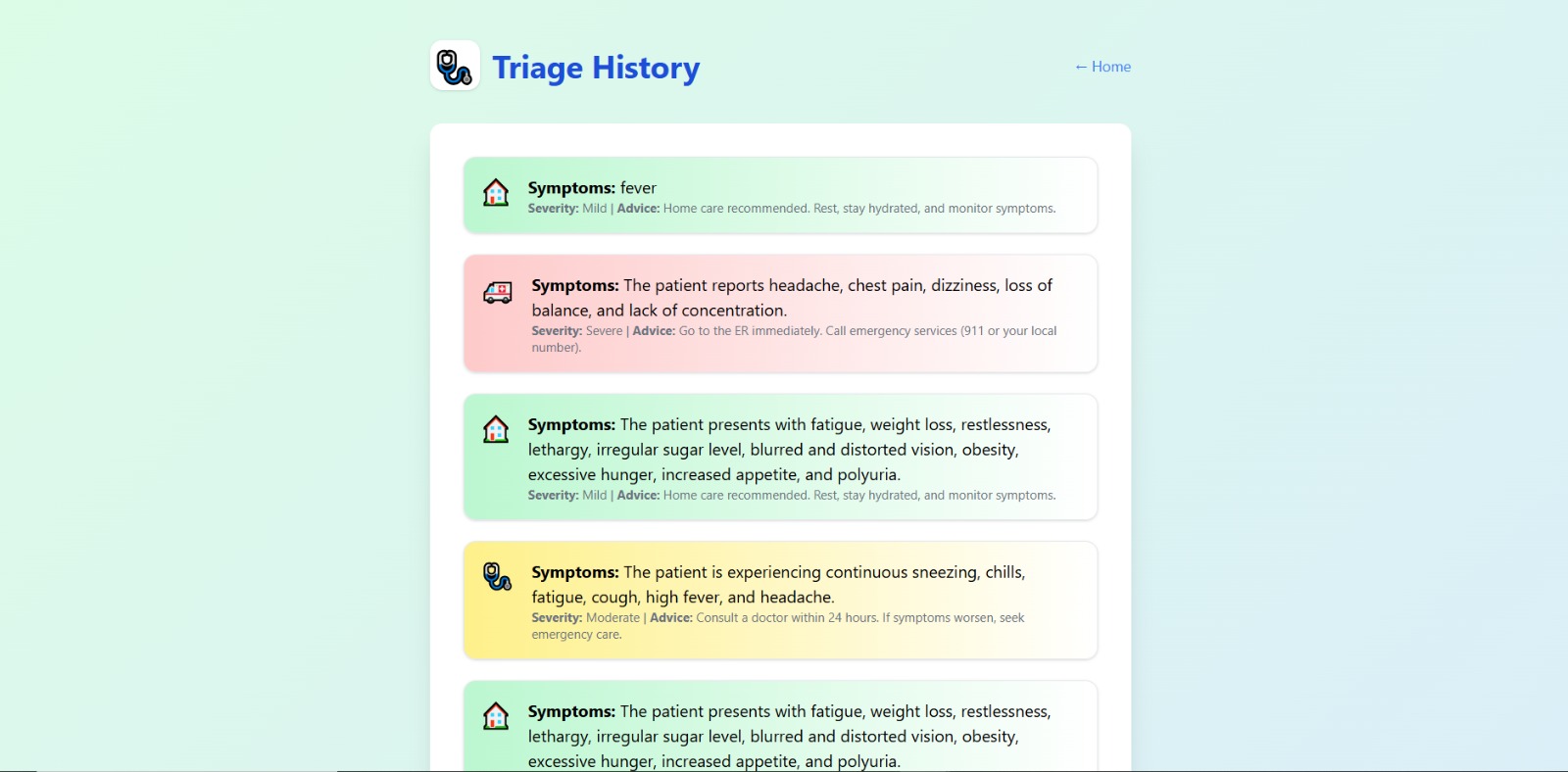
MediAid is an AI patient triage assistant. Users enter their symptoms in natural language, and the system: Analyzes symptoms with a dataset of diseases and risk levels Uses AI (OpenAI GPT) to provide personalized triage advice Classifies cases into Mild, Moderate, or Severe with color-coded icons Suggests possible conditions when relevant Saves triage history for tracking symptom progression It’s like a digital first response tool that helps you decide: rest, see a doctor, or ER now.
How we built it
Backend: Flask (Python) for API + logic AI: OpenAI GPT model for reasoning + fallback rule-based triage Dataset: CSV of symptoms, diseases, and risk levels Frontend: TailwindCSS + Flask templates for a clean, colorful UI Storage: JSON-based history logging for quick retrieval
Challenges we ran into
Finding a reliable symptom–disease dataset with risk levels Balancing between rule-based triage and AI reasoning for safe advice Designing a UI that is both simple and medically trustworthy Handling cases where AI output was inconsistent and required fallback
Accomplishments that we're proud of
Built a working AI triage assistant in just a hackathon sprint Integrated dataset + AI + rules into a single robust pipeline Created a colorful, modern UI that feels like a real medical tool Designed a system that could actually help people in real life
What we learned
How to combine AI with structured datasets for better reliability Importance of clear UX in healthcare apps (users need instant clarity) Prompt engineering to make AI output consistent and safe Working with medical themes responsibly, always adding disclaimers
What's next for MediAid
Expanding the dataset with more diseases, symptoms, and risk factors Adding multi-language support for global accessibility Partnering with healthcare providers for validation and deployment Building a mobile app version for real-time patient triage Exploring integration with telehealth services


Log in or sign up for Devpost to join the conversation.