-
-
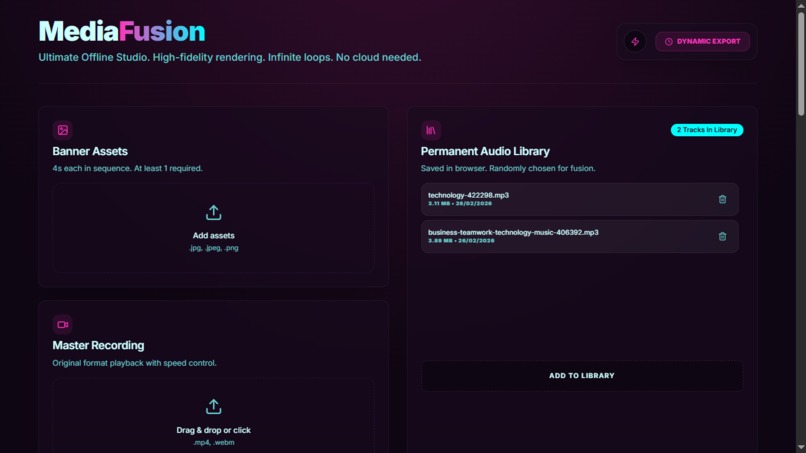
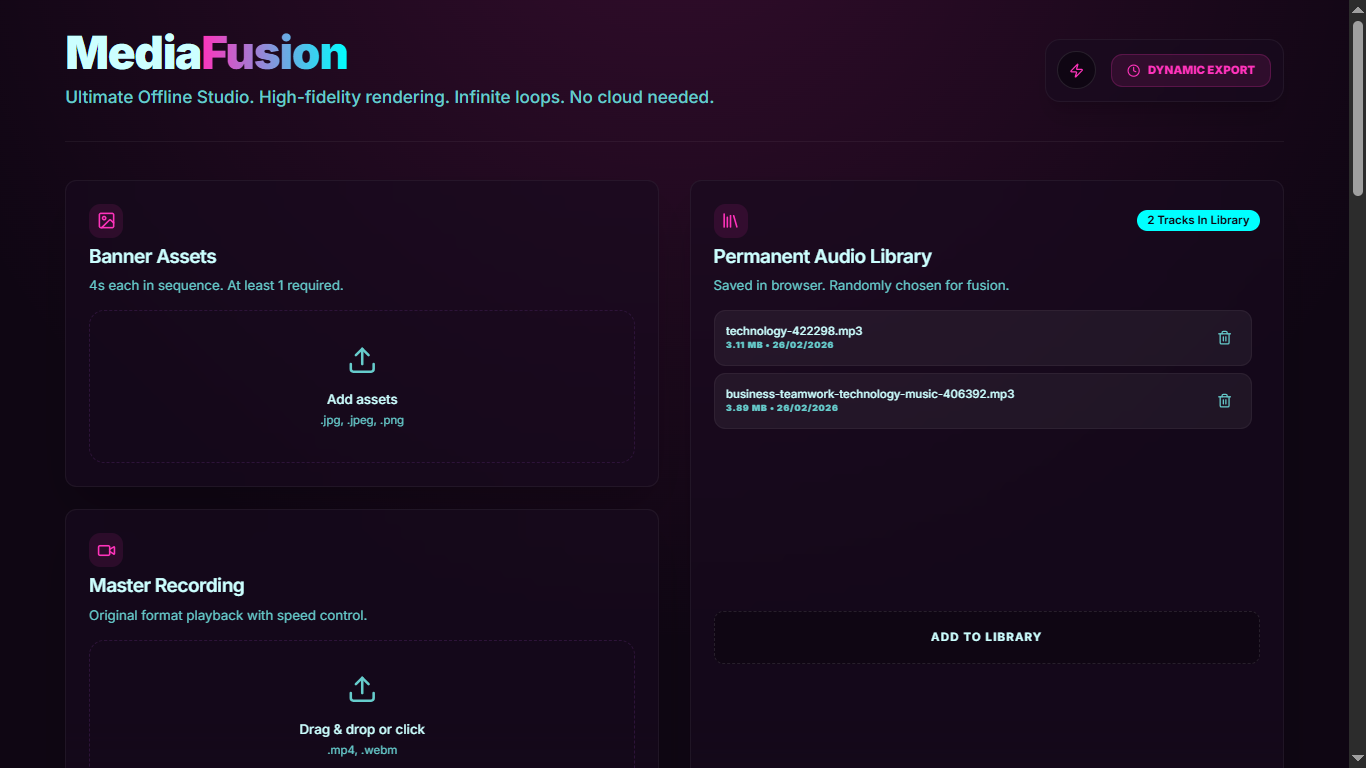
Home page
-
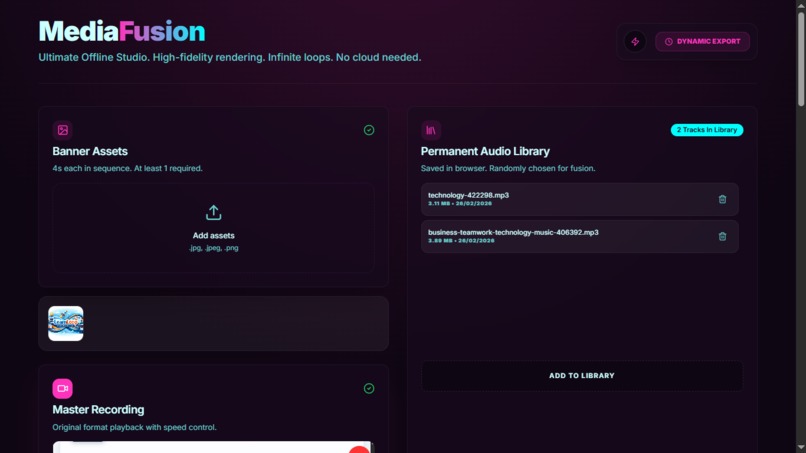
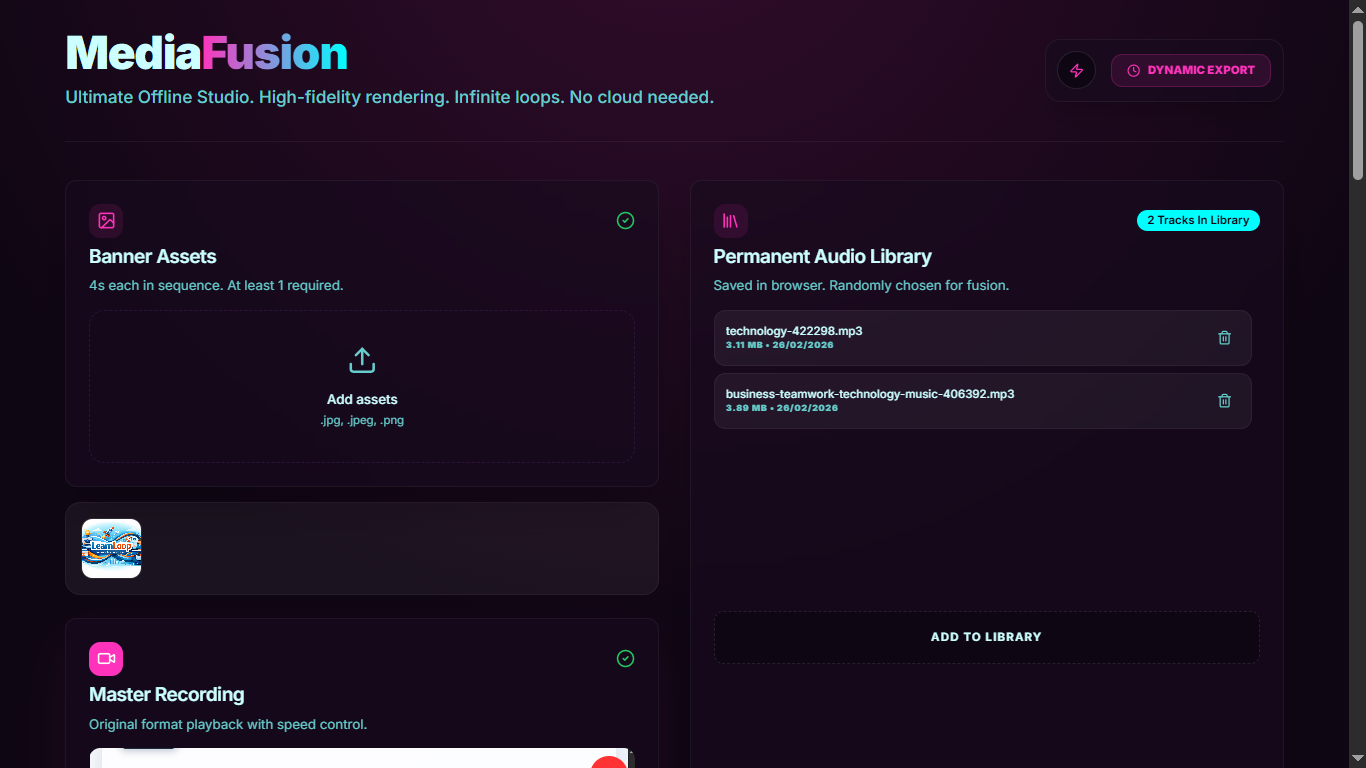
Upload files
-
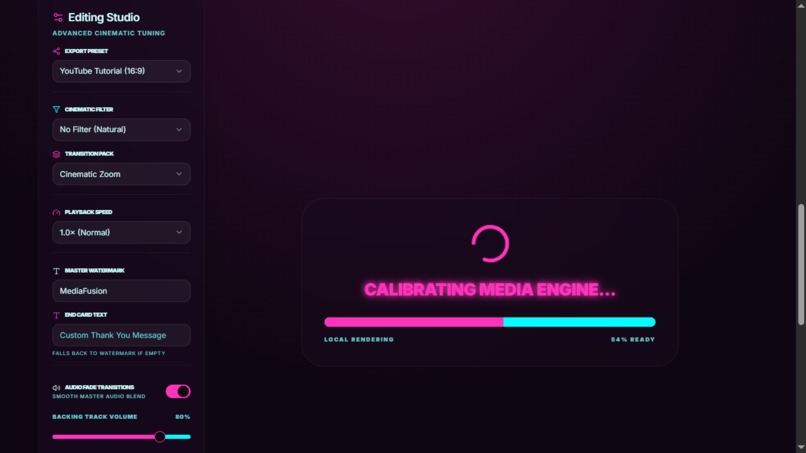
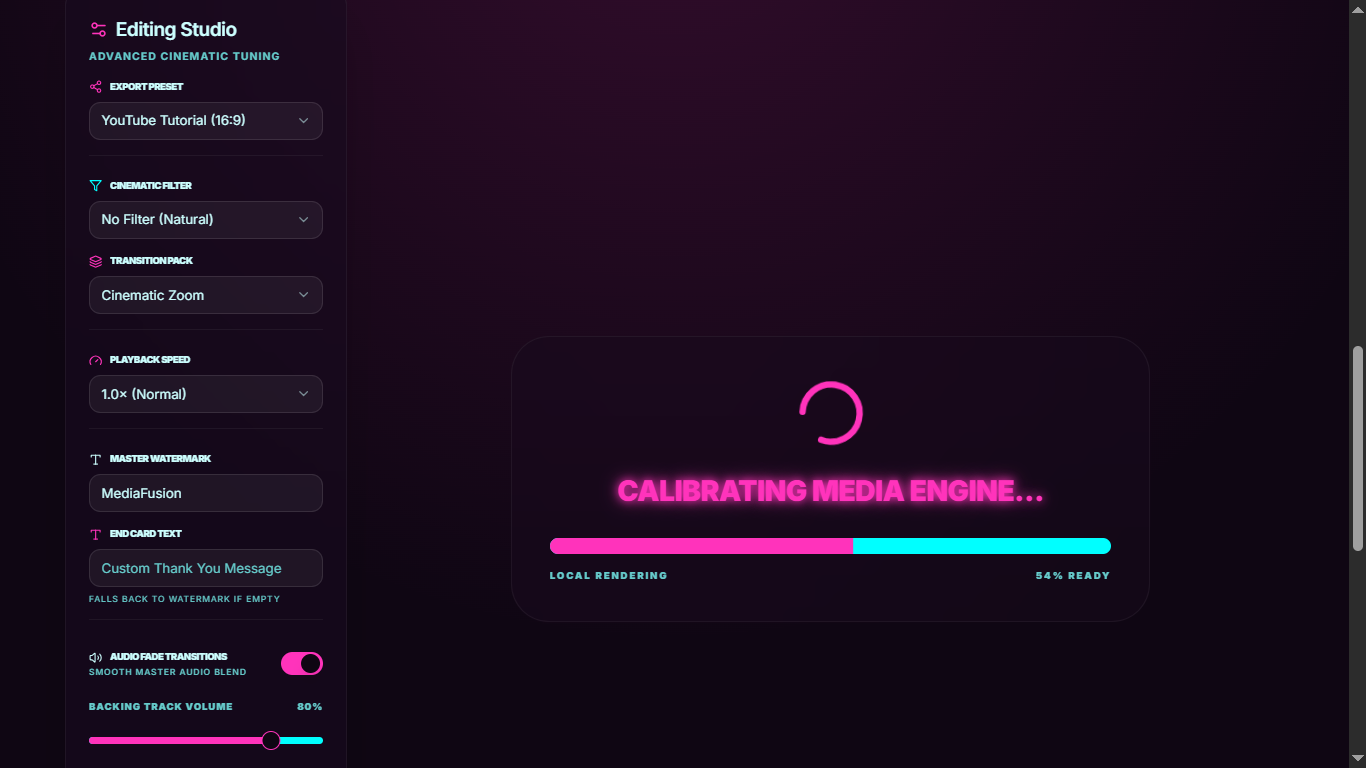
Loading...
-
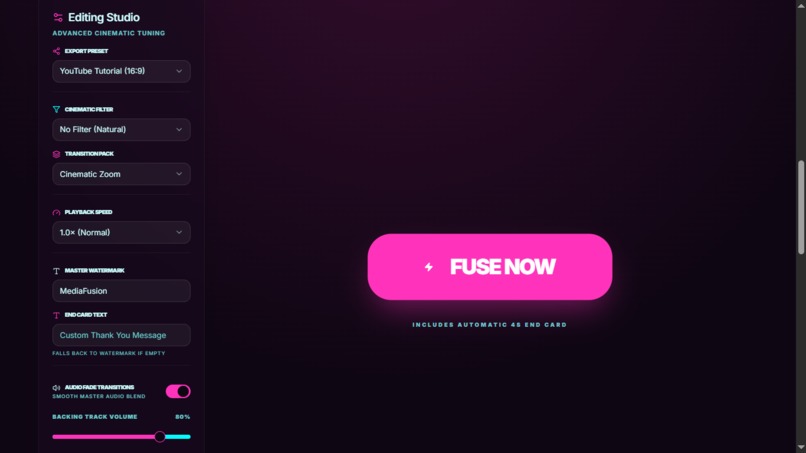
Generate button
-
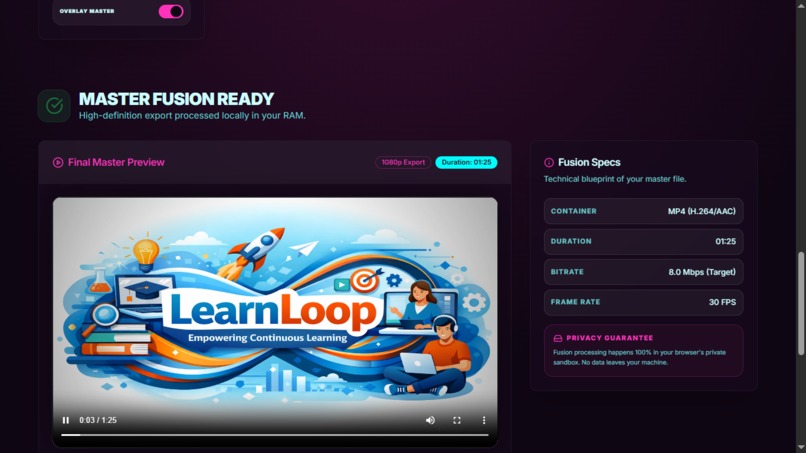
Final output
Inspiration
In an era where privacy is paramount, we noticed a lack of tools that allow for high-fidelity video editing and combining without requiring a cloud connection or expensive software. Most web-based editors upload your raw data to their servers, posing a security risk for sensitive screen recordings. We wanted to build MediaFusion to provide a 100% private, browser-based alternative.
What it does
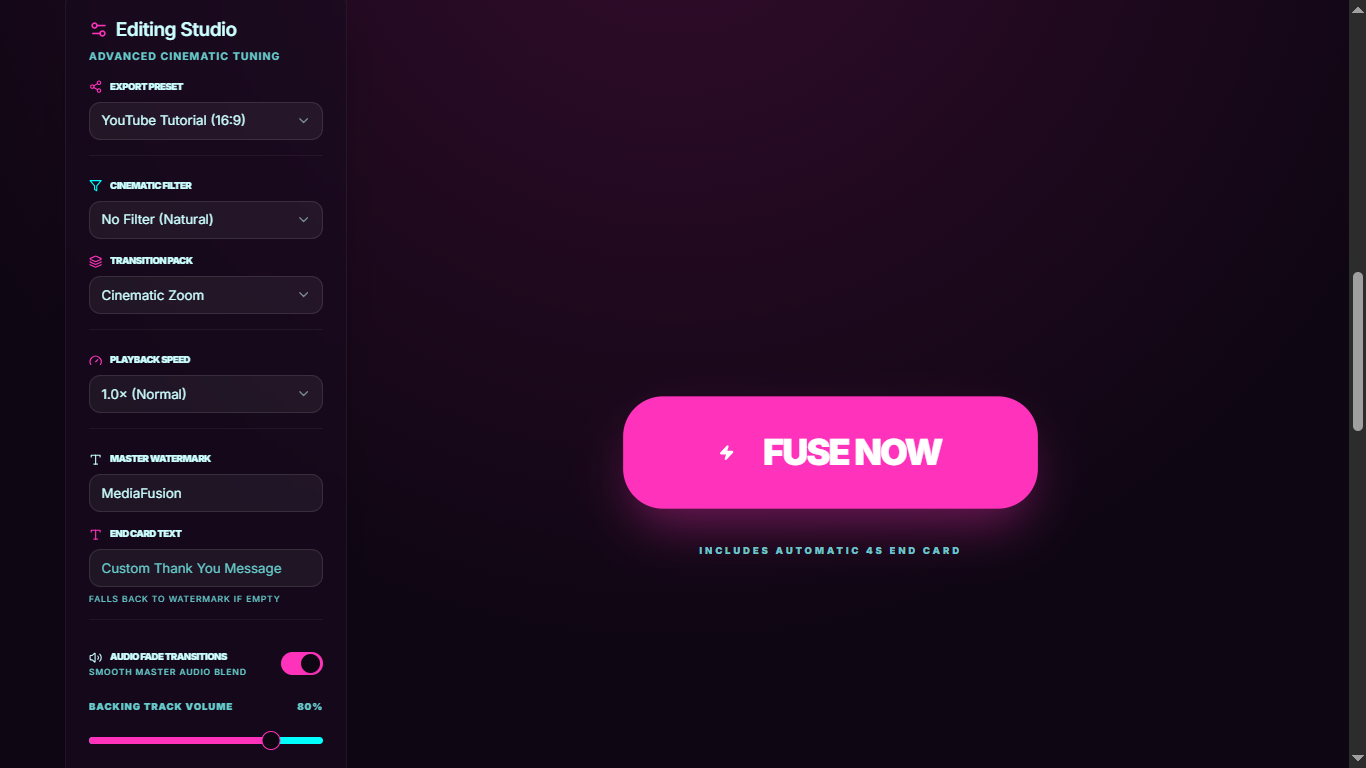
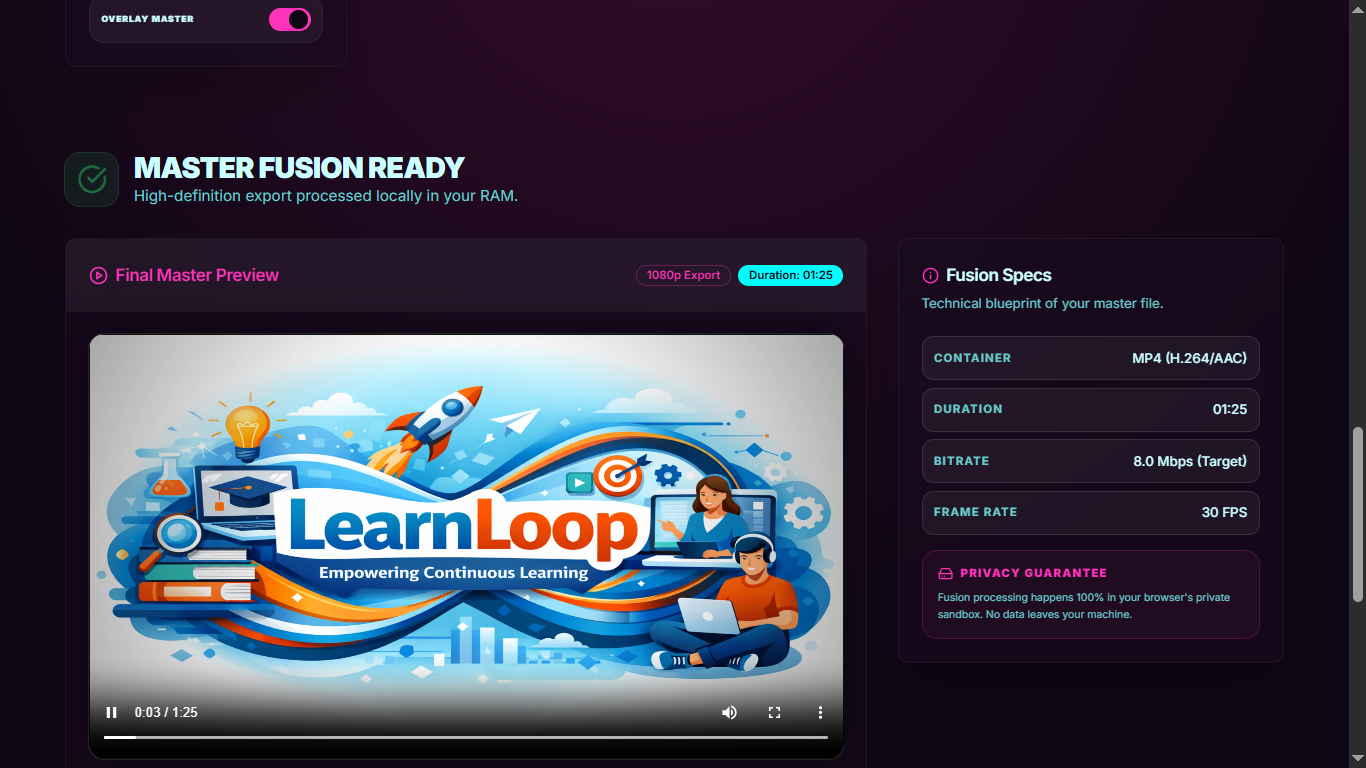
MediaFusion is a professional video assembly tool that operates entirely within the user's browser. It allows users to combine a dynamic intro (from banner images), a master screen recording, and an automated outro into a single master file. Key features include cinematic transitions, playback speed control, a "THANK YOU" card generator, and a "Local Vault" powered by IndexedDB that stores projects locally.
How we built it
The application is built using the latest Next.js 15 framework and Tailwind CSS. The rendering engine is the heart of the project, utilizing the Canvas API to draw frames in real-time and the Web Audio API to manage soundtracks. The final output is captured using the MediaRecorder API, ensuring high-fidelity results without a backend.
Challenges we ran into
One of the biggest challenges was managing memory consumption. Since the video is rendered in the browser's RAM, processing 1080p frames at high frame rates can easily exceed memory limits. We had to optimize our rendering loop to ensure frames were processed and cleared efficiently. Another challenge was synchronizing the audio tracks with the dynamic intro and outro segments.
Accomplishments that we're proud of
We are incredibly proud of achieving a completely "zero-server" architecture. No video data ever leaves the user's computer. Additionally, the implementation of the "Local Vault" allows for a seamless user experience where projects persist across browser sessions without any external database.
What we learned
This project was a deep dive into the capabilities of modern browser APIs. We learned how to push the Canvas API to its limits for video processing and how to use IndexedDB for storing large binary blobs. We also explored the nuances of the MediaRecorder API across different browser engines.
What's next for MediaFusion
The next step for MediaFusion is to introduce multi-track editing, allowing users to layer multiple videos and audio tracks. We also aim to implement WebGPU support for hardware-accelerated rendering and add a library of open-source cinematic filters and transitions.
Built With
- audio
- canvas
- css
- indexeddb
- lucide
- mediarecorder
- next.js
- react
- tailwind
- typescript
- ui
- web

Log in or sign up for Devpost to join the conversation.