-
-
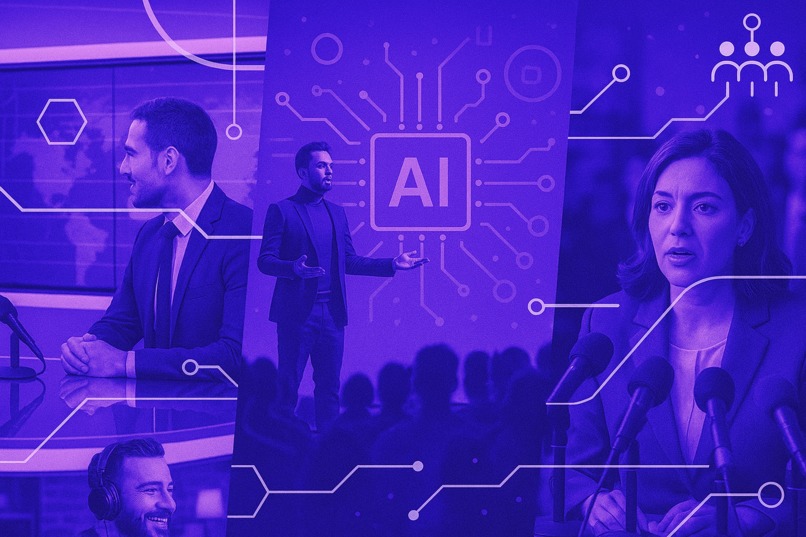
MediaTraining Hero
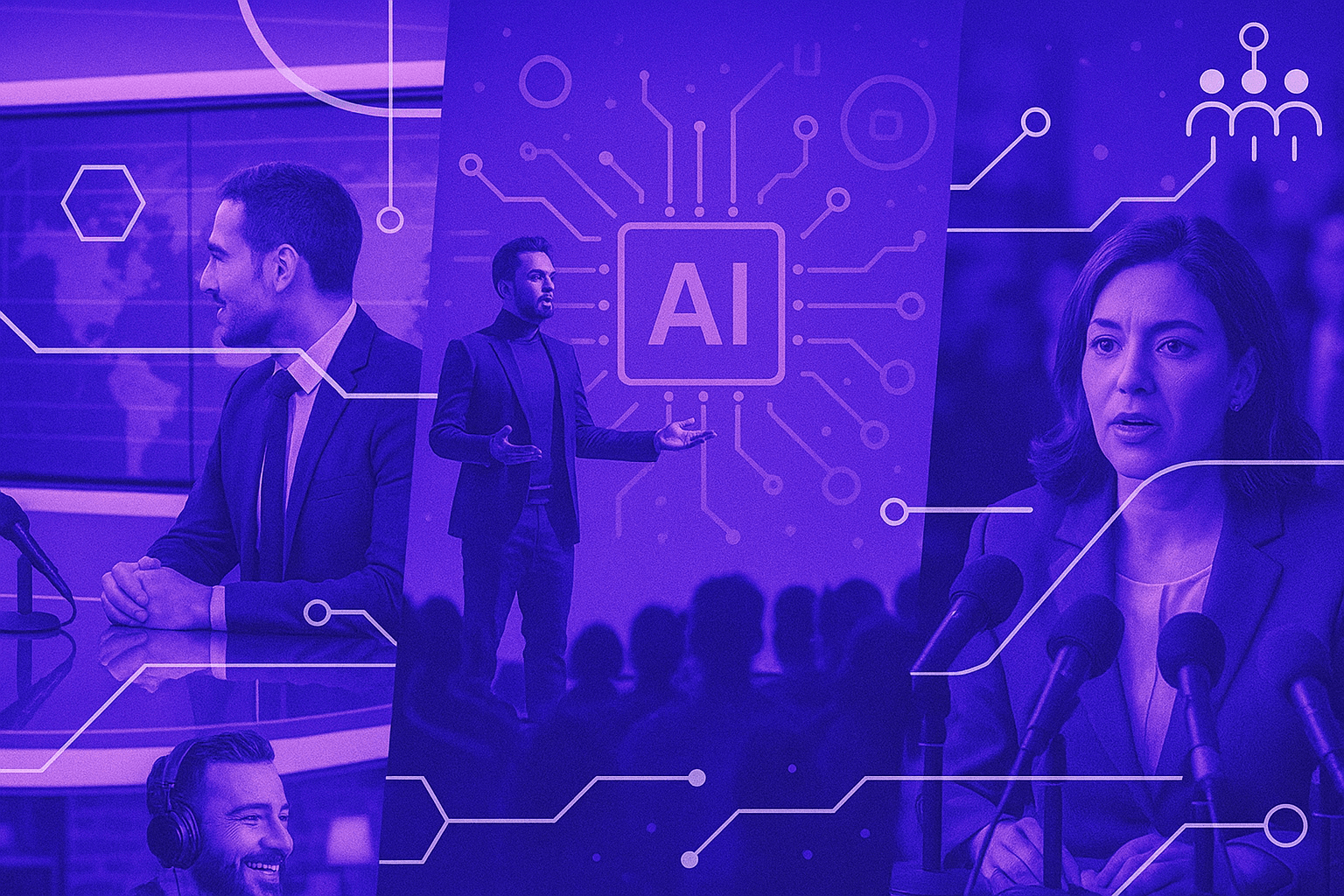
Project Story
Inspiration
Journalism has always been part of my life. I am the son of two journalists, I studied journalism, and I later worked with communication agencies.
Journalism and public relations are professions built around promoting other people, organizations, and ideas. At some point, I realized that I wanted to build something of my own.
That personal journey led me back to a familiar problem. Media training is essential for executives, but it is often expensive, difficult to scale, and limited to occasional one-on-one coaching sessions. As communication teams take on more responsibilities, this important activity can easily become inconsistent or deprioritized.
I created MediaTraining.AI to make professional media coaching more accessible, measurable, and continuous. The goal is to help communication teams prepare executives for press conferences, product launches, earnings calls, and crisis interviews—while giving them the tools to track progress and improve performance over time.
What it does
Organizations upload their own communication materials, such as press releases, messaging guides, or crisis playbooks. The platform creates realistic interview scenarios where executives practice with AI journalists that ask adaptive follow-up questions. After each session, MediaTraining.AI evaluates communication skills, message consistency, confidence, and overall performance, giving teams measurable insights into executive readiness.
How we built it
MediaTraining.AI began as an idea about a year and a half ago. From the start, we used Codex and other large language models to explore the concept and build the first versions of the product.
As a founder without a programming background, however, I struggled to turn those early prototypes into a complete and reliable platform. The project involved several connected workflows, as well as important security challenges—especially reducing the risk of confidential corporate information being exposed or mishandled.
The release of Codex powered by GPT-5.6 became a major turning point. Codex was able to understand the project as a whole, work across the existing codebase, and help integrate features that had previously remained disconnected.
With Codex, we completed the full product workflow: uploading company materials, generating context-aware interview simulations, conducting adaptive interviews, analyzing performance, and producing structured reports. It also helped us improve authentication, data handling, access controls, and other security measures throughout the platform.
Rather than helping with isolated pieces of code, Codex acted as an engineering partner that could understand the architecture, identify gaps, connect the different components, and move the project from an unfinished concept to a functional end-to-end product.
Challenges we ran into
One of our biggest challenges was keeping the AI journalist grounded in the company’s source material throughout the interview.
In earlier versions, the AI generated questions from a short briefing. This worked for simple scenarios, but it increased the risk of vague, inconsistent, or hallucinated questions that were not fully supported by the uploaded content.
We redesigned the workflow so that the user first uploads the relevant document. The platform then analyzes that material and automatically generates a structured set of interview questions. These questions serve as a guide for the AI journalist during the live simulation, helping it remain coherent, relevant, and aligned with the organization’s actual messaging.
The system also evaluates the executive’s response to each question individually. This allows MediaTraining.AI to produce more precise feedback while reducing the risk of the interview drifting away from the source material.
Accomplishments that we're proud of
One of the accomplishments we are most proud of is seeing people discover and test MediaTraining.AI organically, even before the product has been officially launched or promoted. That early interest suggests there is a real need for a more accessible and scalable approach to media training.
Media training has long been a familiar and valuable service within communication agencies. However, because of its cost and the growing number of responsibilities these agencies and internal teams have taken on, it has often become difficult to maintain as a consistent practice.
MediaTraining.AI helps bring this capability back into the hands of communication teams. They can schedule training sessions for executives, provide feedback, monitor progress, and follow each person’s development over time. Instead of relying only on occasional external coaching, teams can manage media readiness as an ongoing internal workflow.
This project is also deeply personal to me. I am the son of two journalists and I also studied journalism. Building a tool that combines technology, communication, and professional development has been especially meaningful, and I am proud to offer something to a market that has been part of my life from the beginning.
What we learned
Building MediaTraining.AI taught us that modern AI models can dramatically accelerate the development of complete software products. With Codex as an engineering partner, we were able to transform an idea into a functional platform in a fraction of the time that would have been possible otherwise.
We also learned that the greatest value of AI is not replacing people—it is enabling them to work more effectively. Media training is a perfect example. While GPT-5.6 can conduct realistic interviews, generate feedback, and evaluate communication performance, experienced communication professionals remain essential to review the reports, coach executives, and guide their long-term development.
MediaTraining.AI succeeds because it combines three elements: human expertise, structured organizational workflows, and AI. Technology accelerates the process, communication teams provide judgment and context, and executives improve through continuous practice. It is this collaboration between people and AI—not either one alone—that creates better outcomes.
What's next for MediaTraining.AI
Our next goal is to make MediaTraining.AI the standard platform for enterprise media readiness.
The first priority is to continue strengthening security and privacy across the platform, especially when handling confidential corporate documents, interview recordings, and performance reports. We also plan to ensure that every subprocessor used by the product meets the compliance requirements expected by enterprise customers.
On the product side, we want to expand features such as self-modeling, allowing users to hear a version of their own response and compare it with a stronger, more effective way to communicate in a specific interview scenario.
We also plan to improve video and audio analysis so the platform can better identify emotional signals, delivery patterns, confidence, composure, and other aspects of human communication.
Additional improvements include multilingual interviews, role-specific journalist personas, enterprise integrations, team dashboards, certification workflows, and more personalized coaching plans.
Finally, we will bring MediaTraining.AI to communication agencies and in-house communication teams, helping them make media training a continuous, measurable, and scalable part of executive development.
Built With
- cloudflare
- github
- gpt-5.6
- plpgsql
- stripe
- supabase
- typescript
- vercel

Log in or sign up for Devpost to join the conversation.