Inspiration
In many parts of the world — including India — there is a real risk of counterfeit or substandard medications. Wikipedia +2 securingindustry.com +2
I wanted to help users check and verify their medicines before taking them — to reduce medication errors, increase safety, and improve trust.
I saw apps like Pharmplug Verify (and other medicine-authentication solutions) that use QR/barcode scanning or packaging checks to help detect counterfeit/unsafe drugs. pharmplugverify.com +1
The core belief: “Every pill should be verified before use.”
What it does
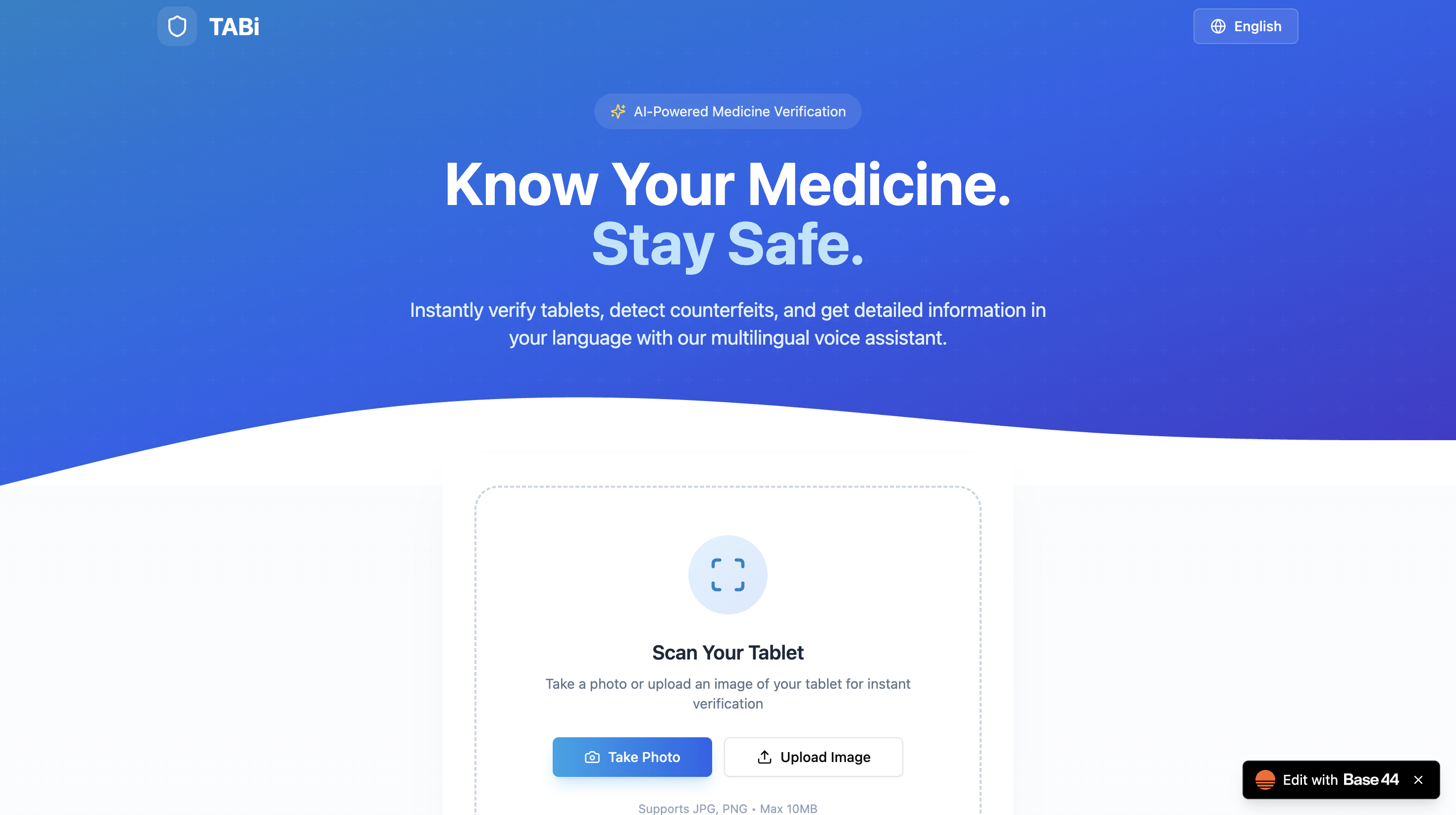
Medi Verify lets a user upload (or scan) a medicine — the packaging or pill information — and verifies whether it appears legitimate or not.
It cross-checks medicines against a reference/verification logic to flag suspicious or potentially counterfeited drugs (or alert if dosage/packaging mismatches).
Provides a simple interface for users to run the check and get immediate feedback — helping them make safer decisions before consuming medicine.
(Optional / depending on your build) Could include a history of verifications, logging of verified medicines, and user notifications if a medicine fails verification.
How we built it
Built a front-end (web or mobile — depending on your setup) that allows users to upload images / enter medicine data.
On the back-end, implemented logic to compare medicine data (packaging, identifiers, metadata) with a database of known/genuine medicines (or configurable reference data).
Used standard secure data handling practices to ensure user data (medicine info, images) is handled safely, respecting privacy and data protection norms.
Designed a clean UI for easy use — simple upload, a verify button, clear pass/fail results.
Tested with sample medicines and edge-cases (bad photos, ambiguous packaging, similar-looking drugs) to improve reliability and UX.
Challenges we ran into
Database / Reference Data Availability: Getting a reliable, comprehensive set of “genuine medicine data” for comparison — packaging variations, generic vs brand names, different manufacturers — is hard. Without that, verification logic could be incomplete or imperfect.
False Positives / Negatives: Due to variations in packaging (lighting, photo clarity, regional packaging differences), the app might wrongly flag genuine medicines or miss suspicious ones. Ensuring robust image/data recognition is tricky.
User Data Privacy & Trust: Handling sensitive data (medicine names, user uploads) responsibly, ensuring no leaks, and building user trust that their data is safe.
User Adoption & Education: Many users may not be used to verifying medicines. Educating them about why it’s important, and getting them to consistently use the app, can be challenging.
Regulatory / Scope Limitations: Medicine verification isn’t foolproof — just because the packaging looks OK doesn’t guarantee authenticity. Being clear about the app’s limitations is important.
Accomplishments that we’re proud of
Built a working prototype / live version of Medi Verify (thanks to the link you shared).
Created an intuitive, user-friendly interface that lowers the barrier for people to check their medicines.
Demonstrated feasibility of a medicine-verification workflow using ordinary phone/web — without specialized hardware.
Raised awareness (at least for initial users) about medicine safety and the risks of counterfeit/substandard drugs.
Laid a solid foundation for further improvements: database expansion, more rigorous verification algorithms, and better UX.
What we learned
Medicine verification is not just a technical problem — it’s deeply tied to data quality (packaging variations, regional differences), user behavior, and trust.
Small UX or data-entry issues (blurry images, mislabeled medicines) can hugely affect reliability of the verification — so robust error-handling and user guidance is critical.
Transparency is important: you need to clearly communicate what verification can and cannot guarantee, so users don’t develop a false sense of security.
For real-world impact, collaboration with pharmacists, regulatory bodies, or a shared verified medications database can significantly improve accuracy and reach.
Balance between ease-of-use (simplicity) and rigorous verification — too many steps or complexity can discourage users; too little rigor may give false assurance.
What’s next for Medi Verify
Expand and curate a more comprehensive database of medicines (brands, generic drugs, packaging variants) to improve coverage and accuracy.
Add support for barcode / QR code scanning (if not already) — to speed up verification and reduce manual input. Many medicine-authentication apps use scanning to map medicines to database entries. pharmplugverify.com +1
Improve image-analysis logic (or integrate ML/AI) to better detect subtle packaging inconsistencies, irregularities — moving beyond just metadata comparison.
Introduce a history / log feature so users can track medicines they’ve verified, easily reference past checks, and flag suspicious ones.
Add user-education / awareness modules: maybe info about common counterfeit-drug risks, what to check in packaging, dosage warnings, etc.
Explore partnerships: with local pharmacies, regulatory bodies, or hospitals to validate medicines — which could increase reliability and trust.
(Optional) Add features like medicine-reminders, expiry alerts, or medicine-intake tracking — making the app more useful as a daily health companion rather than a one-time check.

Log in or sign up for Devpost to join the conversation.