-
-
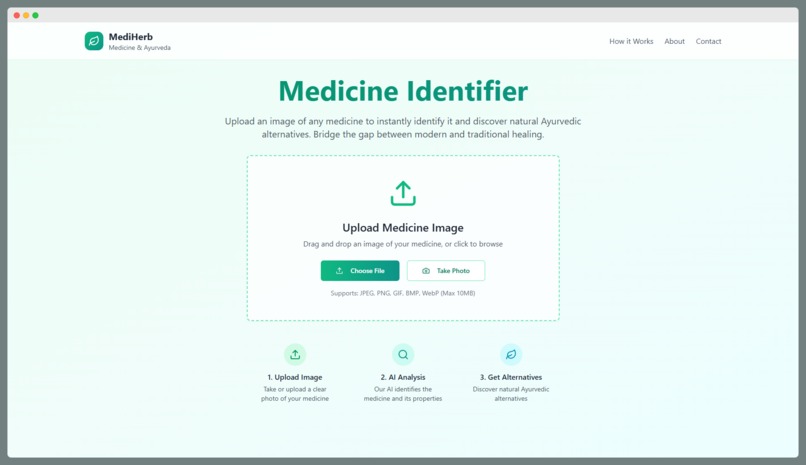
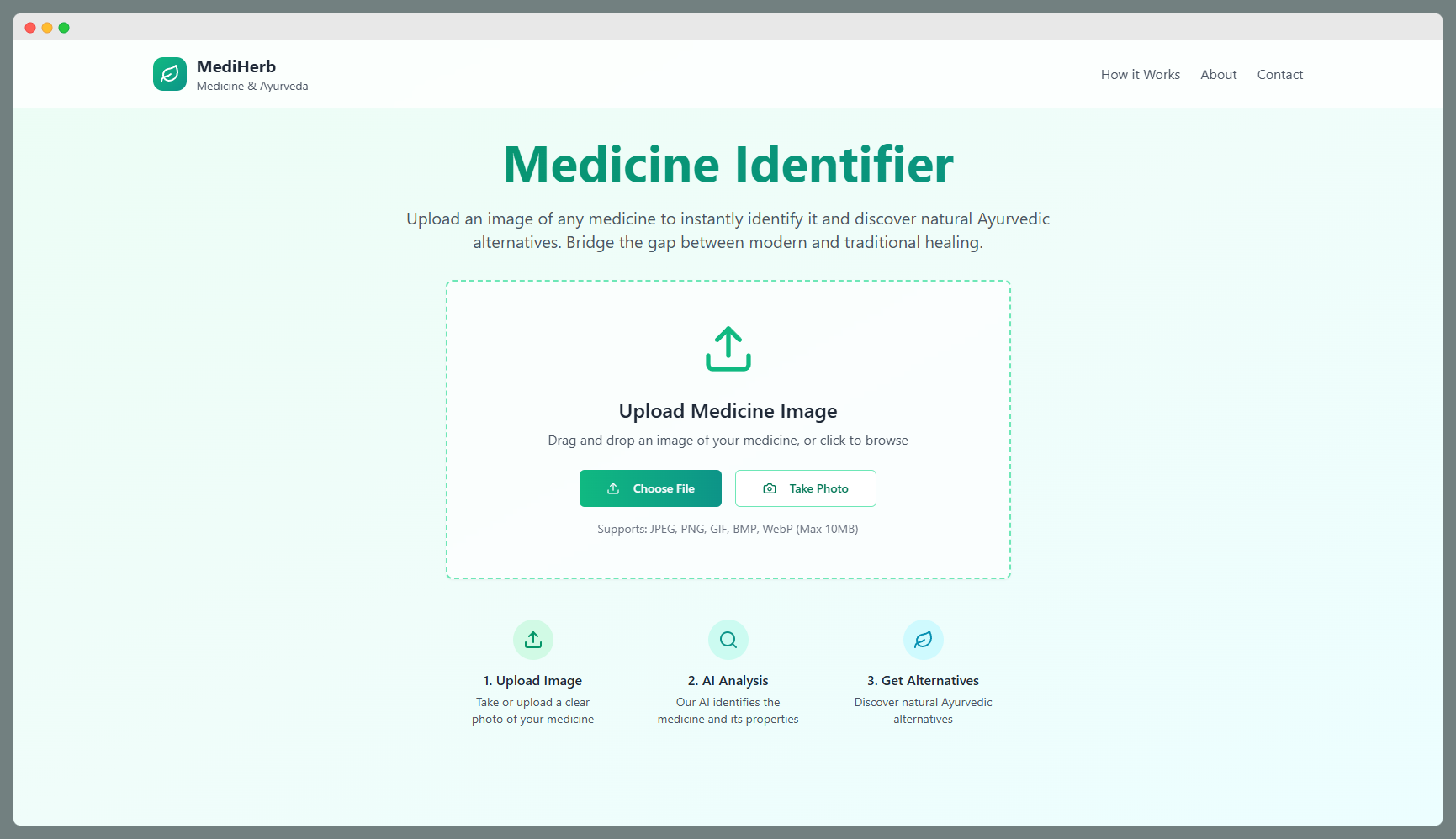
Landing Page
-
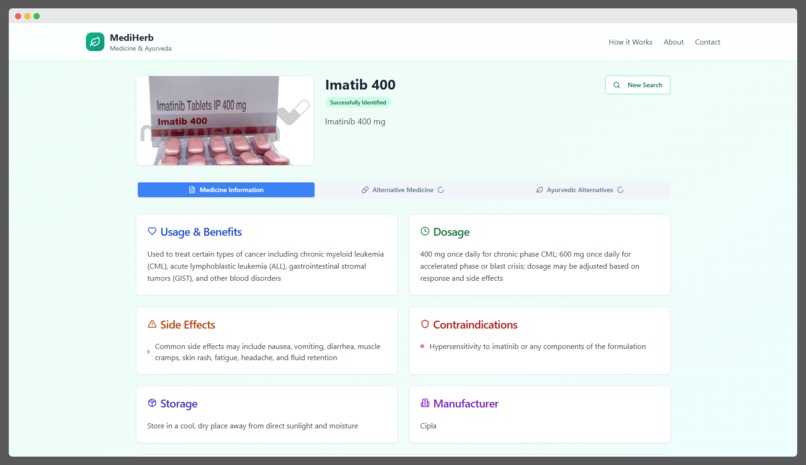
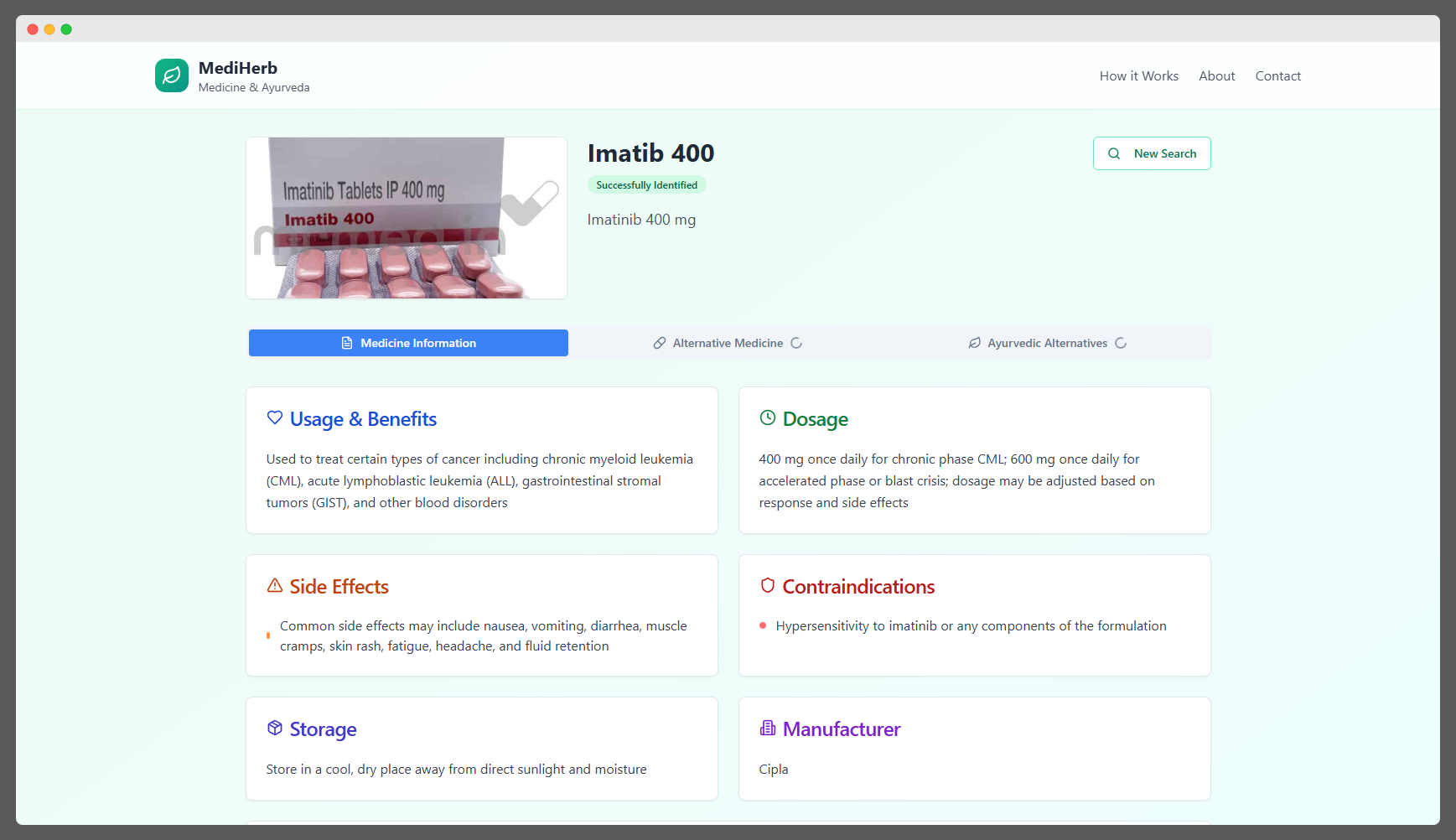
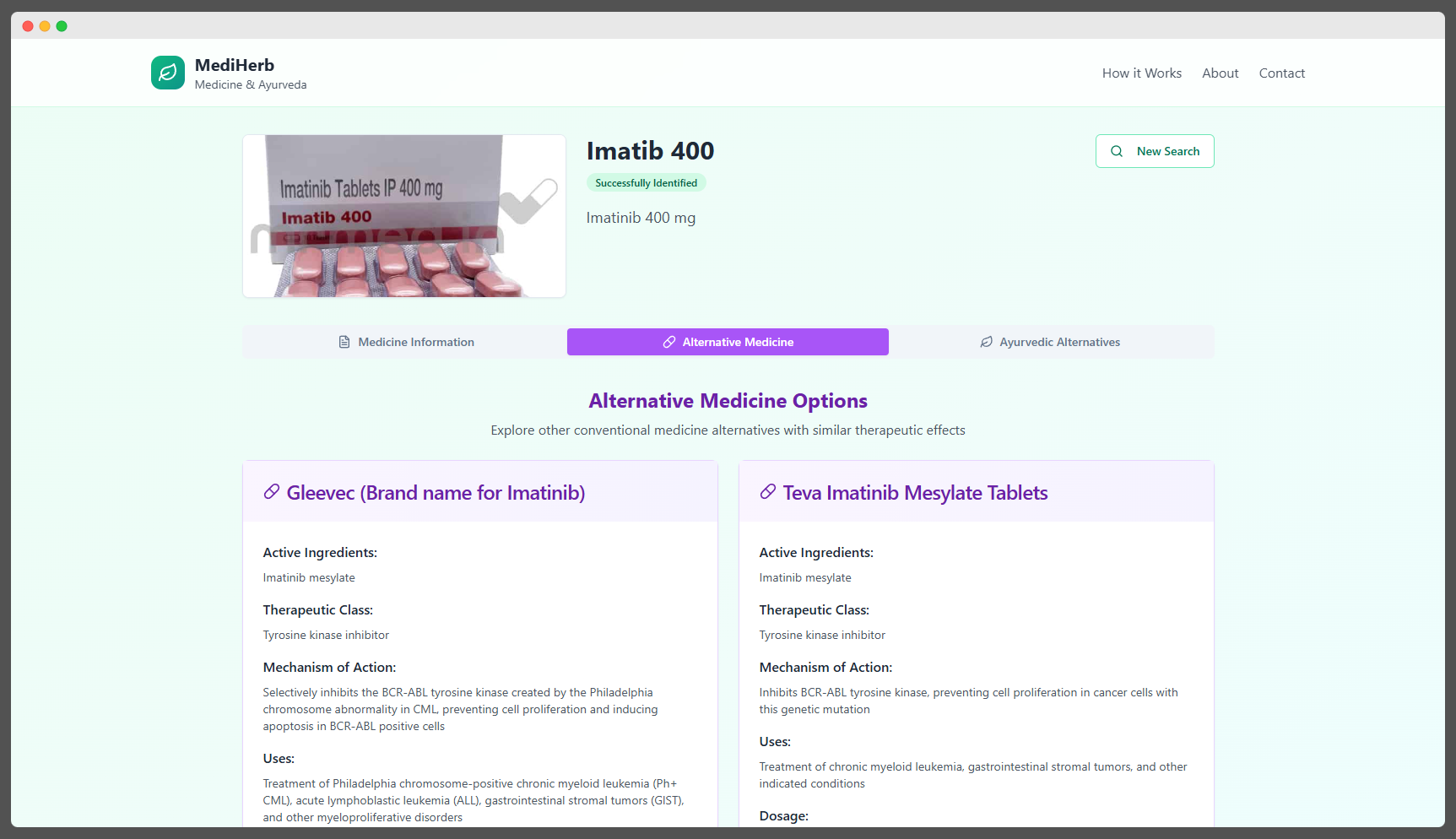
Medicine Information
-
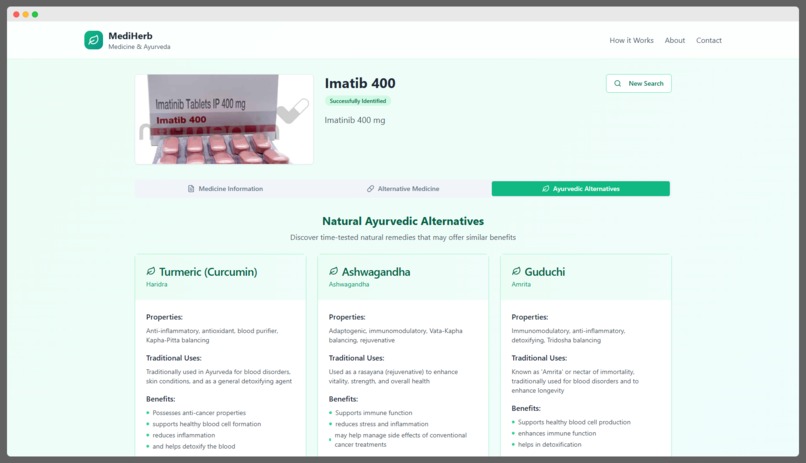
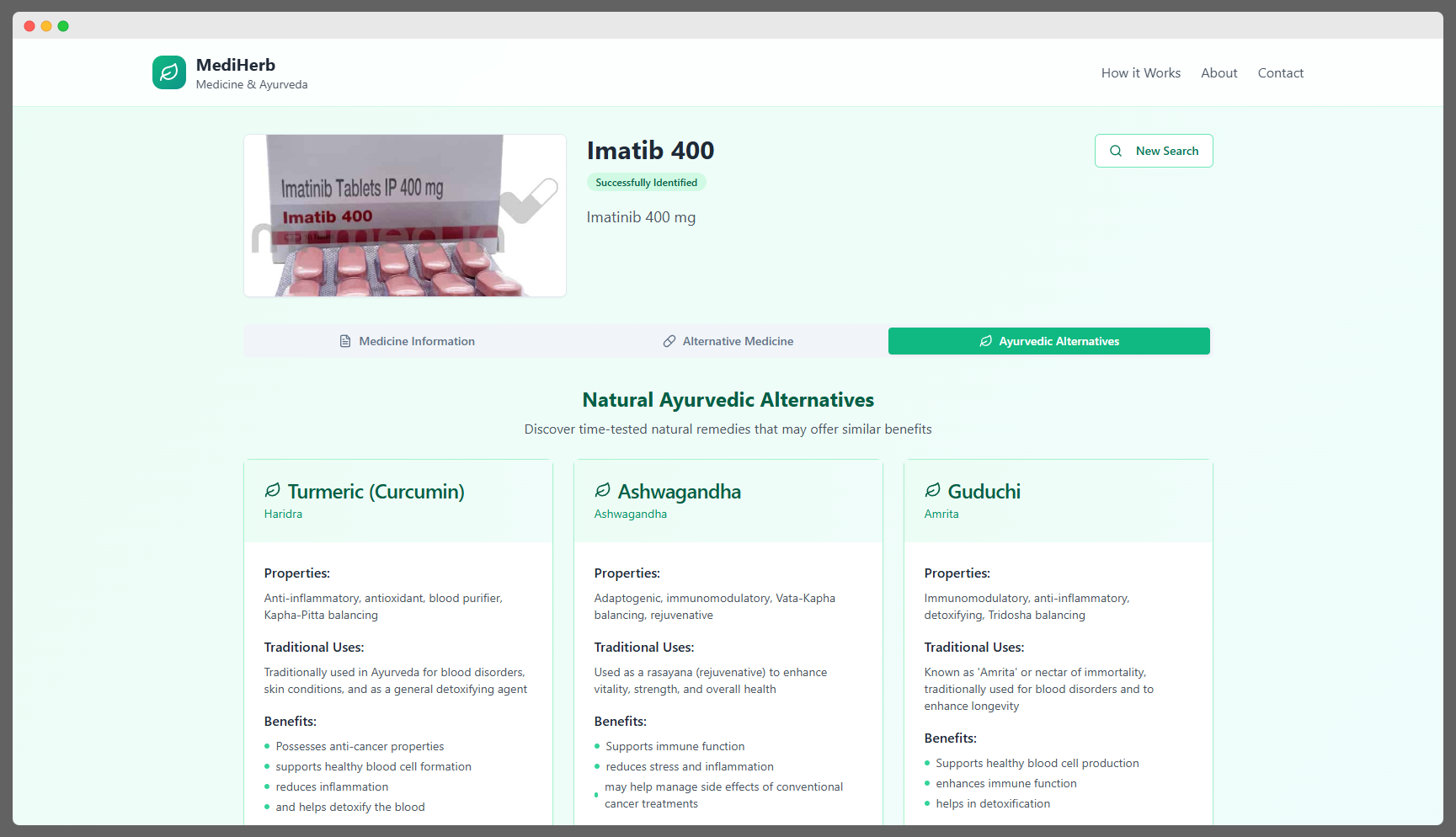
Alternative Ayurvadic Info
-
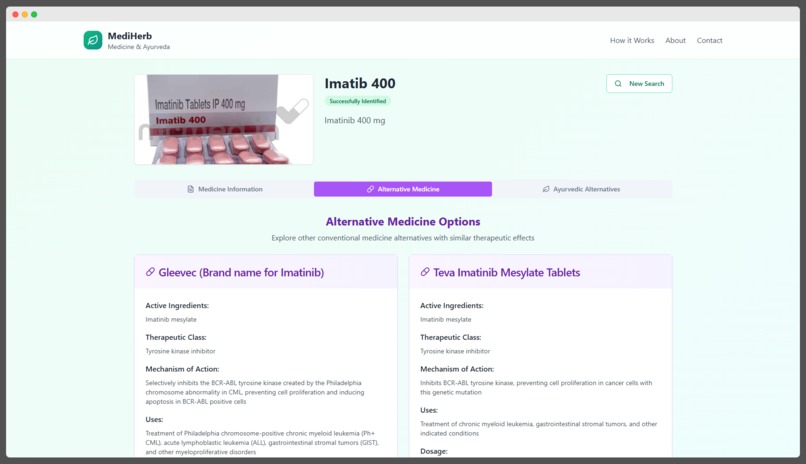
Alternative Allopathic Medicines Info
-
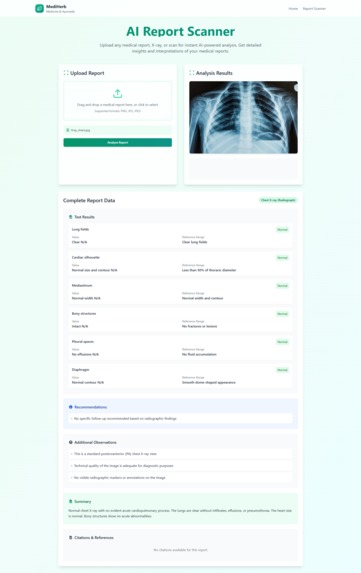
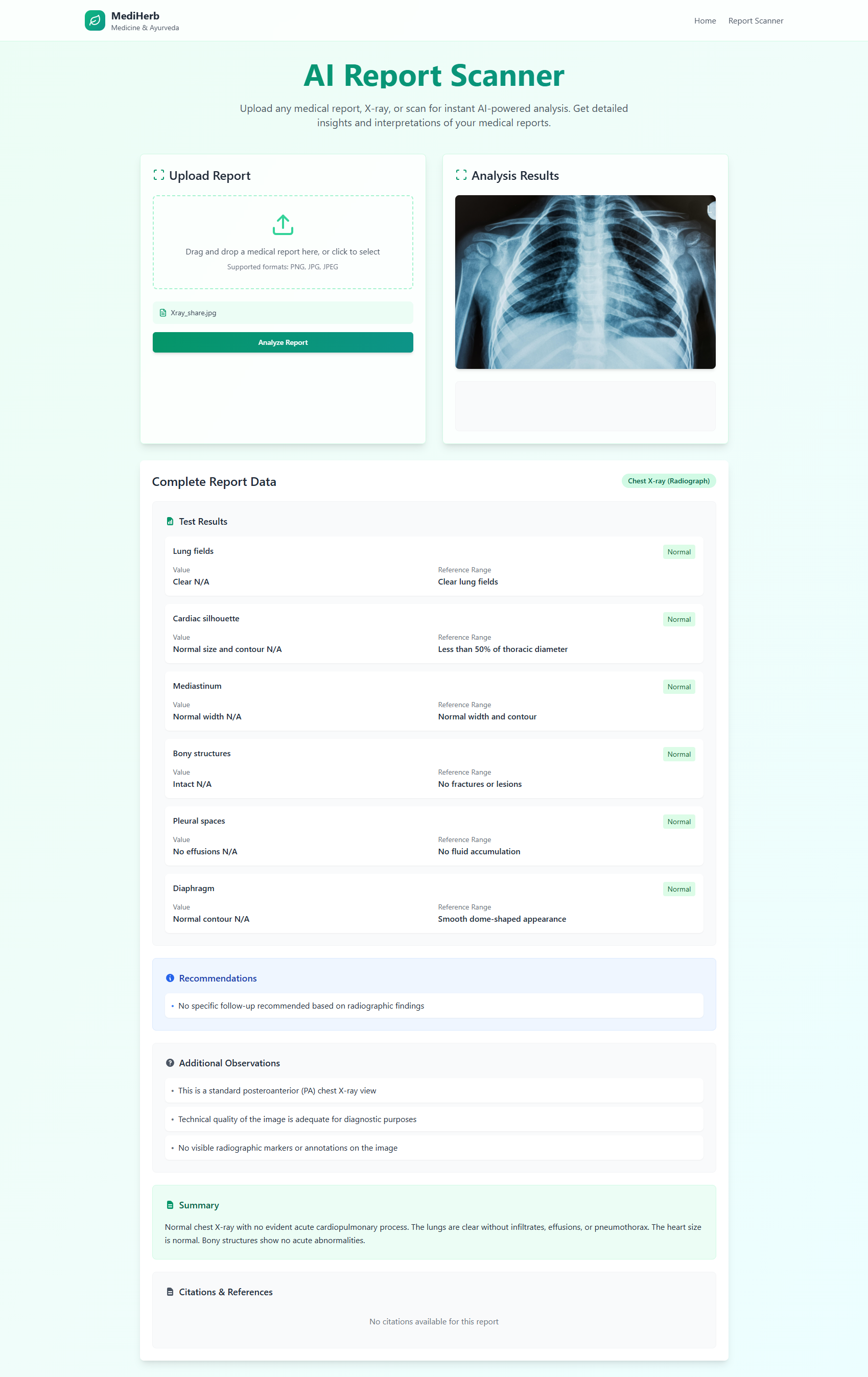
Report Analysis
🌱 Inspiration
Modern users are stuck between two worlds: allopathy, with its clinical precision, and Ayurveda, with its holistic wellness. We realized there's no reliable tool that connects the two. People want to understand what medicine they’re taking and whether there's a safer, natural alternative—without navigating medical jargon or unreliable websites.
That’s why we created Medi-Herb — a bridge between modern medicine and ancient healing, powered by AI and real-time research and report analysis.
💡 What it does
- 📷 Users upload an image of a medicine (strip, label, or packaging).
- 🤖 OCR detects and extracts the medicine name.
- 🔍 The app fetches trusted information: drug composition, usage, side effects, overdose instructions.
- 🌿 Suggests Ayurvedic alternatives using Sonar Deep Research and cites authentic sources.
- 🧠 Users can ask follow-up questions about alternatives using Sonar Reasoning Pro.
- 📄 Report Analysis
🛠️ How we built it
- Frontend: Built using Next.js with Tailwind CSS for a clean and responsive UI.
- OCR Layer: Integrated perplexity Sonar API from uploaded medicine images.
- Backend: Node.js with Express handles OCR processing and interfaces with the Sonar API.
- AI & Search:
- Used Sonar Deep Research to find relevant Ayurvedic alternatives and surface real-time information.
- Used Sonar Reasoning for user-driven follow-up Q&A.
- Data Sources: WebMD, openFDA, PubMed, NCBI, and AYUSH (via Sonar search).
🧗 Challenges we ran into
- ✍️ Inconsistent OCR accuracy from low-quality medicine photos.
- 🌐 Mapping Ayurvedic herbs to clinical medicines required nuanced AI reasoning.
- 🕒 Balancing response latency vs. research depth from Sonar Deep Research.
- ⚖️ Ensuring we provide clear medical disclaimers and responsible AI output.
🏆 Accomplishments that we're proud of
- Seamlessly combined real-time medical research with Ayurvedic wisdom.
- Built a clean and working MVP.
- Provided a one-of-a-kind solution that offers trustworthy alternatives for modern medicine users.
- Leveraged Sonar APIs creatively, especially for context-aware Ayurvedic research.
📚 What we learned
- How to use Sonar Deep Research for building intelligent, explainable research agents.
- The complexity of natural medicine domains and the importance of trusted citations.
- How to design AI-backed health tools with responsible UX patterns.
🚀 What's next for Medi-Herb
- Add voice search and image capture directly from mobile cameras.
- Personalize Ayurvedic suggestions based on user preferences or preconditions (like diabetes).
- Add support for more natural systems (Homeopathy, TCM).
- Partner with licensed practitioners for teleconsultation.
- Expand to a multilingual interface to support Hindi, Tamil, Spanish, etc.
Built With
- express.js
- node.js
- perplexity
- react
- sonar
- tailwindcss


Log in or sign up for Devpost to join the conversation.