-
-
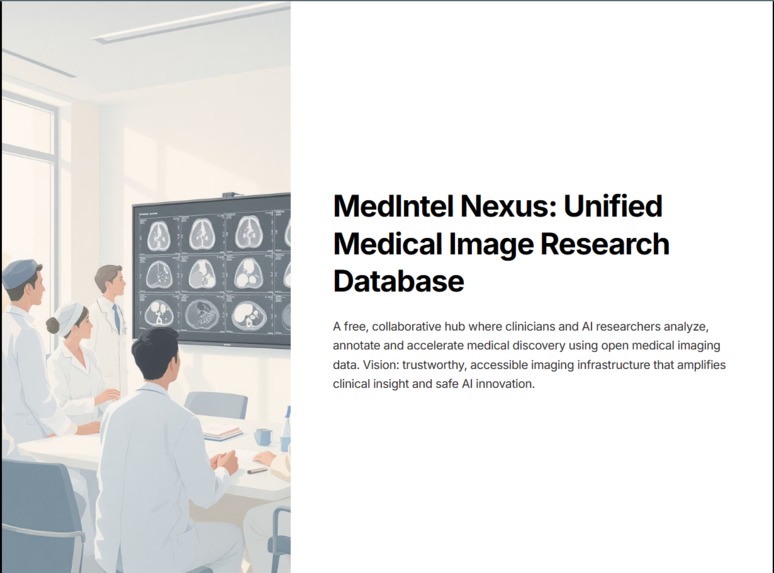
MedIntel-Nexus-Unified Intro
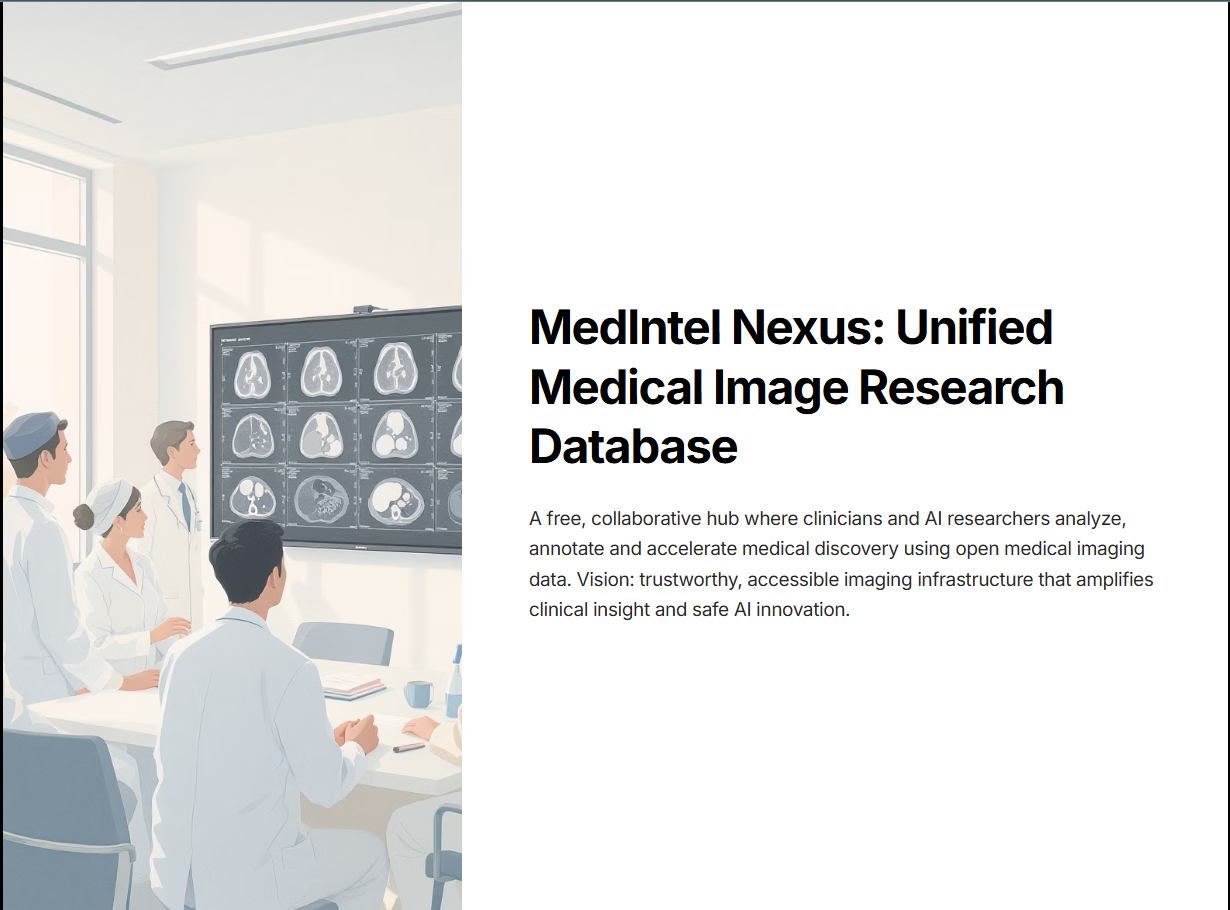
MedIntel-Nexus-Unified
Tagline: Connecting doctors and data — one image at a time.
Inspiration
Medical images are everywhere — in hospitals, research centers, and universities — but access to structured, shareable, and anonymized data is limited. Doctors often work in silos, and AI researchers struggle to find clean, labeled datasets.
We wanted to build a bridge — a free, open medical image hub that connects clinical expertise with AI-powered insights for better healthcare innovation.
What it does
MedIntel-Nexus-Unified allows doctors and researchers to:
- Upload, view, and annotate X-rays, CT scans, MRIs, and ultrasounds
- Automatically anonymize patient data
- Tag diseases using AI-based suggestions
- Browse datasets with search filters for body part, imaging type, and disease
- Collaborate through case discussion and shared annotations
- Export anonymized datasets for AI research or study
How we built it
- Frontend: HTML, CSS, JS / React for interactive interfaces
- AI Layer: TensorFlow.js and OpenCV.js for image processing and disease tagging
- Database / Storage: Firebase free-tier for metadata, local storage for images
- Visualization: Chart.js for dashboards and dataset analytics
- Fully client-side processing ensures patient data never leaves the browser unless shared intentionally
Challenges we ran into
- Ensuring complete anonymization of patient data before any sharing
- Standardizing image formats (DICOM, PNG, JPG) for unified processing
- Designing a UI that is simple for doctors but supports advanced research tools
- Limited free-tier storage for large datasets
Accomplishments that we're proud of
- Built a fully browser-based, privacy-first prototype for medical image research
- Implemented AI-assisted categorization and disease suggestion
- Created a collaboration and annotation workflow for multiple users
- Designed visual analytics dashboards for dataset insights
What we learned
- Privacy is as important as functionality — anonymization is critical
- Doctors value speed and simplicity in medical tools
- Open-source AI tools can handle real-world image preprocessing without heavy servers
- Collaboration features significantly enhance research productivity
What's next for MedIntel-Nexus-Unified
- Expand AI-assisted diagnostics with TensorFlow.js models for rare diseases
- Add federated learning capabilities so hospitals can collaborate without sharing raw data
- Allow dataset versioning and contribution tracking for global research networks
- Build a community portal for doctors, students, and researchers to share case studies and findings

Log in or sign up for Devpost to join the conversation.