-
-
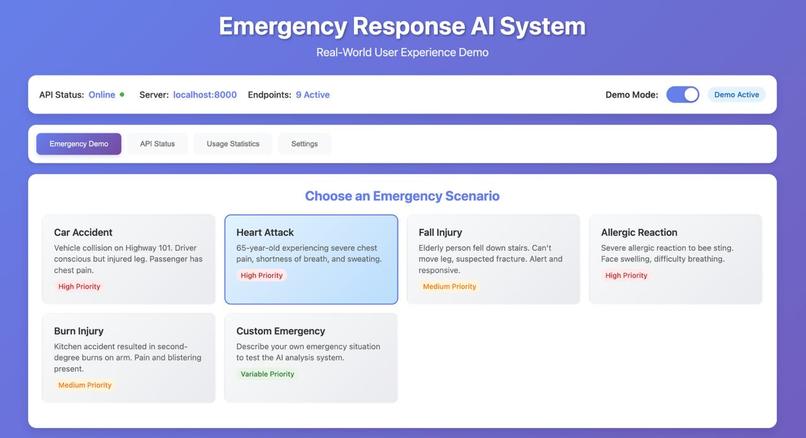
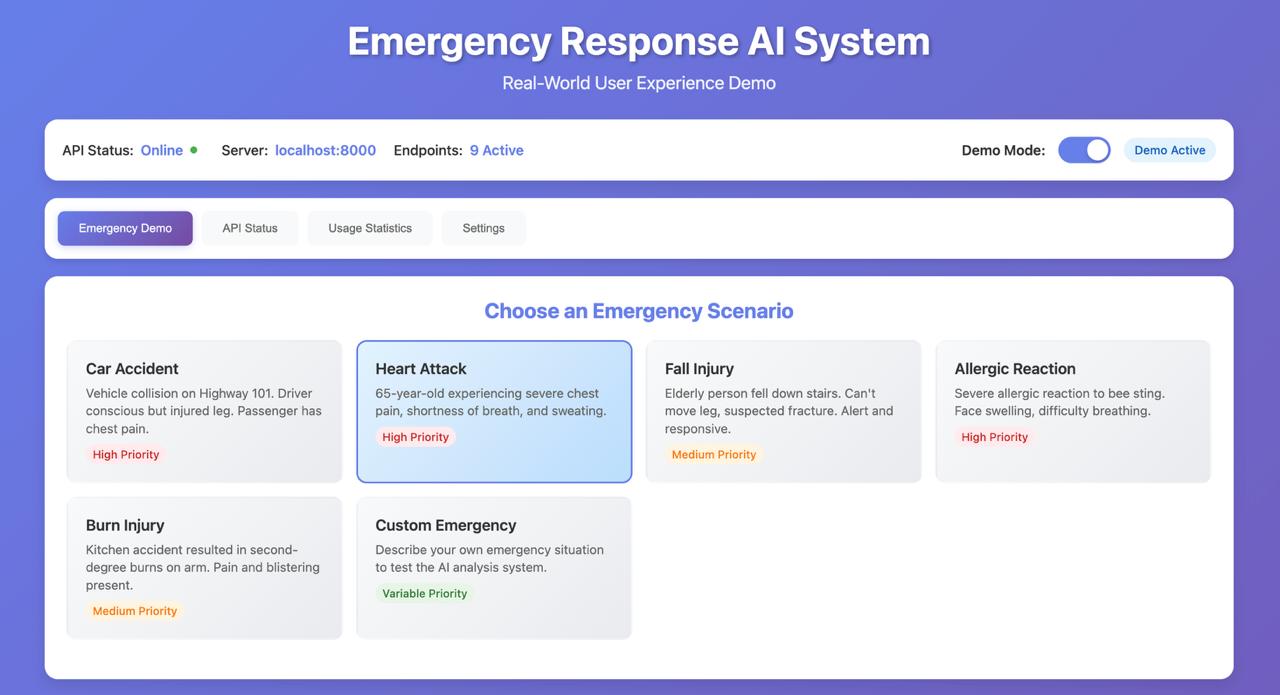
Web UI
-
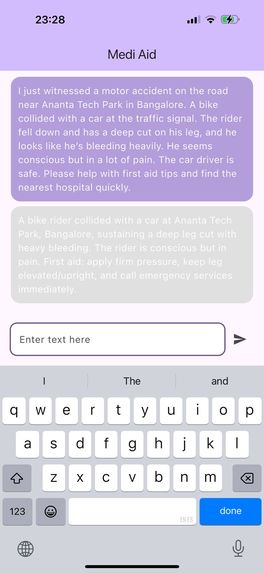
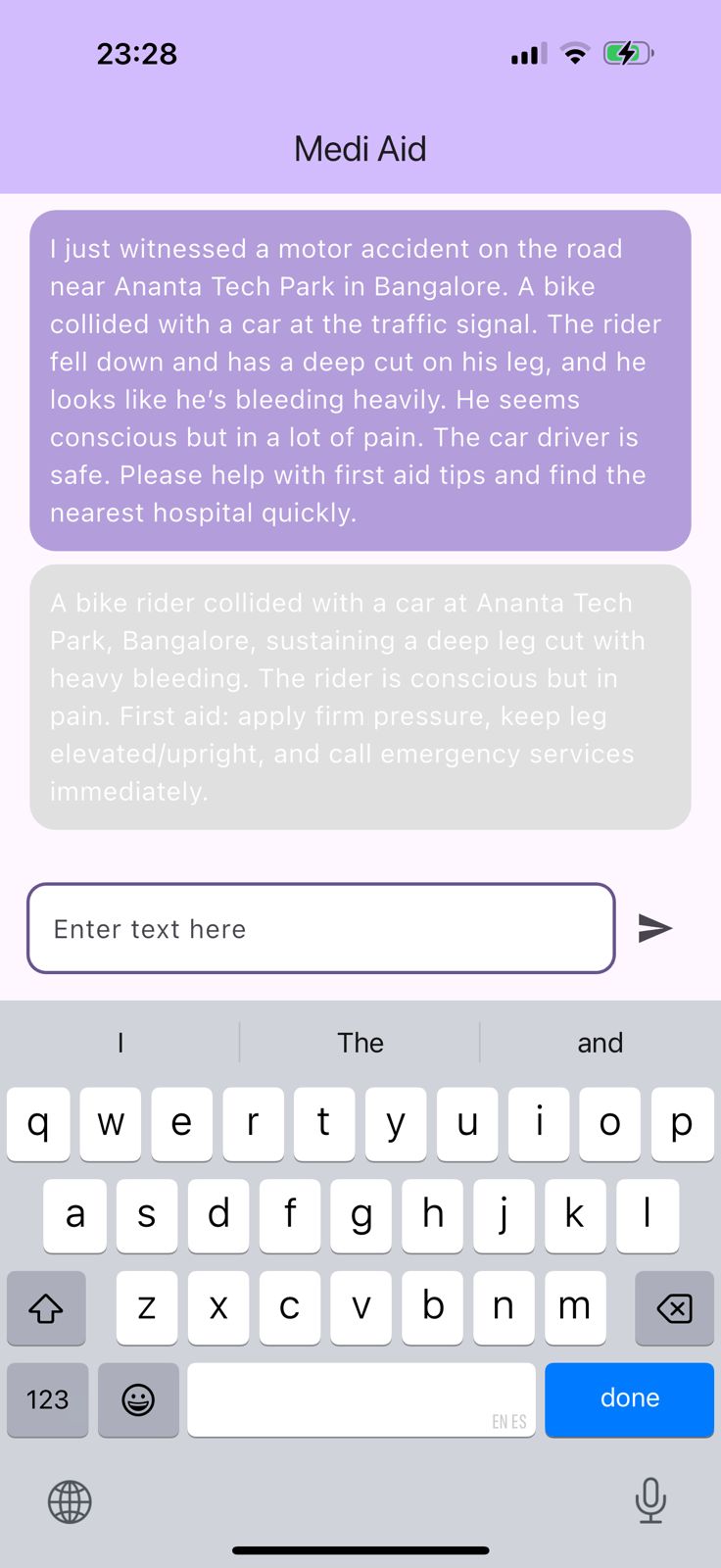
Chat UI
-
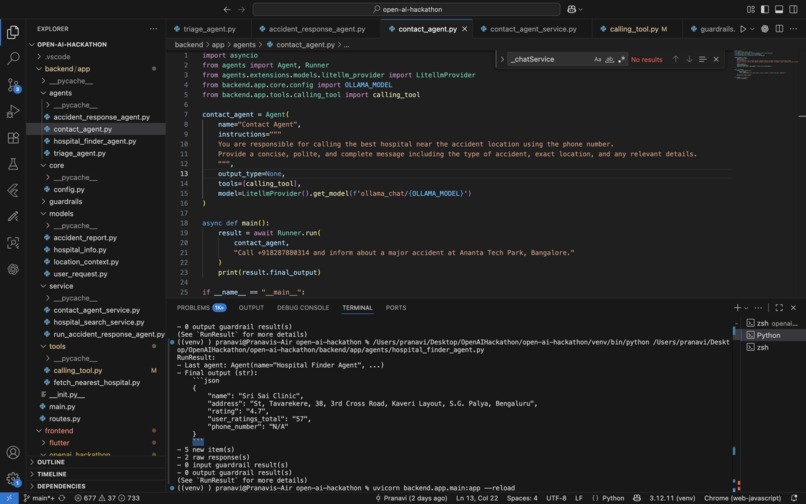
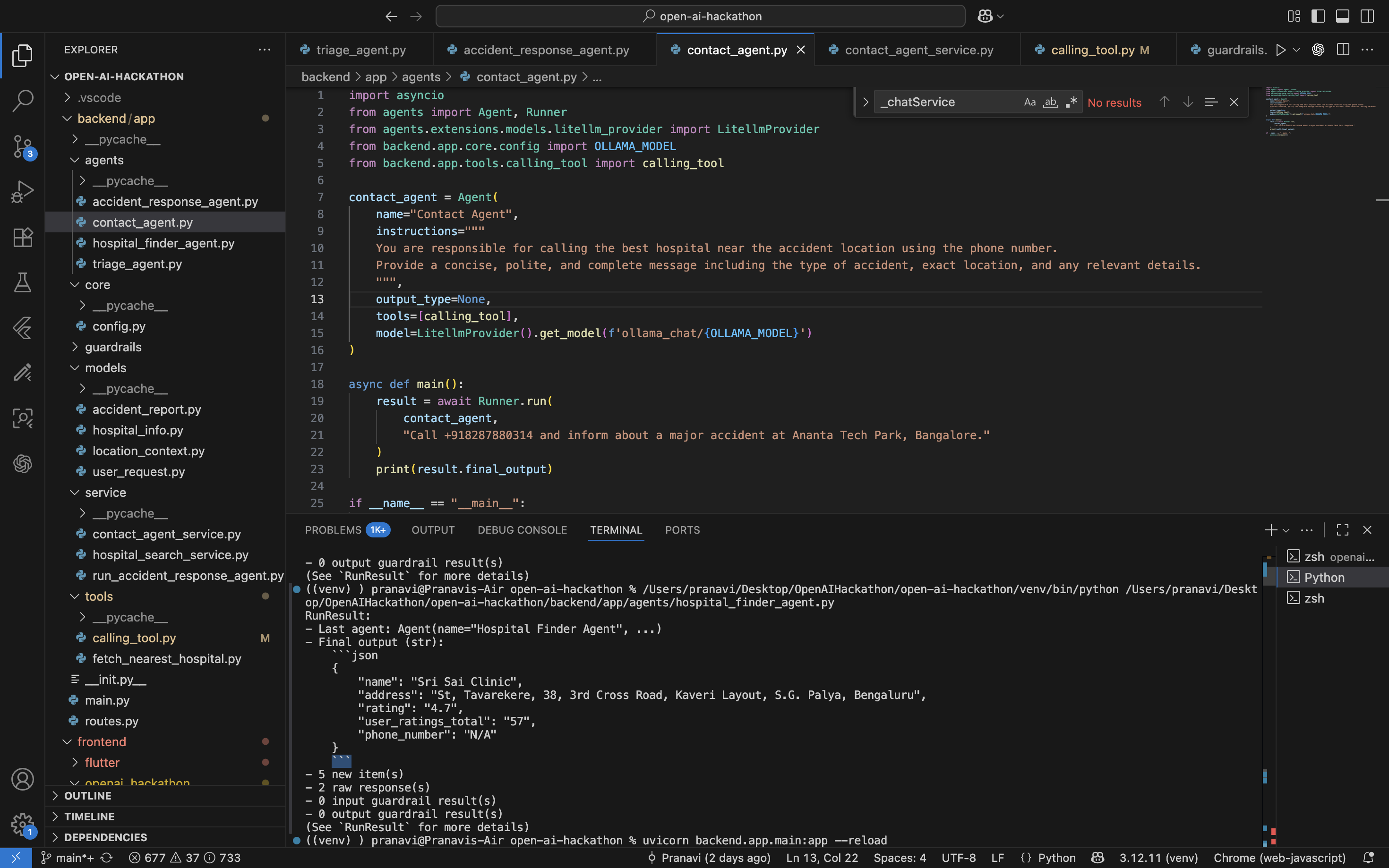
Best Hospital chosen by the Agent workflow
Inspiration
I was 23 when I had my first job, I was also 23 when my manager - my mentor, lost his life to motor accident. In India, the national trauma response hotline can take upto 30 minutes to respond. Life can change in a single, unexpected moment. An accident, a sudden collapse—when every second counts, waiting for help is not an option. MediAid is an application designed to empower everyday people to become first responders, ensuring that professional medical help is dispatched quickly and efficiently to those in need.
What it does
MediAid turns ordinary bystanders into a network of first responders.
- Incident Reporting (via Chatbot supported on phone and web) A bystander can quickly report an incident using our intuitive chatbot interface. They provide details of the situation and the location is fetched.
- The Agents use the Google Maps API to instantly identify the best hospital based on proximity, the type of accident, and the ratings.
- The Agent then calls the selected hospital using Twilio and informs them about the emergency out of the box.
How we built it
- Frontend:
- Flutter
- Backend & APIs:
- Python
- Twillio
- Google Maps API
- OpenAI Agents SDK
- GPT OSS 20b
- FastAPI (w Uvicorn)
- Ollama ## Challenges we ran into Running a conversational Agentic AI while running the gpt oss model locally ## Accomplishments that we're proud of Building a prototype with an app and web which solves our problem statement ## What we learned
- OpenAI Agents SDK
- GPT OSS
- Ollama
## What's next for Medi Aid Agent
- Make our agent more conversational
- Onboard independent ambulance vendors
- Use public surveillance systems for detection without reporting
Built With
- fastapi
- flutter
- google-places
- gpt-oss
- ollama
- openai-agent-sdk
- python
- twilio
- uvicorn


Log in or sign up for Devpost to join the conversation.