-
-
MedGuide
-
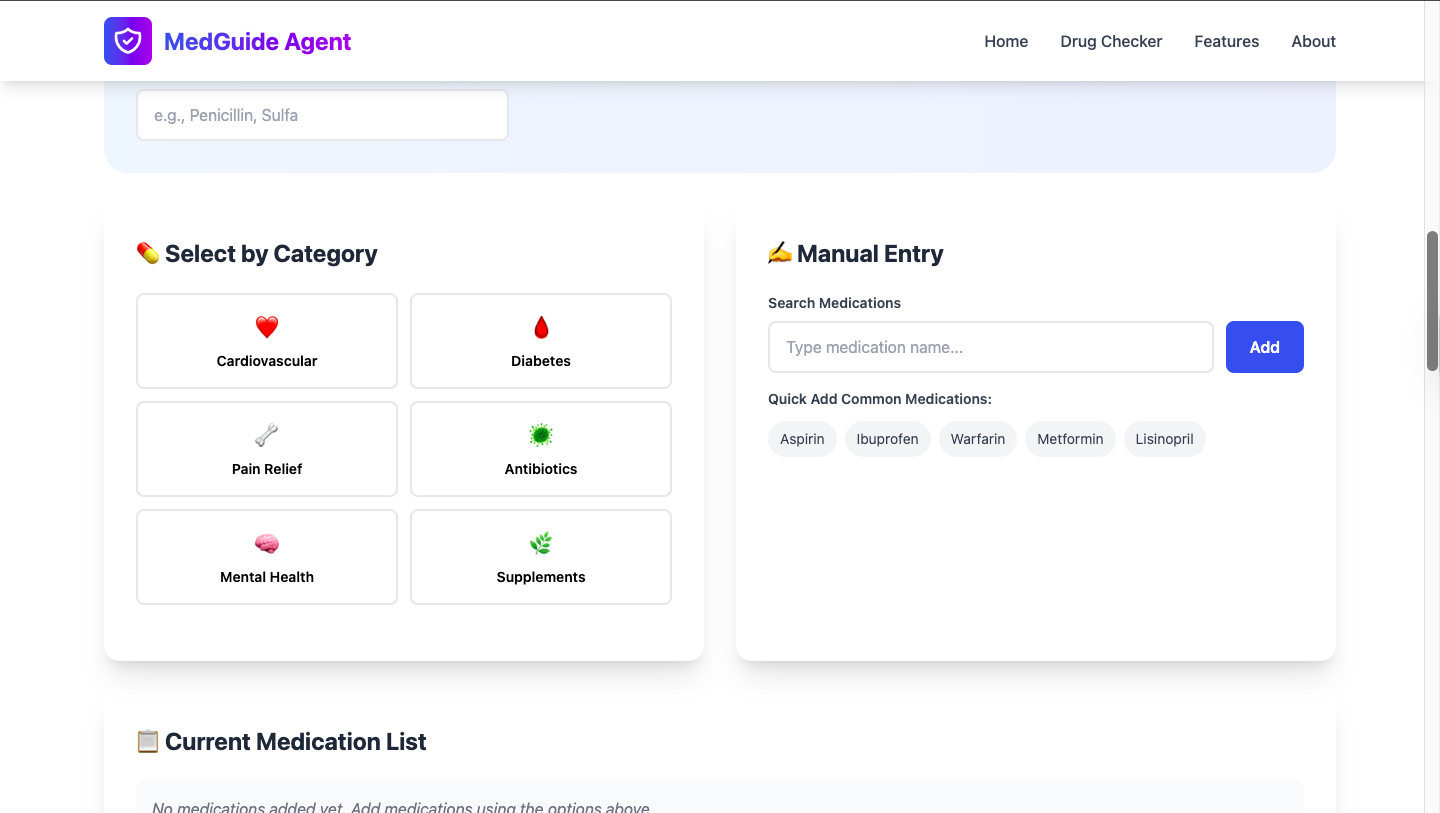
User data input area
-
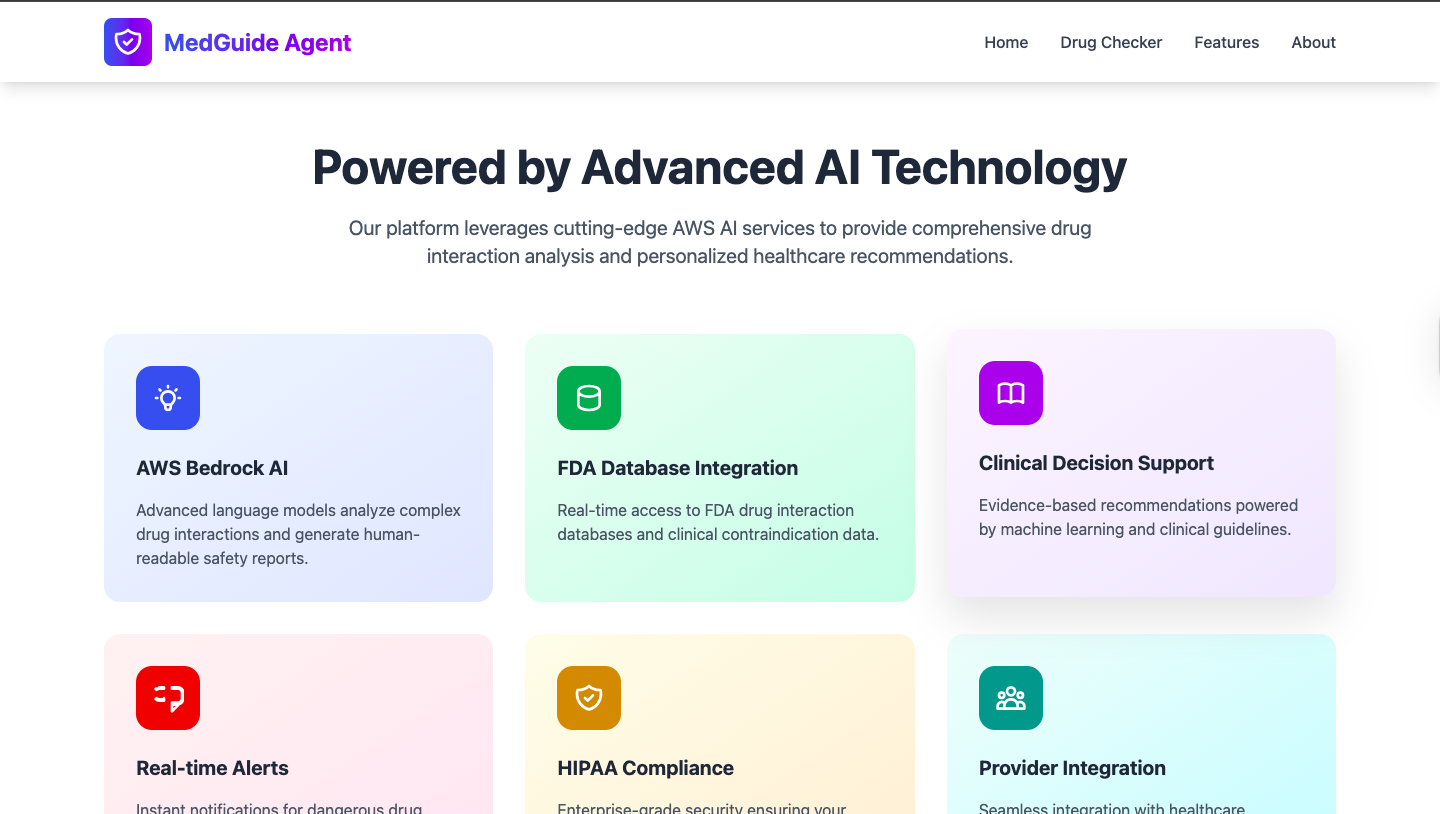
Technology used to build MedGuide
-
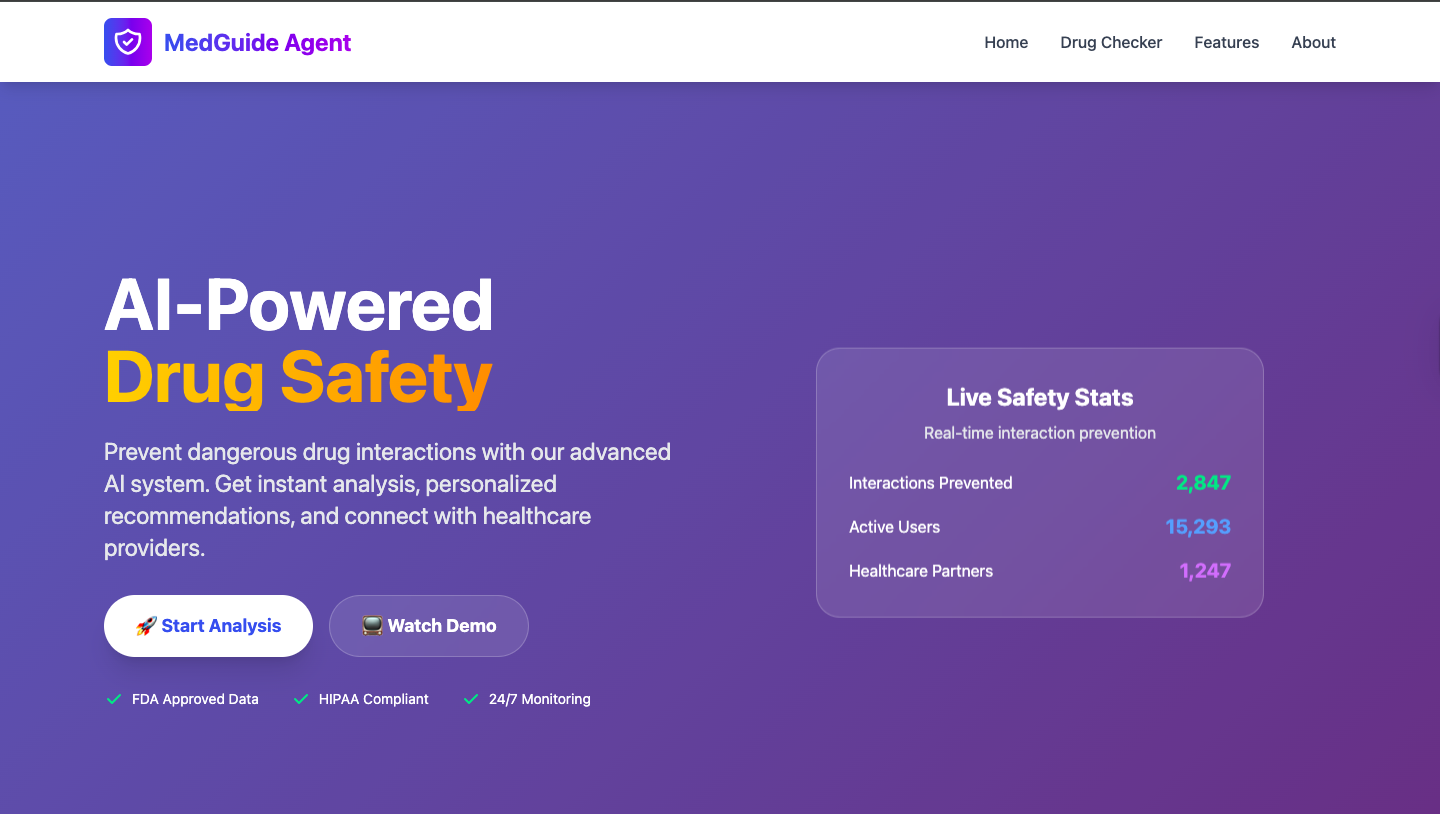
About MedGuide
-
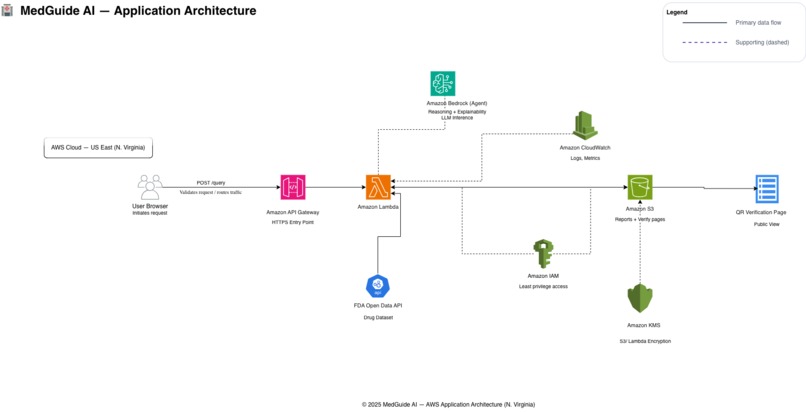
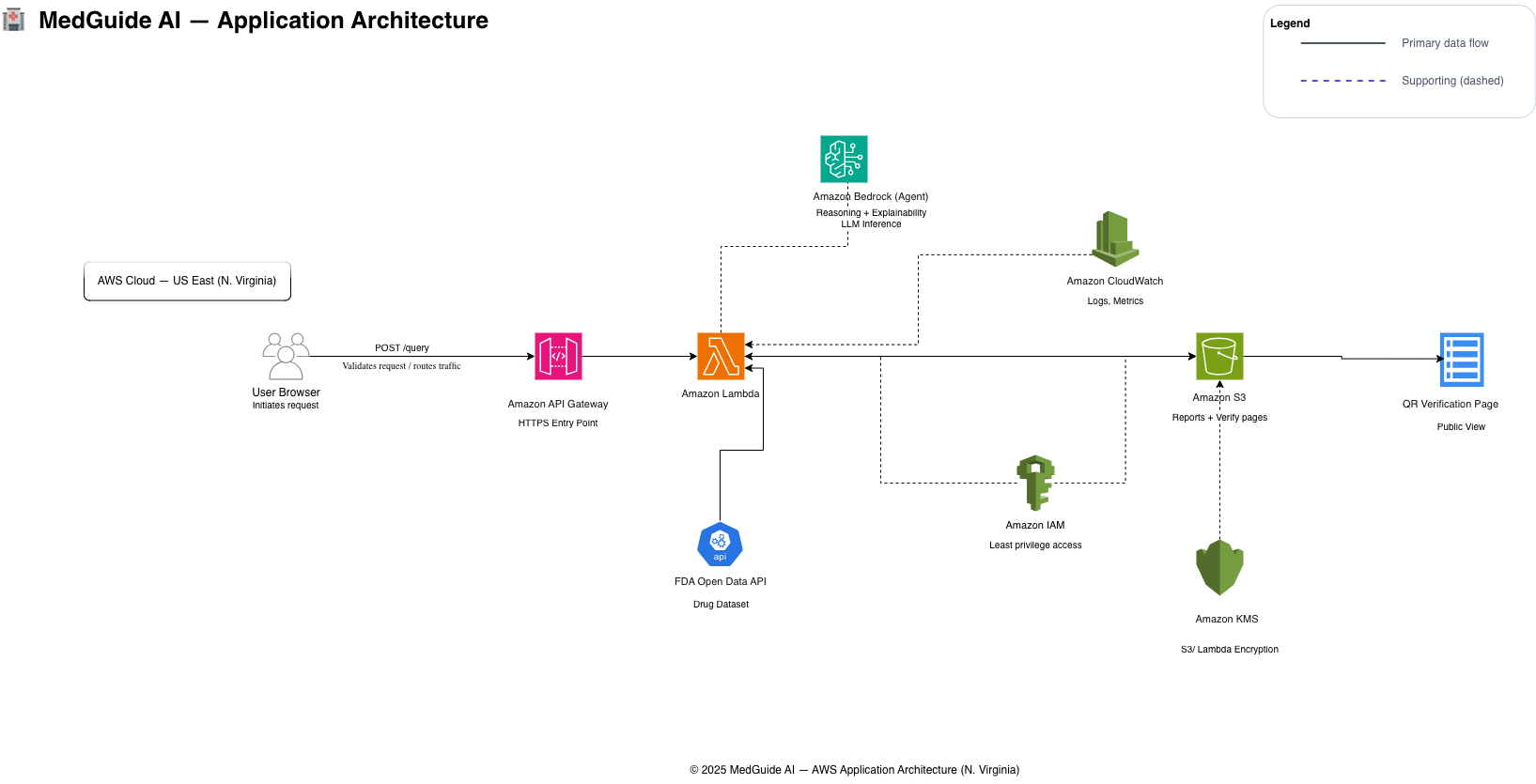
MedGuide Architecture Diagram
Inspiration
Every single day, patients across the world are harmed by the very medications meant to heal them. The World Health Organization reports that 1 in 30 patients experience adverse drug reactions over 260 million lives lost each year. Medication errors lead to millions of hospital admissions annually and cost over $42 billion globally, three-quarters of which are completely preventable. This isn’t just a clinical challenge; it’s a global systems failure. MedGuide AI was born to fix that by giving every clinician and patient a real-time, reasoning-powered safety assistant.
What it does
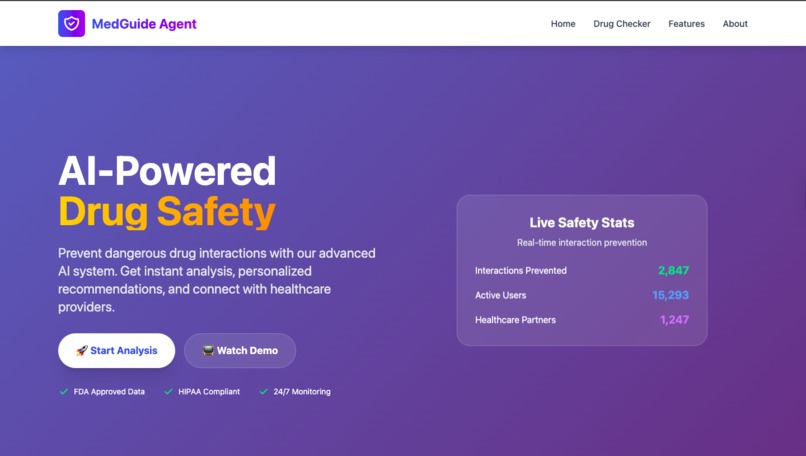
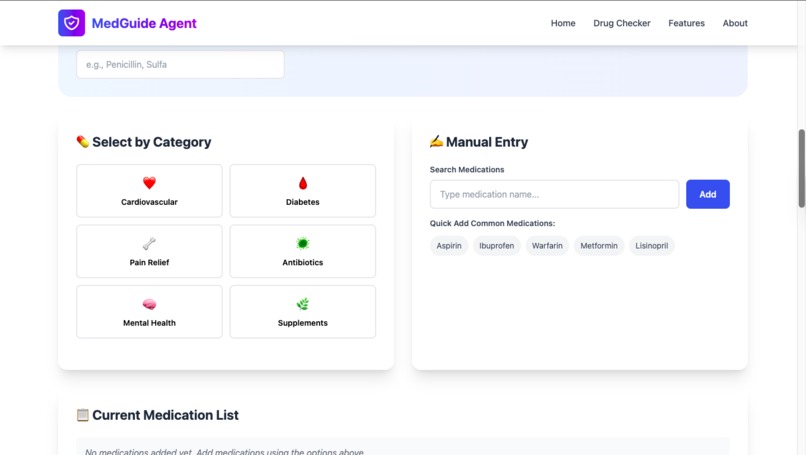
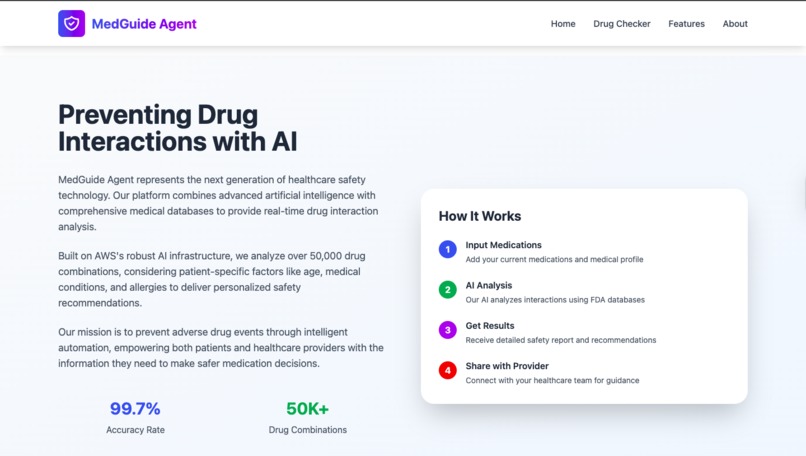
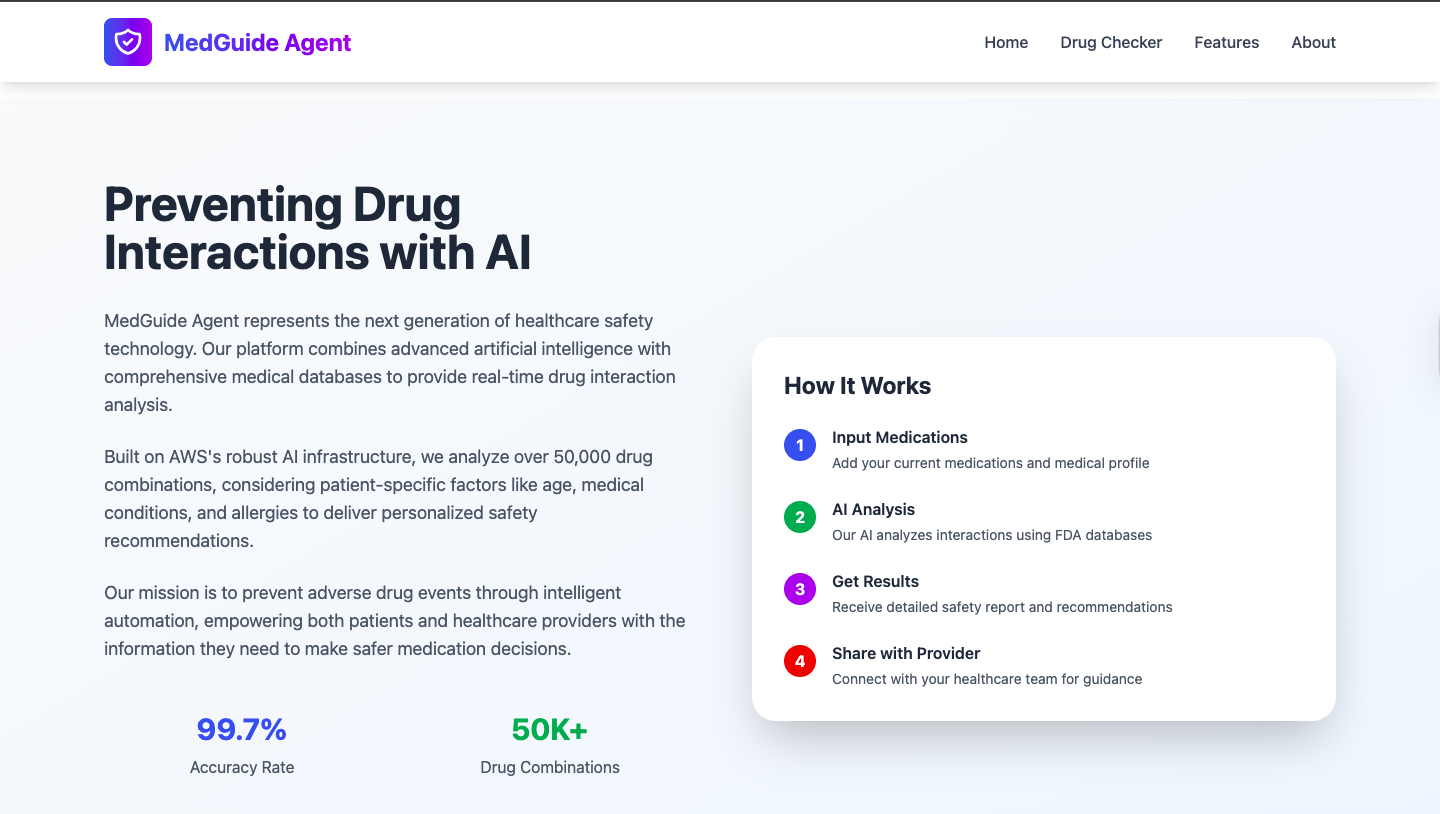
MedGuide AI is an autonomous clinical safety agent that detects unsafe medication combinations, explains the reasoning, and generates a QR-verified clinical report within seconds. Users simply enter gender, age, health conditions, allergies, and medications manually, by category, or via quick-add.
The agent performs:
- Real-time drug safety checks via OpenFDA API
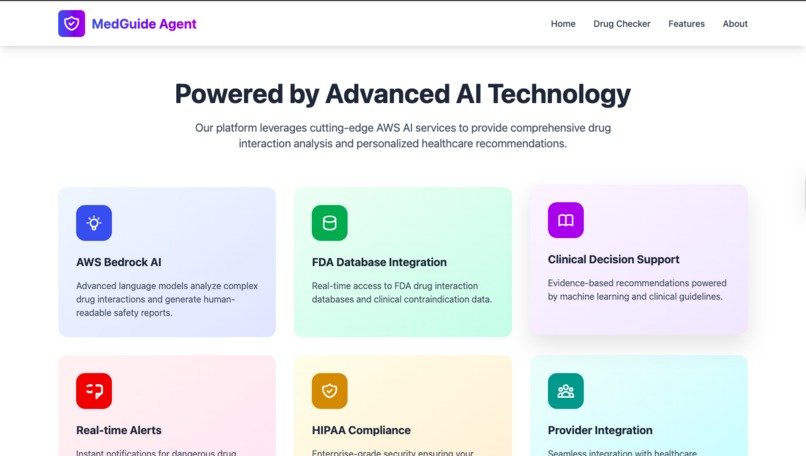
- LLM-powered reasoning through Amazon Bedrock
- Secure report generation with AWS Lambda and S3
Patients and doctors can view verified results instantly or scan a QR code to access the report from any device. It’s mobile-friendly, private, and designed for universal accessibility from hospitals to small rural clinics.
How we built it
- Frontend: HTML + Tailwind + JavaScript for the web app
- Backend: Node.js + AWS Lambda + API Gateway for serverless logic
- AI Core: Amazon Bedrock (LLM) for reasoning and explainability
- Data Source: OpenFDA API for verified medication and interaction data
- Storage & Security: Amazon S3, IAM, and KMS encryption
- Analytics: CloudWatch for performance logs and monitoring
- The system runs fully serverless, ensuring speed, scalability, and HIPAA-aligned security.
Challenges we ran into
- Fine-tuning prompt reasoning to ensure clinically relevant outputs
- Integrating OpenFDA with Bedrock in real-time for live reasoning
- Optimizing response latency while maintaining accuracy under 10 seconds
- Designing a user experience intuitive for both clinicians and patients
Each challenge pushed us to make the system more stable, transparent, and secure.
Accomplishments that we're proud of
- Built the first fully autonomous medication safety agent on AWS
- Generated instant QR-verifiable safety reports for true transparency
- Designed a mobile-first interface for universal accessibility
- Achieved analysis + reasoning + report generation under 10 seconds
- Created a serverless AWS architecture validated end-to-end
No direct competitors:
- Existing tools like Lexicomp and Micromedex are static, paid databases.
- IBM Watson Health was discontinued in 2022.
- Google MedLM and Med-PaLM focus on Q&A, not verifiable reporting.
- Epic EHR CDS modules are region-locked and unaffordable for smaller clinics.
MedGuide AI stands alone as the first-to-market autonomous agent that can reason, verify, and report medication safety in real time, creating a new category rather than competing in one.
What we learned
- Deep integration between LLM reasoning and real-world APIs requires careful orchestration for reliability and compliance.
- AWS’s serverless stack (Lambda + Bedrock + S3) enables healthcare-grade scalability.
- Simplicity in UX is as powerful as sophistication in AI, especially for patient trust.
What's next for MedGuide Agent
- Launching pilot testing across urban and rural clinics in Sri Lanka (2025)
- Expanding datasets to include global drug registries (EMA, WHO, DrugBank)
- Adding multilingual support for English, Sinhala, and Tamil
- Developing clinician dashboards and integration with EHR systems
- Moving toward certification for FDA Software as a Medical Device (SaMD)
MedGuide AI’s long-term vision is to make medication safety autonomous, explainable, and accessible everywhere.
Built With
- amazon-cloudwatch
- amazon-web-services
- api-gateway
- aws-iam
- aws-kms
- aws-lambda
- bedrock
- css
- html
- javascript
- openfda-api
- python

Log in or sign up for Devpost to join the conversation.