-
-
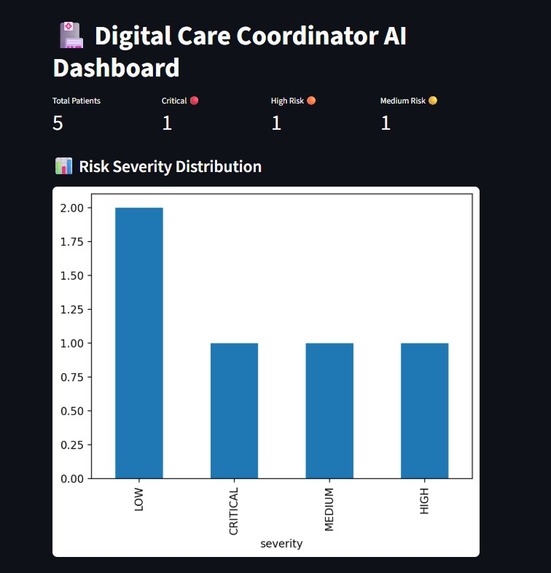
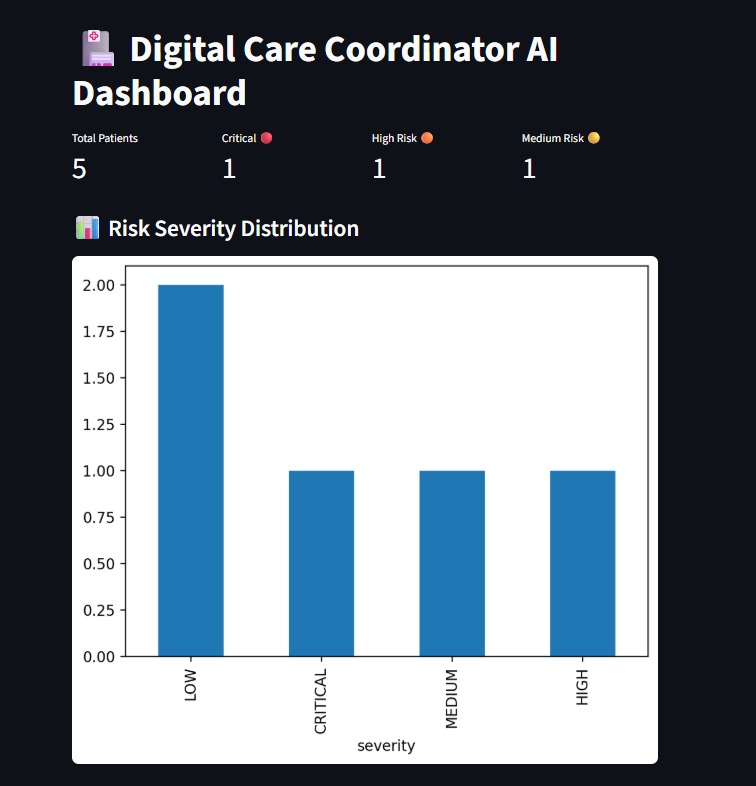
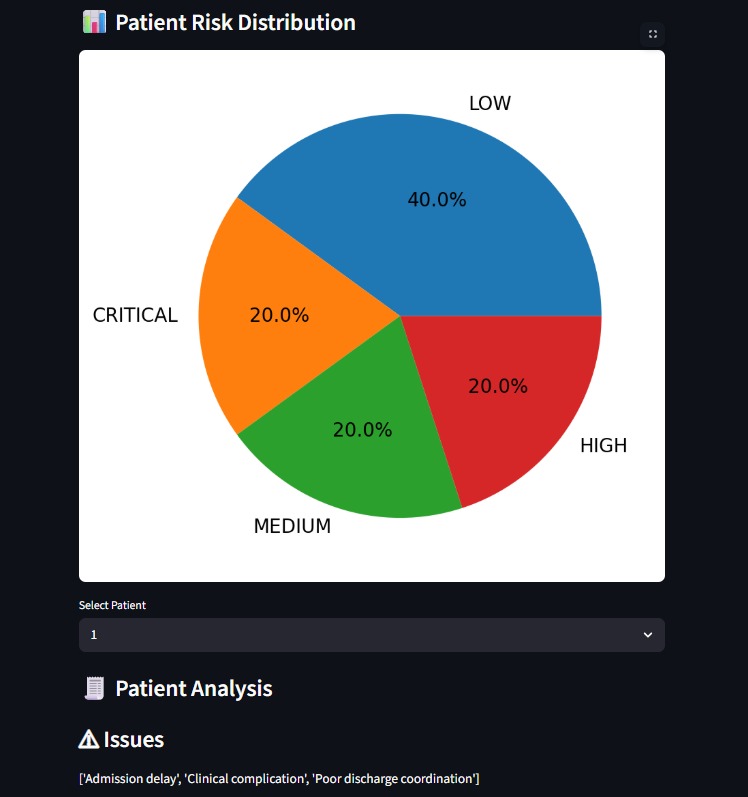
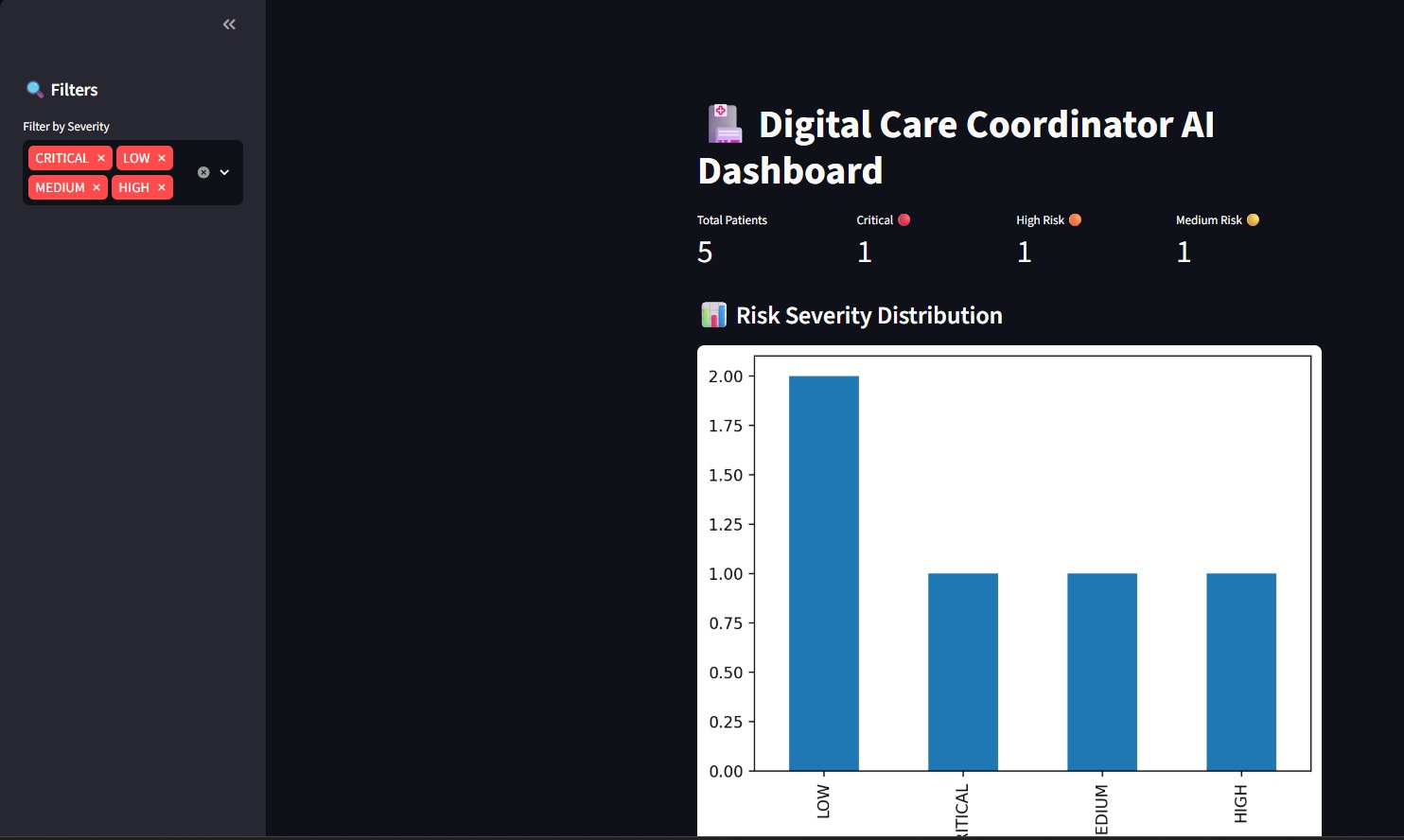
division of patients
-
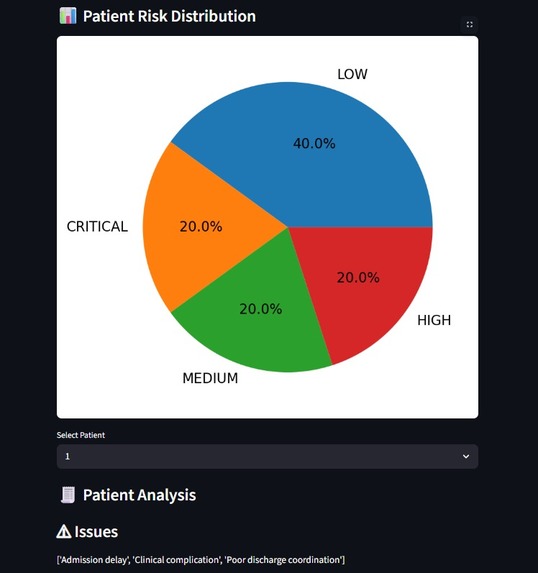
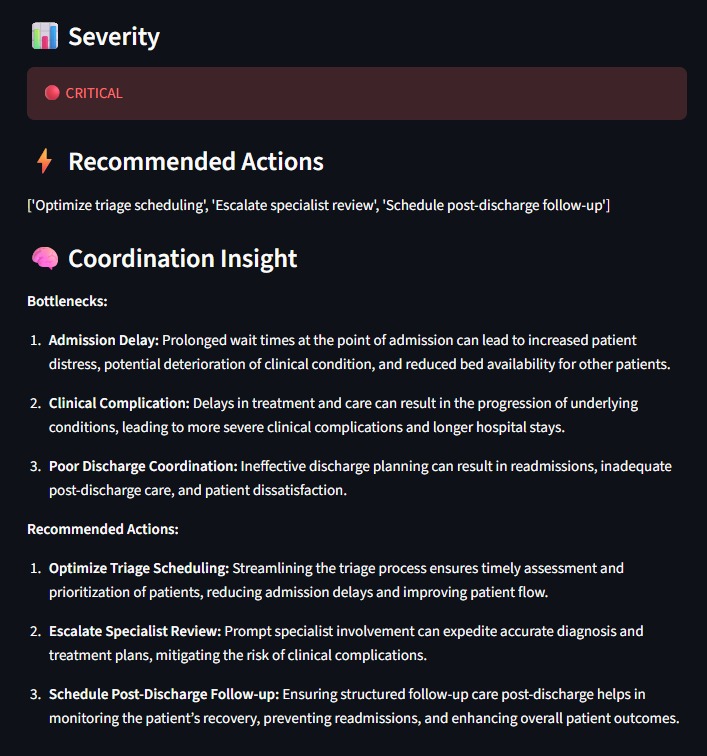
severity of patients
-
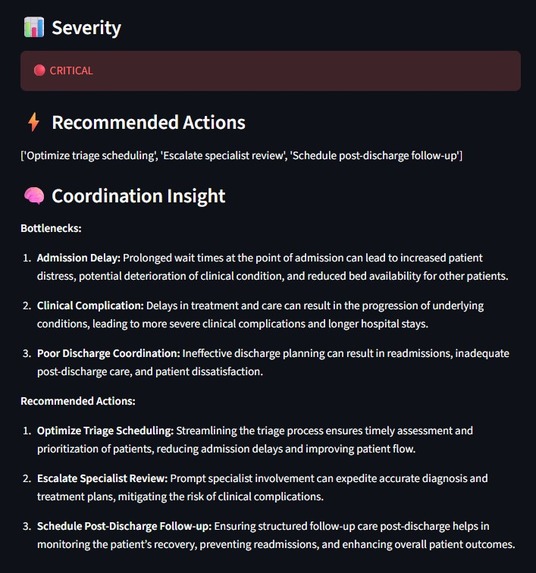
coordination insights
-
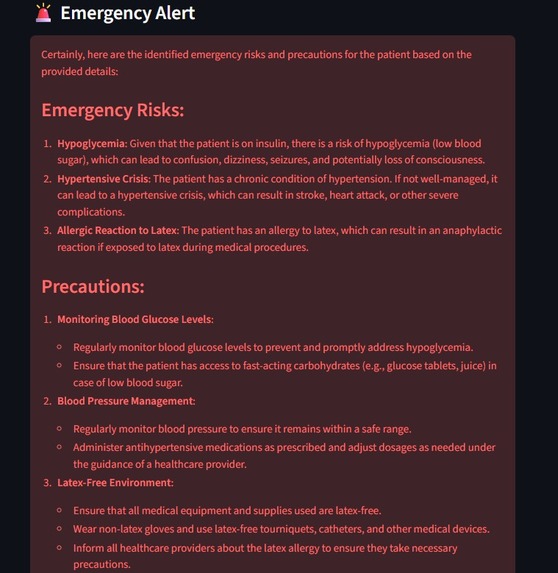
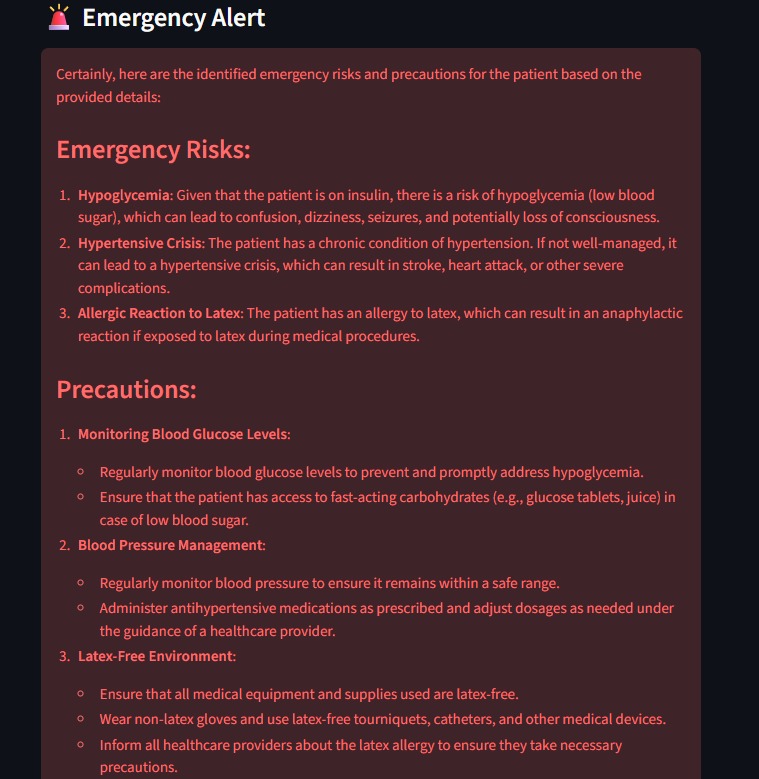
emergency alert
-
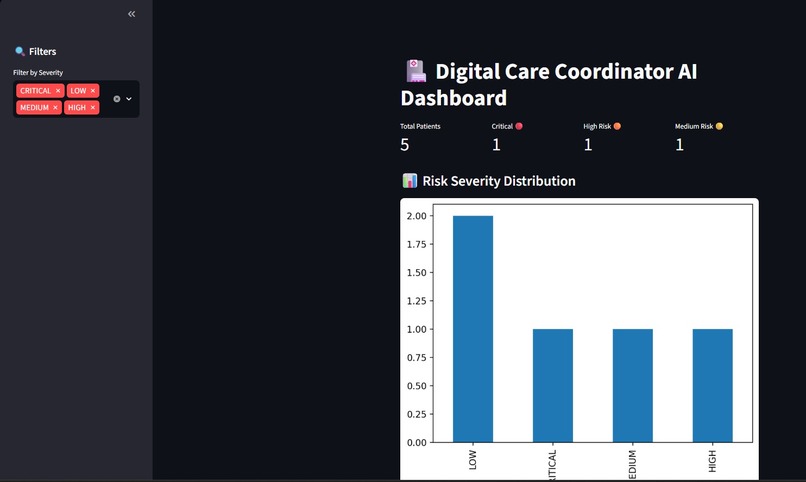
filter section
Inspiration
MedGuardian AI was inspired by a deeply personal loss. A close family member of one of our teammates passed away because the hospital did not have immediate access to their full medical history. Critical information such as allergies and prior medications was not visible at the moment of treatment, and the resulting medical decision could have been avoided if the patient's history had been actively checked.
This experience revealed an important gap in healthcare systems. Hospitals store medical information, but the data often remains passive and fragmented across departments. Doctors are forced to manually review patient records under time pressure, and small gaps in coordination can lead to serious consequences.
We wanted to build a system where patient history does not sit silently in a database but instead actively protects the patient during treatment decisions. That idea led to the creation of MedGuardian AI, an intelligent safety layer between patients and hospital treatment systems.
What it does
MedGuardian AI continuously maintains a patient's medical history and automatically evaluates hospital treatments against that history.
The system performs real time safety checks such as
Allergy conflicts
If a proposed drug exists in the allergy list, the system flags it immediately.
Medication interactions
It evaluates whether a new treatment conflicts with current medications.
Condition based risks
The system checks whether a treatment is unsafe for a patient's medical conditions.
Conceptually, treatment risk can be expressed as
$$ Risk = f(A, C, M, T) $$
where
$$ A = Allergies $$
$$ C = Medical\ Conditions $$
$$ M = Current\ Medications $$
$$ T = Proposed\ Treatment $$
If the treatment appears in the allergy list, the system immediately detects the conflict
$$ Risk = 1 \quad \text{if } T \in A $$
When a risk is detected, MedGuardian AI alerts the healthcare provider and generates an explanation with safer alternatives.
How we built it
We built MedGuardian AI using a multi agent architecture powered by Amazon Nova.
The system contains two main AI agents that collaborate with each other.
Patient History Agent
This agent continuously maintains and updates the patient's medical profile. It records information such as
Allergies
Current medications
Chronic conditions
Past surgeries
Medical notes
The goal of this agent is to ensure that the patient's history remains accurate and available at all times.
Treatment Safety Agent
When a hospital enters a treatment or medication, this agent evaluates the treatment against the stored patient history.
The safety agent performs checks such as
Drug vs allergy conflicts
Drug vs condition conflicts
Drug vs medication interactions
If a potential issue is detected, the system forwards the case to Amazon Nova, which performs deeper reasoning and generates a clear explanation for clinicians.
The workflow of our system can be summarized as
$$ Patient\ History \rightarrow History\ Agent $$
$$ Treatment\ Input \rightarrow Safety\ Agent $$
$$ Safety\ Agent \rightarrow Amazon\ Nova $$
$$ Nova\ Reasoning \rightarrow Safety\ Alert $$
This architecture transforms patient records into an active medical safety system.
Challenges we ran into
One of the biggest challenges was designing reliable communication between multiple AI agents. Both agents needed to share the same patient data while ensuring that updates to medical history were instantly reflected during treatment checks.
Another challenge was dealing with the complexity of medical information. Treatment safety depends on multiple interacting factors such as allergies, conditions, and medications. A simple rule based system was not sufficient, so integrating Amazon Nova helped us introduce contextual reasoning.
We also faced time constraints during development. As this project was built within a limited timeframe, we had to prioritize the most critical features and focus on creating a working system that clearly demonstrates the concept.
Finally, we needed the AI to provide clear explanations instead of simple warnings, because healthcare professionals need to understand why a treatment might be dangerous.
Accomplishments that we're proud of
We successfully built a working prototype that demonstrates how agent based AI can actively monitor patient safety during treatment.
The system can
Maintain patient medical history
Analyze treatment inputs in real time
Detect dangerous conflicts
Generate AI powered explanations using Amazon Nova
Most importantly, we built a system that addresses a real healthcare problem and shows how AI can support doctors in making safer decisions.
What we learned
Through building MedGuardian AI we gained valuable experience in designing agentic AI systems and integrating large foundation models like Amazon Nova.
We learned how specialized AI agents can collaborate to monitor workflows and support real world decision making. The project also deepened our understanding of healthcare data coordination and the importance of building AI systems that are reliable, explainable, and practical.
This experience reinforced the idea that the most impactful AI systems are those that augment human expertise rather than replace it.
What's next for MedGuardian AI
Our next goal is to expand MedGuardian AI into a scalable patient safety platform that can integrate with hospital information systems and electronic health records.
Future improvements include
Advanced drug interaction detection
Predictive risk analysis for treatments
Integration with hospital workflows
Continuous patient monitoring through AI agents
In the long term, we envision MedGuardian AI acting as a universal coordination layer across healthcare systems, ensuring that patient history is always accessible and actively protecting patients during every stage of care.

Log in or sign up for Devpost to join the conversation.