-
-
-
-
-
-
-

-
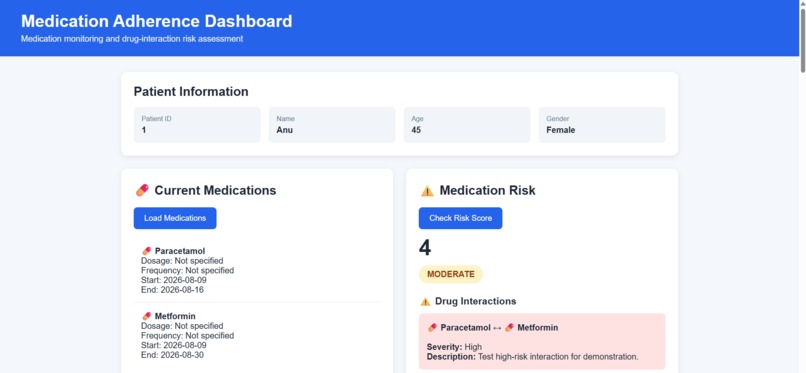
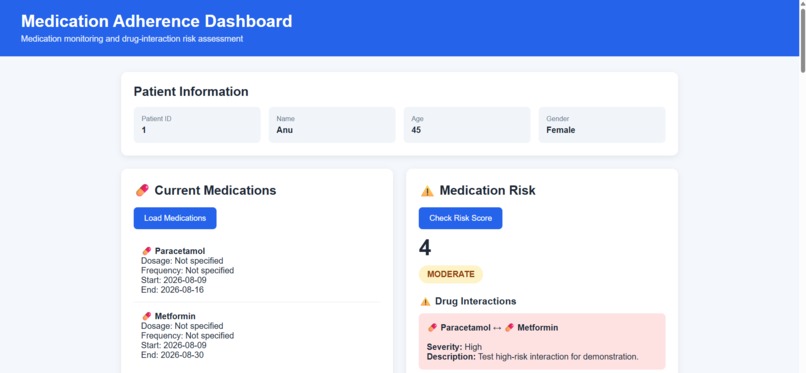
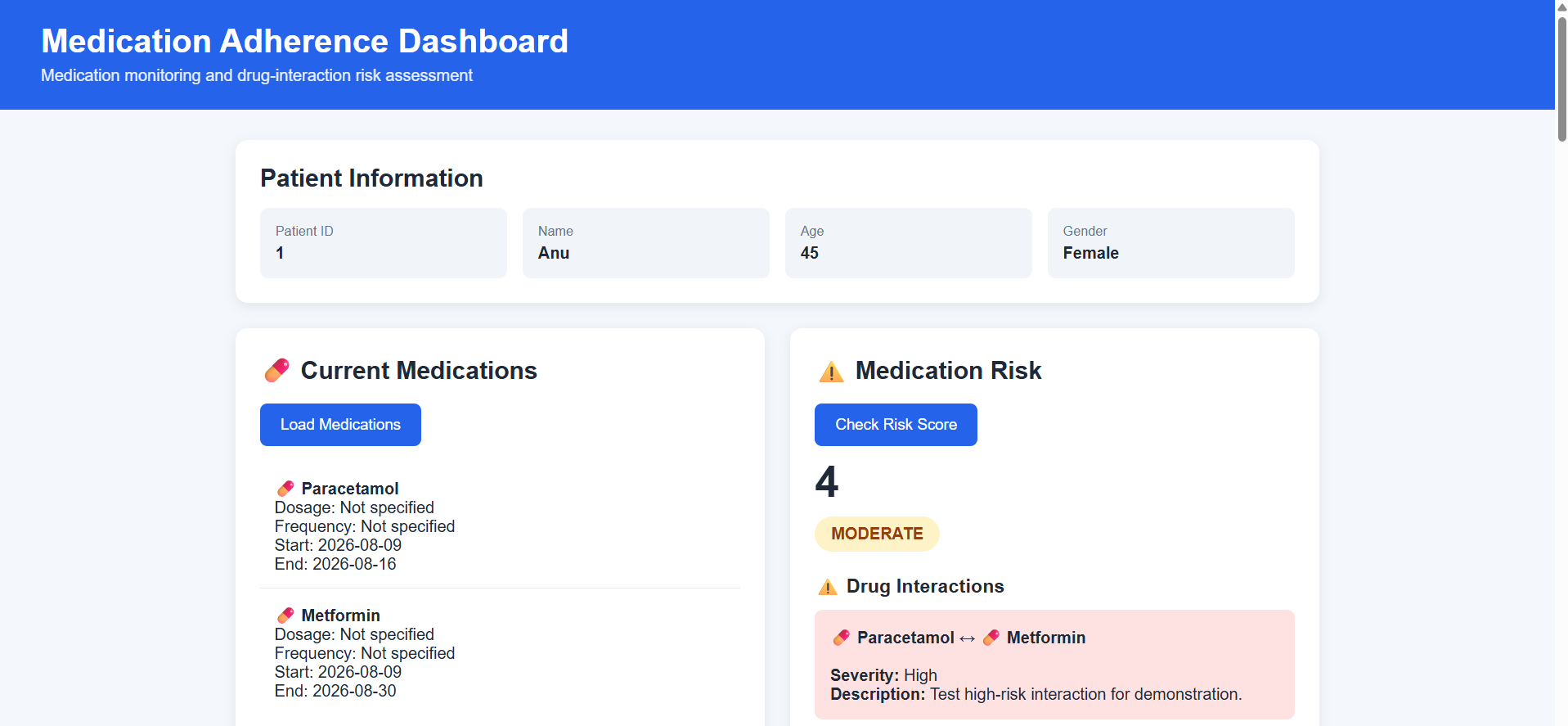
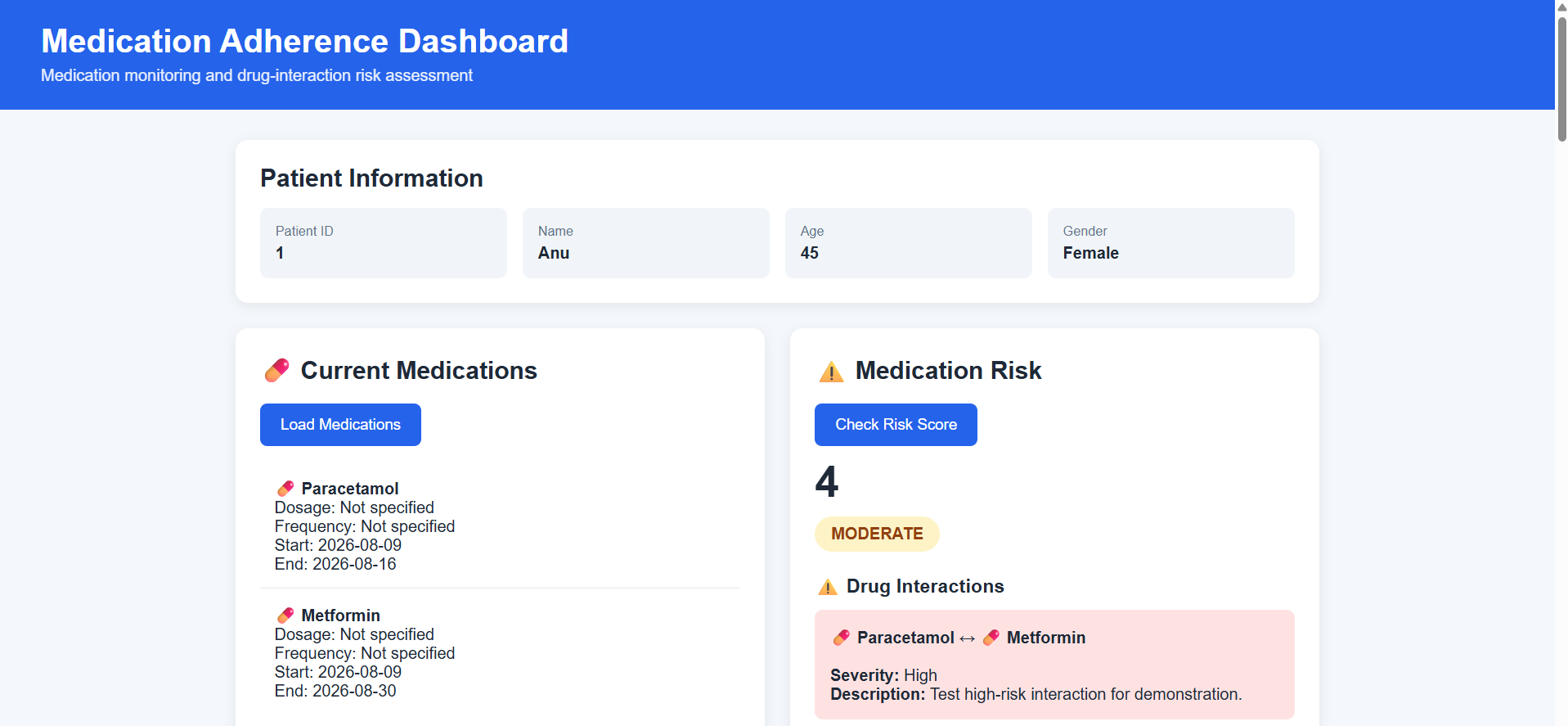
This part covers the patient information, current medication and the medication risk score.
-
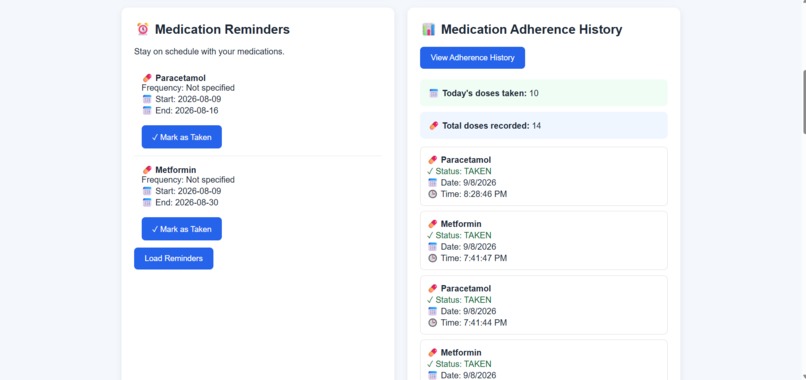
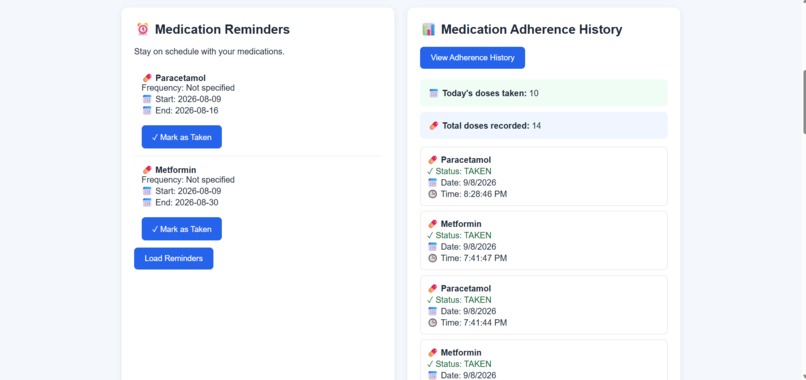
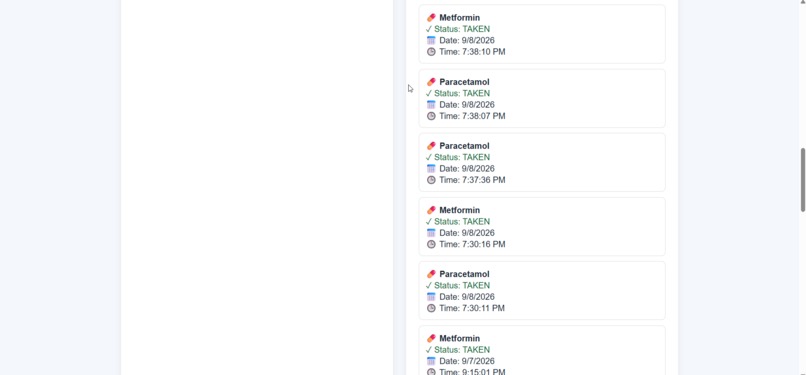
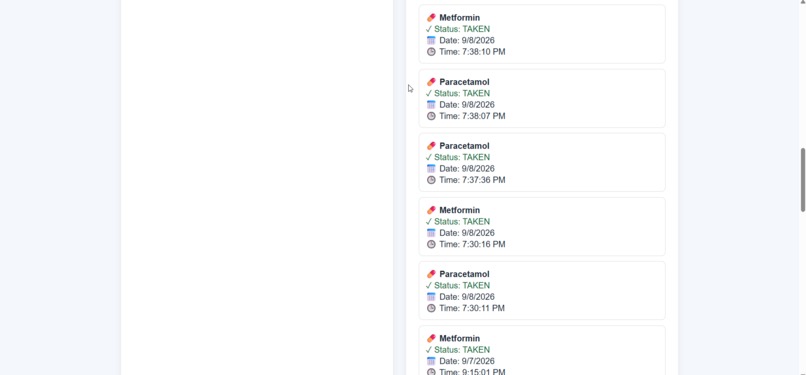
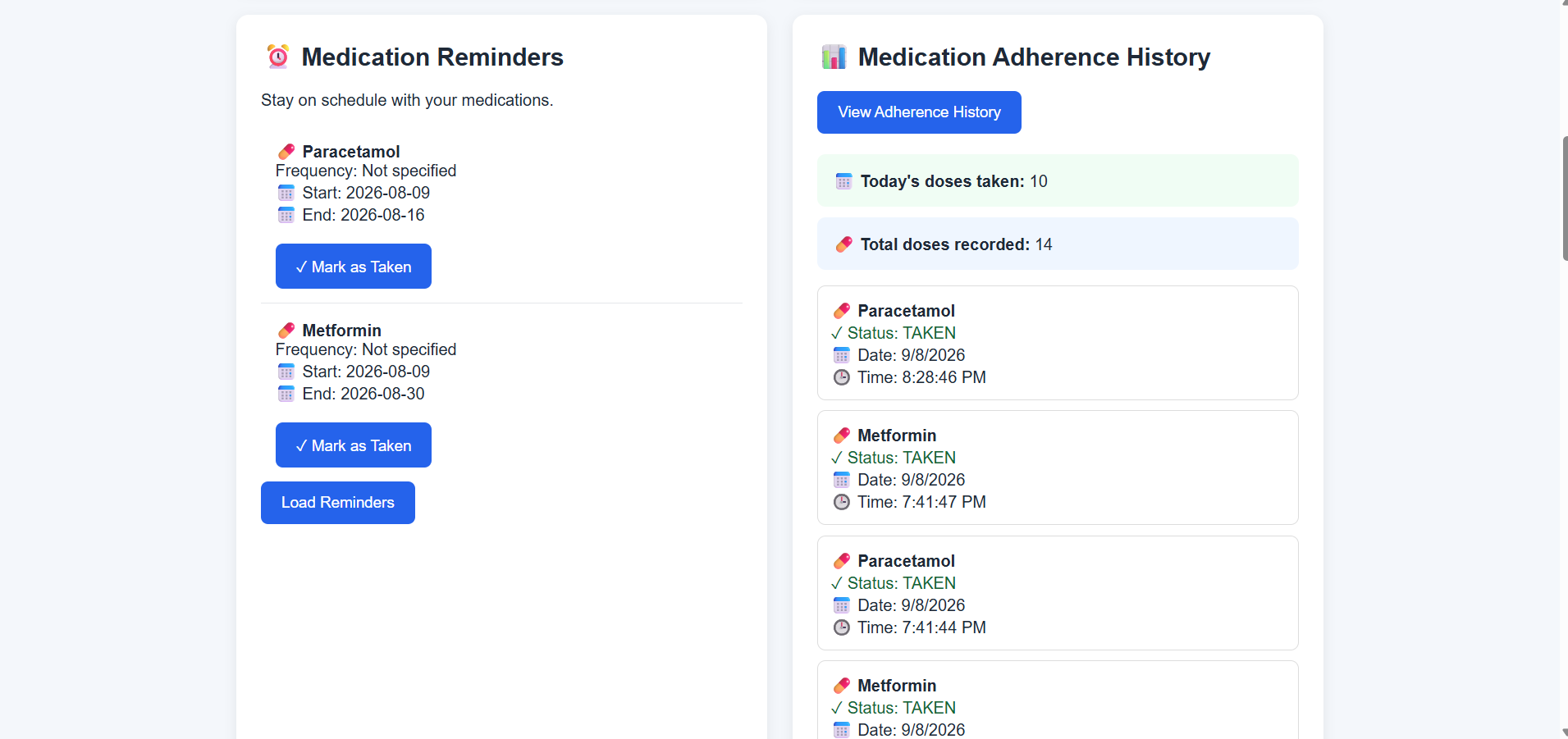
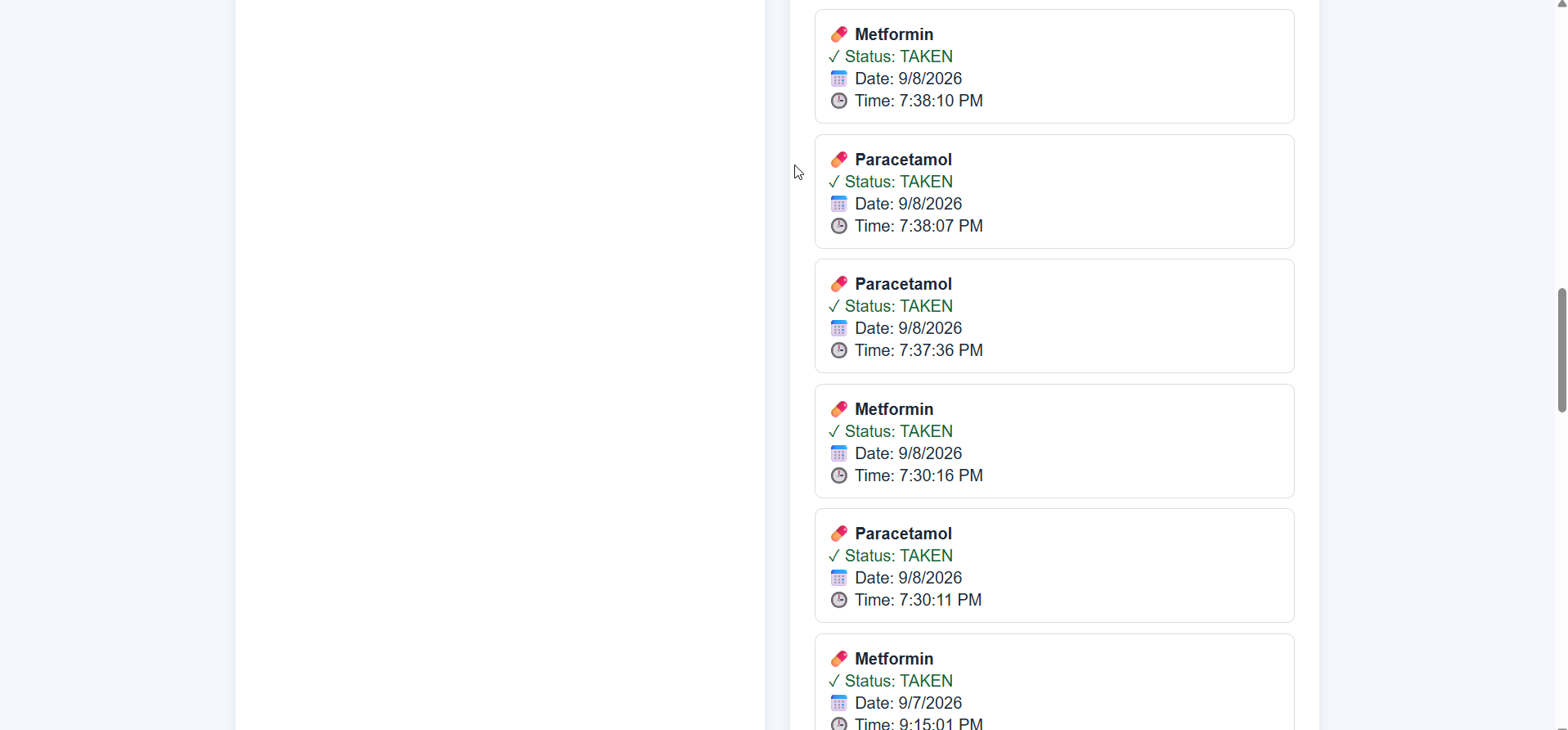
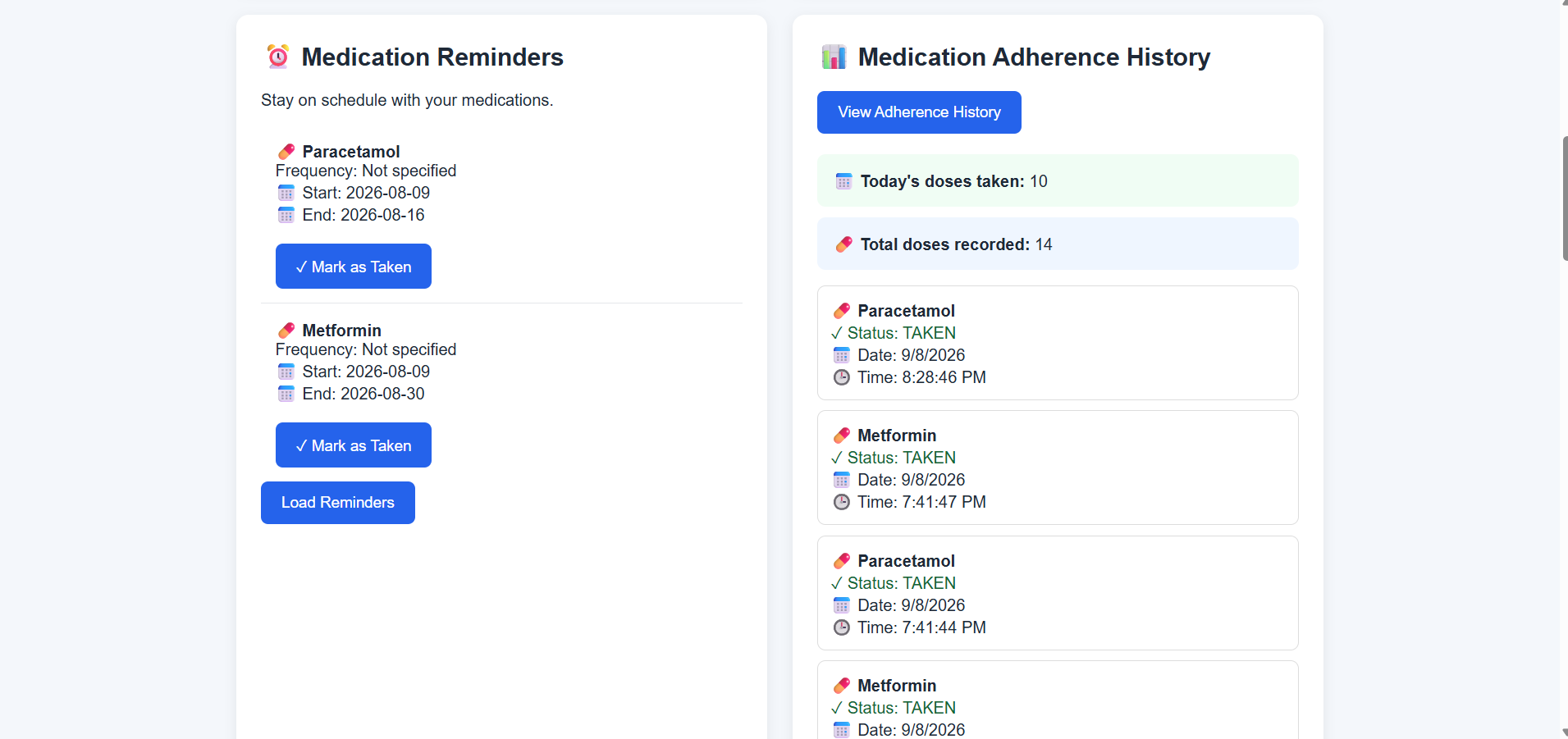
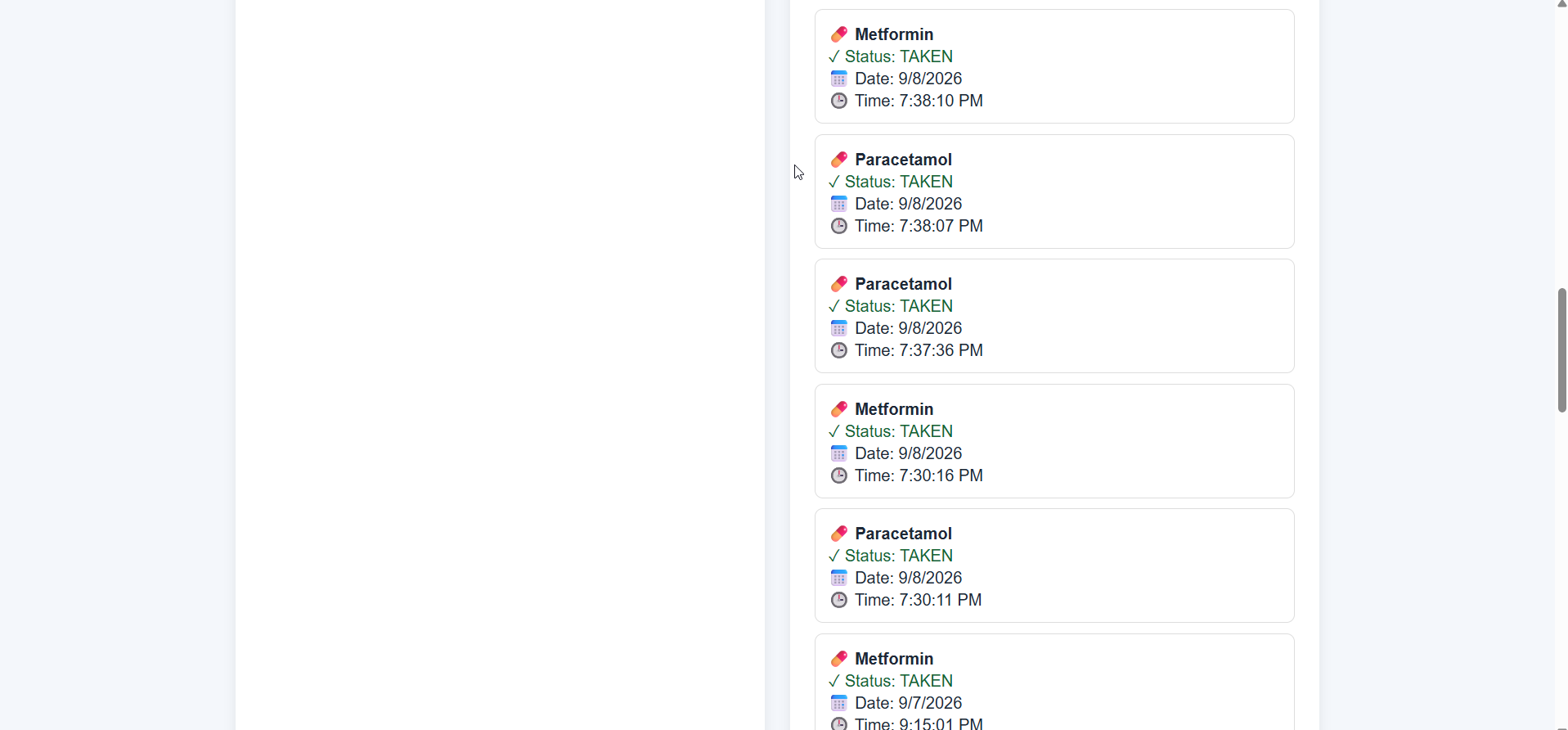
This part covers the medication reminder part and the medication adherence history
-
-
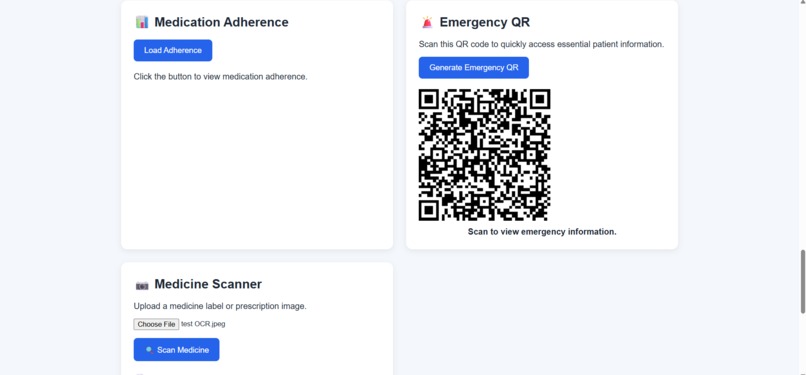
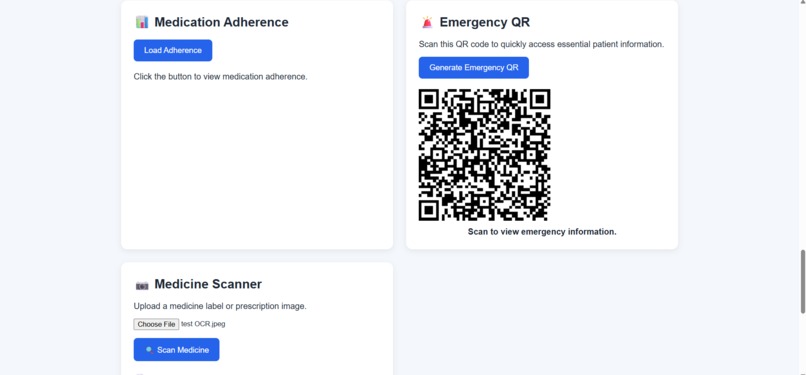
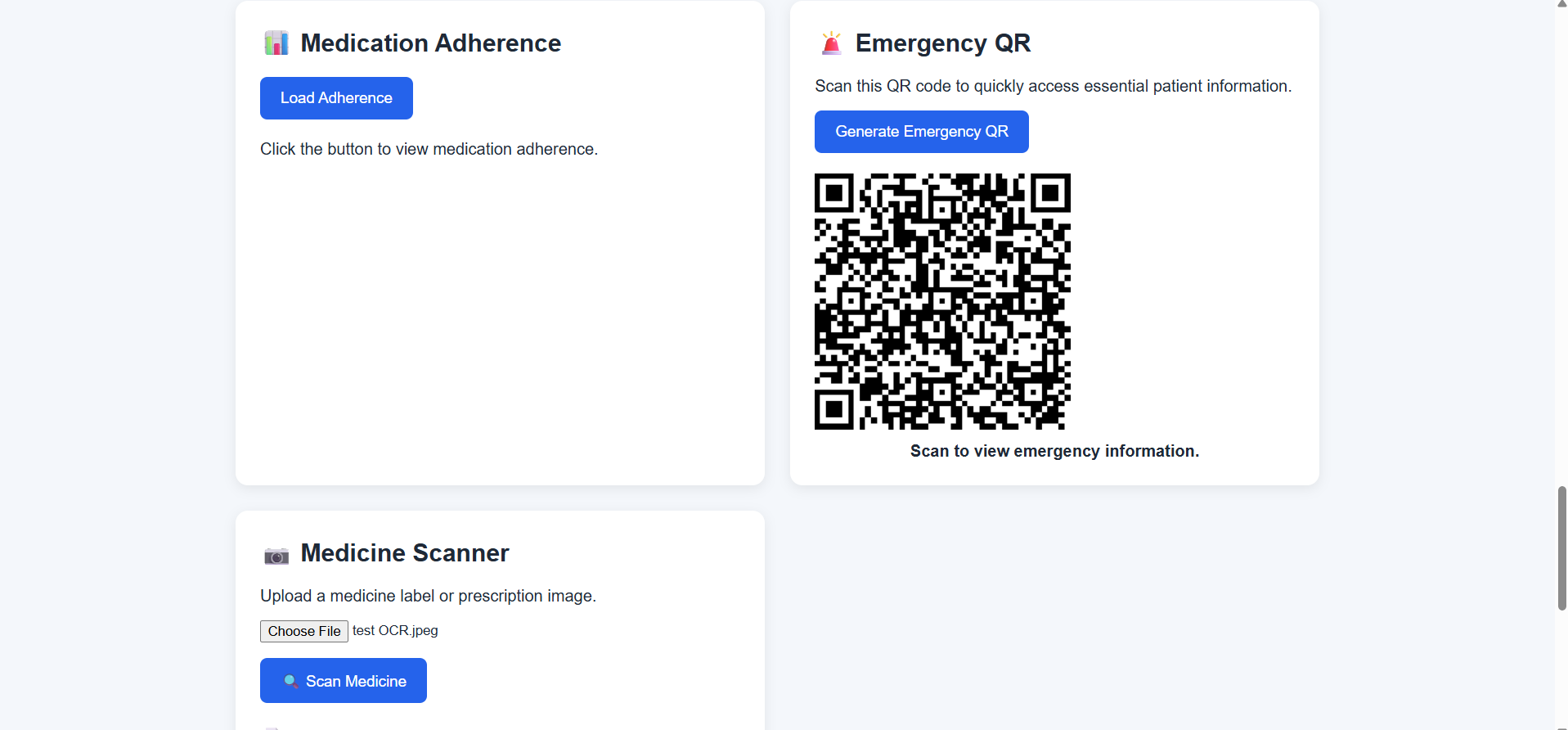
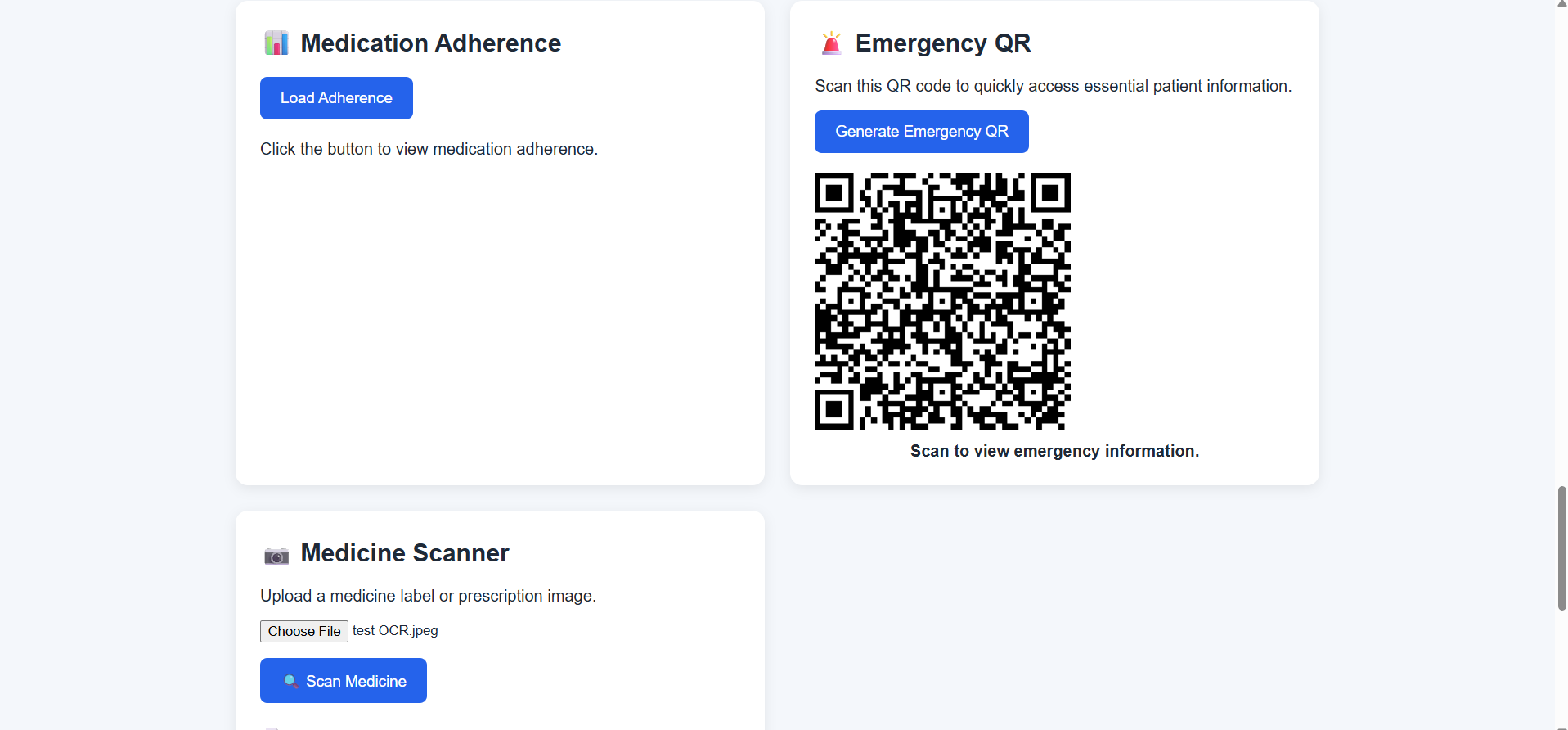
Try to scan this QR to get the emergency medication information the respective patient.
-
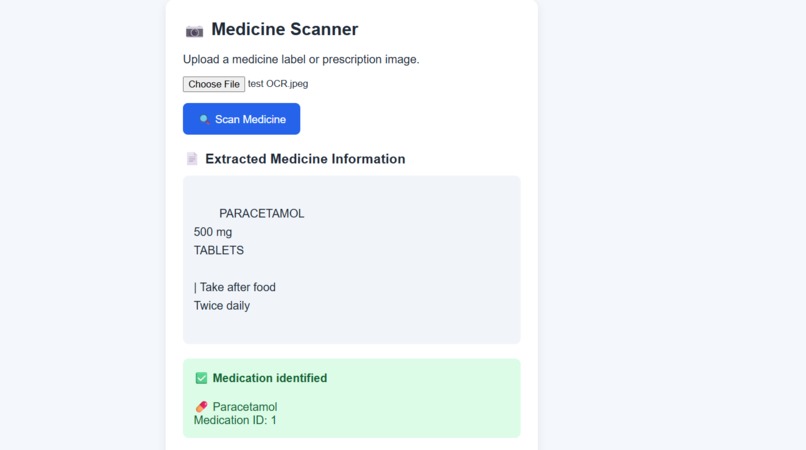
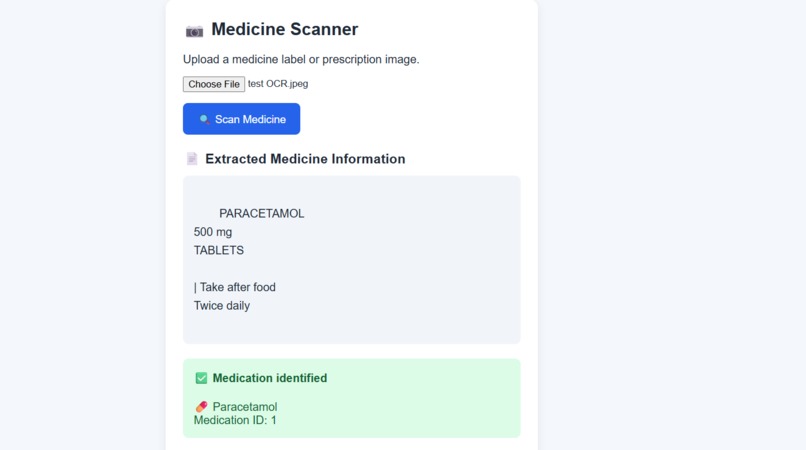
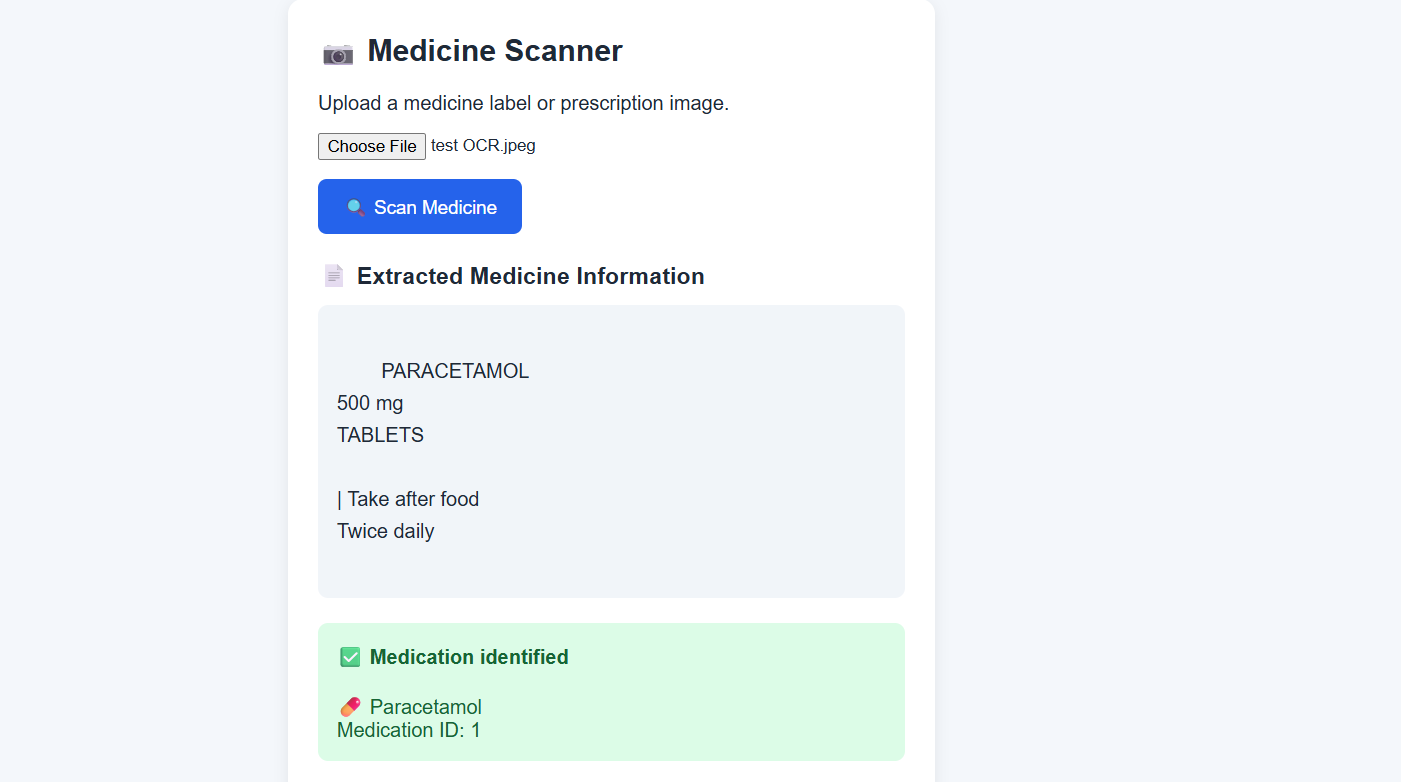
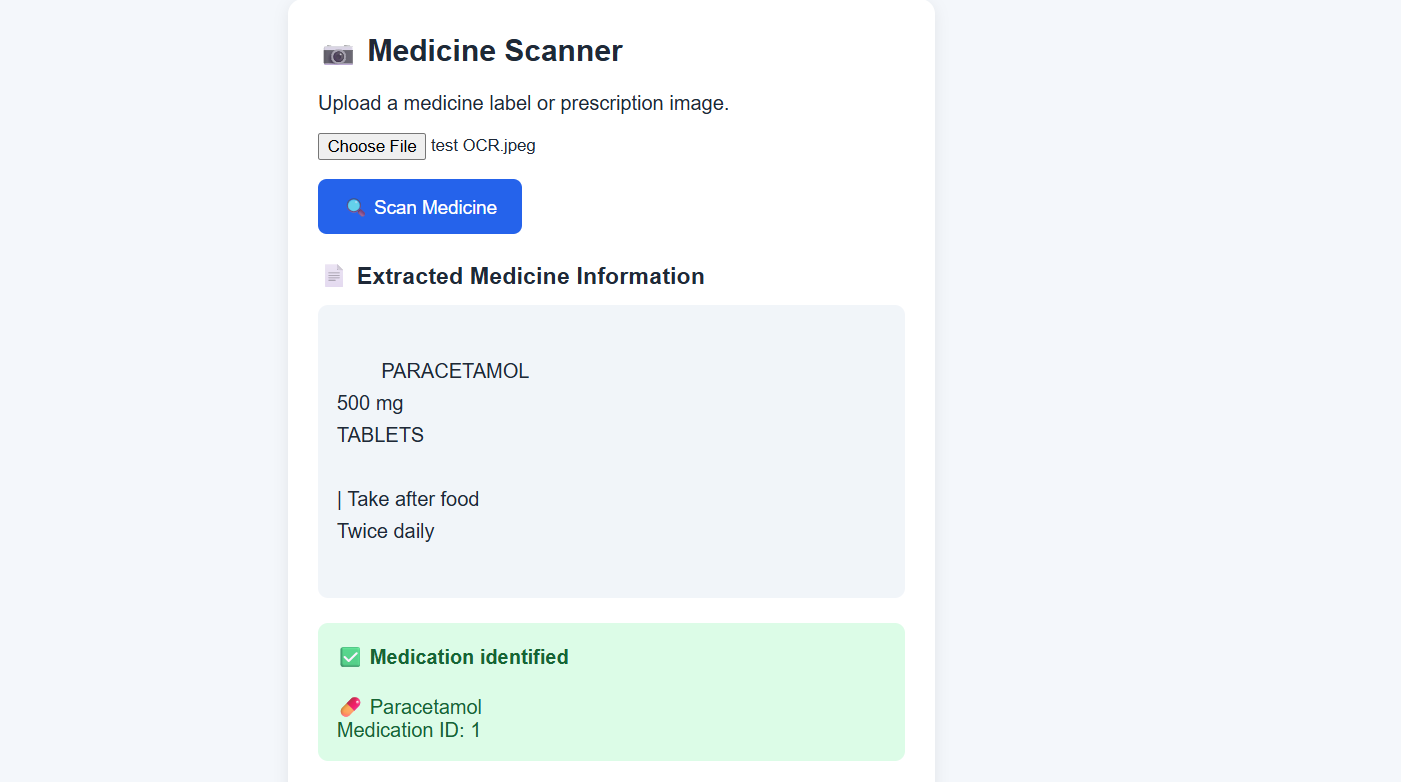
This is the OCR part which is under development but still it can read the medicine names, dosage information from the selected image
-

This is the part which displays whether the drugs have any interaction.


Inspiration
Medication errors can happen easily when people take multiple medicines, forget doses, or are unaware of possible drug interactions. We wanted to build a simple and intelligent solution that helps people understand their medications and follow their prescribed schedule more safely. This inspired us to create MedGuard AI, a medication safety and adherence companion.
What it does
MedGuard AI helps users manage their medications and prescriptions in one place. It stores patient and medication information, checks for known drug-drug interactions, identifies interaction severity, provides a risk score, and helps users keep track of their medication intake.
Users can mark a prescribed medicine as taken, view the exact date and time it was taken, and check their medication adherence history. The system also provides a summary of doses taken today and total recorded doses, helping users monitor their medication routine.
How we built it
We built MedGuard AI as a web-based application using Java and Spring Boot for the backend, MySQL for persistent data storage, and HTML, CSS, and JavaScript for the frontend.
The backend exposes REST APIs for patients, medications, prescriptions, drug interactions, risk assessment, and medication adherence. The frontend communicates with these APIs to provide an interactive dashboard.
We designed the system in a modular way so that intelligent agent-based capabilities, OCR-based medicine identification, personalized risk analysis, notifications, and emergency assistance can be added as the project evolves.
Challenges we ran into
One of the main challenges was connecting the frontend, Spring Boot REST APIs, and MySQL database reliably while maintaining the existing functionality.
We also had to design the medication interaction and adherence data structures so that medication history could be stored and retrieved correctly. Handling medication deletion while maintaining interaction and prescription references was another important challenge.
A further challenge is making medication safety recommendations reliable enough for real-world use, since medication decisions require accurate and trustworthy information.
Accomplishments that we're proud of
We are proud of building a functional end-to-end medication management prototype rather than only creating a UI concept.
MedGuard AI can manage patients, medications, prescriptions, drug interactions, risk assessment, and medication adherence through a connected web application. Users can record when they take their medication and view their medication history with actual timestamps.
We are also proud that the system has been designed with an extensible architecture that allows future intelligent-agent capabilities to be integrated without rebuilding the entire application.
What we learned
Through this project, we learned how to connect a web frontend with a Java Spring Boot backend and a MySQL database.
We gained practical experience in designing REST APIs, working with JPA repositories, managing relational data, handling CRUD operations, and storing time-based medication adherence records.
Most importantly, we learned that building an AI-enabled healthcare solution requires more than adding AI. It requires reliable data handling, explainable risk assessment, careful validation, and a strong focus on user safety.
What's next for MedGuard AI
Our next goal is to evolve MedGuard AI into a more intelligent agentic medication assistant.
We plan to integrate OCR for automatically identifying medicines, personalized risk analysis using patient information, smarter medication reminders, intelligent interaction analysis, emergency QR-based medication information, and advanced adherence analytics.
The long-term vision is for MedGuard AI to act as a proactive medication safety agent that can understand a user's medication context, identify potential risks, provide understandable explanations, and help the user stay on schedule while keeping the user in control of important health decisions.
Built With
- css
- html
- java
- javascript
- mysql
- springboot

Log in or sign up for Devpost to join the conversation.