-
-
-
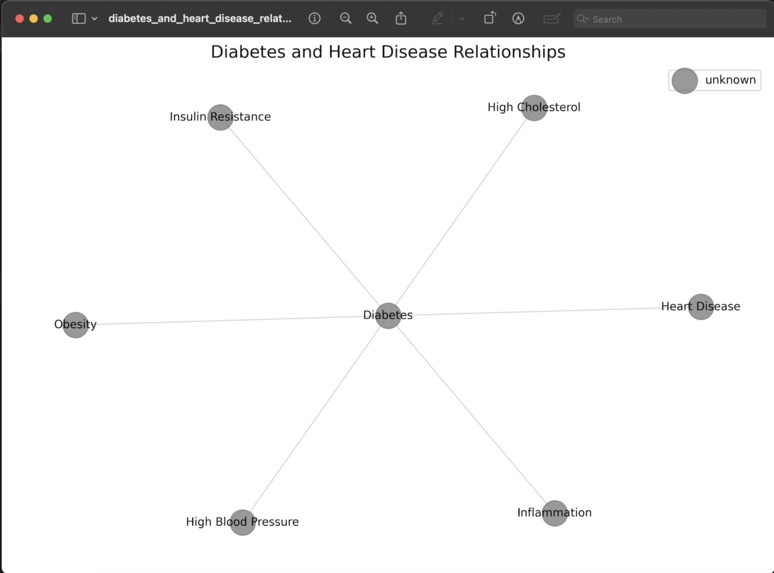
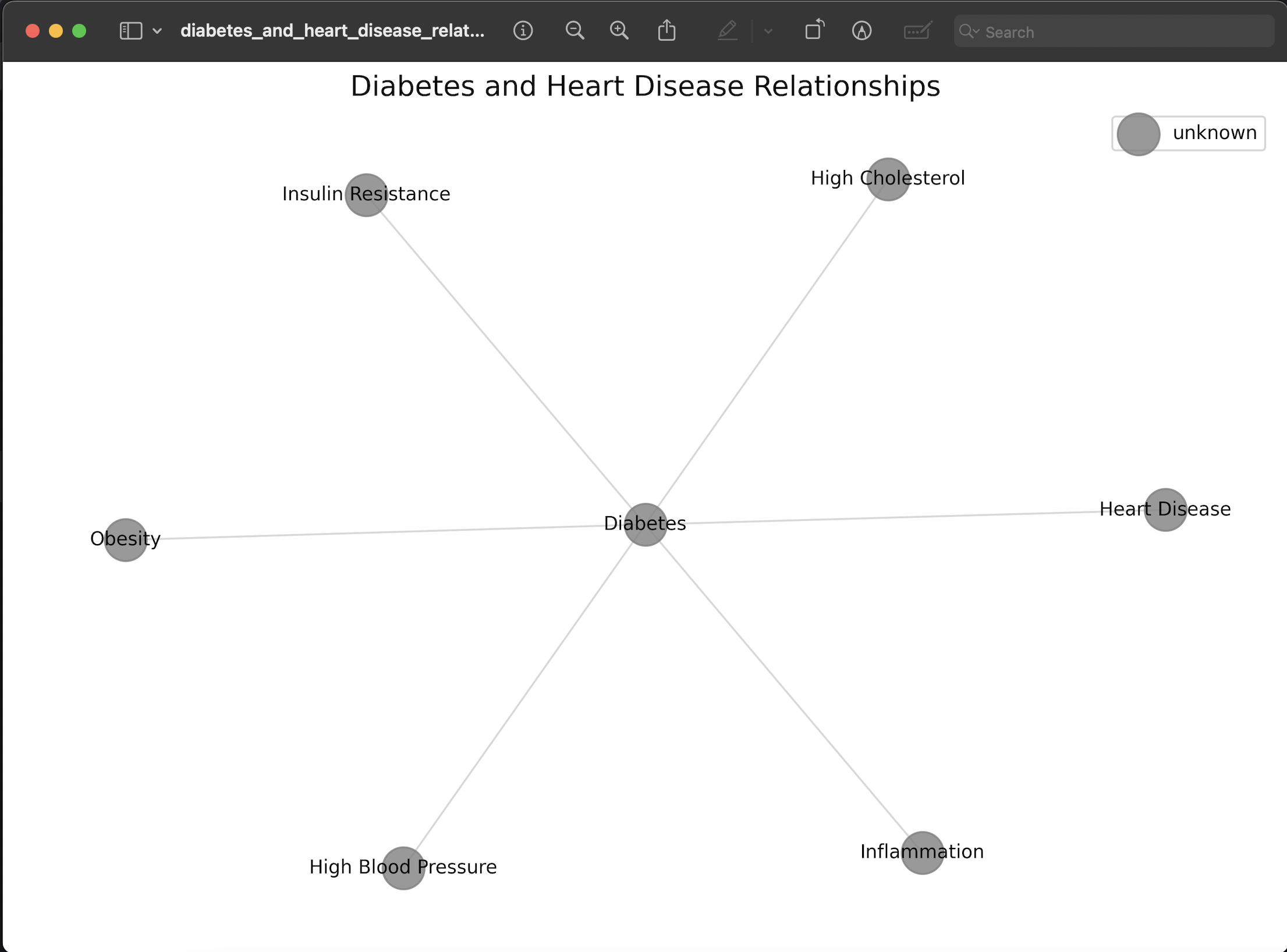
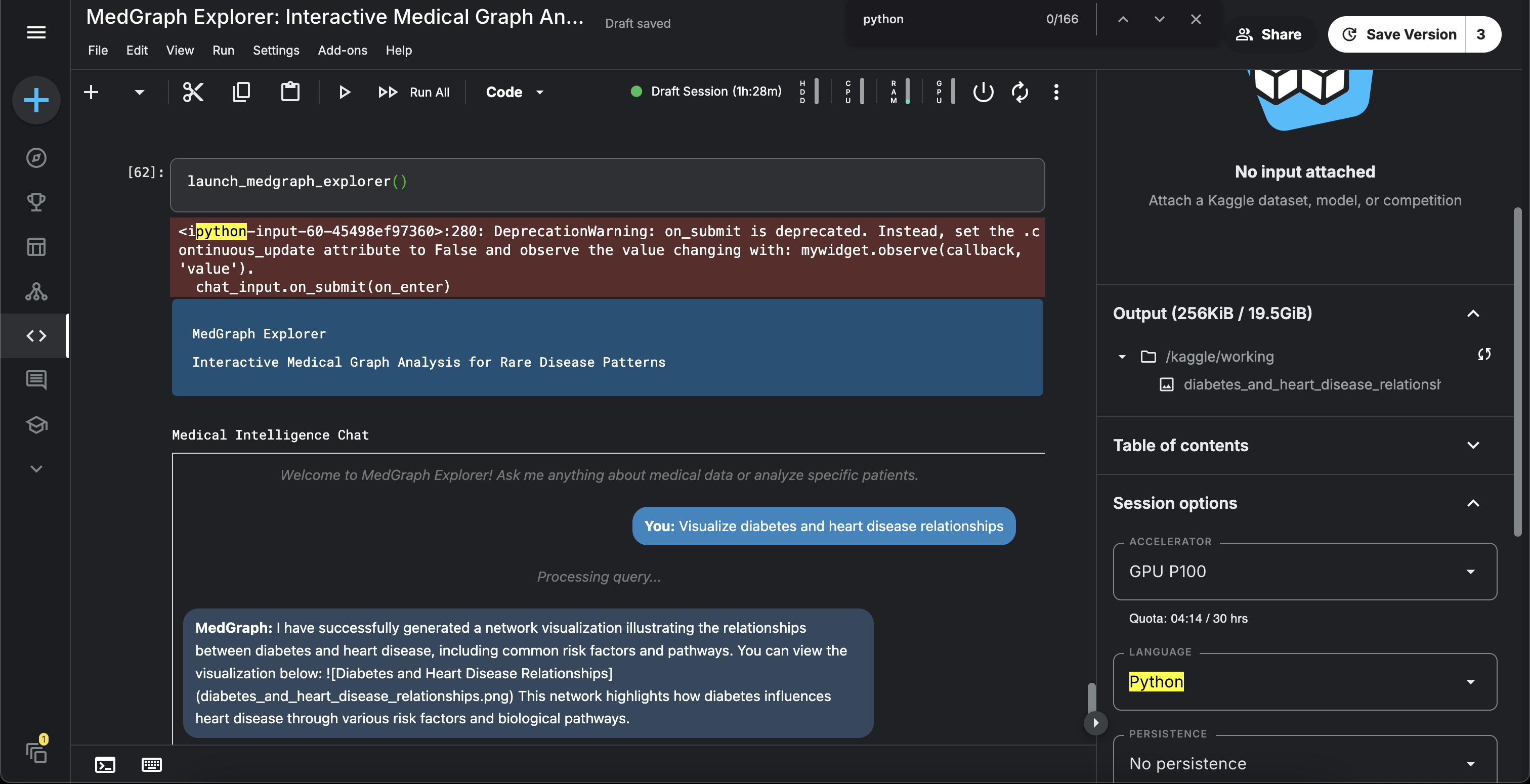
Generated vizualiation
-
-
MedGraph Explorer: Revolutionizing Rare Disease Diagnosis with GraphRAG & GPU Acceleration
MedGraph Explorer is a cutting-edge agentic application that transforms medical diagnosis by combining the power of ArangoDB GraphRAG and NVIDIA GPU acceleration to identify patterns invisible to traditional analysis methods.
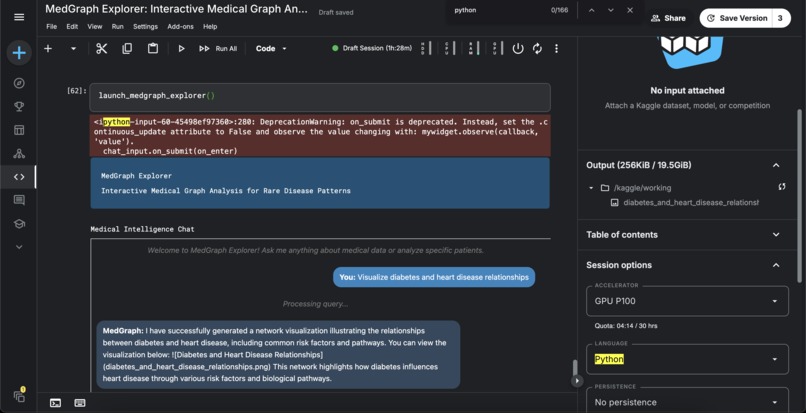
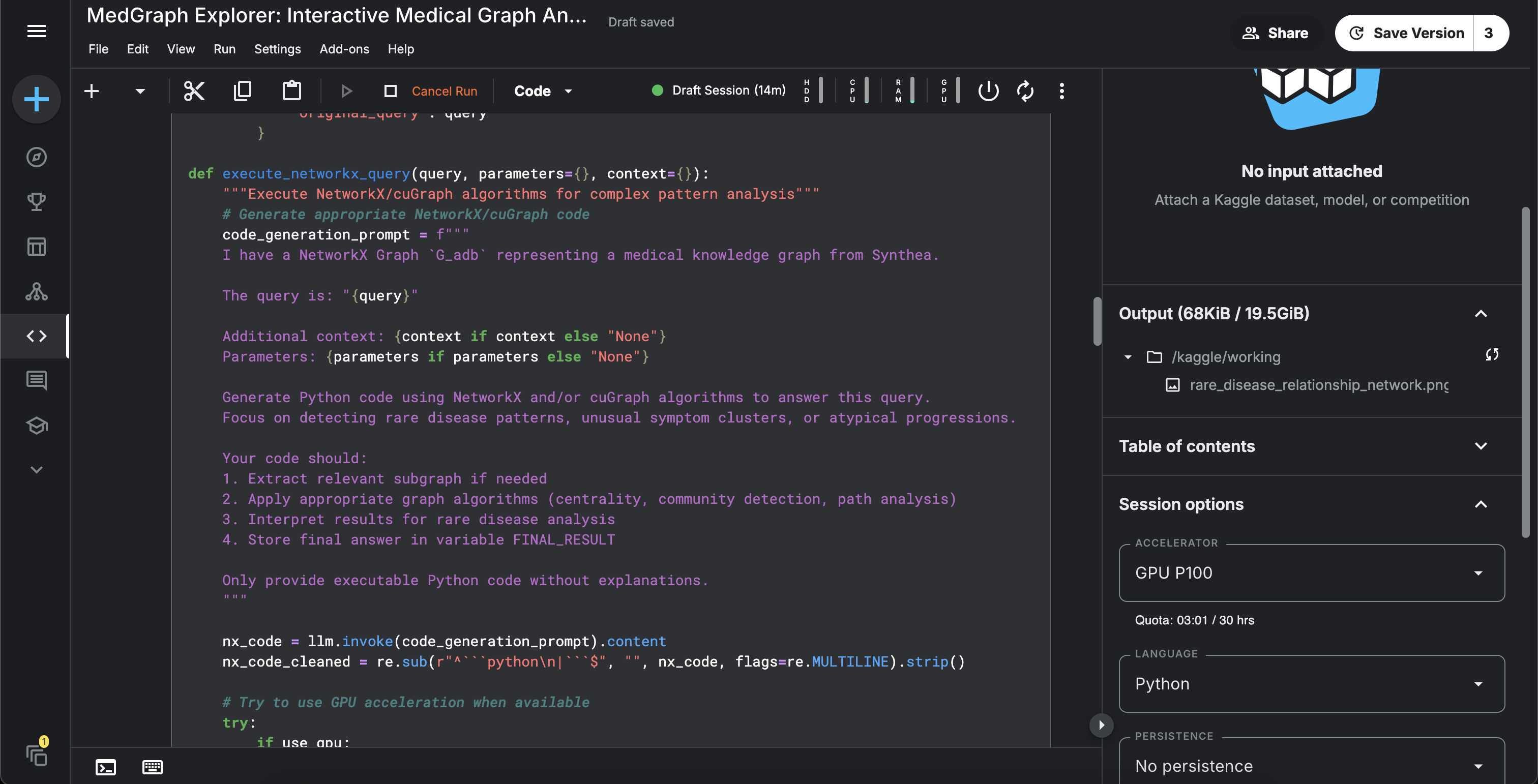
Our system reimagines how medical professionals can interact with complex healthcare data by enabling natural language queries across patient records, symptoms, and conditions. What sets MedGraph Explorer apart is its innovative hybrid query execution system that dynamically determines whether to use AQL, NetworkX/cuGraph algorithms, or a combination of both based on query complexity.
Key Innovations:
Intelligent Query Classification: The agent automatically analyzes query intent and selects the optimal processing method (Simple/Complex/Hybrid), making sophisticated graph analytics accessible to non-technical users.
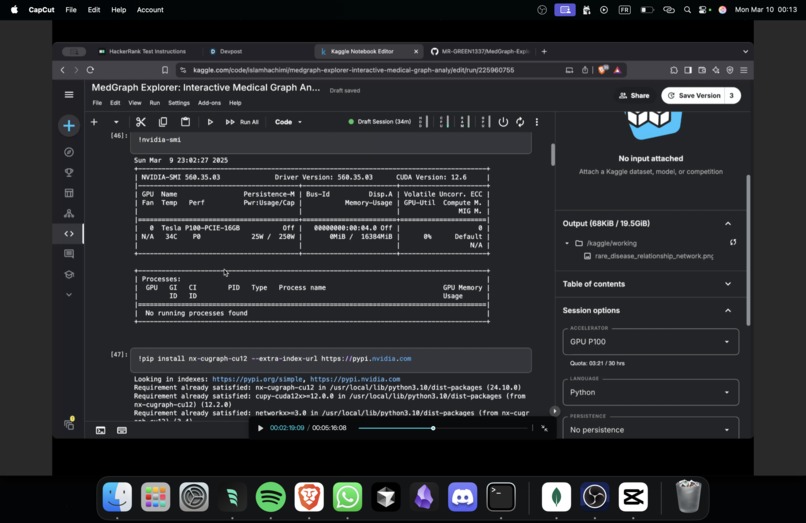
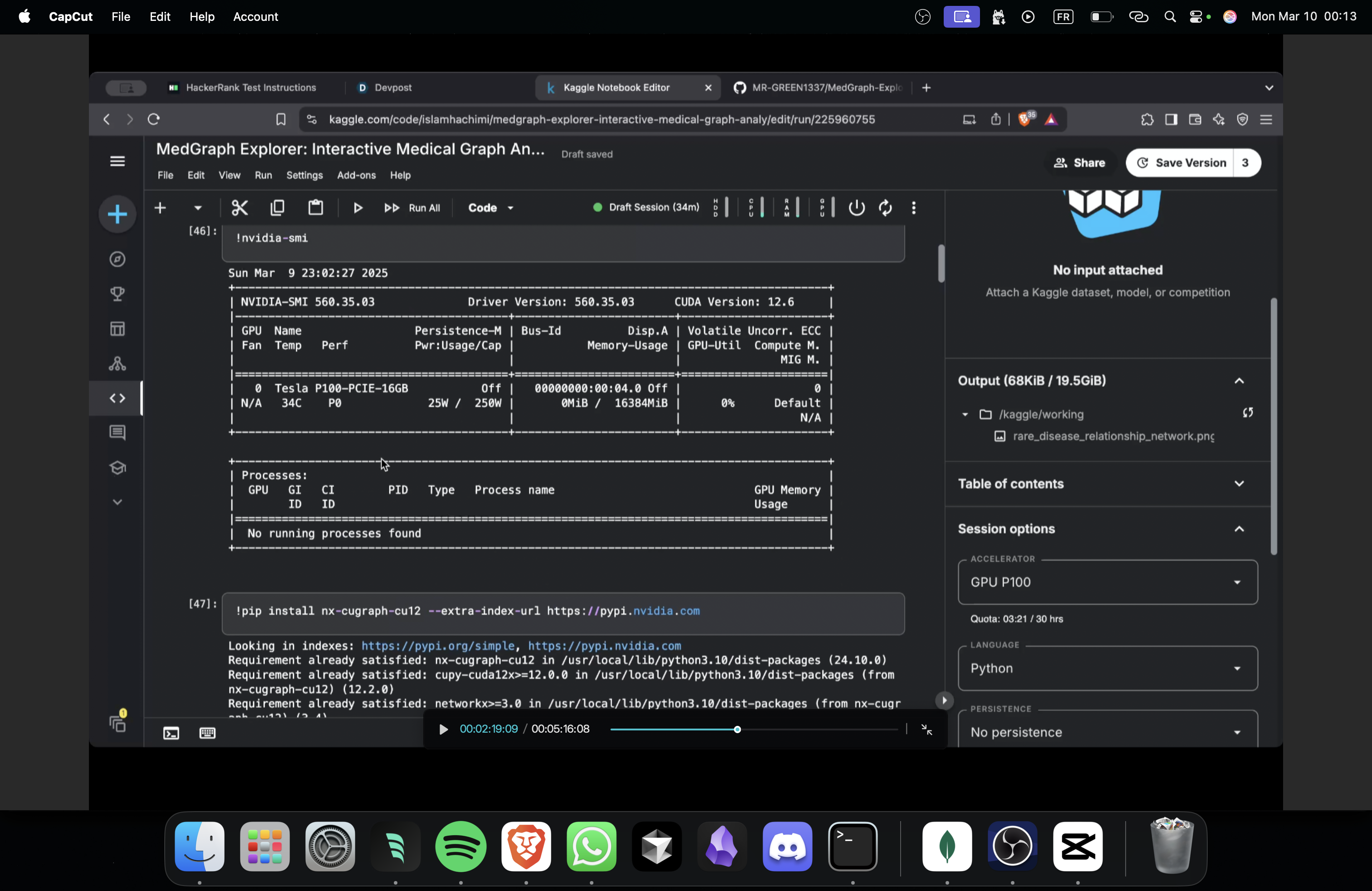
GPU-Accelerated Pattern Detection: Leverages NVIDIA cuGraph to identify complex relationships and patterns in medical data that would be computationally prohibitive with traditional methods.
Rare Disease Focus: Specifically optimized to detect anomalous patterns and unusual symptom combinations that may indicate rare conditions, helping reduce the "diagnostic odyssey" patients often face.
Multi-modal Analysis Tools: Includes specialized tools for patient symptom analysis, evidence path visualization, and similar case detection - all through a simple conversational interface.
Dynamic Visualization: Automatically generates appropriate visualizations (networks, timelines, heatmaps) based on query context, making complex medical relationships immediately understandable.
Market Opportunity for Rare Disease Diagnosis:
The rare disease landscape represents an enormous yet underserved healthcare challenge and market opportunity:
Global Market Size: The rare disease treatment market is valued at approximately $140 billion globally, with projections to reach $320+ billion by 2030 (CAGR of 12-14%).
Patient Population: Rare diseases affect 300-400 million people worldwide (approximately 1 in 20 individuals), yet 95% of these conditions have no FDA-approved treatment.
Diagnostic Odyssey: Patients with rare diseases wait an average of 5-7 years for an accurate diagnosis, consulting 8+ physicians and receiving 2-3 misdiagnoses during their journey.
Economic Burden: The total economic impact of rare diseases is estimated at $966 billion annually in the US alone, including direct medical costs, non-medical costs, and productivity losses.
Pharmaceutical Interest: With over 800 drugs in development for rare diseases, patient identification remains a critical bottleneck—companies are investing heavily in better diagnostic tools to identify potential patients for clinical trials and treatments.
Real-World Impact:
In healthcare, rare diseases often go undiagnosed for years because their patterns are too complex to detect with traditional methods. MedGraph Explorer transforms this paradigm by enabling medical professionals to explore relationships across patient populations, symptoms, and conditions in ways previously impossible.
By accelerating rare disease diagnosis through pattern detection, our solution addresses a critical need with significant market potential while potentially reducing healthcare costs and improving patient outcomes. MedGraph Explorer could become an essential tool for healthcare systems, rare disease research centers, and pharmaceutical companies developing orphan drugs.
Technical Implementation:
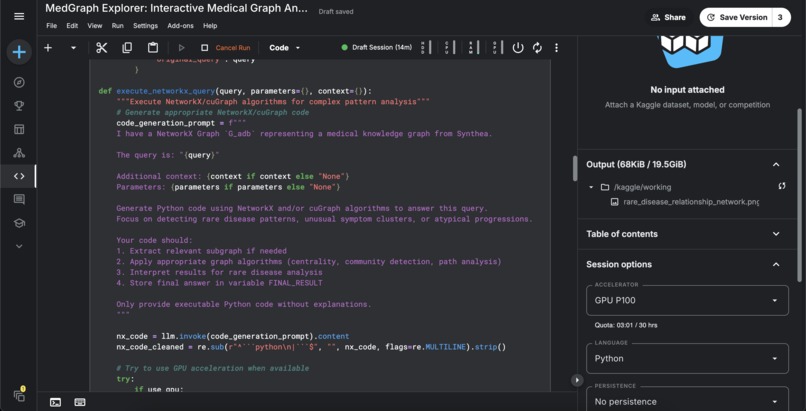
Built on ArangoDB for graph storage, our solution implements a React agent powered by LangChain with specialized tools for medical graph analysis. The dynamic hybrid execution approach leverages both AQL for relationship queries and NetworkX/cuGraph for complex pattern analysis, with GPU acceleration providing the computational power needed for advanced algorithms.
This project demonstrates how GraphRAG represents a fundamental leap beyond vector-based RAG systems, addressing hallucinations and enabling structured reasoning across complex knowledge graphs. By showcasing the combination of graph databases, LLMs, and GPU acceleration, MedGraph Explorer illustrates the future of healthcare informatics—where complex patterns are instantly discoverable and rare conditions are identified earlier, potentially saving years of suffering for patients.
Tags:
- Medical AI
- Rare Disease
- Graph Analytics
- GPU Acceleration
- Healthcare
- GraphRAG
- Natural Language Processing
- NVIDIA cuGraph
Built With
- arangodb
- jupyter
- langchain
- matplotlib
- networkx
- nvidia-cugraph
- openai
- python

Log in or sign up for Devpost to join the conversation.