Inspiration
My inspiration for MedGPT stemmed from the need for easily accessible and reliable medical advice. I recognized the potential for leveraging generative AI to create a tool capable of providing accurate and personalized medical guidance and helping stop the spread of misinformation.
What it does
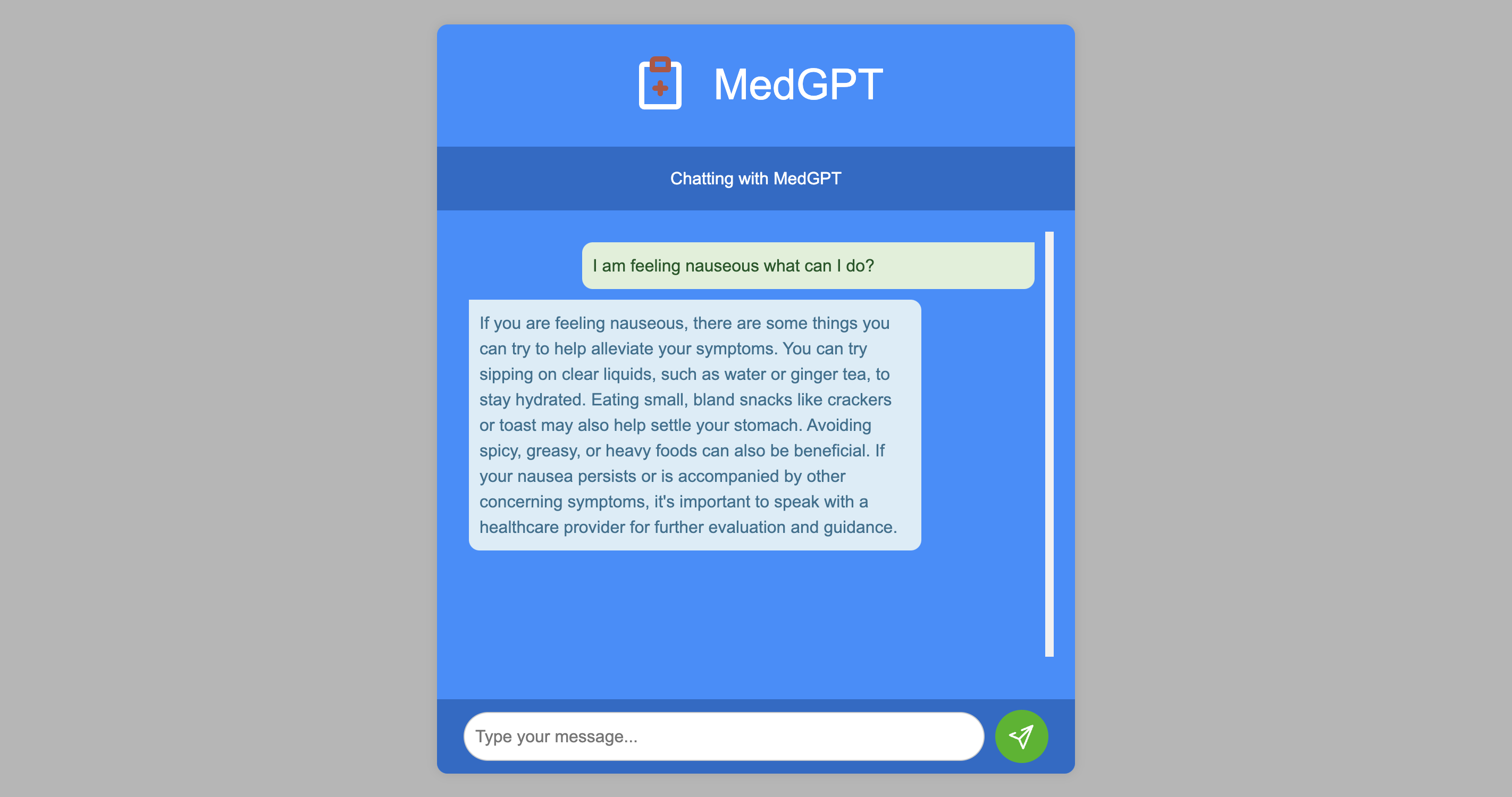
MedGPT utilizes a fine-tuned version of the GPT-3.5-Turbo model to offer tailored medical advice to users. Analyzing input text can provide information on symptoms, diagnoses, treatment options, and preventive measures. Its fine-tuning ensures reliable responses within the medical domain, and no misinformation is spread.
How we built it
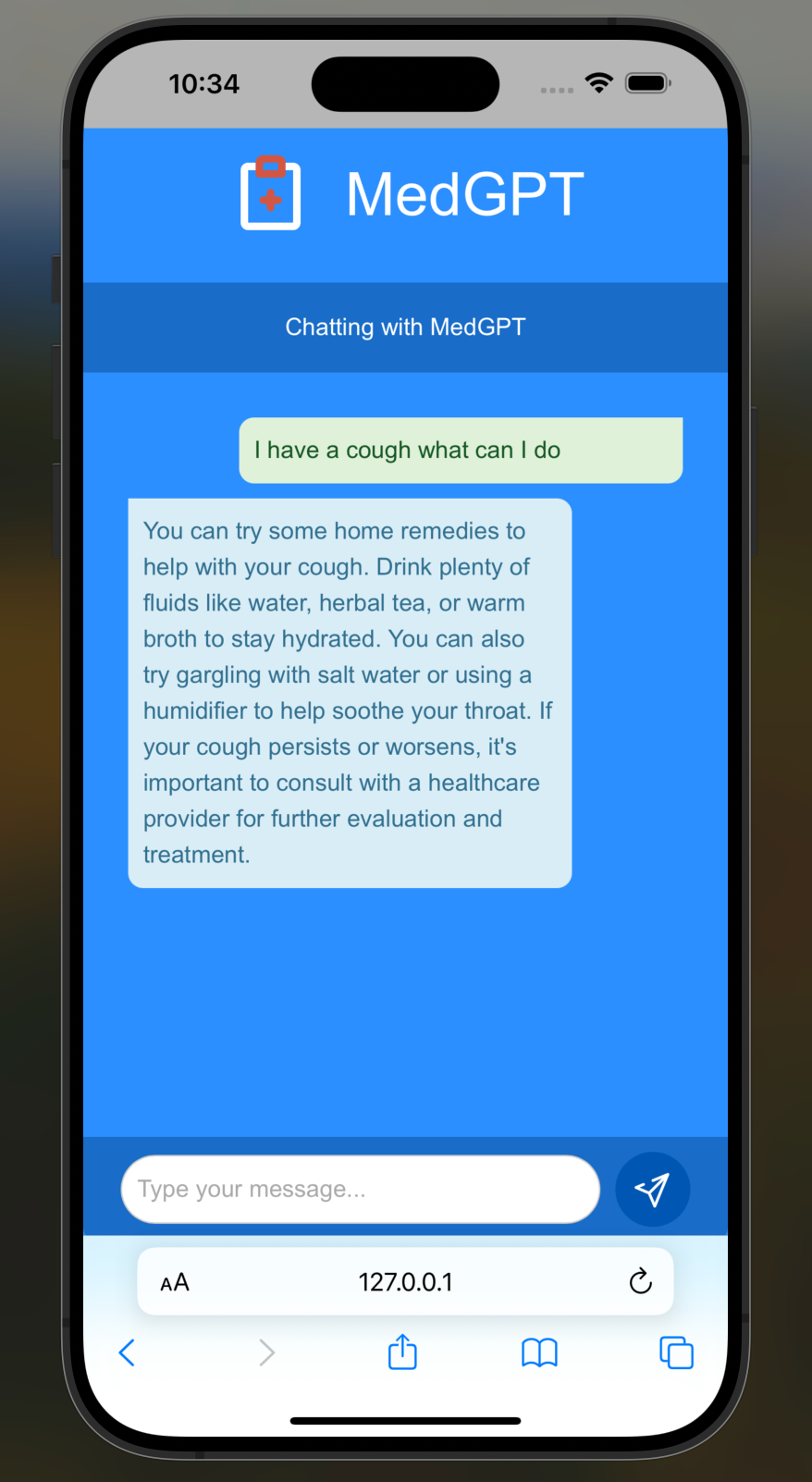
I built MedGPT using a combination of Python back-end frameworks and the OpenAI GPT3.5 model. I also used bootstrap to make the site scale seamlessly for mobile users
Challenges we ran into
One of the main challenges was sourcing and preprocessing accurate and reliable medical data. As this is a prototype, the fine-tuning knowledge base is nowhere near as expansive as I would like.
Accomplishments that we're proud of
I built a super clean and aesthetically pleasing UI within 48 hours that scales across all screen sizes and fine-tuned a GPT model for the first time.
What we learned
I learned to use Bootstrap, fine-tune a GPT model, and source and preprocess data for training.
What's next for MedGPT
I want to expand the knowledge base so it has more specific and helpful information and can give more accurate and precise answers, so it will rely less on the openAI training data. I would also like it to be able to have conversations using context from previous messages in the conversation and for conversations to be persistent across some form of user accounts.

Log in or sign up for Devpost to join the conversation.