Inspiration
Me and my friend Yuvraj realized that doctors are usually very busy, handling many patients at once and not having enough time to thoroughly check long medical records, raw vital signs, and ongoing health information. Important health trends, especially from wearable devices, can be overlooked simply because there's not enough time to look at everything carefully.
This made us wonder: instead of giving doctors more information, what if we helped them get better understanding faster?
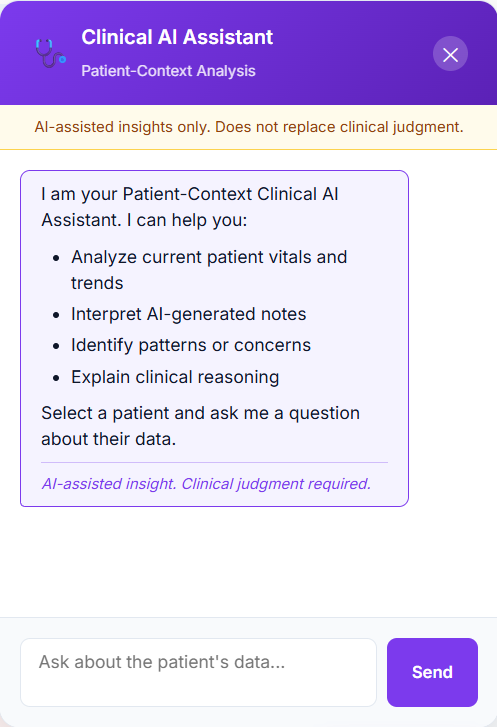
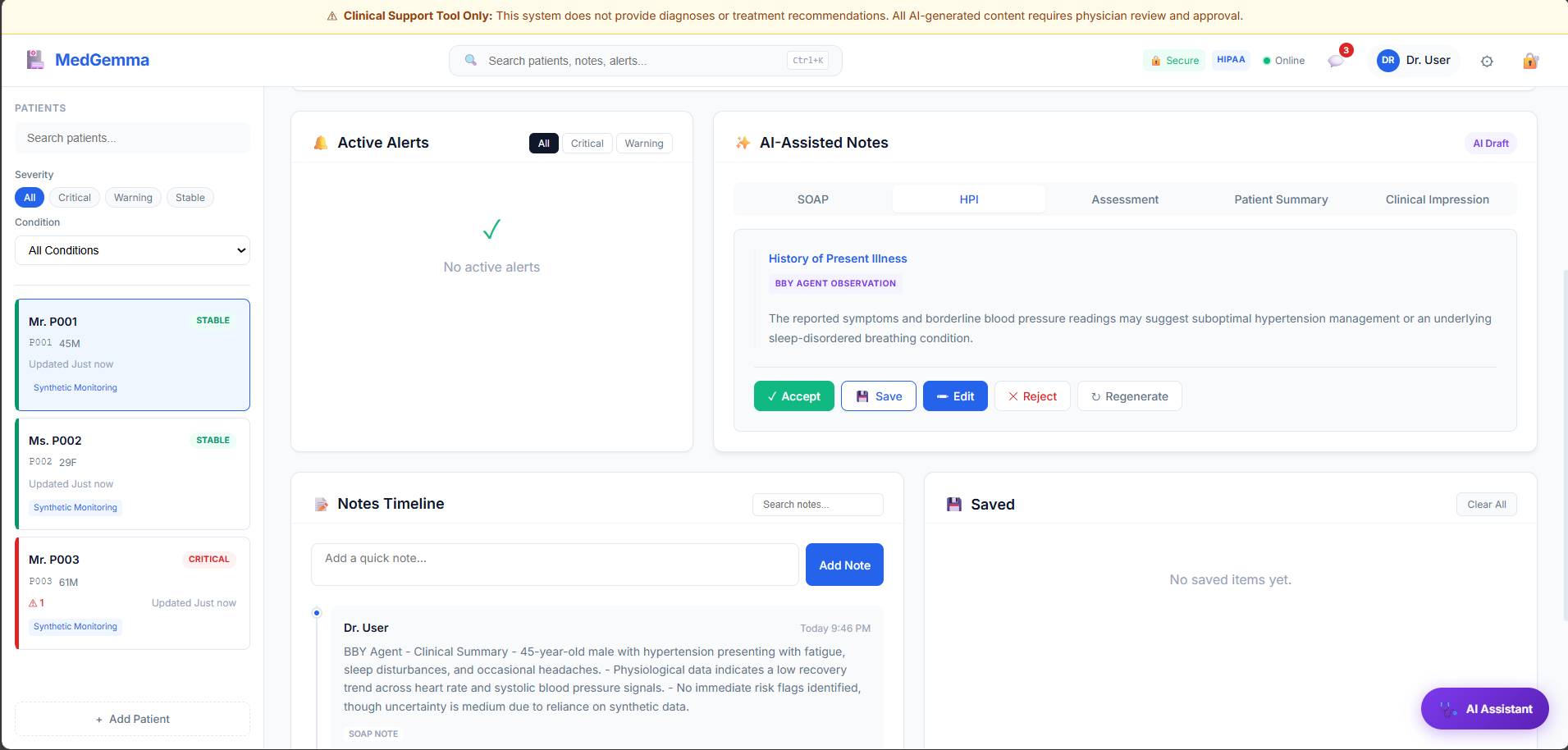
That thought led to the creation of MedGemma. We developed MedGemma to take real patient data from wearables and turn it into brief, organized clinical notes like SOAP summaries, assessments, and patient summaries that doctors can quickly grasp. To make it even more helpful, we also included an AI chatbot that lets doctors ask follow-up questions about a patient's condition without having to search through charts manually.
MedGemma isn't meant to replace doctors or make decisions for them. It's designed to save time, helping clinicians focus on what's most important: making smart choices and offering better care.
What it does
An AI-powered system that converts patient wearable data into summaries, SOAP notes, etc. And also includes an AI assistant for deeper patient analysis.
How we built it
The backend of MedGemma was created by my friend Yuvraj using Python, where all the main data processing and clinical thinking happens. This involves working with real-time patient data from wearables, creating organized clinical documents like SOAP notes, assessments, and patient summaries, and supporting the AI assistant through a structured backend system.
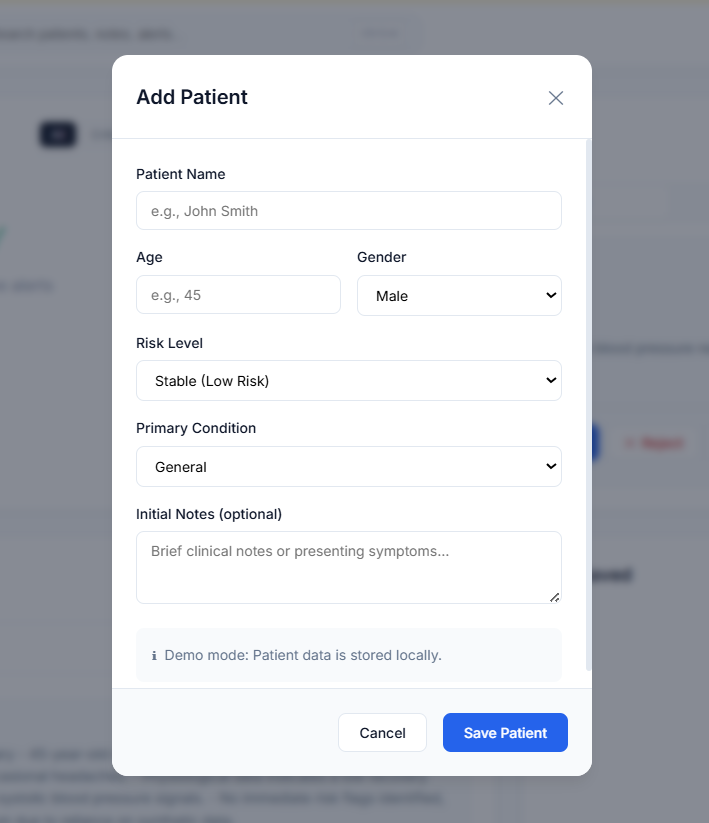
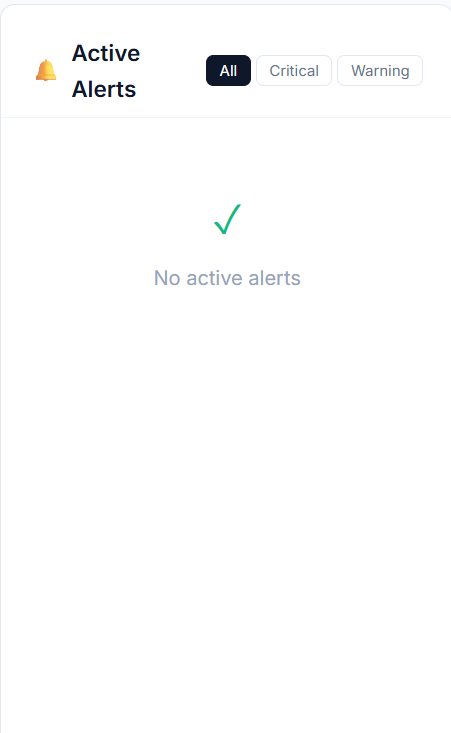
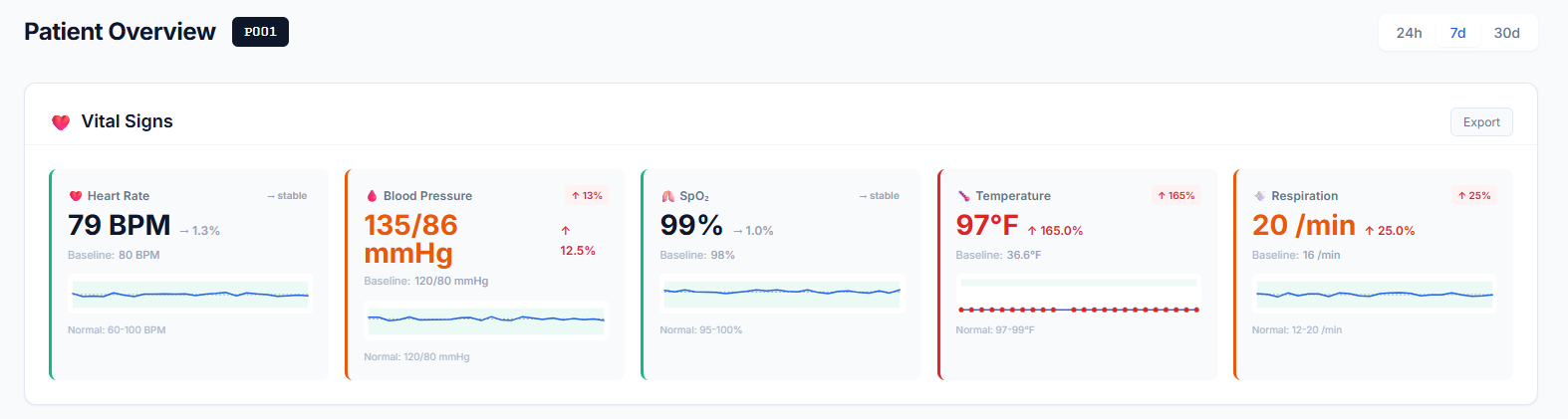
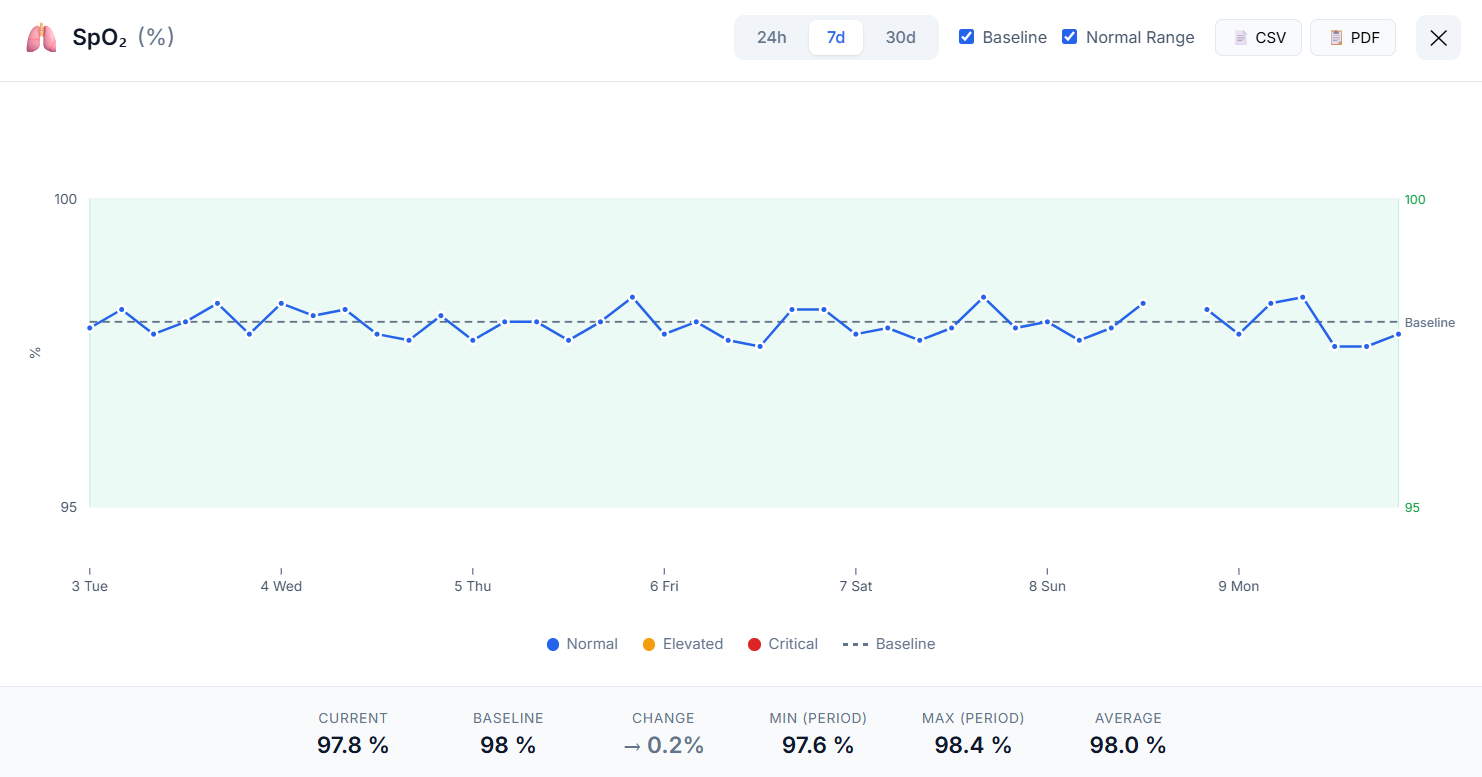
I focused on the frontend and system integration, building the user dashboard with HTML, CSS, and JavaScript. My job was to create an interface that is easy to use, clean, and efficient for doctors, making sure important patient details are easy to find and understand quickly. I also made sure the frontend and backend work together smoothly, so the user interface can reliably interact with the Python services and show AI insights accurately.
Together, we designed MedGemma with a clear split between the smart part and the display part: the Python backend is the "brain" of the system, while the frontend is the "face." This setup helped us create a flexible, scalable, and easier-to-maintain system, while keeping the user experience focused on helping busy healthcare professionals.
Challenges we ran into
While working on MedGemma, we faced several challenges, with the main one being how to safely and effectively integrate Gemini into our backend system. Instead of using Gemini as a separate chatbot, we needed it to operate entirely within our Python backend, follow a specific clinical structure, and generate outputs based only on real wearable data. Making sure Gemini followed strict instructions, formatting rules, and section boundaries—without making up information or mixing up clinical sections—required many attempts and careful planning of prompts and logic.
Another big challenge was keeping the roles of the frontend, backend, and AI clearly separate. We had to make sure all clinical reasoning took place only in the backend, while the frontend was just for displaying information. Avoiding repeated logic, accidental AI processing in the user interface, and overlapping content in sections like SOAP notes, assessment, and clinical impression was a major technical and design challenge.
We also encountered issues related to keeping things brief and user-friendly. Doctors are very time-conscious, so producing clear, easy-to-read outputs instead of long, wordy text needed strict limits and constant improvements. Plus, incorporating realistic patient data, dealing with API limits, and fixing deployment and backend connection problems added to the difficulty.
By overcoming these challenges, we created a system that is organized, secure, and truly useful in a clinical environment.
Accomplishments that we're proud of
We are really proud to share that the product we developed is truly helpful for doctors and was carefully designed from both a technical and user experience perspective. MedGemma was built with the understanding that healthcare professionals are very busy and need quick, dependable insights instead of being overwhelmed by too much information. By turning real data from wearable devices into clear, organized clinical notes and summaries, the system helps doctors get a quick overview of a patient's condition and make better, more informed decisions.
In addition to its functionality, we placed strong emphasis on a clean design and safety. All the clinical reasoning takes place in a secure Python backend, while the user interface is simple, easy to use, and focused on clarity. We carefully integrated Gemini to maintain a consistent structure, keep outputs brief, and avoid any confusion between different clinical sections, making it easy to read and trustworthy. The AI chatbot also adds value by letting doctors ask follow-up questions without having to go through patient data manually.
What's most important is that MedGemma is designed to support, not replace, doctors. Every suggestion can be checked, accepted, or rejected by a clinician, ensuring that human judgment stays at the center. The result is a well-organized, scalable system that combines strong technical foundations with the real needs of clinical practice.


Log in or sign up for Devpost to join the conversation.