💡 Inspiration
The idea for MedFlow came from a real experience. I went to a hospital with my grandfather, and after waiting for a long time, we briefly stepped out — only to miss our turn.
That moment made me realize how inefficient hospital systems still are. Patients don’t know when their turn will come, and a lot of time is wasted. I wanted to fix this “glitch” in the system.
⚙️ What It Does
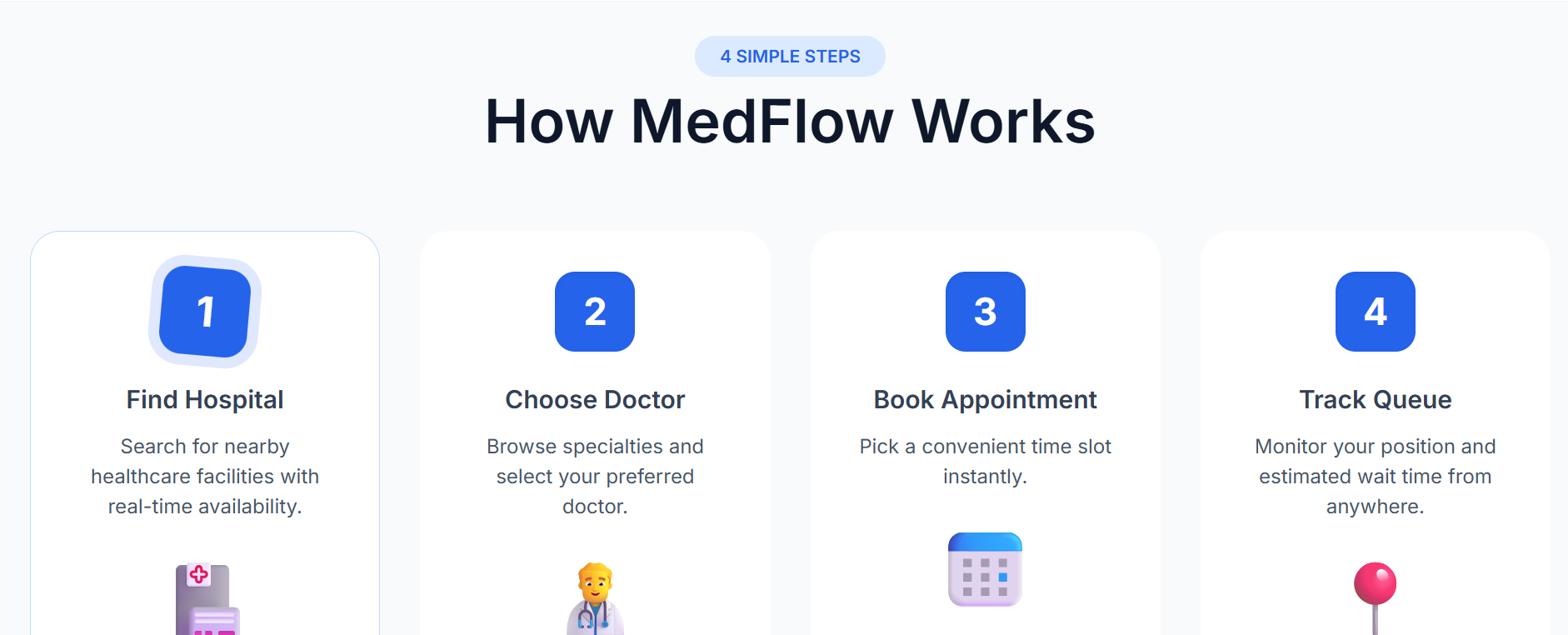
MedFlow is an AI-powered healthcare platform that simplifies the entire patient journey:
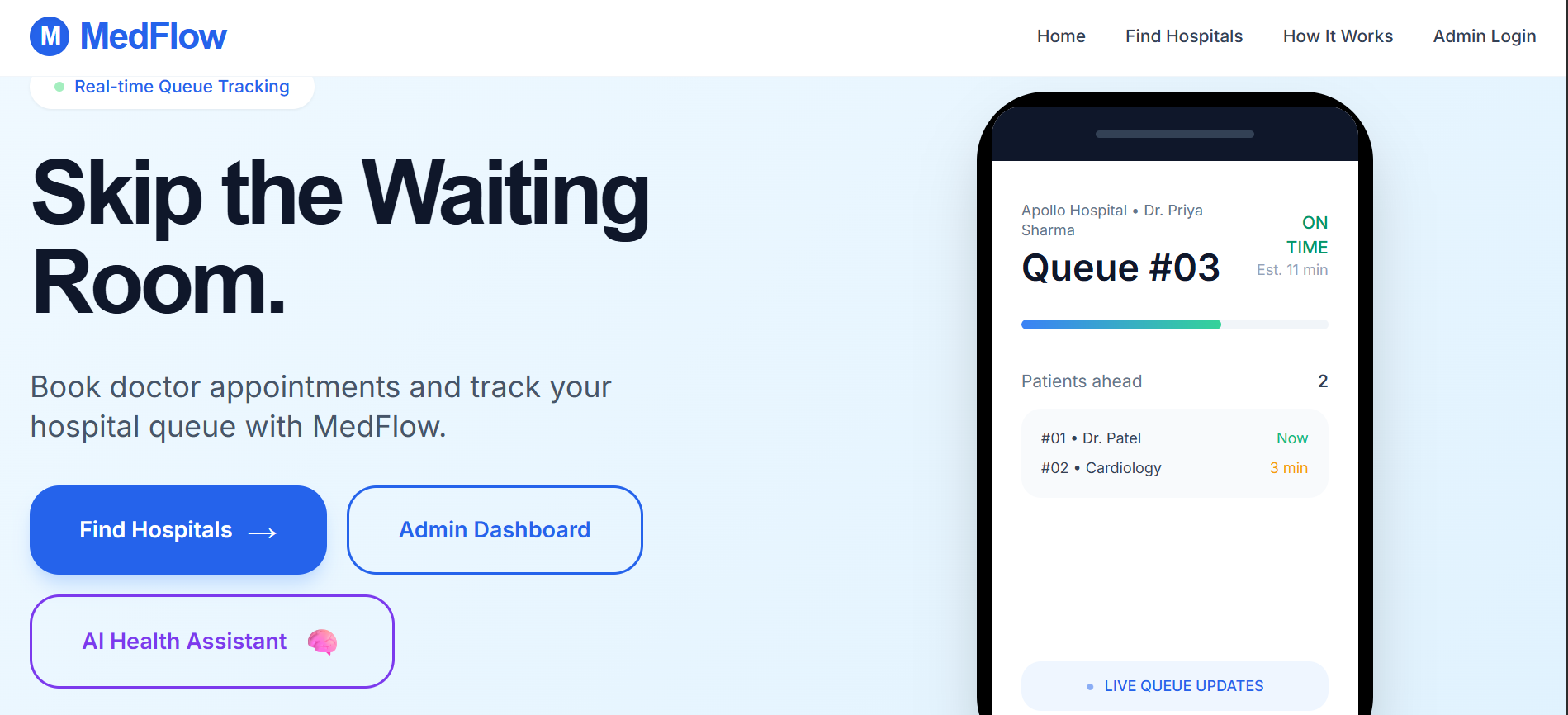
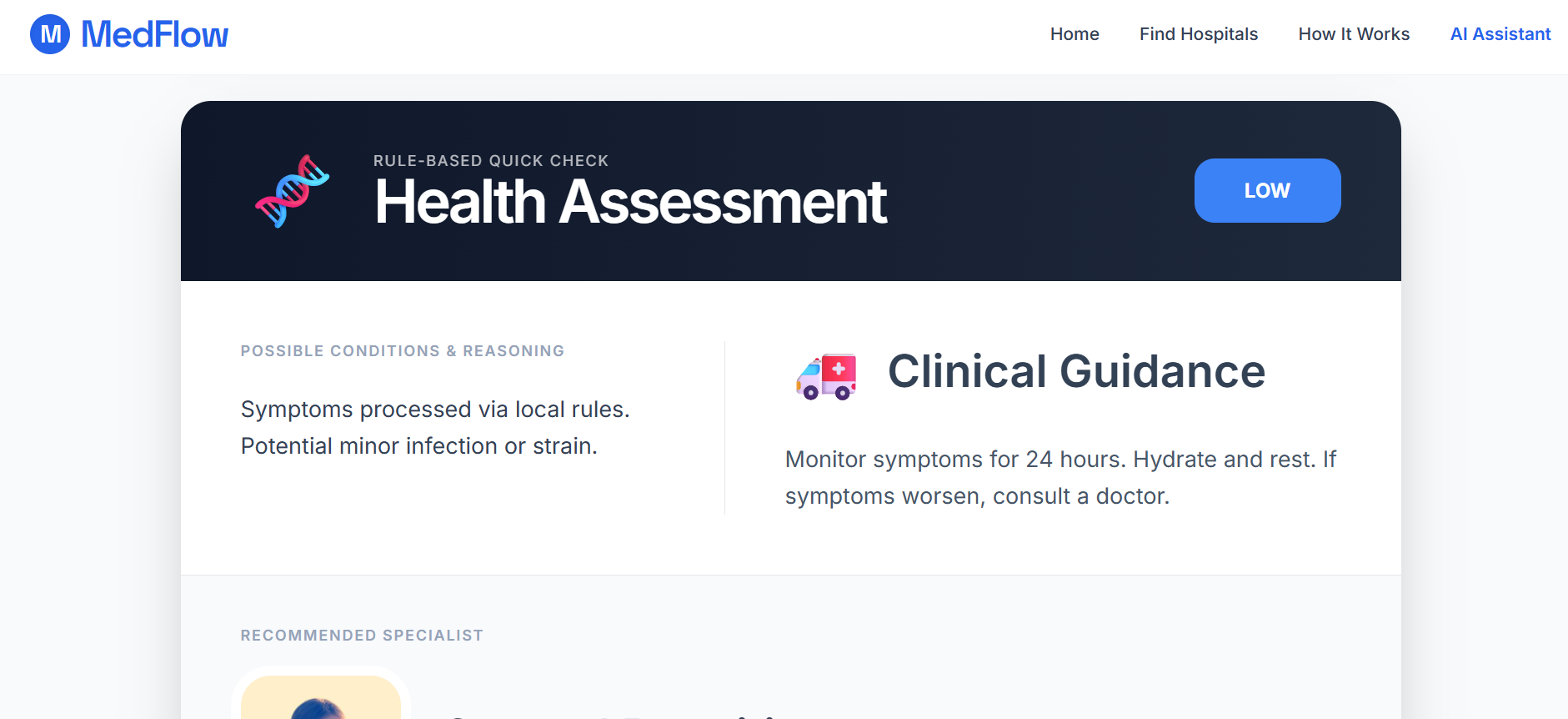
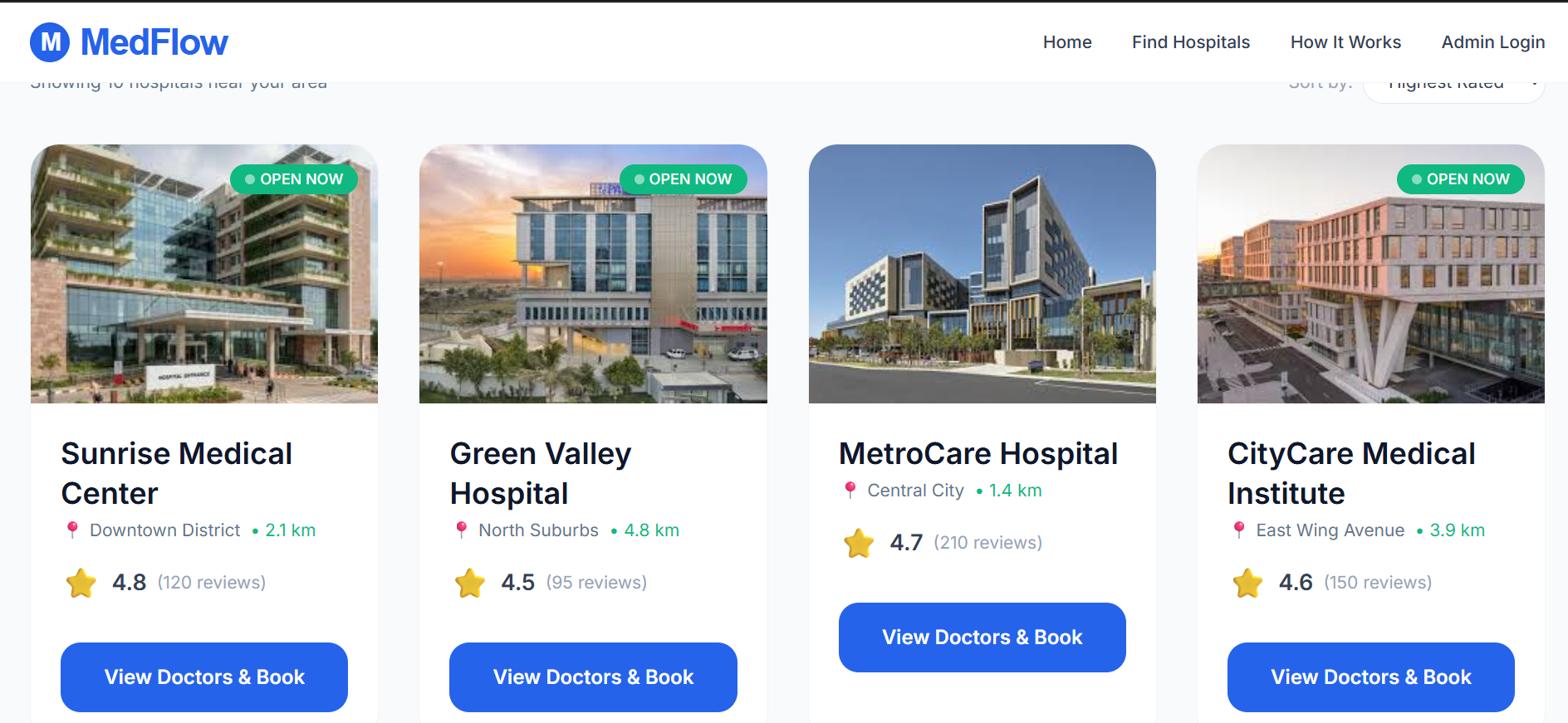
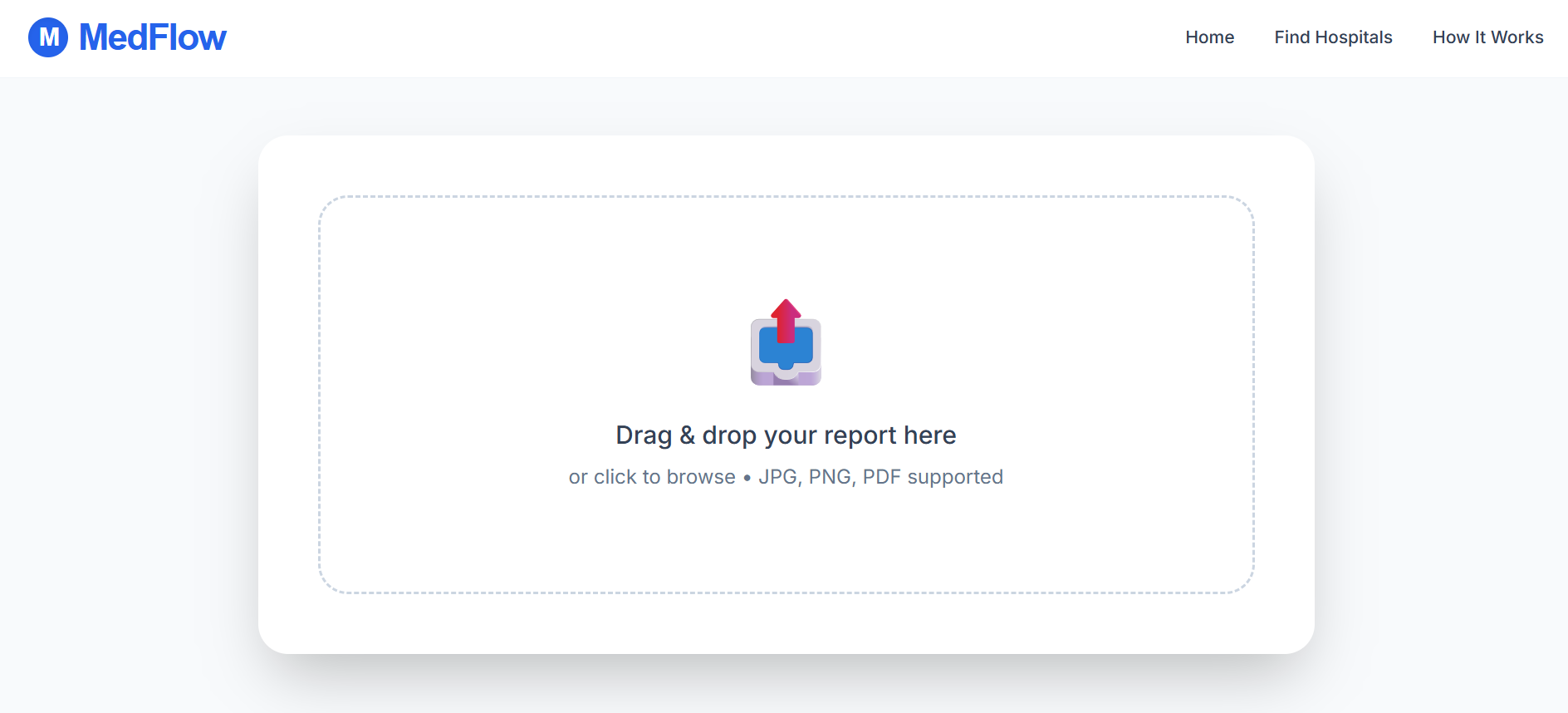
🤖 AI Symptom Analyzer (with urgency detection) 🧠 Medical Report Analyzer (AI explains reports like X-rays, MRIs) 🏥 Hospital & Doctor discovery 📅 Appointment booking ⏳ Real-time queue tracking
It takes users from symptoms → understanding → action, all in one place.
🛠️ How I Built It
I built MedFlow using a combination of frontend development and AI integration:
Designed and developed the full website interface Integrated AI using Gemini API for medical report analysis Created a hybrid system combining: rule-based triage (for speed) AI models (for deeper insights) Used AI tools to speed up development and improve UI/UX ⚠️ Challenges I Ran Into Faced multiple bugs while integrating AI APIs Handling responses and formatting them properly for users Making sure the system stayed simple while adding complex features Balancing between a working demo and advanced functionality
I solved these by debugging step-by-step and simplifying the system wherever needed.
📚 What I Learned How to integrate real AI into applications The importance of user experience in real-world problems How to think in terms of systems, not just features That solving real problems requires both technical and practical understanding 🚀 What’s Next for MedFlow Connect with real hospitals and onboard them Improve AI accuracy and reliability Add real-time data and live queue systems Scale the platform to serve users across India
Built With
- aitools
- css
- geminiapi
- html
- javascript
- vercel


Log in or sign up for Devpost to join the conversation.