Inspiration
Have you ever seen the old seasons of "Scrubs"? Do you remember the pagers they'd wear on call and constantly get buzzed between patients, and sometimes find out that they shouldn't have been paged at all? Well, medicine has evolved from the pager, but now being on call can mean vastly different things in different hospitals. One common way of alerting people to consultation requests is through calling your hospital call connection service and then connecting you to the person who is on call in the field needed. But mistakes happen, a case can get presented to someone who isn't on call or isn't the specialty that is needed in that moment.
What it does
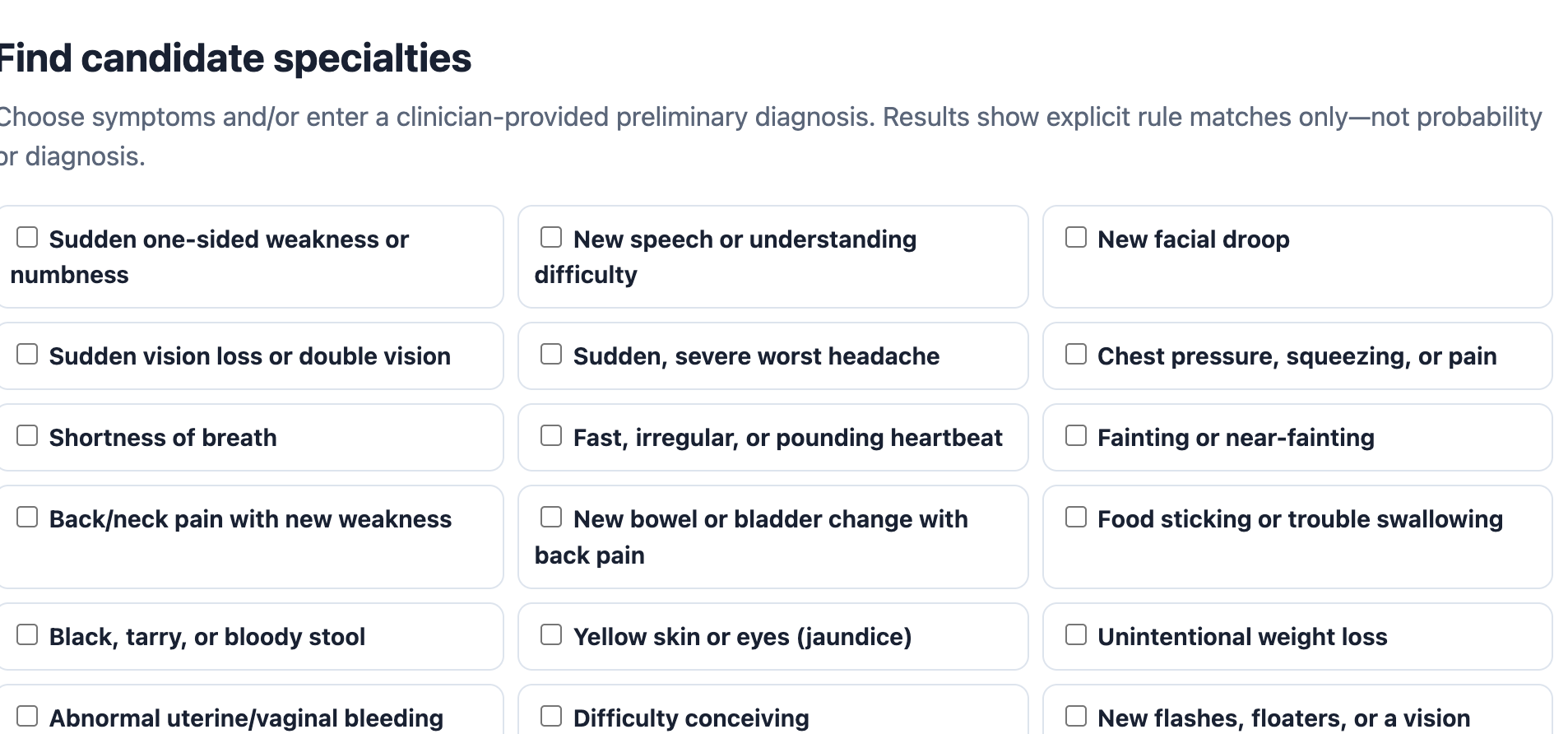
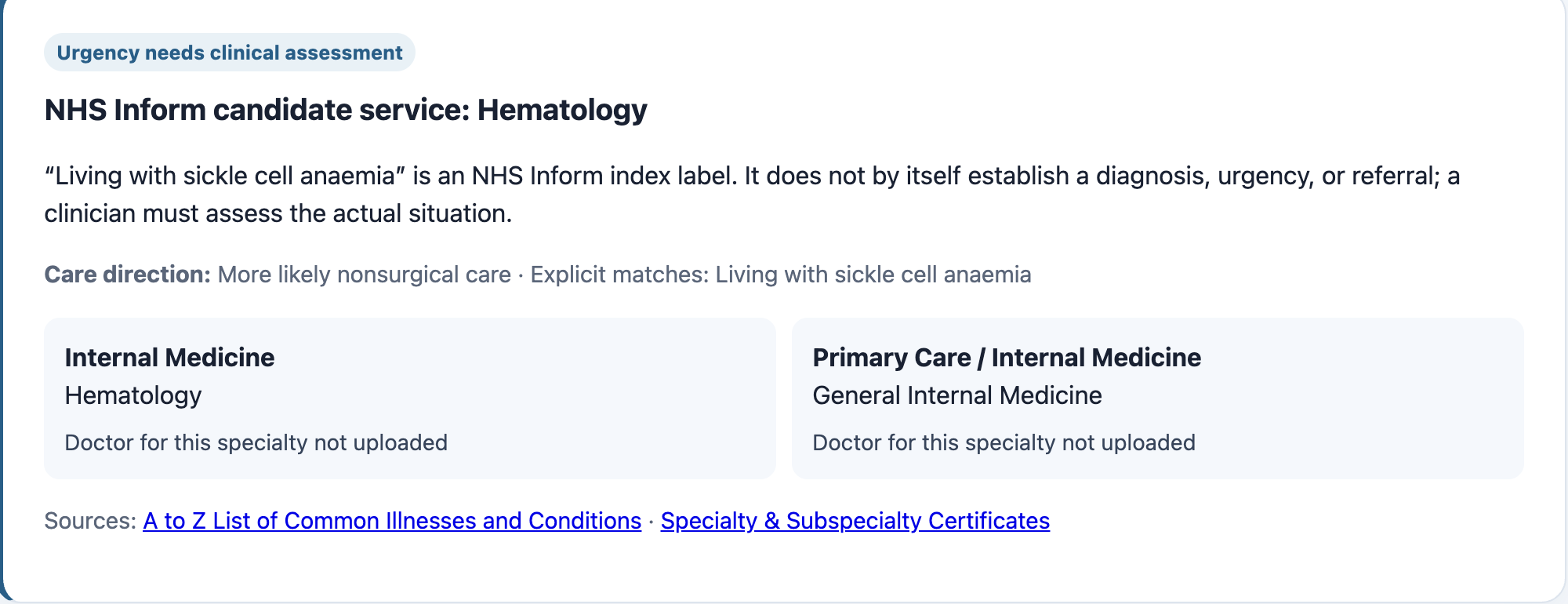
That's what MedFinder does. It tells you who's on call, whether it should be the surgical speciality or not, and the urgency of the call. It helps speed up the process of calling between doctors, allows for more efficient care, and allows for less unnecessary consults.
How I built it
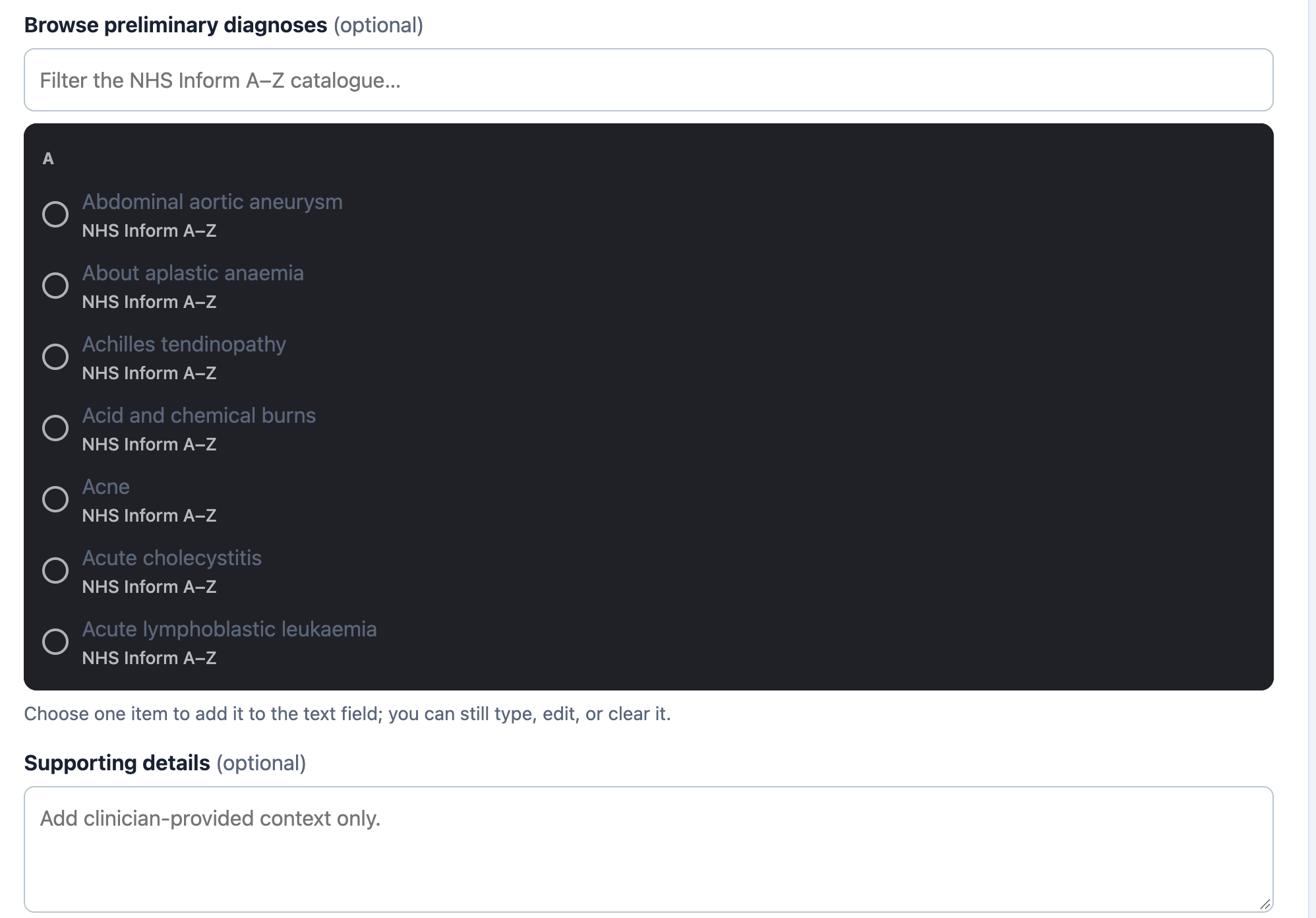
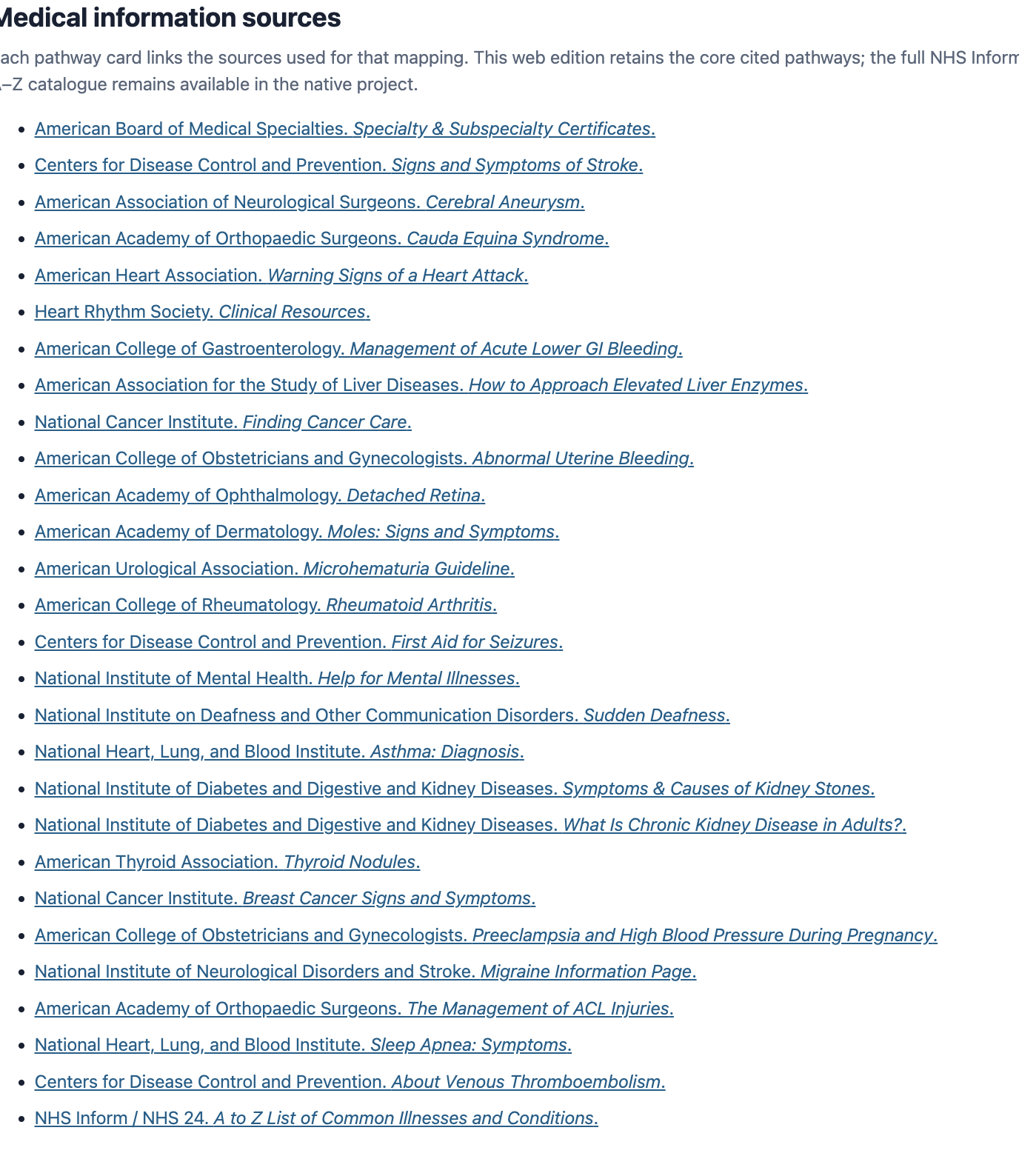
Using AI tools, I created multiple iterations in Swift. Then to upload it to Github, I turned it into HTML using Codex. Essentially, how the code works is that through a data base created through 33 sources, different cases are created for each preliminary diagnosis or symptoms added. For example, if I were to put "Cancer related fatigue" in as the main concern or diagnosis, it would tell me that the care team for medical oncology or hematology could be possible consults, and surgery may be required depending on the position the patient is in. That is because under the information for this choice, it has these presets put under the cases as recommendations. It does the same with symptoms, but as there are a lot of symptoms that don't point to anything specific, you get a much larger range of answers.
Challenges I ran into
The main challenges I ran into were that I am not very familiar with vibe coding. Yes it seems simple enough that you tell AI what you want, but it doesn't always listen to you. To get the Swift files to HTML so they worked properly in Github took a very long time as the AI kept changing things or hallucinating features that weren't in the finished Swift model. Plus, after years of being told that coders shouldn't use resources like this, having an opportunity n to experiment with these tools that are going to be essential in computer science future was very interesting.
What we learned
Through this, one thing I learned was how to vibe code, as well as understand what it was doing. After coding for many years, it felt weird to sit back more on this one, but seeing as this hackathon allowed for vibe coded submissions, just figuring it out initially had a slight learning curve. I think this hackathon ahs changed my perspective on vibe coding.
What's next for MedFinder
I would like to keep developing this, because it is very interesting to me. I've heard about this being an issue in healthcare, and ultimately it harms the patient. Especially in cases where time is of the essence, like STEMIs or strokes. By my making the process quicker, more efficient, and simple, call times can drop and we can provide better care. Especially with AI, if we are able to develop this enough, it take the job of the human entirely with the doctor telling the system who what field they need a consult from and the condition and it can automatically connect them to the right person, without the need of a middleman.


Log in or sign up for Devpost to join the conversation.