-
main screen
-
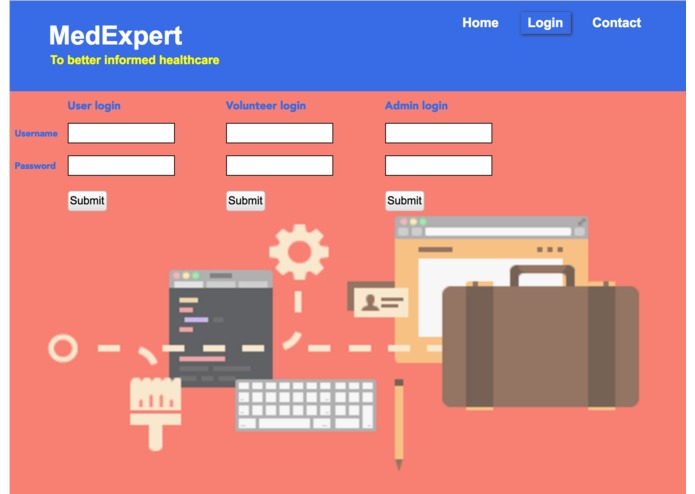
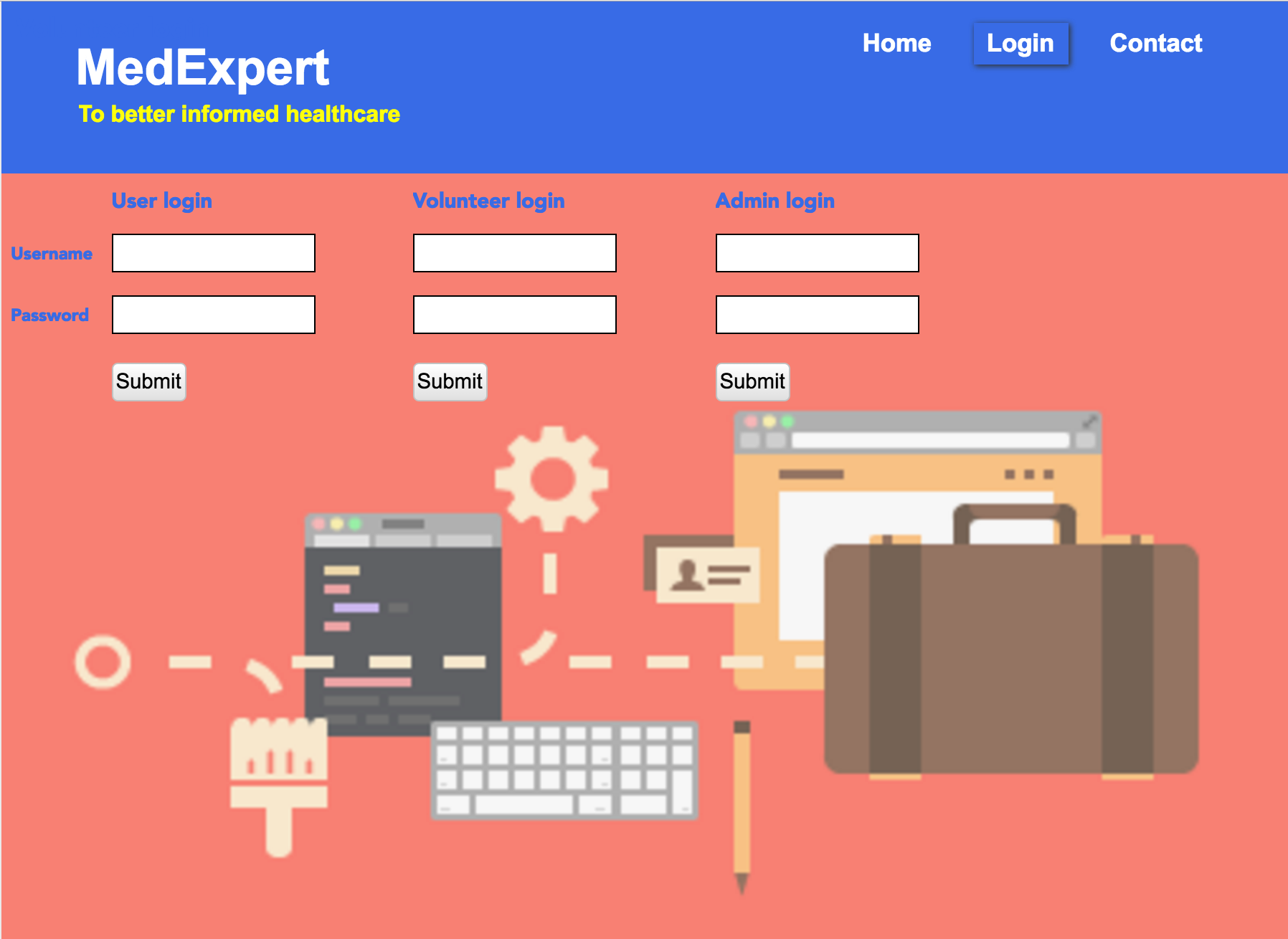
login page
-
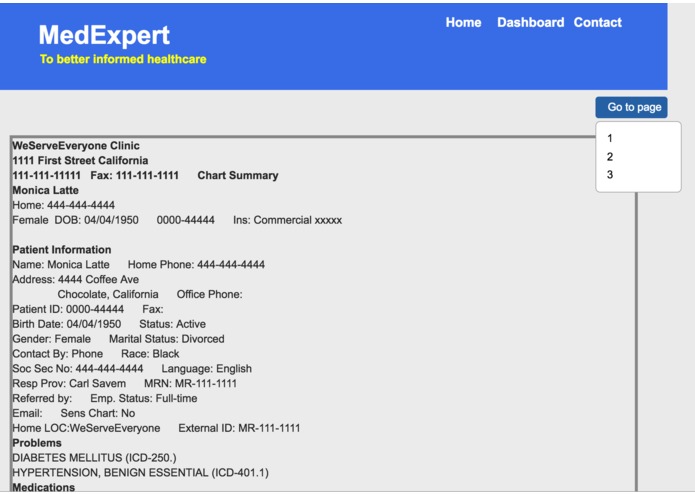
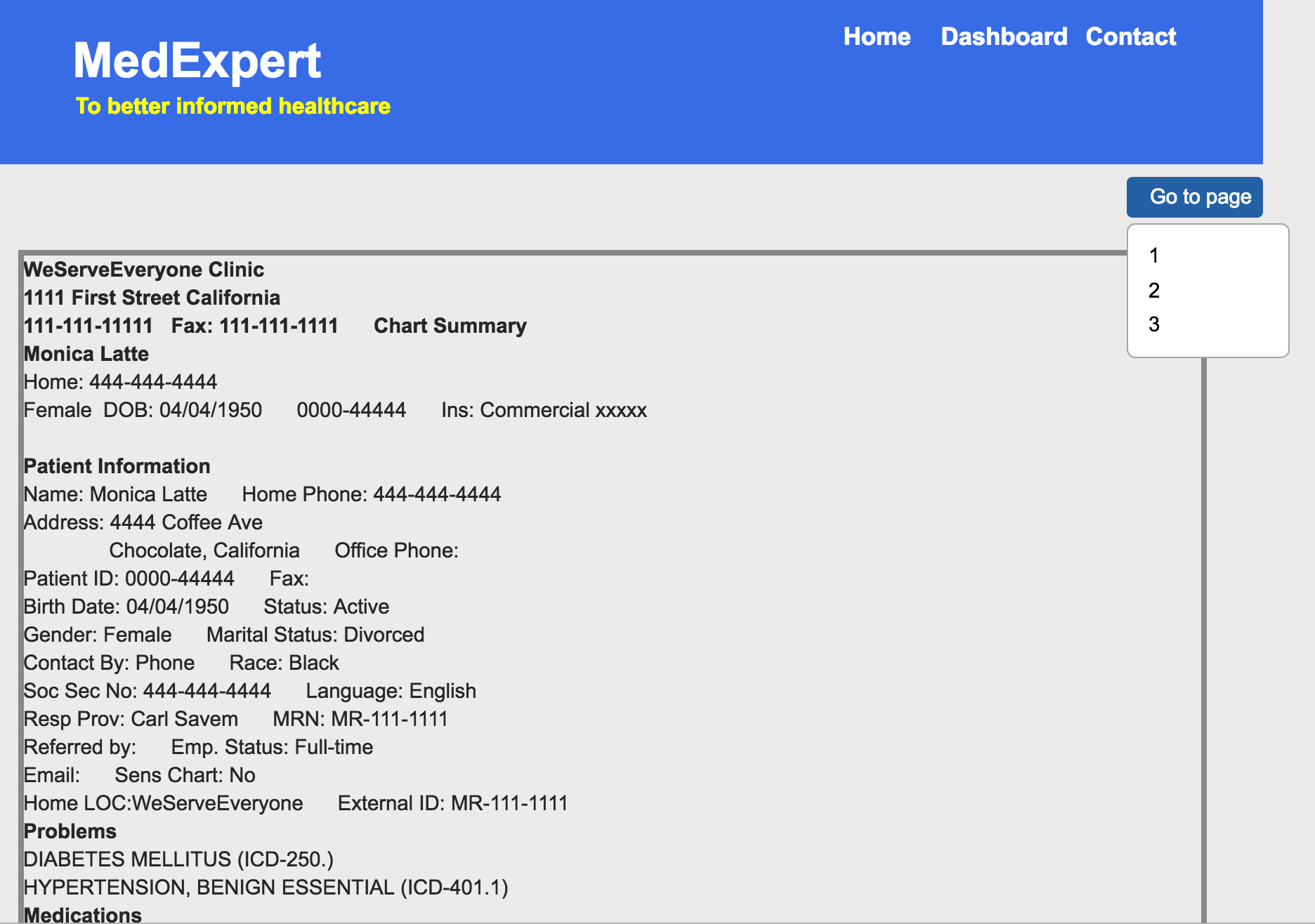
EHR browsing page demo
-
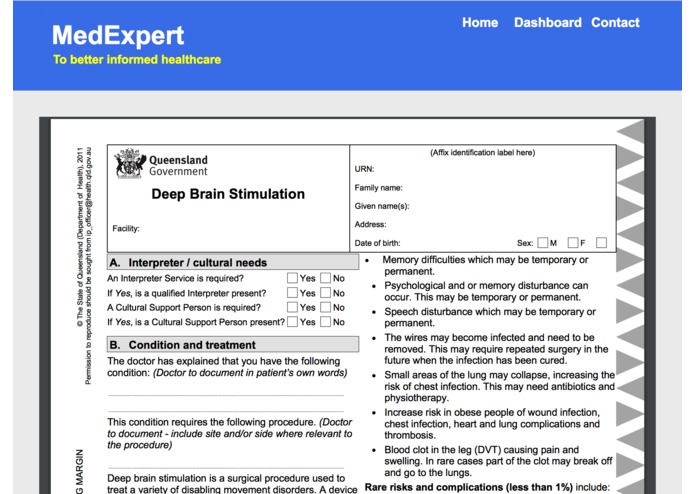
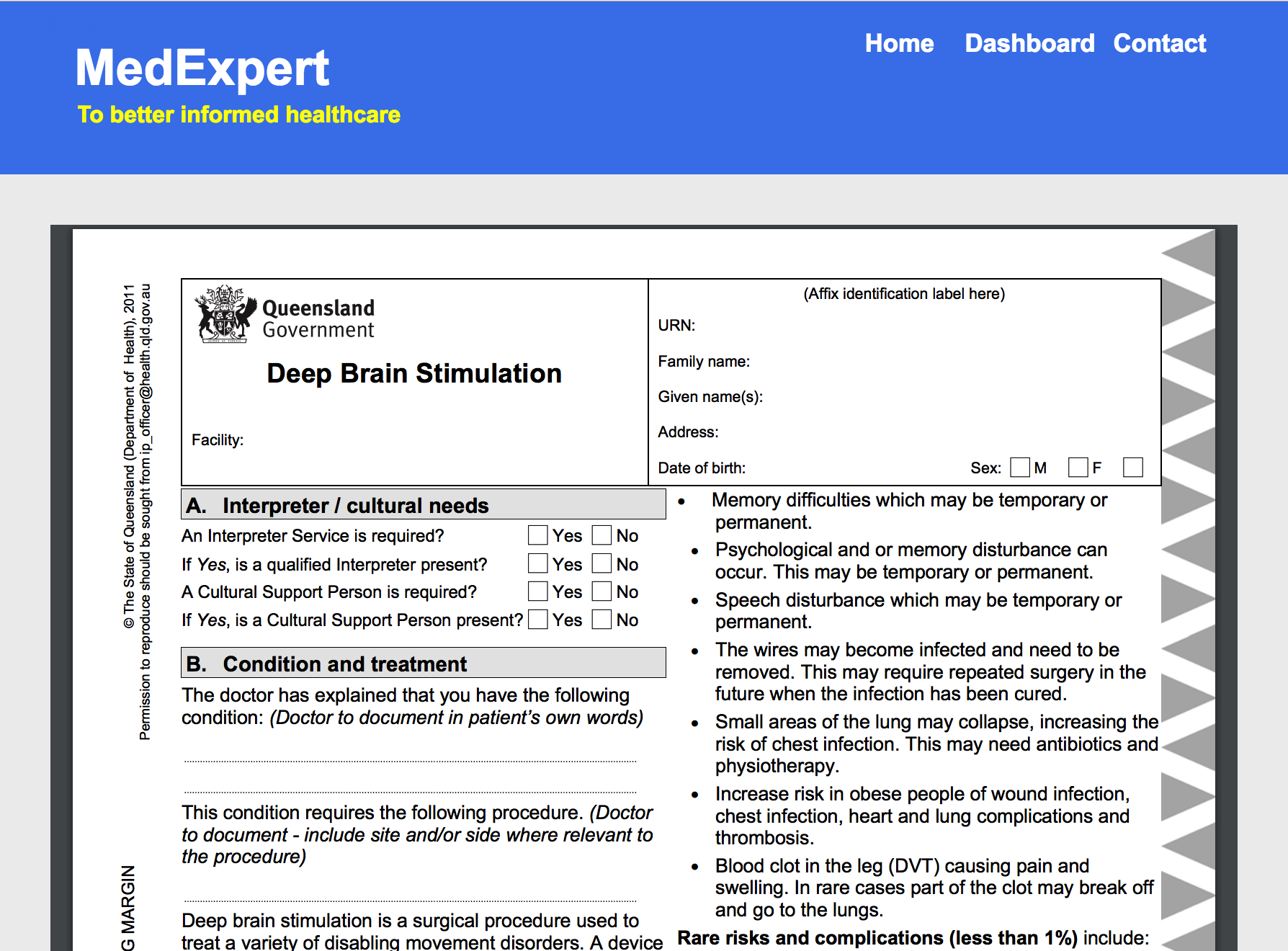
Medical informed consent page browsing demo

Inspiration
What it does
MedEx is a web application developed for both patients and healthcare professionals, providing patients with easy access on medical consent/ EHR information with further educational contents they care about and/ or reveal confusion on, giving suggestions on both educational portal development and guidelines on patients informed consent instructions. The two goals of MedEx are to
- help people understand their medical consent forms/ medical records
- help healthcare professionals/ researchers understand what patients need to understand in their medical documents as well as what is important to patients, and adjust their service guidelines accordingly.
Functions and Features proposed: MedEx is a platform enabling patients to interact with their medical records through functions such as in-text vocabulary searches (definitions, resources, images) and multiple language translations. Medical consent forms in PDF format will be accepted. Usage data, such as word searches and cursor activity (heat-maps) will be tracked, processed, and presented to physicians and other professionals who want to gain insight in patient education. Collected usage data and statistics can be presented in a dashboard including charts, graphs, and other visualizations, as well as in informative exportable reports. The application development mainly contains two stages: experimental data collection(experimental phase) and patients user trials (testing phase). [1] In experimental phase, a number of volunteer subjects are recruited to read medical consent forms/ EHRs and asked to highlight and search words/ phrases/ sentences they want to further explore. Their user behaviour are recorded through integration of Mouseflow API, from which heat-map for mouse movement/ clicking event tracking are generated as the raw user behavior data to be analyzed. [2] Words/ phrases/ sentences of the most interest will be extracted to comprise a baseline dictionary where each entry is matched with a list of conventional explanatory data sources (doctor definition/ wikipedia/ dynamic google search results, etc). The list of datasource will be present as a drop down menu when users in the testing phase click on a specific expression (list for common items from overlapping expressions will be merged), in which way user are able to redirect themselves to the data sources in an in-app pop-up window. The system constantly analyze real-time user behavior and dynamically adjust entries in the original dictionary of data source lists.
How we built it
The front-end framework was built using Justinmind prototyper and IntelliJ-IDEA using Javascript, css, html5.
Challenges we ran into
Neither of us had enough back-end fast deployment experience. Instead of connecting our back-end function with the front-end web application, we were only able to provide simple mock cases as demo.
Accomplishments that we're proud of
Came up with a two-phase method that is able to collect information on patient interest points on medical documents and use that information to direct patient education & help modify standard medical informed consent instruction pipelines. Fast prototyping/ front-end design& deployment.
What we learned
Actively reaching out to other hackers to communicate ideas is essential to forming a functional team. Our team only had 3 person, with skills concentrated in front-end design/ medical app prototyping.
What's next for MedEx
Website-domain connection trouble-shooting/ back-end design

Log in or sign up for Devpost to join the conversation.