-
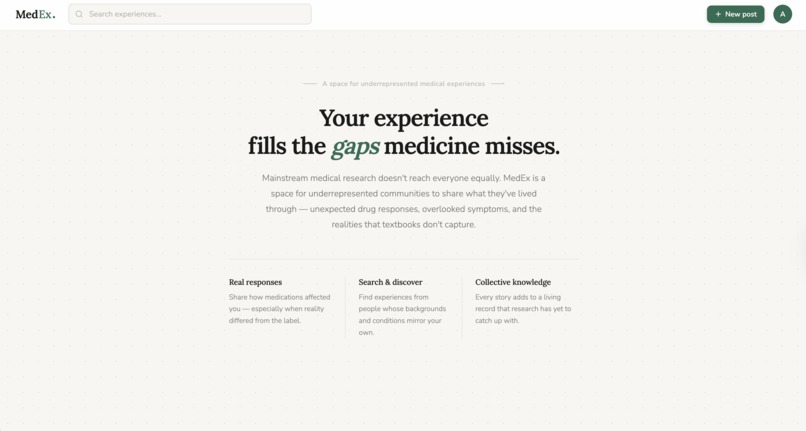
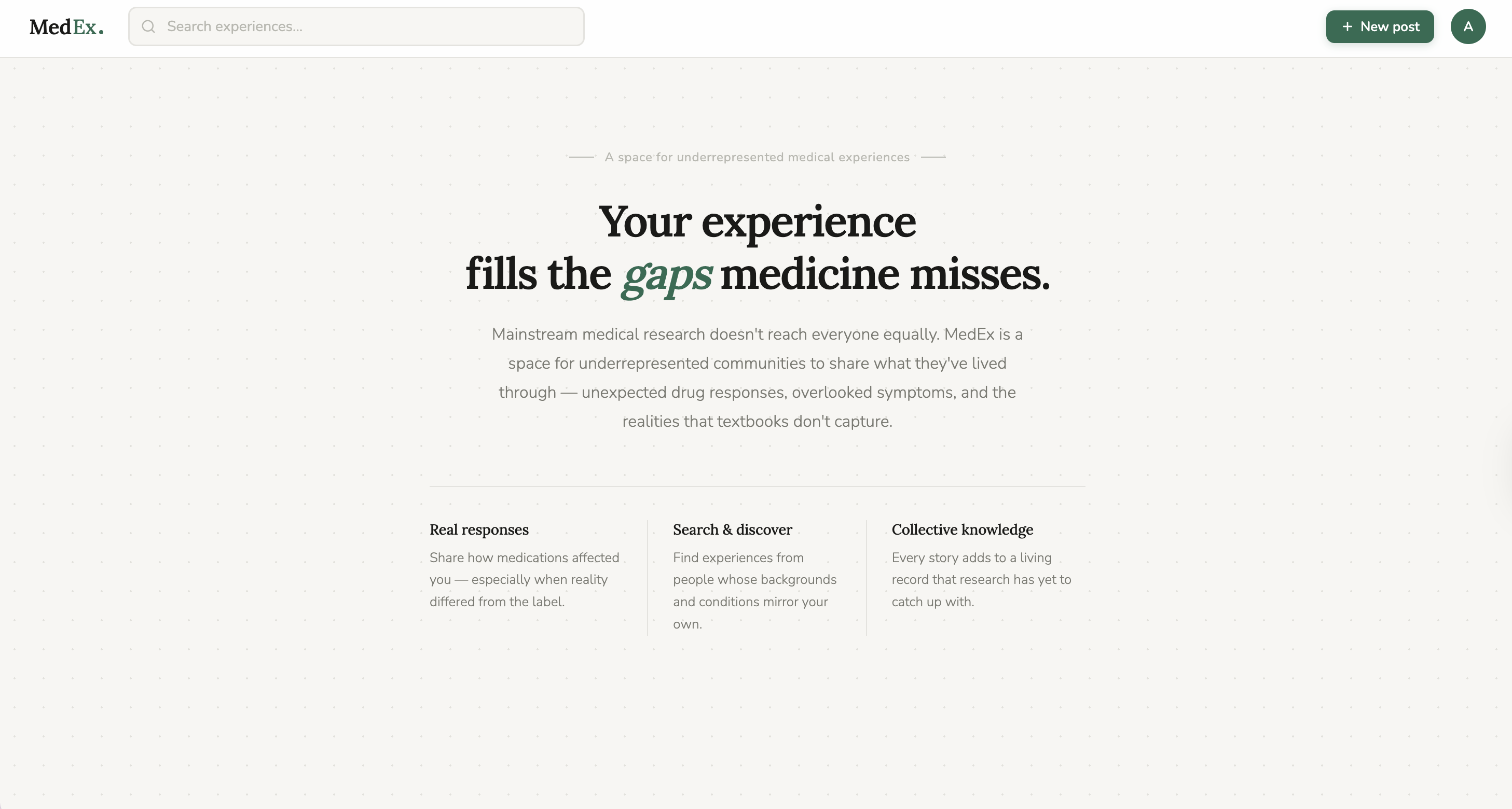
Homepage
-
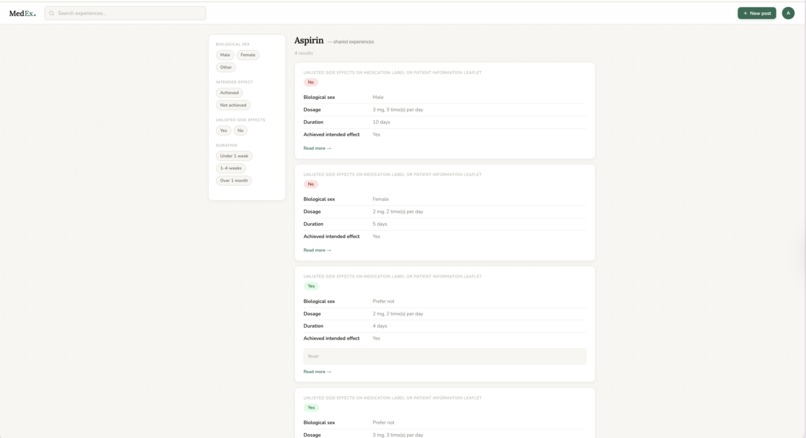
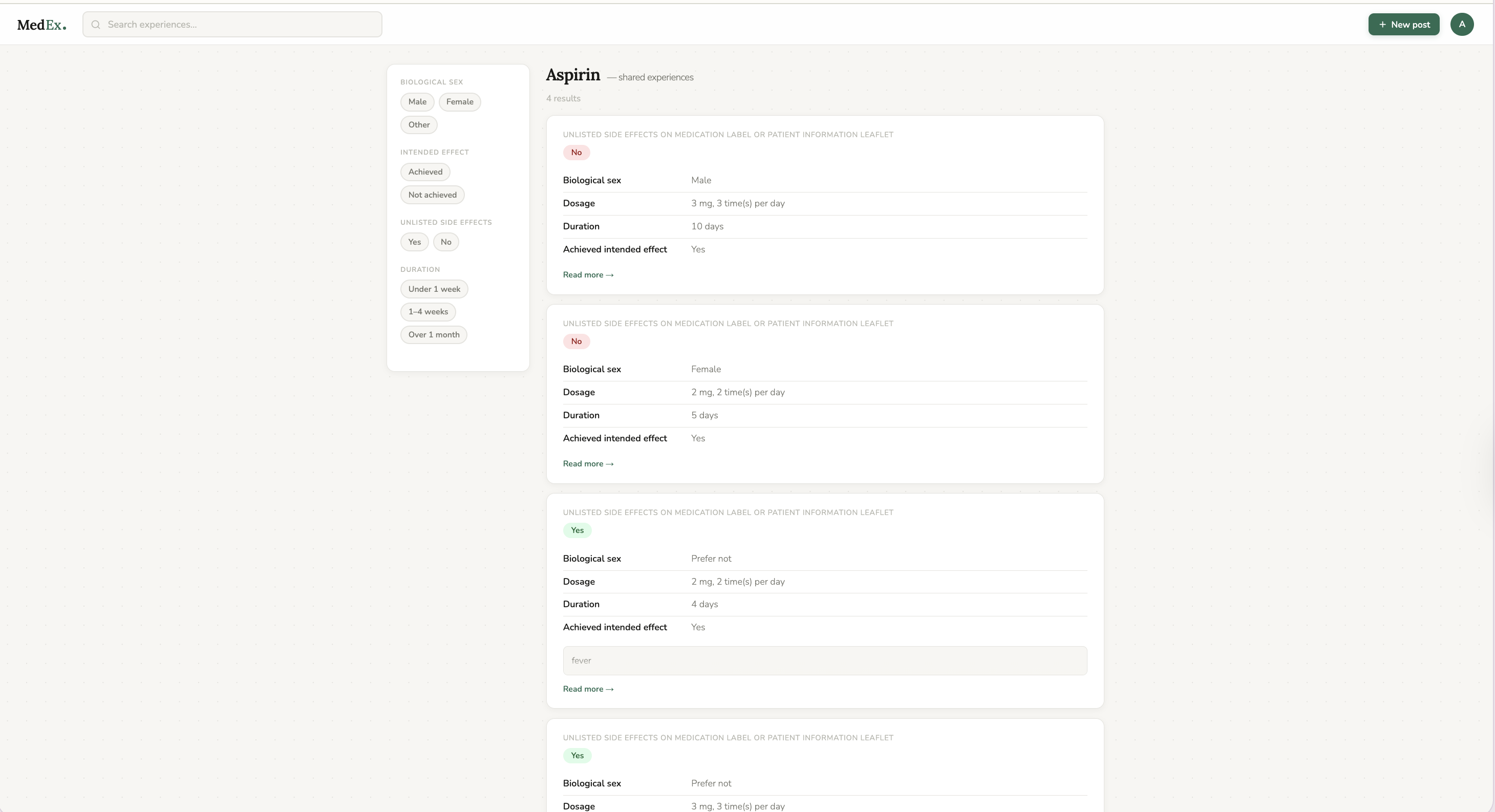
Search and Filter
-
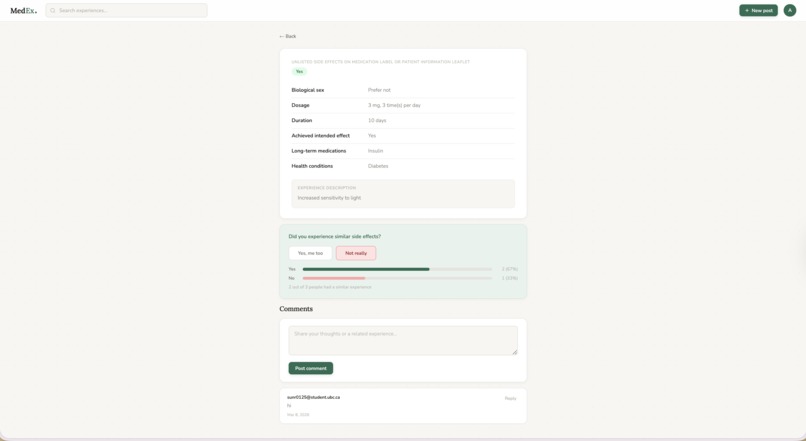
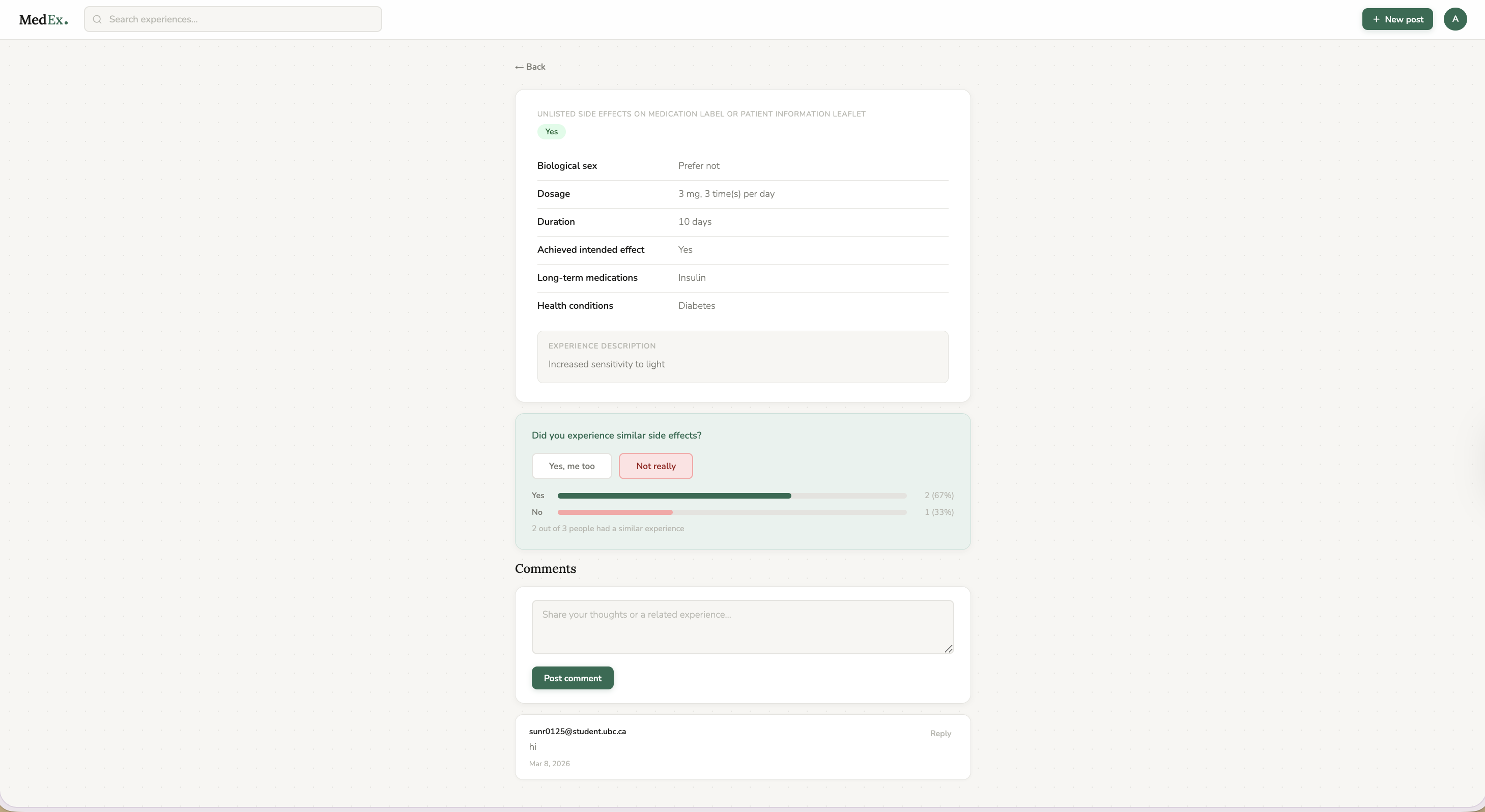
Post and Comment
-
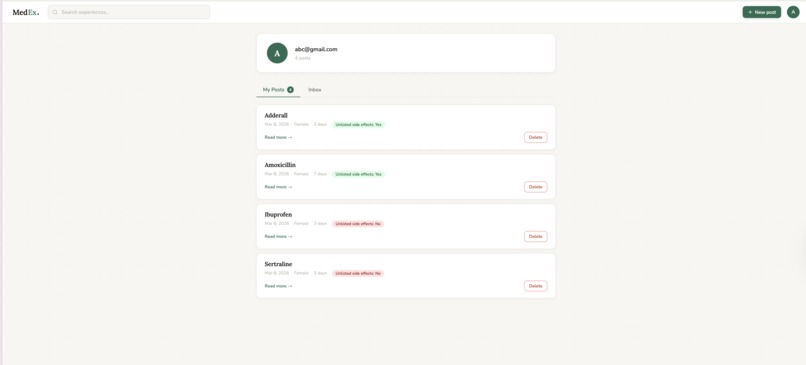
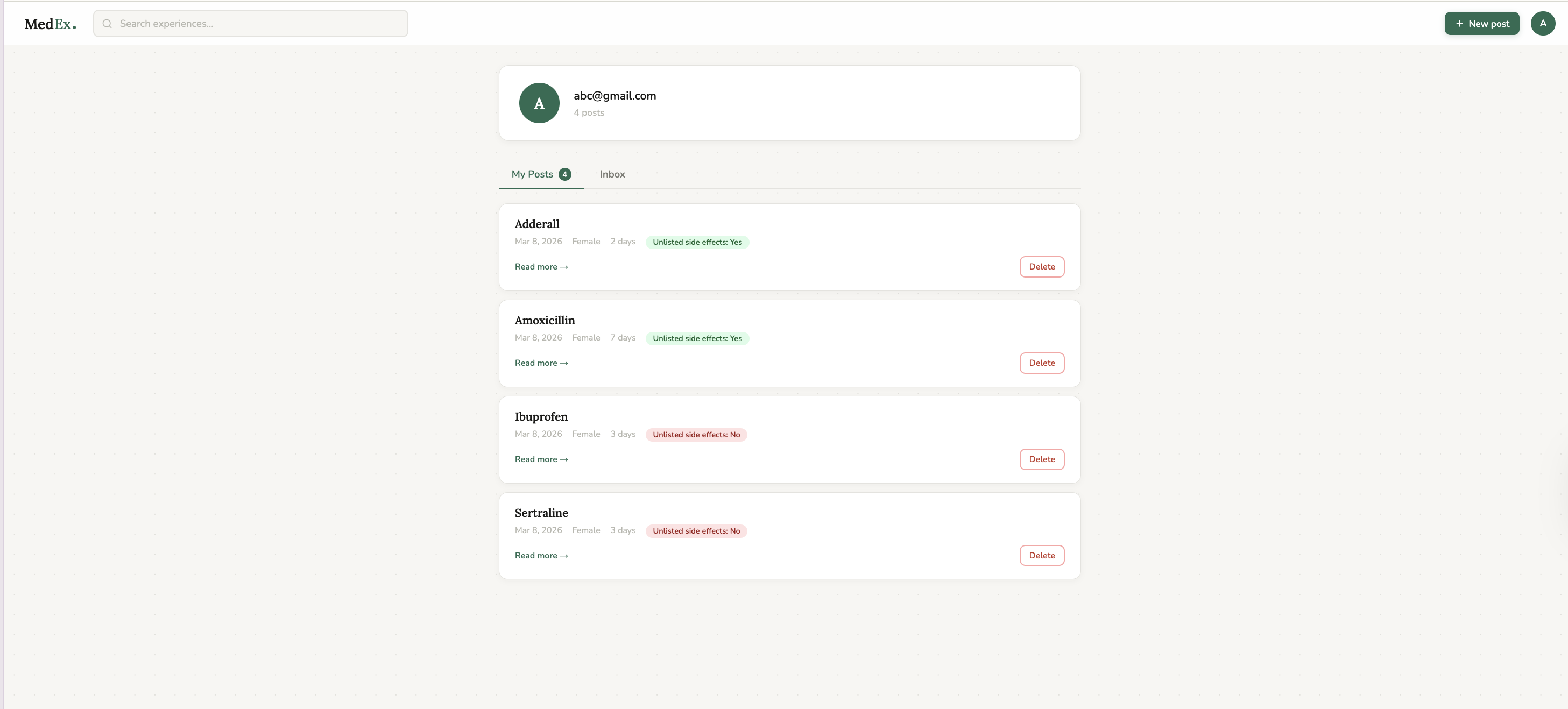
Profile
Inspiration
Until the late 20th century, most clinical trials were conducted primarily on adult men. Women were frequently excluded due to concerns about hormonal fluctuations and potential risks to pregnancy — meaning the drugs we all use today were largely tested on a population that doesn't represent everyone. Women and many other groups remain underrepresented in medical research to this day, and their experiences remain silent in the data.
MedEX was built to change that. By giving underrepresented communities a space to record and share their real medication experiences — whether the intended effect was achieved, or whether they noticed side effects not listed on the label — MedEX turns lived experience into collective knowledge. Our goal is to raise awareness of these minority differences and encourage a future where medical research is built for everyone.
What it does
MedEX is a community-driven medication experience platform that allows users to share and explore real-world drug experiences.
Users can submit their medication experience, including drug name, dosage, biological sex, frequency, and duration of use.
Users can share whether the medication achieved the intended effect or caused unexpected side effects, and write detailed personal experiences describing benefits, side effects, and impact on daily life.
Users can also search and browse posts to see how others reacted to the same medication, helping them identify patterns and learn from real experiences.
How we built it
Frontend: React / Next.js with a clean, minimal UI, CSS
Backend: REACT API handling submissions, auth, and user profiles
Database: PostgreSQL for structured, filterable, searchable report storage
Auth: User accounts with profiles for contextual credibility
Hosting: Railway
Challenges we ran into
Backend to Database
Connecting the backend and getting data to save correctly into the database took much longer than expected. Structuring and storing all the form fields reliably was trickier than it looked.
Deploying the Website and Implementing Domain
Shipping from local to production introduced a whole new set of problems — environment configs, database connections, and build issues. What worked on our machines didn't always work live.
Conflicting Version Control
Working as a team meant we constantly ran into merge conflicts. Keeping everyone's code in sync, resolving conflicts without breaking things, and managing branches cleanly was a constant challenge throughout the project.
Accomplishments that we're proud of
Successfully Deployed the Website
We took the project from localhost to a live, publicly accessible website. We managed branches, resolved merge conflicts, and kept the codebase in sync across the whole team. Going from version control chaos to clean collaboration was a real milestone.
Fixed a Tricky Display Bug
We caught and fixed a bug where the additional notes section was incorrectly splitting text into bullet points instead of displaying it as a clean, continuous block. A small fix that made a big difference to the user experience.
Built Core Features: Filters, Comments & Delete
We successfully implemented post filtering, the ability to leave comments, and comment deletion — giving users meaningful ways to interact with each other's experiences.
What we learned
First Hackathon Experience
This was our first hackathon as a team — and we shipped a real, working product. That alone is something we're proud of.
Deployed a Live Website
We took the project all the way from localhost to a real, publicly accessible website.
Learned SQLite from Scratch
We had no prior experience with SQLite going in. By the end, we were using it to reliably store and retrieve structured user submissions — a genuinely new skill picked up under pressure.
AI-Assisted Development
We learned how to write effective prompts to use AI as a coding partner. Knowing how to give AI clear, specific instructions — and verify its output — made us faster and more productive throughout the build.
Mastered GitHub as a Team
We used GitHub to collaborate across the whole project — managing branches, resolving merge conflicts, and keeping our codebase in sync. Going from conflict chaos to clean version control was a real accomplishment.
Designing User-Friendly UI/UX
We obsessed over the user experience — from layout decisions to small details like replacing "like" with "agree." The result is an interface that feels approachable, clean, and purpose-built for a sensitive health context.
What's next for MedEX
Real User Verification and Privacy Protection
Adding proper email verification and username to registration and login to make the platform more trustworthy and the data more credible.
Disease-Based Search
We didn't have time to categorize medicines by disease, so users currently have to know the medicine name to search. Next up is letting users search by condition and discover relevant medications from there.
Disease as the Missing Link
We were so focused on the user profile and the medication that we forgot disease is the bridge between them. Adding condition tagging will make the whole platform significantly more useful.
Becoming a Research Data Resource
As submissions grow, MedEX could become a valuable dataset for researchers — helping identify real differences in how drugs affect people across sex, age, ethnicity, and underlying conditions — filling gaps that clinical trials have long ignored.

Log in or sign up for Devpost to join the conversation.