-
Question
-
Home
-
Result
-
Inspiration
Health information is everywhere, but finding trustworthy, understandable information supported by credible sources can be difficult. AI assistants can make information easier to access, but health-related answers need more than fluent text: users should be able to see the evidence behind an answer and understand its limitations.
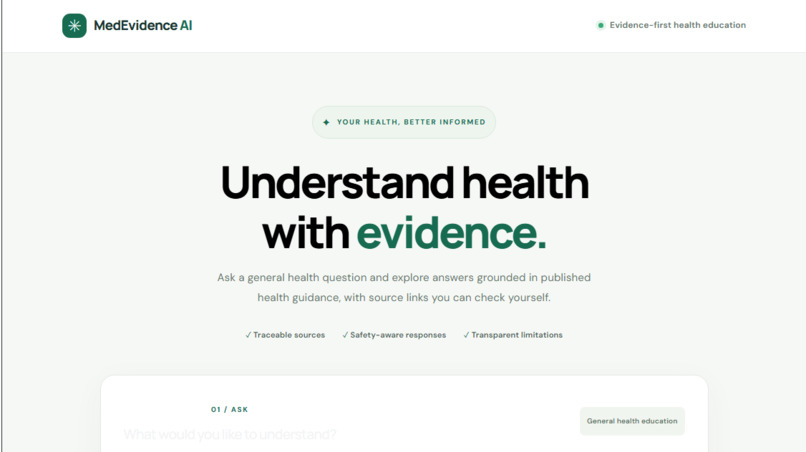
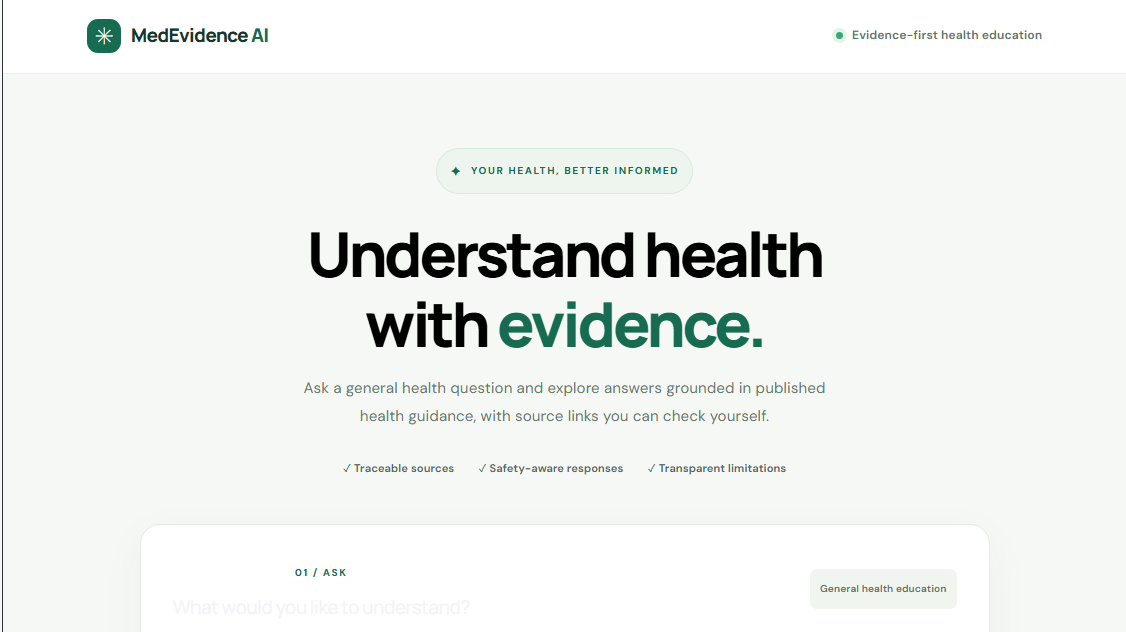
That inspired us to build MedEvidence AI, an evidence-grounded health education assistant designed to make health information more transparent and safety-aware.
What it does
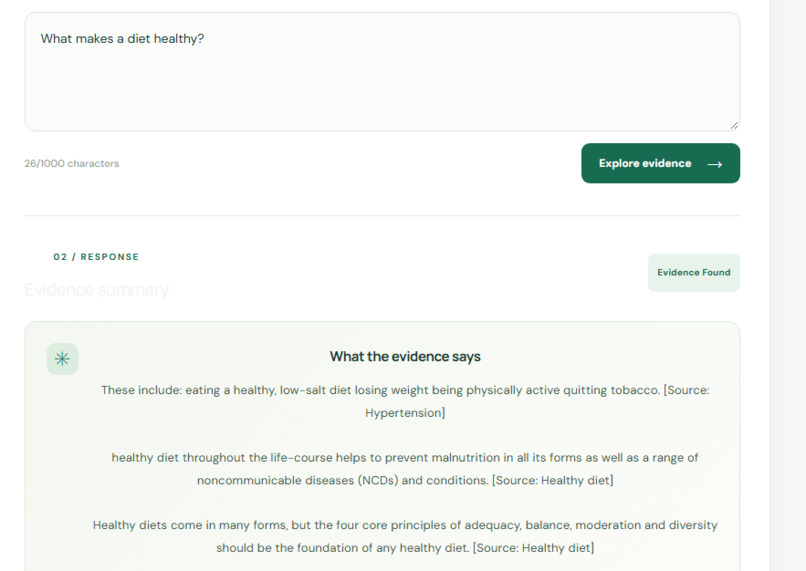
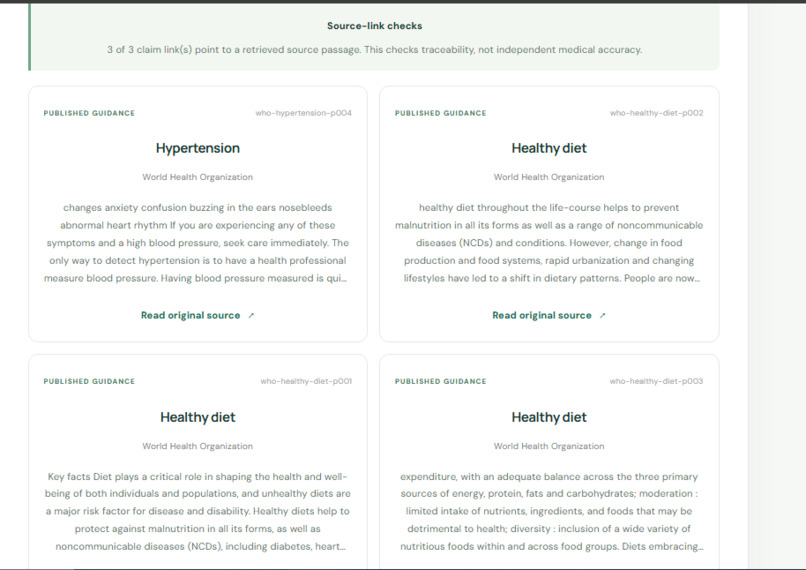
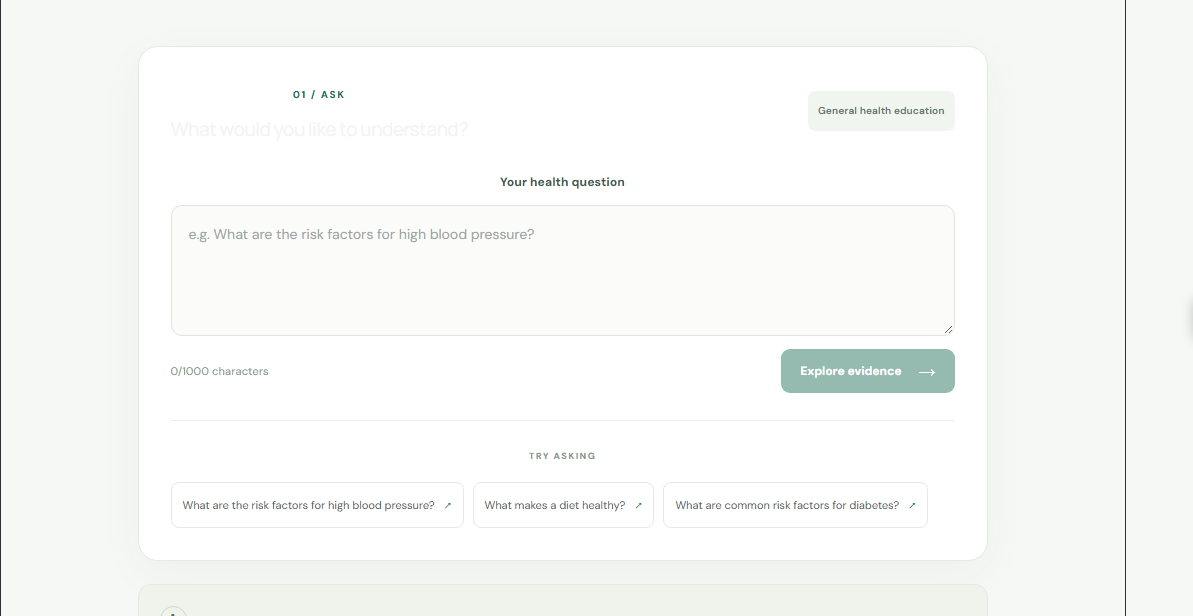
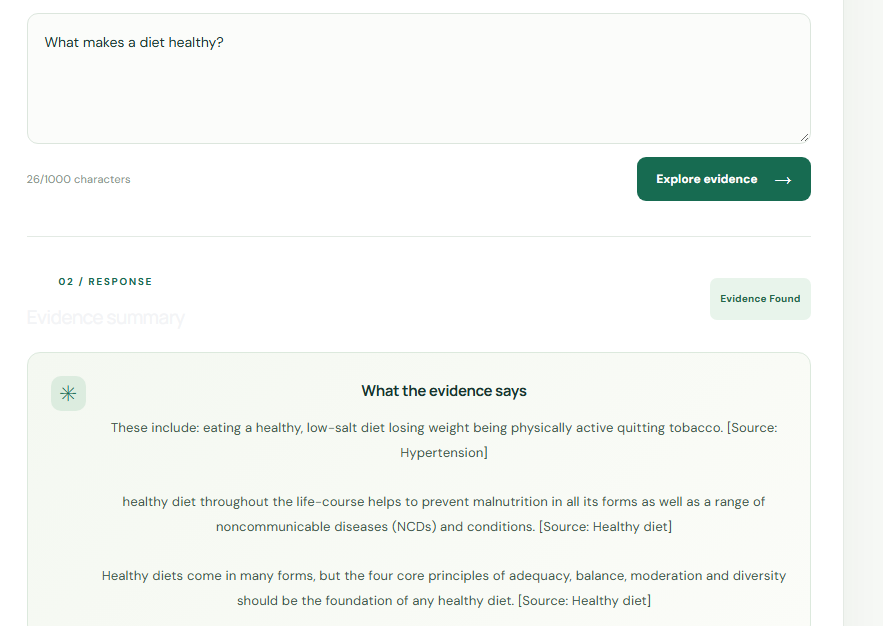
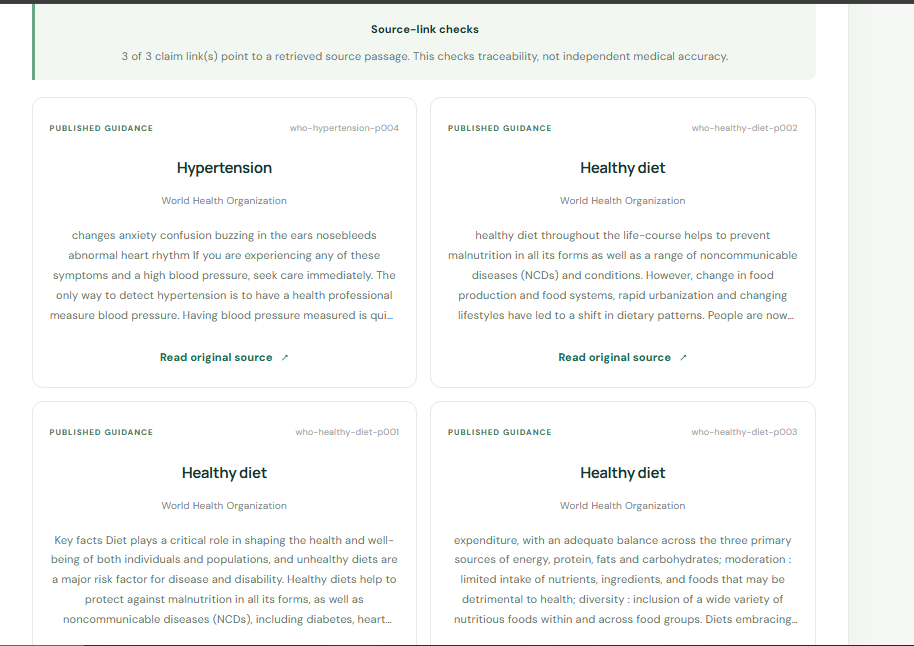
MedEvidence AI accepts health-related questions and generates educational responses using a curated library of evidence passages. It retrieves relevant passages, presents supporting sources, and includes traceability information to help users examine the basis of an answer.
The project also incorporates safety checks and a health-information disclaimer. It is designed for education, not for medical diagnosis, emergency care, or replacing a qualified healthcare professional.
How we built it
We built MedEvidence AI with a FastAPI backend and a React frontend powered by Vite.
The backend includes:
- Evidence retrieval using token-overlap matching against a curated JSONL evidence library.
- Answer generation based on retrieved passages.
- Source and claim traceability checks.
- Safety checks for potentially risky health questions.
- API endpoints for health questions and application health checks.
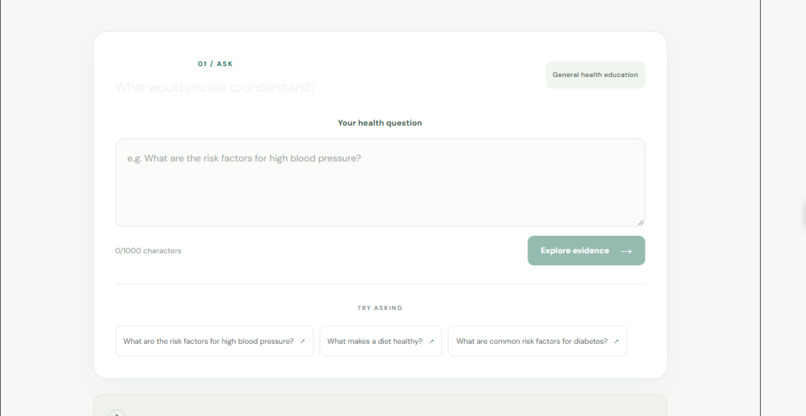
The frontend provides a simple interface for asking questions and viewing responses. We also added cross-origin configuration for deployment and published the application online.
Challenges we faced
One of the main challenges was connecting generated answers to identifiable evidence rather than presenting unsupported text as fact. We also worked to keep the system's safety limitations visible and to make the application work across local development and cloud deployment.
Testing the backend and resolving deployment configuration issues helped us verify the application beyond simply running it on a local machine.
What we learned
This project reinforced the importance of evidence retrieval, traceability, safety-aware design, automated testing, and deployment. It also showed us that a useful health AI tool should communicate both what its evidence supports and what it cannot reliably determine.
What's next
Future improvements could include expanding and reviewing the evidence library, strengthening medical claim verification, adding more comprehensive evaluation against expert-reviewed examples, and improving source presentation so users can inspect the supporting evidence more easily.
MedEvidence AI is a prototype for more transparent health education—not a substitute for professional medical advice.
Built With
- artificialintelligence
- css
- fastapi
- html
- javascript
- pytest
- python
- react
- rest
- vite

Log in or sign up for Devpost to join the conversation.