-
-

Main View
-

App's prediction
-
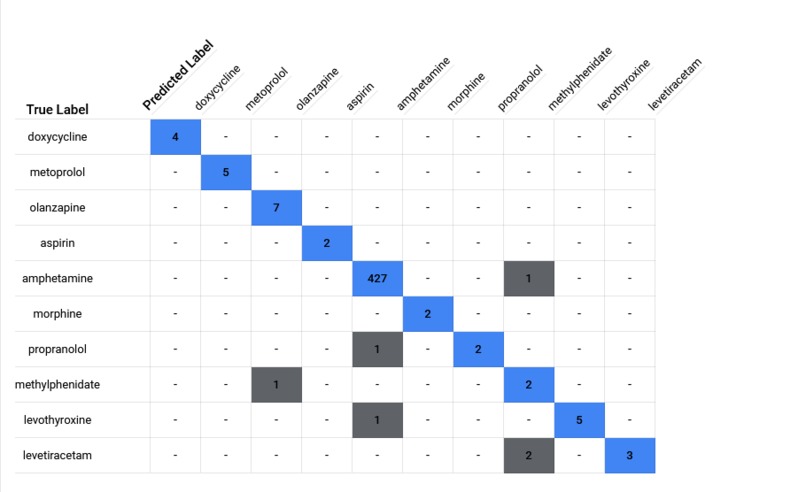
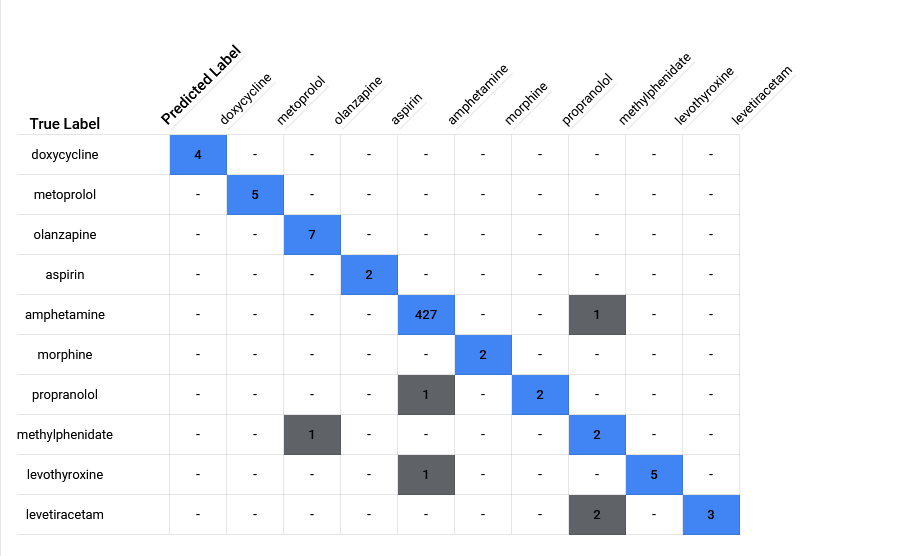
Confusion Matrix for our model (trained with AutoML)


Inspiration
Both members of the team have connections and experience in the health care field, and wanted to work with machine learning technology. Creating a tool to identify household medicine seemed like an achievable foundation for a project which could become much more.
What it does
Compares photographed medicine with the medicines included in the model.
How I built it
Using Google Cloud's AutoML to generate the model, react native was used to create an android/ios interface, which compares with the model using TensorFlow.js.
Challenges I ran into
Understanding the data structures associated with machine learning provided challenging, as both team members were novices in this area of expertise. Likewise, we needed to retrain the algorithm after early testing, which took up an immense amount of time.
Accomplishments that I'm proud of
The labeled datasets were partially collected with a data scraper, for the initial training of the algorithm. Thousands of additional photos were later added, taken in various environments around one of the team member's houses. This resulted in significantly higher accuracy for the medicines which were photographed (although, unfortunately this only includes 5 of the 20 medicines in our data set).
What I learned
Effective machine learning takes a lot of time, ideally this data should be collected as early as possible in a hackathon or time limited event. The majority of the coding should be done while the model trains, rather than before.
What's next for Medentifier
We'd like to add user-photographed images to our ML database, as well as provide information to the user when it is not clear which medicine the user has photographed. In these edge cases, we'd like to prompt for additional information to aid in identifying the medicine (such as prompting the user to place a quarter for scale, or request the user enter the numbers on the pill).
Built With
- automl
- expo.io
- react-native
- tensorflow.js

Log in or sign up for Devpost to join the conversation.