Inspiration
We all knew someone managing a chronic illness — a parent tracking heart disease, a friend juggling five medications, a relative whose lab results no one ever explained clearly. The pattern was the same everywhere: too much data, not enough insight, and a care team that only sees you once a month. We built MEDALA to close that gap. Not to replace clinicians, but to give patients and doctors a shared, continuous picture of health — powered by AI, grounded in real clinical data.
What it does
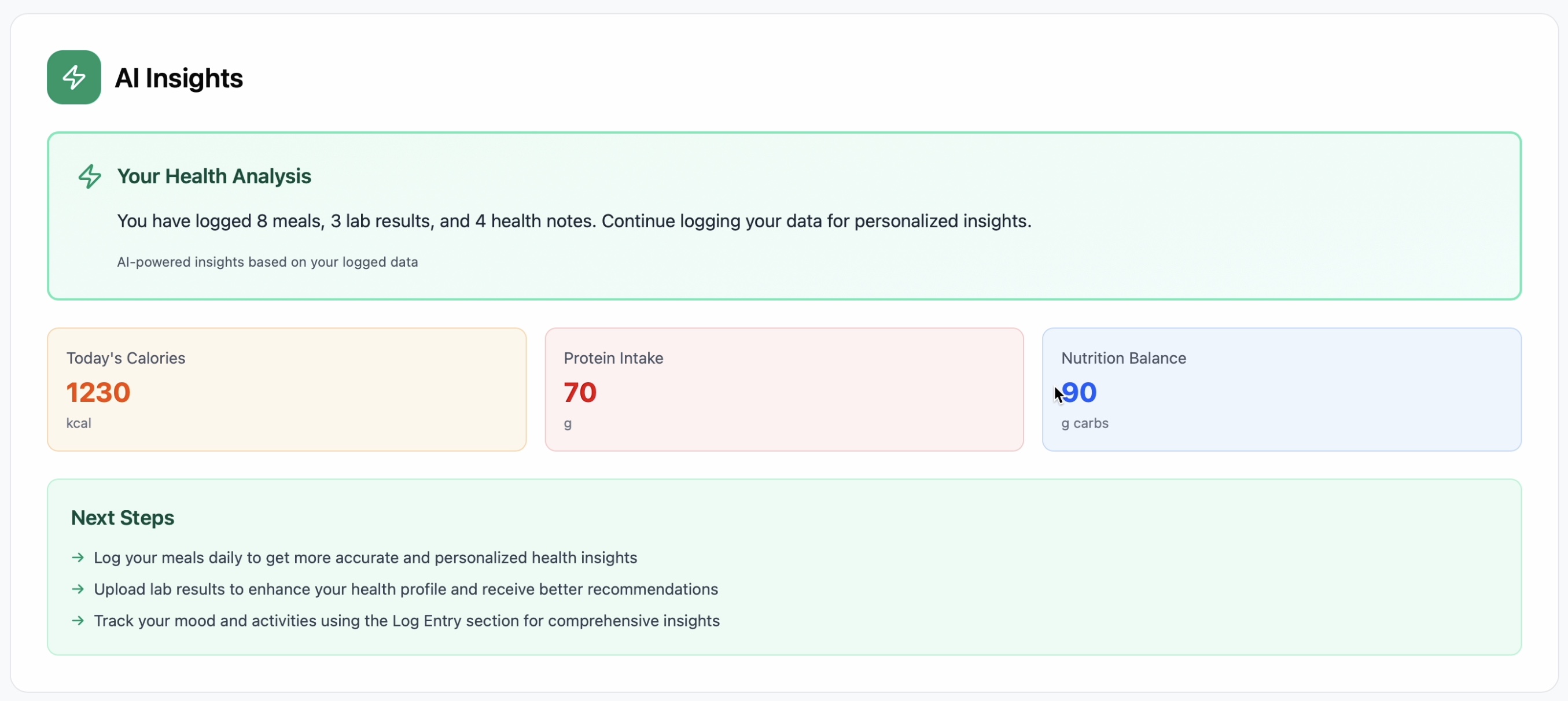
Building for healthcare humbled us fast. Health data isn't just sensitive — it's contextual. A caloric intake of 1,230 kcal means something completely different depending on diagnosis, medication, and history. We also learned that communicating uncertainty honestly is harder than building the model itself. Knowing when to say "your score will sharpen as you log more" — rather than presenting false precision — was as important as the math behind it.
How we built it
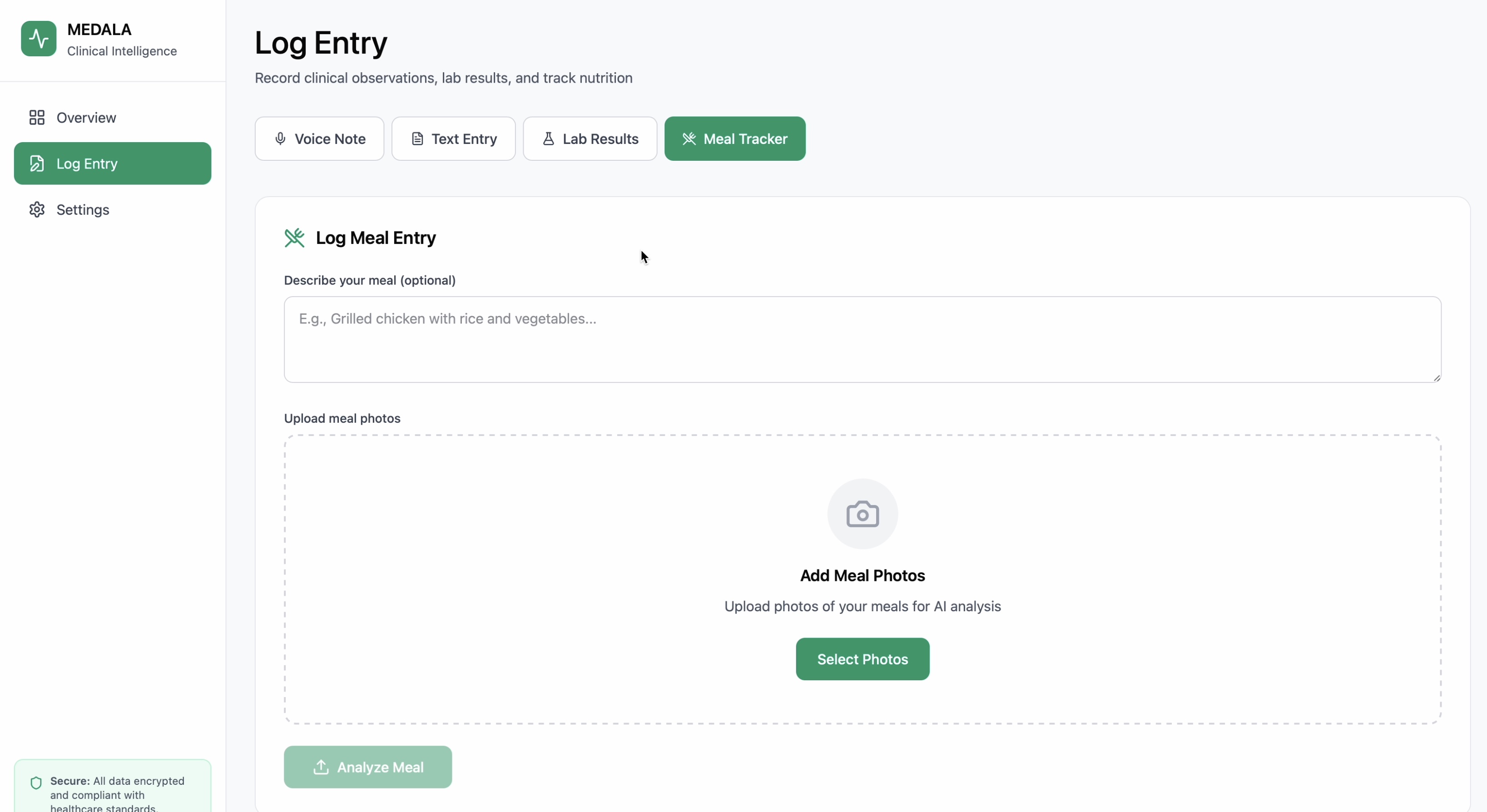
We divided across four layers: onboarding & profile, AI meal analysis, the stability score engine, and the dashboard UI. The meal tracker uses Claude to analyse food photos against a patient's clinical context, mapping intake to macronutrient targets using: Etotal=(P×4)+(C×4)+(F×9)(kcal)E_{total} = (P \times 4) + (C \times 4) + (F \times 9) \quad \text{(kcal)}Etotal=(P×4)+(C×4)+(F×9)(kcal) Everything feeds back into a single score that updates in real time — turning fragmented logs into one honest signal.
Challenges we ran into
The hardest problem wasn't technical — it was tone. How do you tell someone their score is Critical without causing panic, while still conveying urgency? We rewrote the status language a dozen times until it felt human: naming what's concerning, what to do, and when to call a doctor. We also wrestled with the cold start problem: a new user has no history. Our confidence model grows trust gradually — Confidence(S)=1−e−λ⋅n\text{Confidence}(S) = 1 - e^{-\lambda \cdot n} Confidence(S)=1−e−λ⋅n — so the system earns its authority rather than assuming it.
Accomplishments that we're proud of
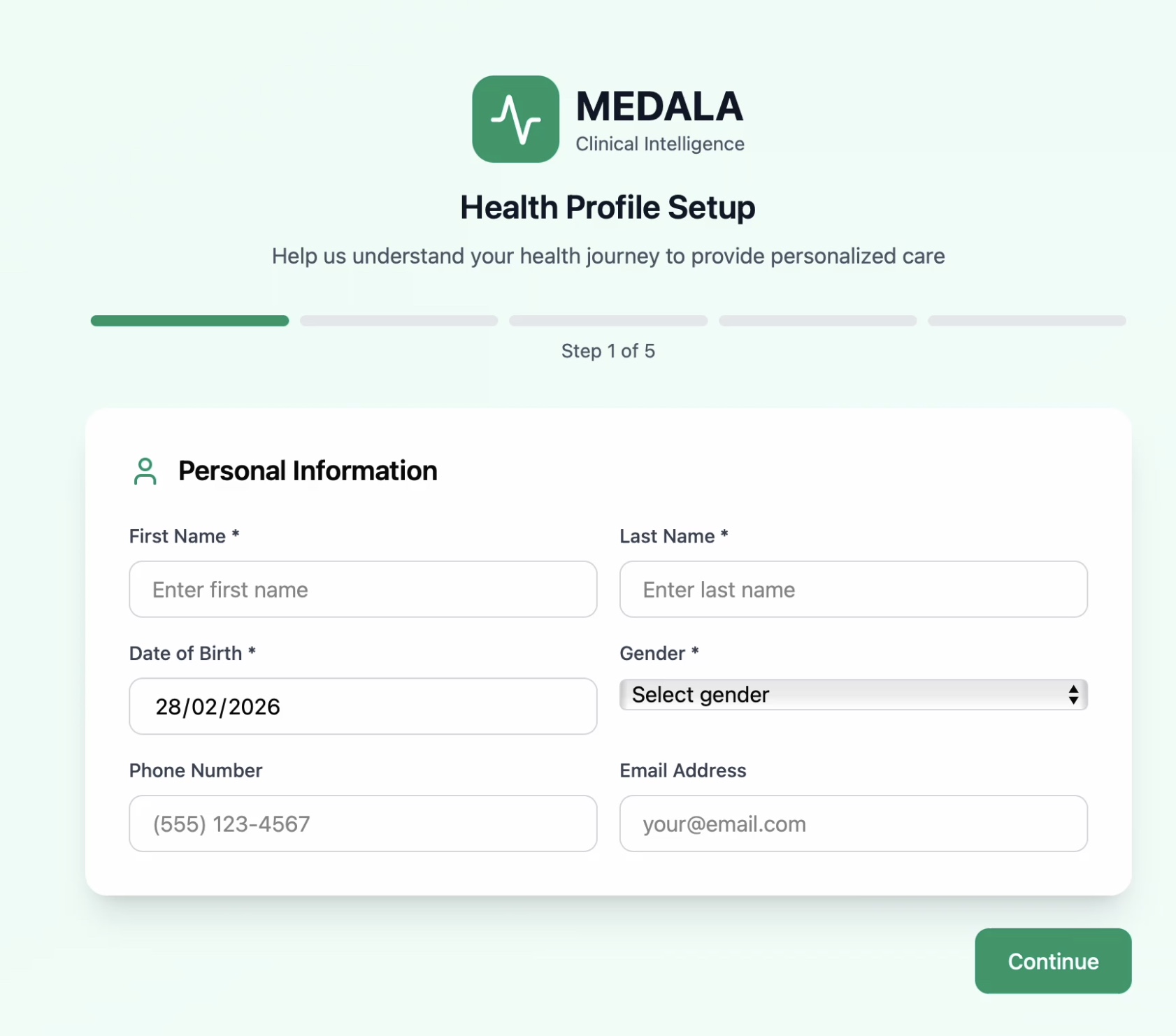
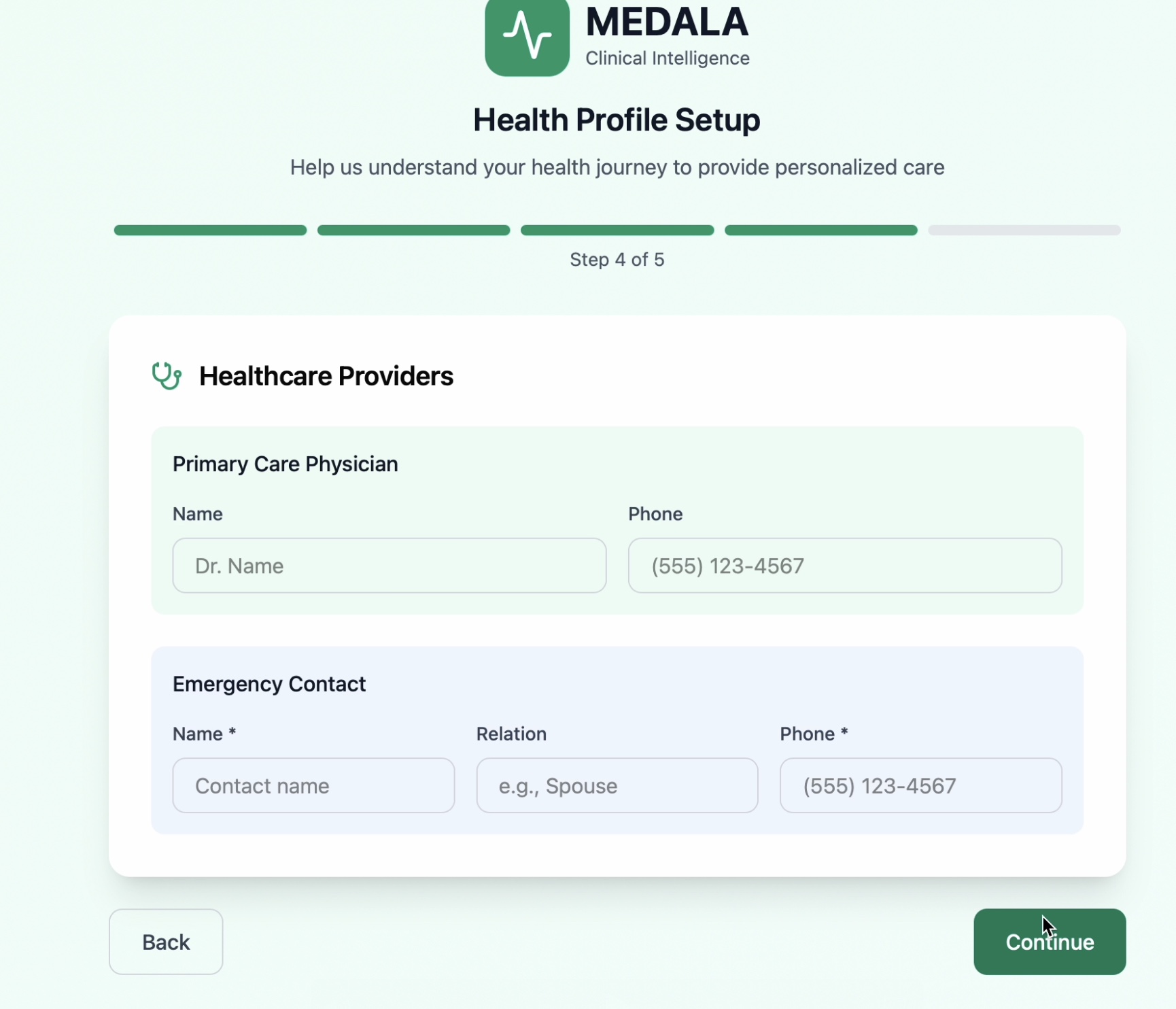
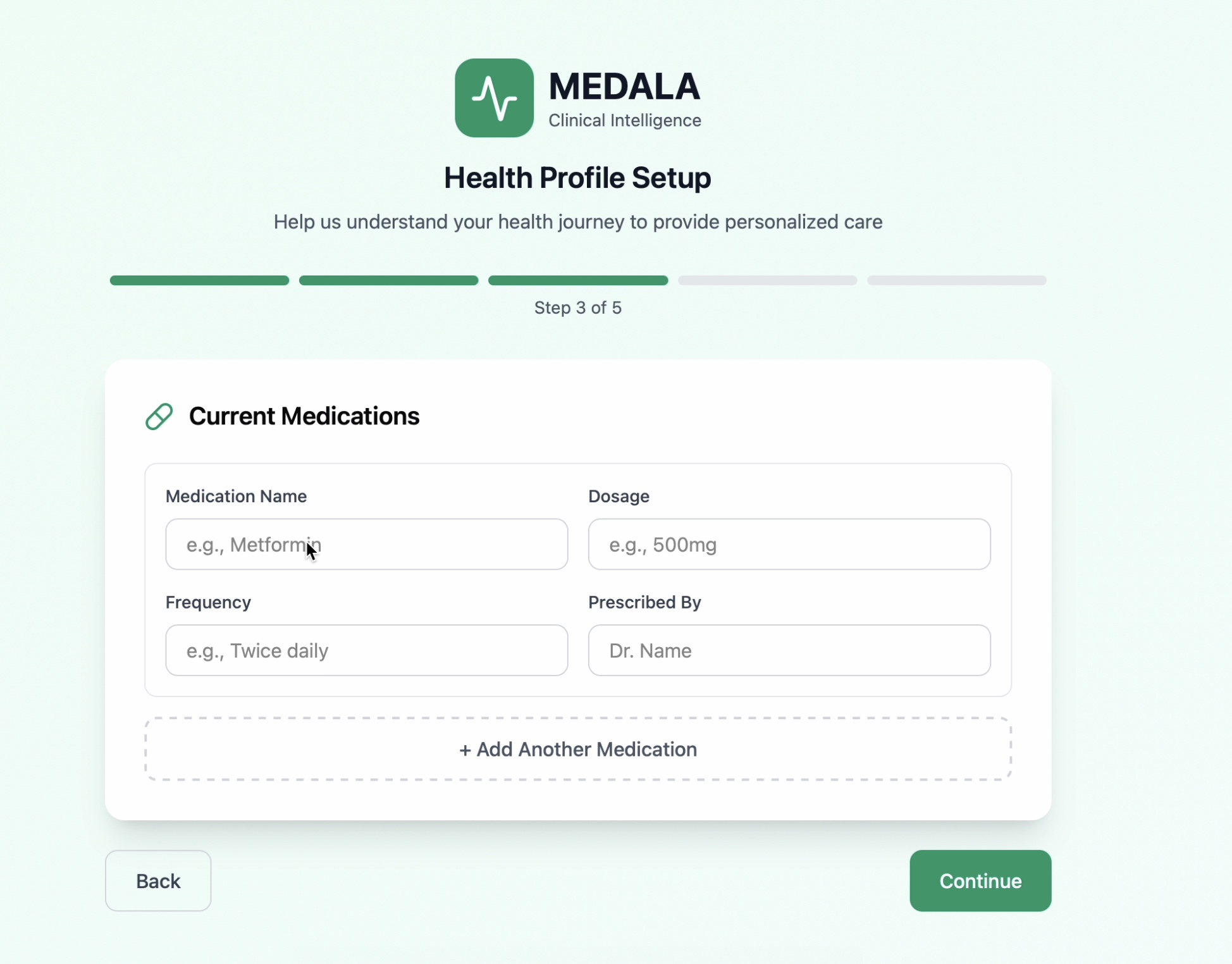
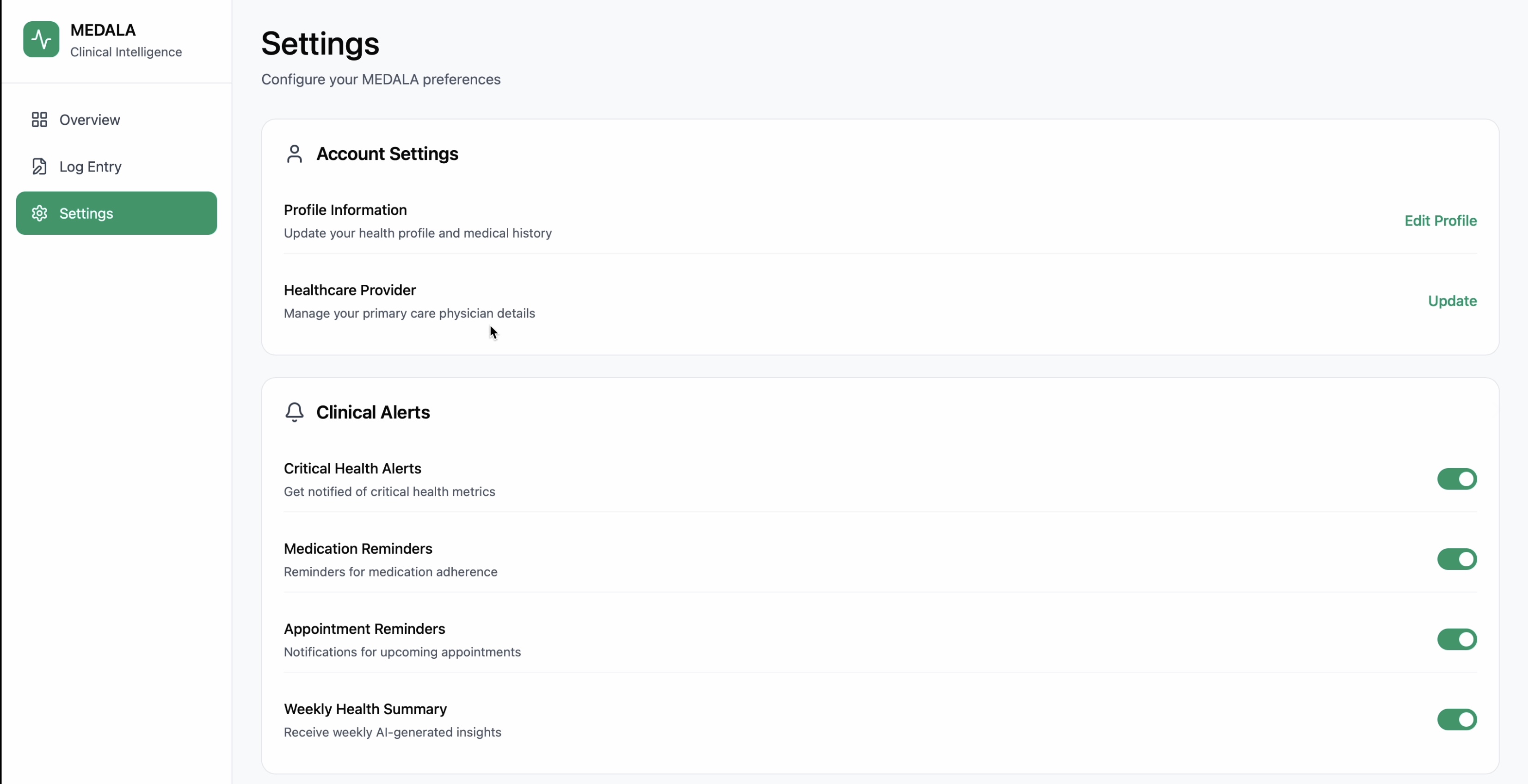
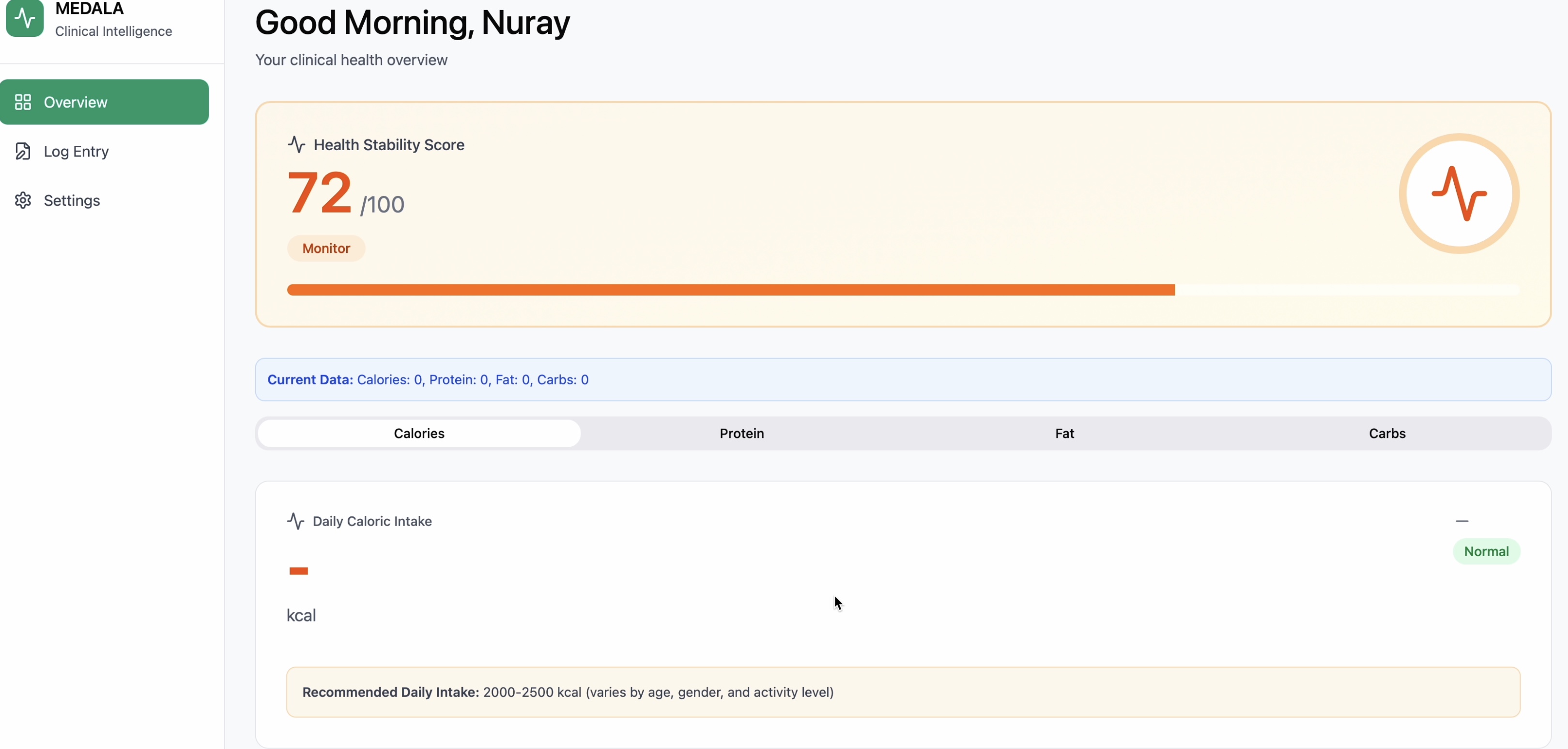
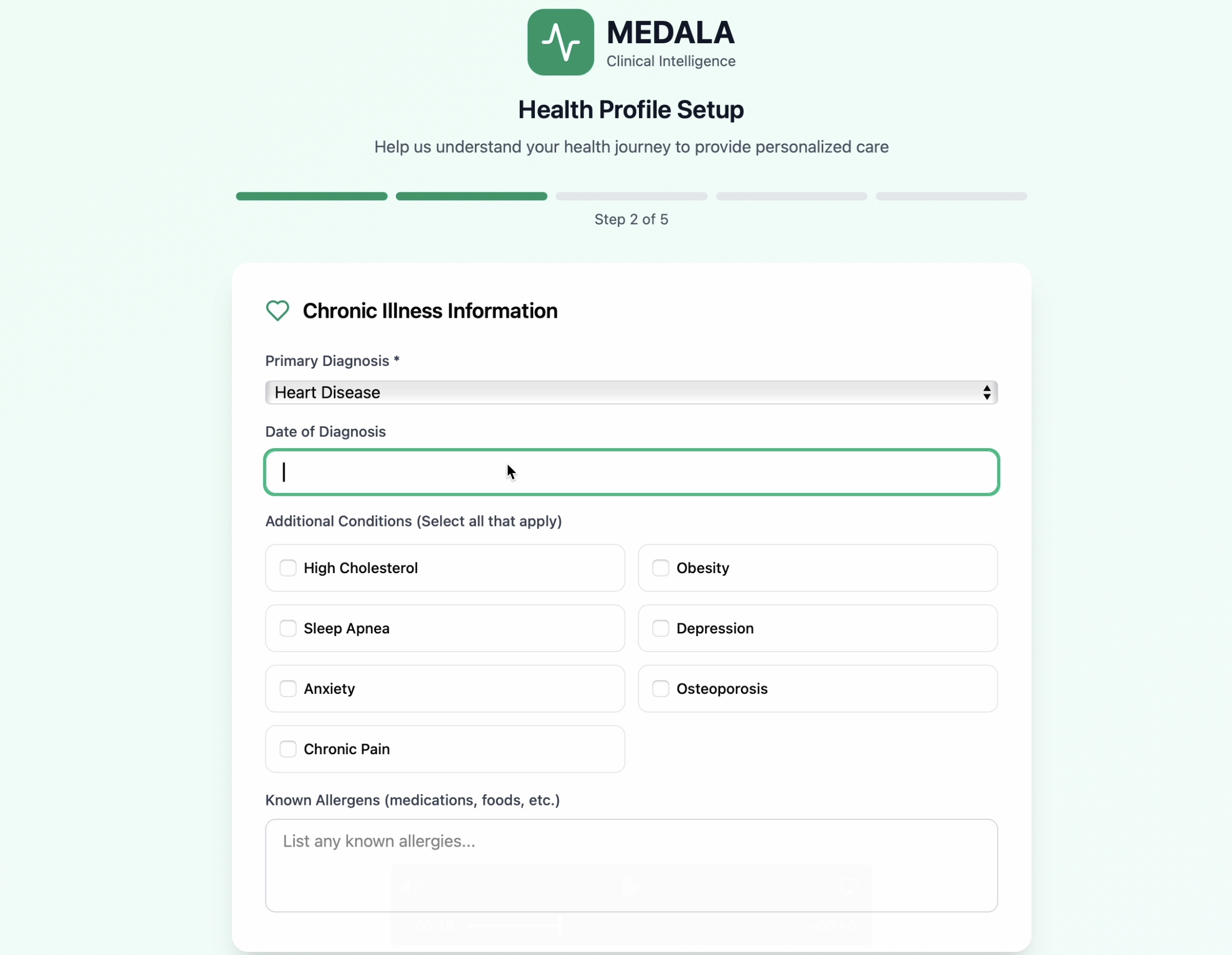
In 24 hours, we shipped a working end-to-end product: a 5-step clinical onboarding flow, photo-based AI meal analysis, a live Health Stability Score, and a settings layer with real clinical alerts. We're proud that it doesn't feel like a hackathon prototype — it feels like something a patient could actually open on a hard day and trust. Getting the score to update meaningfully across nutrition, lab results, and logged notes — and presenting that as a single human-readable signal — was the technical milestone we weren't sure we'd hit. We did.
What we learned
Building for healthcare humbled us fast. Health data isn't just sensitive — it's contextual. A caloric intake of 1,230 kcal means something completely different depending on diagnosis, medication, and history. We also learned that communicating uncertainty honestly is harder than building the model itself. Knowing when to say "your score will sharpen as you log more" — rather than presenting false precision — was as important as the math behind it.
What's next for MEDALA
The foundation is built — now we want to make it continuous. The next version integrates wearable data (heart rate, sleep, glucose) so the stability score reflects how a patient is doing right now, not just what they remembered to log. We also want to build a care team portal — a read-only view where clinicians can review trends between appointments, closing the loop that motivated the whole project. Longer term, we're exploring longitudinal drift detection: using the score's trajectory over weeks to flag gradual deterioration before it becomes a crisis. The goal is simple — make the inequality below true for every patient who uses it.
Built With
- apialchemist
- css
- fastapi
- flask
- html
- javascript
- json
- python
- typescript


Log in or sign up for Devpost to join the conversation.