-
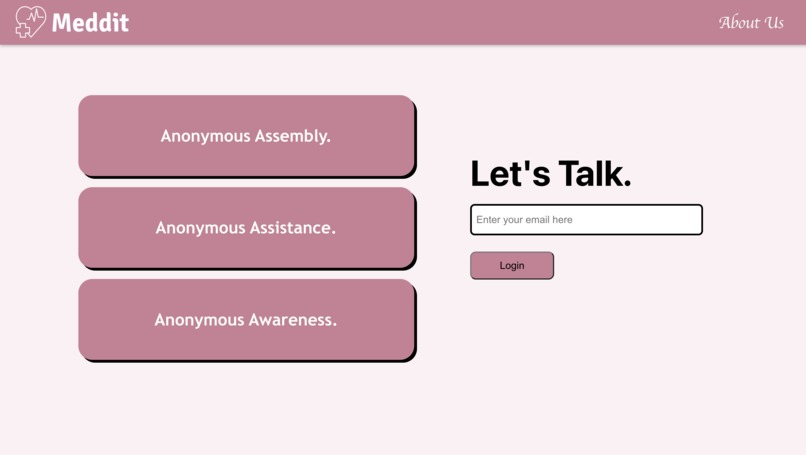
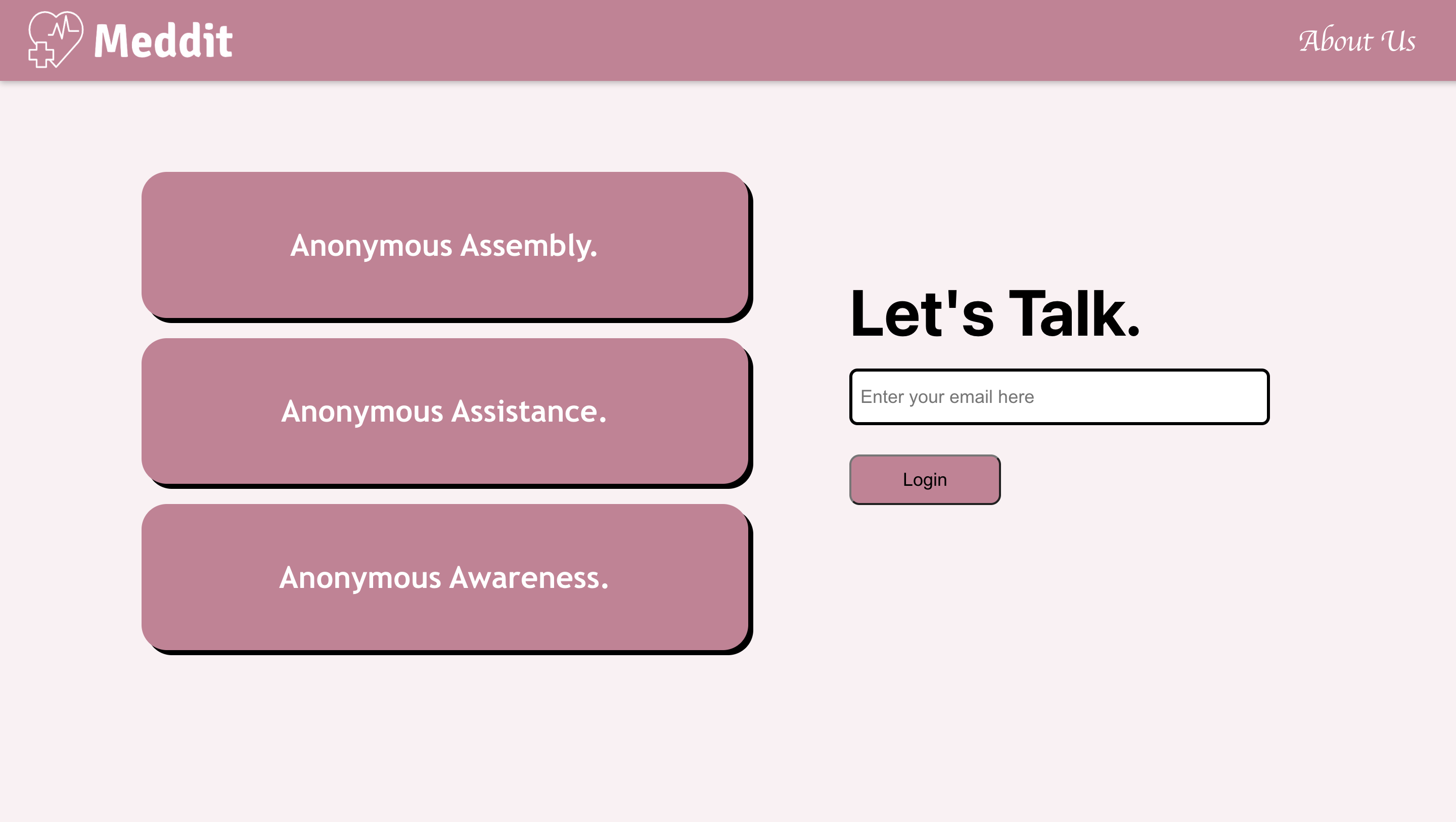
Home Page
-
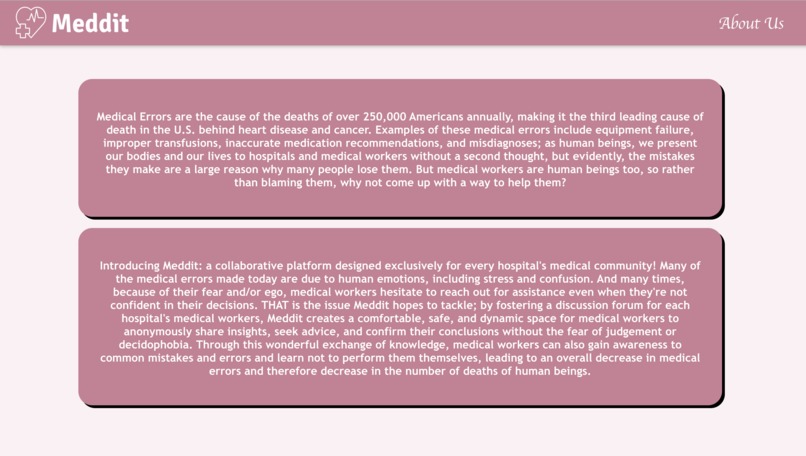
About Us
-
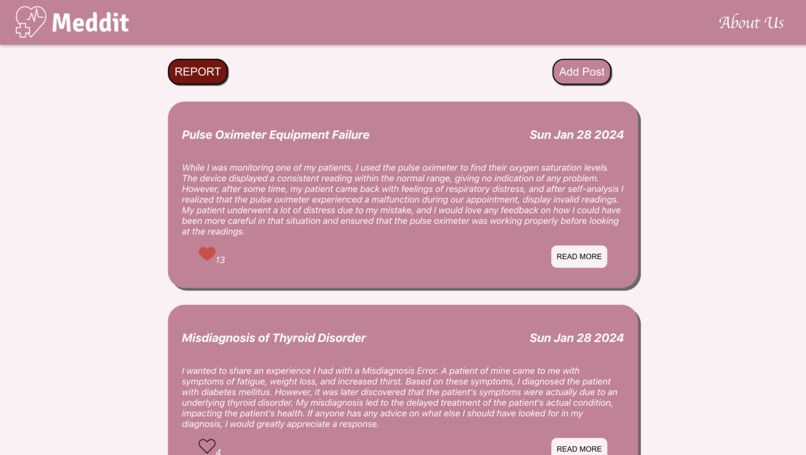
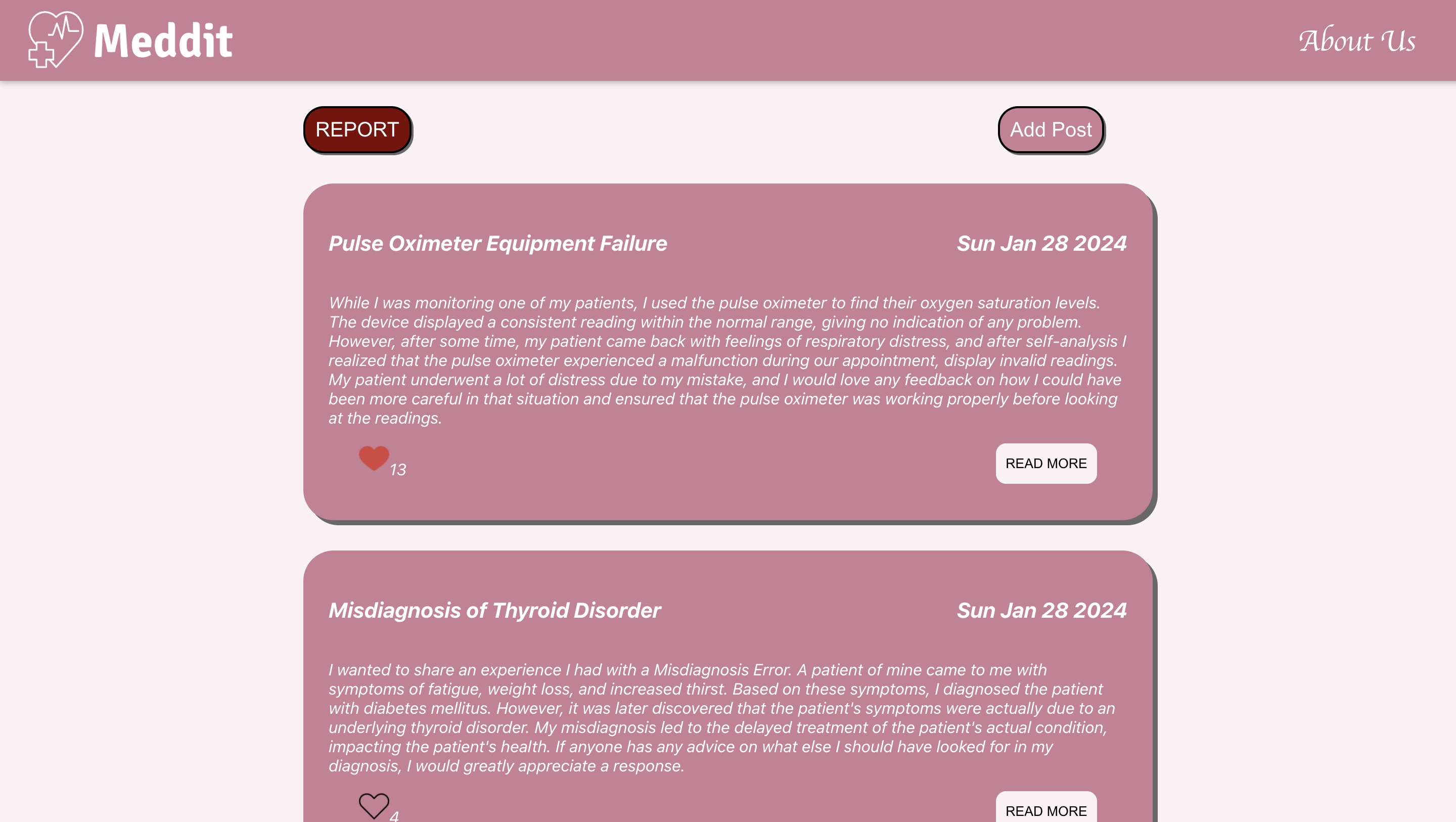
Main Feed
-
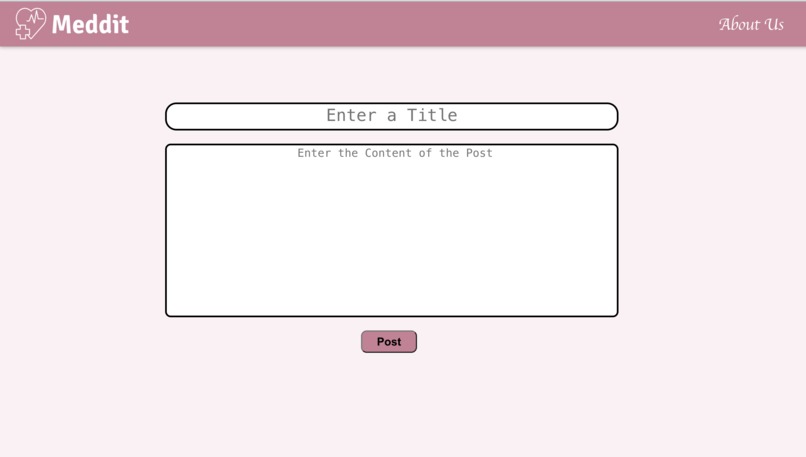
Add a Post
-
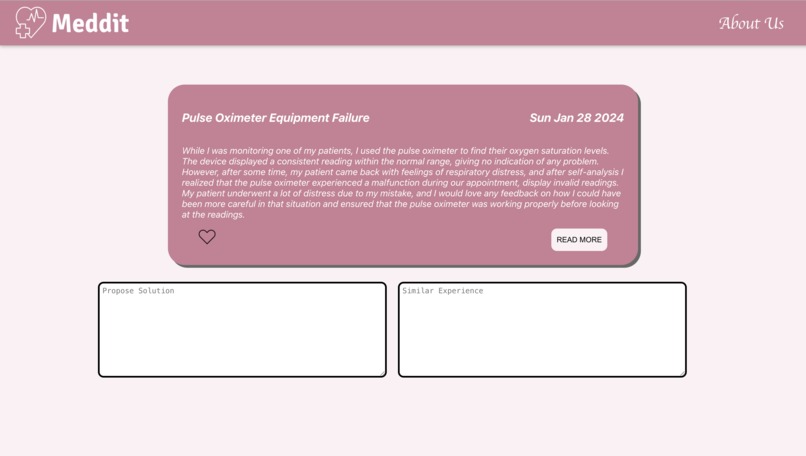
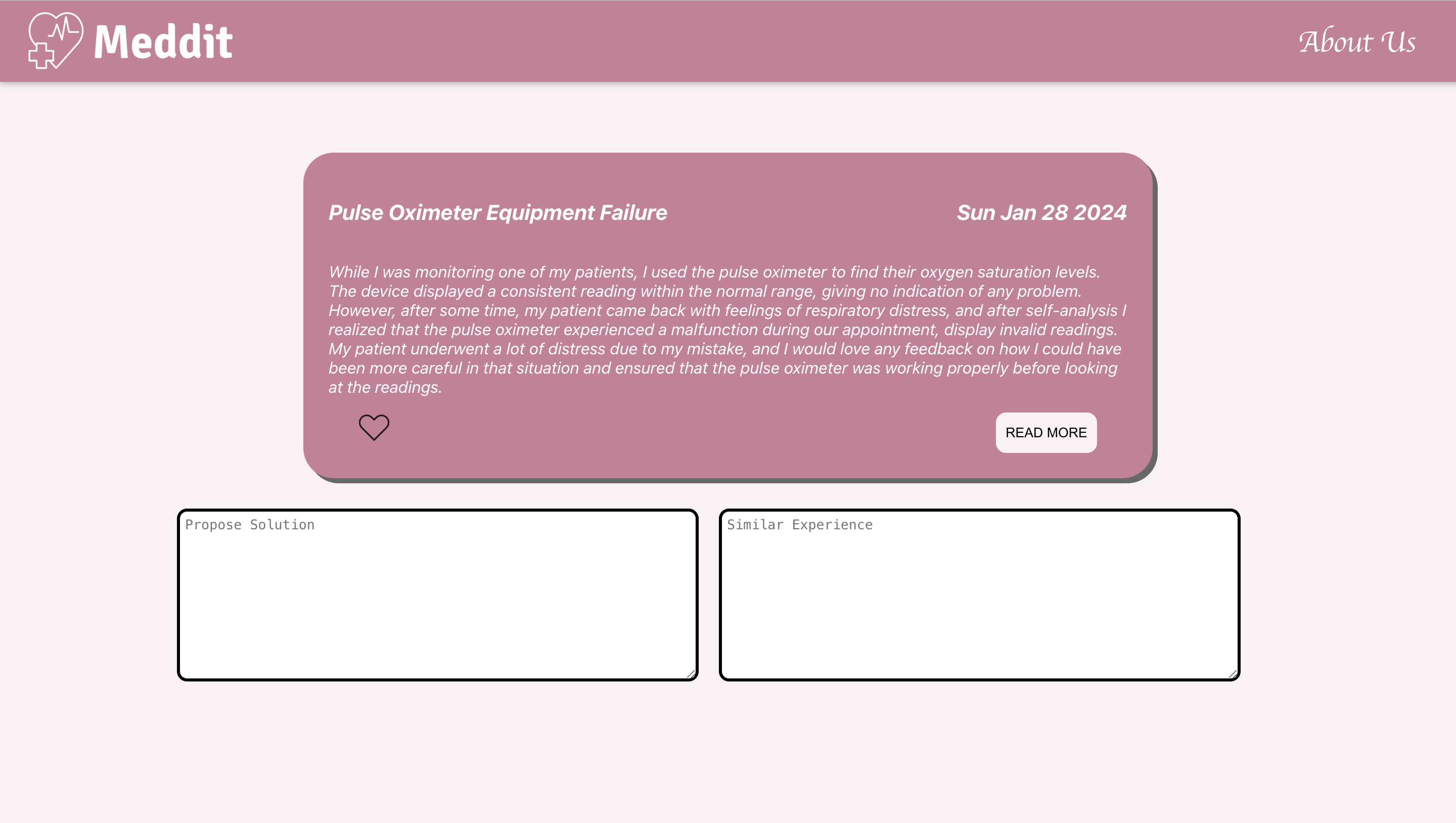
Individual Posts


Inspiration
We were inspired by the Patient Safety Technology Challenge to develop a product that would help combat the proliferation of medical errors which are the reason for the loss of hundreds of thousands of lives.
What it does
Meddit creates exclusive and anonymous spaces for every hospital's medical communities to participate in the exchange of questions, answers, and advice. Each medical worker that logs into our website will immediately see a list of posts of various topics from other medical workers, and they will have the option to respond to another's post or create their own post. Through these aforementioned features of Meddit, users can gain a sense of community and understanding in the medical field, hopefully gain inspiration from others to report any errors they have made rather than hiding them, and spread awareness on some of the most common medical errors to prevent other medical workers from committing the same mistakes in the future.
How we built it
We built Meddit using our very own sqERN stack: SQLite3, Express, React, and NodeJS.
Challenges we ran into
When attempting to link our login page to the main feed page, we were unable to properly communicate our front and back end servers. Our goal was to send prepopulated data from the database to the front end port, but we could not facilitate proper data transfer. After trying multiple solutions, we solved this issue by converting the submit button on our login page from an HTML form to a fetch command.
Accomplishments that we're proud of
We made a major development in our project when we were able to connect the front and back end together and successfully send data back and forth using requests. We were also able to make a user-friendly UI that is easy to navigate as well as visually appealing. This was also our very first time using React and node.js, and our first fullstack app.
What we learned
We learned a lot about collaborating and working on Git, as well as a variety of development technologies such as React, Node.js, express.js, and SQLite3. We also learned about installing modules and using inspect element on the localhost port to check if data was transferred between the front and back end.
What's next for Meddit
We strongly believe that Meddit could go far if developed even more; therefore, we plan to continue our development process with Meddit even after the hackathon. Some notable goals in mind include establishing a connection between our database and users' responses to posts to store them, integrating a code system in which each hospital has their own unique code for an environment exclusive to the medical workers who work there, implementation of a pop-up window after posting that reminds users to report any errors they have made, acquiring legal access to hospitals' error reporting systems so users can directly report through our website, and creating a filtering system for users to filter through posts in categories such as Most Recent and Most to Least Liked.


Log in or sign up for Devpost to join the conversation.