Inspiration
In rural India a patient can be hours away from the nearest doctor. The ASHA worker or community health worker in the village is often the only medical help. When a farmer suddenly can't move one side of his face, she has no quick way to reach a specialist, no reliable way to tell an emergency from a routine case, and often no shared language with the doctor. We wanted a doctor in every village, one tap away.
What it does
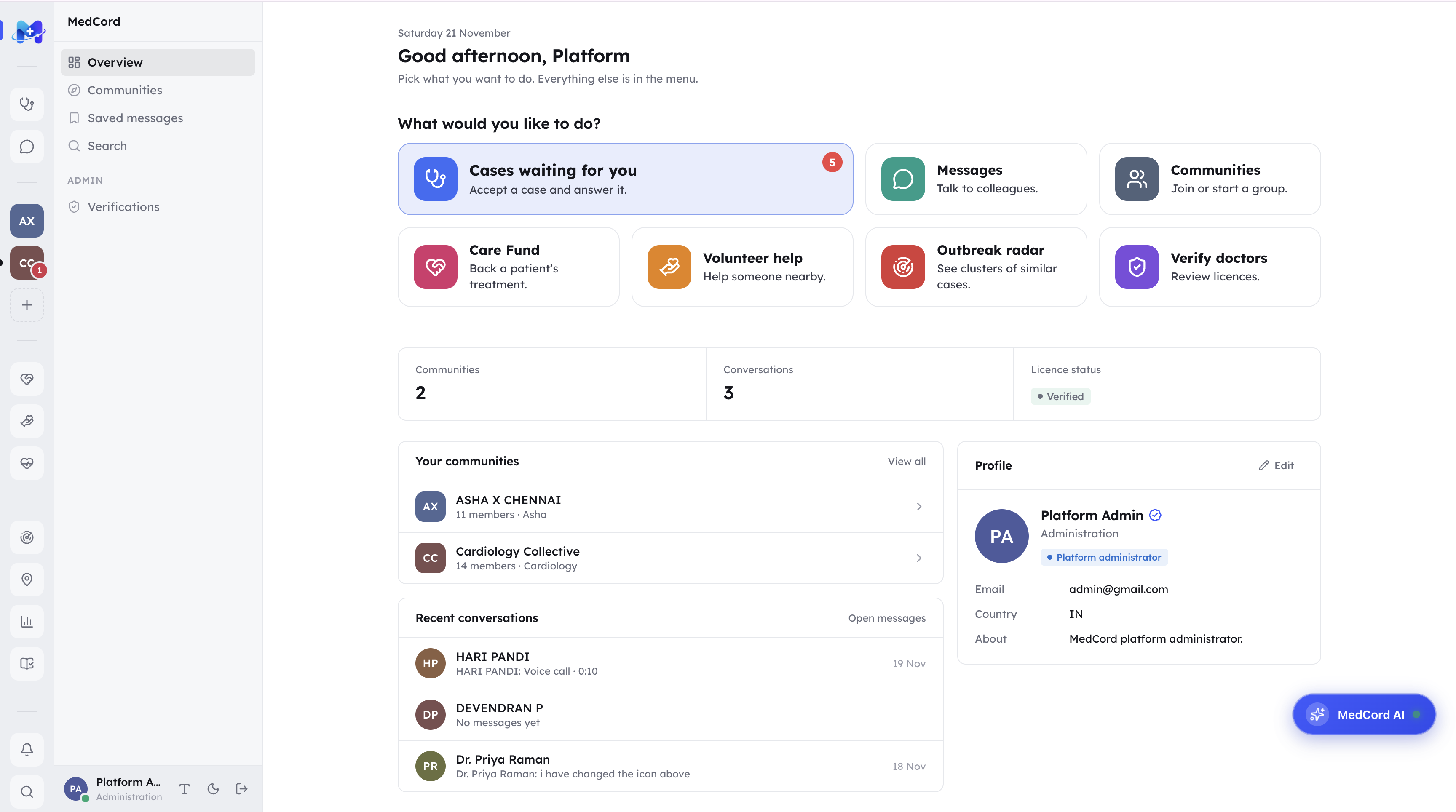
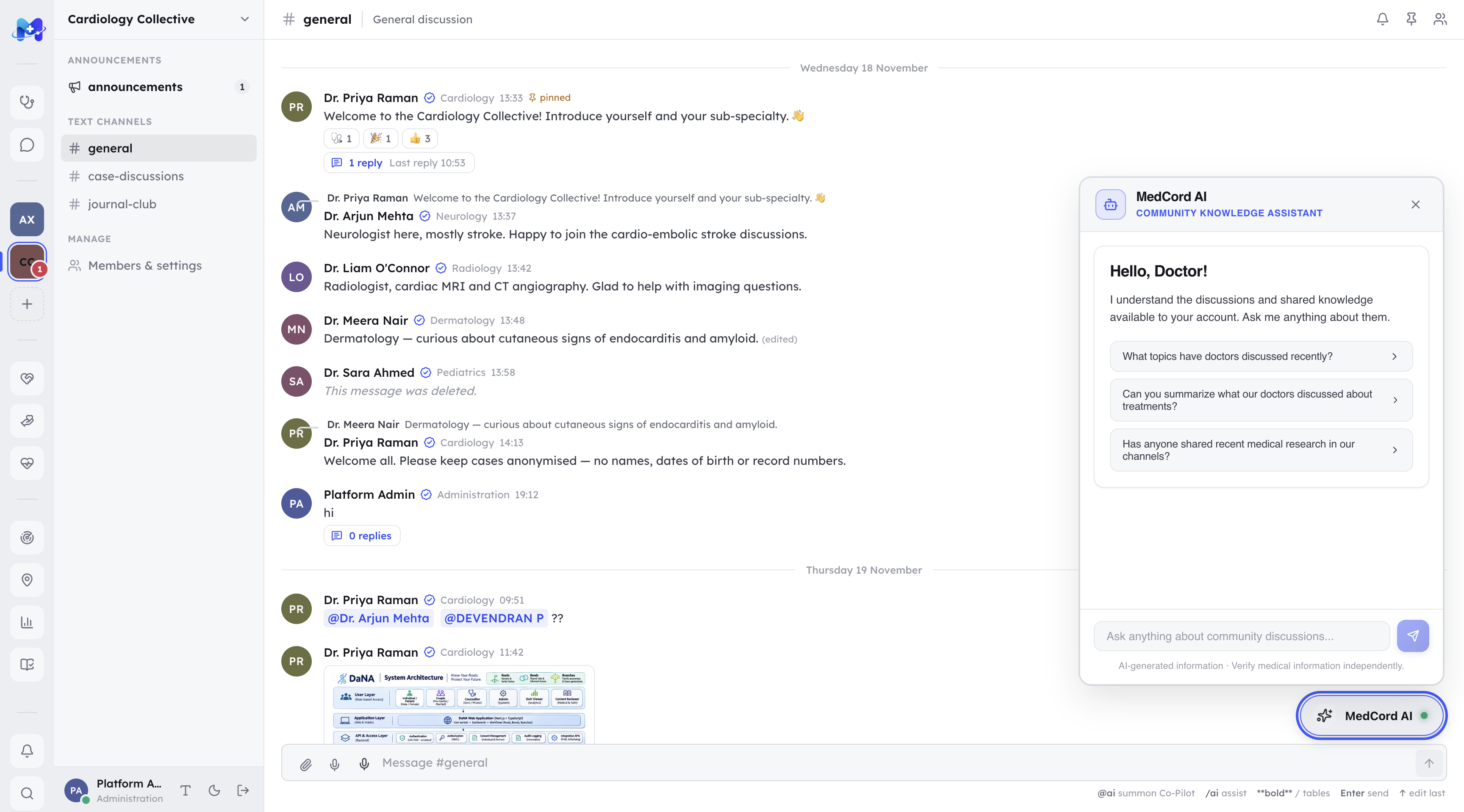
MedCord · Rural Case Rooms connects village health workers with verified doctors in a live, private case room.
- Send a case your way: speak, type or tap symptoms, in 7 Indian languages (Tamil, Hindi, Malayalam, Telugu, Kannada, Bengali, English). It works on weak networks; with no signal, the case is saved on the device and sends itself when the connection returns.
- Instant triage: every case gets an automatic SBAR summary, an urgency level (red / amber / green), red-flag advice (e.g. "Possible stroke: note the time symptoms began and arrange transport now") and is routed to the right speciality.
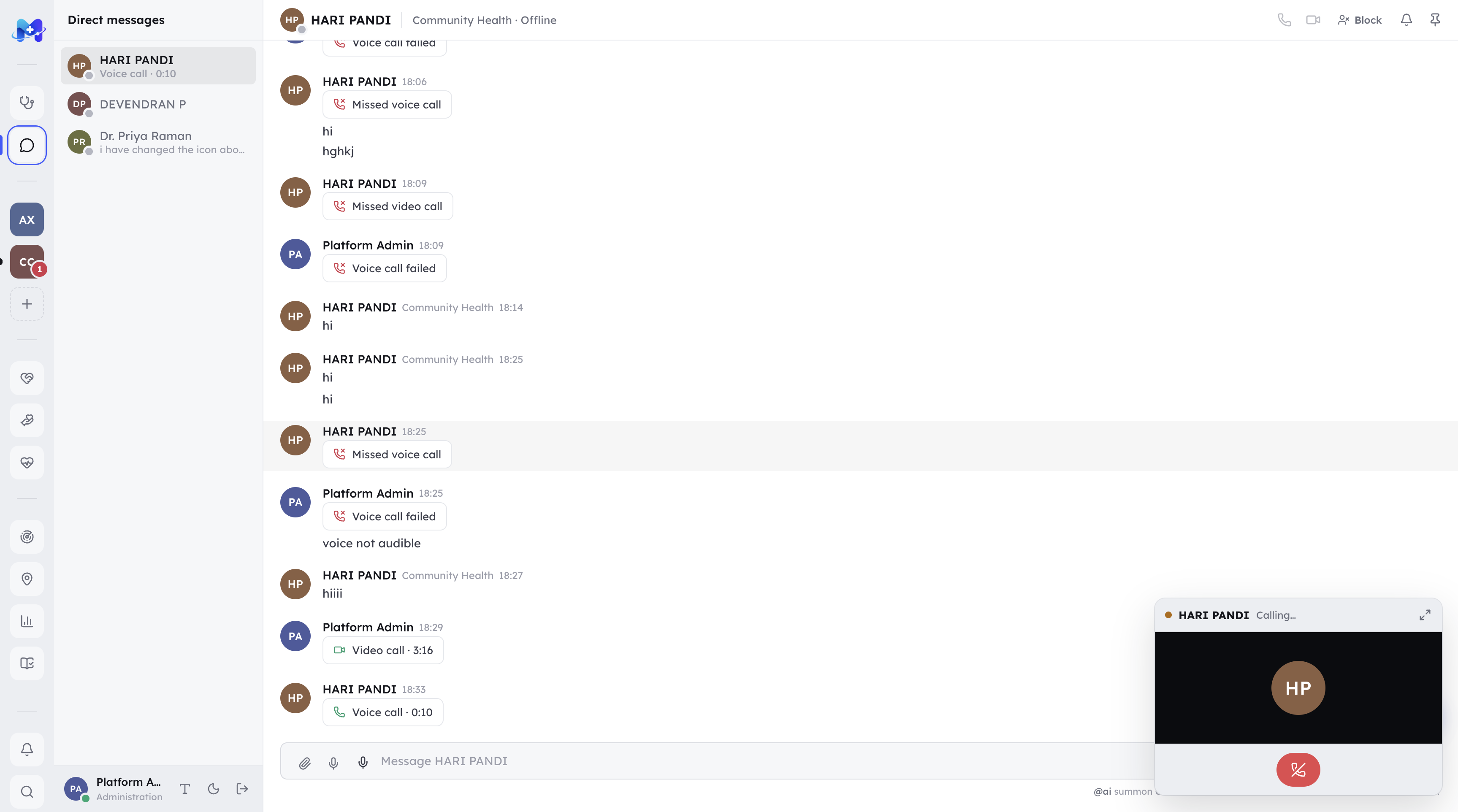
- A verified doctor answers live: on-duty doctors see urgent cases at the top of their queue, accept with one tap and chat in a real-time case room on the Nexconn Chat SDK. One-to-one voice and video calls let the doctor see the patient.
- No language barrier: any message can be translated and read aloud in the health worker's language.
- Answers that last: the doctor's verified answer closes the loop with a 24-hour follow-up and joins a Verified Answer Library, so the next worker with a similar case gets help in seconds.
- A community that helps: a Care Fund where the community helps pay for care (payments are simulated in the demo), volunteer help for rides and medicine pick-ups, and a daily check-in so health workers look after each other.
- Insight: an Outbreak Radar flags clusters of similar cases in one area, a care network map shows who works where, and an impact dashboard tracks response times.
- Accessible everywhere: large-text mode, a phone-first layout, and a phone app built with Capacitor (Android and iOS).
How we built it
- Frontend: React 19, Vite, TypeScript, Leaflet maps, a phone-first design system; wrapped as an Android/iOS app with Capacitor.
- Backend: Spring Boot 4 on Java 21, PostgreSQL (Supabase) with Flyway migrations and row-level security on every table, JWT auth with rotating refresh tokens, RFC 7807 errors.
- Real-time with Nexconn: the backend issues Nexconn tokens through the signed Server API. Each browser connects with
NCEngine, and a direct-channel signal tells the other side a message is waiting, so the case room updates instantly . Chat and calls share one Nexconn connection. - Design choice: PostgreSQL stays the source of truth (history, edits, search, audit). Nexconn carries the real-time signal, so chat degrades to a slow refresh instead of breaking if Nexconn is unreachable.
- Languages: speech-to-text, translation and natural Indian-language text-to-speech through Sarvam AI, called from the server so the key never reaches the browser.
- Triage and Outbreak Radar are transparent, rule-based checks (red-flag keywords, vital-sign thresholds, case clustering in an area over 72 hours), not a black box.
Challenges we ran into
- Networks that block real-time services: many college and office networks block Nexconn. We made the backend the record and Nexconn the fast path, so the app keeps working on a weak or blocked network.
- A call-signalling race: the caller's video offer could arrive before the callee's app had loaded the incoming call, so some calls silently failed. We now buffer early signals and wait briefly for the offer instead of failing.
- Language in both directions: translating a doctor's answer was not enough, because read-aloud still spoke the original English. Now it reads the Tamil translation the worker actually sees.
- Phone-first for real: some screens overflowed on a 390 px phone. Building the Capacitor app forced us to fix every layout for small screens.
- Safety without a diagnosis engine: we kept triage rule-based and clearly labelled "automatic alert, not a diagnosis", and refuse phone or ID numbers in free text so no patient-identifiable data is stored.
Accomplishments that we're proud of
- A complete loop, live on the web: village → triage → verified doctor → live chat and video call → verified answer → follow-up → library.
- A health worker can send a case in Tamil, hear the doctor's answer in Tamil, and never type a word of English.
- Real-time case rooms on the Nexconn Chat SDK, with a fallback that never loses a message.
- Community features beyond the consultation: Care Fund, volunteer help, peer check-ins and an Outbreak Radar.
- 200+ automated tests across the backend and frontend, with CI and secret scanning on every push.
What we learned
- Building for the field means designing for weak signal, small screens and many languages first, not as add-ons.
- Real-time SDKs are fastest when you keep your own data as the source of truth and use the SDK for what it does best: instant delivery and calls.
- Rules you can explain earn more trust in healthcare than clever models you can't.
What's next for MedCord
- Publish the Android and iOS apps and add push notifications for new urgent cases.
- Photo and voice-note attachments in case rooms.
- Red-flag detection in Indian languages, not just English.
- Real UPI payments for the Care Fund and SMS alerts to district health officers for outbreaks.
- Pilots with ASHA programmes and district hospitals, and verification of doctors against the national medical register.
Try it: https://med-cord.vercel.app/welcome · Code: https://github.com/KarthikeyanMahendran/MedCord


