-
-
Home
-
-
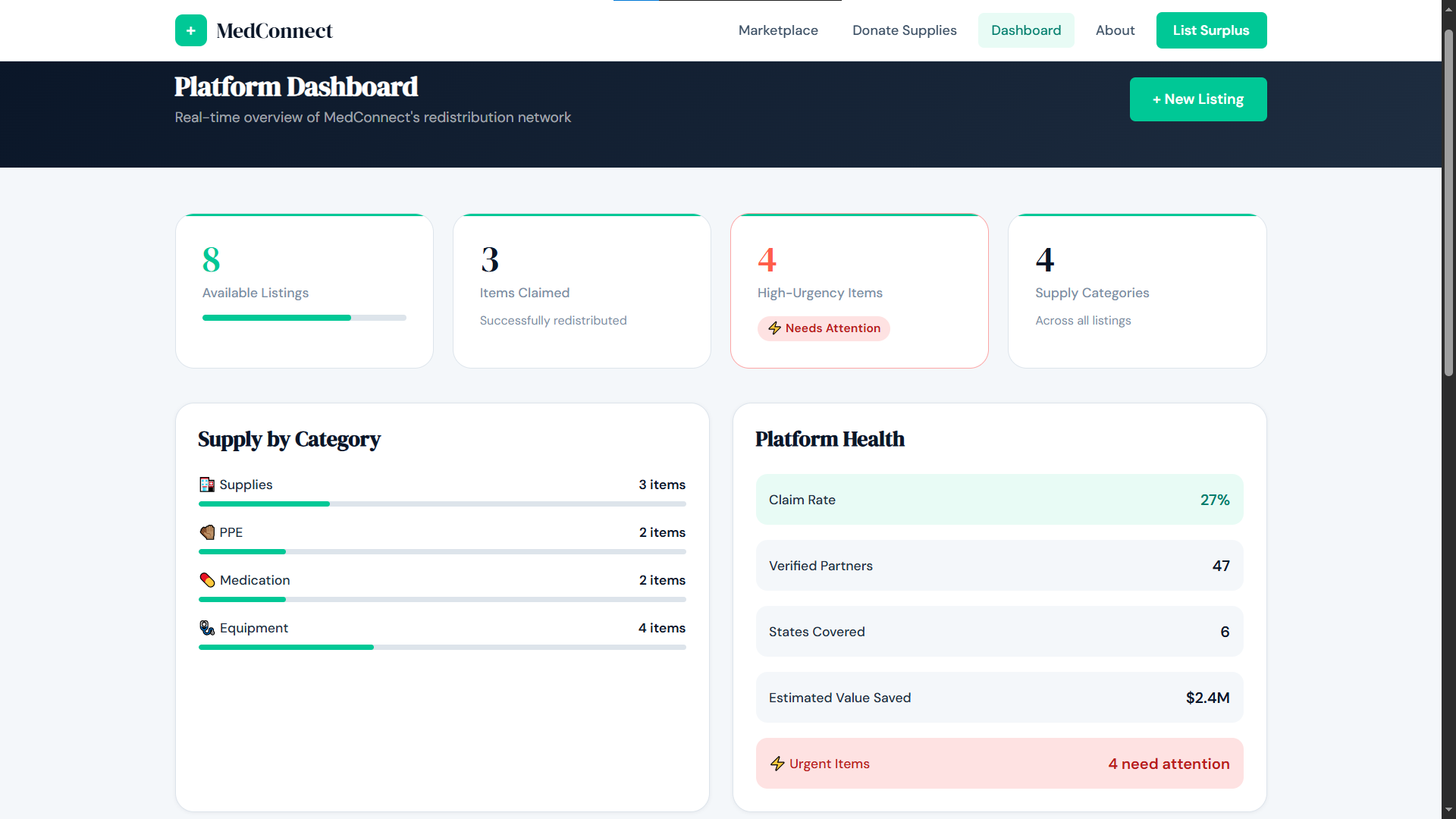
Dashboard
-
Inspiration
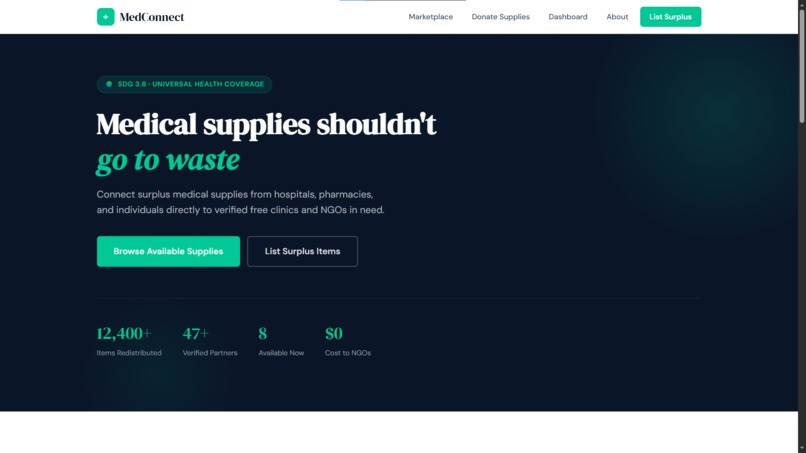
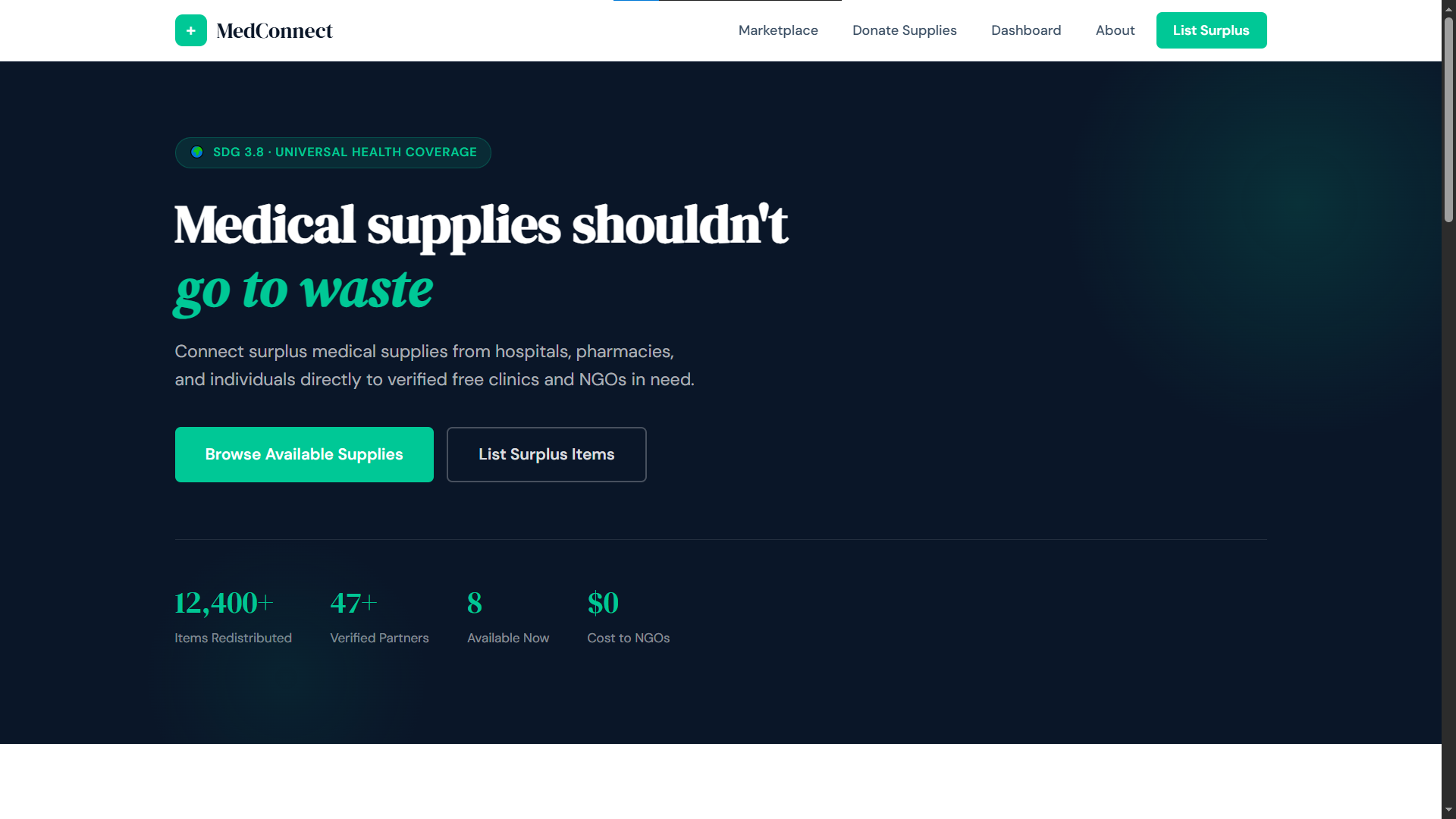
While researching solutions for SDG 3.8 (Universal Health Coverage), we discovered a massive paradox in the healthcare system: well-funded hospitals and pharmacies regularly throw away perfectly usable, unexpired medical surplus due to storage limits or protocol changes, while free clinics and NGOs struggle to afford those exact same supplies. We realized this isn't a scarcity problem; it is a logistics and communication problem. MedConnect was inspired by the need to bridge this gap, rerouting life-saving supplies away from landfills and into the hands of under-resourced healthcare providers.
What it does
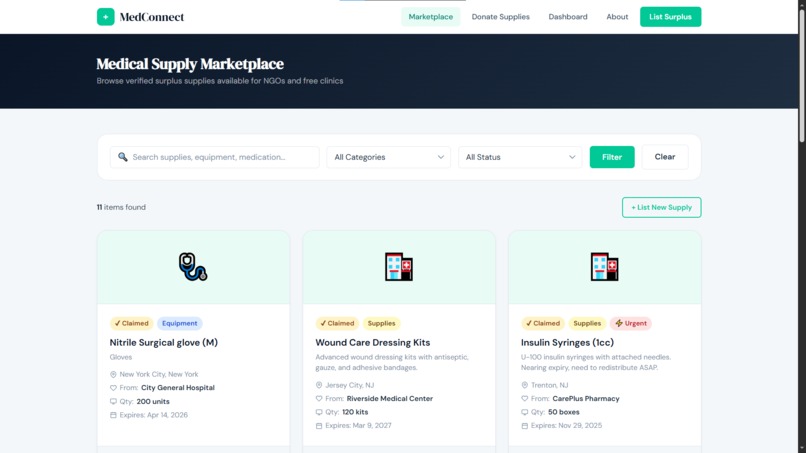
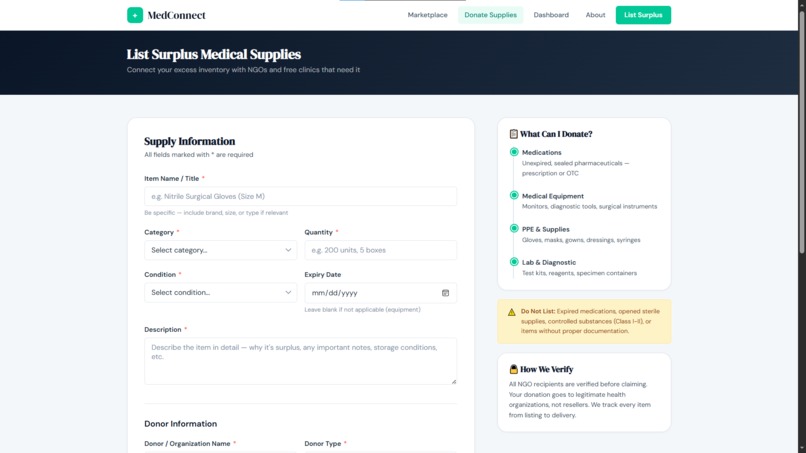
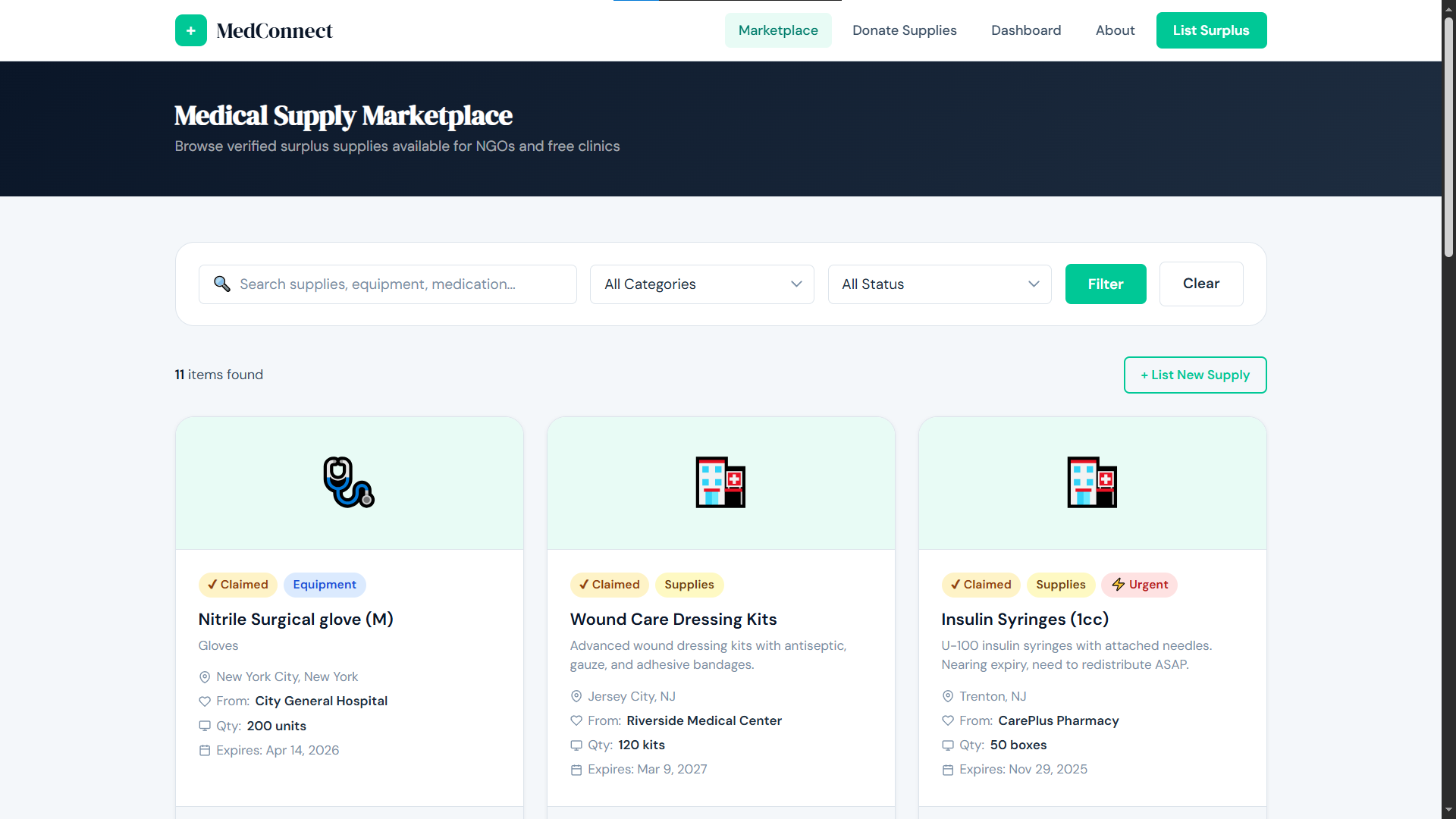
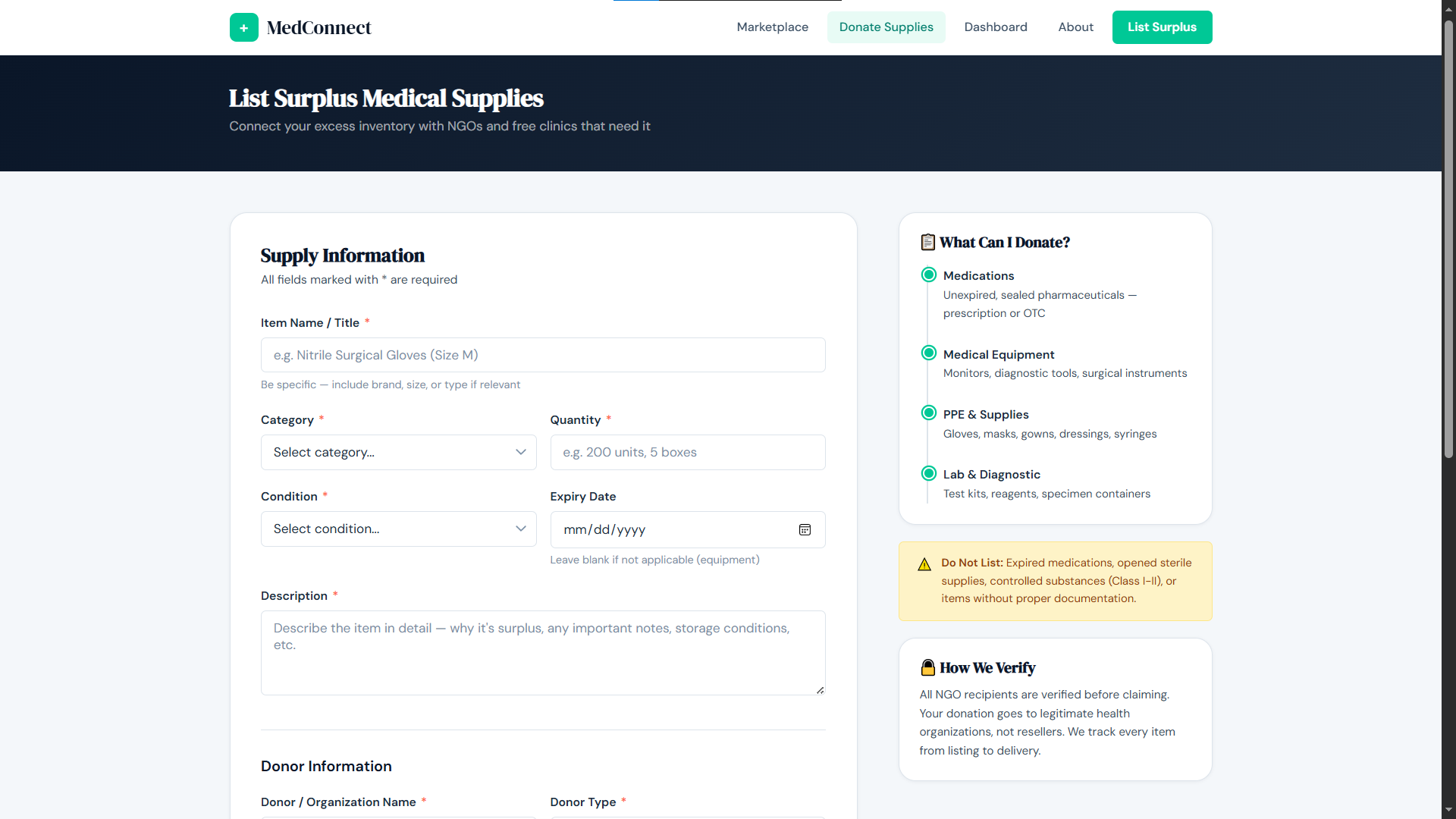
MedConnect is a B2B surplus redistribution marketplace. It allows hospitals, pharmacies, and individuals to list surplus medical equipment, PPE, and medications in under two minutes. On the other side, verified NGOs and free clinics can browse the marketplace, filter by urgency or category, and claim the items they need at zero cost. Once an item is claimed, our platform automatically dispatches an email notification to the donor to initiate the handover, creating a seamless, zero-waste supply chain.
How we built it
We built MedConnect as a full-stack web application.
- Backend: We used Node.js and Express.js to handle the routing and server logic.
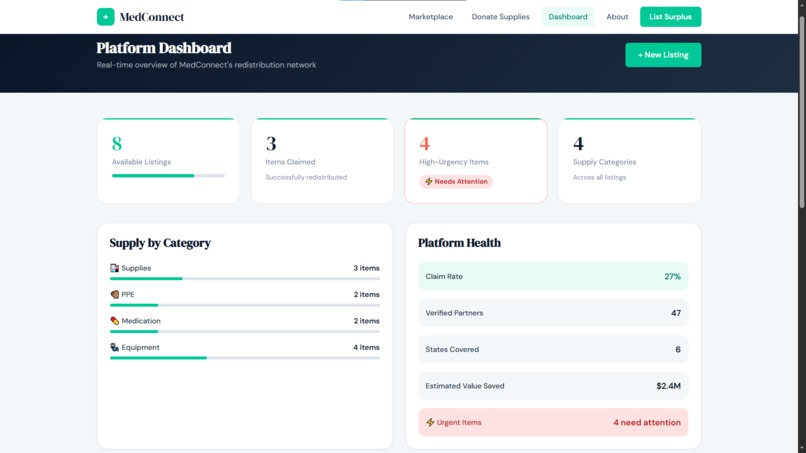
- Database: We integrated MongoDB Atlas using Mongoose to persist our listings, user claims, and real-time dashboard statistics in the cloud.
- Frontend: We utilized EJS (Embedded JavaScript) for fast, server-side rendering, paired with a custom CSS design system using Google Fonts to ensure the platform feels accessible and professional.
- Integrations: We implemented Nodemailer to handle the automated email alerts that connect donors with claimants instantly.
Challenges we ran into
One of our biggest hurdles was transitioning our backend from local, in-memory arrays to a live cloud database. We had to refactor our route handlers to be asynchronous, manage the transition from standard UUIDs to MongoDB's unique _id format across all of our frontend templates, and ensure our database queries were properly formatted. Additionally, securing our credentials using environment variables and configuring Google App Passwords to bypass strict email security for Nodemailer required careful debugging.
Accomplishments that we're proud of
We are incredibly proud to have shipped a fully functional, full-stack application within the hackathon time limit. Going from a conceptual idea to a working platform where a user can post an item to a real database, claim it, and instantly receive an automated email notification is a massive win. We are also proud of the clean, intuitive UI—healthcare workers are busy, so we made sure the donation flow was completely frictionless.
What we learned
We learned the critical importance of environment variable security and utilizing .gitignore to protect sensitive database credentials. We also gained deep, hands-on experience with asynchronous JavaScript, Mongoose schema design, and how to seamlessly pass data from a backend server directly into HTML templates using EJS.
What's next for MedConnect
This weekend was just the MVP. Moving forward, we plan to implement:
- Geolocation Routing: Integrating Mapbox to automatically match local donors with the closest free clinics to minimize transport logistics.
- Verified Authentication: Implementing Auth0 or Passport.js to build a robust verification system for NGOs.
- Automated Impact Reporting: Generating downloadable PDF receipts for hospitals to use for tax write-offs, incentivizing further donations.
- Live Image Uploads: Wiring up AWS S3 and Multer so donors can upload real photos of their medical surplus.

Log in or sign up for Devpost to join the conversation.