-
-
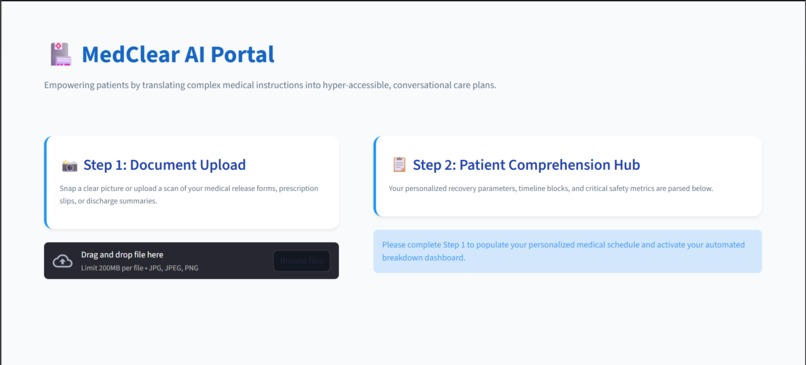
Users drop in a raw photo or scan of their medical paperwork directly from their smartphone or computer. No tedious typing required.
-
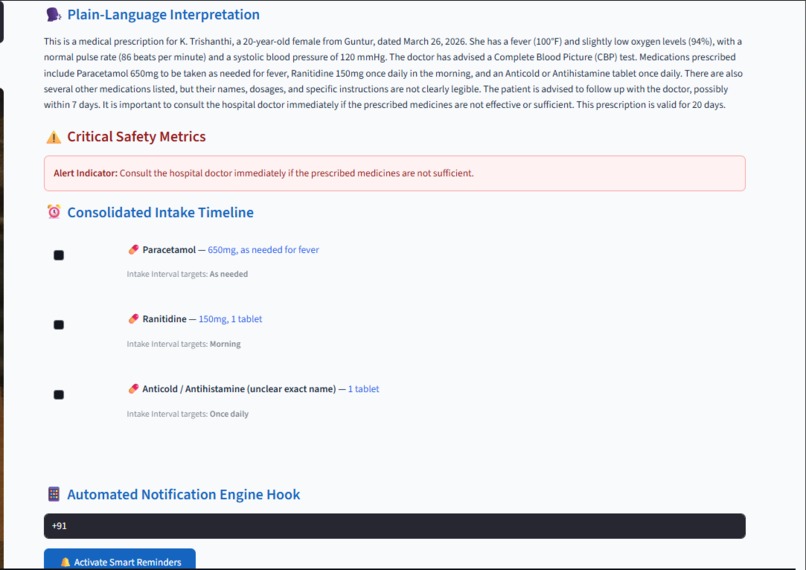
Translates complex jargon into highly readable text geared toward low health literacy.
-
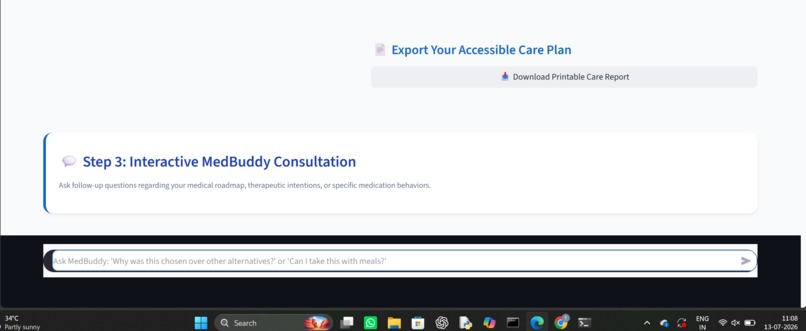
A context-aware conversational AI companion that remembers the parsed prescription data.
Inspiration
Every year, millions of patients leave hospitals or pharmacies with dense discharge forms, hand-written notes, and prescriptions covered in complex pharmaceutical abbreviations or Latin shorthand. For elderly patients, non-native speakers, or those experiencing intense health anxiety, this creates a massive health literacy barrier. If a patient cannot confidently read or interpret their care plan, they cannot recover safely. We built MedClear AI Portal to completely strip away this technological and linguistic friction, turning confusing medical jargon into clear, comforting, and actionable health independence.
What it does
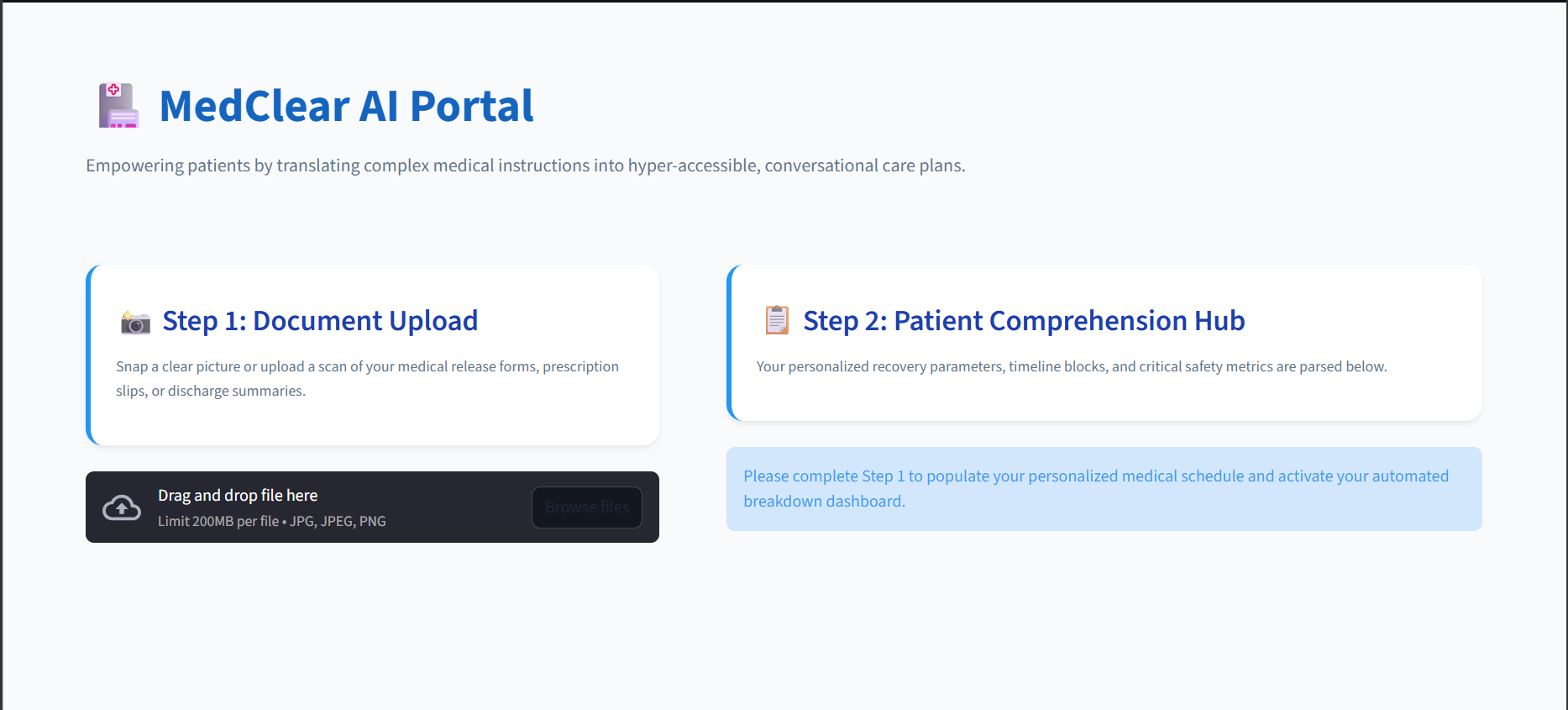
MedClear AI Portal is a modern, zero-typing, access-first medical companion structured into three distinct steps:
📸 Step 1: Document Upload: Users take a photo or upload a raw scan of their medical paperwork directly from their smartphone or computer.
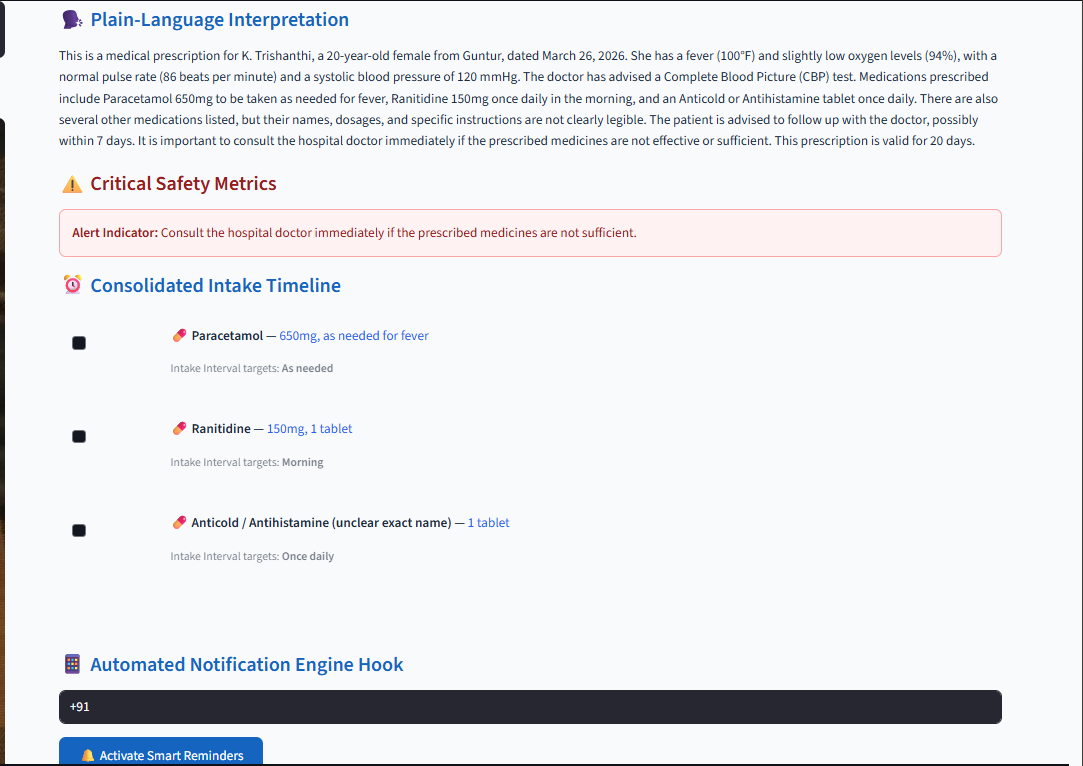
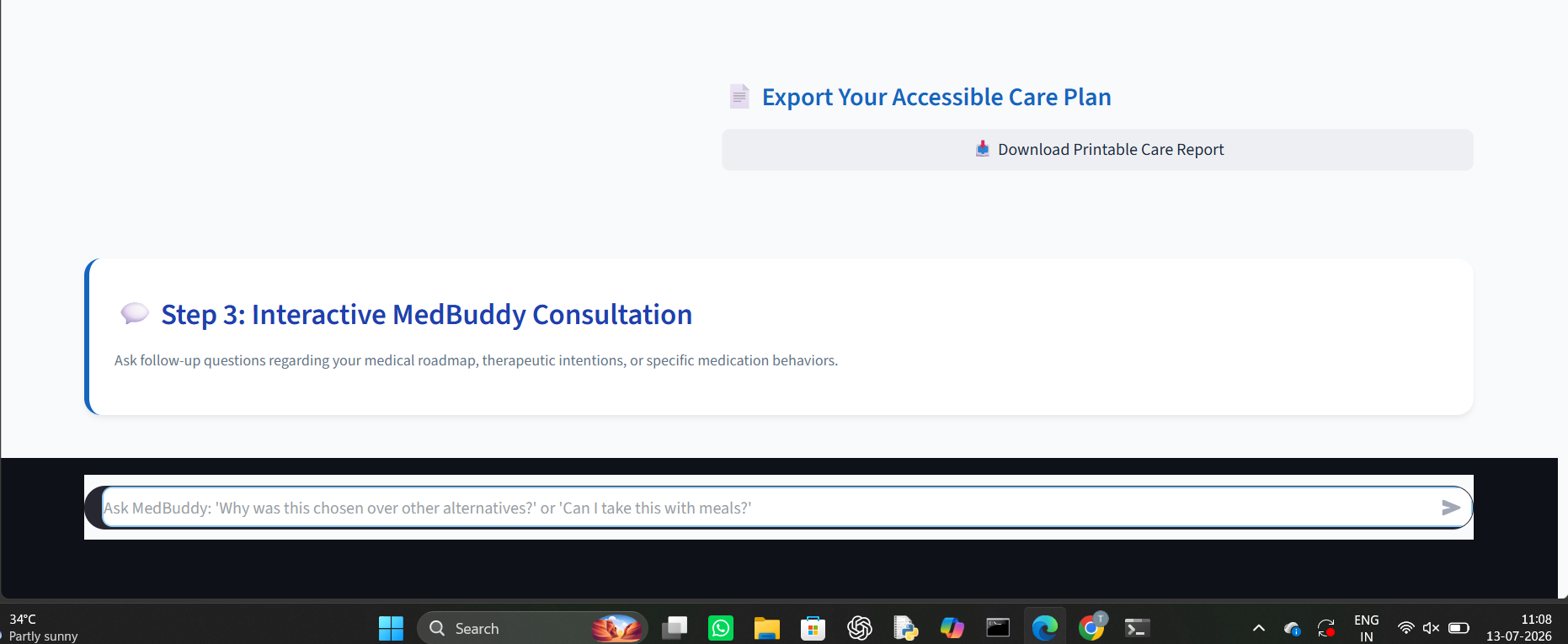
📋 Step 2: Patient Comprehension Hub: The portal translates the medical text into an ultra-scannable dashboard. It features a plain-English translation of all shorthand, prominent red boxes for critical safety red flags, a consolidated intake timeline that groups daily medication intervals beautifully, an SMS text-reminder registration module, and an instant printable/downloadable text care plan.
💬 Step 3: Interactive MedBuddy Consultation: An active, context-aware AI conversational companion allows patients to ask follow-up questions about why specific medications were chosen or clarify dietary guidelines in real time using simple analogies.
How we built it
We prioritized a high-speed, cohesive tech stack that could operate seamlessly within a single application file: Frontend Architecture: Built using Python and Streamlit, heavily customized with injected CSS to override default behaviors and implement a clean, high-contrast, light-blue healthcare aesthetic. Core Intelligent Engine: Powered by the Google GenAI SDK, leveraging the multi-modal capabilities of gemini-2.5-flash. Data Pipelines: Designed the AI vision engine to ingest raw images alongside rigorous system instructions to enforce strict JSON schema output. This allows our Python frontend to parse the structured data dynamically into beautiful UI card elements.
Challenges we ran into
Our biggest hurdle was handling data formatting consistency. If the LLM returned loose markdown text or incomplete strings, the custom UI cards and checkboxes would break. We spent significant time crafting precise system prompts and setting response_mime_type="application/json" to ensure the model output strictly adhered to our expected JSON layout. Another hurdle was style isolation—forcing Streamlit’s native chat elements and footer containers out of their default dark overlays and into our custom light-blue color palette required deep CSS inspection and targeted overrides.
Accomplishments that we're proud of
True UX Optimization: Successfully implementing a "Consolidated Timeline" that intelligently groups multi-dose medications (like combining morning and afternoon intervals under one card) instead of rendering an overwhelming, repetitive list. High Contrast Accessibility: Engineering a genuinely clean, vibrant medical layout with highly legible text, shifting away from generic dark developer themes to prioritize real-world patient utility. The Contextual Memory Loop: Passing the extracted prescription JSON directly into the conversational memory of the MedBuddy assistant, ensuring it answers patient queries safely and accurately based only on their specific upload.
What we learned
We learned that building an impactful AI application isn't about throwing every available feature at the user; it's about scoping down to remove micro-frictions. A patient using this tool is likely stressed or poorly sighted, meaning a "Vision-First, Zero-Typing" design beats a complex multi-page dashboard every time. We also gained practical experience with strict structural response parsing using Gemini.
What's next for MedClear AI Portal
Real SMS Integration: Moving from our simulated notification architecture to full Twilio/SMS API triggers that dispatch real-world text messages at precise intake times. On-Device OCR & Edge AI: Implementing local client-side image compression so users with low bandwidth or poor hospital cell reception can still upload documentation lightning-fast. Multi-Lingual Audio Playback: Integrating a text-to-speech engine to read the plain-English translations aloud in multiple regional languages for visually impaired or non-English-literate users.
