-
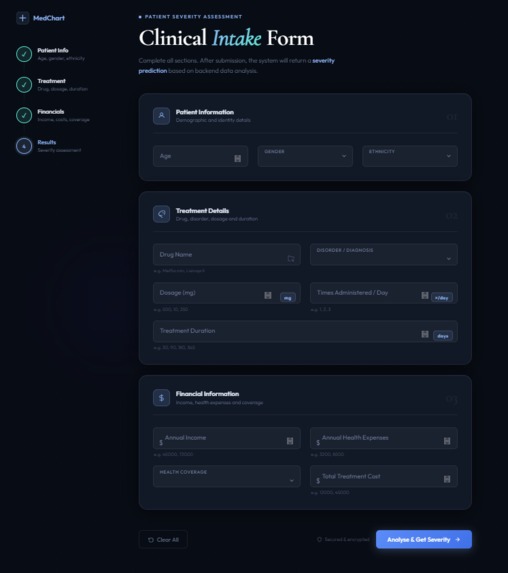
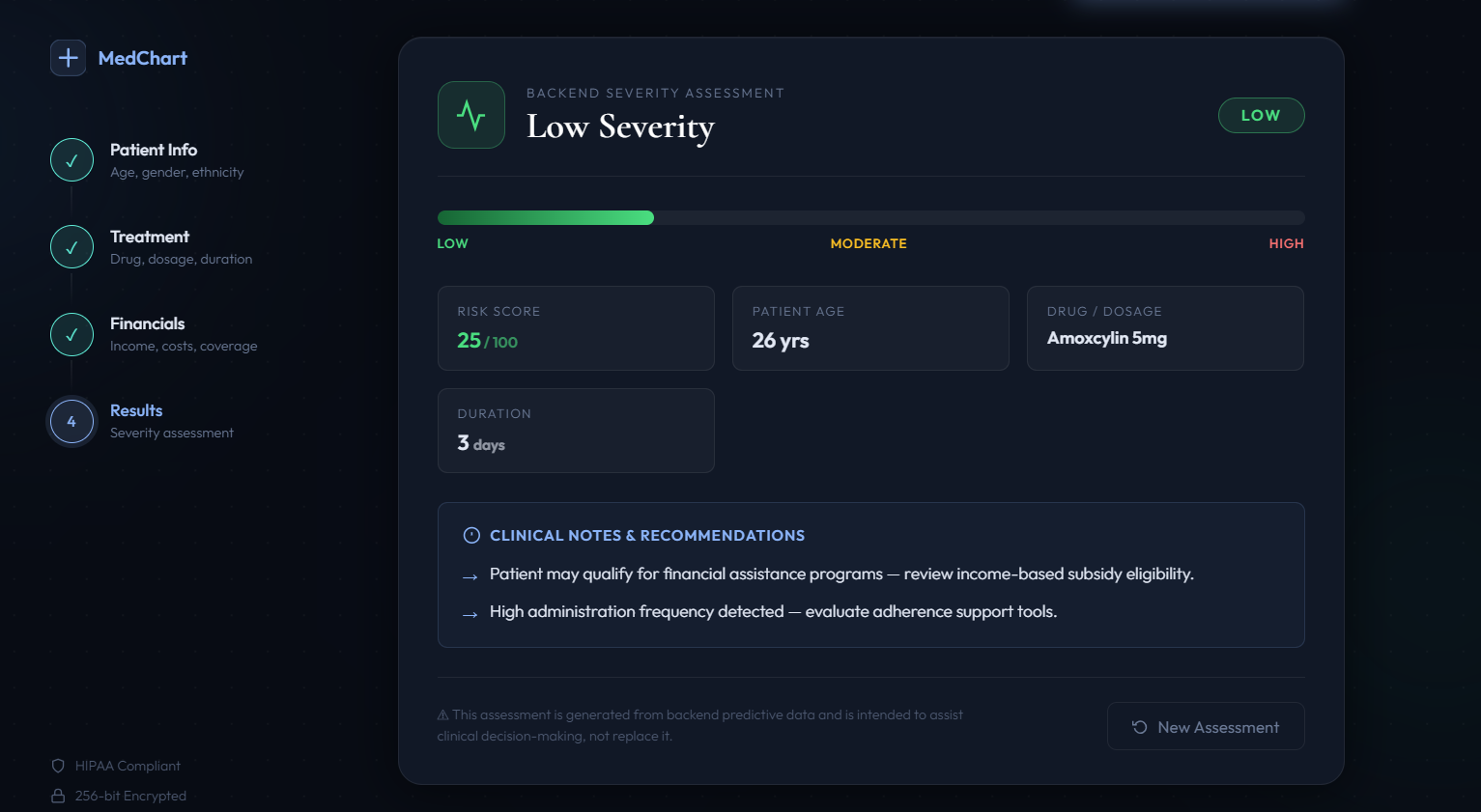
Patient Intake Form - Frontend
-
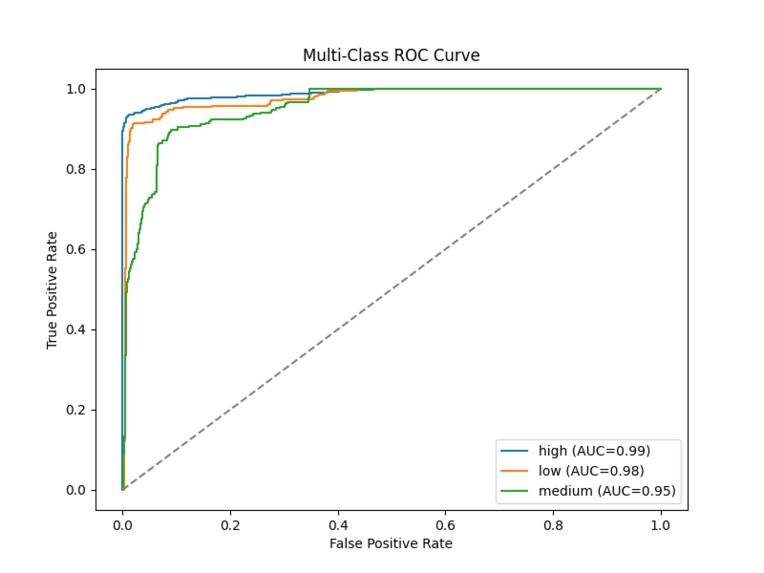
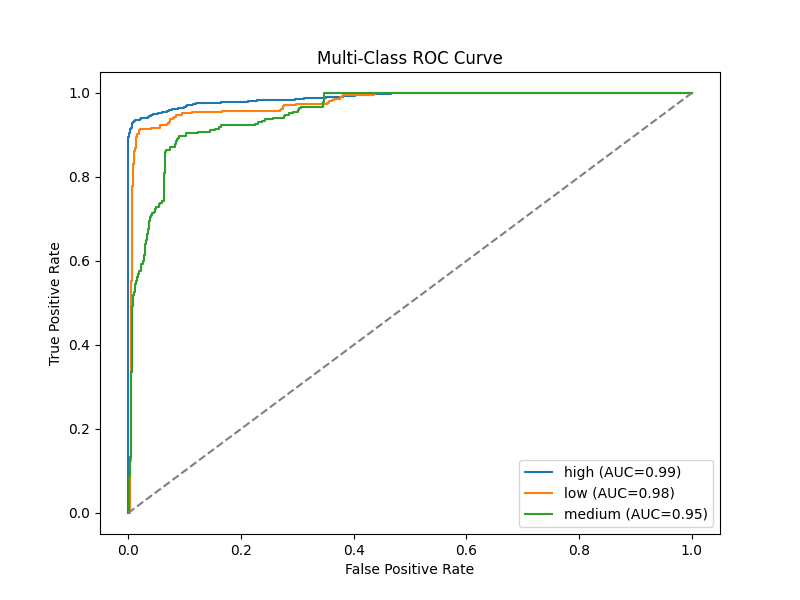
ROC Model Results based on Severity
-
Inspiration
Adverse drug reactions and medication allergies are a major healthcare risk. Prescriptions are often generalized instead of personalized.
Using drug data from Kaggle and synthetic EHR data from Synthea, we wanted to build a system that predicts medication risk before complications occur.
What it does
Our system predicts drug side effect & allergy risk in 3 categories:
Low, Moderate, High
It analyzes:
- Patient demographics
- Medication dosage & duration
- Healthcare costs
- Medical conditions & allergies
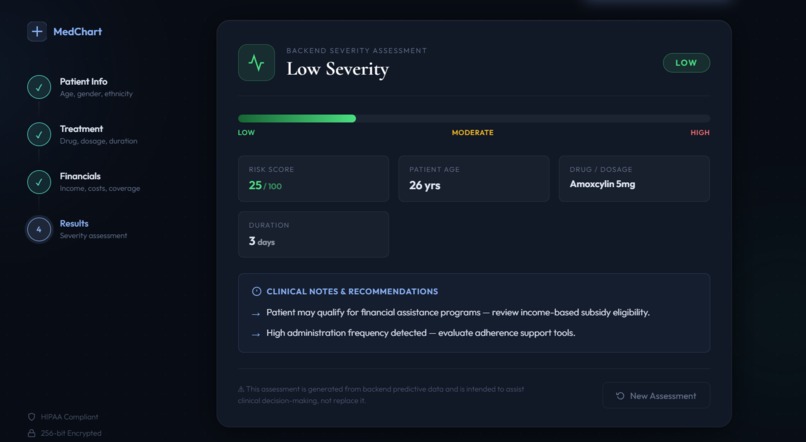
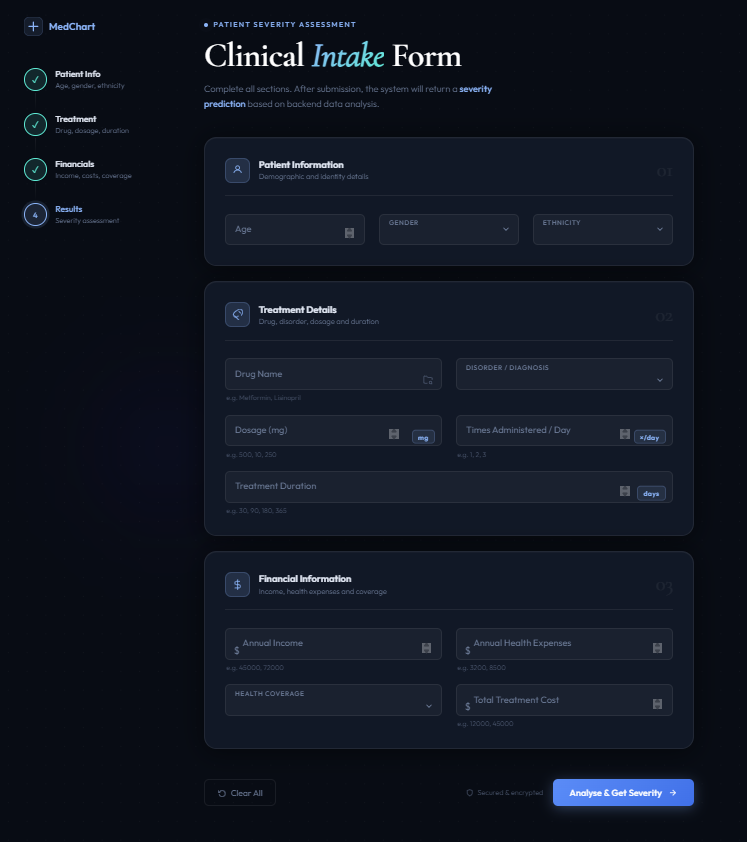
It outputs a risk level and probability distribution through a simple frontend form.
How we built it
- Merged Kaggle drug data with Synthea EHR data
- Performed ETL & feature engineering (duration, aggregation, encoding, scaling)
- Built a Multinomial Logistic Regression model
- Evaluated using confusion matrix & ROC curves
- Integrated with a frontend patient intake form for real-time prediction
Challenges we ran into
- Merging heterogeneous healthcare datasets
- Cleaning inconsistent date and numeric formats
- Designing meaningful severity labels
- Handling multi-class evaluation
- Ensuring encoder/scaler consistency for live predictions
Accomplishments we're proud of
- Built an end-to-end ML pipeline
- Implemented multi-class risk scoring
- Delivered real-time frontend + backend integration
- Created a working healthcare AI prototype within hackathon time
What we learned
- Data preprocessing is critical in healthcare ML
- Feature engineering impacts model performance heavily
- Logistic Regression is interpretable and effective
- End-to-end integration is essential for practical ML systems
What's next
- Improve severity labeling using clinical guidelines
- Explore advanced models (XGBoost, Neural Networks)
- Add model explainability (SHAP)
- Deploy as a scalable healthcare API
- Integrate into hospital EHR systems for real-time decision support

Log in or sign up for Devpost to join the conversation.