-
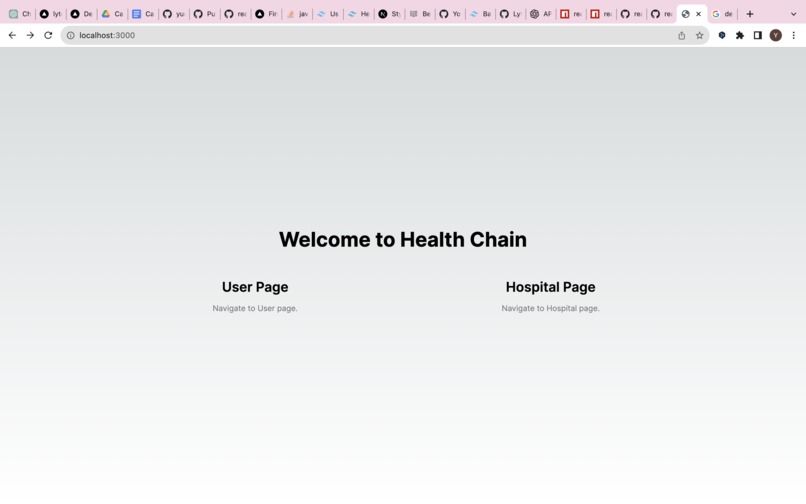
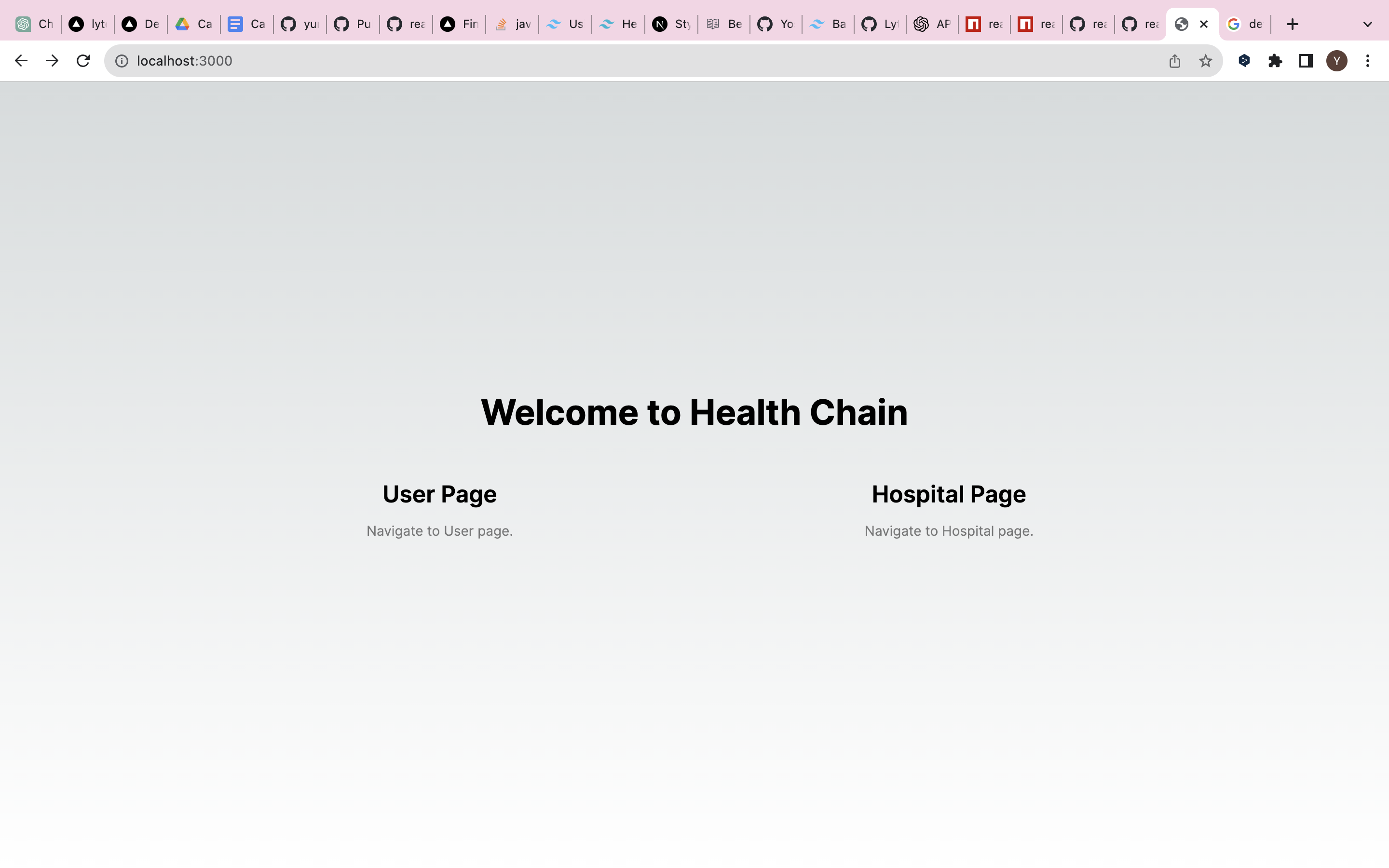
Main Page. This is the first page.
-
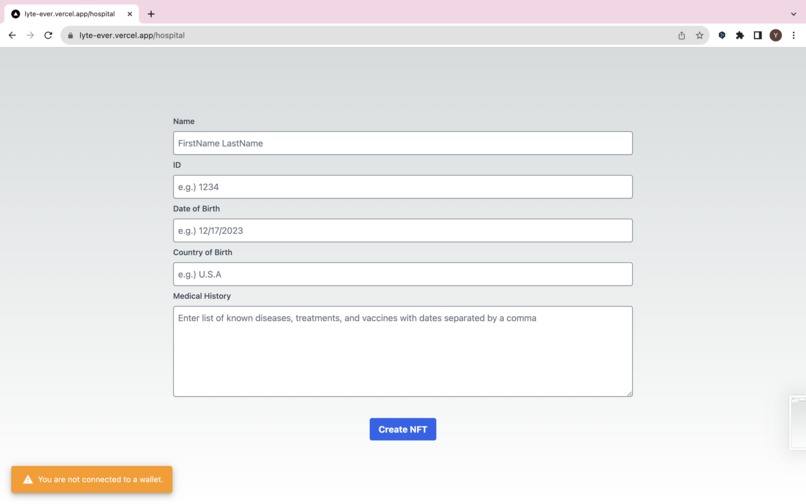
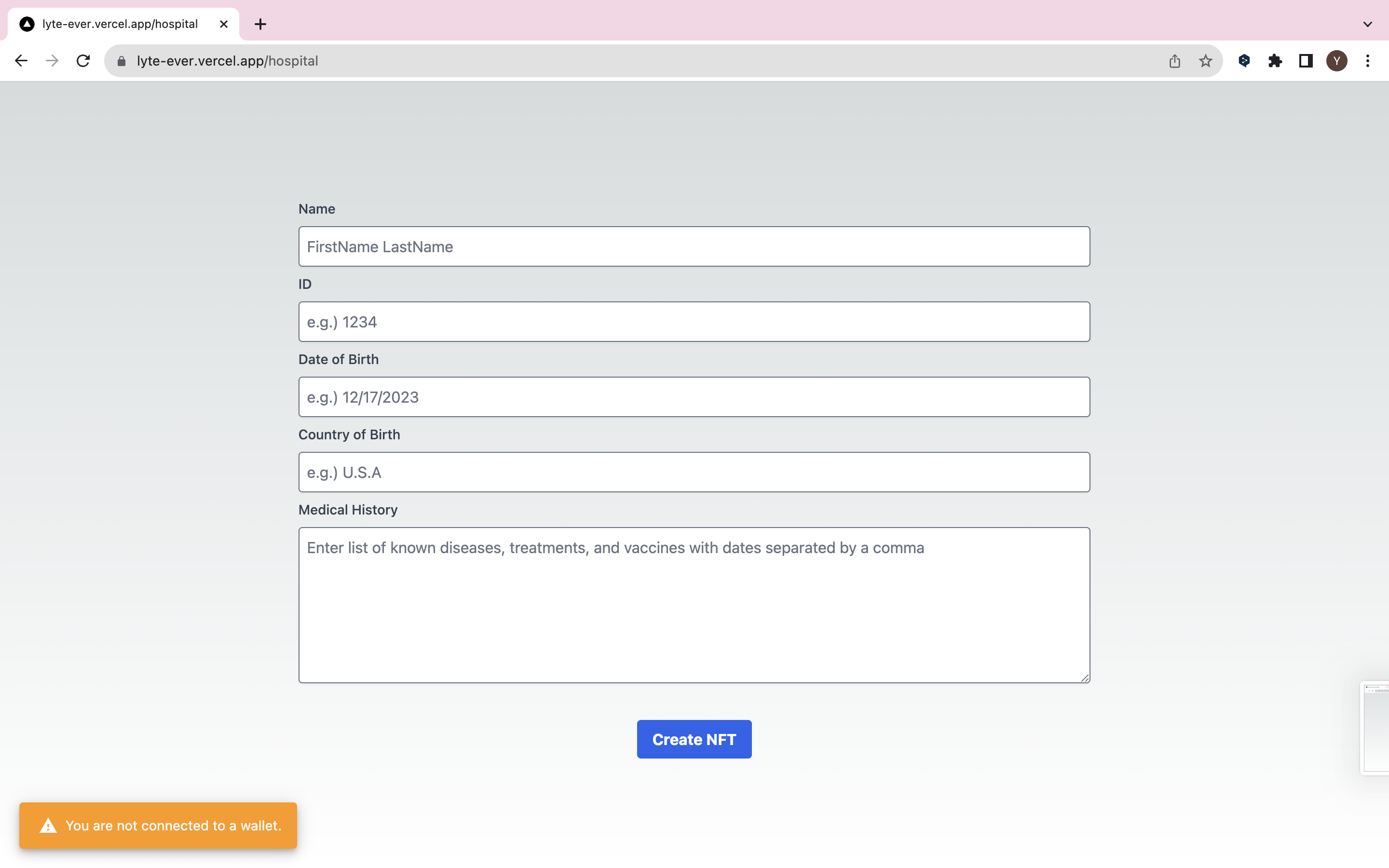
Hospital Page. A doctor can create a record
-
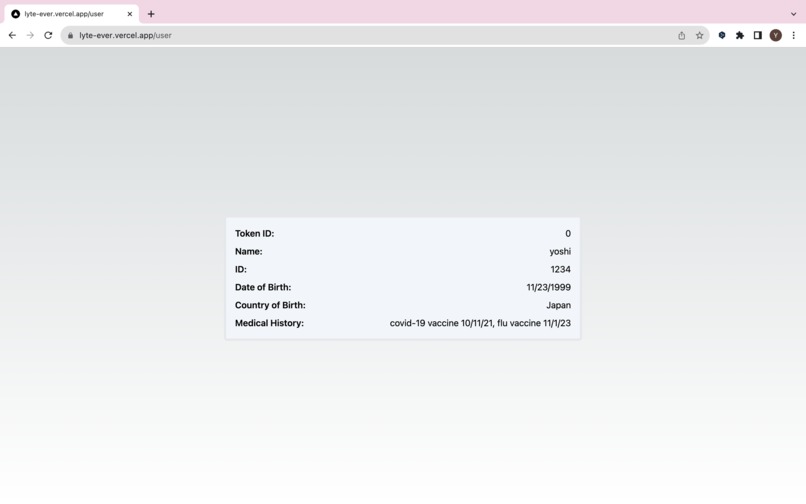
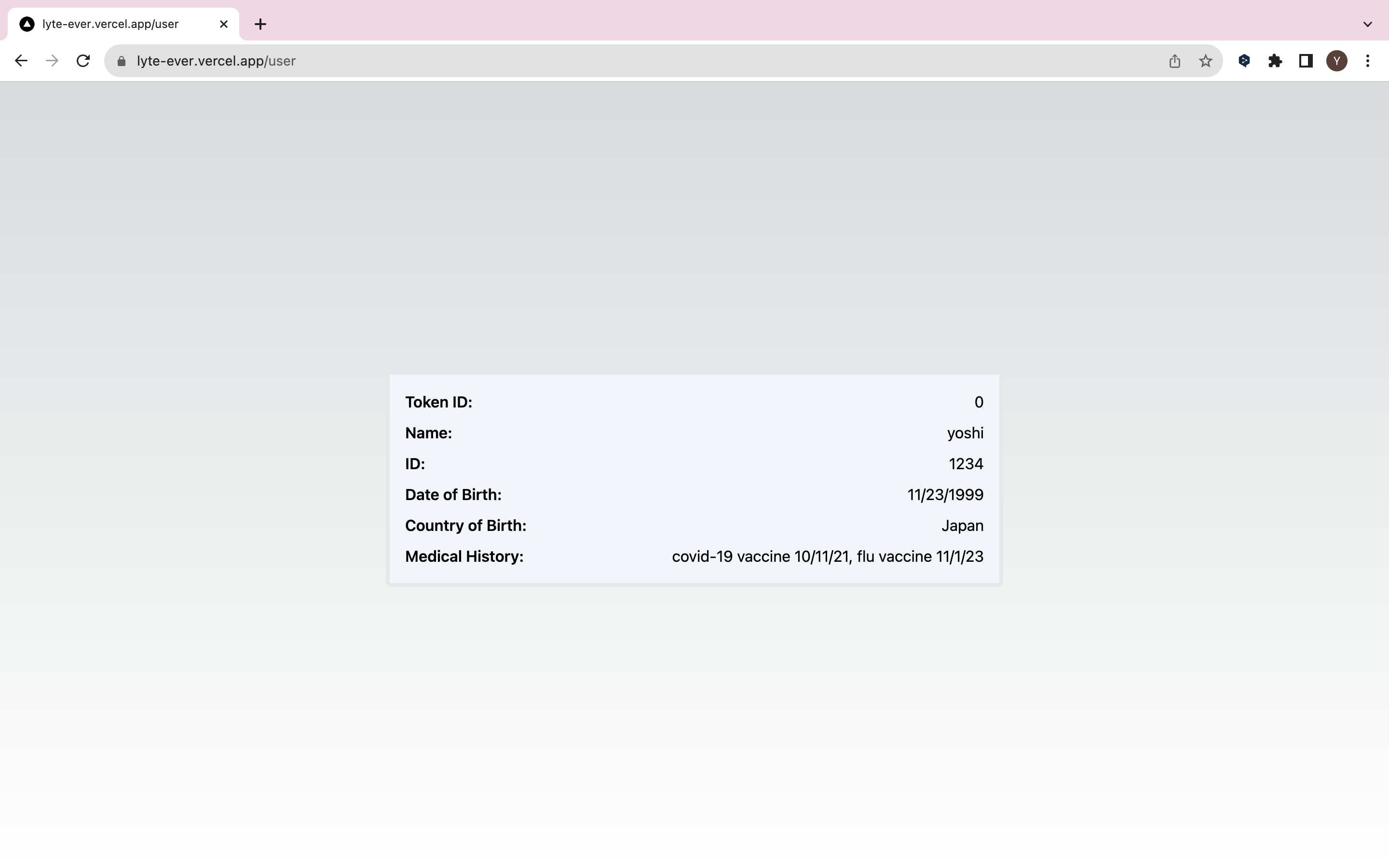
Patient page. The users can see their medical records
Inspiration
As three of our team members are international students, we encountered challenges when transferring our medical records from our home countries to the United States. Because of poor transferability of medical records, we would end up retaking vaccines we had already received in our home countries and wasted a lot of our time collecting our medical records. Moreover, even within the US, we noticed that medical records were often fragmented, with each hospital maintaining its own separate records. These experiences inspired us to create a solution that simplifies the secure transfer of medical records, making healthcare more efficient and accessible for everyone.
What it does
HealthChain.ai allows for medical records to be parsed by AI, and stored as non-fungible tokens on the Ethereum blockchain. The blockchain takes away a central authority to remove long wait times for document requests and allows for easy access by record holders and hospitals. AI parsing allows for easy integration between differing hospital systems and international regulations.
How we built it
Our frontend uses Next.js with tailwind and typescript, and is deployed on Vercel. We used OpenAI to process text input into json to store on our block chain. Our backend used Solidity to write our smart contracts, and broadcast it to the Ethereum block chain using the Alchemy API. We used custom NodeJS API calls to connect the Ethereum block chain to our frontend, and deployed this on vercel as well. This all integrates into the MetaMask API on our frontend which displays NFTs in your Ethereum wallet.
Challenges we ran into
Our original plan was to use Aleo as our Blockchain of choice for our app. But after working with the Aleo’s developers we discovered that the chain's testnet was not working and we couldn't deploy our smart contract. We had to redevelop our Smart Contracts in Solidity and test on the Sepolia, one of the Ethereum testnet. Even then, learning how to navigate through the deployment process and getting the wallets to connect to the chain to interact with our Smart Contracts proved to be one of our biggest challenges.
Accomplishments that we're proud of
We were able to upload our smart contract and able to retrieve data from the chain which allowed our use of the OpenAi API to parse the information retrieved into more understandable, formatted medical records. We are able to apply decentralized finance along with AI which is a huge challenge, we are proud to be able to pull this off.
What we learned
Throughout the hacking of our project, we learned quite a lot such as concepts of Blockchain, cryptography and Machine Learning. On top of learning all these concepts we've learnt how to combine them together through frontend and API calls which is crucial in fullstack development.
What's next for HealthChain.ai
In our upcoming version, we have exciting plans to introduce additional features that we envisioned during the project's development but were constrained by time. These enhancements encompass the integration of speech-to-text for recording medical records, the implementation of OCR technology to convert traditional paper medical records into electronic formats (EMRs), and a comprehensive user interface redesign to simplify the organization of personal medical records. Last but not least, we also want to collaborate with hospitals to bring accessible medical records to the mass market and listen to our customers on what they really want and need.
Built With
- aleo
- metamask
- next.js
- node.js
- openai
- solidity
- tailwind
- typescript


Log in or sign up for Devpost to join the conversation.