-
-
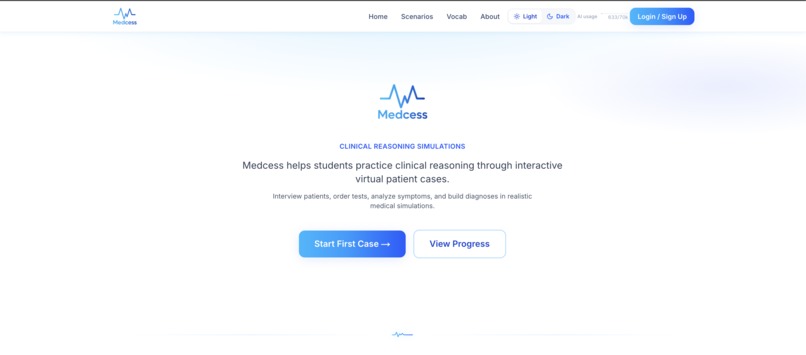
Medcess home page
-
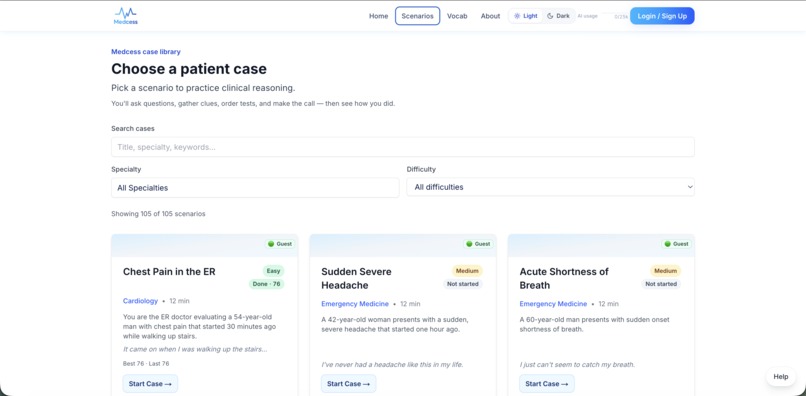
Scenarios catalog
-
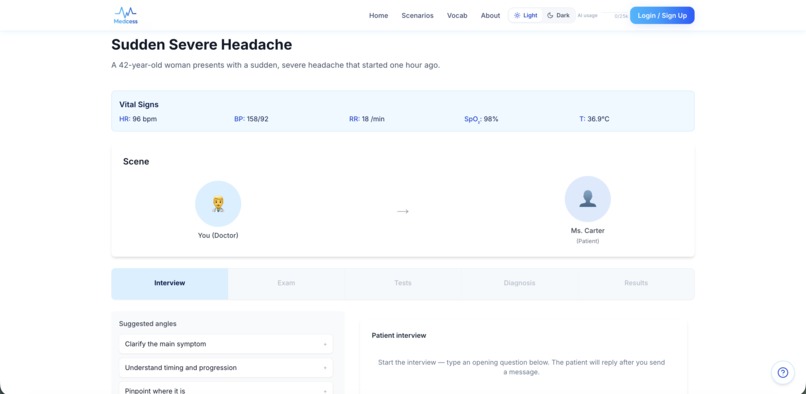
Patient vital signs
-
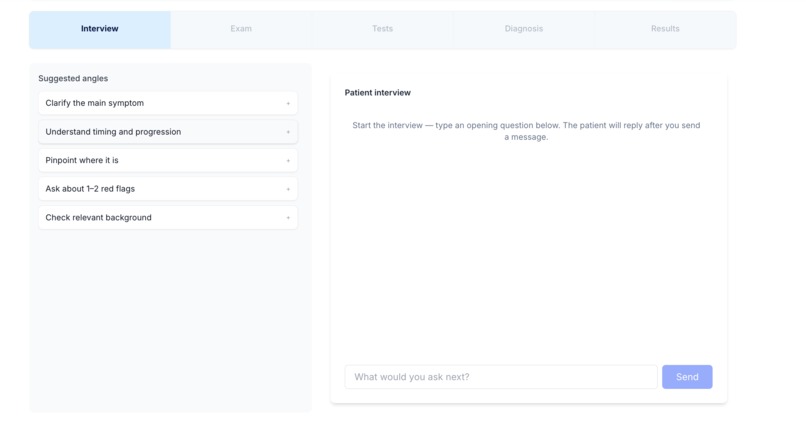
AI-driven patient chat
-
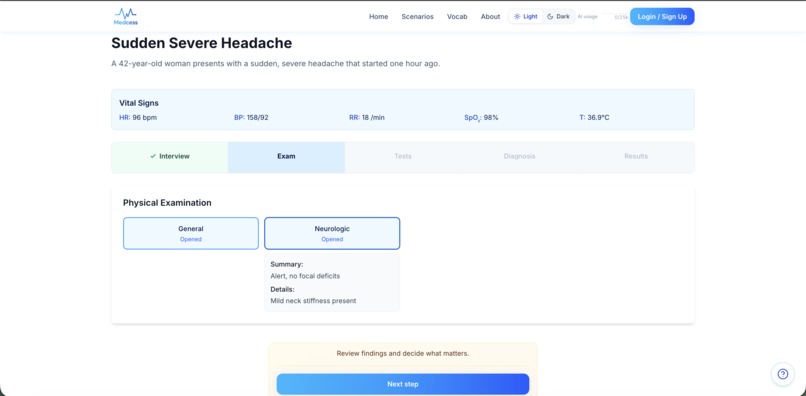
Exams
-
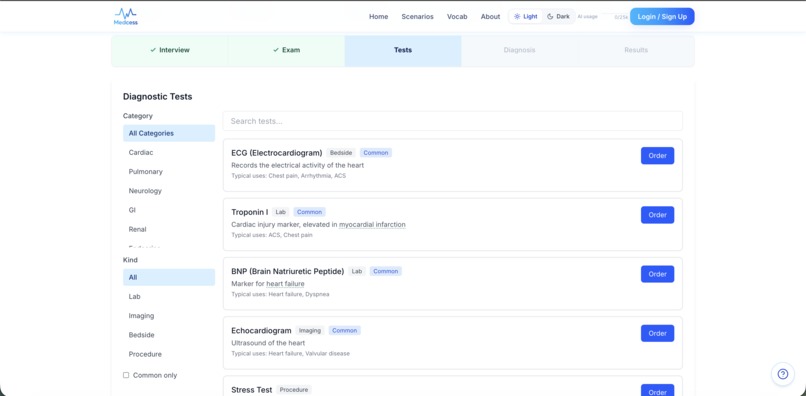
Tests
-
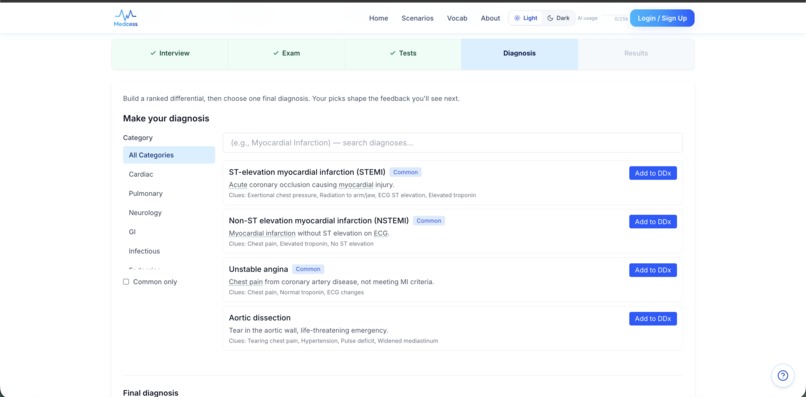
Differential diagnosis
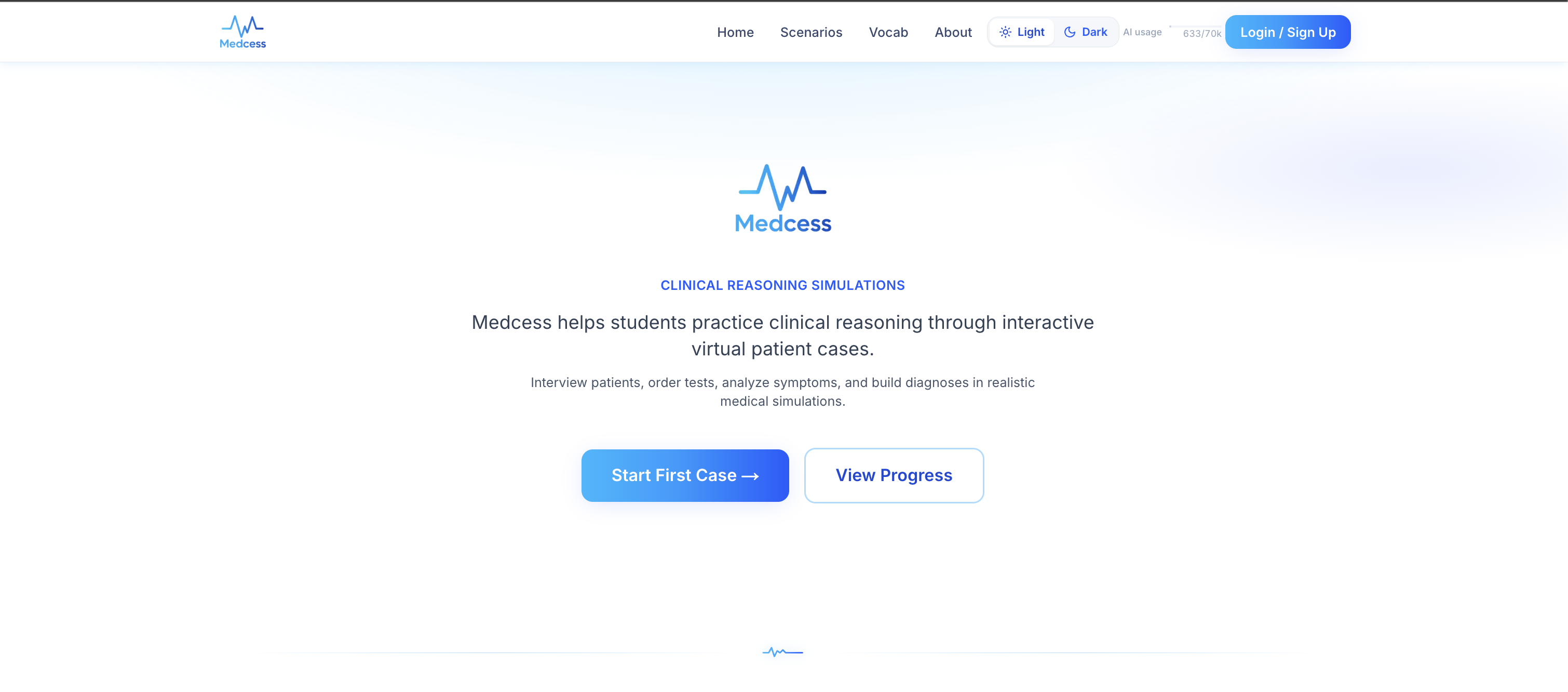
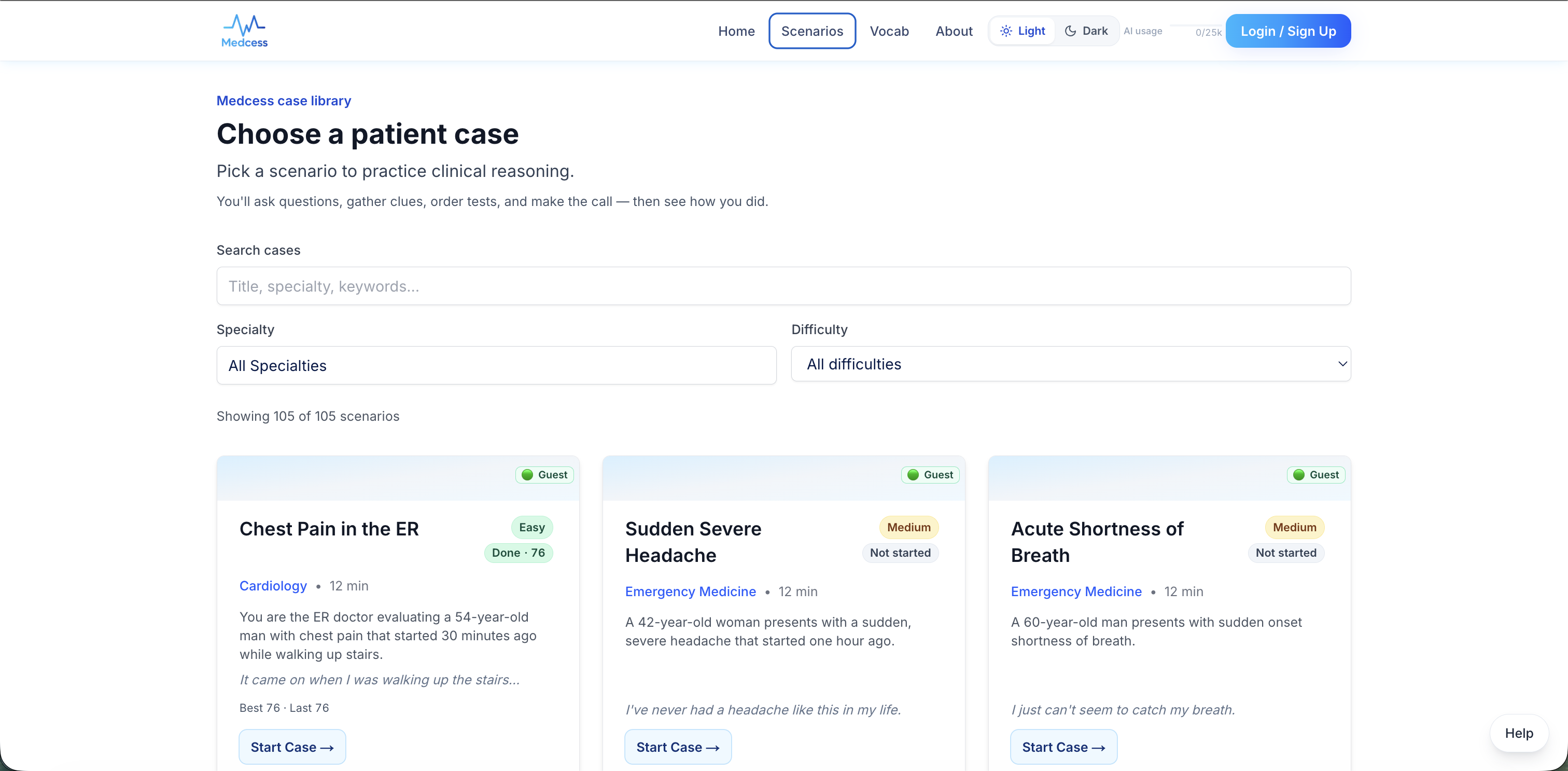
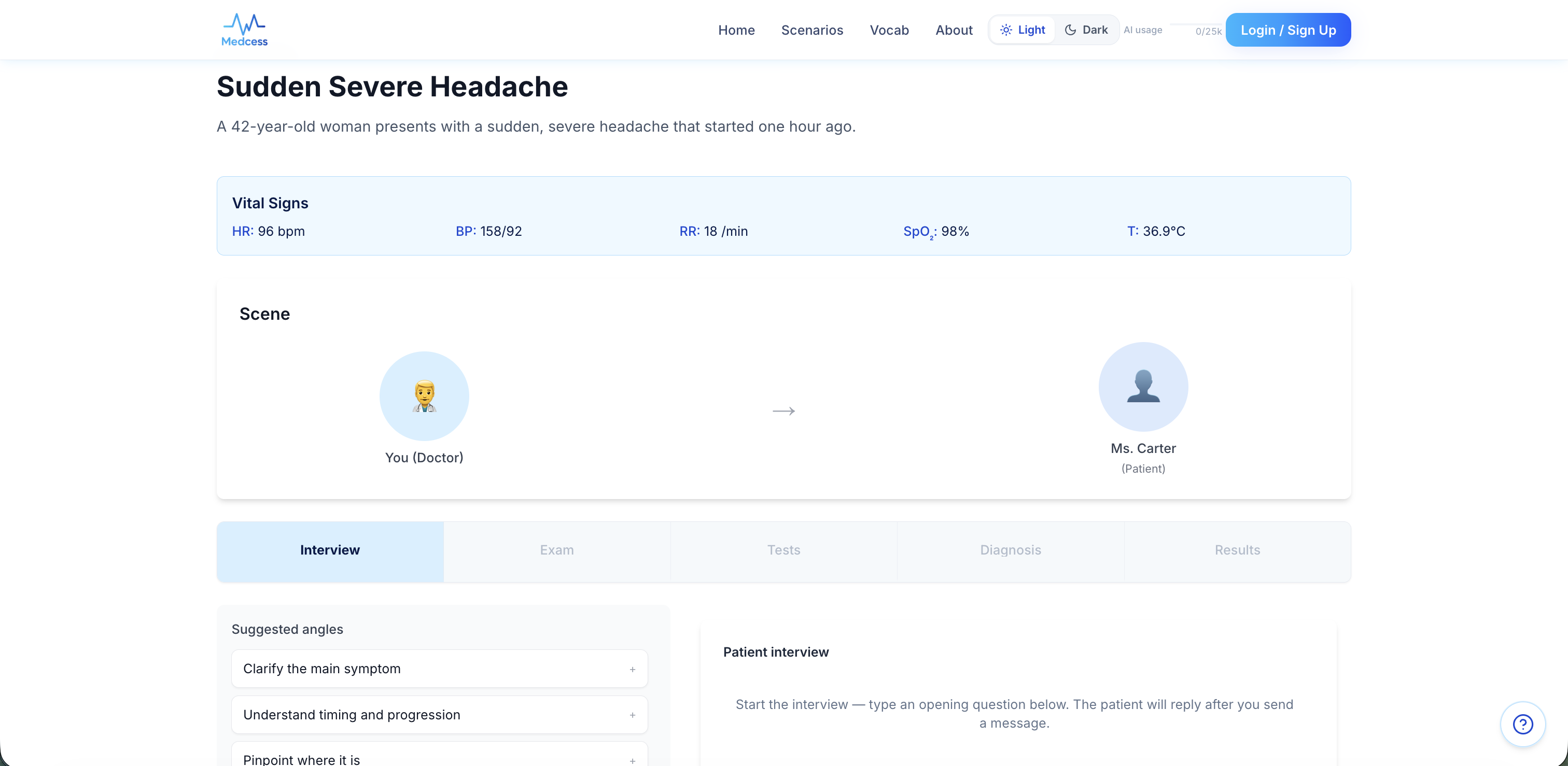
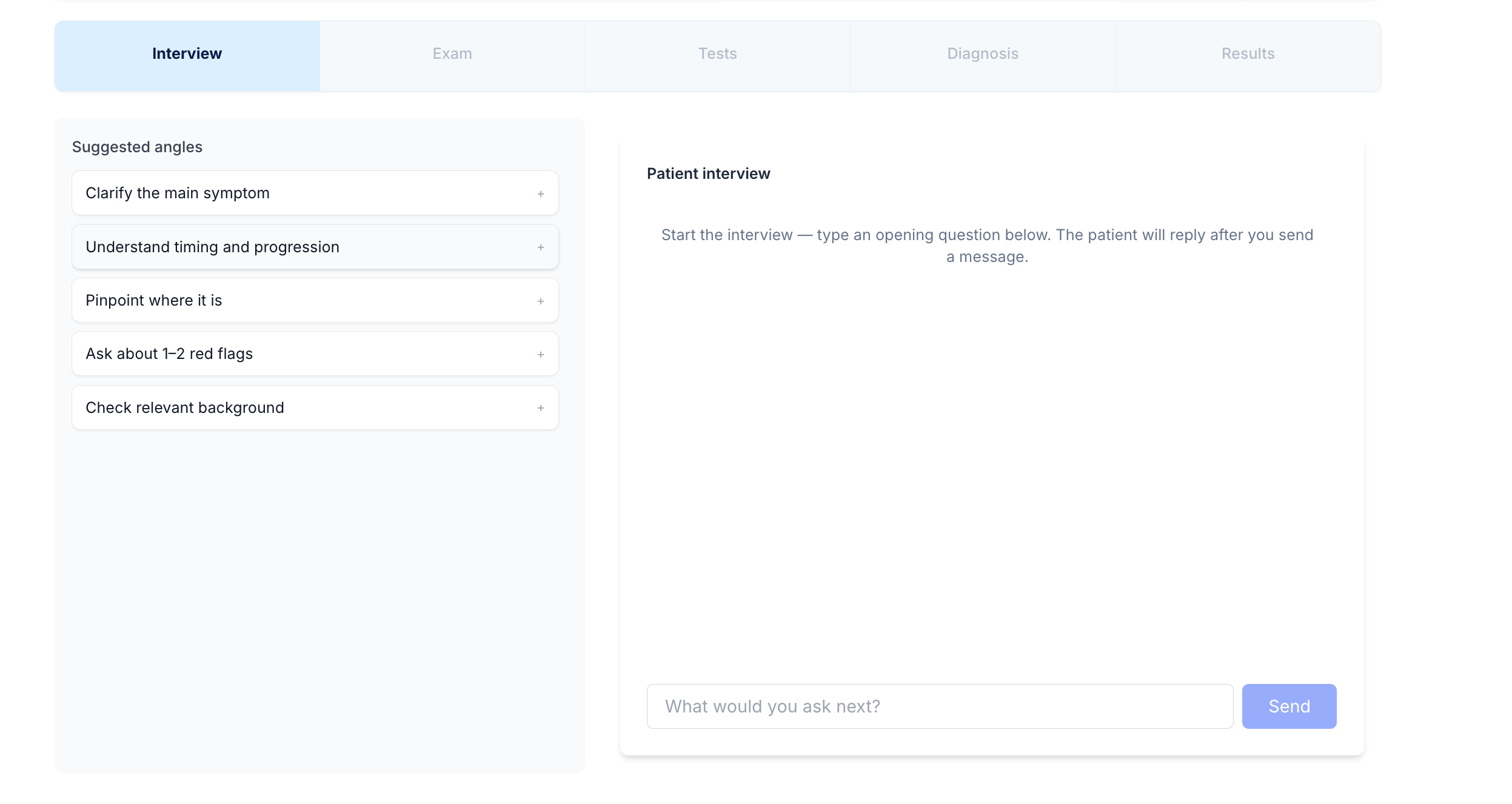
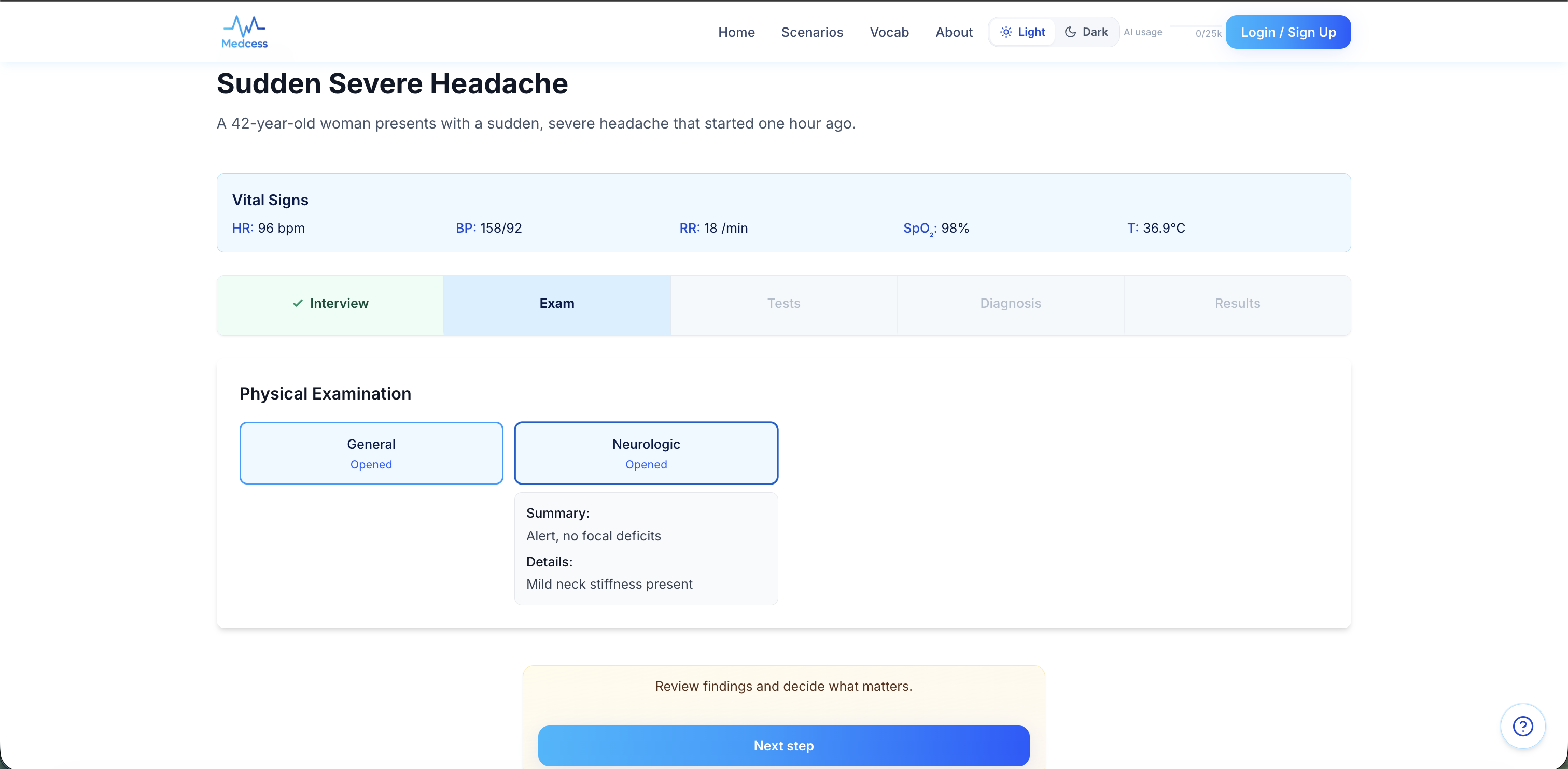
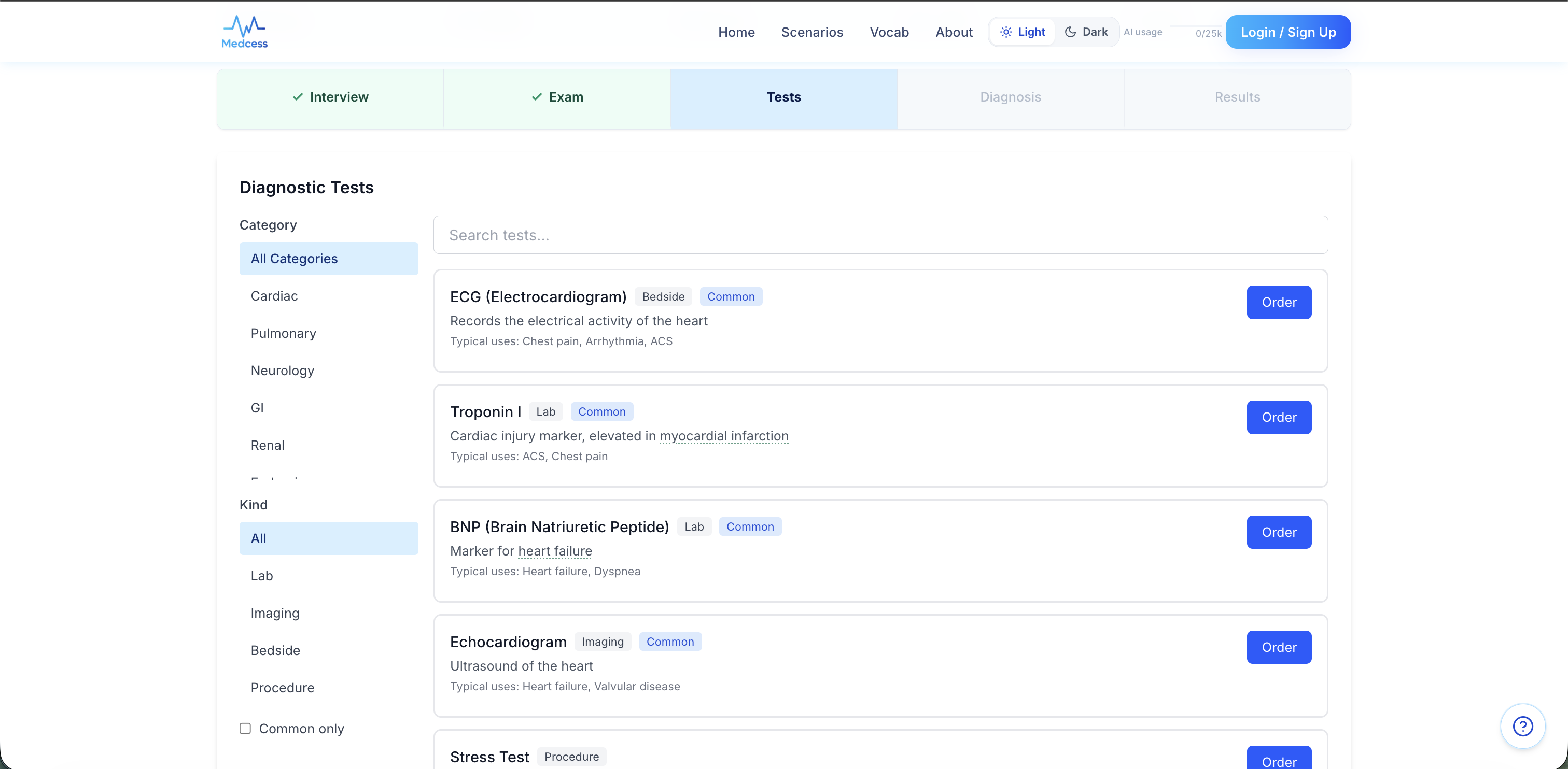
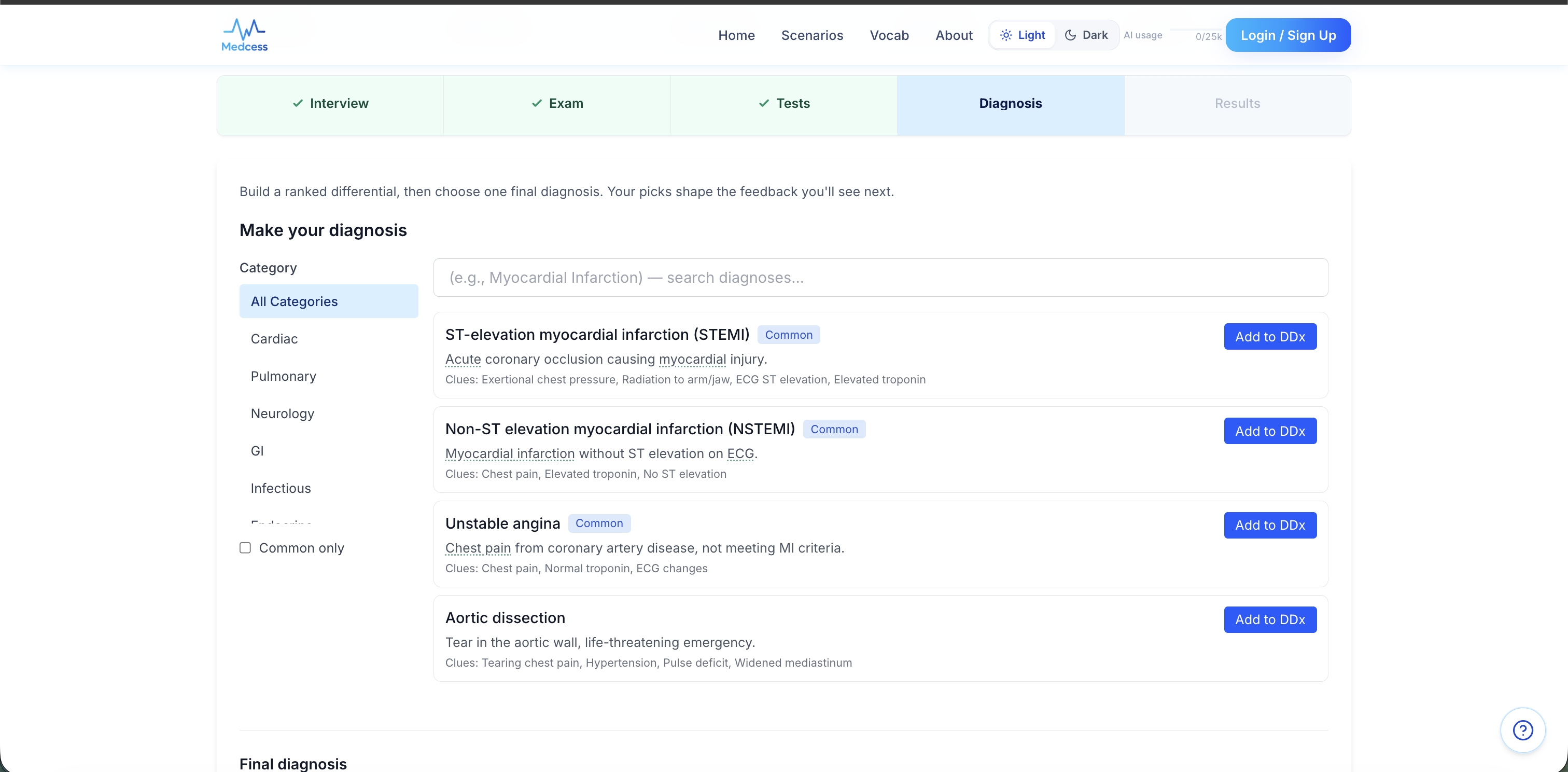
Medcess. Medical access. As a high schooler interested in medicine, I always had the same problem: internships, research, and experience. I was unable to gain the proper exposure I needed to better understand the medical field. It is very difficult for students to get shadowing opportunities, and even if they do, they often do not get as much exposure as they had hoped. Medcess solves that problem. It allows students to actually talk to patients, review exams, order tests, and create a diagnosis. Through AI-driven chats and databases filled with tests and diagnoses, students are able to get a glimpse of what it really feels like to be a doctor.
During my tenure of building this app, I learned a lot about medicine in general. One such thing is how doctors make a final diagnosis. They start off by creating a list of possible diagnoses, known as a differential diagnosis, and start ruling certain ones out based on medical history and tests ordered. I also learned a lot of new vocabulary. This app uses the Unified Medical Language System (UMLS) as its main source for vocab. There is a feature on the app that allows students to click on words or phrases that they do not know. Most of these words have official definitions from the UMLS, while others are generated from AI and saved in a dynamic database.
I built this project mainly through Cursor. I spent a lot of time designing realistic patient cases, testing AI-generated conversations, and improving how users interact with the platform. My goal was to make the app engaging while still being educational and easy to use for high school and pre-med students.
The challenges that I faced were mainly on the user interface and AI integration. For the user interface, I had to make sure that anyone who used the website would clearly understand how to use it. My point of view was biased because I had created the app and already knew from the start what was going on, so I had to consult classmates to test the interface and give feedback. Another struggle I had was debugging problems on Cursor. It was difficult to troubleshoot AI responses and make sure the patient conversations stayed realistic, medically accurate, and relevant to the case scenario.
Built With
- clinical-reasoning-workflows
- diagnostic-simulations
- frontend:-next.js-14
- github-design-&-ui:-shadcn/ui
- lucide-icons-features-implemented:-ai-powered-patient-conversations
- react
- scoring/debrief-system
- tailwind-css-backend:-next.js-api-routes-/-server-actions-authentication:-nextauth.js-database:-neon-postgresql-hosting-&-deployment:-vercel-ai-integration:-openai-api-development-tools:-cursor-ai
- typescript

Log in or sign up for Devpost to join the conversation.