-
-
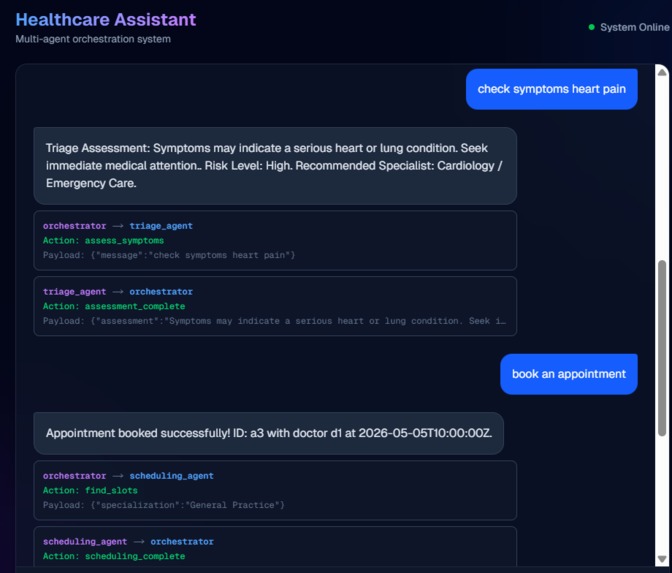
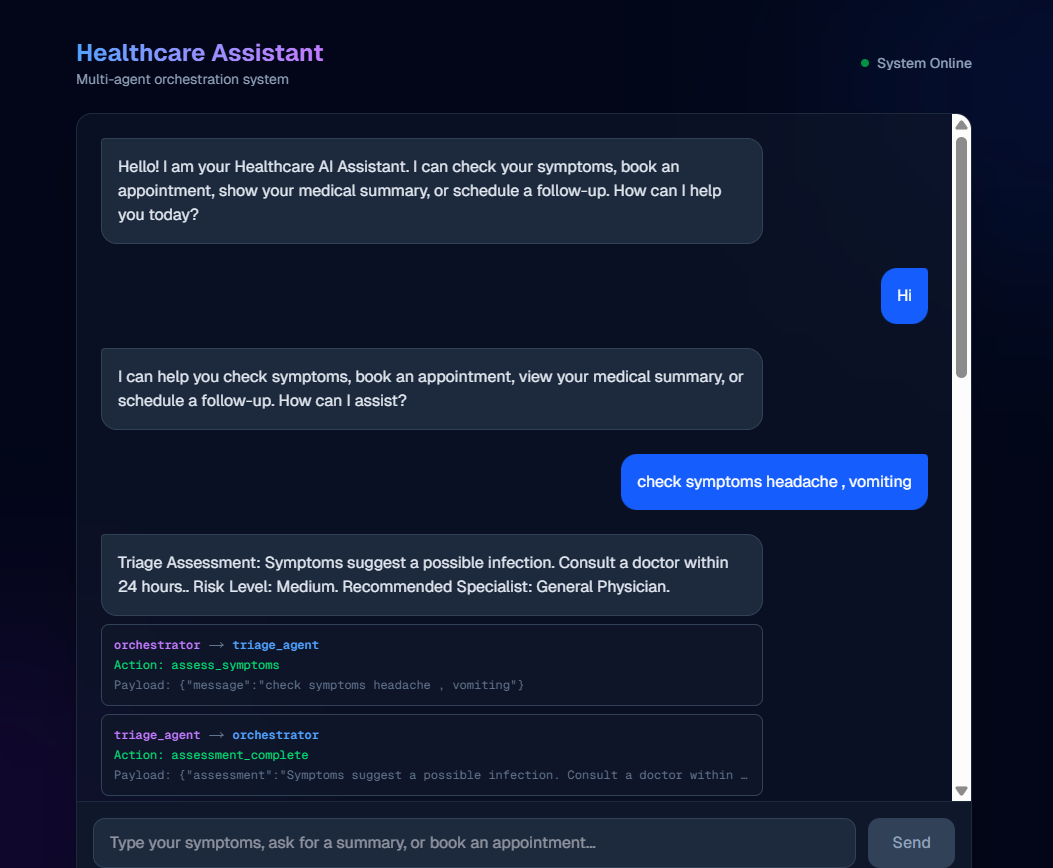
chatbot using mcp server reponse
-
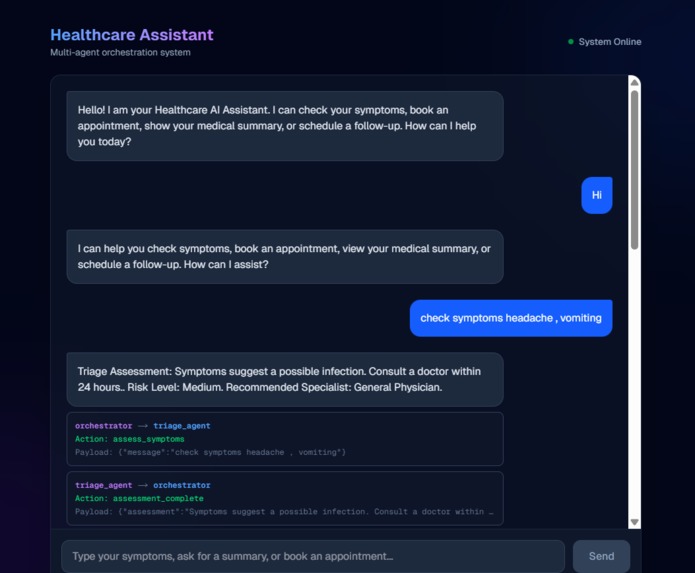
chatbot using mcp server request
-
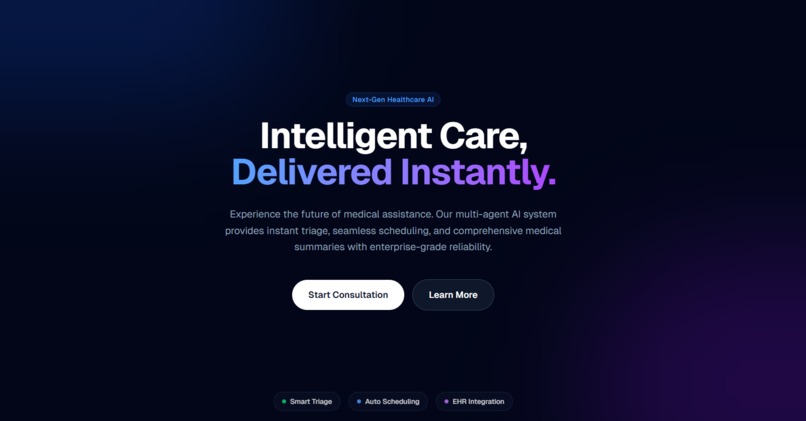
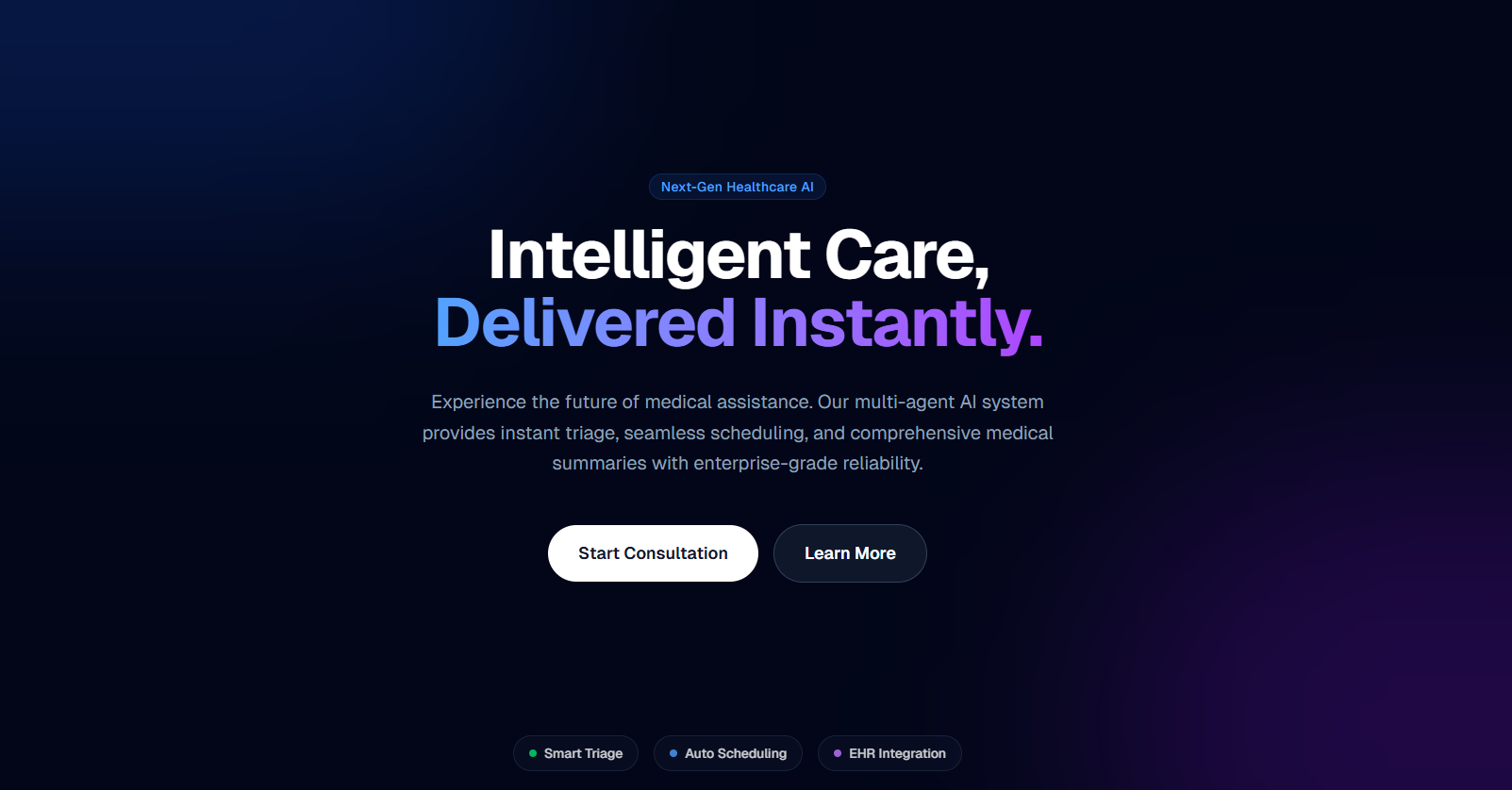
home page
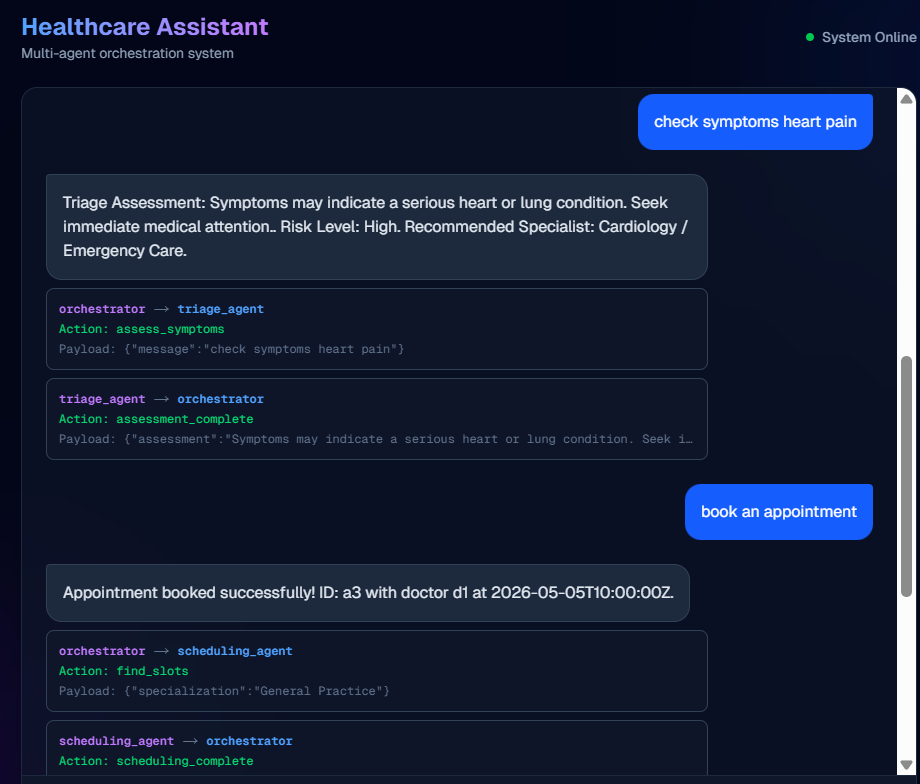
Inspiration
What it does
How we built it
Challenges we ran into
Accomplishments that we're proud of
What we learned
What's next for medcare ai
Healthcare AI Assistant with MCP Orchestration
Inspiration
Will be the basis of the model for the engine, drawing from various engine manufacturers.
Most healthcare systems experience issues with appointment delays and availability, improper patient triaging and hand-offs, lost records, and missing accessible advice for the average patient.
We wanted to create an AI-enabled healthcare assistant that would do intelligent triaging of patients, automate healthcare workflows, and mimic how advanced AI agents could work together in real-world medical environments.
Our inspiration came from Really conversational Ai and agentic systems are extending the horizons of many industries.
- Appointment scheduling * Patient summaries * Automating healthcare processes Our goal was to architect something scalable along the lines of current enterprise AI systems.
So at the end, out of the total contribution, we get due to: (a) the number of stock options exercised; and (b) other financial variables.
The paper also states that the most sensitive part is the choice of the type of variables to include in the control method.
We developed a multi-service Healthcare AI Assistant platform consisting of:
1 Frontend (Next.js + TypeScript) A modern chat-based healthcare interface where users can:
- indicate symptoms. * interact with healthcare agents * do appointments. * access patient-related workflows
I deployed it on platform Vercel. 2- MCP Server (AI Orchestration Layer) The MCP server serves as the intelligent orchestrator between the front-end and backend
What it does
MedCare AI is an AI-powered healthcare assistant platform that helps users interact with healthcare services through a conversational interface.
The platform can:
analyze symptoms and estimate risk levels recommend appropriate medical specialists schedule appointments generate patient summaries create follow-up reminders coordinate healthcare workflows using an MCP orchestration layer
The system uses a modular multi-service architecture where the frontend communicates with an MCP server, which then coordinates backend healthcare APIs.
How we built it
The frontend was developed using Next.js, React, and TypeScript to create a responsive chat-based healthcare interface.
The backend API was built using FastAPI and handles:
appointments patient records healthcare analytics follow-up management
An MCP server was implemented as an orchestration layer to route requests between agents and healthcare tools. The MCP server manages AI workflow coordination and acts as the bridge between the frontend and backend.
The project was deployed using:
Vercel for the frontend Render for the MCP server Render for the backend API
Environment variables and API routing were configured to enable communication between deployed services.
Challenges we ran into
One of the major challenges was managing communication between multiple deployed services. During deployment, we faced issues related to:
CORS configuration localhost references in production environment variable management API routing between services cloud deployment debugging
We also encountered dependency issues while deploying Python services and had to configure compatible runtime versions for FastAPI and Pydantic.
Another challenge was restructuring the application architecture so that the MCP server could properly orchestrate requests between frontend and backend services without tightly coupling components.
Accomplishments that we're proud of
We successfully built and deployed a production-style multi-service healthcare AI platform with:
cloud deployment modular architecture AI orchestration healthcare workflow automation
We are proud that the project demonstrates how AI agents can coordinate real healthcare operations through scalable backend systems.
Another accomplishment was successfully integrating:
frontend MCP orchestration layer backend APIs
into a working distributed system deployed entirely on cloud platforms.
What we learned
Through this project, we learned:
multi-service system architecture cloud deployment workflows environment variable management API orchestration backend service communication production debugging CORS handling FastAPI backend development Next.js frontend deployment
We also gained practical experience in designing scalable AI-driven systems and understanding how orchestration layers can improve modularity and maintainability.
What's next for MedCare AI
We plan to improve MedCare AI by adding:
PostgreSQL database integration authentication and authorization real AI model integration voice-based healthcare interaction medical knowledge retrieval systems doctor dashboards analytics and monitoring real-time notifications secure patient data handling
We also plan to make the platform more production-ready by improving scalability, reliability, and healthcare-specific AI capabilities.
Built With
- apis
- architecture
- cloud
- compose
- configuration
- cors
- css
- deployment
- environment
- fastapi
- github
- javascript
- json-based
- mcp
- middleware
- next.js
- node.js
- npm
- postgresql
- pydantic
- python
- react
- render
- rest
- tailwind
- typescript
- uvicorn
- variable
- vercel

Log in or sign up for Devpost to join the conversation.