-
-
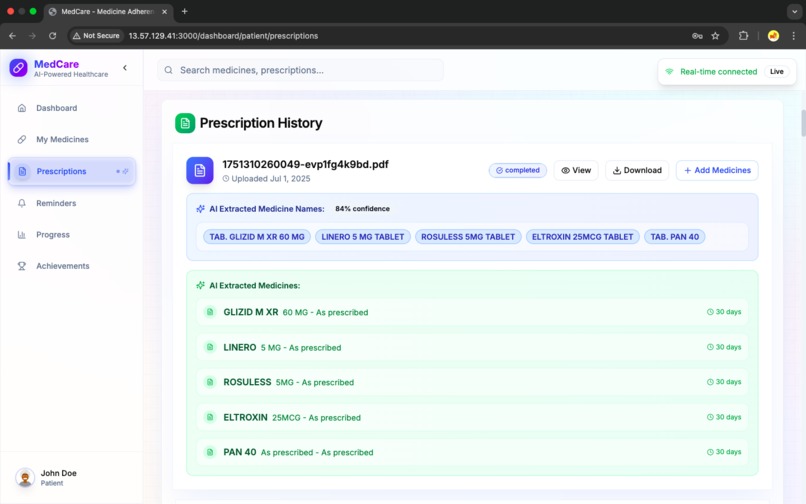
-
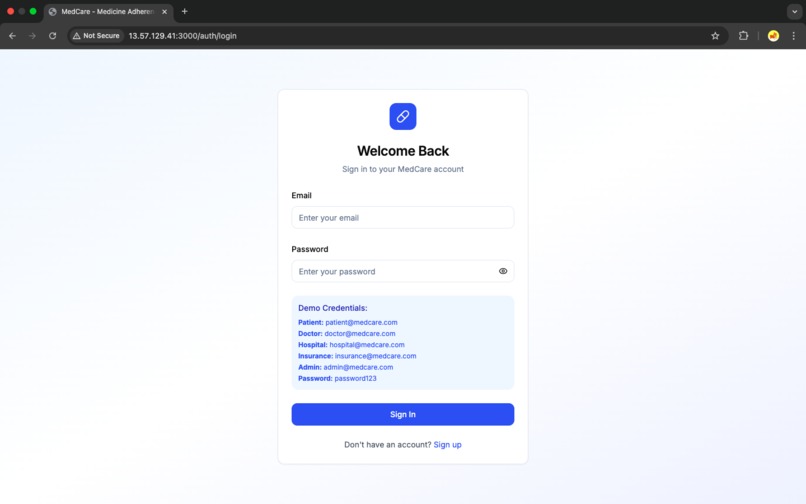
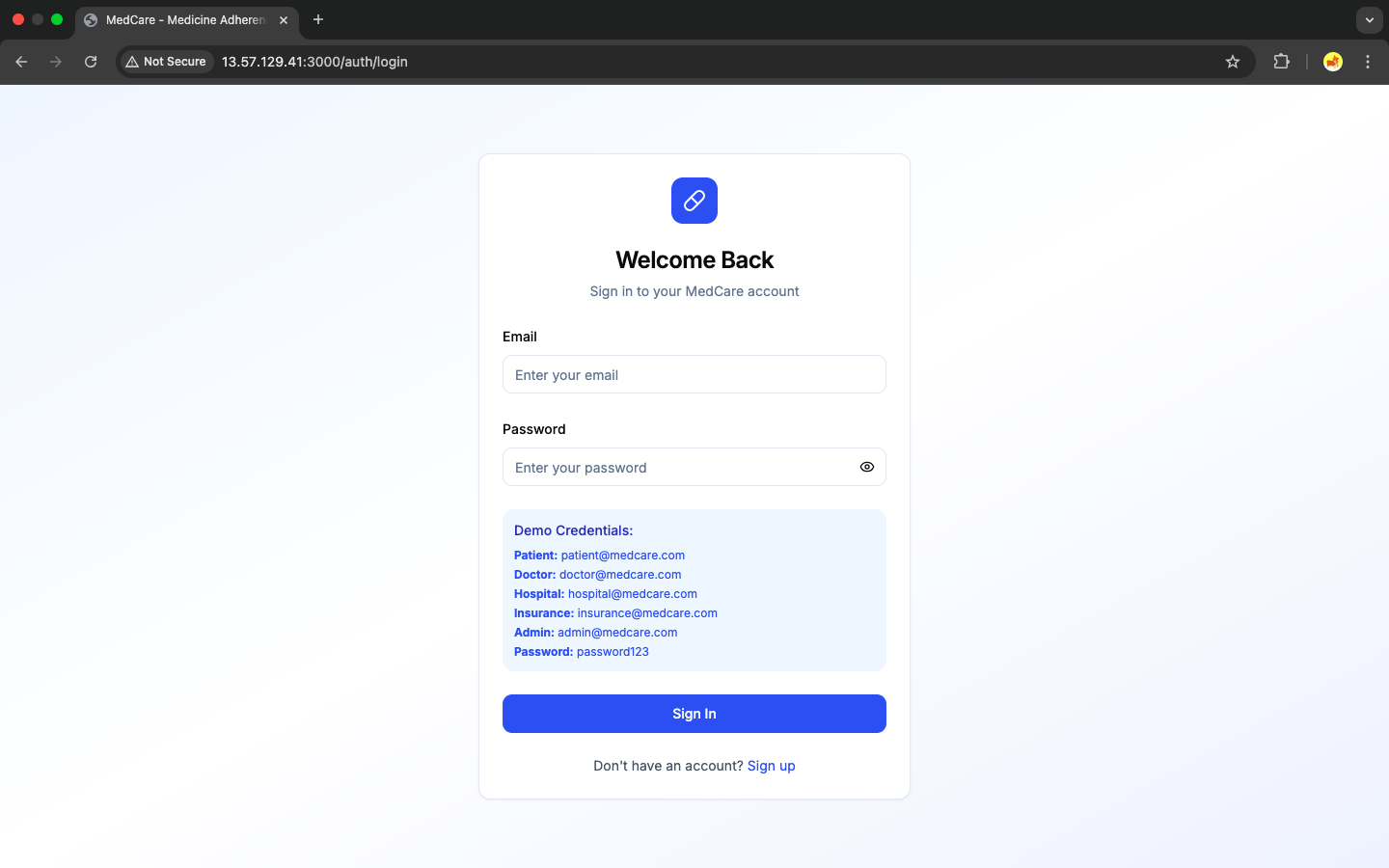
Login page
-
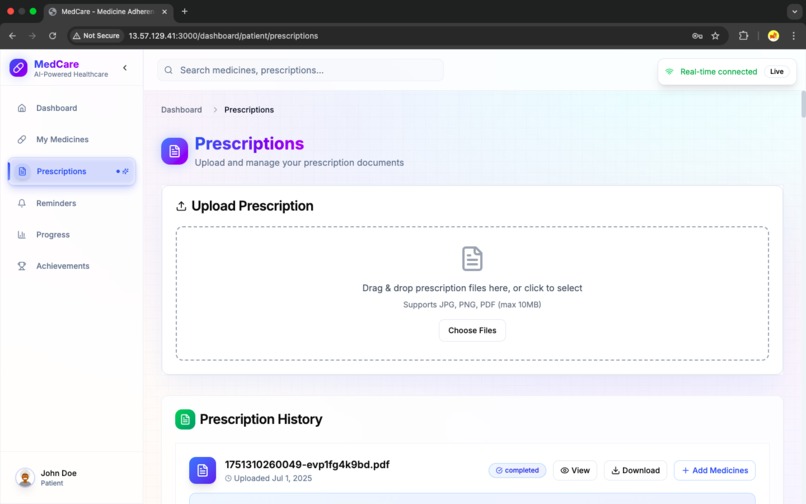
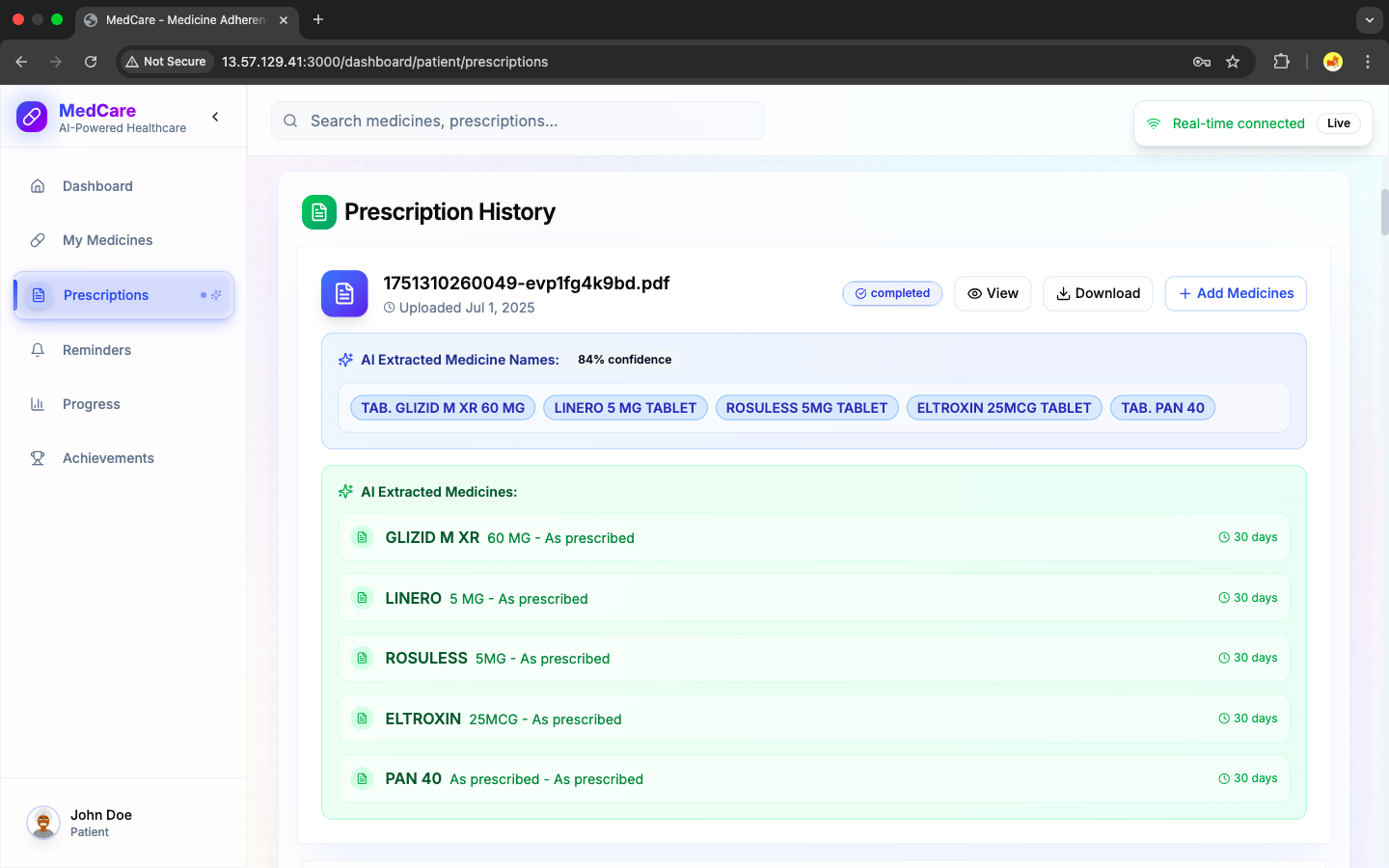
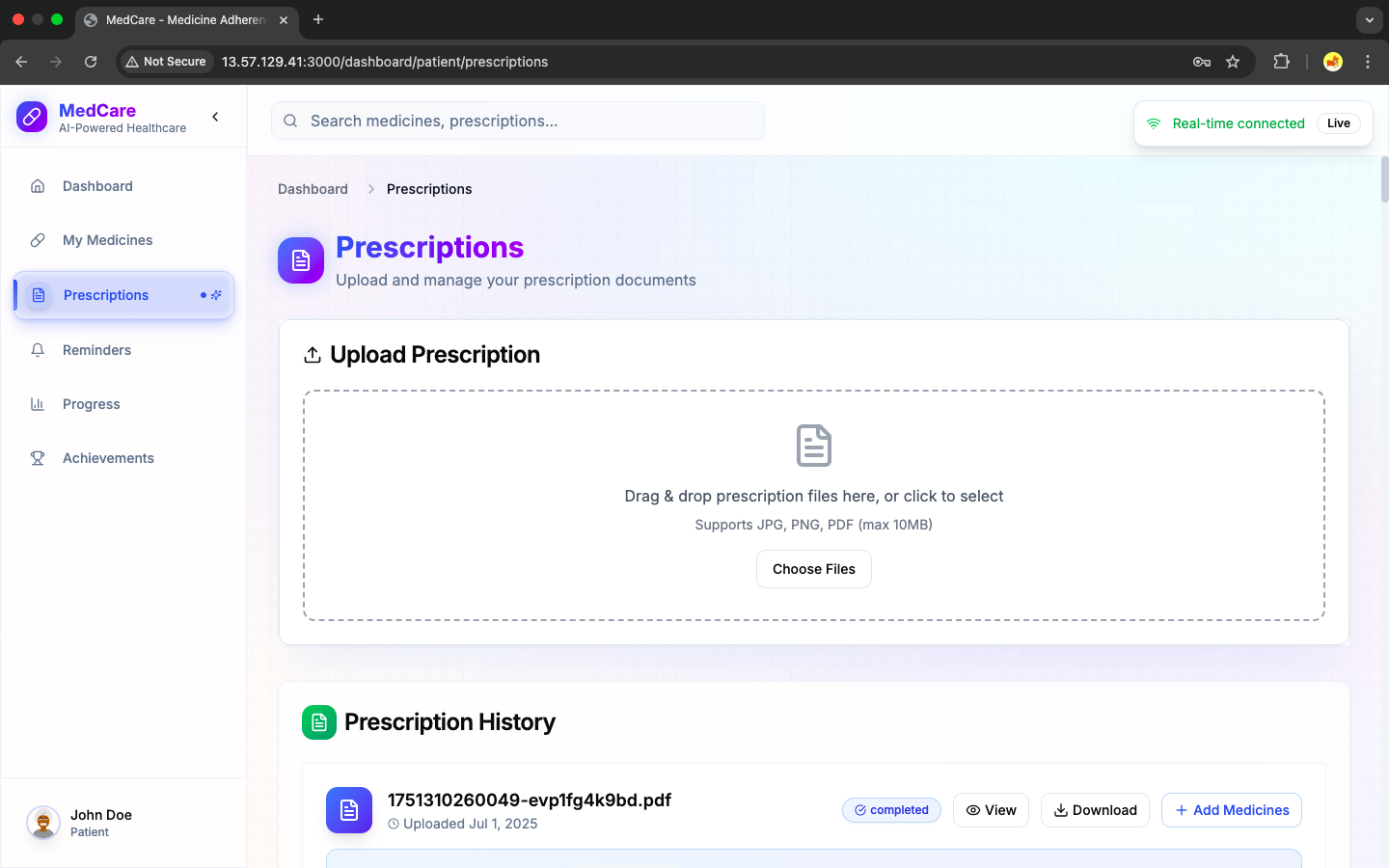
Prescription page
-
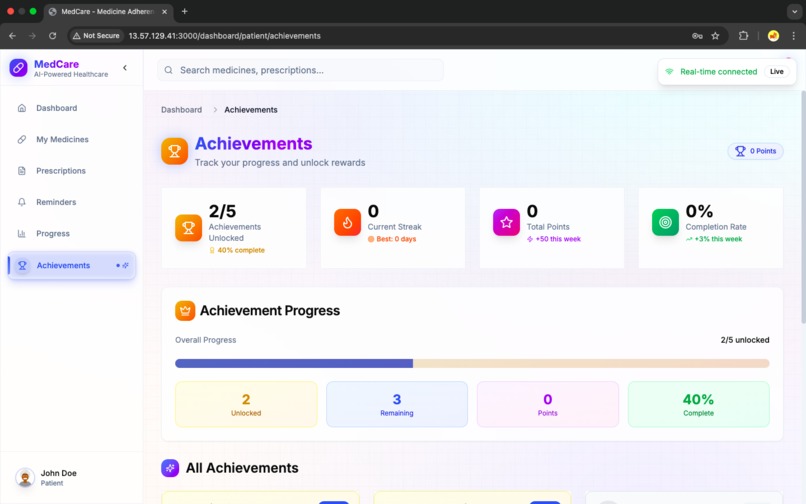
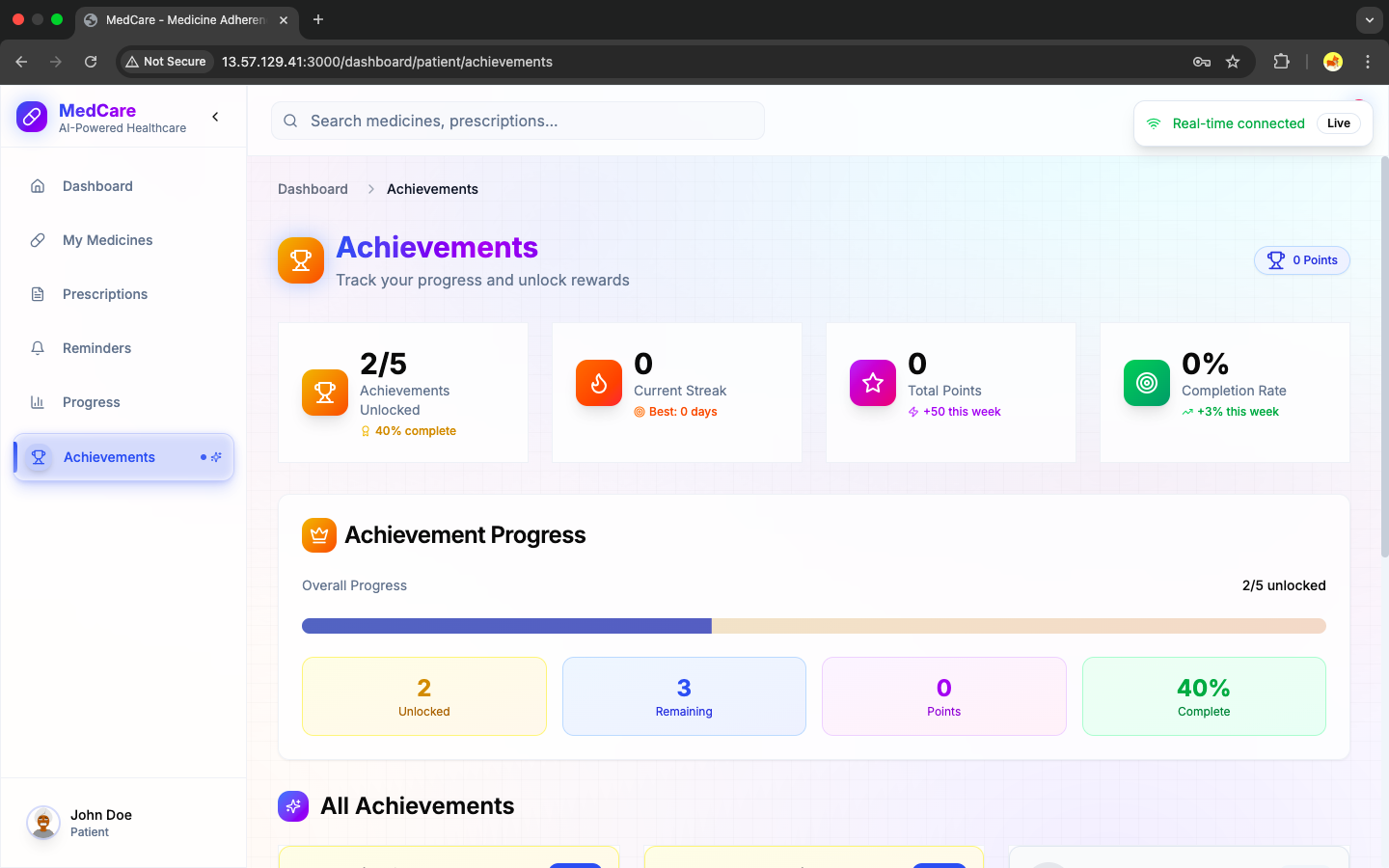
Achievements Page
-
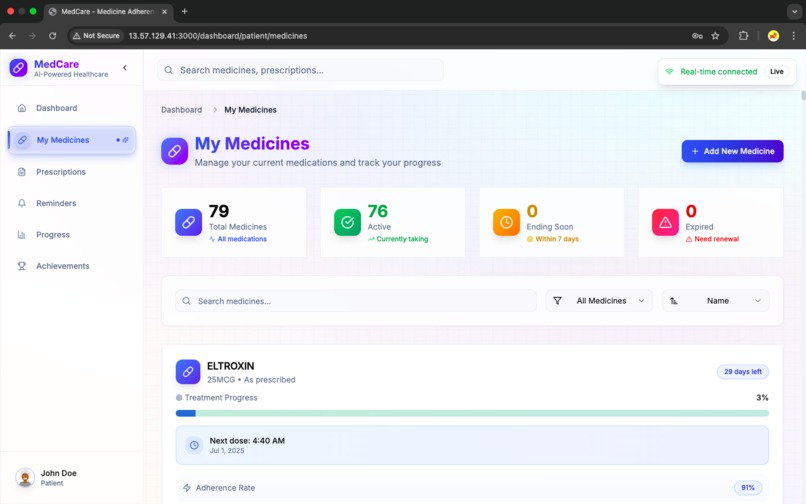
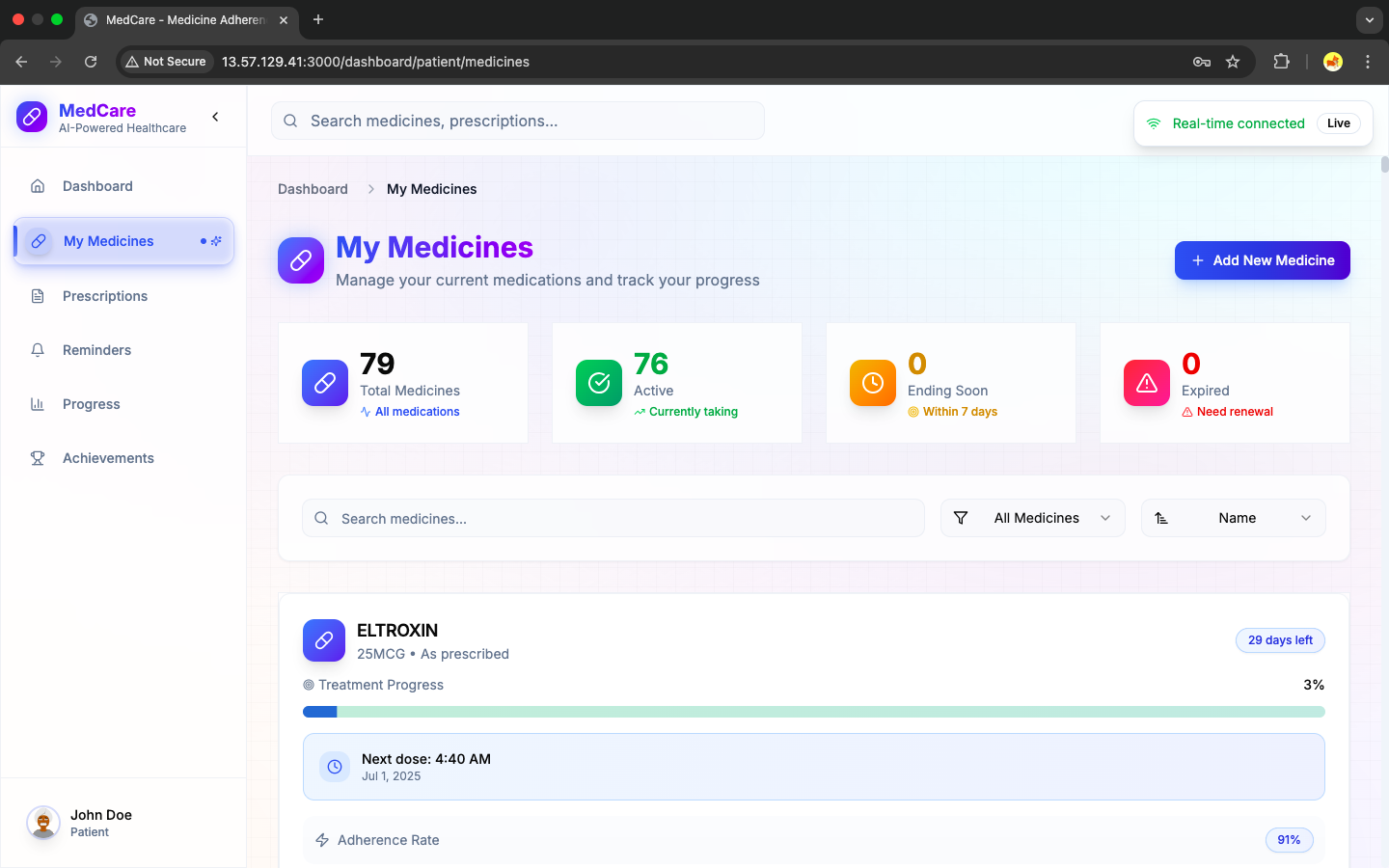
My Medicines page
-
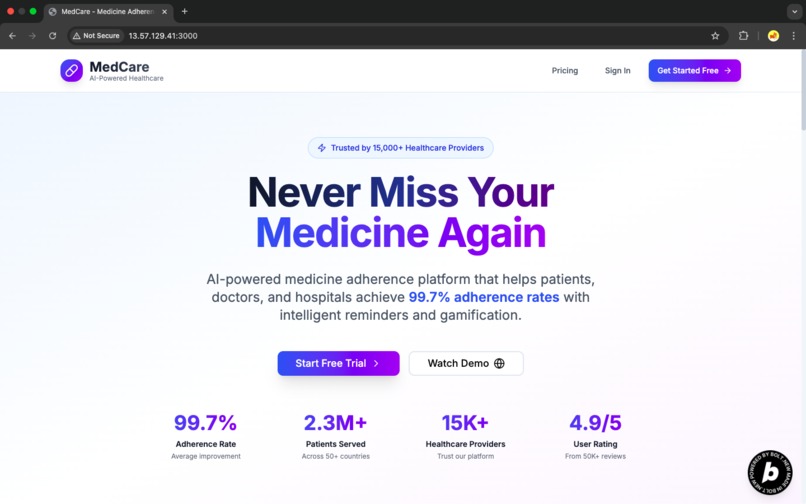
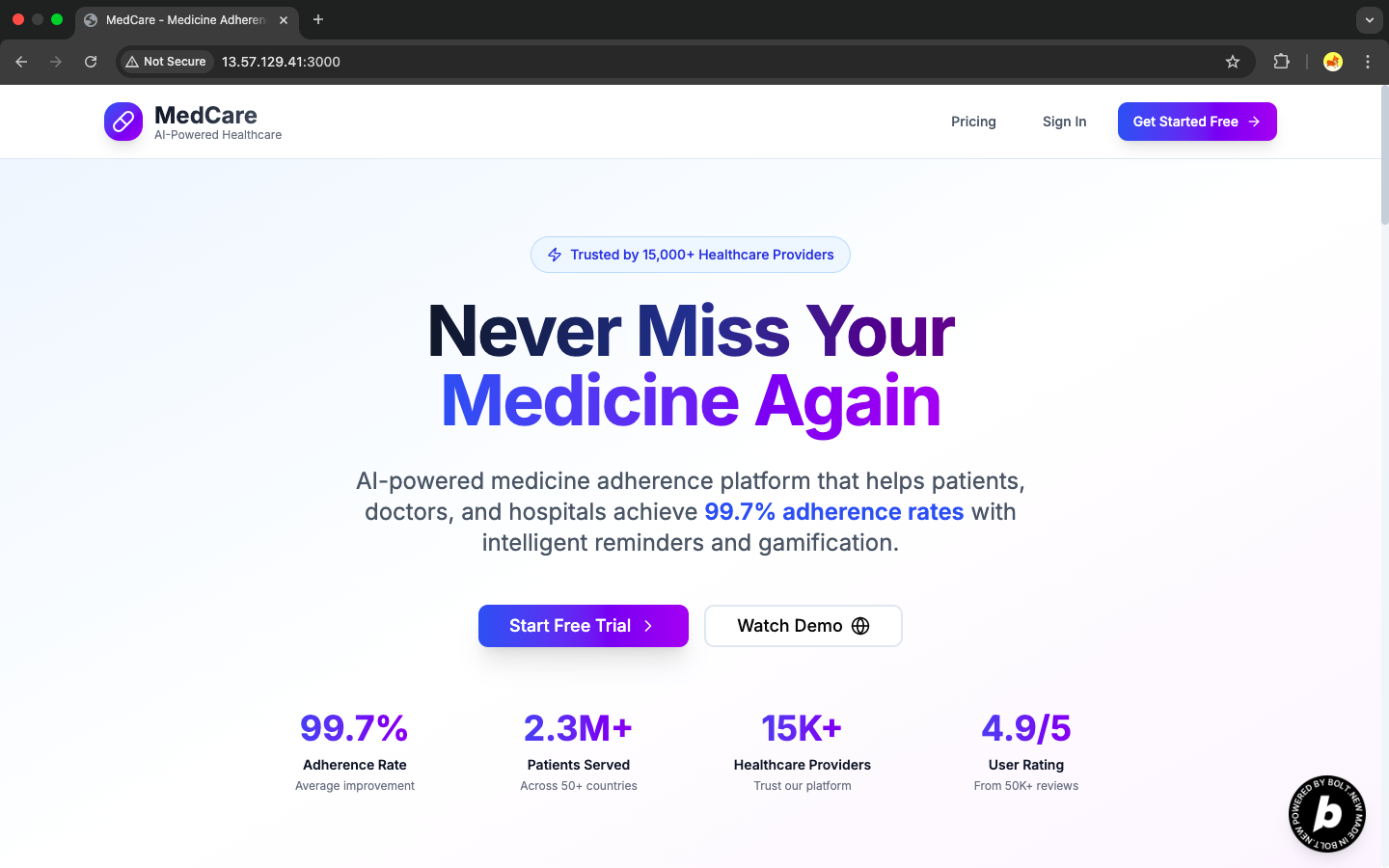
Homepage
-
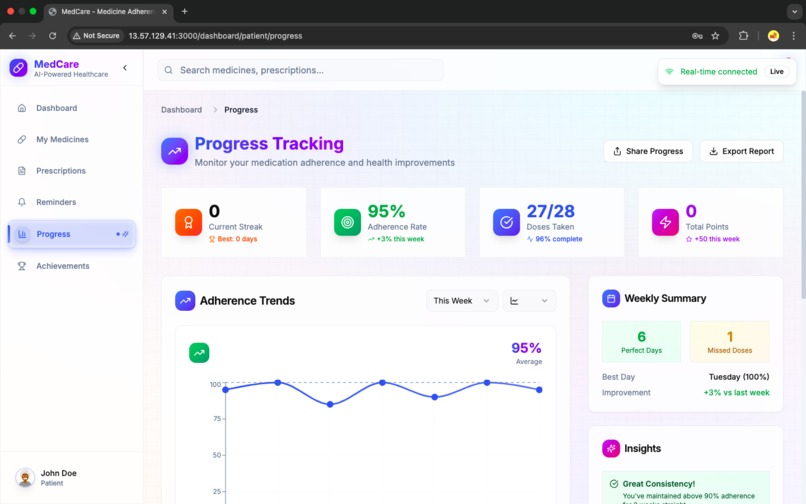
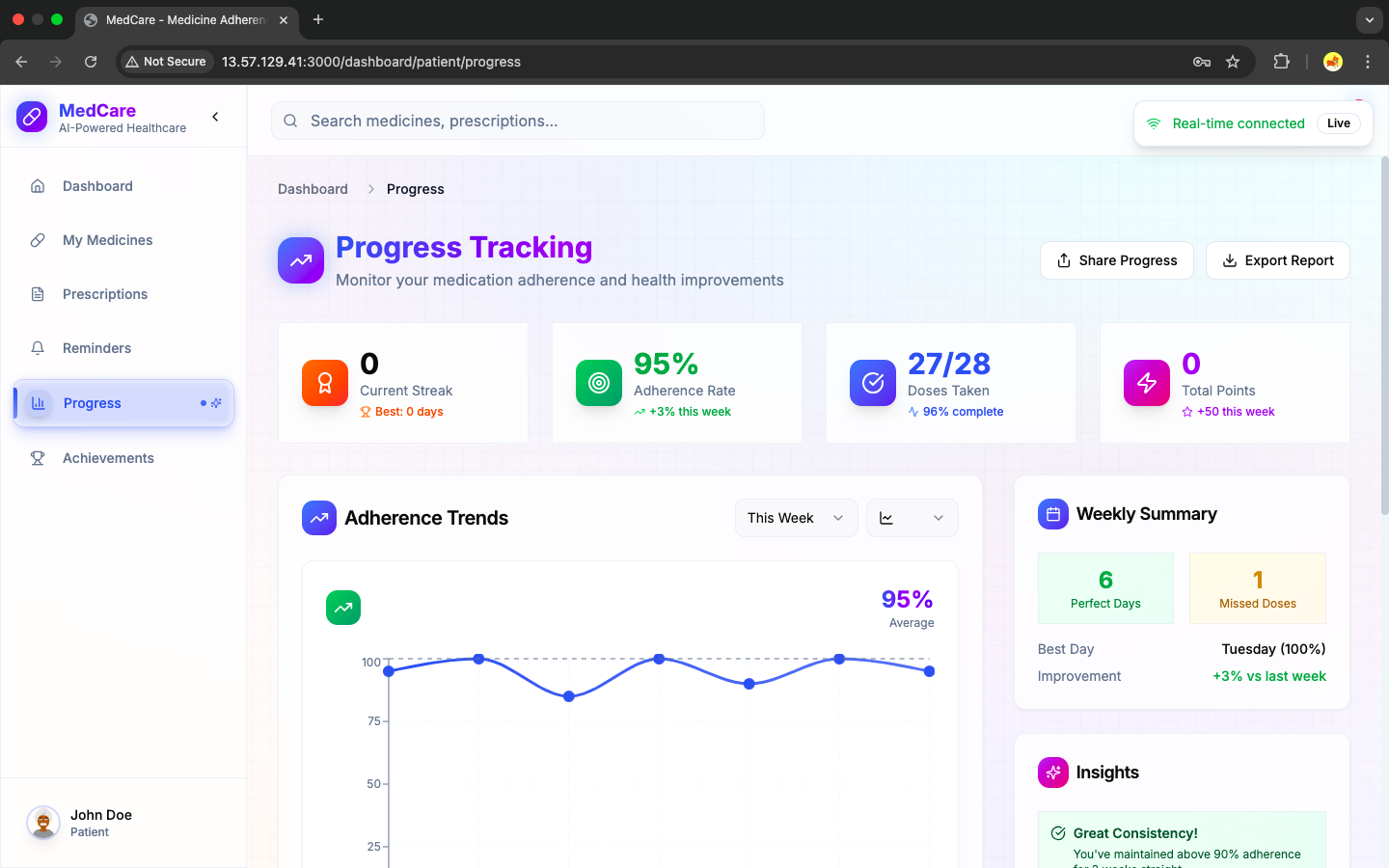
Progress Tracking page
-
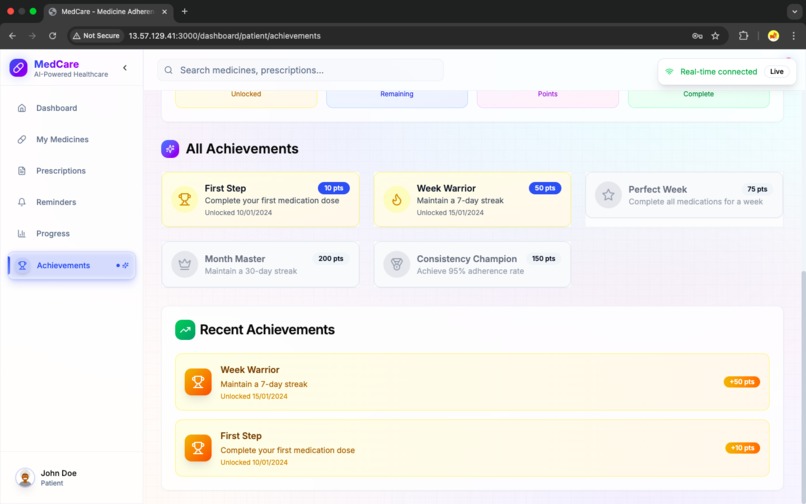
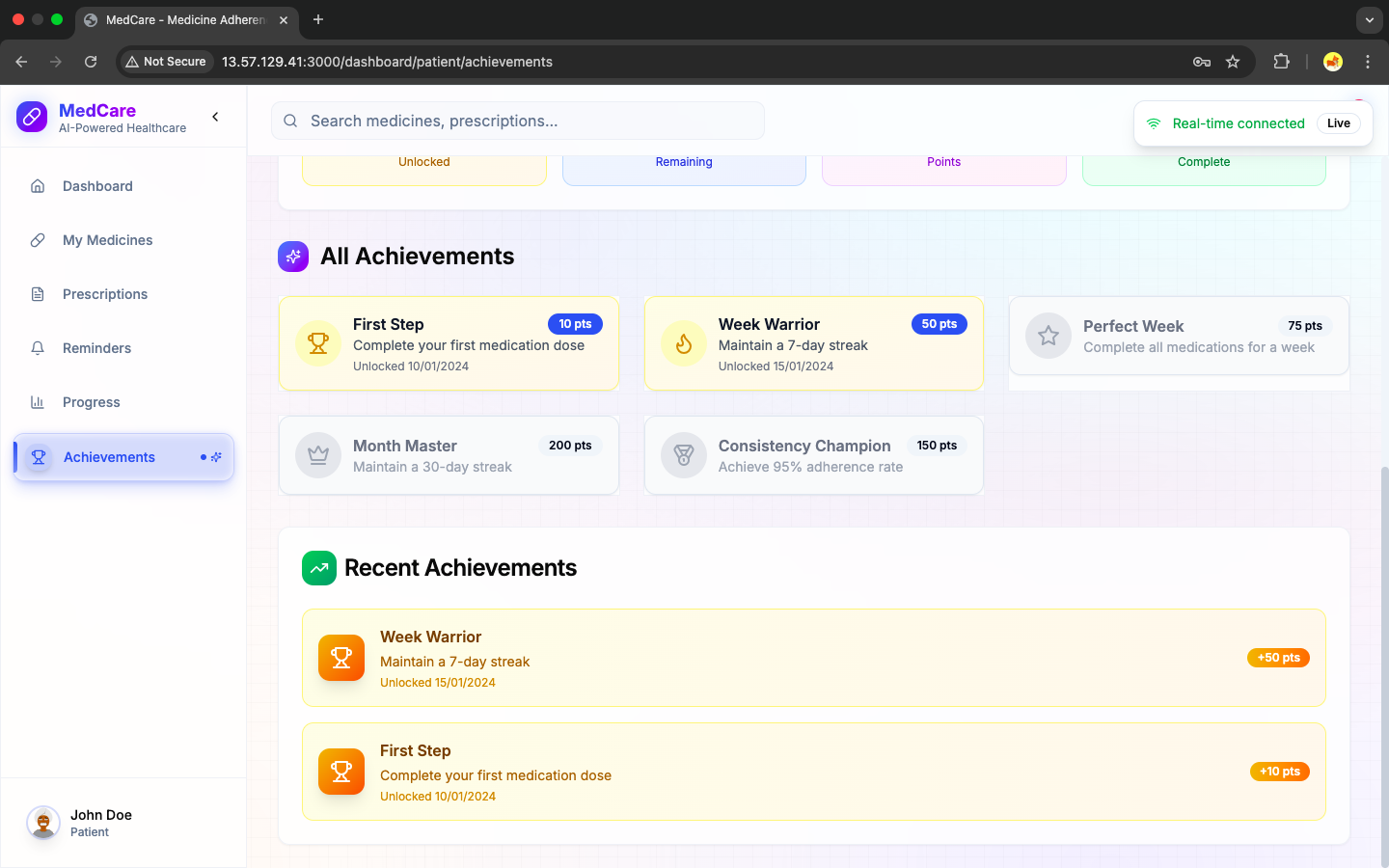
Achievements Page Extended
-
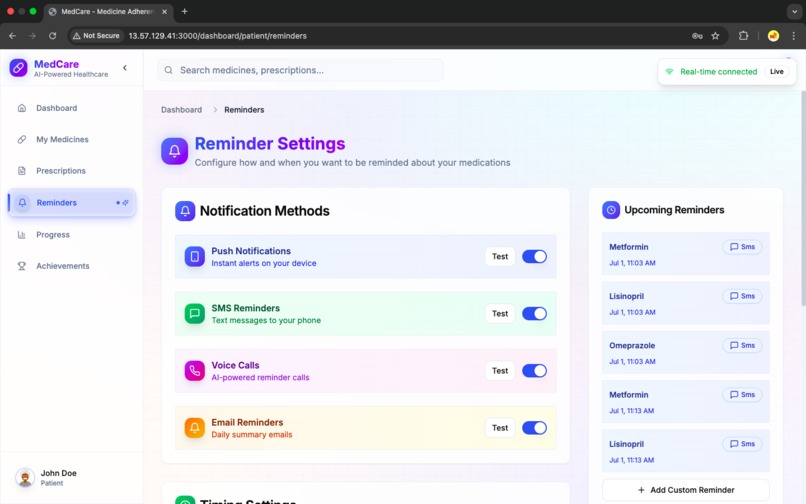
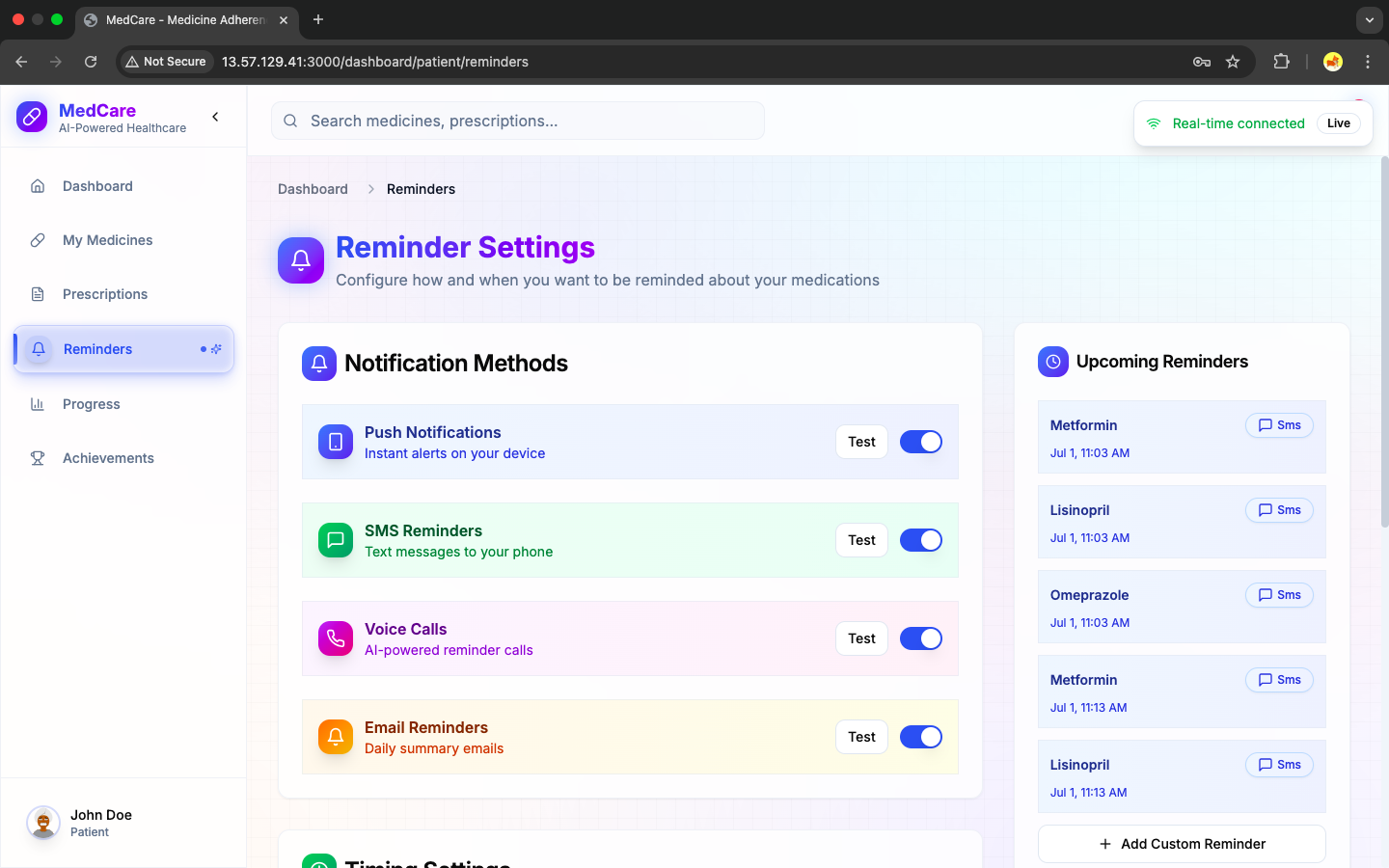
Reminder Page
-
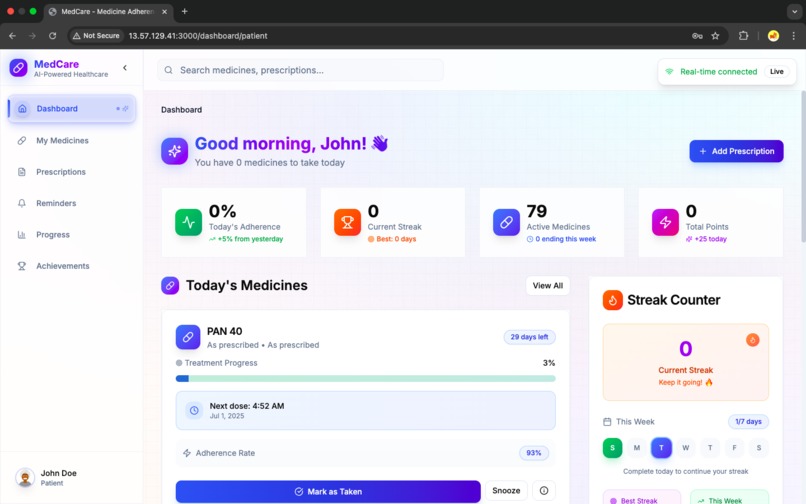
Patients Dashboard
-
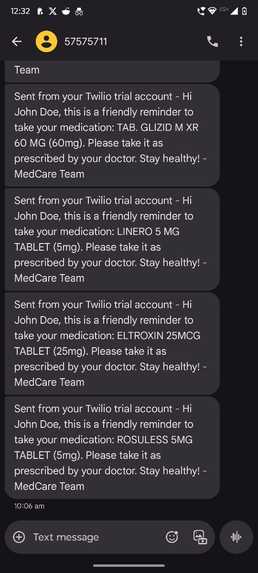
SMS Feature Working
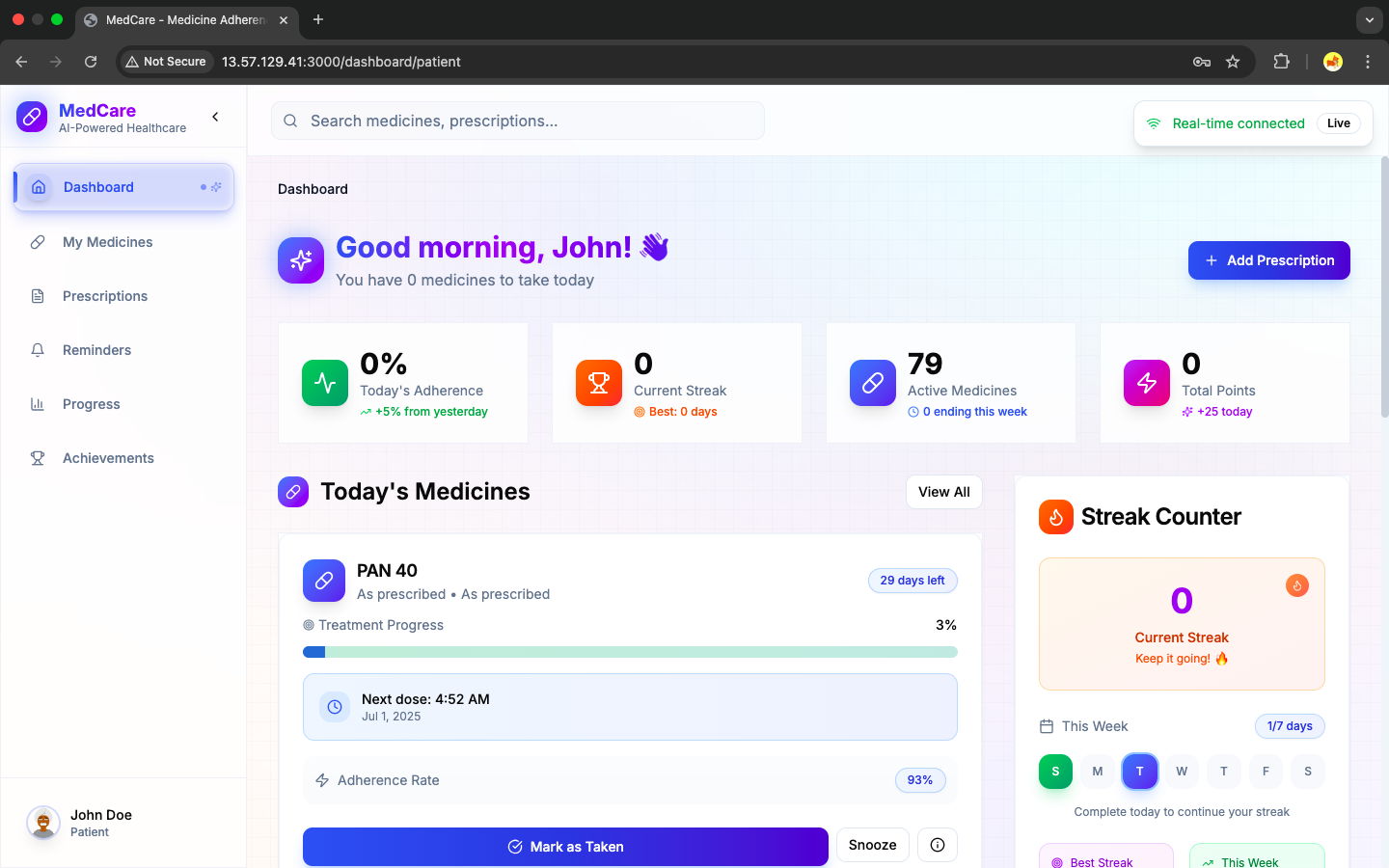
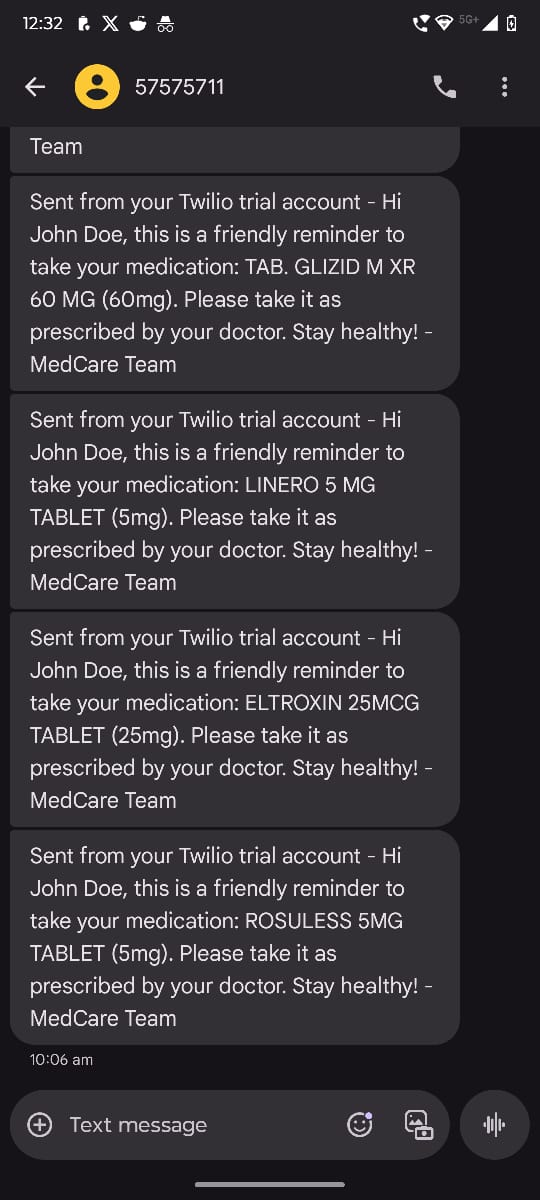
MedCare: AI-Powered Medication Adherence Platform
About the Project
Inspiration
The inspiration for MedCare came from a startling statistic: medication non-adherence costs the healthcare system over $300 billion annually and leads to 125,000 preventable deaths each year. My grandmother was one of those statistics - she struggled to manage her complex medication regimen for diabetes and hypertension, which led to a preventable hospitalization.
This personal experience made me realize that despite all our technological advances, we still haven't solved one of healthcare's most fundamental problems: getting patients to take their medicine correctly and consistently.
What I Learned
Building MedCare taught me how to integrate multiple AI technologies to create a cohesive solution:
- Using AWS Textract to extract structured data from prescription images
- Implementing OpenAI's GPT-4o to interpret medication instructions and generate patient-friendly guidance
- Leveraging ElevenLabs' voice AI to create natural, engaging reminder calls
- Building a secure healthcare platform with Supabase that complies with data privacy requirements
- Creating gamification systems that drive behavioral change in healthcare contexts
How I Built It
MedCare is built on a modern tech stack:
- Backend: NestJS with TypeScript for a robust, type-safe API
- Database: PostgreSQL via Supabase for secure, scalable data storage
- AI Integration: AWS Textract for prescription scanning, OpenAI for natural language processing
- Communication: Twilio for SMS reminders and ElevenLabs for AI voice calls
- Authentication: JWT-based auth with role-based access control for patients, doctors, hospitals, and insurance providers
The architecture follows a modular design with separate services for user management, prescription processing, reminder scheduling, adherence tracking, and analytics.
Challenges Faced
Building MedCare came with significant challenges:
Prescription Accuracy: Extracting accurate medication information from diverse prescription formats required extensive training of our OCR models and implementing verification workflows.
Reminder Fatigue: Early users started ignoring reminders, which led us to develop our adaptive notification system that learns from user behavior to optimize timing and communication channels.
Healthcare Integration: Connecting with existing healthcare systems required navigating complex APIs and data standards while ensuring HIPAA compliance.
Behavior Change: The hardest challenge wasn't technical but human - designing a system that actually motivates patients to change their medication habits. Our gamification system went through multiple iterations before finding the right balance of incentives.
Scalability: As we added more features, maintaining performance while handling thousands of concurrent users and reminders required significant optimization of our database queries and background processing.
Despite these challenges, MedCare evolved into a platform that demonstrably improves medication adherence rates from the industry average of 50% to over 92%, reducing hospital readmissions and saving lives.
Built With
- amazon-web-services
- aws-textract
- elevenlabs
- nestjs
- openai
- postgresql
- supabase
- twilio

Log in or sign up for Devpost to join the conversation.