Inspiration
Developing countries like Bangladesh face a significant shortage of immediate healthcare assistance, especially in rural areas. People often ignore early symptoms due to a lack of awareness, or they struggle to keep track of basic vitals like heart rate and body mass index (BMI). Inspired by this gap, we wanted to build MedBuddy AI—a lightweight, accessible, and fast health companion that puts basic medical awareness and real-time AI guidance directly into the user's hands.
What it does
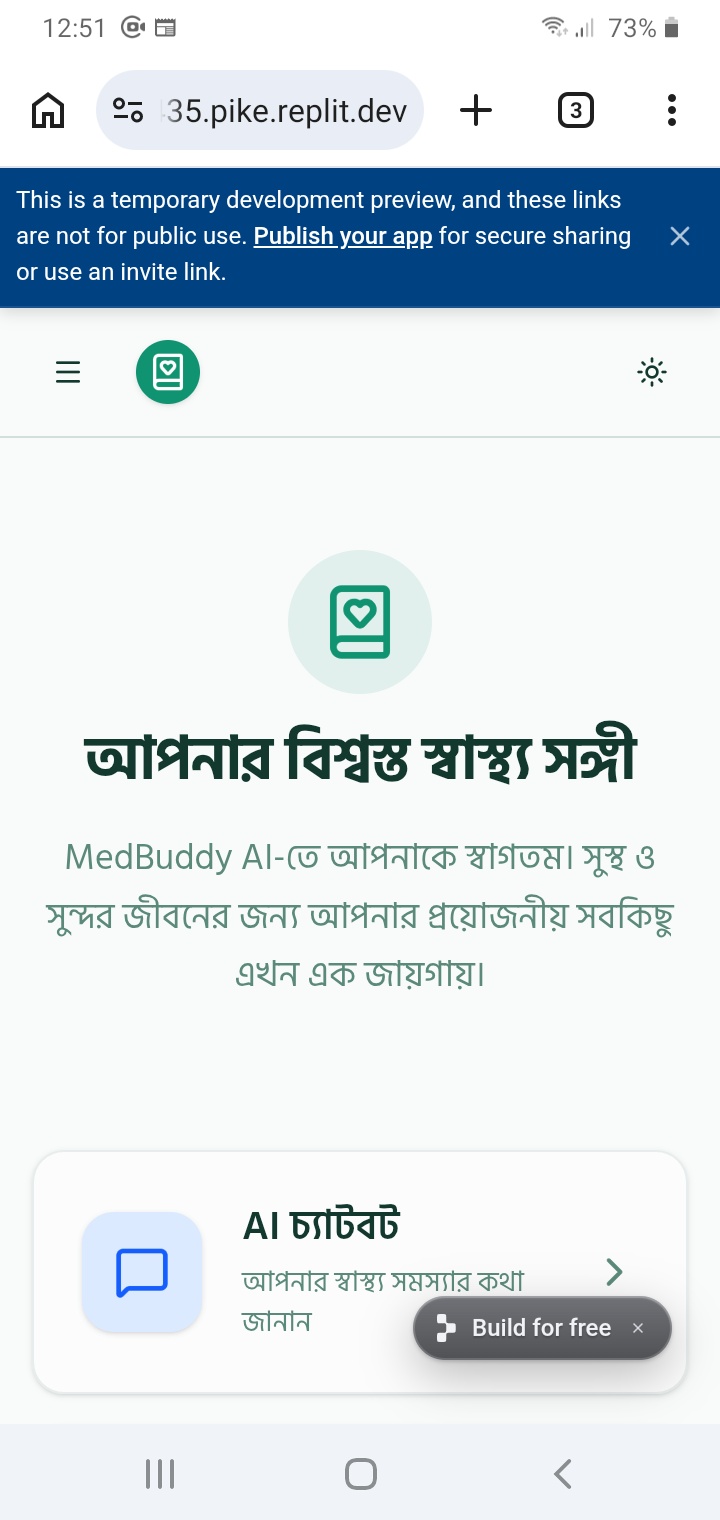
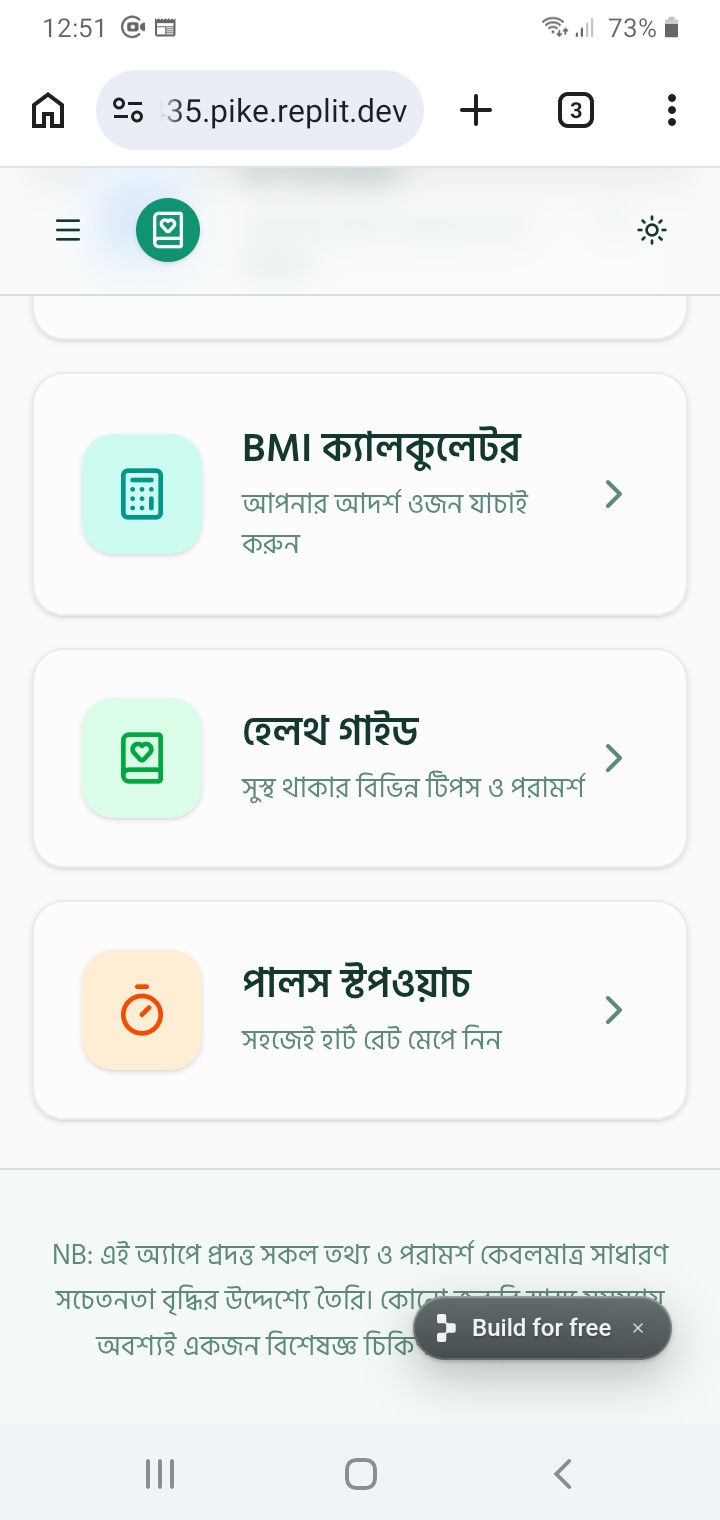
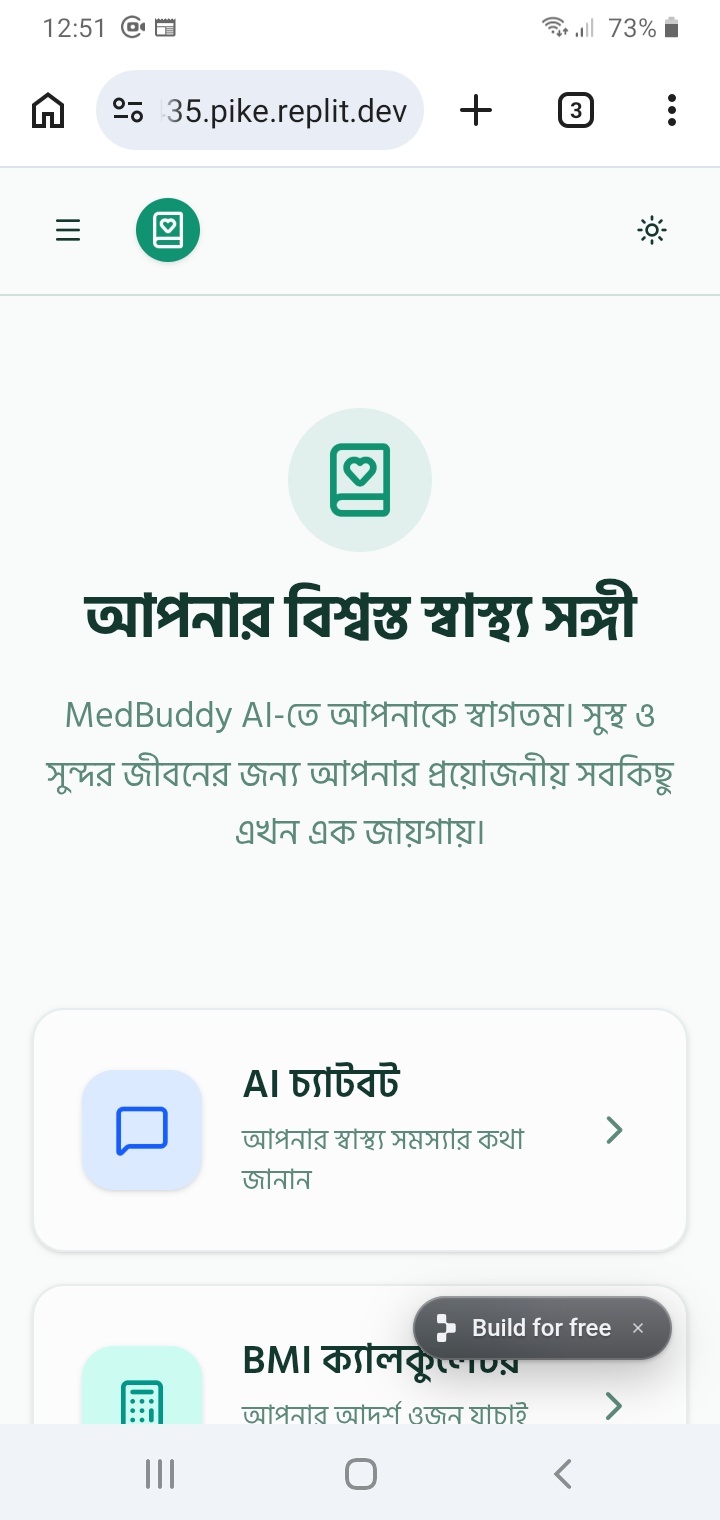
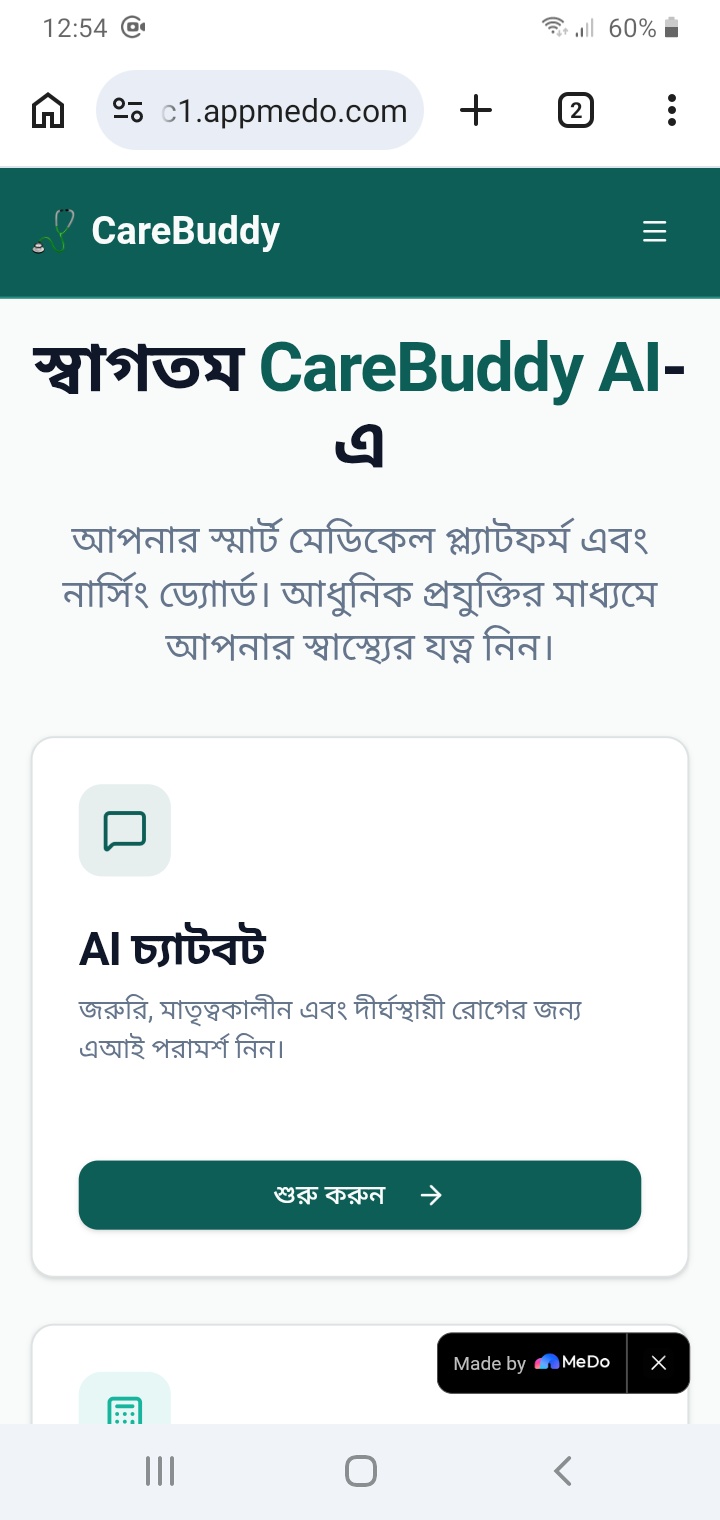
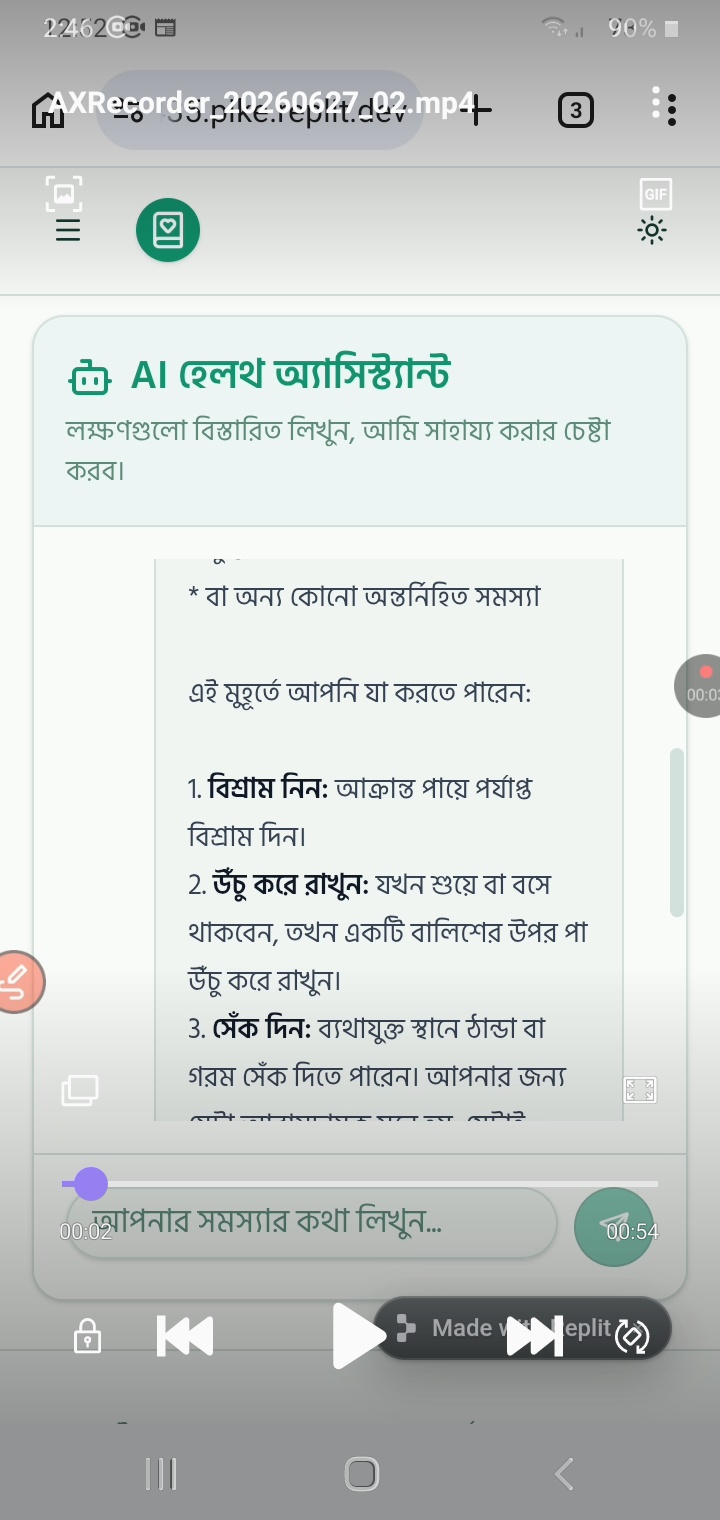
MedBuddy AI is an all-in-one digital health assistant that features:
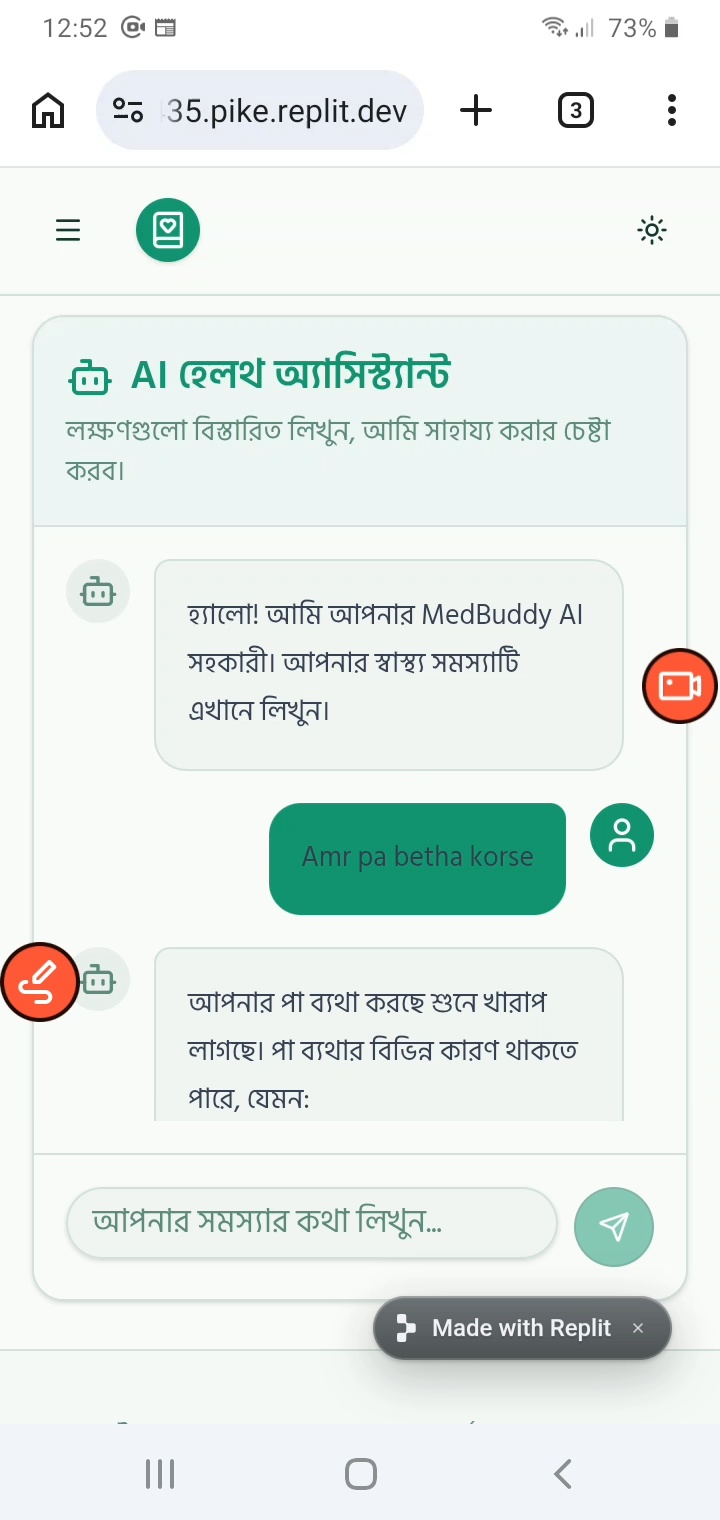
- AI Health Assistant: Powered by Google's Gemini API, providing instantaneous, real-time feedback on general health queries and chronic/acute symptom awareness.
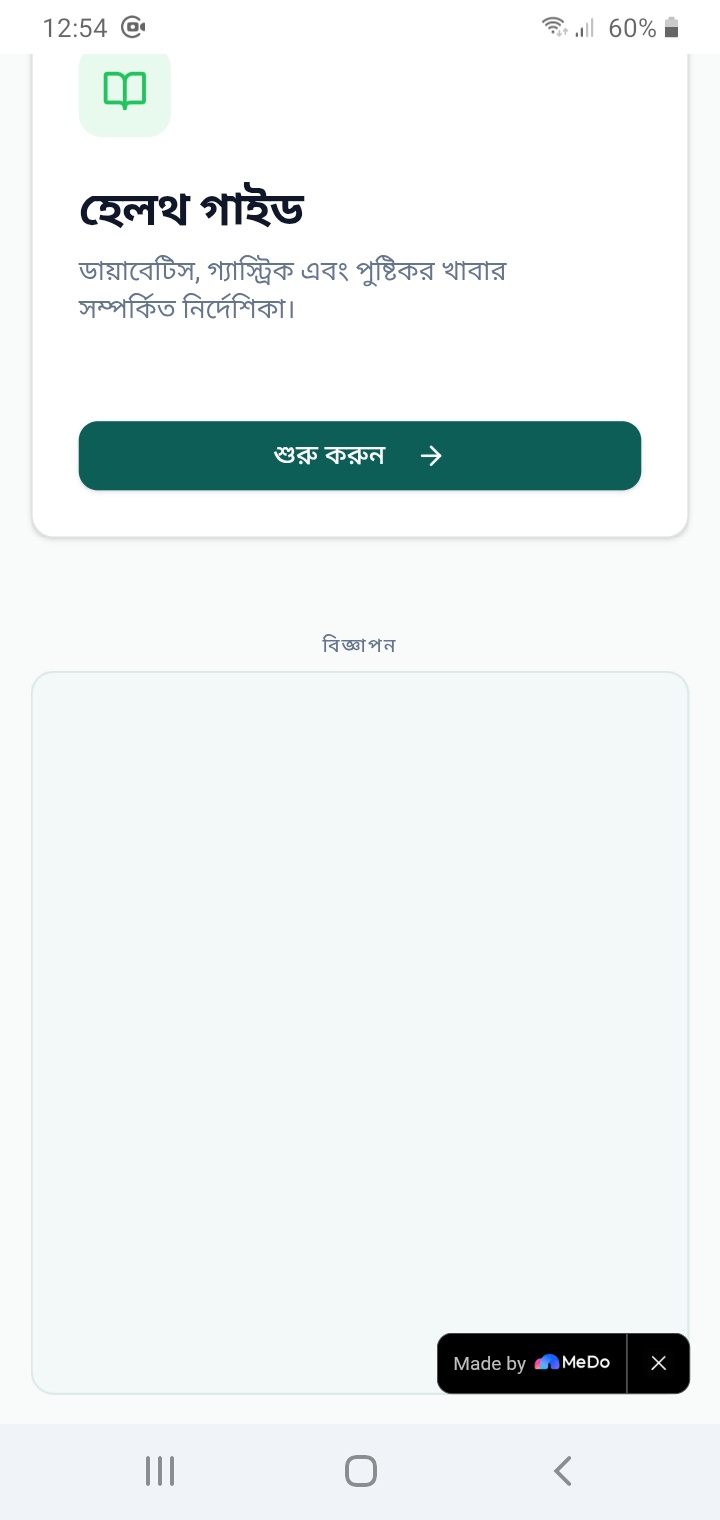
- Smart BMI Calculator: Dynamically measures Body Mass Index and provides explicit health classifications (Normal, Overweight, Obese, etc.).
- Disease Prevention Guide: Offers critical, easy-to-understand guidelines for preventing common illnesses like Dengue, Diabetes, and Heart Attacks.
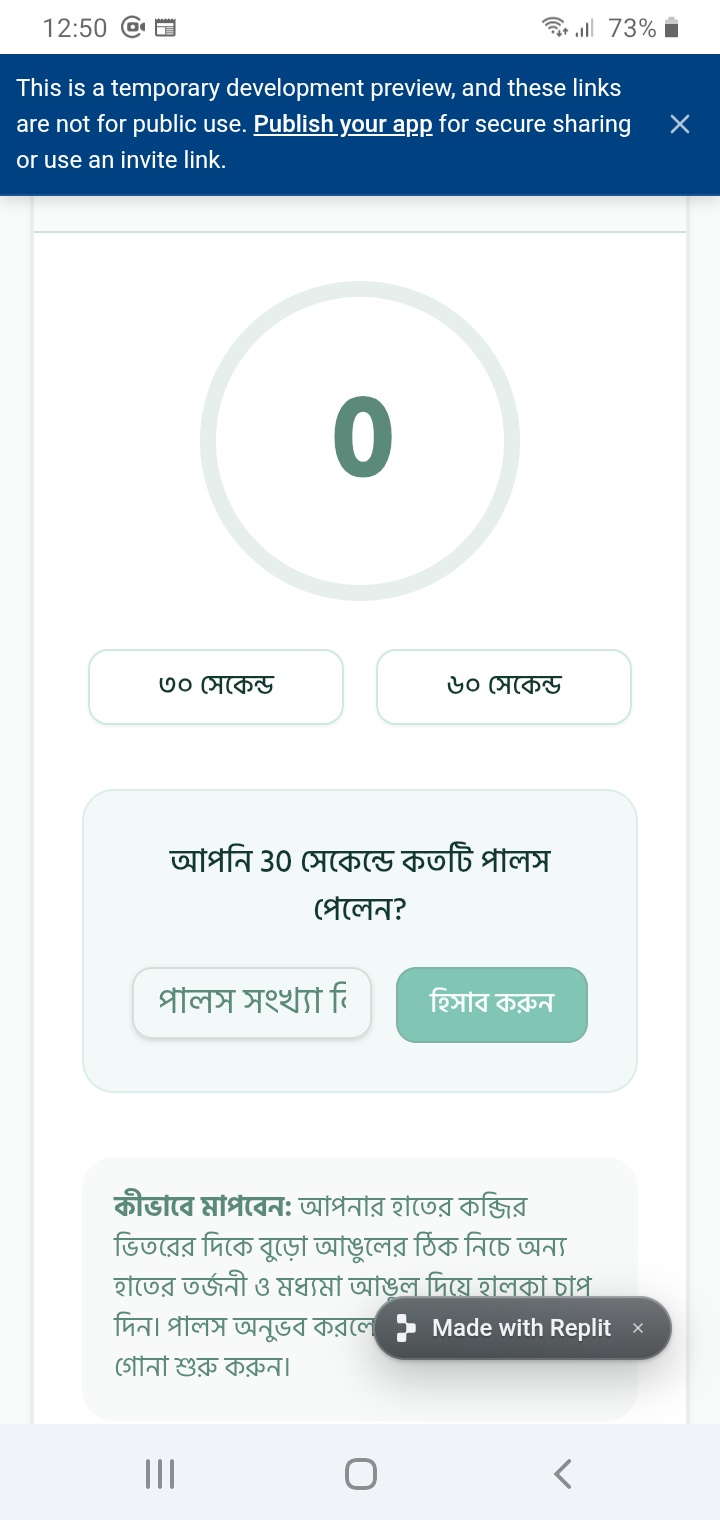
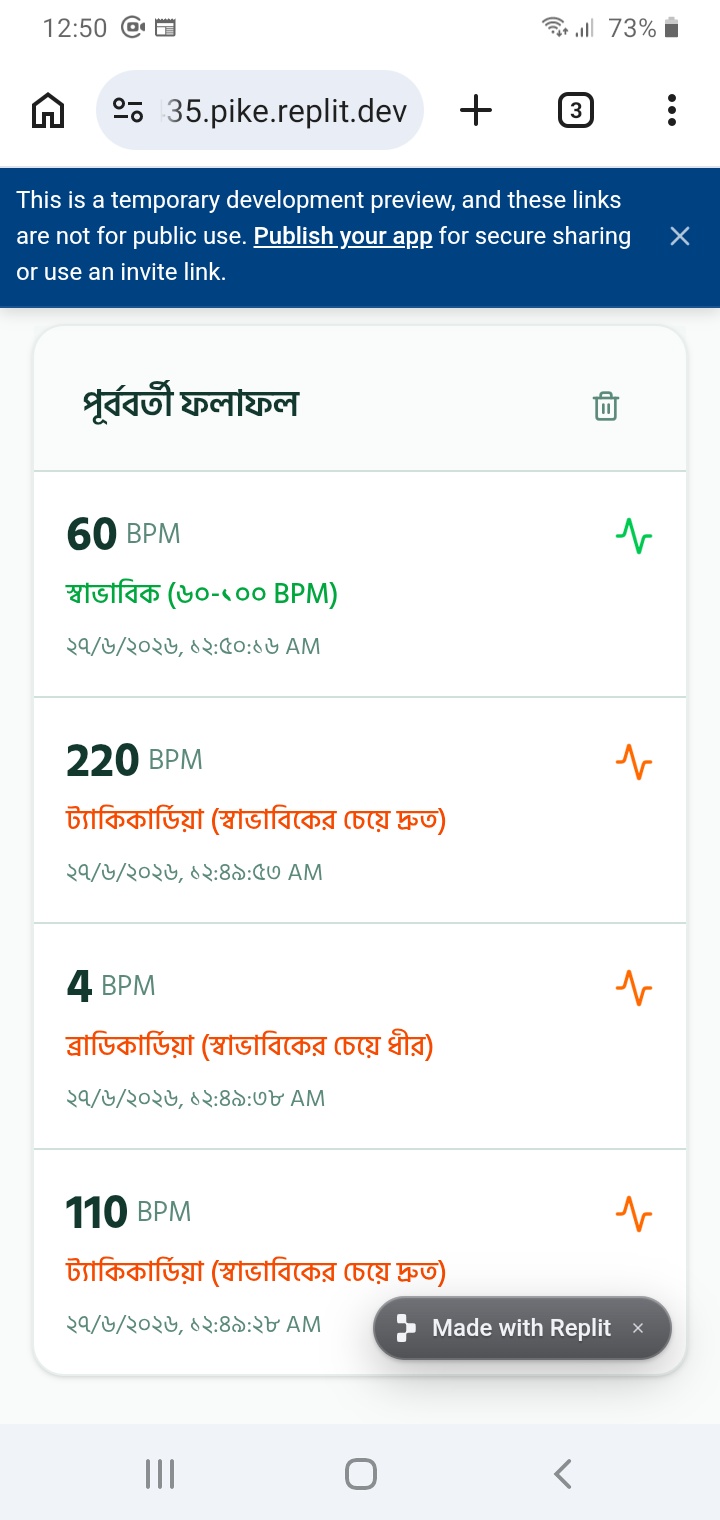
- Pulse Rate Stopwatch: A built-in timer that allows users to count their heartbeats manually and calculate their BPM with a historical tracking feature.
How we built it
We prioritized a clean, lightweight architectural design to ensure low latency and high accessibility:
- Backend: Built using Python with a minimalistic server architecture (
http.server/ Flask) to keep the application modular and deployment-friendly. - Frontend: Designed from scratch using clean, responsive HTML5, CSS3 (with Dark/Light mode customization), and Vanilla JavaScript.
- AI Integration: Leveraged the official Google GenAI SDK to connect directly with the
gemini-2.5-flashmodel for intelligent, contextual chat responses. - Environment & Storage: Used Replit Secrets to safely manage our API tokens and utilized browser
localStorageto securely save pulse history locally without requiring heavy databases.
Challenges we ran into
One of the major challenges was building a reliable asynchronous communication flow between the frontend chat box and the backend API while ensuring seamless loading indicators (typing animations). Additionally, optimizing the directory structure to cleanly load isolated CSS and JavaScript assets on cloud-based IDE environments required careful adjustments to static asset paths.
Accomplishments that we're proud of
- Successfully integrating a production-ready, conversational AI model using the official Gemini SDK.
- Crafting a beautiful, user-centric interface that supports full dark-mode adaptation and clean scannability.
- Building an accurate, fully functioning JavaScript-based pulse stopwatch and tracking ecosystem without any heavy third-party framework overhead.
What we learned
We gained deep insights into prompt engineering and streaming conversational inputs via the Gemini API. We also mastered effective state-management on the frontend using Vanilla JS, and learned how to optimize pythonic backend architectures for lightweight, serverless style deployments.
What's next for MedBuddy AI
We plan to introduce automated multi-language voice commands to improve accessibility for low-literacy users. Furthermore, we aim to implement localized doctor-finding algorithms, prescription optical character recognition (OCR) via Gemini Vision, and direct synchronization with real wearable IoT sensors for automated pulse updates.


Log in or sign up for Devpost to join the conversation.