Inspiration
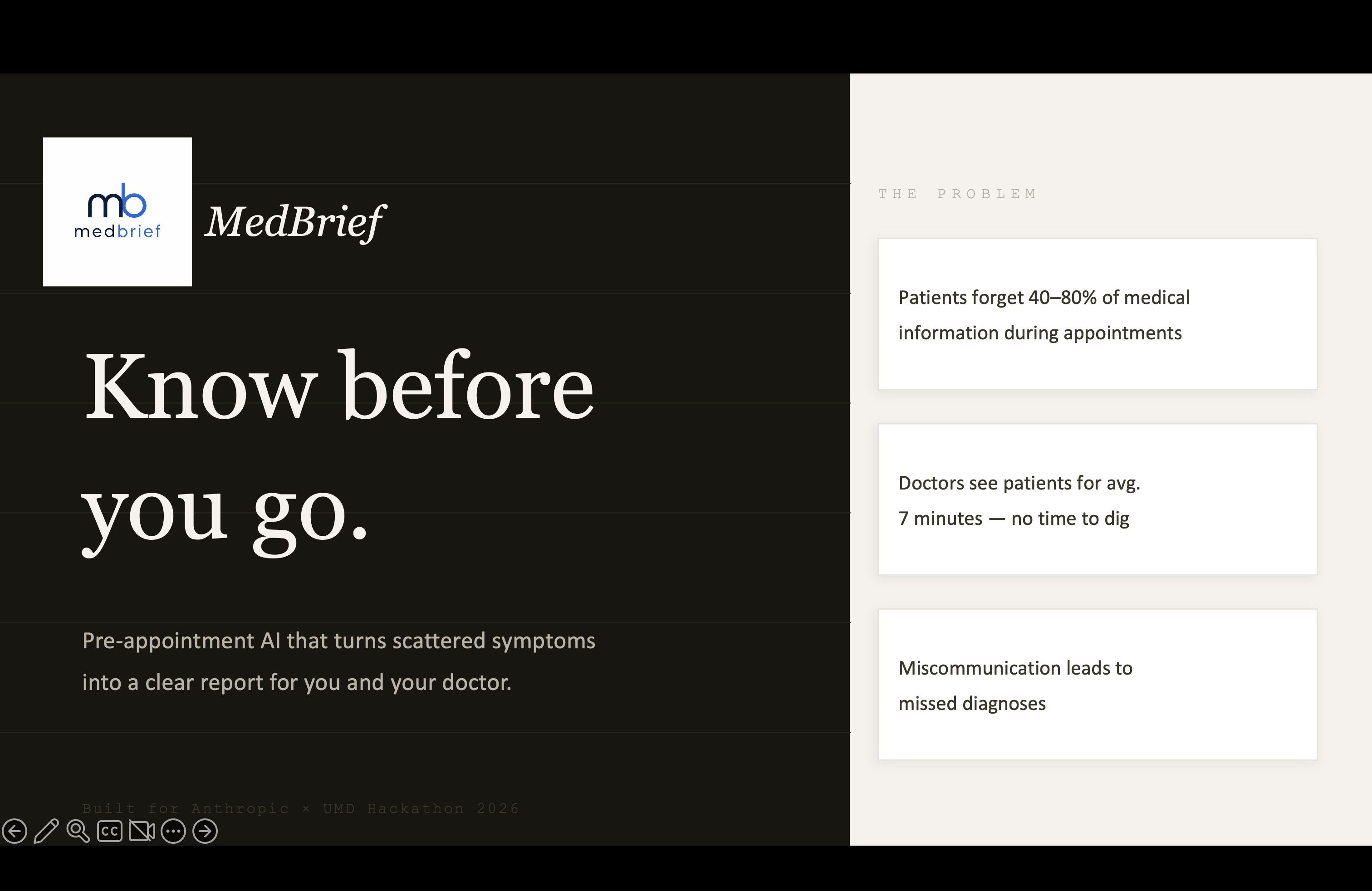
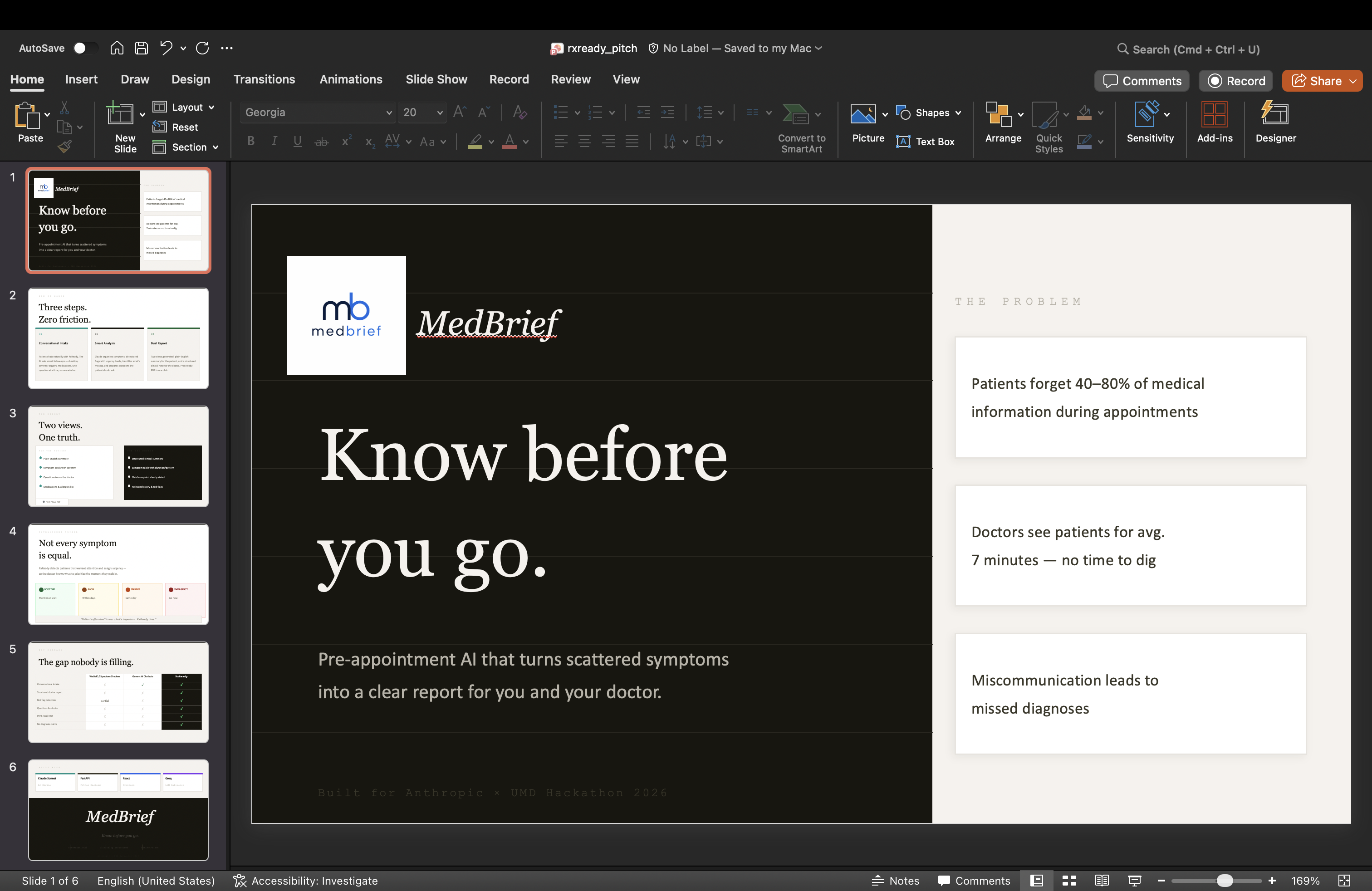
Healthcare breaks down at communication. Patients forget symptoms, struggle to explain issues, and waste most of their ~18-minute visit figuring out what to say. We asked: what if patients could walk in as prepared as doctors?
What it does
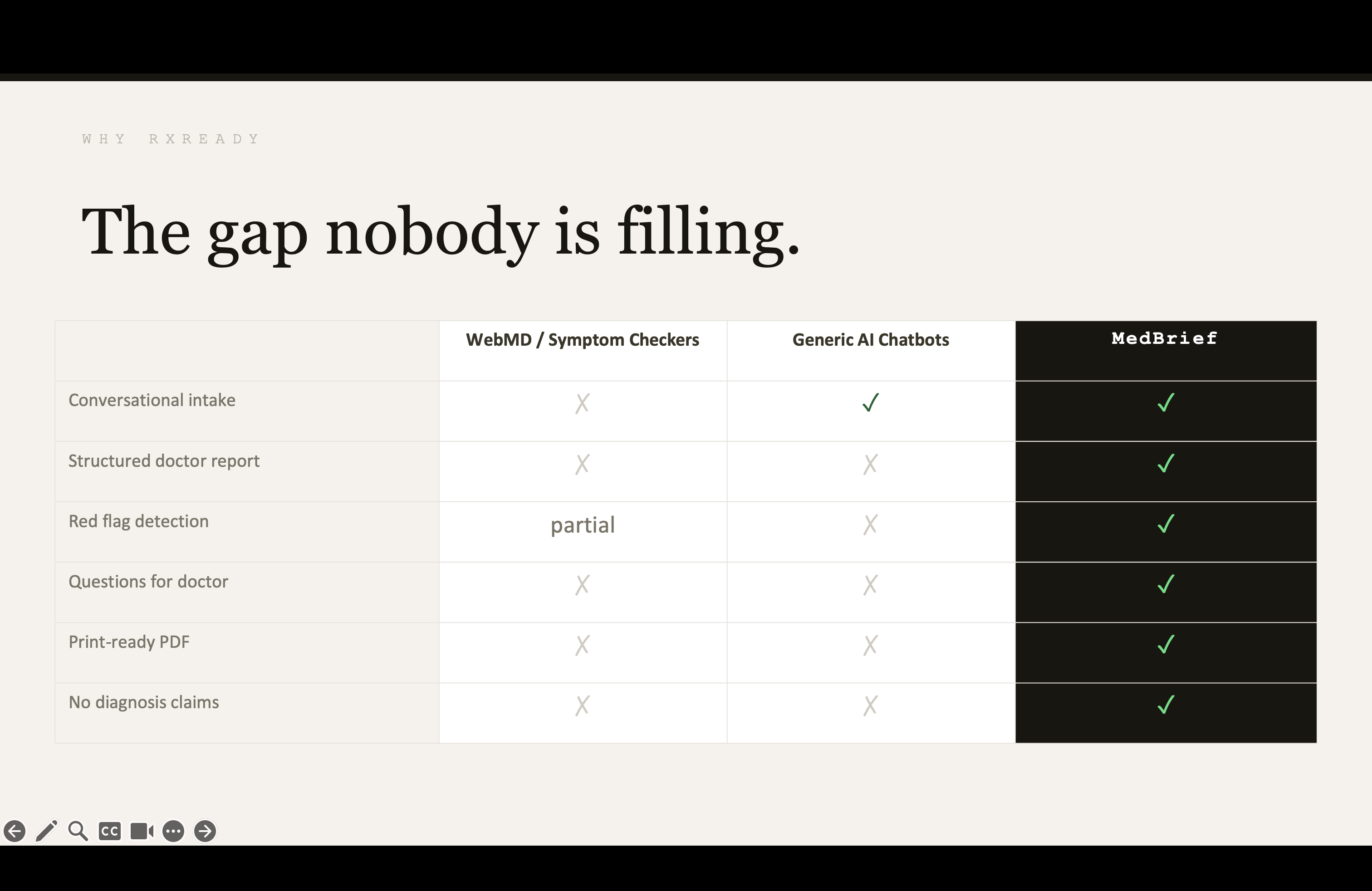
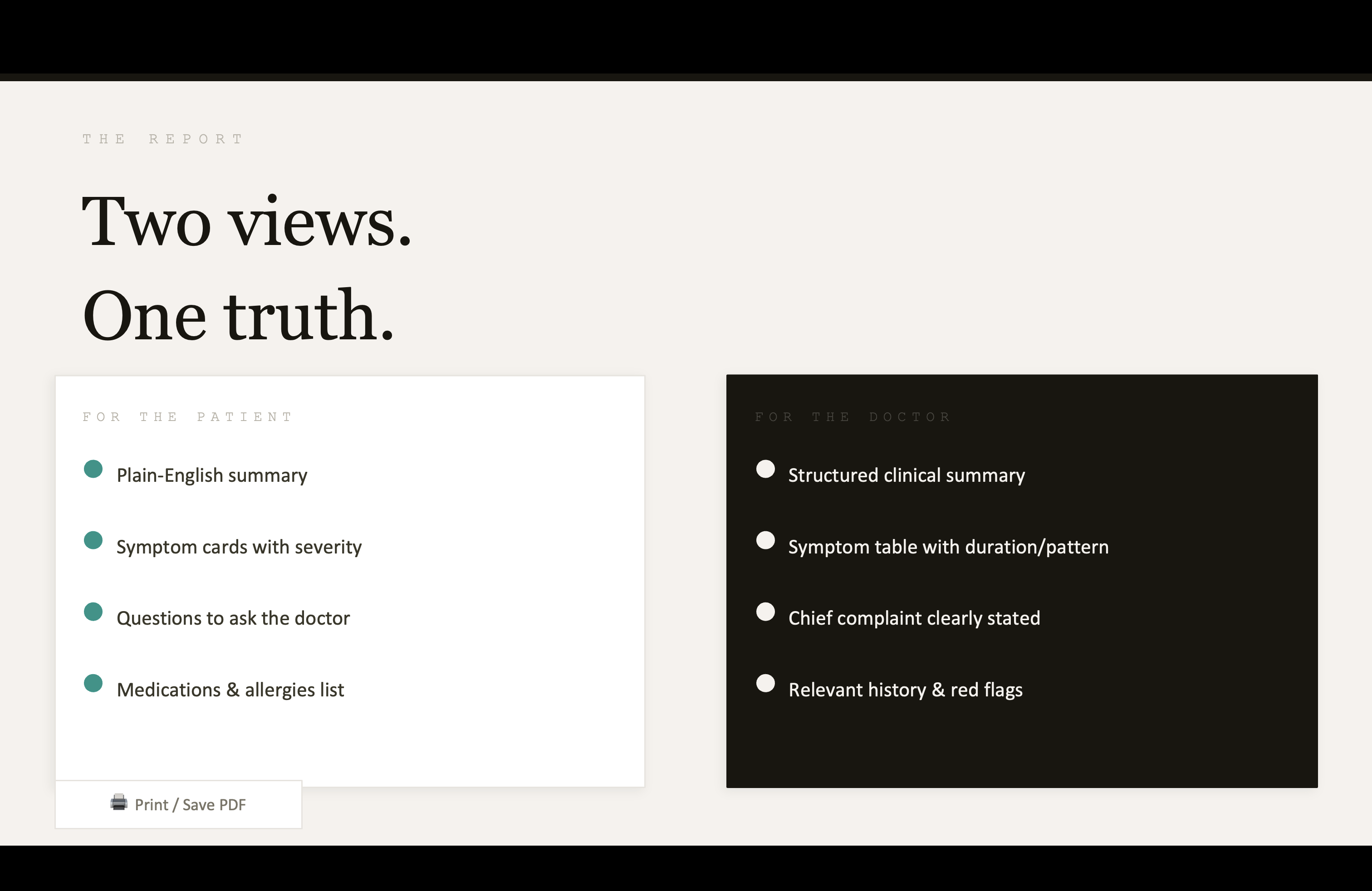
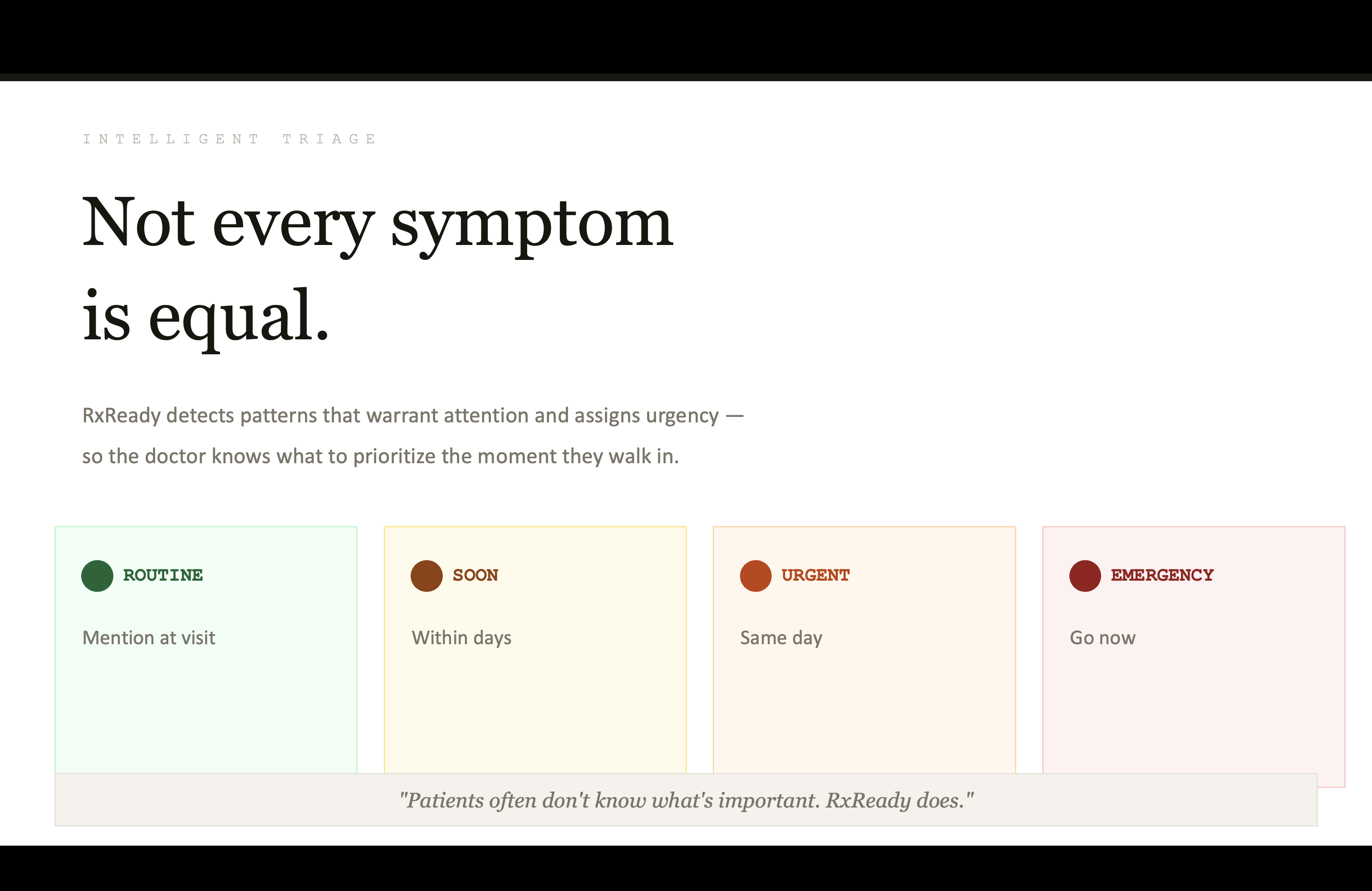
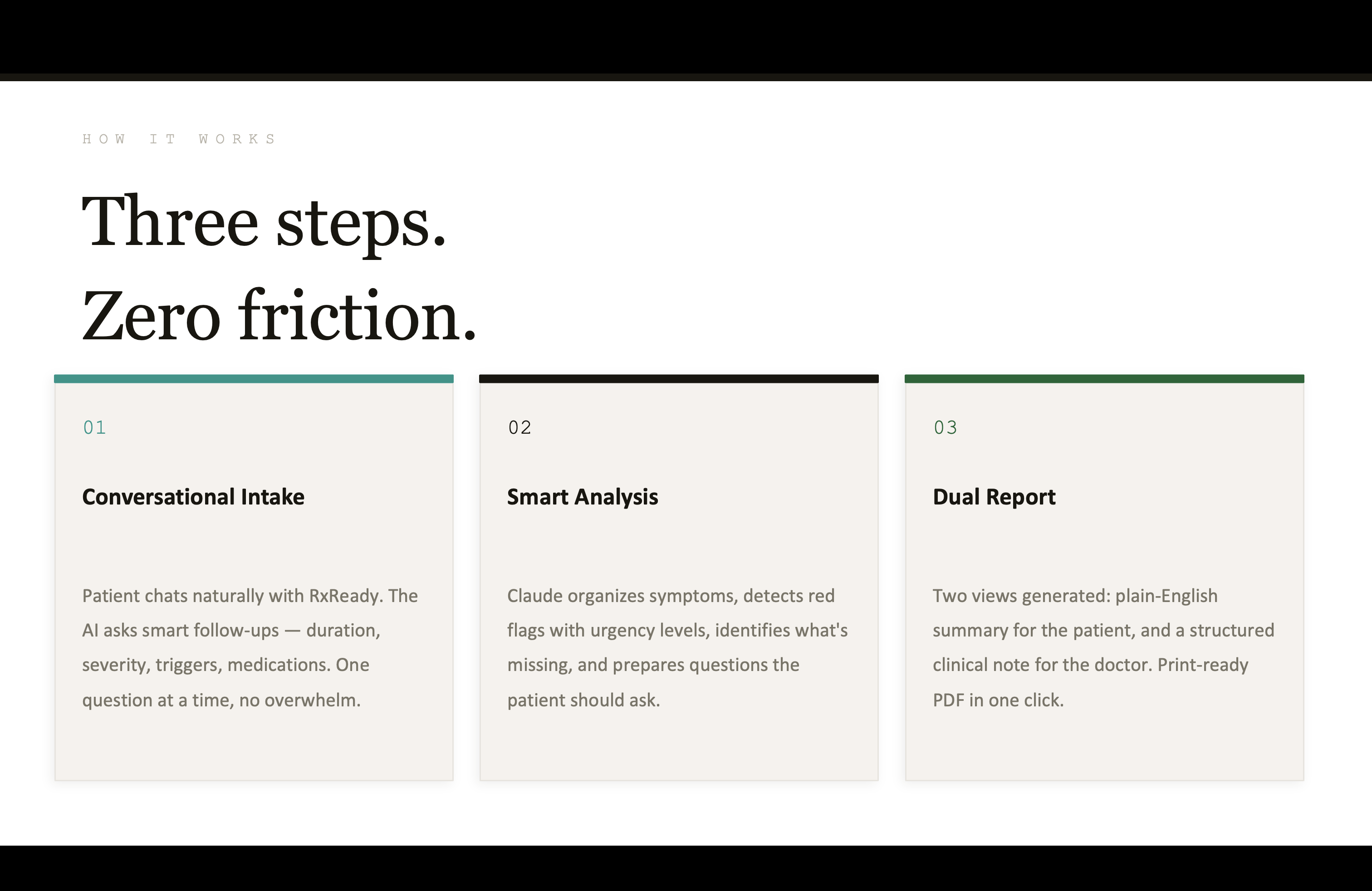
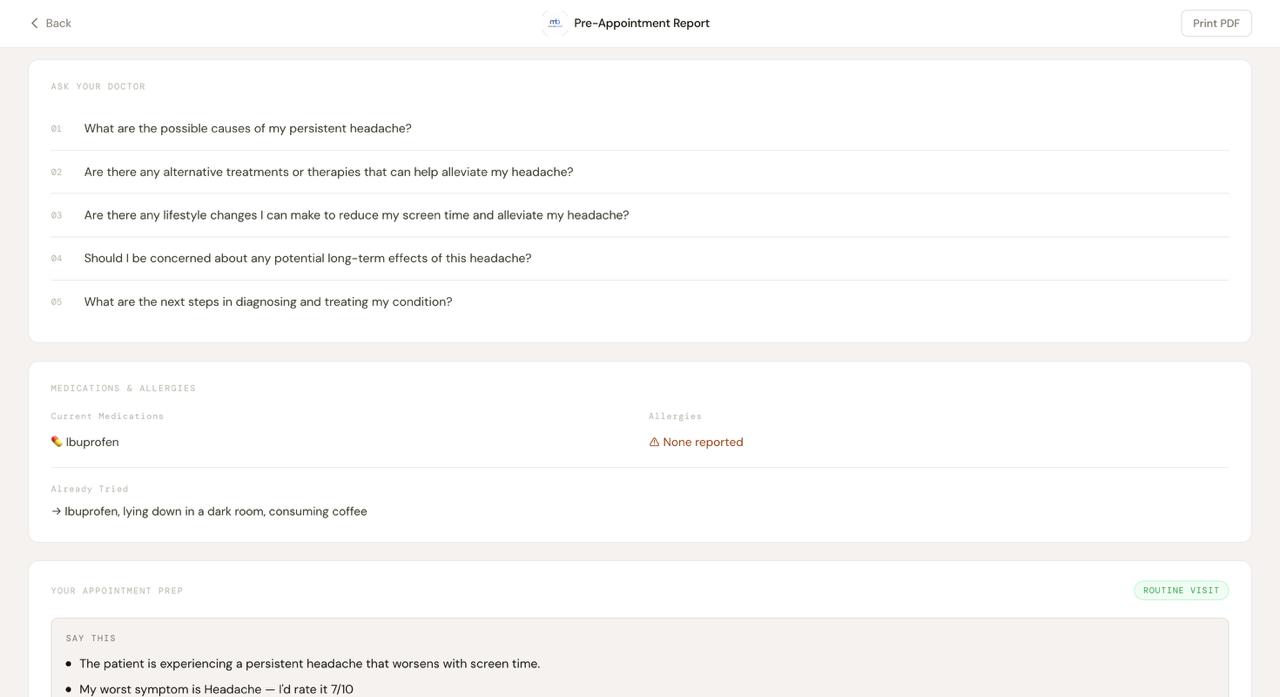
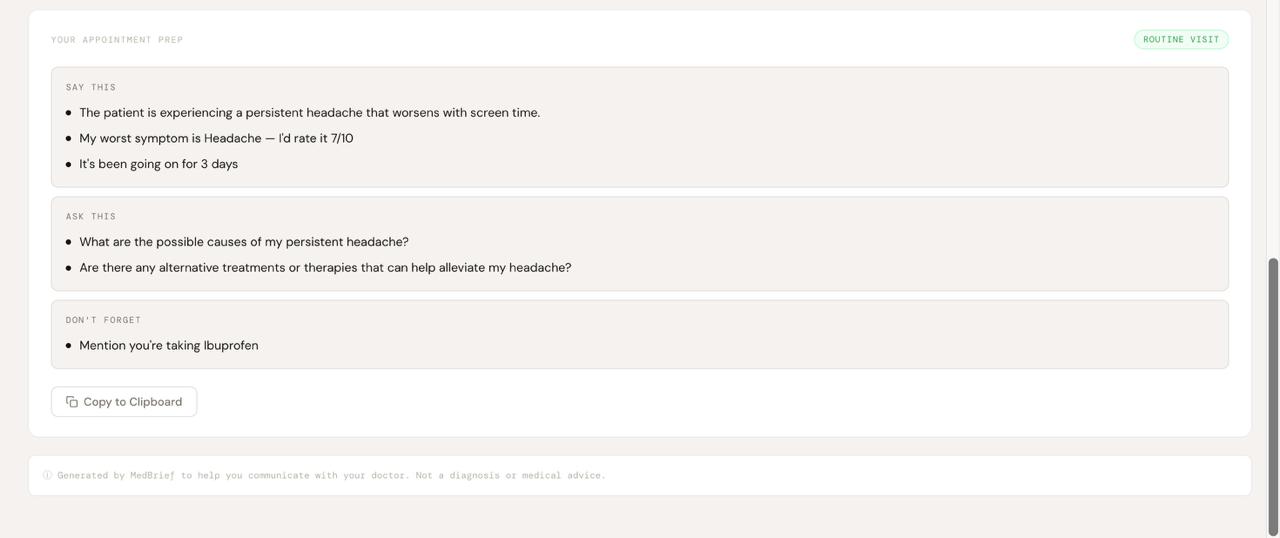
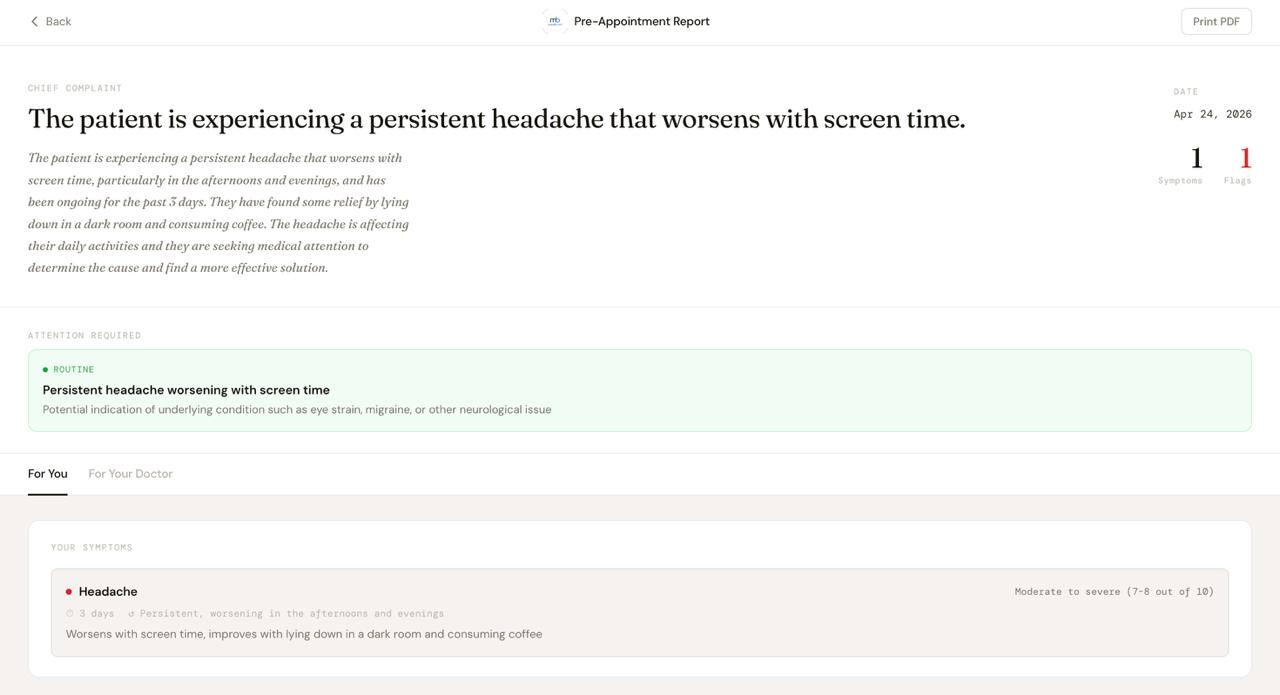
MedBrief turns messy patient input into two outputs: a plain-English summary for the patient and a structured clinical brief for the doctor. It also suggests what to say, what to ask, and flags concerns—always as questions, never diagnoses.
How we built it
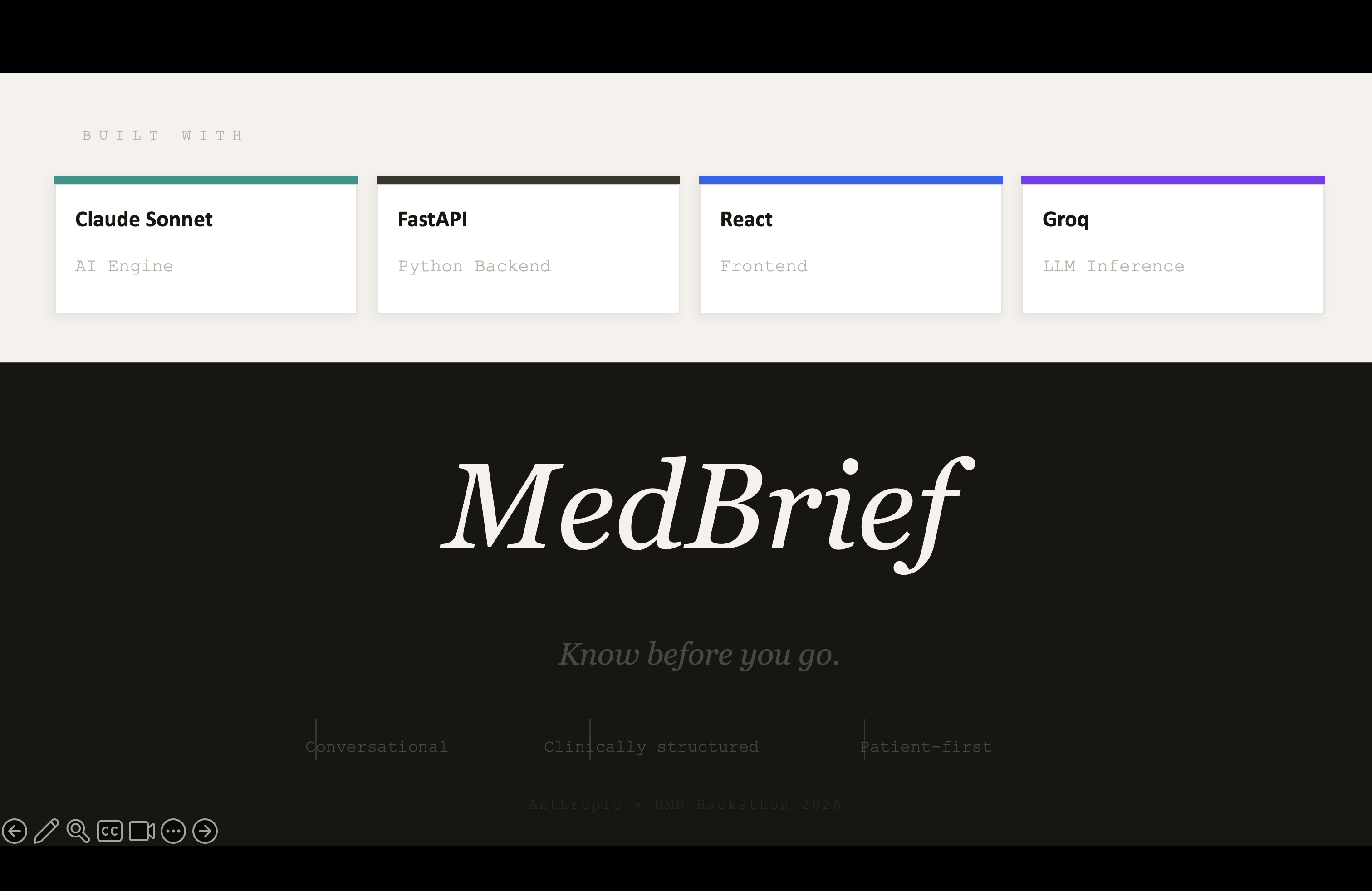
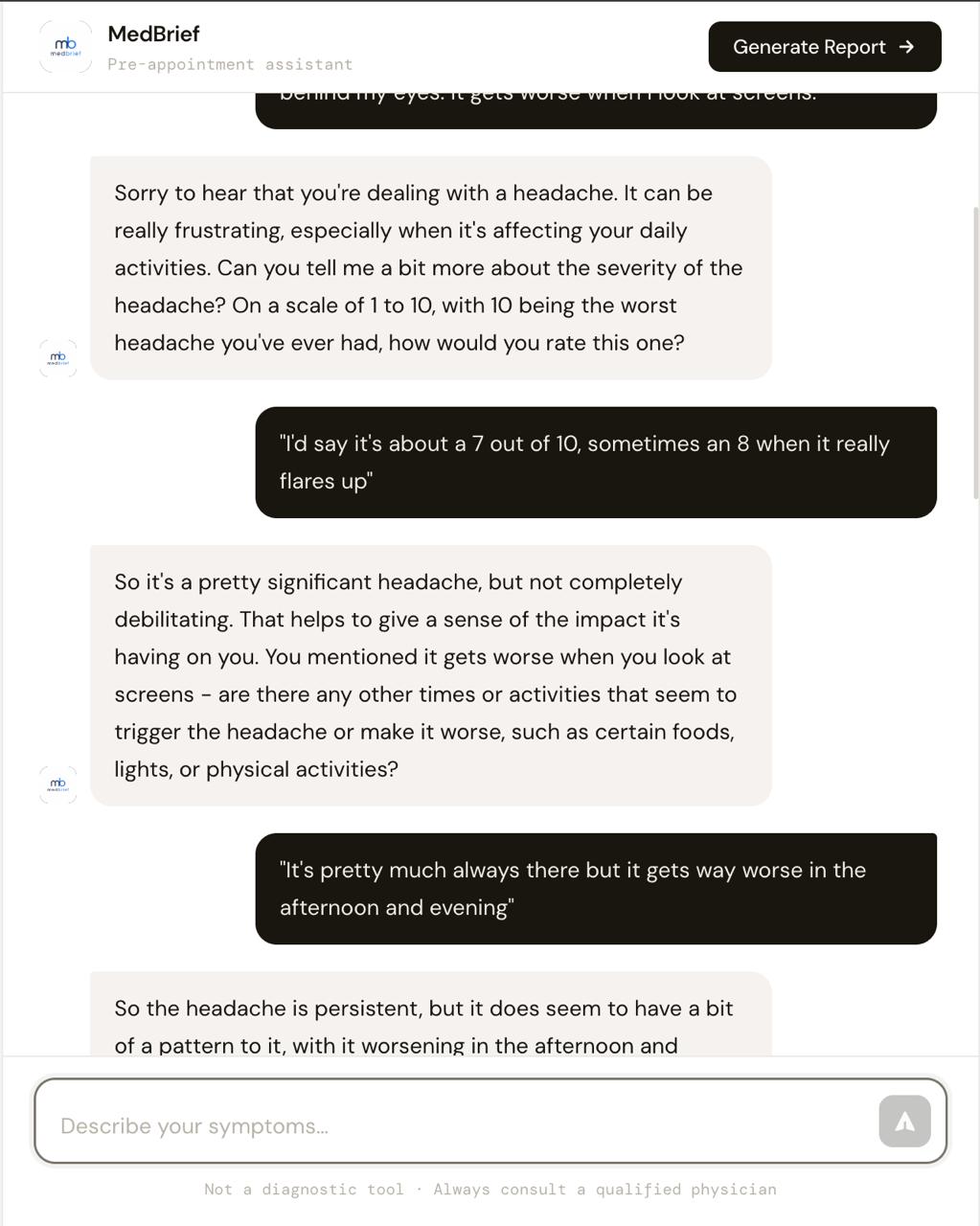
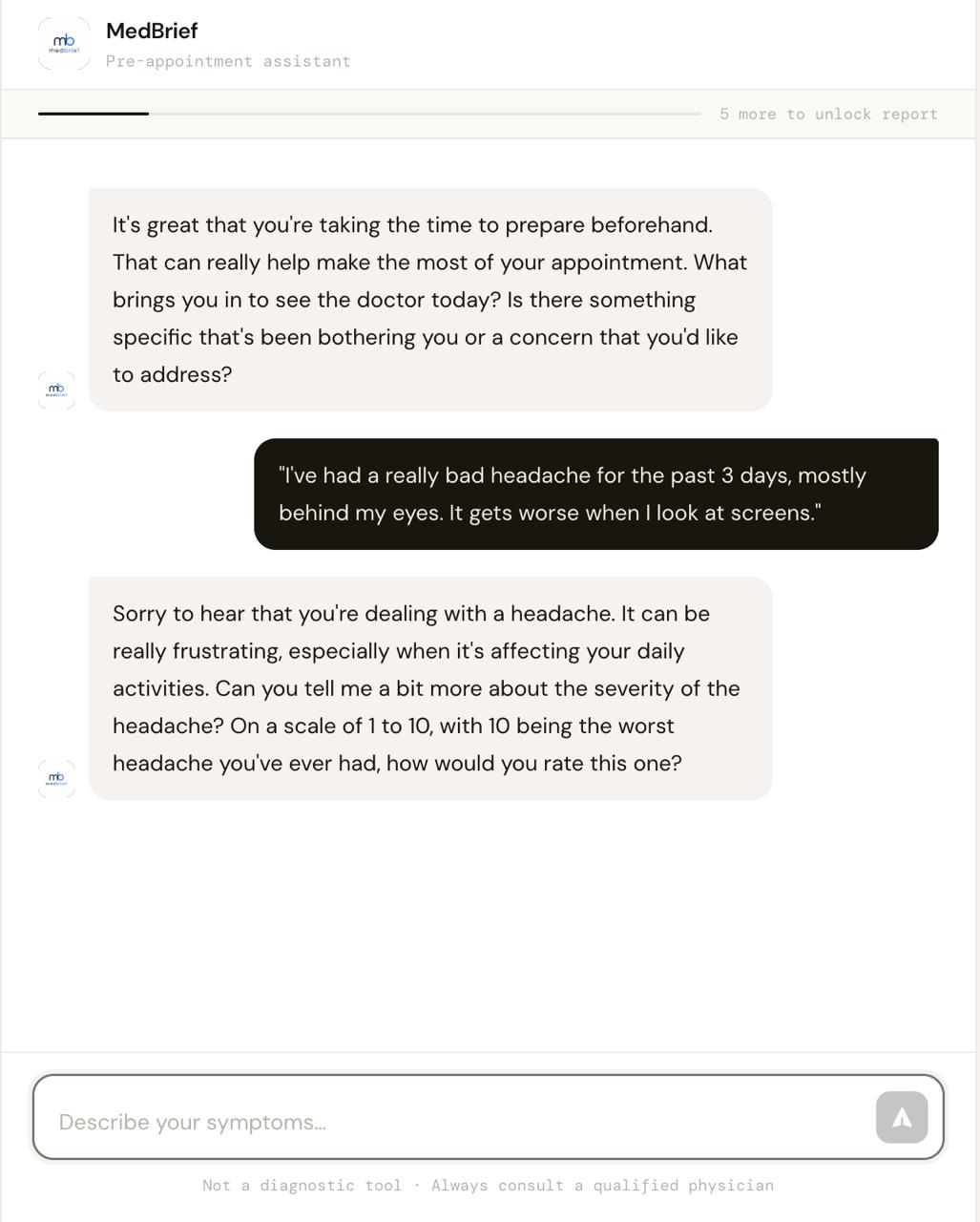
We used React for the frontend, FastAPI for the backend, and Claude API for conversational intake and report generation. A second-pass analysis layer converts risks into safe, actionable questions. Everything is modular and plug-and-play.
Challenges we ran into
Avoiding medical liability while still being useful, getting consistent structured outputs from AI, ensuring seamless integration with no conflicts, and keeping the UX simple but powerful.
Accomplishments that we're proud of
Built a dual-sided product for patients and doctors, created a safe-by-design system, generated a print-ready clinical brief, and achieved fast modular integration.
What we learned
AI works best when it structures thinking, not replaces it. Simplicity in healthcare UX is hard. Framing insights as questions builds trust. Real-world products need both technical strength and ethical design.
What's next for MedBrief
Mobile-first version, integration with wearables and health records, personalization, multilingual support, and real-world clinical testing.


Log in or sign up for Devpost to join the conversation.