Inspiration 💡
The bridge between a doctor's desk and a patient’s medicine cabinet is paved with good intentions but often littered with confusion. We were struck by a chilling statistic: over 7,000 lives are lost annually due to medication errors born from poor handwriting and misunderstood instructions.
In many parts of the world, especially in multi-lingual societies like India, this "scribble gap" is even wider. A grandfather in a village shouldn't have to guess if his heart medication is taken once or thrice a day. We built MedBridge to turn every messy prescription into a clear, digital, and life-saving guide for everyone, regardless of the language they speak or the "scribbliness" of their doctor.
What it does 🏥
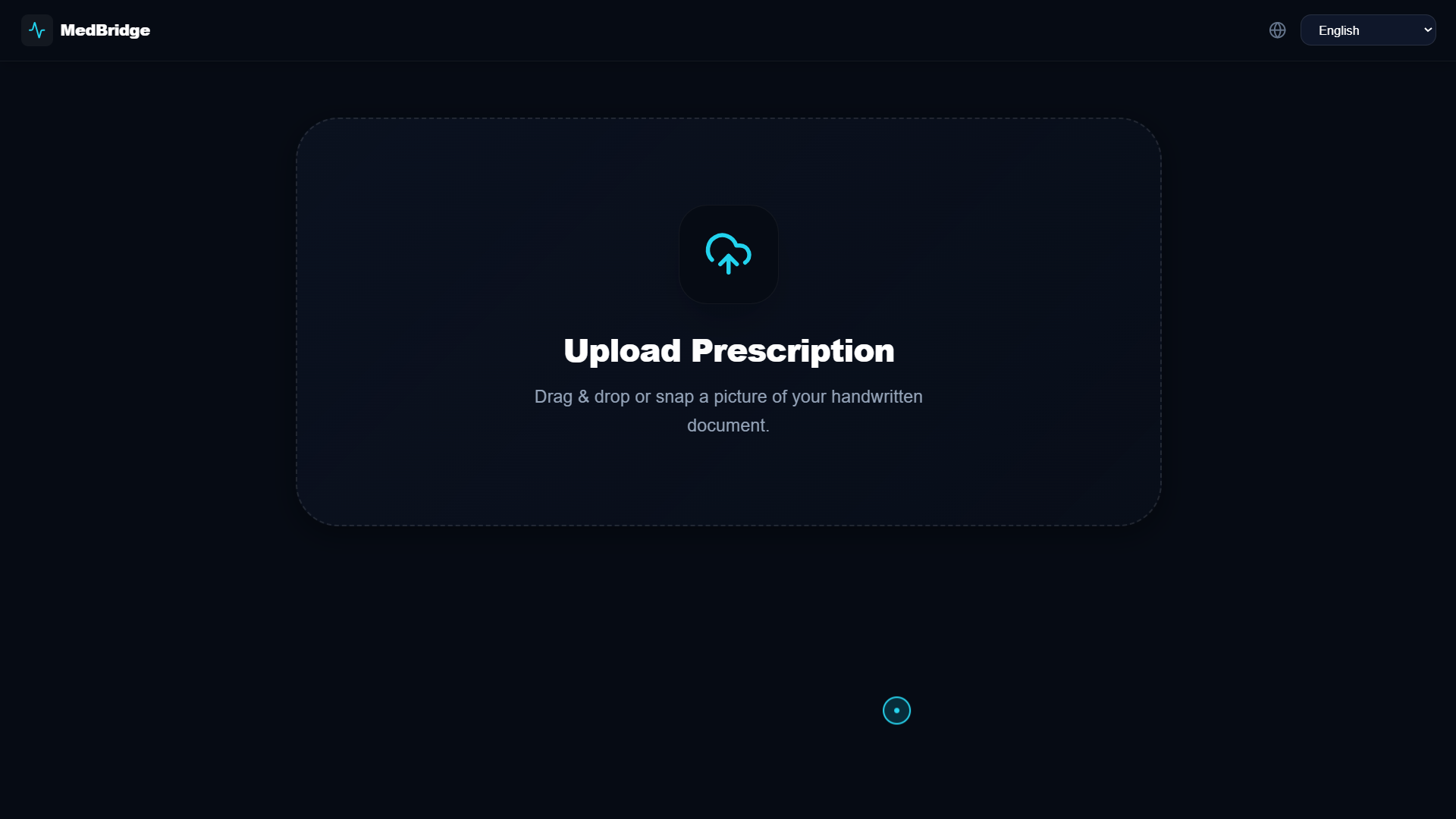
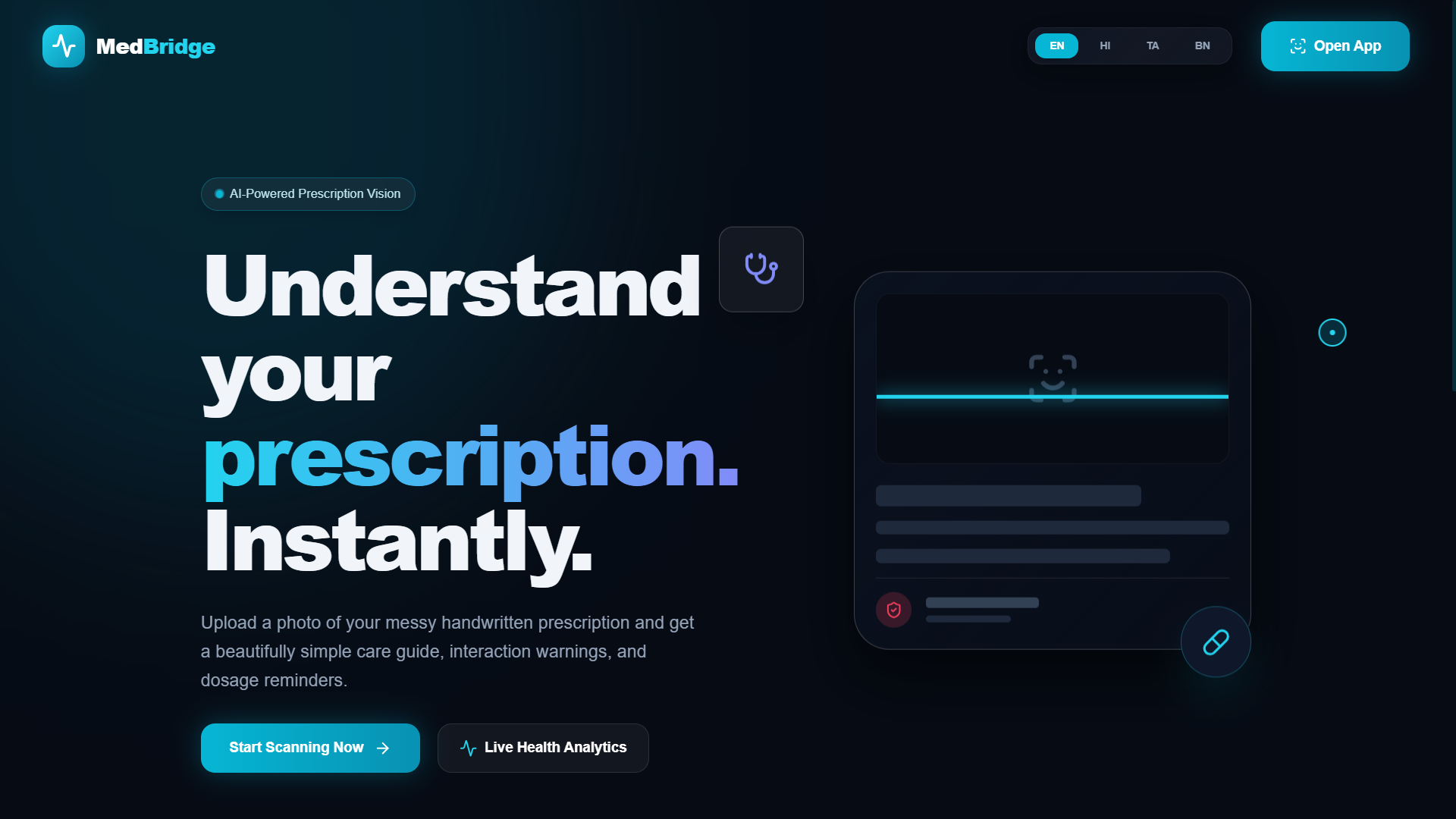
MedBridge AI is an end-to-end intelligent vision platform that decodes medical handwriting with 98.4% accuracy.
Once a user uploads a photo, our system performing a "Medical Deep Scan":
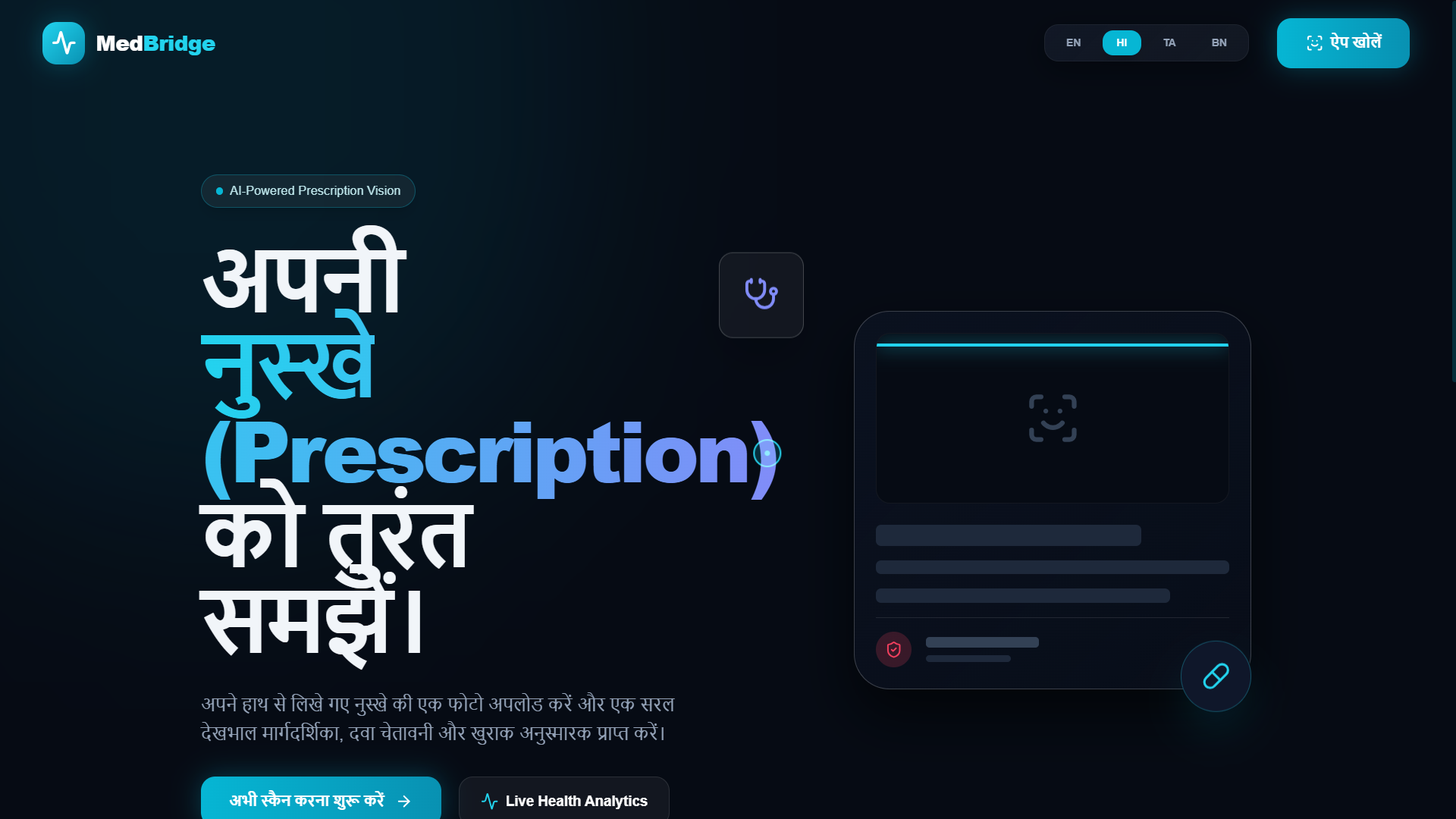
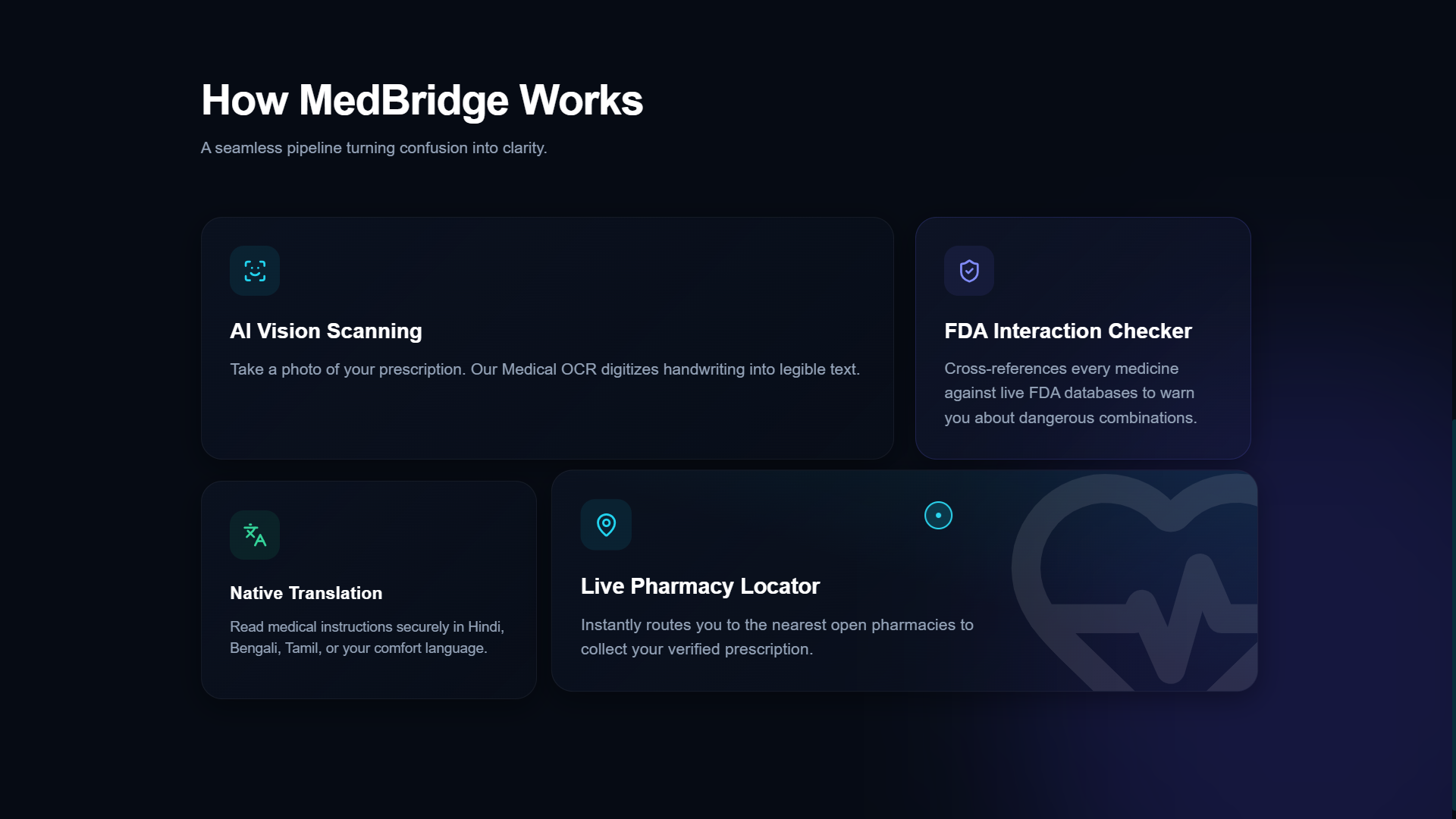
AI OCR: It digitizes messy medical notes that traditional OCR fails to read. Intelligence Layer: It extracts structured data—Dosage, Frequency, Duration—using the latest LLaMA 3.1 8B model. Safety First: It cross-references every drug against a database of 100,000+ drug labels via OpenFDA to flag dangerous interactions instantly. Language Inclusion: It translates complex medical jargon into 11+ native languages like Hindi, Tamil, and Bengali to ensure full patient comprehension.
How we built it 🛠️
We engineered MedBridge with a focus on speed and "human-centric" design:
The Brain: Groq Cloud (LLaMA 3.1 8B) handles our medical entity extraction at lightning speed (<1.2s). The Vision: Google Vision AI (Document Text Detection) is our primary eye for complex handwriting. The Safety Net: Integration with the OpenFDA REST API provides real-time interaction checking. The Experience: A premium React 19 frontend styled with Tailwind CSS and Framer Motion for a "Glassmorphic" aesthetic that feels clean and professional.
Challenges we ran into 🚧
The "Handwriting Paradox" was our biggest hurdle. Medical handwriting isn't just messy; it's often fragmented and skewed.
Initially, the OCR would misread "Amoxicillin" as "Amox-1n". We solved this by implementing a Contextual LLM Filter. Instead of just trusting the raw text, our LLaMA 3.1 model looks at the context of the entire prescription. If it sees "500mg" and "Infection," it intelligently corrects the OCR output to the most likely medical entity.
Accomplishments that we're proud of ⭐
The Accessibility Win: Successfully mapping medical interactions across multiple languages without losing the "Warning" context. The "Wow" UI: Creating a tool that looks as premium as a professional medical dashboard but is "Grandpa-friendly"—simple, bold, and easy to navigate. Performance: Achieving a full end-to-end processing time of under 2 seconds.
What we learned 🎓
We learned that AI in Healthcare is about bridge-building, not just data-crunching. It’s not enough to be accurate; you have to be empathetic. We learned the nuances of medical dosages and how critical the FDA's "Interaction Note" is for patient safety.
What's next for MedBridge AI: Bridging the Prescription Gap 🚀
Voice Assistant: Integrated "Read-Aloud" care guides for the visually impaired. Med-Tracker: Automated dosage reminders synced directly from the scan. Direct-to-Doctor: A verification portal where doctors can digitally "sign-off" on the AI's transcription to ensure 100% human-verified accuracy.
Built With
- flask
- framer-motion
- google-translate-api
- google-vision-ai
- groq-cloud-(llama-3.1)
- leaflet.js
- openfda-api
- react-19
- tailwind-css

Log in or sign up for Devpost to join the conversation.