-
-
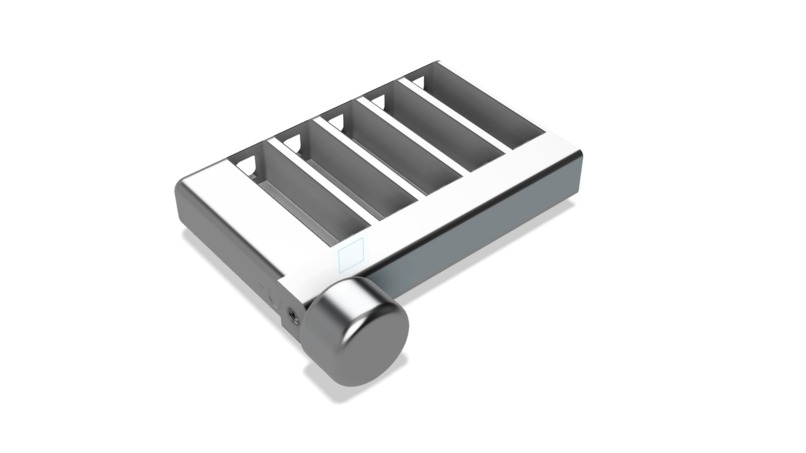
MedBox1
-
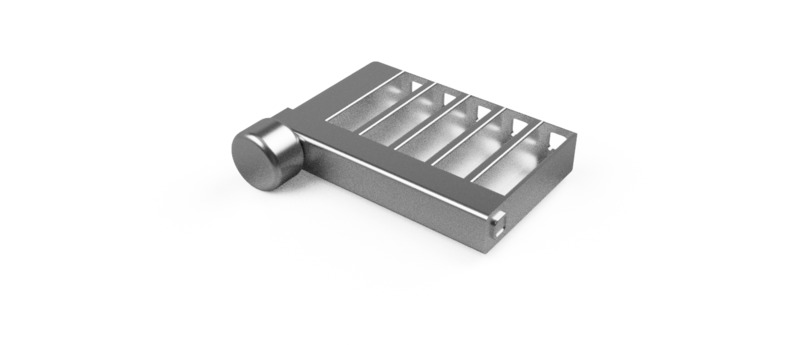
MedBox2
-

MedBox3
-
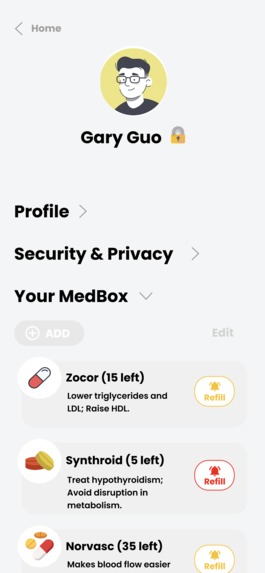
MedBox Assistant App 3
-
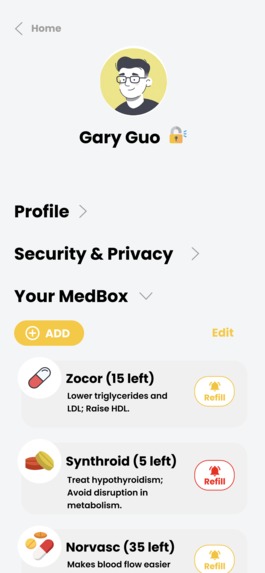
MedBox Assistant App 4
-
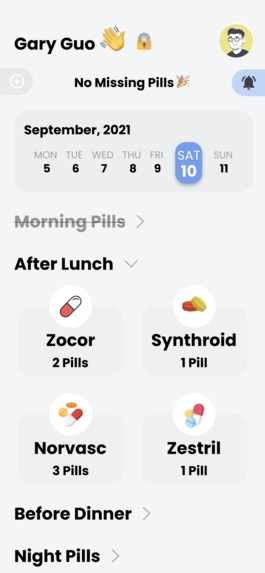
MedBox Assistant App 1
-
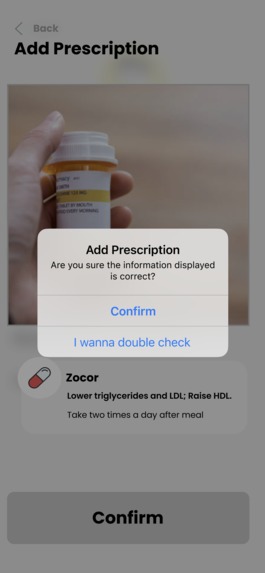
MedBox Assistant App 5
-
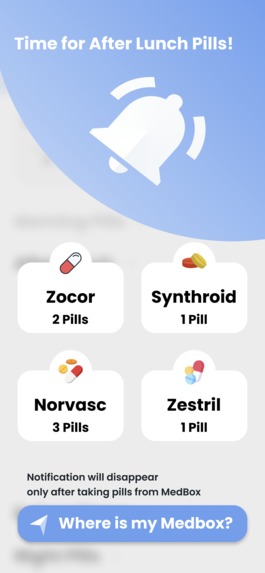
MedBox Assistant App 2

Inspiration
One of our team members, Zhennan, shared a story internally about his Grandma, Tan. Grandma Tan, unfortunately, has Alzheimer's symptoms in her 60s. Her smile is kind as always. Hidden under the smile is the increasingly severe memory loss. She received some treatments that can slow down memory loss. But there are too many pills to take in a day with varying times and dosages. It's not just Grandma Tan who suffers from this symptom, there are over 6 million elderly people in the United States living with Alzheimer's according to the statistics from Alzheimer's Association. We believe it is of absolute necessity to monitor patients' memory loss because forgetting to take medications can be dangerous to their health, especially if doses are missed on a frequent basis. Someone with Alzheimer’s might also accidentally take medication again, probably more than once in a day, leading to life-threatening overdoses. Additionally, they may inadvertently take incorrect medications, from other family members, which could expose them to dangerous side effects.
What it does
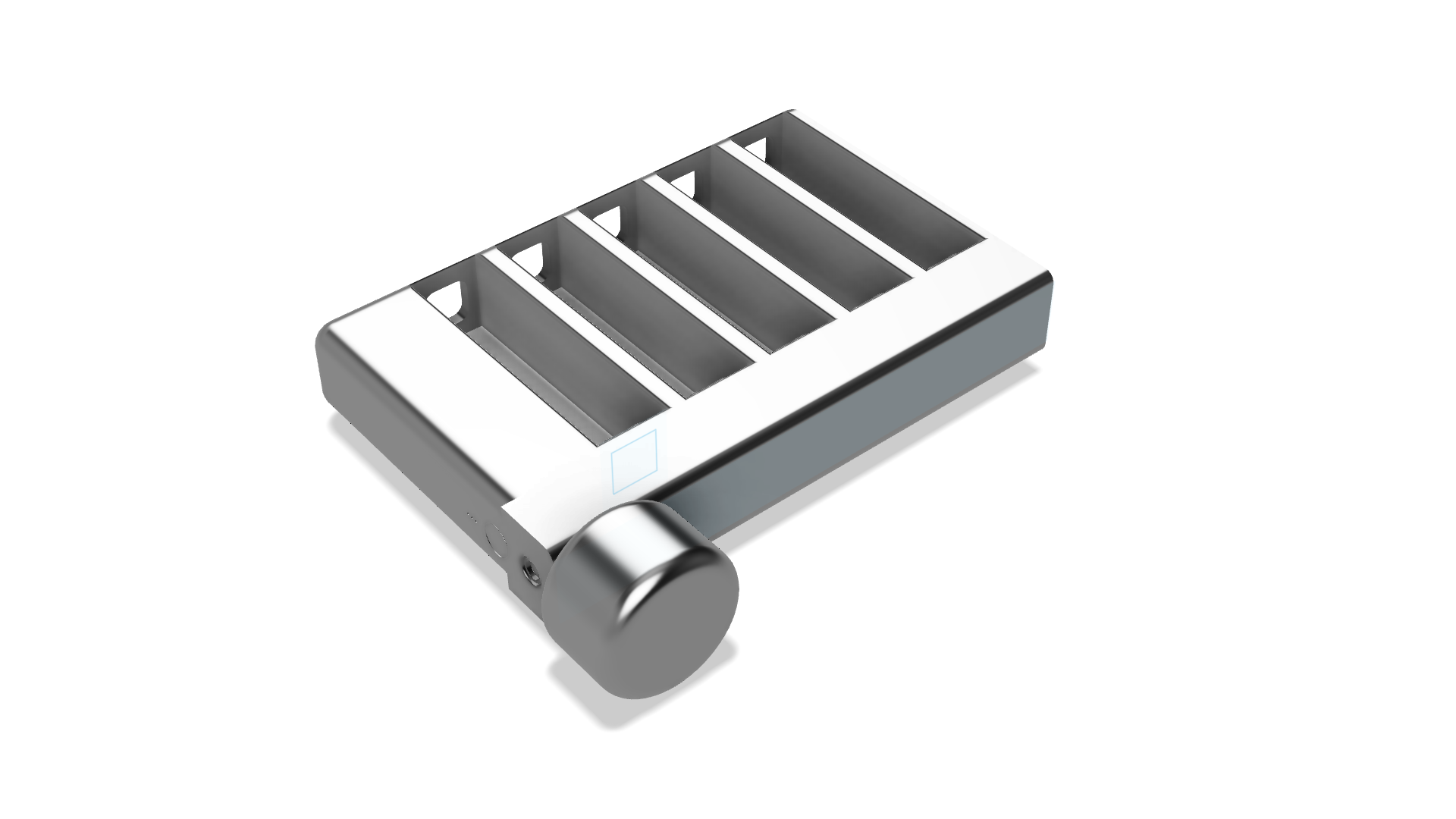
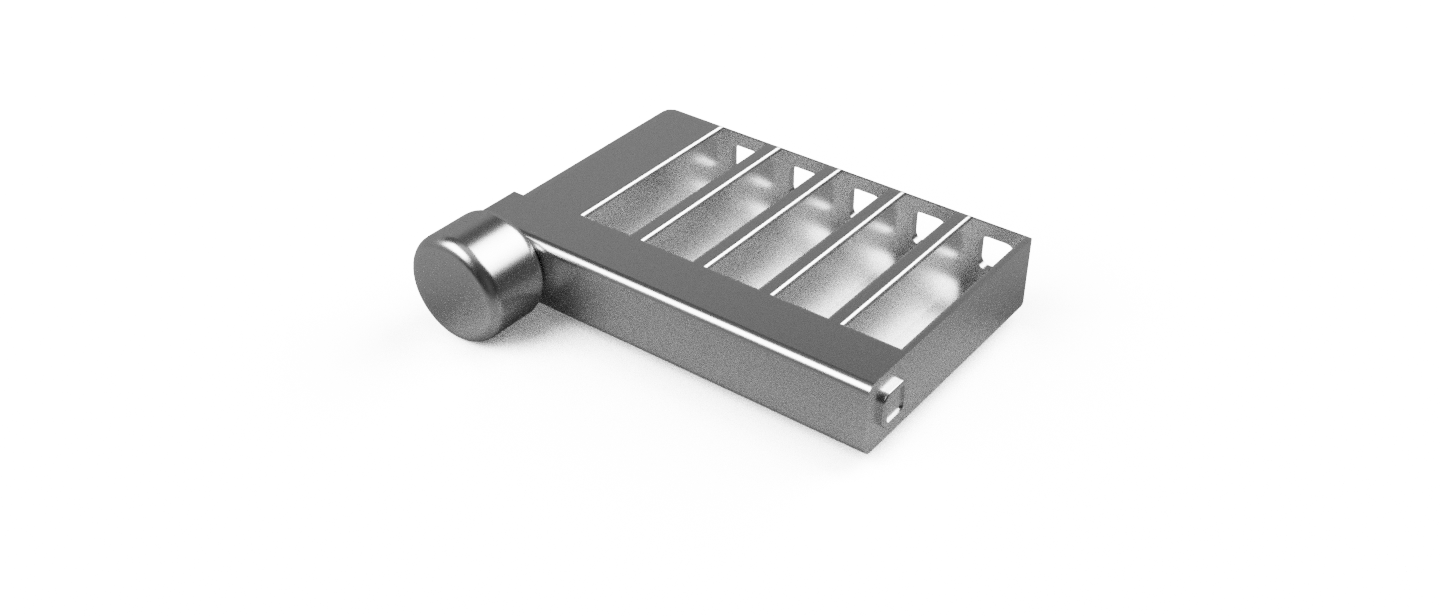
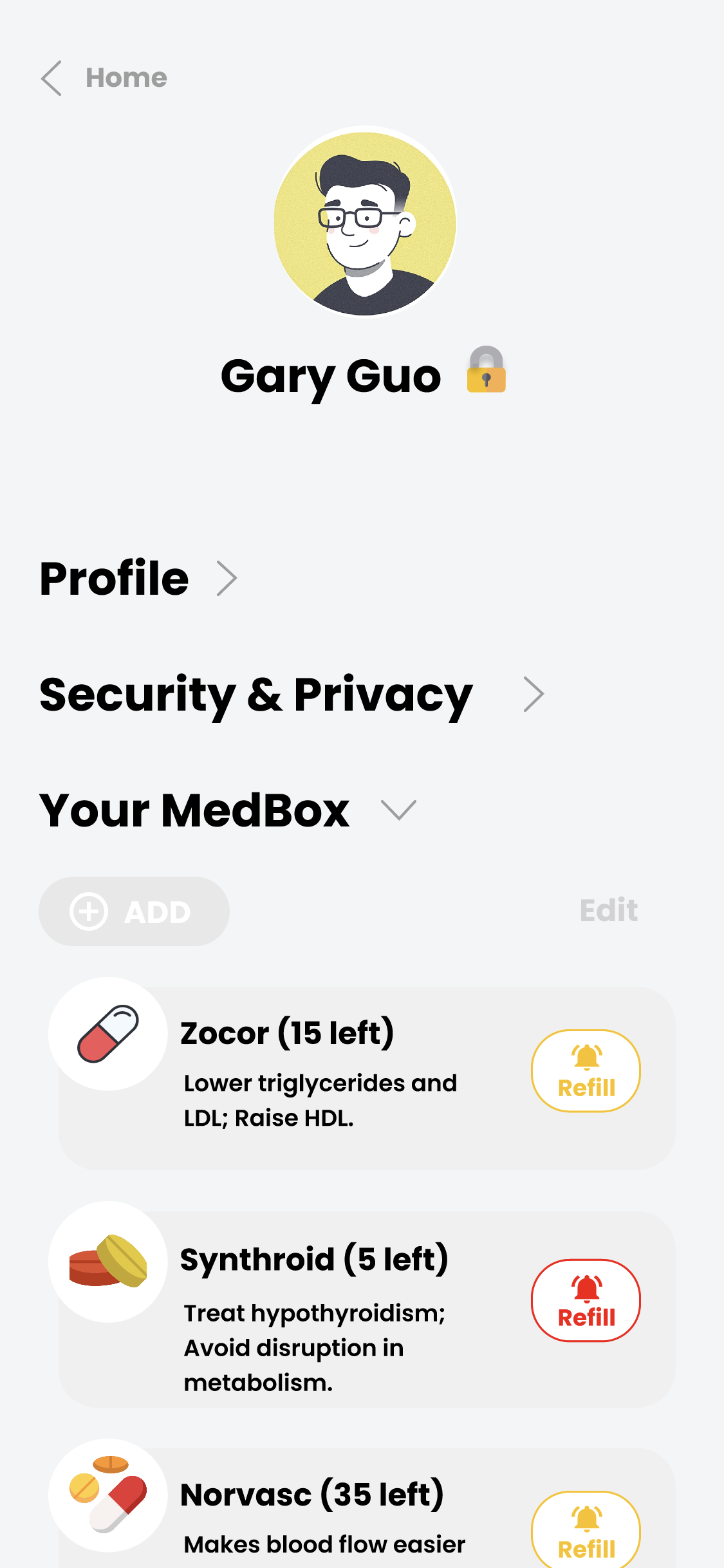
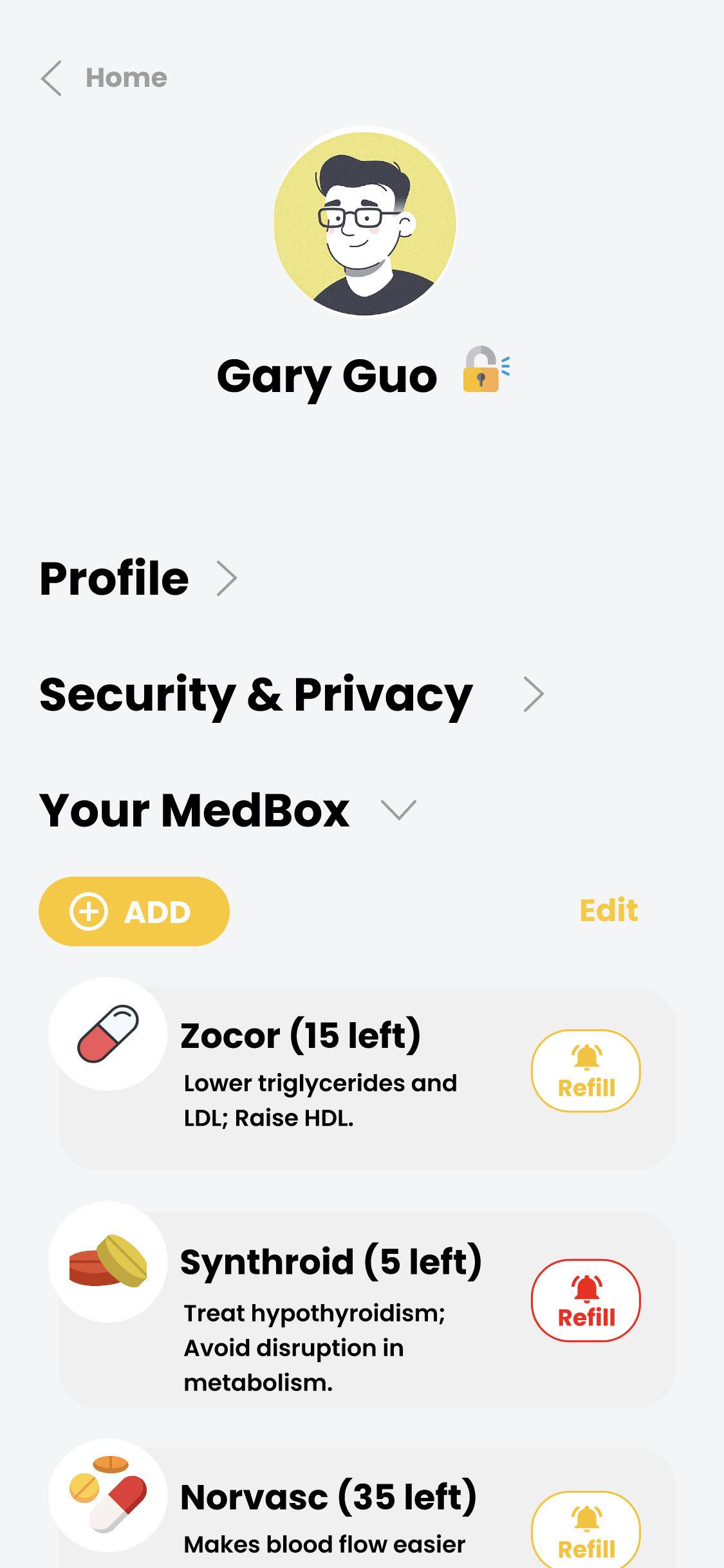
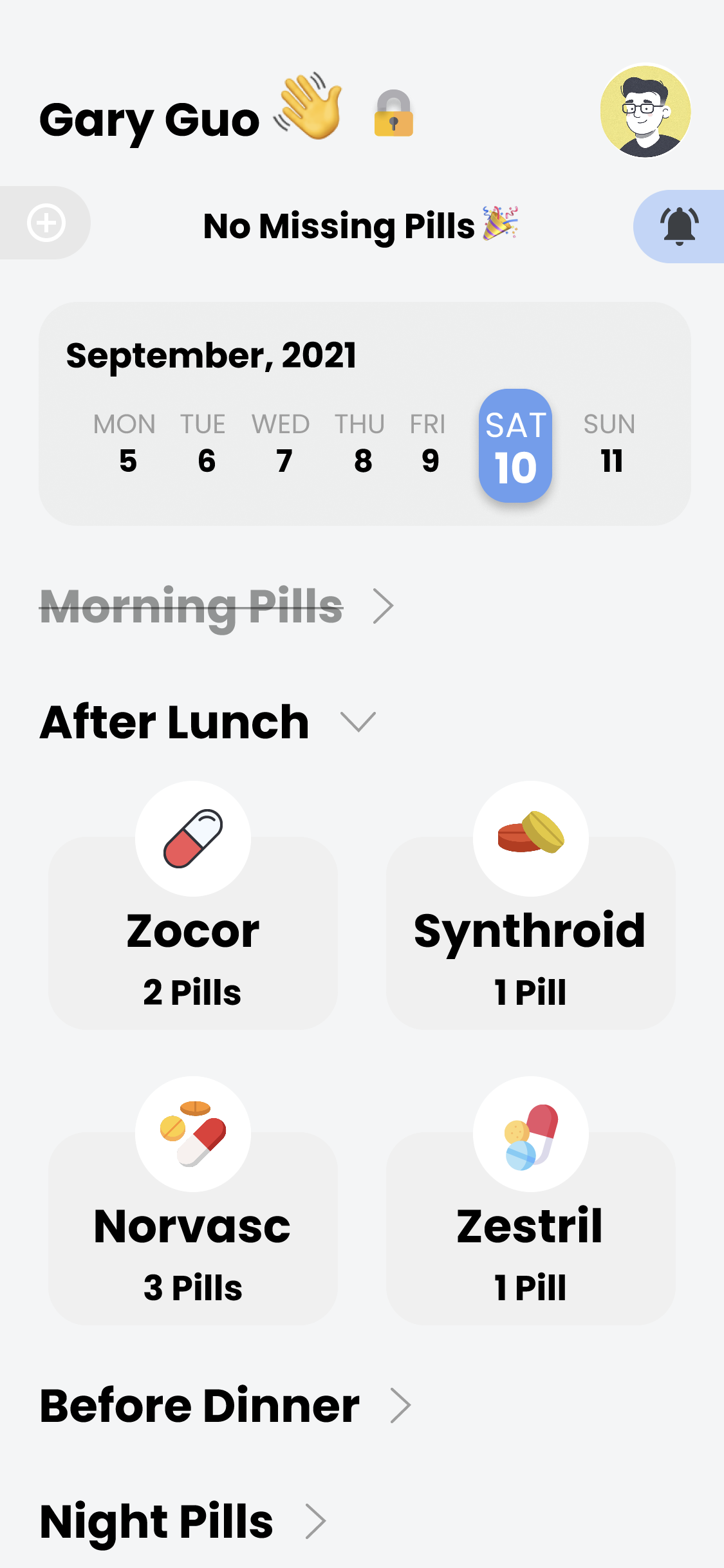
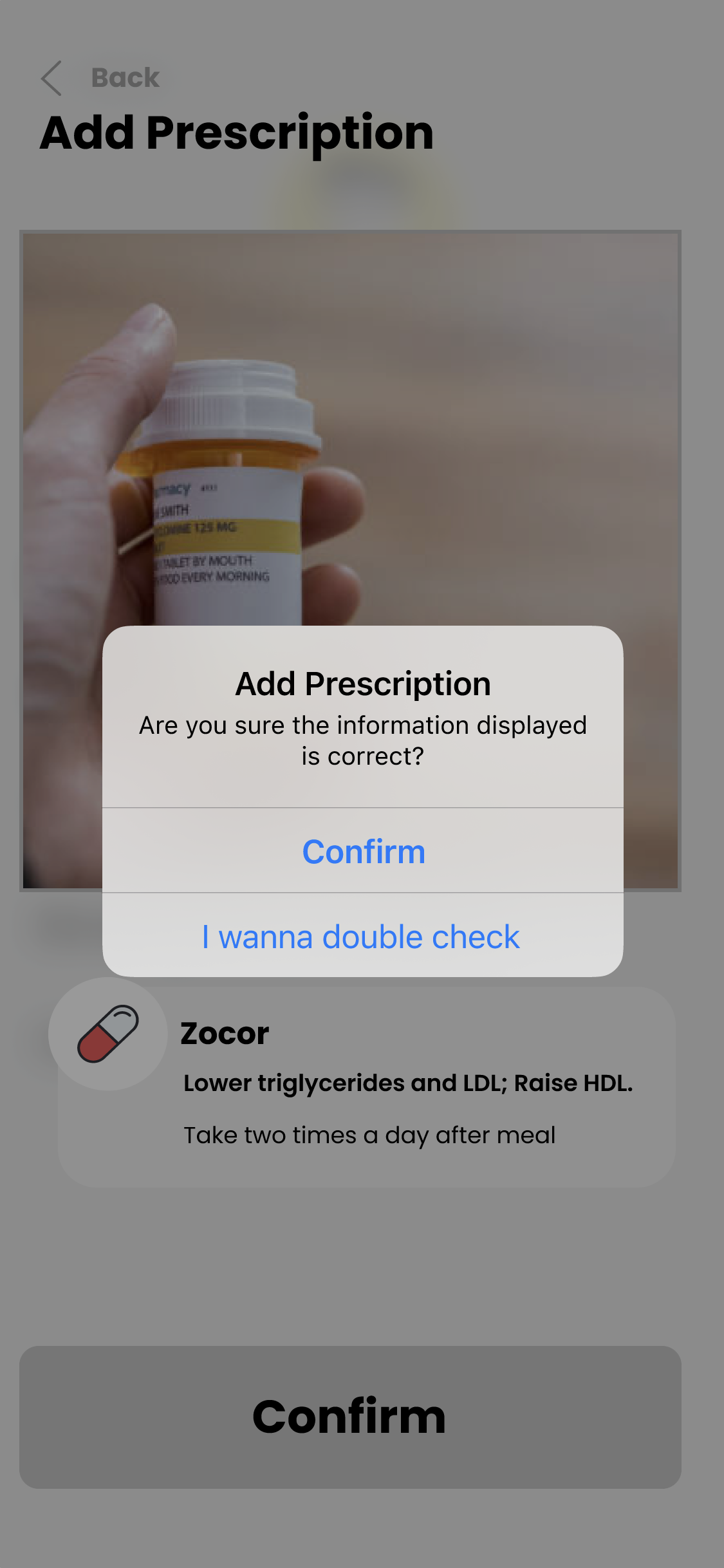
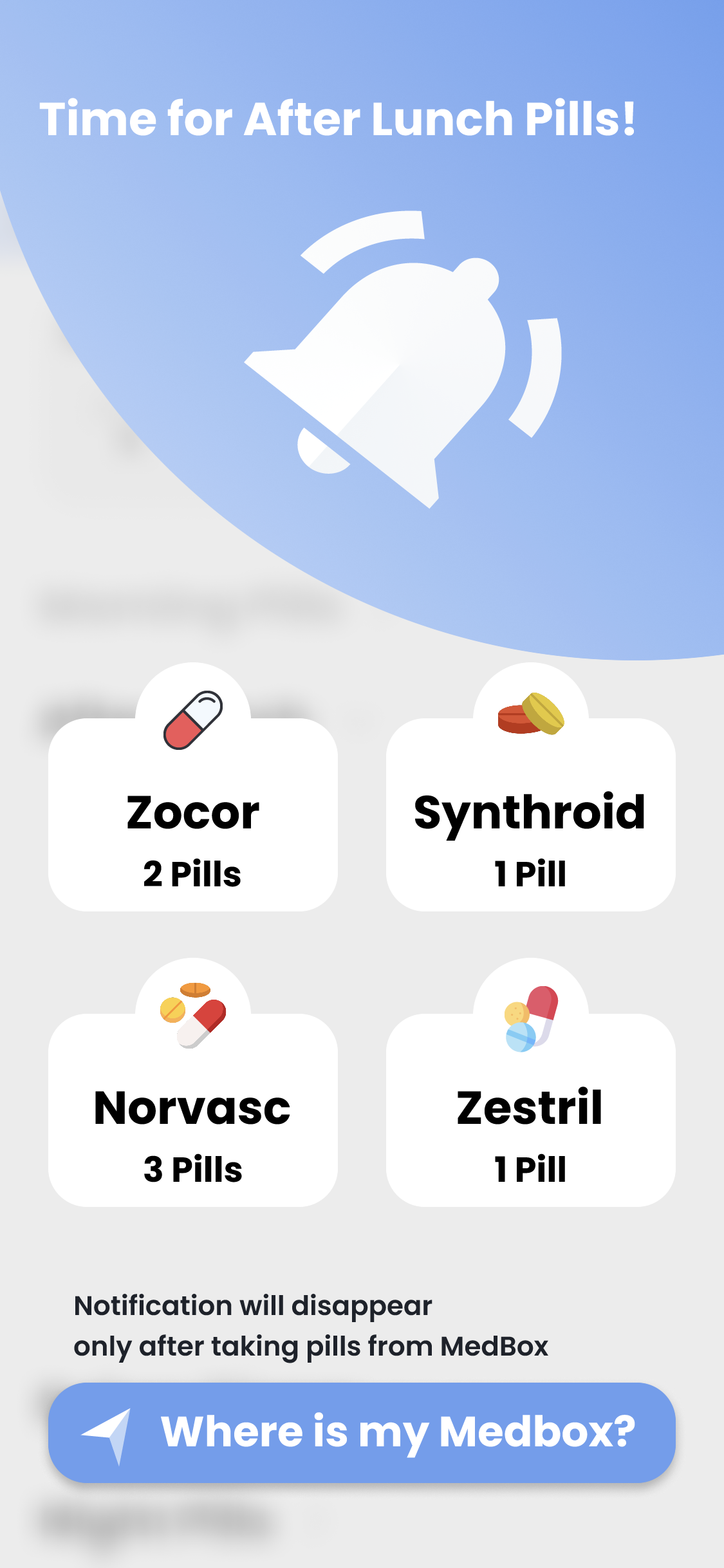
We have prototyped an intelligent medical box along with a mobile app as an assistant that helps patients record, remind and monitor taking medications, dosages, and frequencies. The physical medical box stores all pills, type by type, in each cell. The mobile app acts as the information center where all the information, such as dosage, frequencies, types, caregiver, and emergency contact information, are displayed, modified, and saved. The physical medical box has a container attached underneath to house all pills that need to be taken each time according to the information stored in the mobile app. The mobile app can alert patients when they need to take medications through rings and vibrations.
How we built it
We used Blender to build Medbox's 3-D model and Figma for the app model. We hope to take advantage of the Machine Learning technologies from TensorFlow or CoreML and text recognition technology to help import prescriptions into the Medbox and the mobile app. We also hope to connect with MyHealthOnline or MyChart so that information, including medication refill, new prescriptions, can be synced with the Medbox. That information will be hugely helpful for family members or healthcare providers to update the medications in the Medbox promptly.
Challenges we ran into
Working hardware and software remotely created a lot of challenges for the entire team. Due to the lack of resources, we could not build a physical prototype to demonstrate our ideas and technologies. We would love to work on the idea in the future. Understanding our target users - the Alzheimer's patients - is quite difficult for the entire team due to restricted health protocol.
Accomplishments that we're proud of & What We Learned
We are proud that we can create such a high-fidelity 3D model and intuitive and user-friendly UI/UX under such time constraints. We are delighted that we can raise public awareness for marginalized Alzheimer's patients. We are aware that providing well-rounded care for the patients is not an easy task and requires extreme meticulousness and attention to details. The team is proud that we can contribute to this medical realm by alleviating the burdens on healthcare providers and family members through technology.
What's Next for Medbox
For our next step, we hope to realize the 3D model as well as the mobile software so that we can conduct field tests to ensure we do provide tangible convenience for the patients, their family members and the caregivers. The team believes that idea can also be extended beyond Alzheimer's to a wider range of diseases so that more patients can enjoy the convenience.
Built With
- blender
- figma


Log in or sign up for Devpost to join the conversation.