-
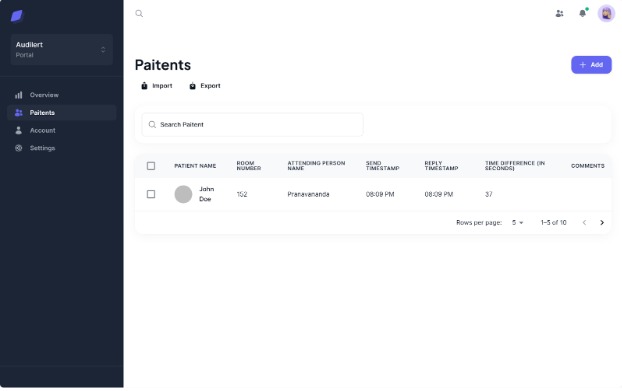
AdminUI
-
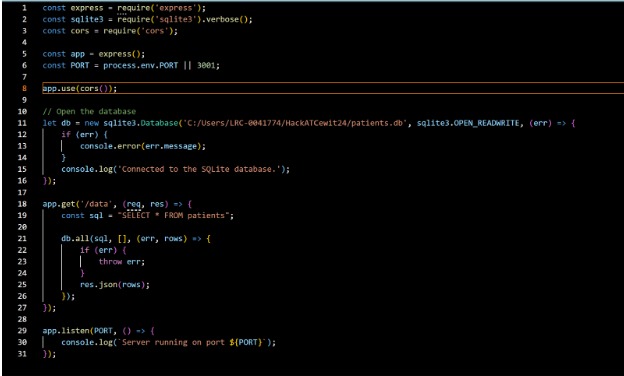
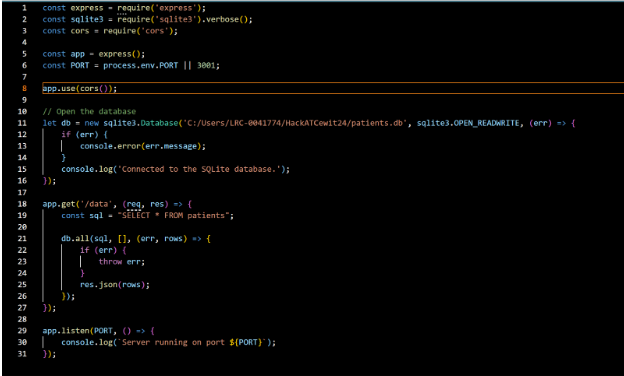
Code to host our DB on a server to be accessed by our frontend
-
-
-
-
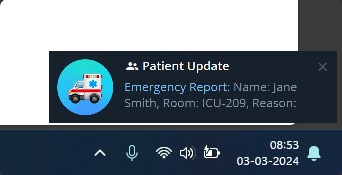
Desktop Notification
-
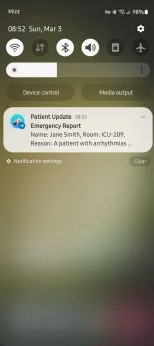
Mobile Notification
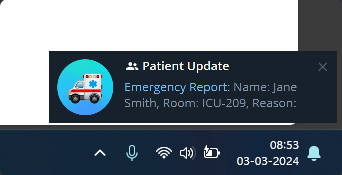
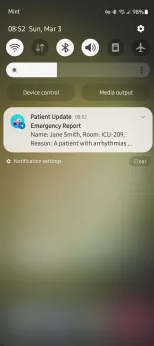
Reducing ICU Deaths with Innovative AI Technology
The Problem: Untapped Potential in Hospital Monitoring
Annually, an alarming rate of 13% of ICU deaths are attributed to delays in response from medical staff. This troubling statistic often stems from systemic challenges, including understaffing and the big costs associated with advanced monitoring software and equipment. Many healthcare facilities are left to rely on basic hardware without the benefit of proper accompanying software solutions, risking patient safety and lives.
Our Mission: Transformative Software for Life-Saving Alerts
Our project, Audilert, aspires to bridge this critical gap with a cost-effective, powerful software solution. Audilert is designed to analyze the beeps emitted by existing medical equipment and interpret these signals to notify medical professionals in real-time in the event of a medical emergency. Through a combination of Artificial Intelligence (AI) and coded algorithms, our software distinguishes sound signals, decoding them to identify potential health crises swiftly and accurately.
How It Works: Technology Behind Audilert
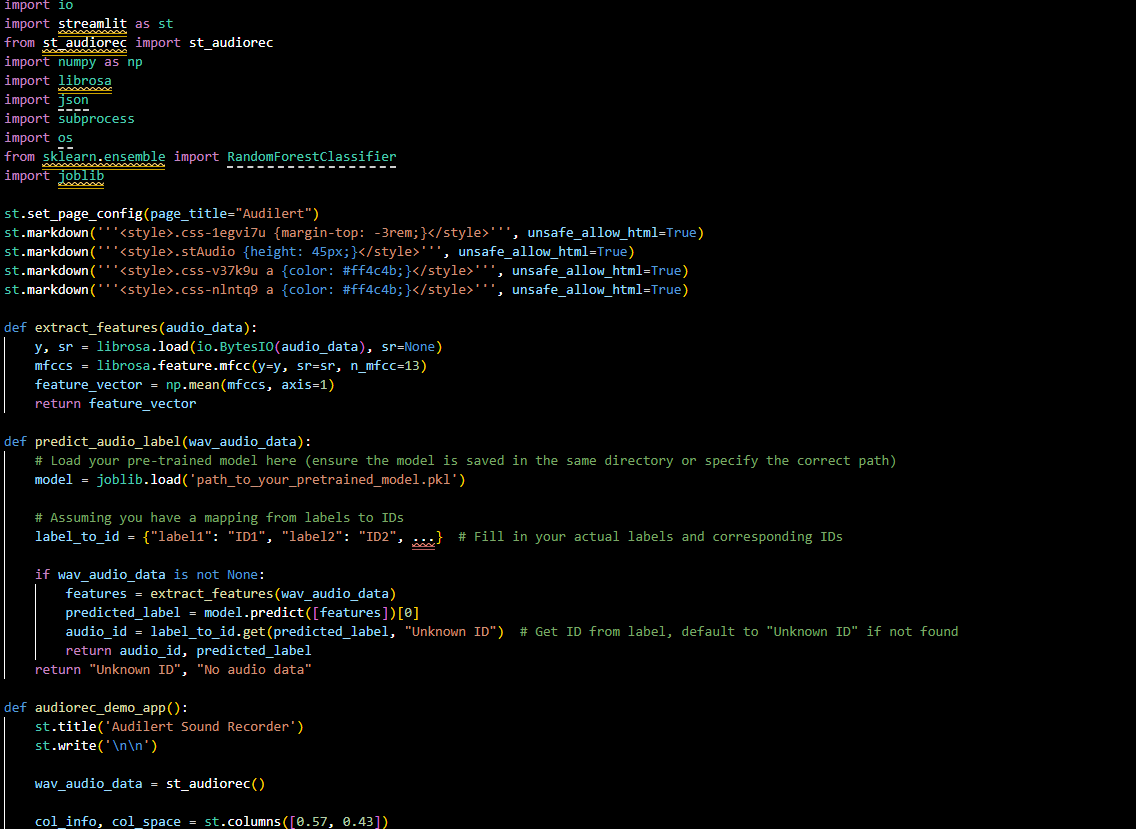
To achieve this, we wenton a development journey utilizing a mix of cutting-edge and accessible technologies:
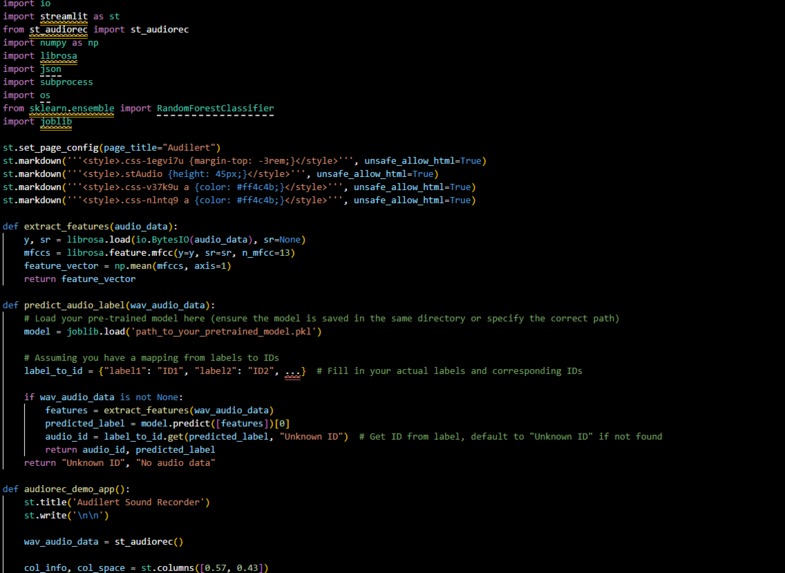
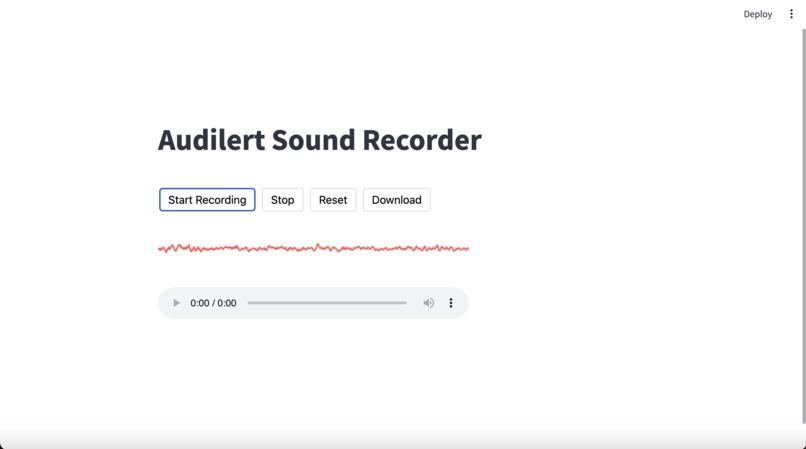
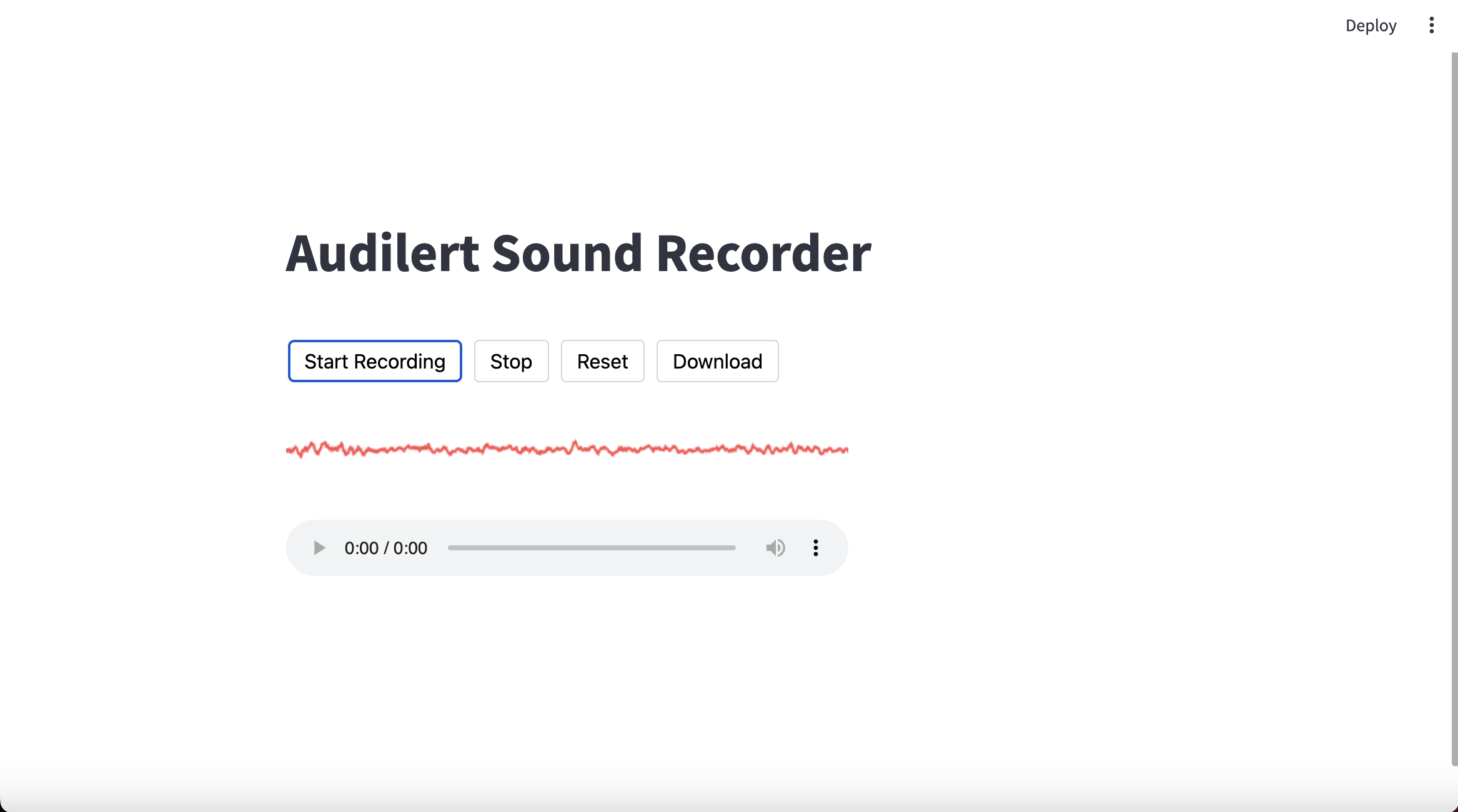
- Streamlit: Enabled us to swiftly develop and deploy an intuitive web application interface for real-time audio analysis.
- Python and Librosa: A robust duo for converting and analyzing audio waveforms, essential for accurate medical signal interpretation.
- Machine Learning: Our custom-trained models analyze medical equipment's beeps, offering reliable diagnostics insights.
- Telegram Bot: A novel use of instant messaging for immediate notification of medical staff based on urgency and critical insights from our ML model.
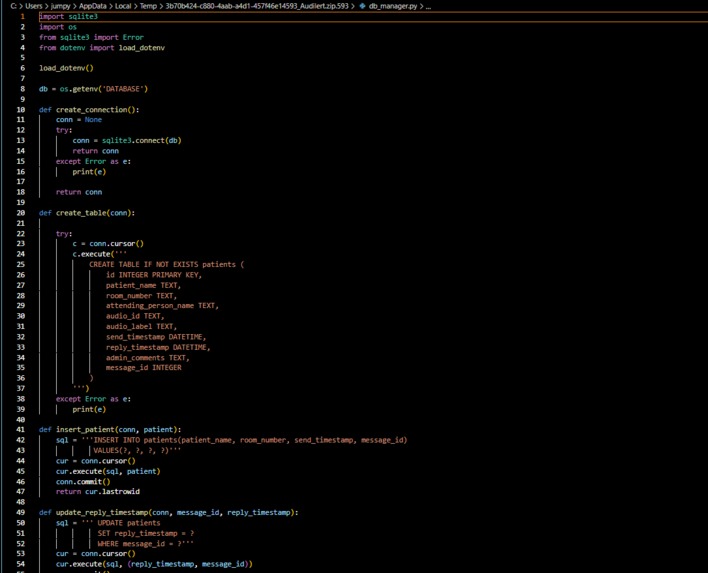
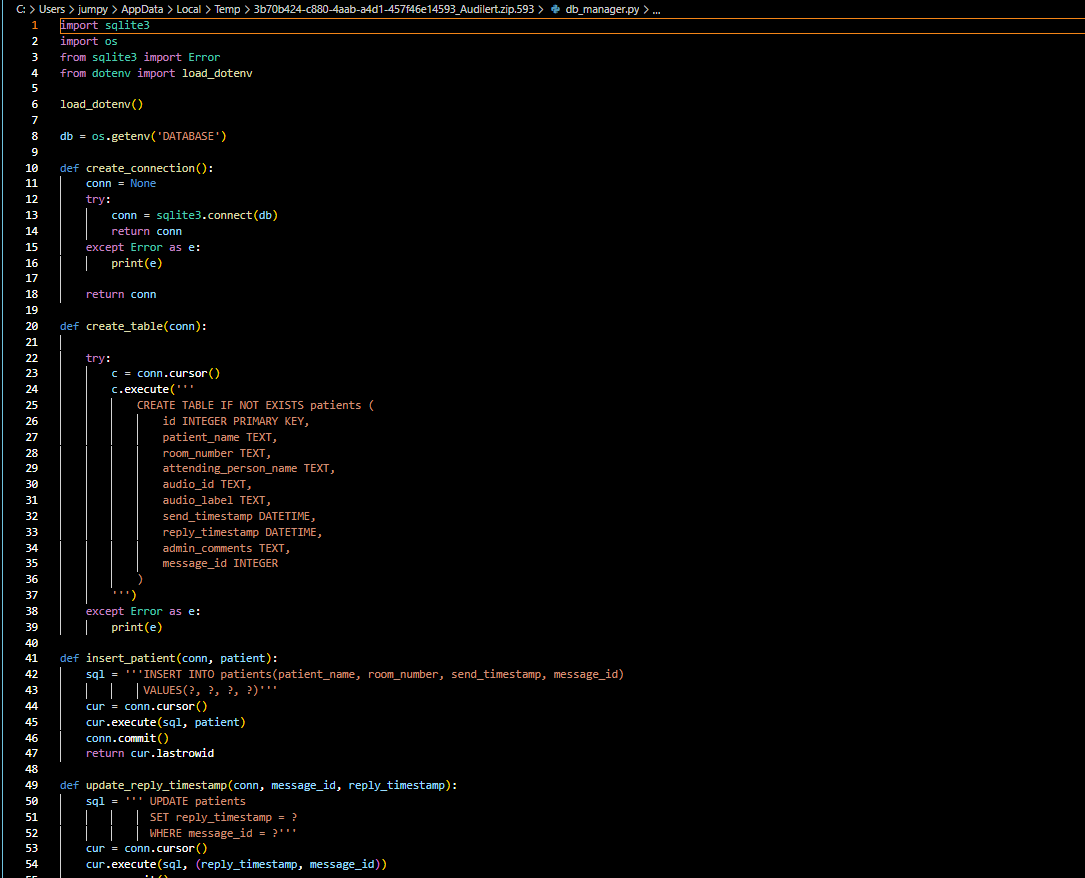
- SQLite Database: Facilitates the secure storage of patient records, staff notifications, and response metrics to ensure accountability and continual improvement of patient care.
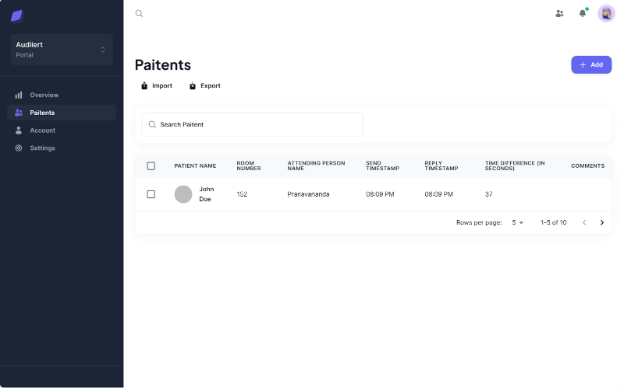
- React: Utilized for our frontend AdminUI. Allows for and intuitive view of the backend software and tracks timing between alerts and responses
Challenge and Triumphs
- Audio Analysis: Traditional audio classification models failed in our unique context due to limited training data. This led to a great period of research, trial, and iteration until we could tailor a model suited to our needs.
- Deployment Hurdles: Integrating our Python-based audio analysis into a web application presented significant hurdles. Time constraints led us to pivot to Streamlit, enabling faster deployment without sacrificing functionality.
Our Journey: Development and Learning
Our development process was ambitious from the start:
- Machine Learning Classifier: Recognizing the pivotal role of accurate audio analysis, we prioritized the development of our ML classifier.
- Diagnostic Code Mapping: Ensuring our classified labels correspond accurately to diagnostic codes was a fundamental step for precise medical alerts.
- Backend Integration: Seamlessly integrating our classification with our database was essential for the timely notification of healthcare professionals.
- Admin UI: We employed React, JS, MaterialUI, and Node.js to craft an interactive, user-friendly admin interface, enabling healthcare professionals to make backend adjustments easily and intuitively.
Accomplishments, Learning, and Future Directions
Accomplishments We're Proud Of:
- Developing a novel solution to a pressing healthcare issue, utilizing a blend of technologies in innovative ways.
- Overcoming significant technical challenges, particularly around audio analysis and machine learning.
What We Learned:
- The importance of adaptability in the face of technical and time constraints.
- The power of team collaboration in overcoming complex, multifaceted problems.
What's Next for Audilert:
- Expanding our database and refining our machine learning model with a larger dataset for even greater accuracy.
- Exploring partnerships with hospitals for real-world testing and feedback.
Our journey with Audilert is only just beginning. We envision a future where no lives are lost due to delays in medical response, propelled by the visionary integration of technology in healthcare.
Built With
- express.js
- javascript
- librosa
- machine-learning
- materialui
- node.js
- python
- react
- sqlite
- streamlit


Log in or sign up for Devpost to join the conversation.