-
-
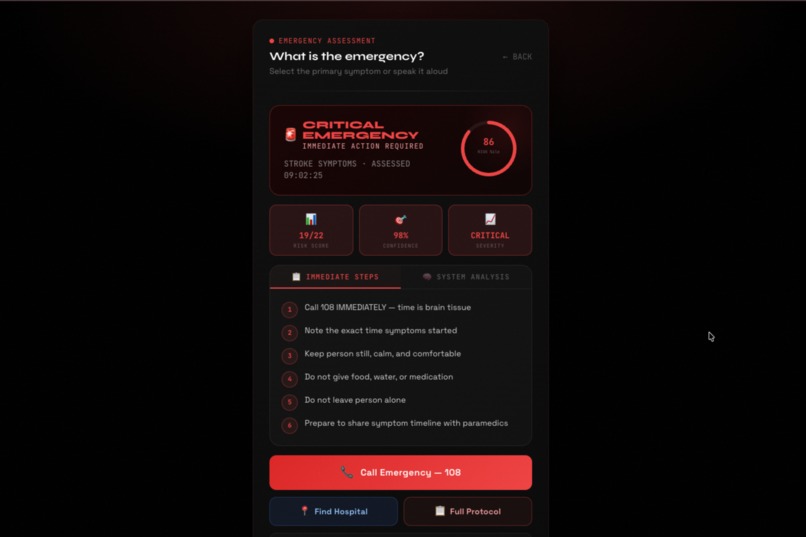
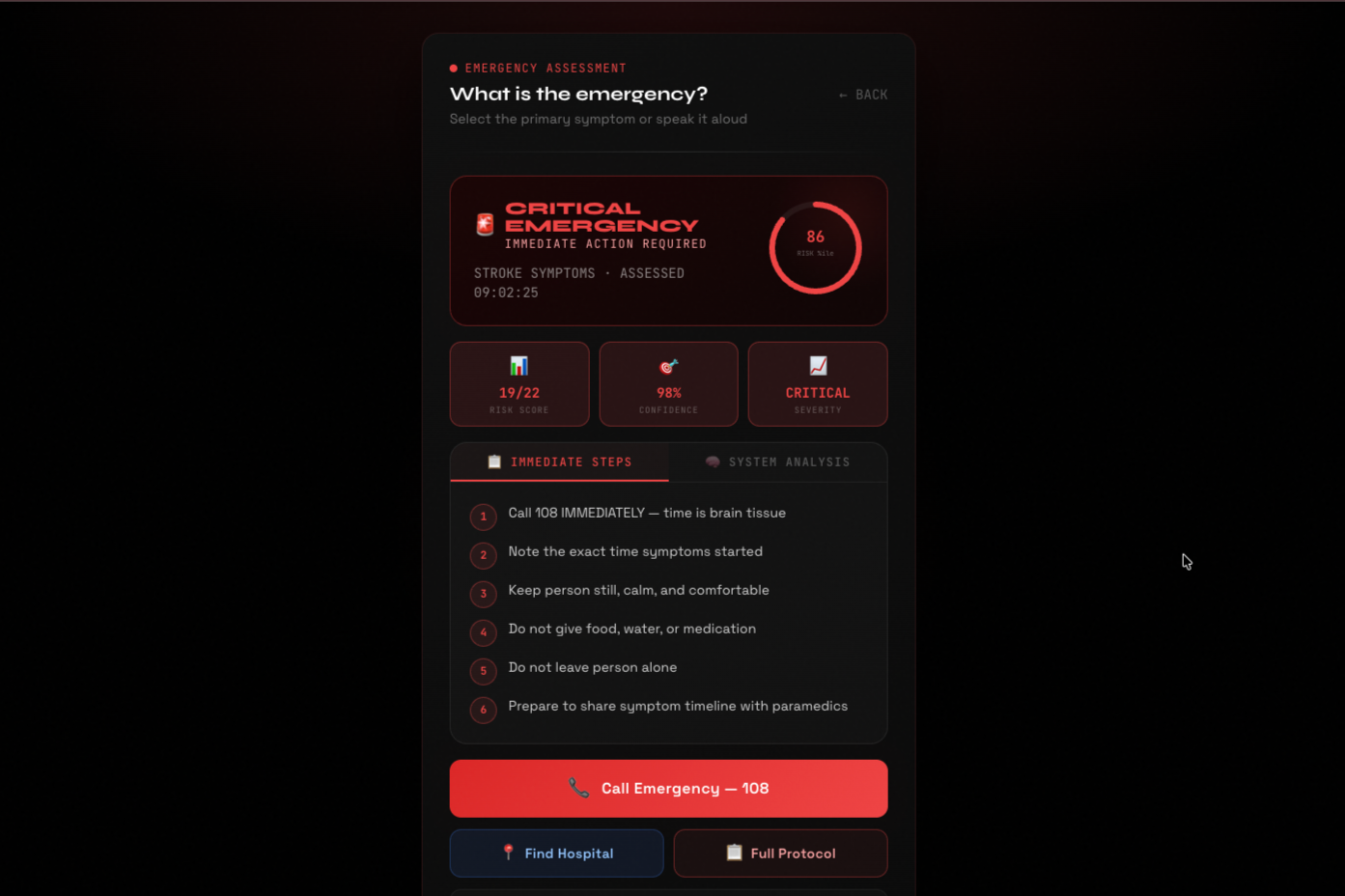
CRITICAL Stroke detected , time critical FAST protocol with full explainability in under 30 seconds.
-
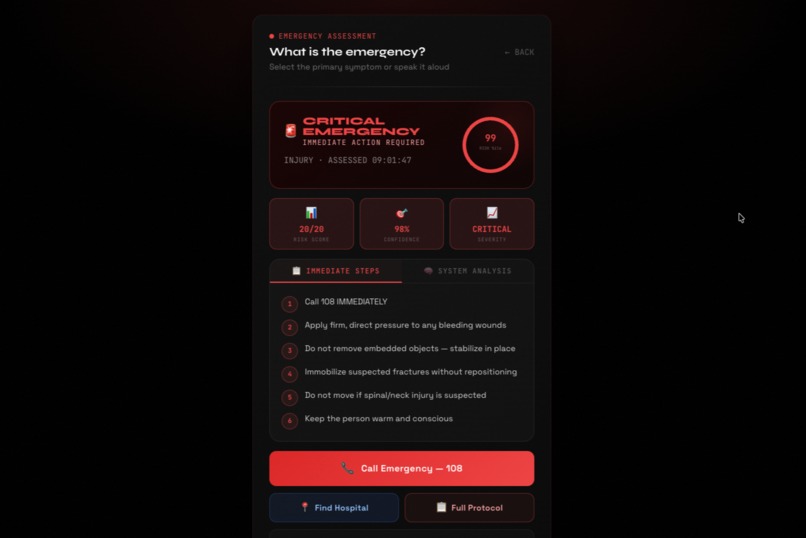
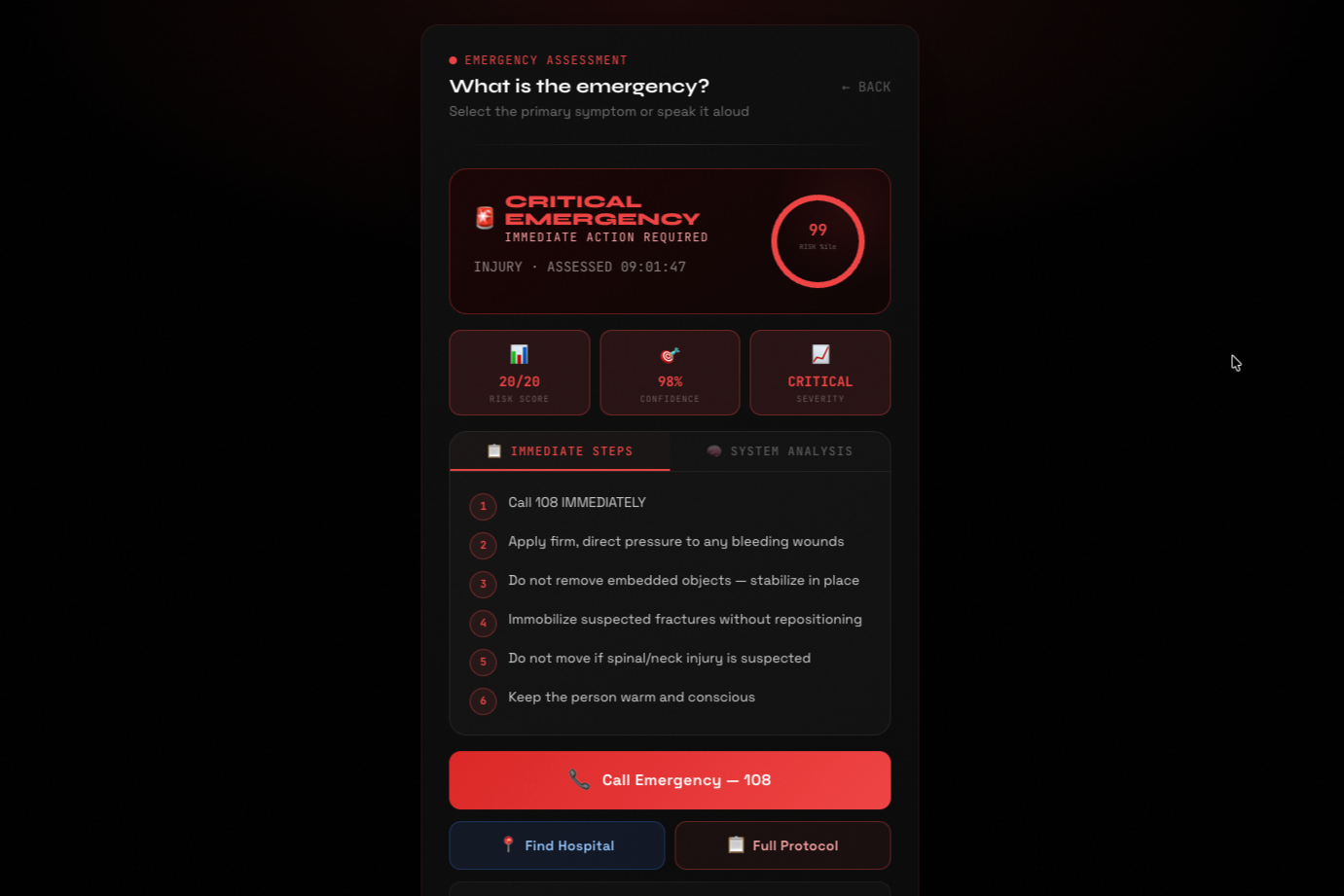
CRITICAL Injury : Perfect 20/20 risk score trauma protocol generated instantly with zero ambiguity.
-
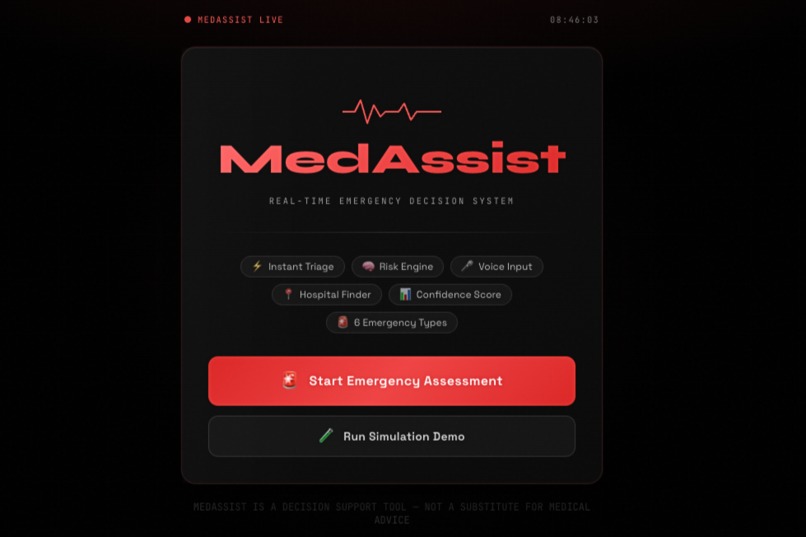
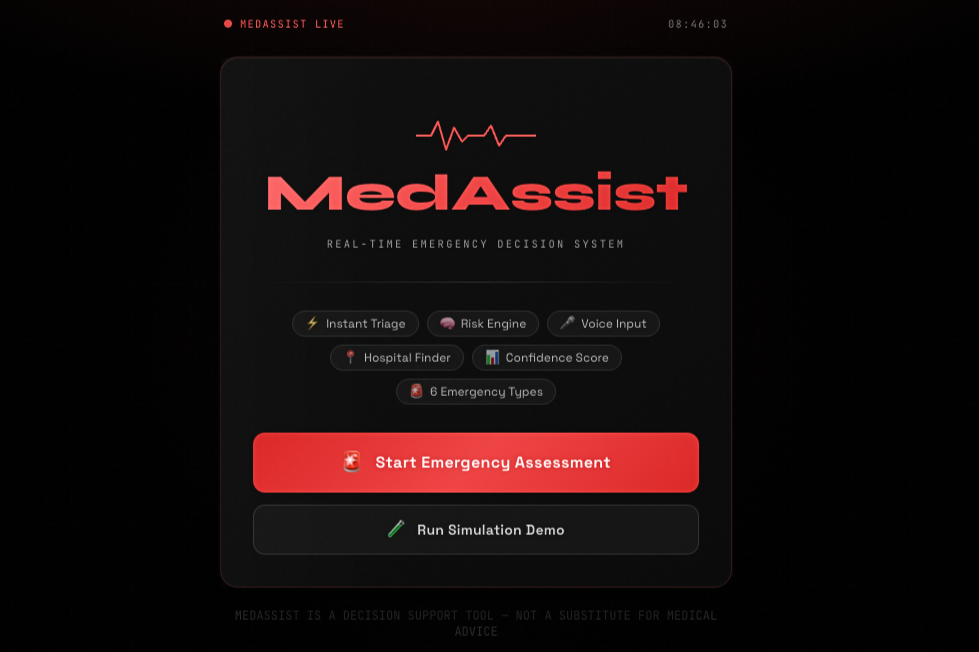
Landing page : From symptom to life-saving decision in under 30 seconds deployed live, works right now.
-
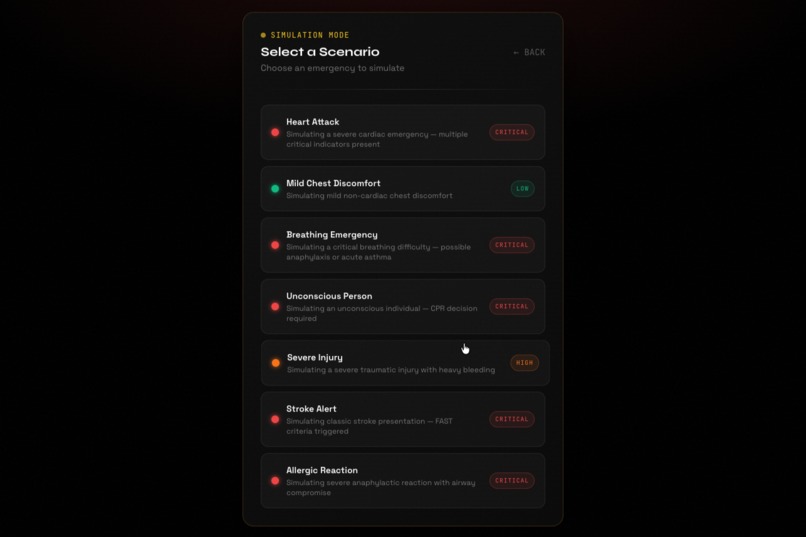
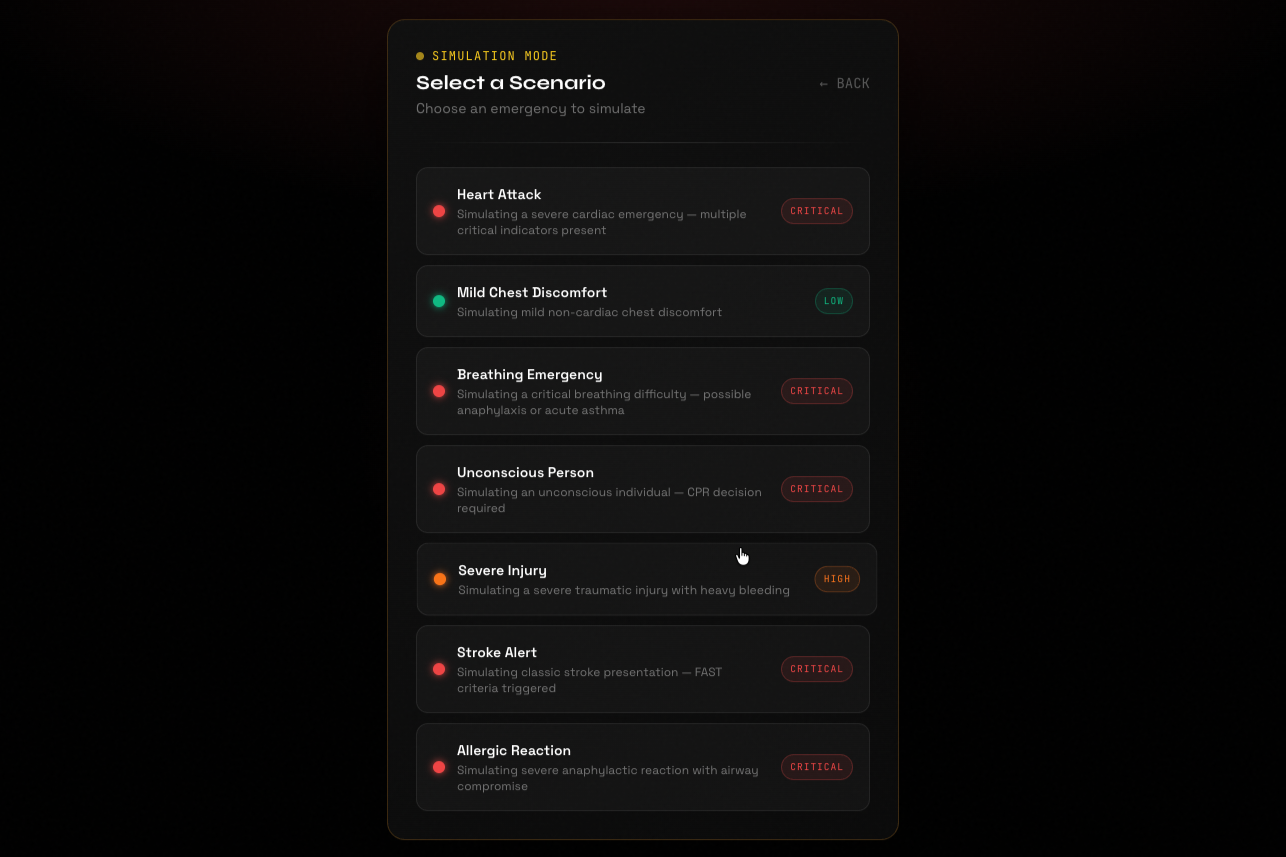
Simulation Mode: 7 deterministic emergency scenarios, from CRITICAL cardiac events to LOW risk cases.
-
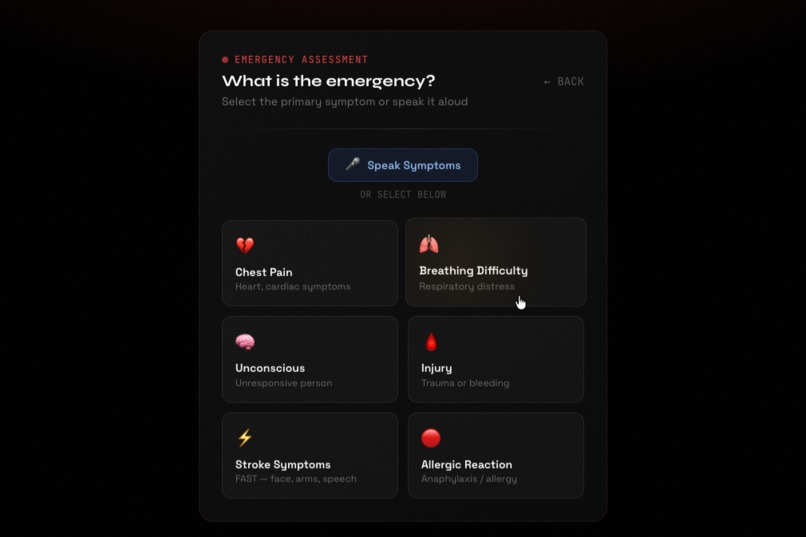
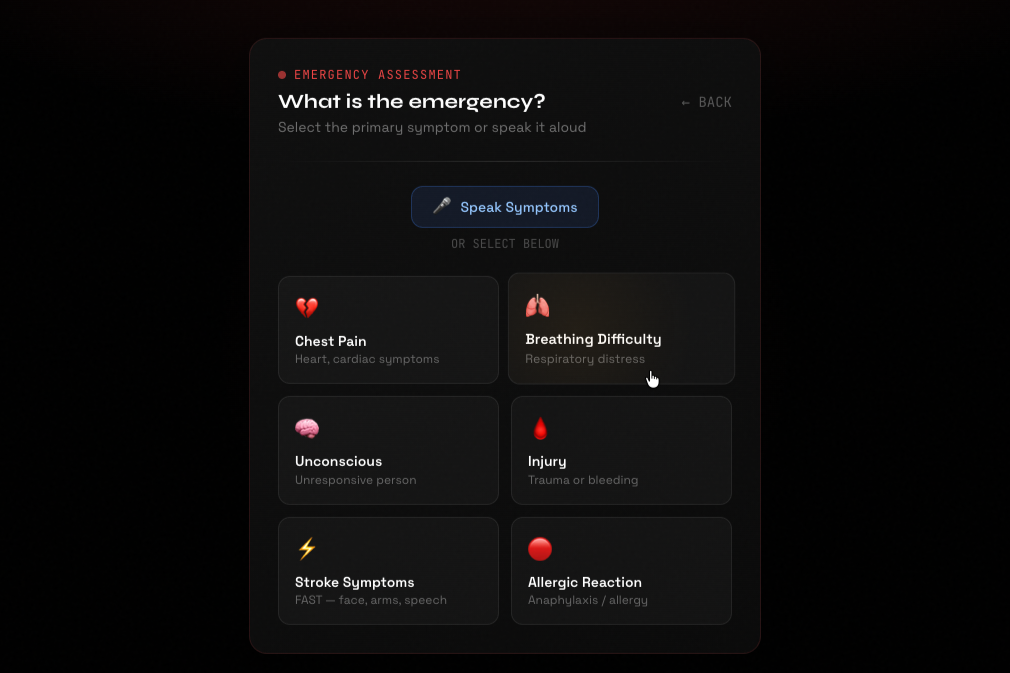
Symptom Selector: 6 emergency categories, voice input, instant tap to triage, no prior knowledge needed.
-
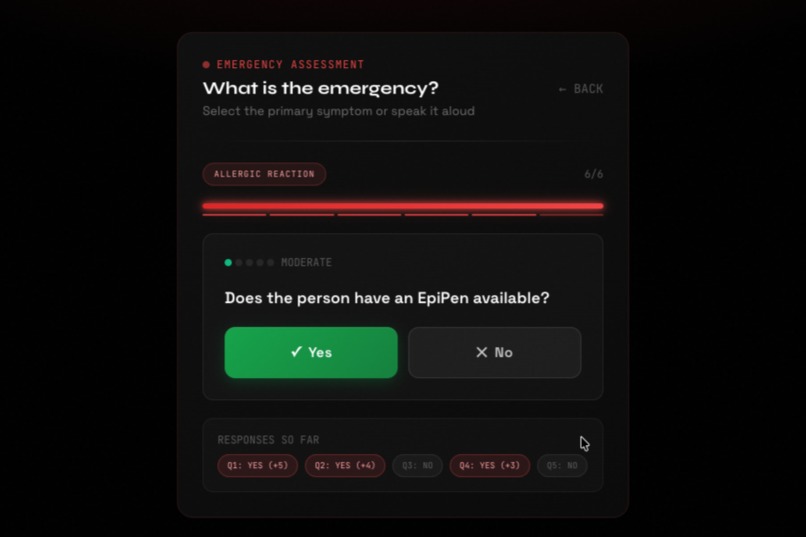
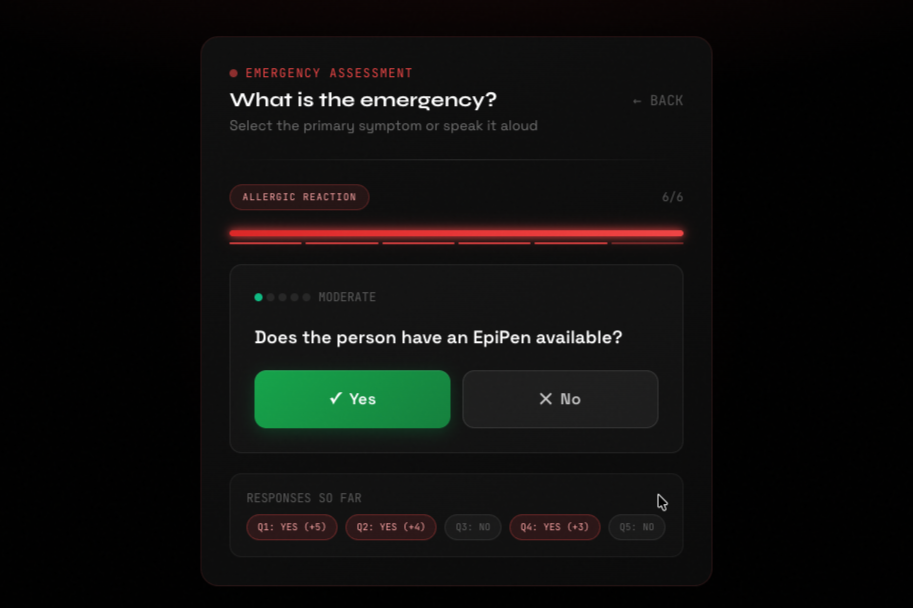
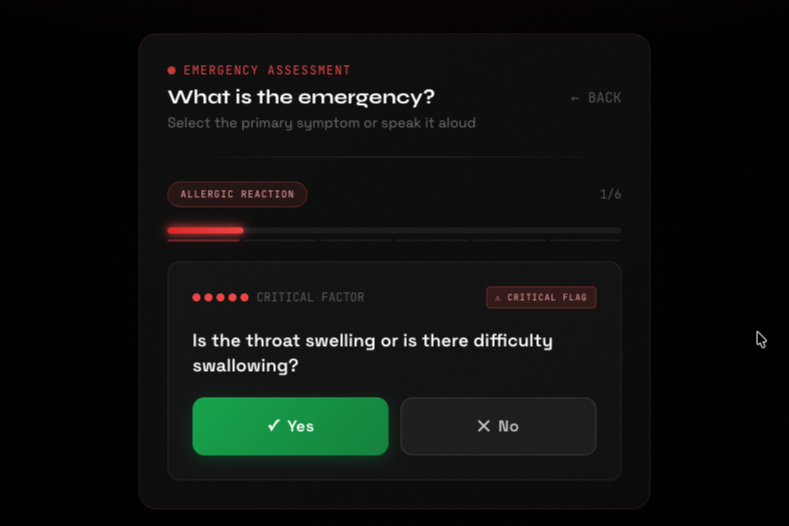
Question Flow: Adaptive weighted questions with live response tracking, every answer builds the risk picture.
-
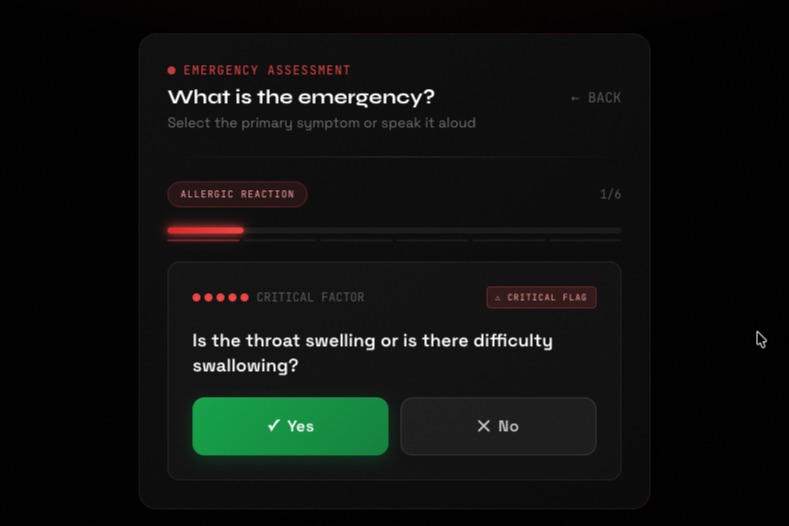
Critical flag detection: high weightage severity factors that heavily influence the final risk score and classification.
-
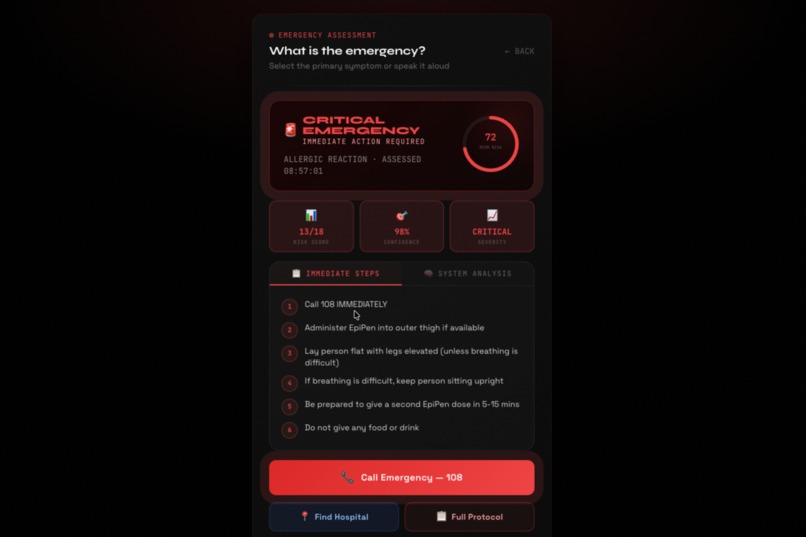
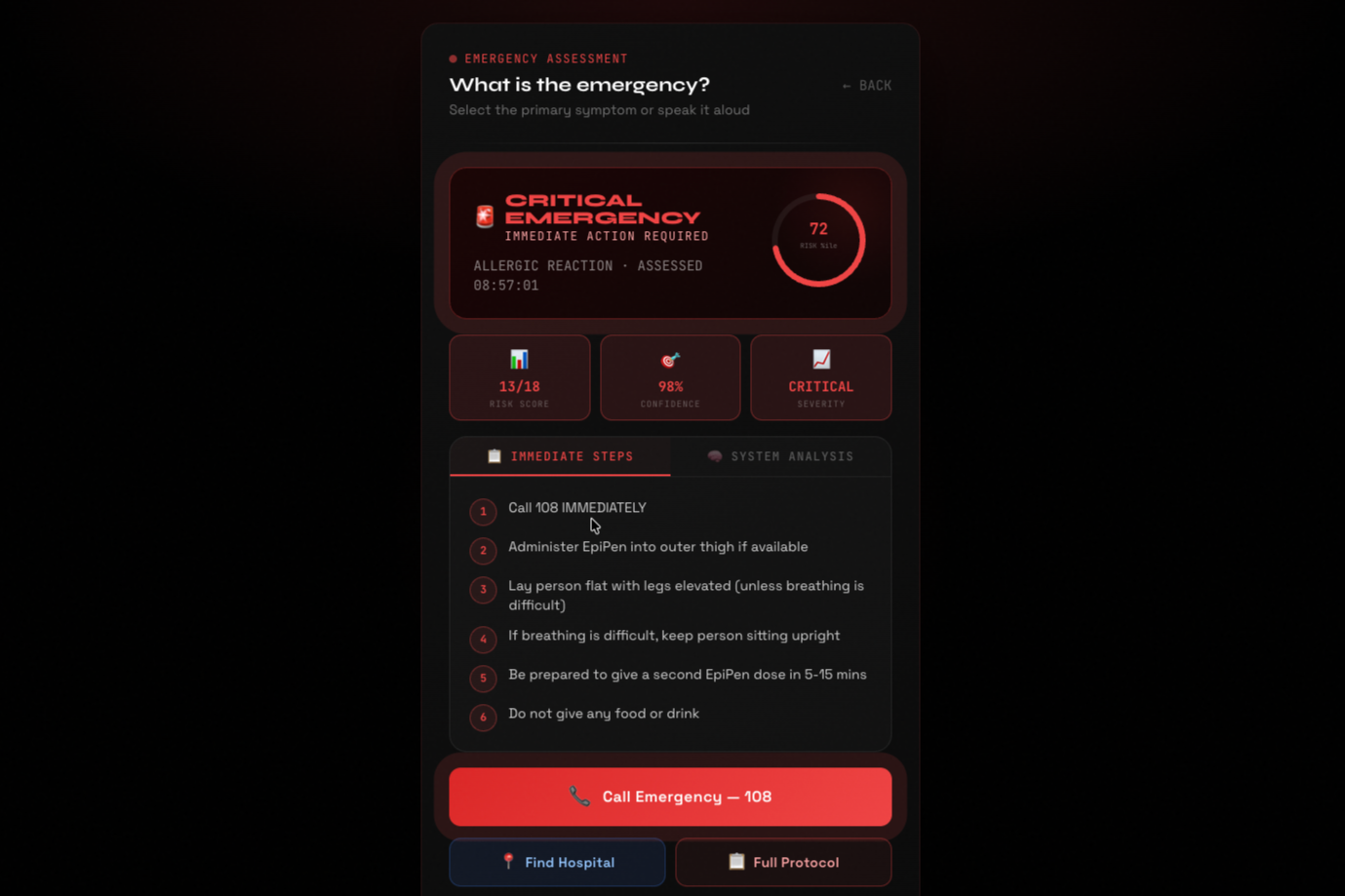
CRITICAL Allergic Reaction detected 98% confidence, EpiPen protocol delivered, 108 call ready in one tap.
-
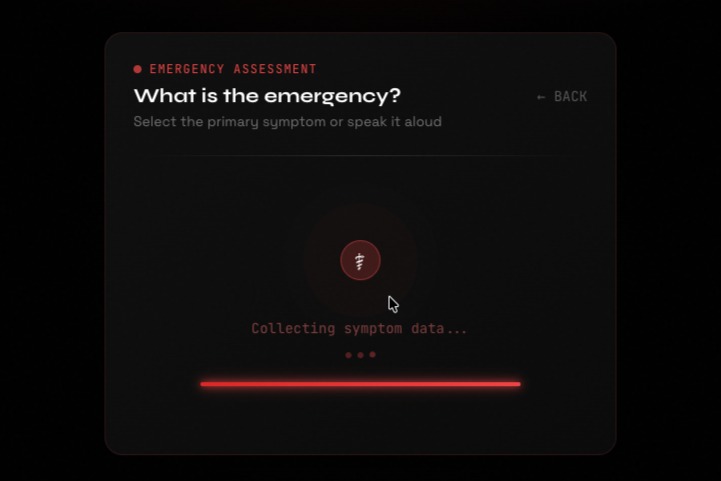
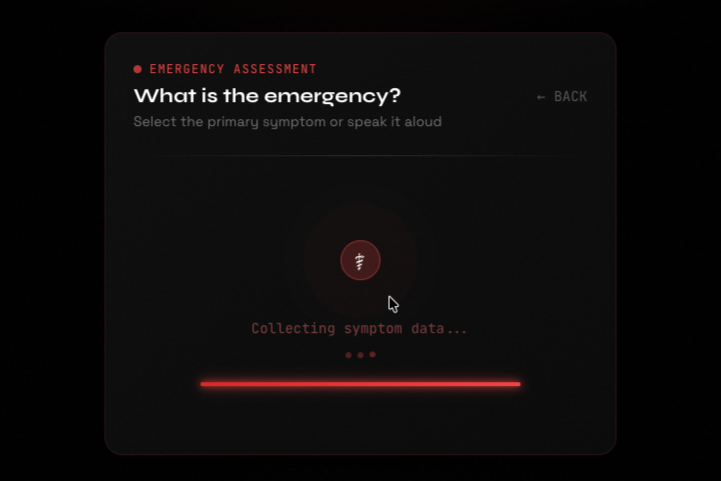
Loading Page : Real time weighted risk analysis running before your emergency decision is delivered.
-
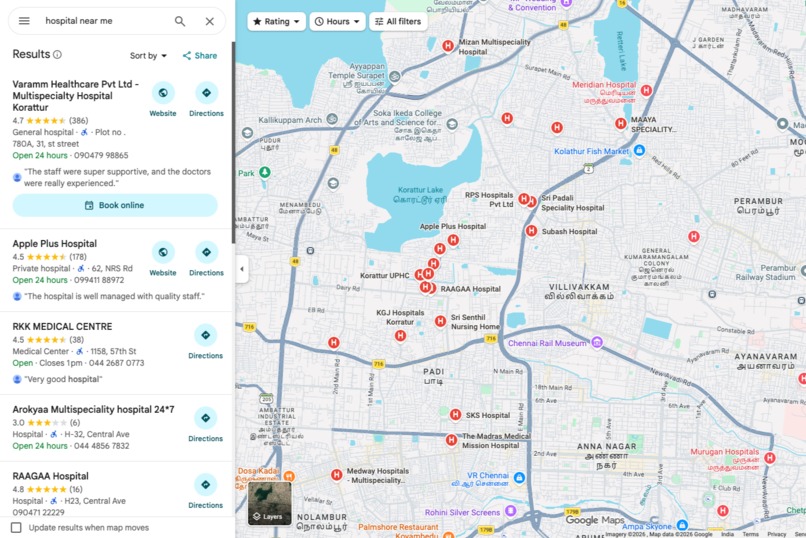
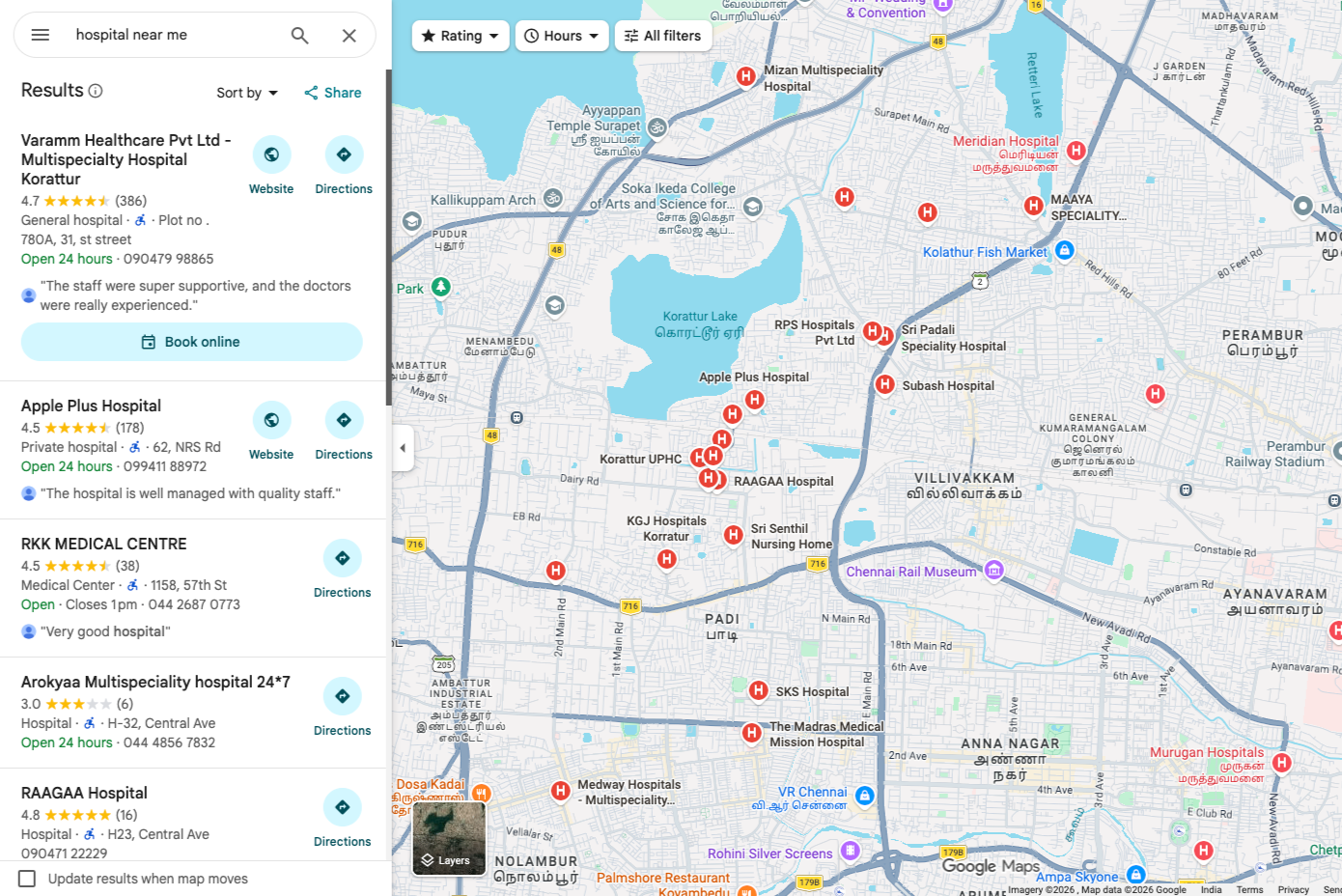
Hospital Finder: One tap to nearest hospital, real location-based emergency integration, not just a redirect.
🚨 About the Project :
💡 Inspiration
In emergency situations, the biggest failure is not the absence of help , it is the delay in making the right decision.
People panic. They hesitate. They are unsure what to do next.
Most existing solutions act as information providers , they list symptoms or possibilities, but do not guide immediate action.
This gap between symptom → decision → action inspired MedAssist.
«The goal was to build a system that guides users clearly and instantly when every second matters.»
⚙️ How We Built It
MedAssist is designed as a real-time decision support system that evaluates symptoms through a structured and explainable process.
The system follows a clear pipeline:
User Input → Structured Questions → Risk Evaluation → Decision → Action
🧠 Decision Engine
At its core, MedAssist uses a weighted risk evaluation model:
- Each response contributes to a cumulative risk score
- Higher risk symptoms carry greater weight
- The final score is mapped to severity levels:
- LOW
- MEDIUM
- HIGH && CRITICAL
Mathematical Representation (Conceptual)
Risk Score = sum of (weight × response) across all questions
Where:
- weight = importance of each symptom
- response = user input (yes/no mapped to 1/0)
This ensures that severity is quantified rather than guessed, making the system consistent and interpretable.
🔄 Structured Question Flow
The system uses a guided sequence of targeted questions:
- Each question captures clinically relevant signals
- The flow is consistent to ensure reliability
- Users are guided step by step without requiring medical knowledge
📊 Explainable Output
MedAssist emphasizes transparency and clarity:
- Displays risk level clearly
- Provides a confidence estimate
- Explains reasoning behind the result
- Suggests immediate next steps
🎨 Emergency-Focused Interface
The UI is designed for high stress scenarios:
- High-contrast severity colors (Green / Yellow / Red)
- Minimal interaction steps
- Clear layout and typography
- Smooth transitions to simulate real-time analysis
🌐 Deployment & Integration
- Deployed using Vercel
- Built with Next.js + TypeScript
- Integrated real-world actions:
- Emergency call guidance (108)
- Nearby hospital discovery via Google Maps
🧗 Challenges We Faced
Designing a Balanced Risk Model Ensuring meaningful scoring without oversimplification required careful tuning of weights.
Clarity Under Stress The system had to be usable in panic conditions — simplicity became critical.
Maintaining Explainability Avoiding black-box logic while still producing useful results was a key challenge.
Real-Time Experience Design Balancing responsiveness with perceived intelligence required careful UI timing.
📚 What We Learned
- Structured decision systems are more reliable than generic symptom checkers
- Explainability increases user trust significantly
- UX must adapt to cognitive load during emergencies
- Simplicity, when engineered correctly, is powerful
🚀 Final Outcome
MedAssist is not just a symptom checker.
It is a system that:
- Evaluates symptoms systematically
- Quantifies severity clearly
- Guides users with actionable steps
All within seconds.
«It transforms uncertainty into clear, reliable decisions , when every second matters.»
Note: MedAssist is designed for mobile-first emergency use , voice input is supported on both mobile and desktop via the Web Speech API. For the most reliable speech recognition, a smartphone is recommended, as mobile browsers handle microphone permissions more consistently than desktop. Manual symptom selection is always available as a fallback and works instantly on all devices.
Built With
- framer-motion
- next.js
- next.js-api-routes
- node.js
- react
- tailwind-css
- typescript
- vercel
- web-speech-api


Log in or sign up for Devpost to join the conversation.