Inspiration
Access to healthcare is not always guaranteed. Emergencies can occur suddenly, doctors may not be available during holidays or late hours, and many regions still face limited medical services. Even for minor health concerns, people often need quick guidance and reassurance. This project was inspired by the idea that while artificial intelligence cannot replace doctors, it can help bridge critical gaps by offering timely, structured support when professional medical care is not immediately accessible.
What it does
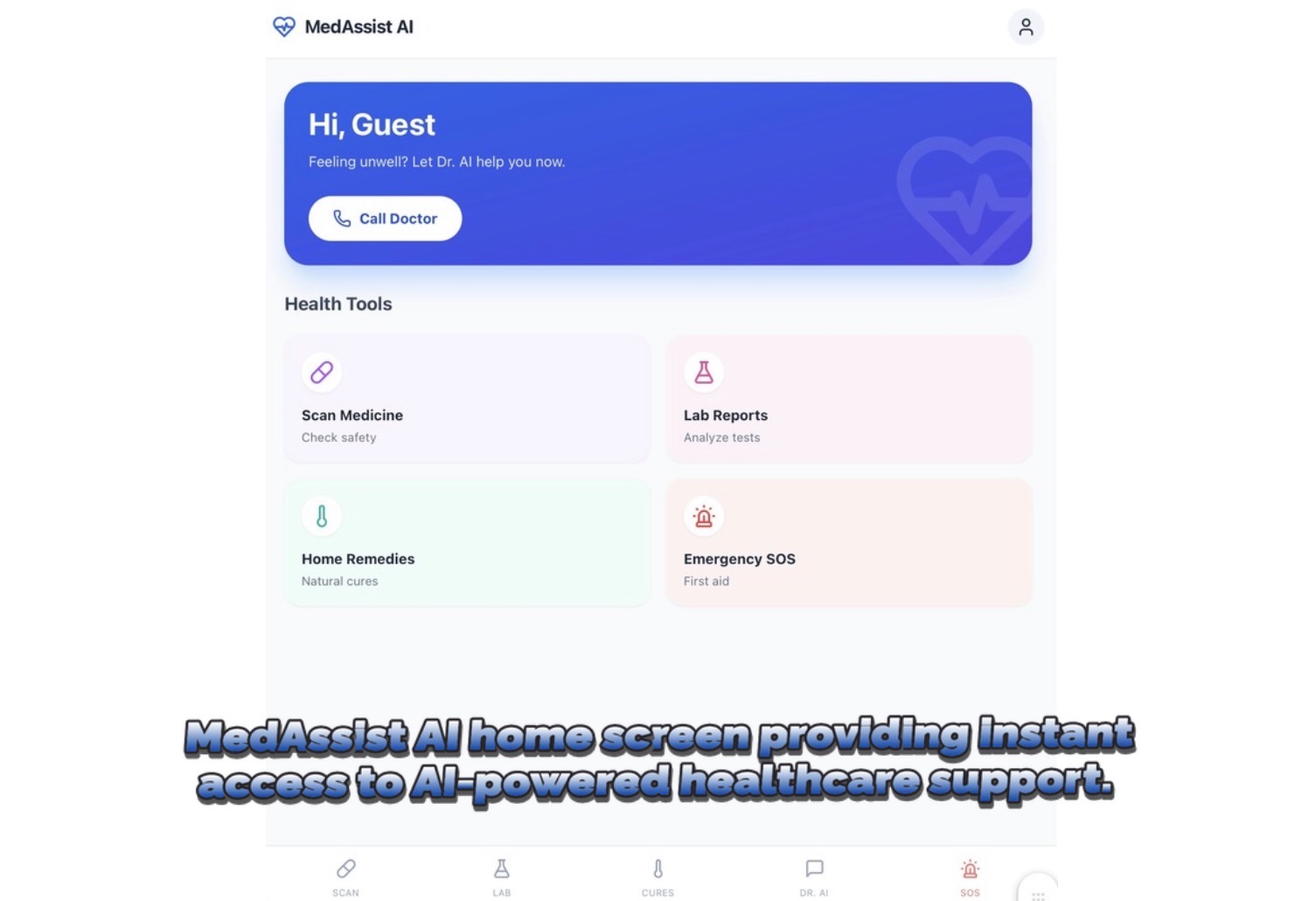
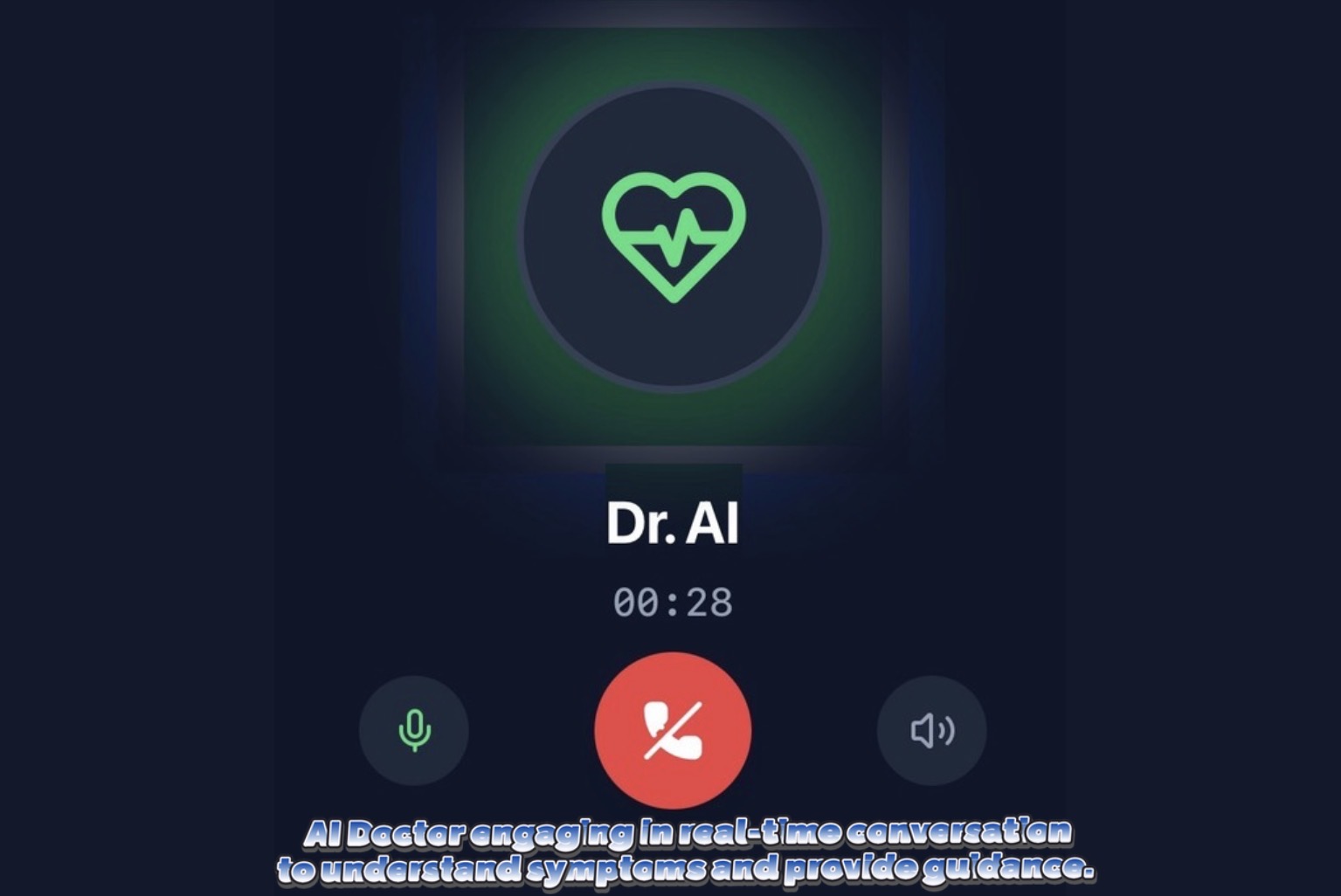
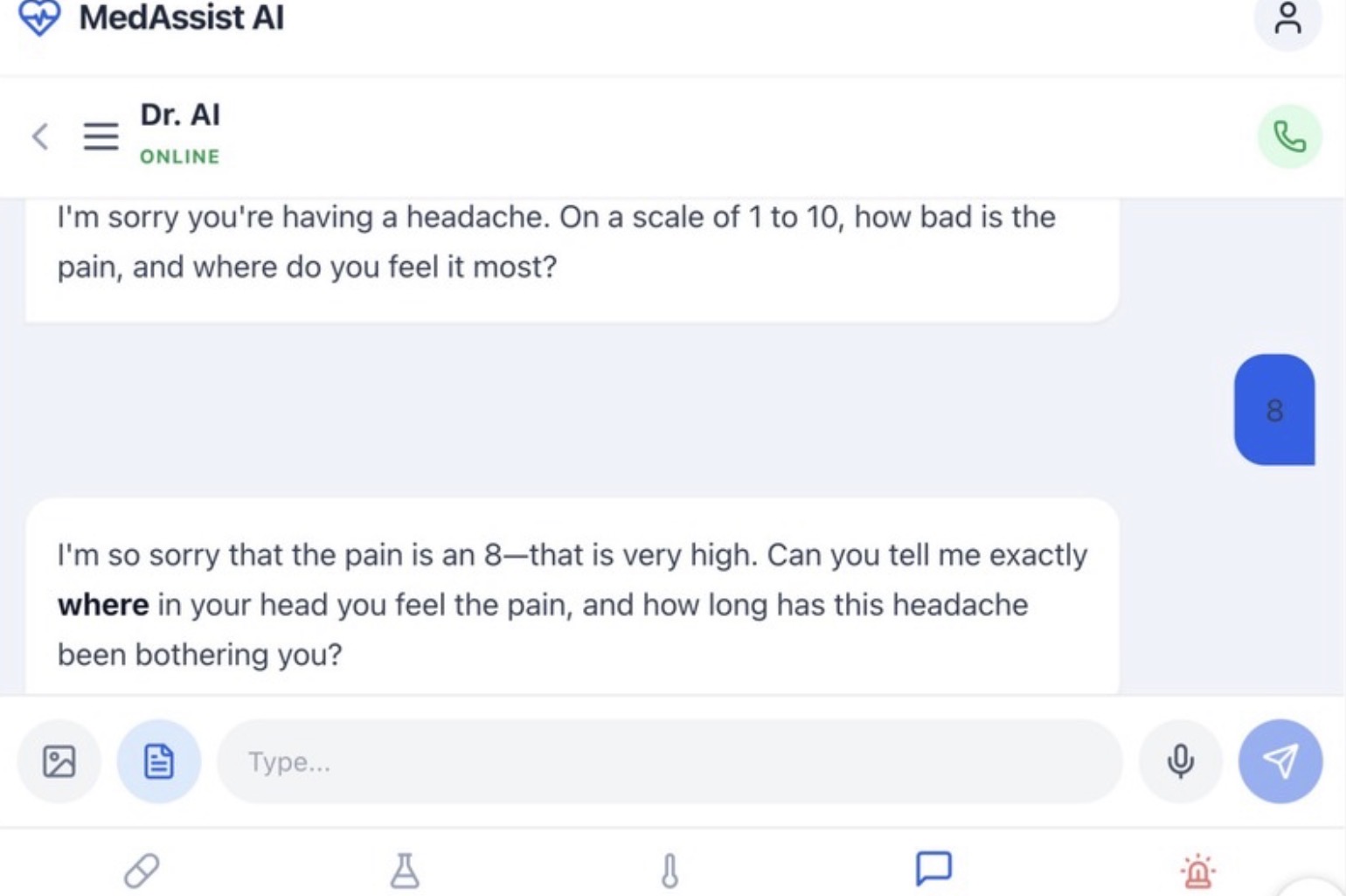
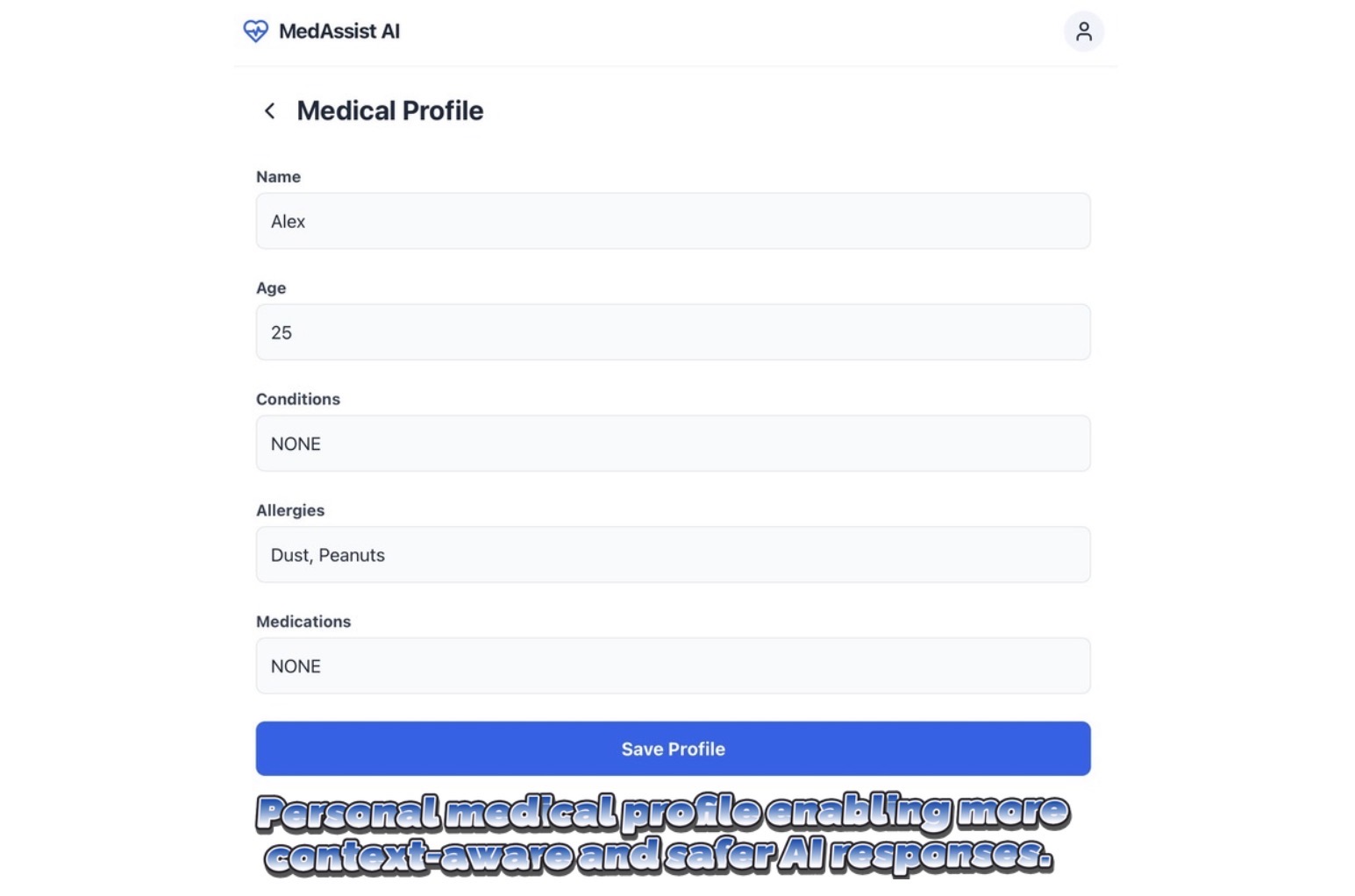
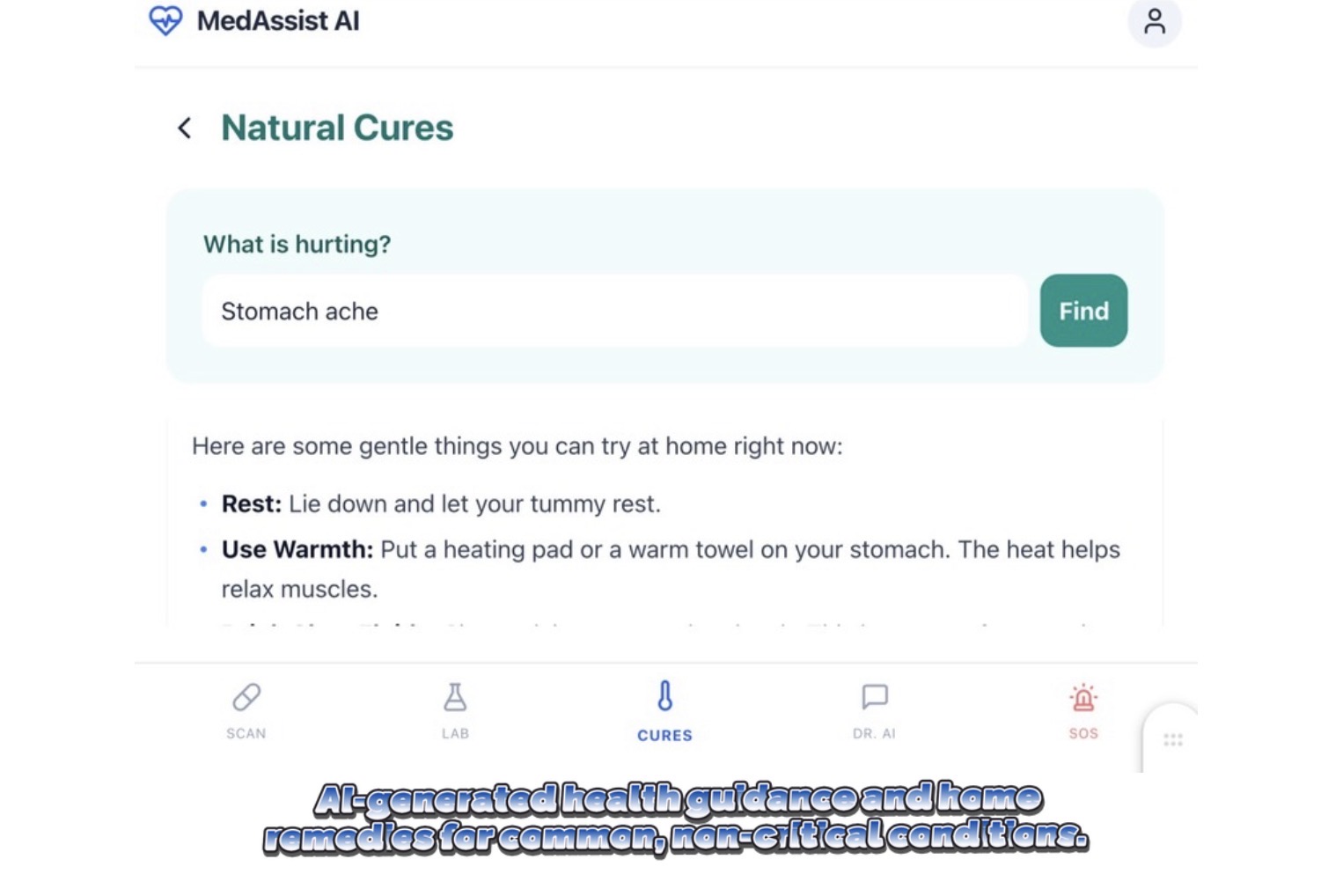
This project is an AI-powered healthcare assistance platform that provides real-time medical guidance through natural interaction. It includes an AI Doctor for conversational symptom discussion, medical image and lab report interpretation, an SOS feature for urgent situations, and the generation of readable prescriptions and care summaries. The platform is designed to support users during sudden health concerns, in regions with limited healthcare services, and in situations where immediate access to doctors is not available.
How we built it
I built MedAssist AI entirely using Gemini. From writing code to designing the interface and refining features, Gemini helped me bring the app to life. Every functionality—from AI-powered guidance to SOS alerts and prescription support—was created with its assistance. This shows the true potential of AI as a partner in building full applications end-to-end.
Challenges we ran into
Some outputs didn’t work as expected on the first try. Certain behaviors required 2–3 rounds of reminders and edits to guide Gemini toward the intended result. It involved a lot of trial and error to get the logic, flow, and responses right. Balancing helpful guidance while keeping the system responsible and safe for users was a key challenge.
Accomplishments that we're proud of
I’m proud of creating a working AI-powered healthcare assistant that can provide guidance in emergencies, support underserved areas, and offer structured prescriptions and SOS features. Seeing a complete, functional app come together entirely with Gemini’s assistance—effectively building itself with my guidance—was extremely rewarding. It shows the potential of AI as a development partner.
What we learned
I learned to work iteratively with AI, refine prompts effectively, and evaluate responses critically. I gained hands-on experience in ethical AI design and responsible deployment for sensitive domains. Patience, iteration, and careful testing proved essential in creating a reliable application.
What's next for MedAssist AI
MedAssist AI is just the beginning. Future versions will include multi-language support, smarter AI reasoning for complex cases, improved accessibility, and integration with wearable devices for real-time health monitoring. I also plan to expand its capabilities to predict potential emergencies, offer preventive guidance, and become a proactive companion in healthcare. The goal is to transform MedAssist AI into a next-gen, globally accessible digital healthcare partner that reaches everyone, everywhere—even where doctors can’t.Here’s a clean, polished hackathon submission document you can directly paste into Google Docs 👇
MedAssist AI – Hackathon SubmissionInspiration
Access to healthcare is not always guaranteed. Emergencies can occur unexpectedly, doctors may not be available during late hours or holidays, and many regions still face limited access to medical services. Even for minor health concerns, people often need quick guidance and reassurance.
MedAssist AI was inspired by the idea that while artificial intelligence cannot replace professional medical care, it can serve as a critical support system—bridging gaps by providing timely, structured assistance when immediate access to doctors is not possible.
What It Does
MedAssist AI is an AI-powered healthcare assistance platform designed to provide real-time medical guidance through natural and interactive communication.
Key features include:
AI Doctor: Enables conversational symptom discussion and basic guidance
Medical Analysis: Interprets medical images and lab reports
SOS Feature: Provides urgent support in emergency situations
Prescription Generator: Creates clear, structured care summaries and prescriptions
The platform is designed to assist users during sudden health concerns, support underserved regions, and offer immediate help when healthcare access is limited.
How We Built It
MedAssist AI was built entirely using AI-assisted development with Gemini. From writing code to designing the user interface and refining functionalities, Gemini played a central role in bringing the application to life.
Every feature—including AI-driven medical guidance, SOS alerts, and prescription generation—was developed through iterative collaboration with AI. This project demonstrates the potential of AI not just as a tool, but as a full development partner capable of building end-to-end applications.
Challenges We Ran Into
Developing MedAssist AI involved several challenges:
Initial outputs often required multiple iterations to achieve the desired behavior
Fine-tuning logic and conversational flow required consistent prompt refinement
Ensuring responsible and safe responses in a sensitive domain like healthcare was critical
Balancing helpfulness with ethical boundaries demanded careful testing and validation
Overcoming these challenges required patience, experimentation, and continuous improvement.
Accomplishments That We’re Proud Of
Successfully built a functional AI-powered healthcare assistant
Integrated multiple features including emergency support, medical interpretation, and prescription generation
Demonstrated the ability to build a complete application using AI-assisted development
Created a system that has real-world potential to support underserved communities
This project highlights how AI can meaningfully contribute to solving real-world problems.
What We Learned
Through this project, we gained valuable insights:
The importance of iterative development when working with AI
How to refine prompts effectively for better outputs
The need for critical evaluation of AI-generated responses
Practical understanding of ethical AI design in healthcare
This experience reinforced that building reliable AI systems requires both technical and ethical awareness.
What’s Next for MedAssist AI
MedAssist AI is just the beginning. Future developments will focus on:
Multi-language support for wider accessibility
Improved AI reasoning for handling complex medical scenarios
Integration with wearable devices for real-time health monitoring
Predictive capabilities for early detection of potential health risks
Enhanced accessibility features for diverse user groups
The long-term vision is to evolve MedAssist AI into a globally accessible, next-generation digital healthcare companion—bringing support to anyone, anywhere, even where traditional healthcare is unavailable.
Built With
- ai
- engineering
- gemini
- generative
- healthcare
- language
- natural
- nlp)
- processing
- prompt
- python
- studio
- ui/ux

Log in or sign up for Devpost to join the conversation.