-
-
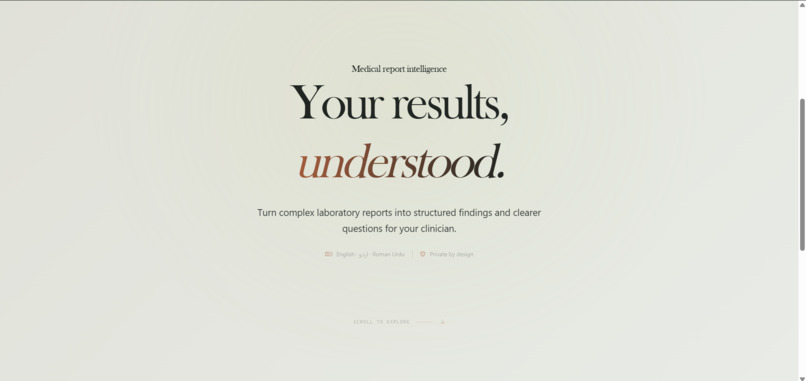
dashboard
-
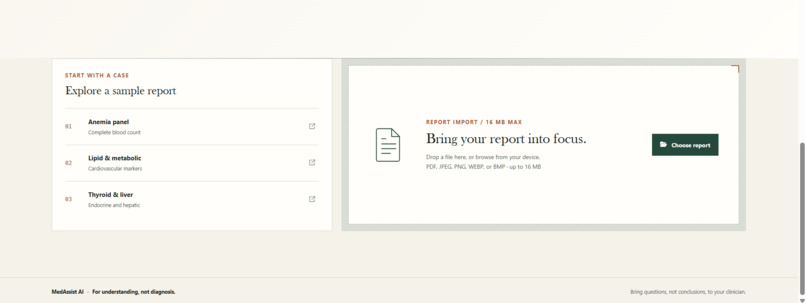
demo-reports
-

logo
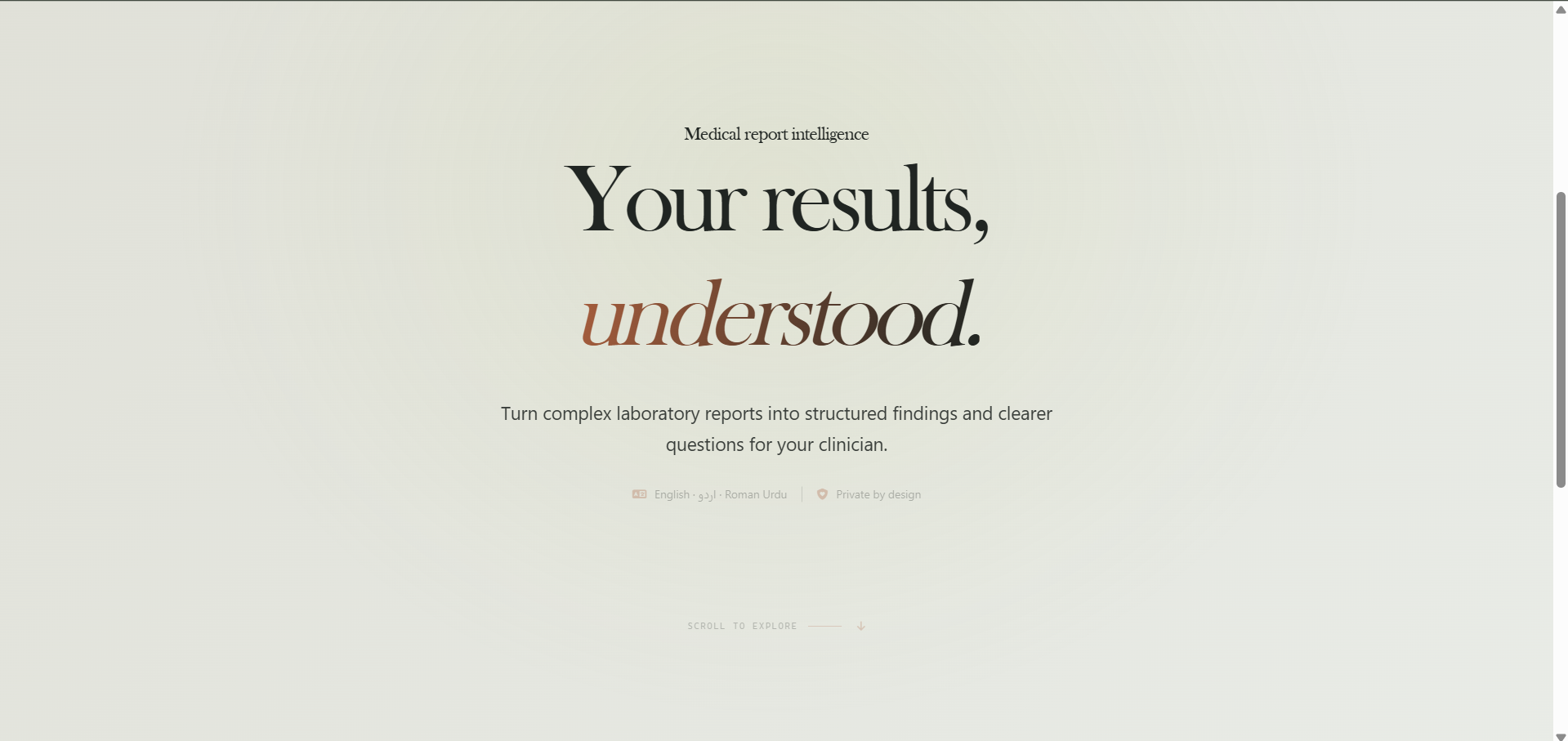
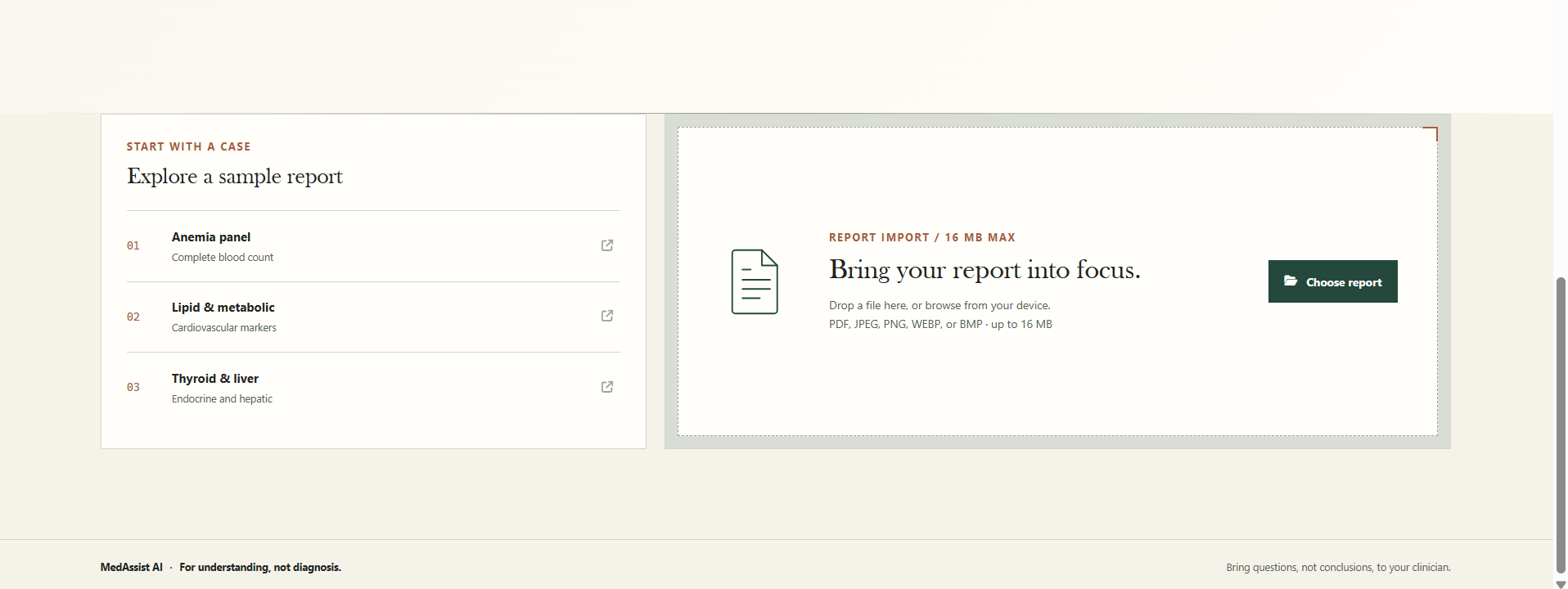
MedAssist — Turning Medical Reports into Meaningful Insights
Inspiration
Medical reports often contain technical terms, unfamiliar abbreviations, and reference ranges that can be difficult for people to understand without medical knowledge. Even when a report is available, understanding what the results mean and knowing which questions to ask a doctor can be challenging.
This inspired us to build MedAssist, an AI-powered medical report analyzer designed to make medical information easier to understand. Our goal was to bridge the gap between complex laboratory results and clear, accessible explanations, helping users become more informed about their health.
How We Built It
We built MedAssist with a simple, user-friendly interface that allows users to upload medical reports in supported formats, including PDF and common image formats. The application processes the uploaded report and uses the Google Gemini API to generate an understandable analysis of its contents.
The platform organizes the results into clear sections, including a summary, key findings, laboratory values, reference ranges, and explanations of potentially concerning results. It also provides general questions and guidance that users may consider discussing with their healthcare professionals.
We added an interactive “Discuss Your Report” feature that allows users to ask follow-up questions about their uploaded report and receive AI-generated explanations. The aim was to make the experience more interactive than simply displaying extracted medical data.
We used AI-assisted development tools to help with interface design, implementation, debugging, and refining the user experience. The project was developed using web technologies and integrated with the Gemini API, with the application interface deployed on Vercel.
Challenges We Faced
One of the main challenges was presenting complex medical information in a way that was clear and easy to navigate without overwhelming the user. We worked on organizing the analysis into structured sections so that important findings could be identified more easily.
Another challenge was handling different report formats and making the AI-generated output useful and readable. We also had to think carefully about how to present abnormal or potentially concerning results without making the application appear to provide a definitive medical diagnosis.
Integrating AI-generated analysis into a practical user workflow required balancing simplicity, functionality, and responsible communication. These challenges helped us recognize that a useful healthcare-support tool needs more than an AI response: it needs clear presentation, appropriate limitations, and a user experience people can understand.
What We Learned
Building MedAssist helped us gain practical experience in integrating generative AI into a web application, working with APIs, designing a user-focused interface, and debugging issues throughout development. We also learned the importance of structuring AI-generated information and communicating its limitations, especially in a sensitive domain such as healthcare.
Most importantly, we learned that AI can help make complex information more accessible when it is used thoughtfully and responsibly.
What's Next
We would like to improve MedAssist with more robust report extraction, better handling of different laboratory report layouts, stronger validation of extracted values, and additional safeguards for medical explanations. We also see opportunities to improve privacy, reliability, and accessibility as the project evolves.
MedAssist is designed to support understanding, not replace professional medical advice, diagnosis, or treatment. Its purpose is to help users better understand their reports and prepare more informed questions for their healthcare professionals.
Built With
- artificial-intelligence
- css
- flask
- generative-ai
- github
- google-gemini-api
- html
- javascript
- machine-learning
- python
- rest-api
- vercel
- web-app


Log in or sign up for Devpost to join the conversation.