-
-
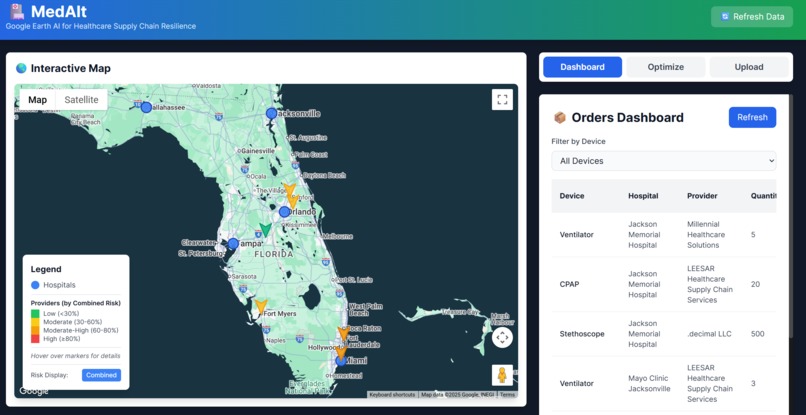
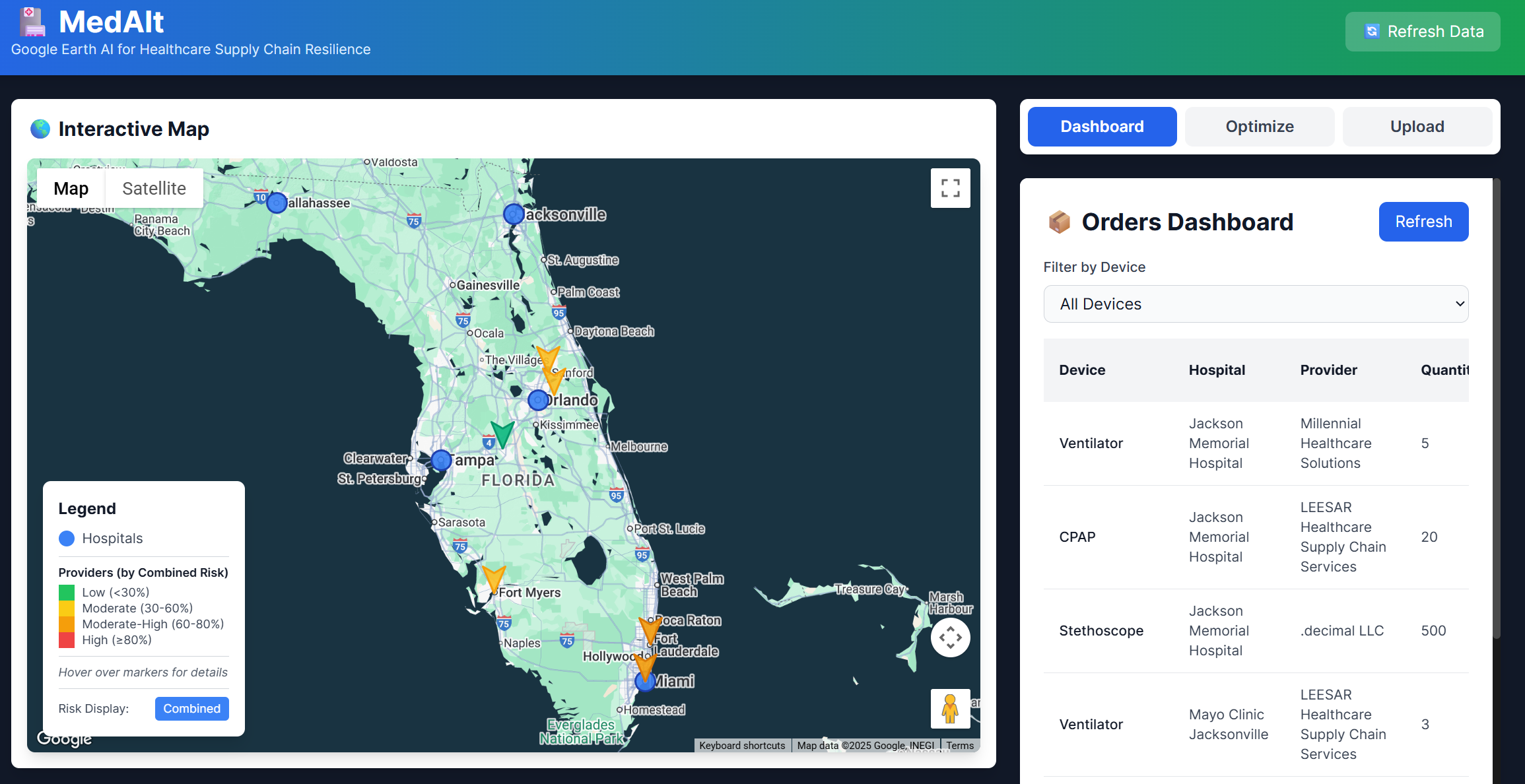
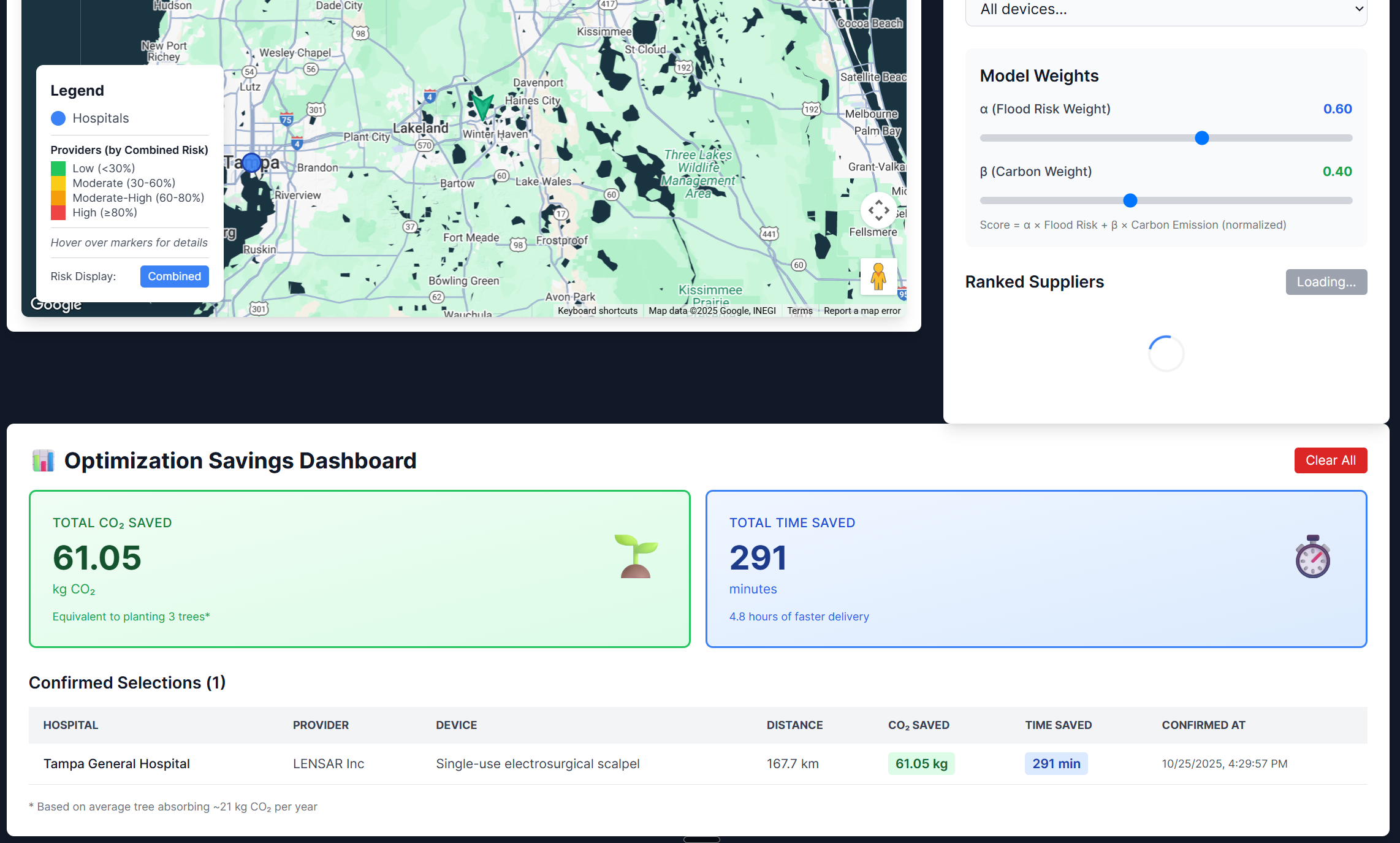
Dashboard of MedAlt
-
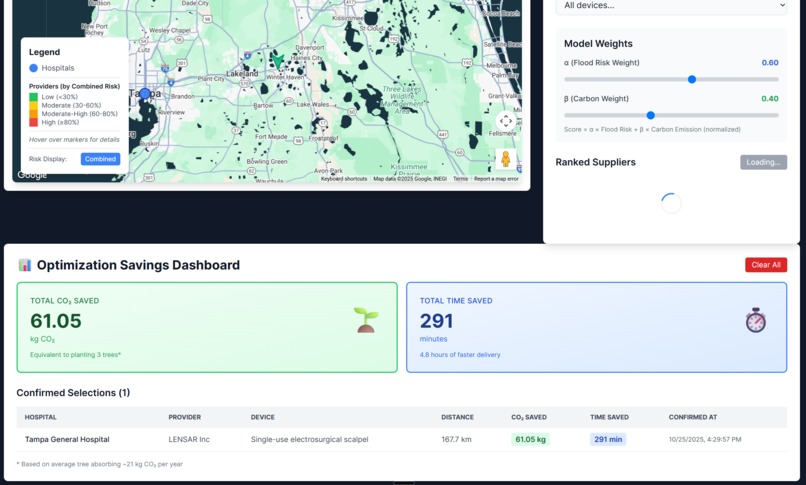
Carbon emission and time saved
-
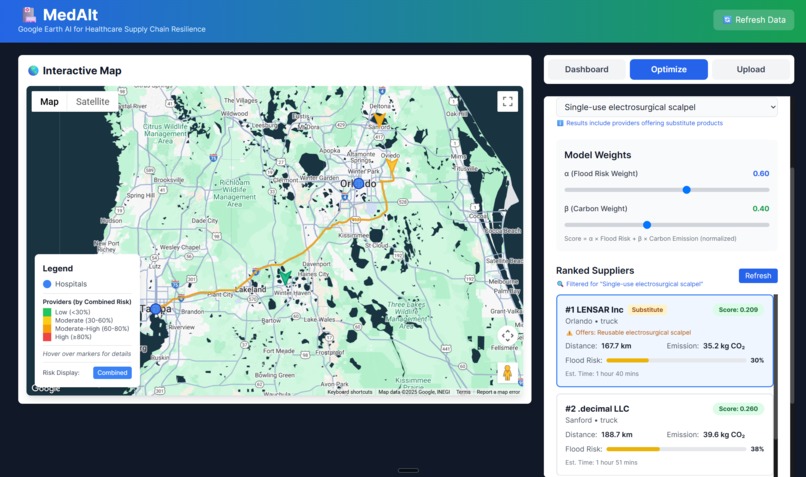
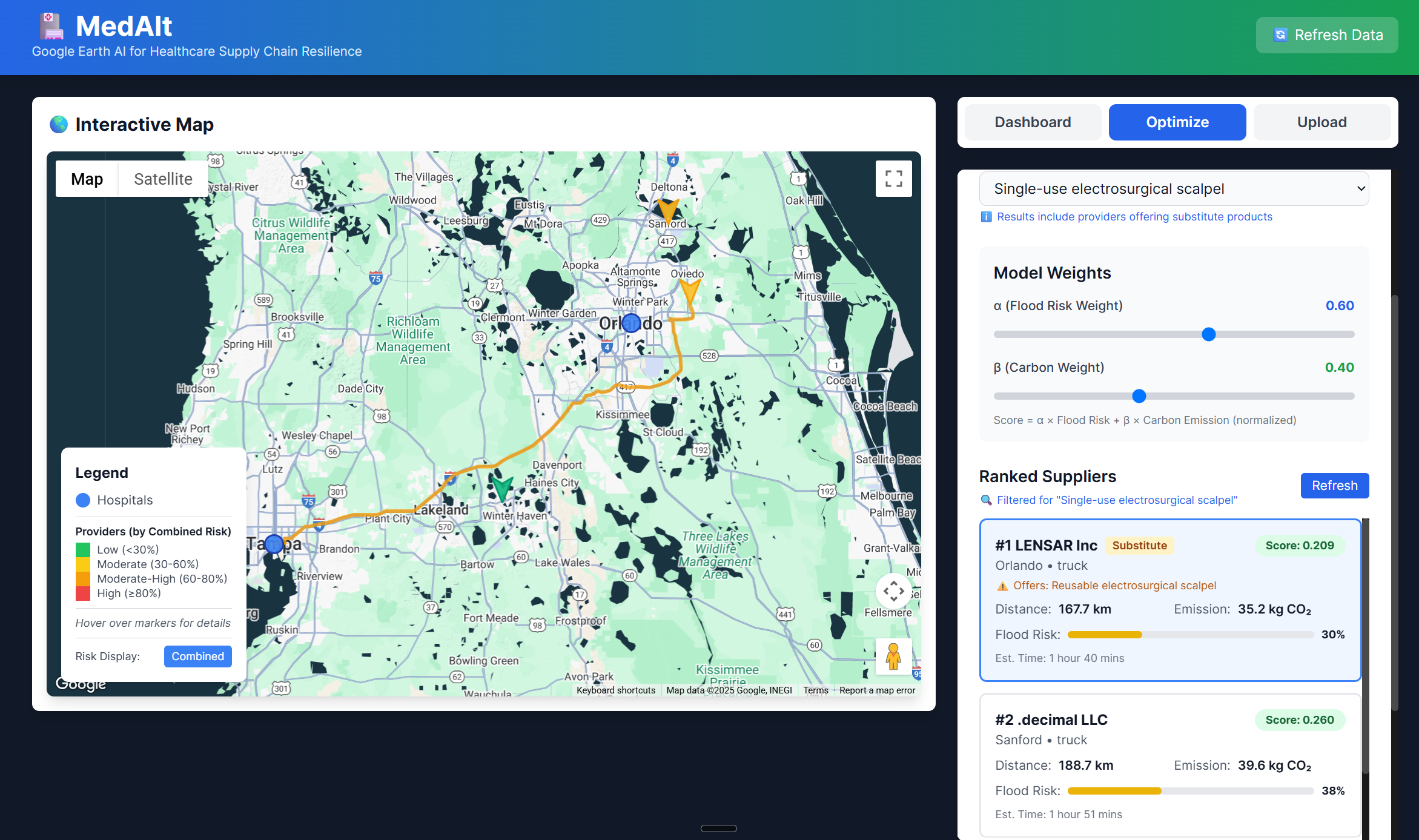
Ranking and mapping suppliers based on hospital and devices needed
Inspiration
Climate disasters disrupt medical supply chains, forcing hospitals into costly, high-emission, high-waste emergency logistics.
What it does
A web-based dashboard that helps hospitals in Florida identify climate risks to their medical supply chain and automatically recommend low-carbon, flood-resilient routes from manufacturers or distributors to hospitals.
How we built it
We used FEMA, GEE, and Google Map API to collect data and calculate a combined score, weighing the flooding risk and carbon emission. These scores will be used to help hospitals rank suppliers and give recommendations accordingly based on the medical device the hospitals need.
Challenges we ran into
We started by trying to predict flooding, but found that flooding prediction within 24 hours is too resource-intensive. It was also hard to find open-source data that maps flooding risks, so we have to find ways to connect the data sources.
Accomplishments that we're proud of
MedAlt has the potential to help derisk the health supply chain and reduce carbon emissions at the same time.
What we learned
Accessing GEE data, using the Google Map API. Constantly pivoting and making the most out of the resources available.
What's next for MedAlt
- Integrating live ERP data (entire supply chain beyond Florida)
- Lead time prediction
- Demand prediction
- Introduce a low-carbon alternative medical supply as a recommendation engine
Built With
- fema
- gee
- google-maps
- python
- react
- tailwind

Log in or sign up for Devpost to join the conversation.