Inspiration
During major disasters earthquakes, floods, or pandemics the biggest killer isn't always the event itself; it’s the chaos that follows. We saw that emergency responders often operate "blind": hospitals get overwhelmed because ambulances don't know which ERs are full, and families are separated because there’s no central patient ledger. We were inspired to build a "Digital Brain" for disaster response that turns chaotic data into predictive, life-saving actions.
What it does
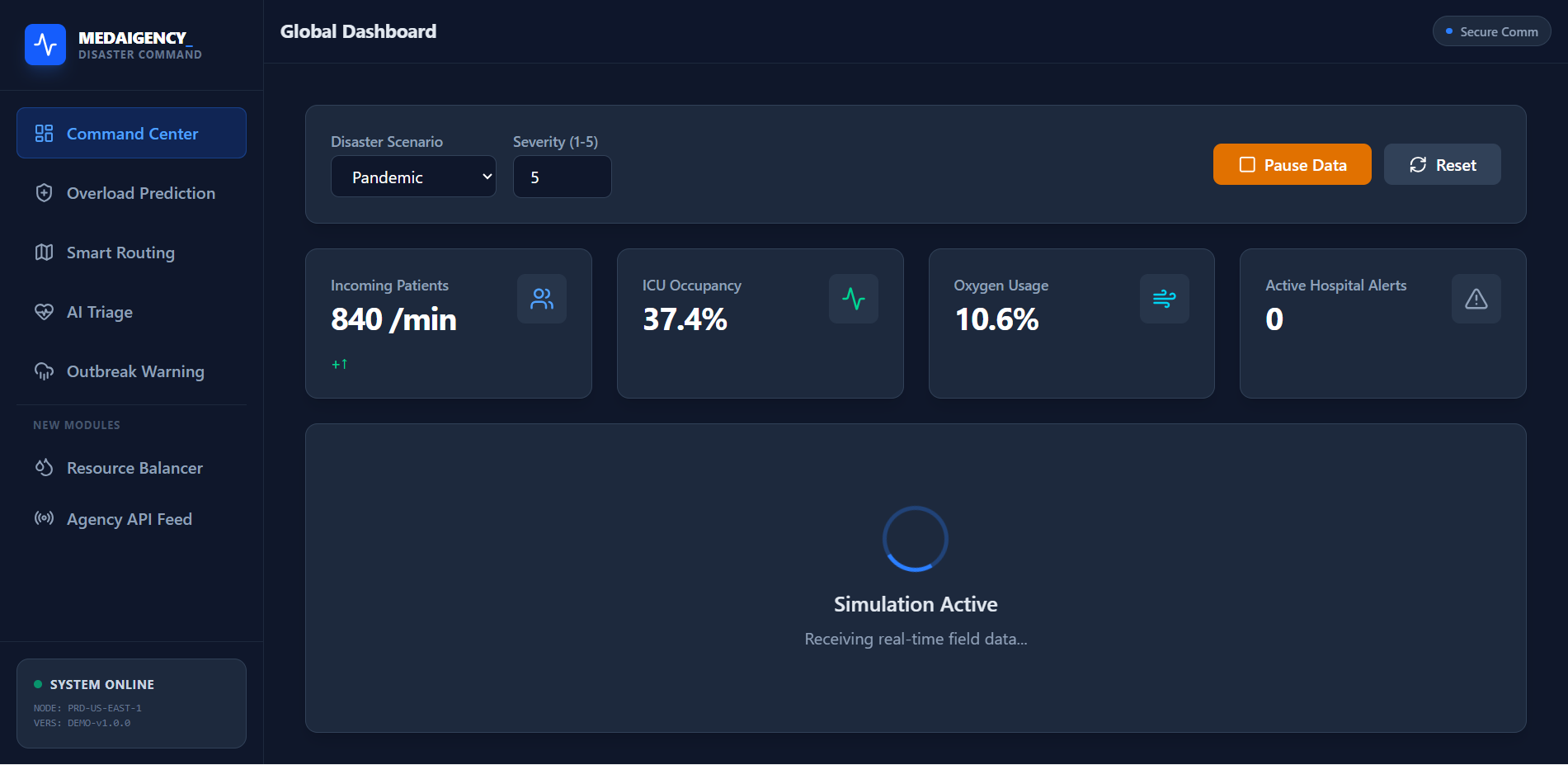
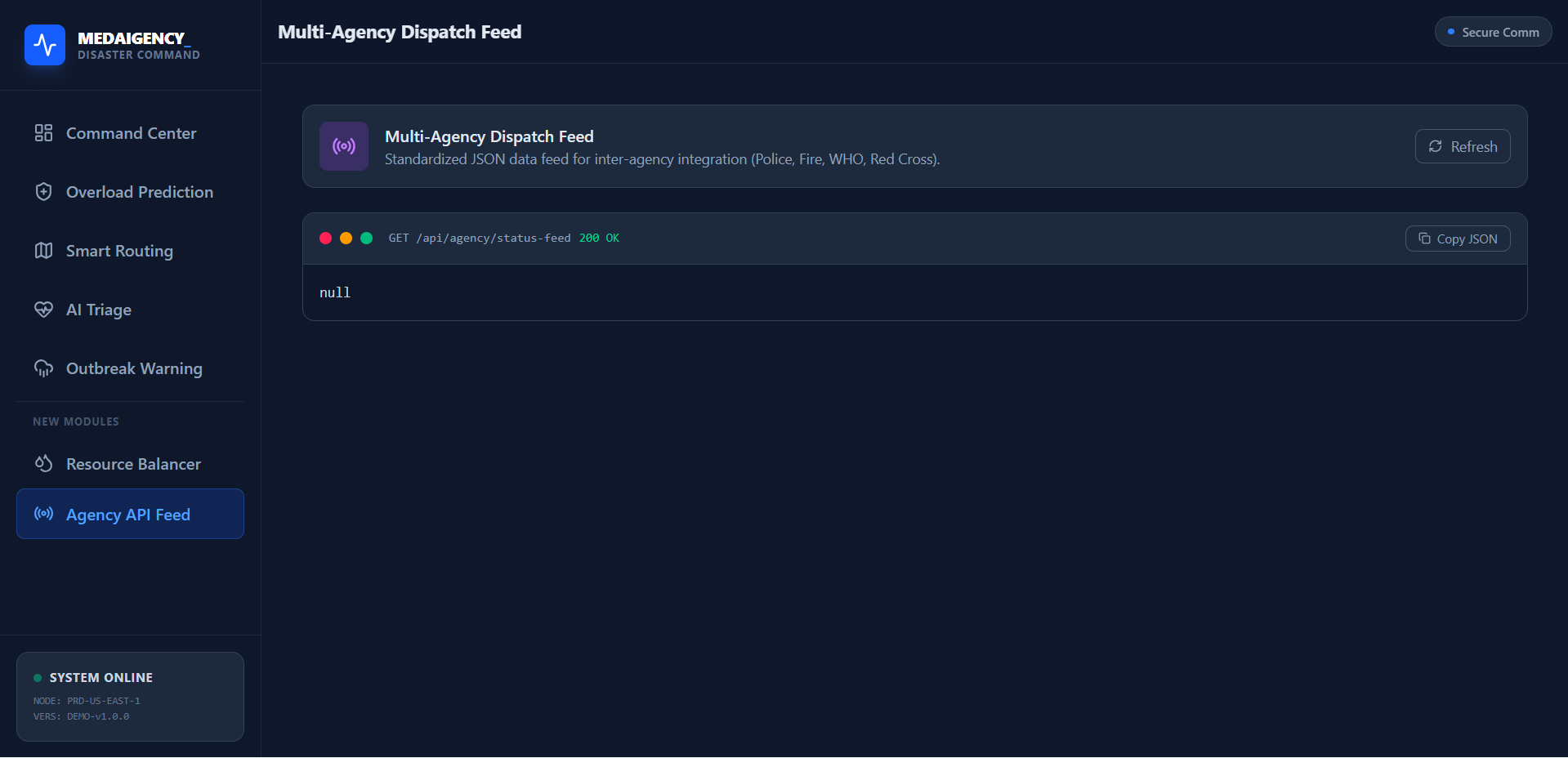
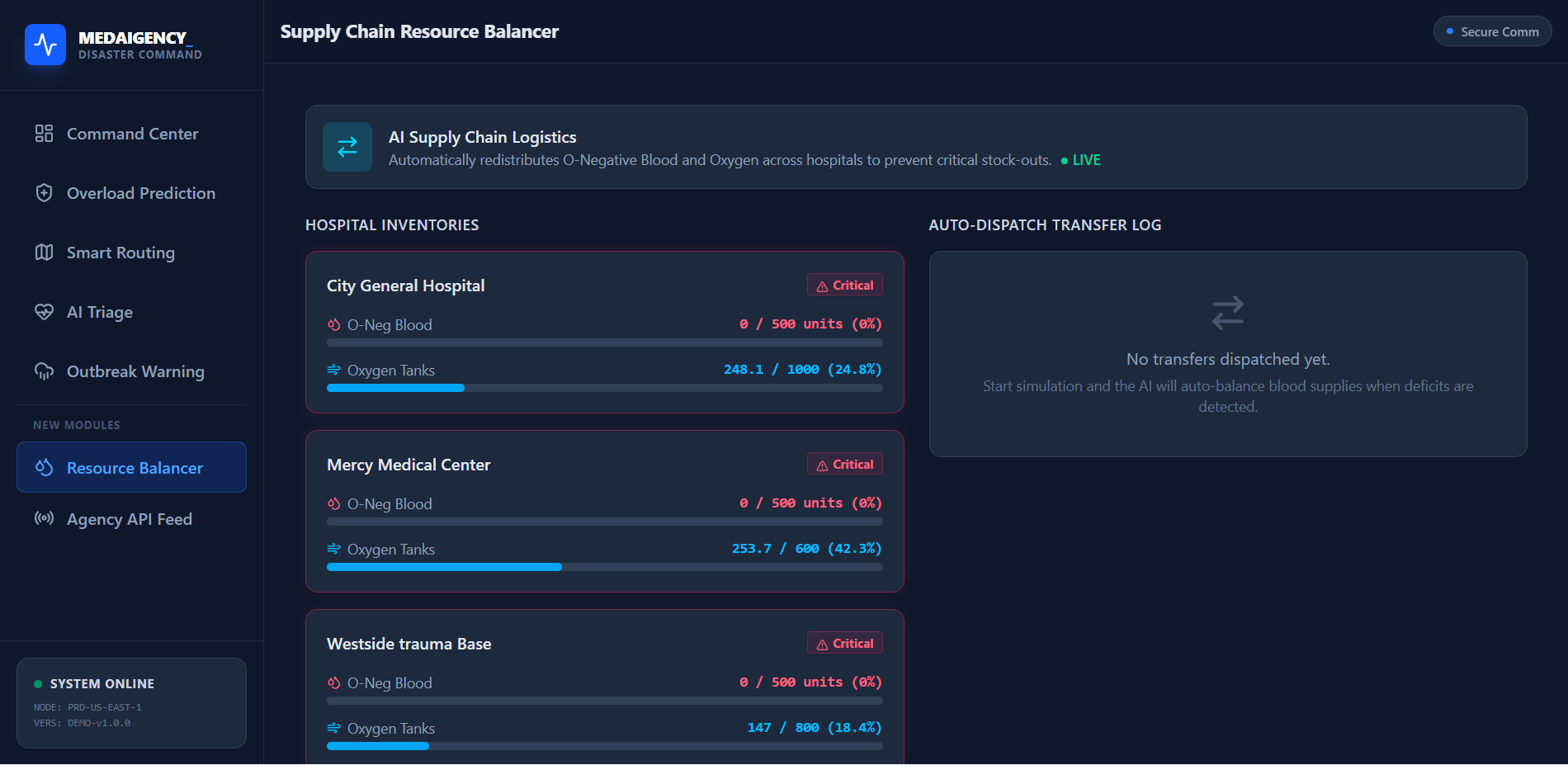
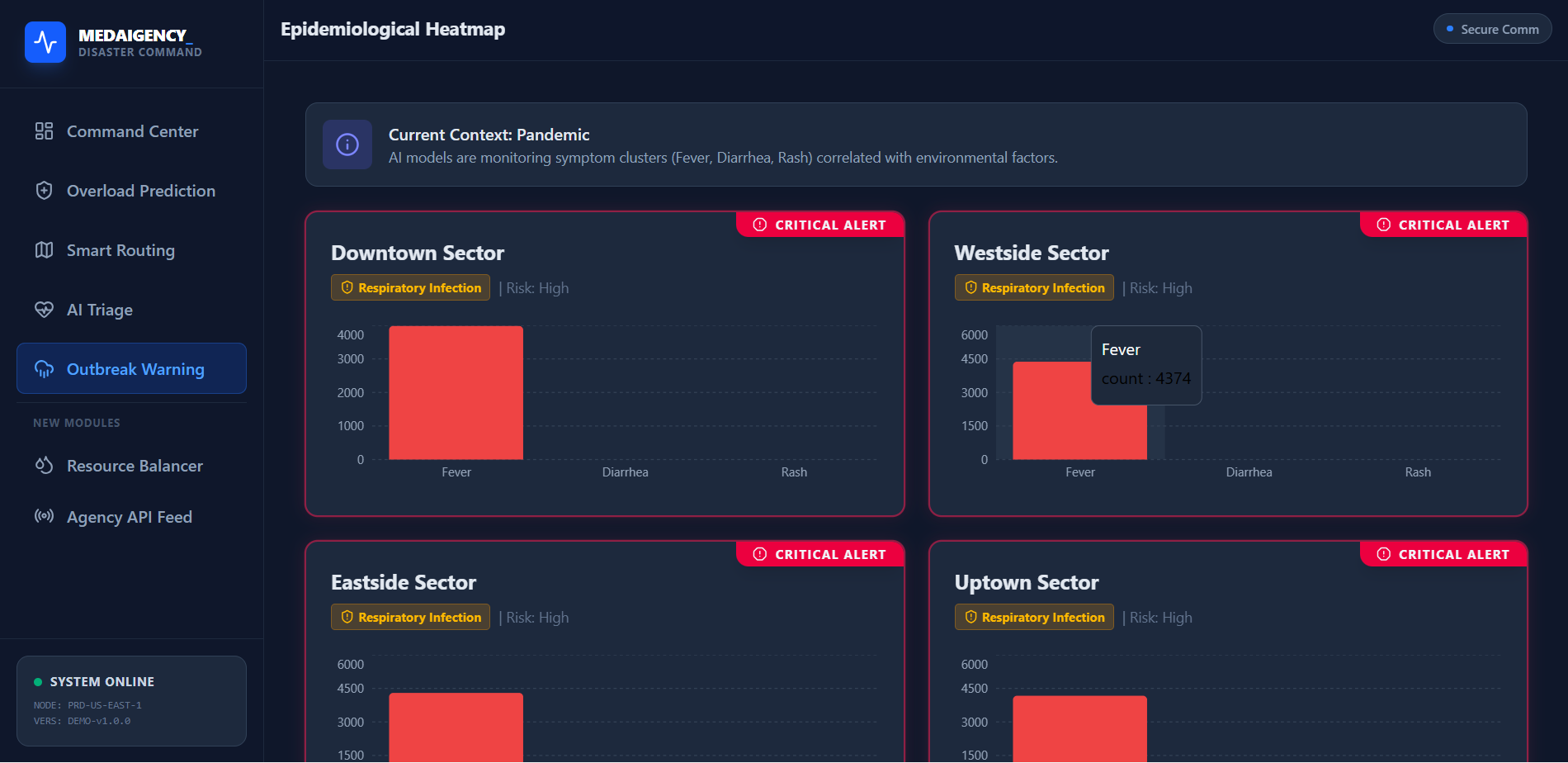
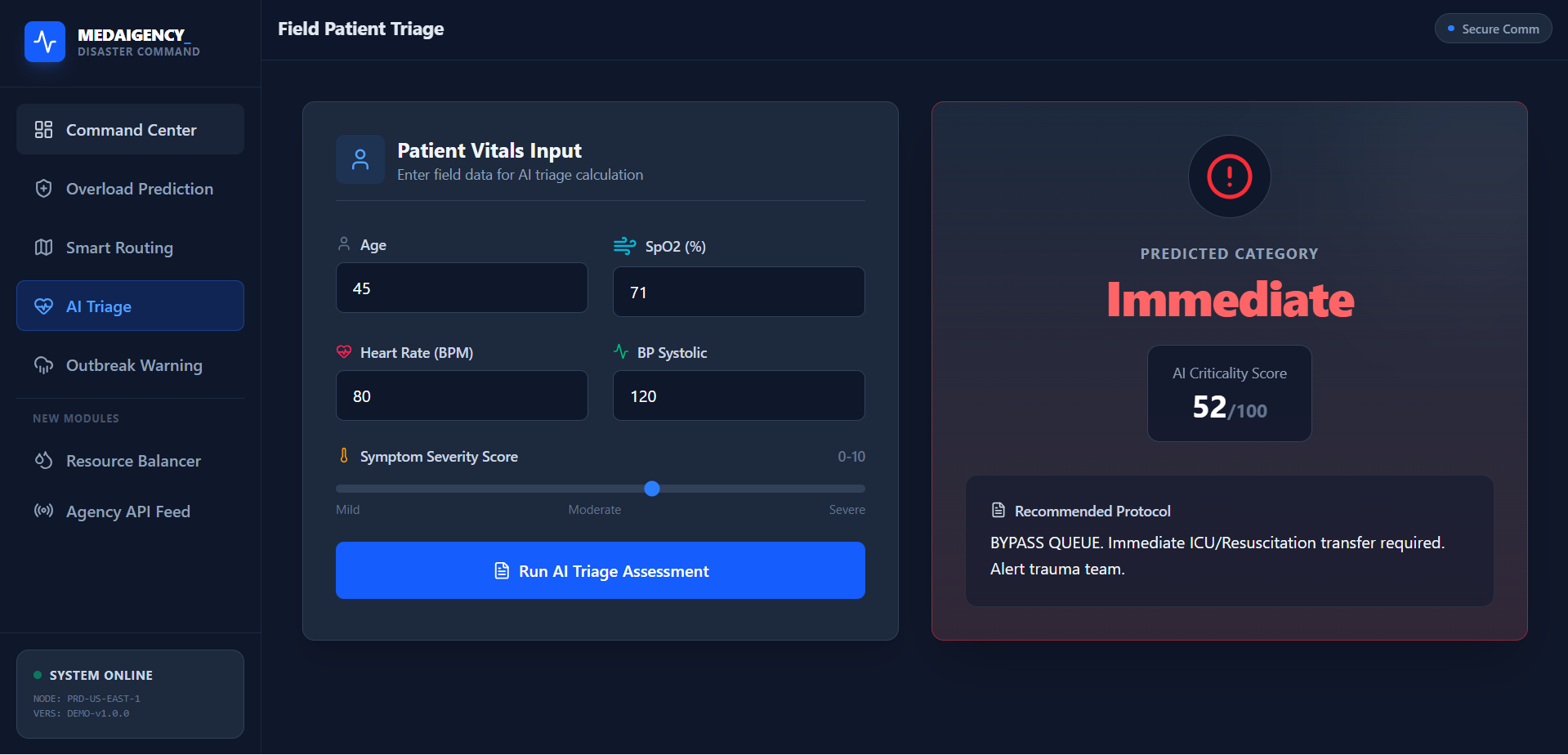
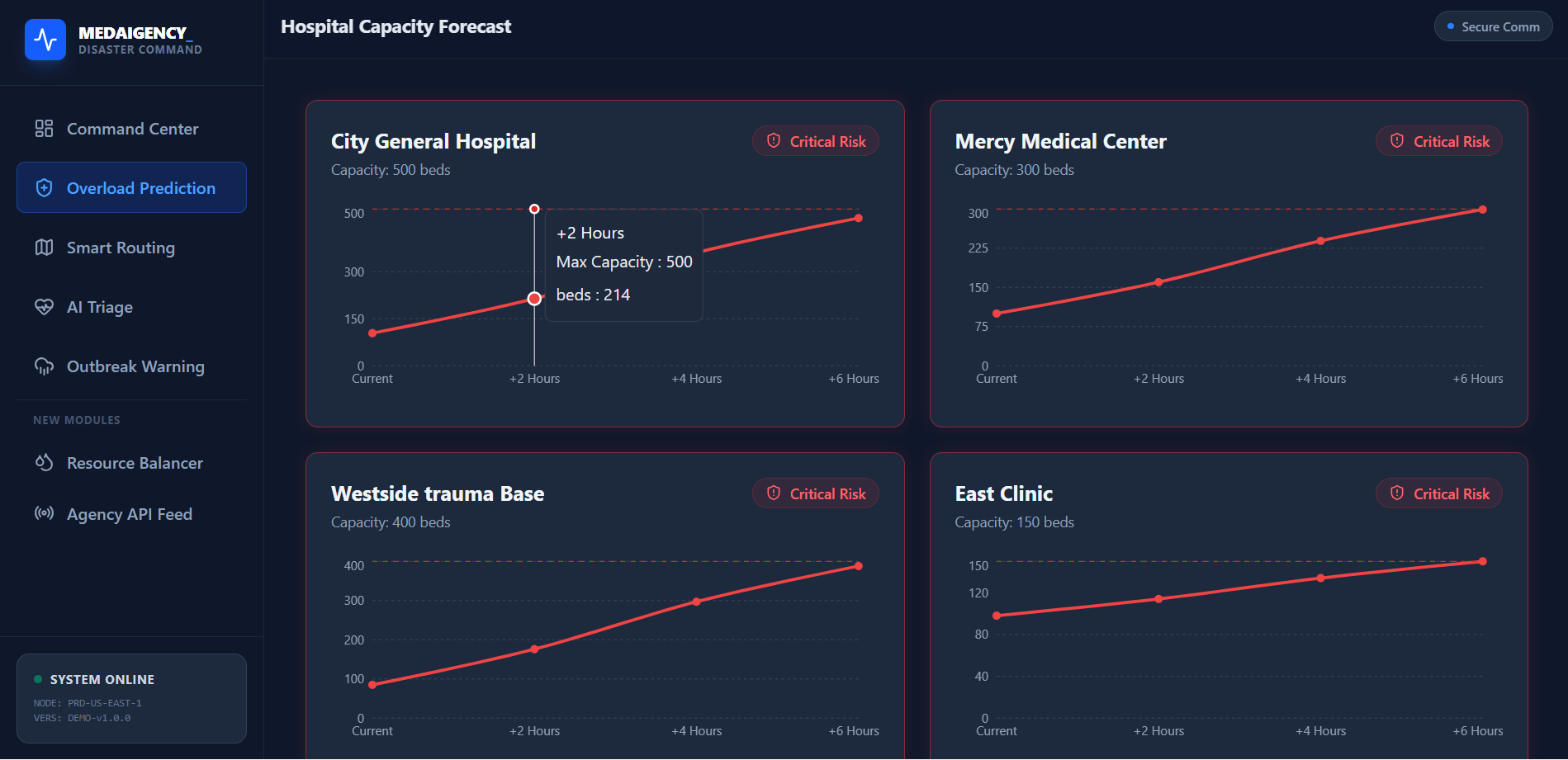
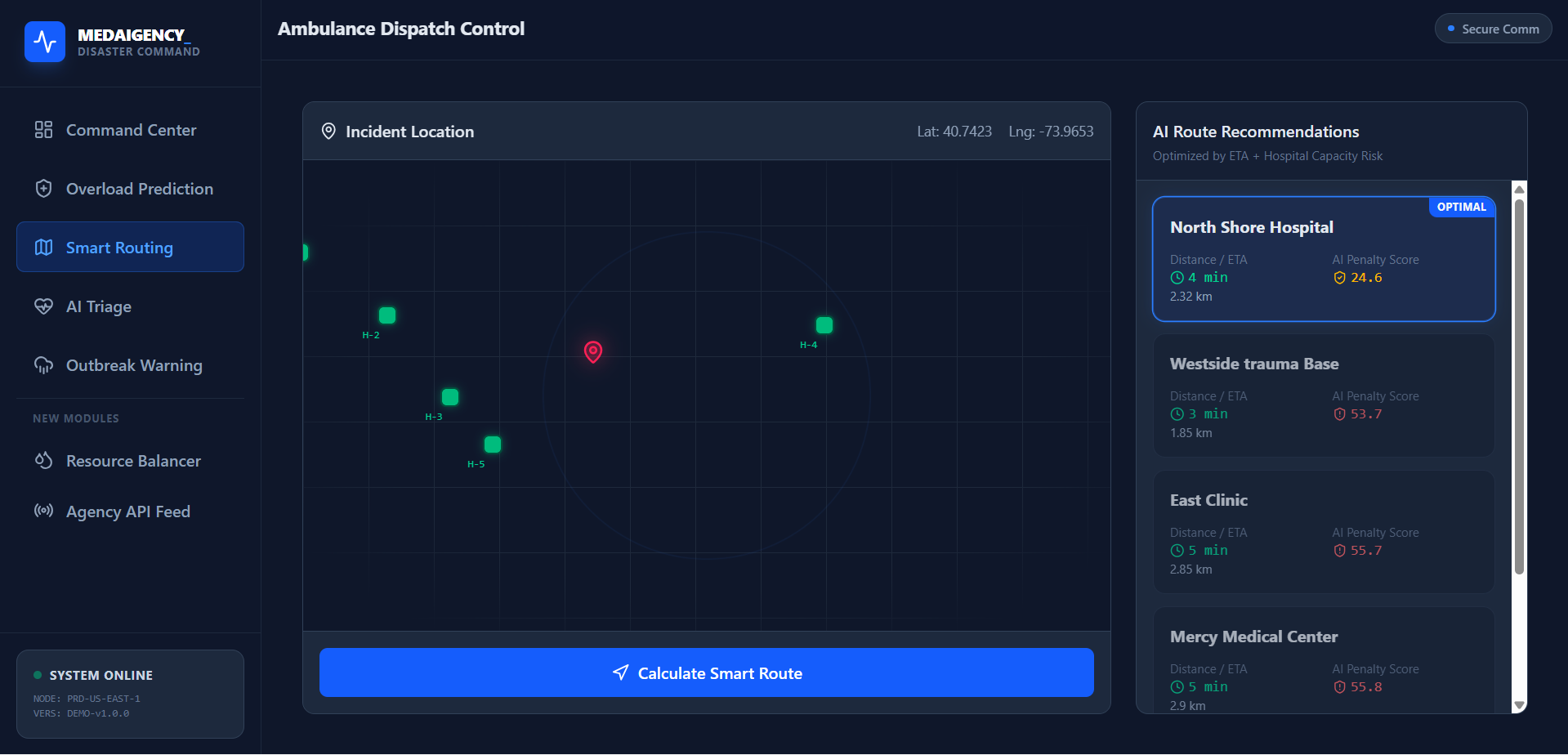
MEDAIGENCY is a real-time, AI-driven Command System designed for healthcare resilience. It provides a unified 360-degree view of a city in crisis: Predictive Hospital Control: Uses Machine Learning to forecast bed and oxygen occupancy 6 hours into the future. Smart Ambulance Routing: An AI dispatch engine that routes ambulances based on travel time plus a predictive hospital overload penalty. Field Patient Triage: A medic-facing AI tool that categorizes patient criticality (Normal/Urgent/Immediate) using local ML models. Epidemiological Surveillance: Detects outbreaks of diseases (like Cholera or Dengue) by monitoring symptom clusters in real-time. Autonomous Resource Balancer: An "Auto-Logistics" engine that automatically dispatches blood and oxygen transfers between hospitals to prevent stock-outs. Multi-Agency API Feed: A standardized JSON gateway for police, fire, and international NGOs to sync with the healthcare network.
How we built it
Backend: Built with FastAPI (Python). We implemented a custom Asynchronous Simulation Engine that pings a SQLite database every 2 seconds to simulate a breathing, live crisis environment. Frontend: A high-performance SPA built with React (Vite) and Tailwind CSS. We used Recharts for real-time data visualization and Lucide-React for a professional "Dark Mode" command center aesthetic. Machine Learning: We developed and trained 5 separate local models using Scikit-learn (Random Forest Regressors, Classifiers, and Logistic Regression). These models run entirely locally, ensuring the system works even if global cloud APIs are down. Algorithms: Implemented custom routing logic using the Haversine formula combined with dynamic AI-weighting for hospital load-balancing.
Challenges we ran into
One of the biggest hurdles was simulating a real-time environment without relying on external, paid, or slow APIs. We had to build a complex state-management system on the backend that could "burn" resources (like blood and oxygen) and "admit" patients concurrently while keeping the UI in sync via high-frequency polling. We also faced challenges in ensuring our ML models remained accurate across multiple disaster scenarios (Earthquake vs. Pandemic).
Accomplishments that we're proud of
Predictive Depth: We didn't just build a dashboard; we built a system that anticipates problems before they happen. The Resource Balancer: Seeing our AI automatically trigger "Transfer Orders" for blood when it detected a deficit in a specific hospital felt like a real breakthrough in disaster logistics. Visual Excellence: We created a UI that feels "Premium" and ready for a real-world emergency operations center (EOC).
What we learned
We learned the critical importance of Interoperability. In a disaster, no single app can do everything; that’s why we built the Multi-Agency API Feed. We also deepened our understanding of Emergency UX making sure that alerts are high-contrast and data is glanceable so that stressed responders can make decisions in seconds.
What's next for MEDAIGENCY_DISASTER COMMAND
IoT Integration: Connecting directly to real-time hospital oxygen sensors and ventilator metrics. Live GPS Dispatch: Integrating real-time ambulance tracking via WebSockets. Offline-First Sync: Using PWA (Progressive Web App) technology to allow field medics to continue triaging even when cellular networks fail, syncing data as soon as a connection is restored.
Built With
- algorithms
- css
- fastapi
- lucide-react
- machine-learning
- python
- react
- recharts
- scikit-learn
- sqlite
- tailwind
- vite

Log in or sign up for Devpost to join the conversation.