-
-
MedAI Health-Vault
-
How it Works
-
MedAI Health-Vault
MedAI – AI-Powered Healthcare Platform
Inspiration
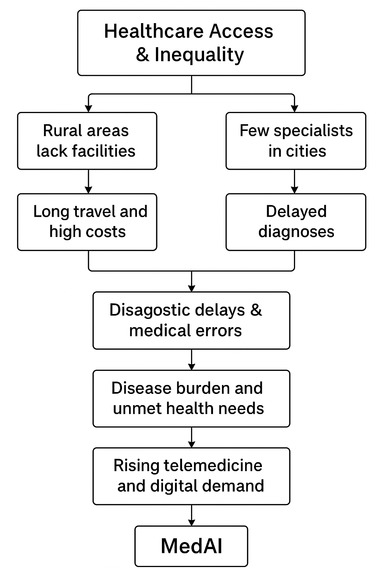
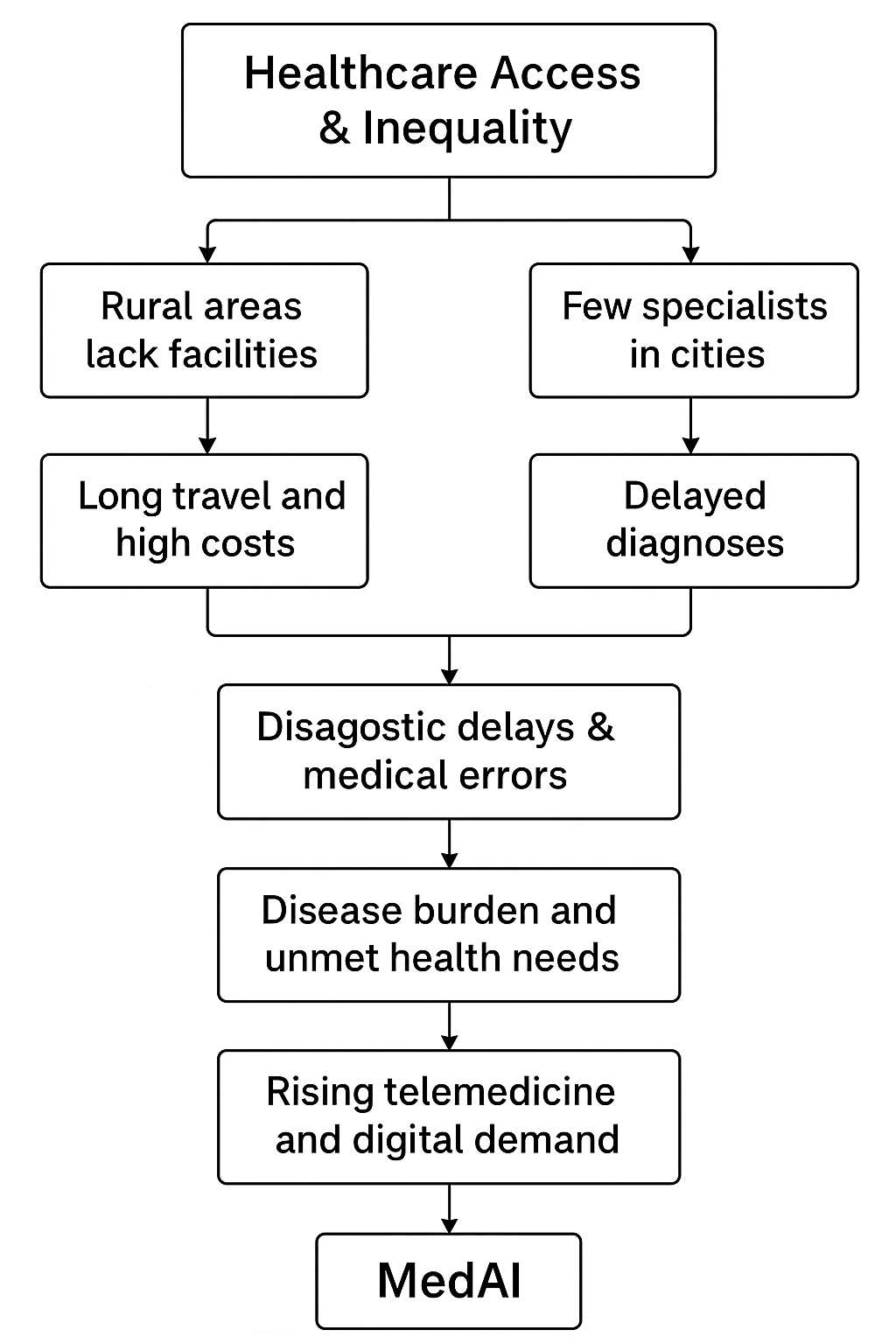
Healthcare in India is highly imbalanced. Nearly 70% of the population lives in rural areas, but most doctors and hospitals are concentrated in cities. People often travel long distances for basic consultation, face long diagnostic delays, and struggle to understand medical reports. Chronic diseases like diabetes and hypertension are rising, while infectious diseases like TB still persist.
MedAI was inspired by the need to bridge this gap using technology, to give people instant, reliable, and affordable preliminary healthcare support using AI, especially in underserved areas.
What it does
MedAI is an AI-powered healthcare platform that acts as a virtual hospital assistant.
It provides:
- AI-based chat diagnosis for common health issues in multiple Indian languages
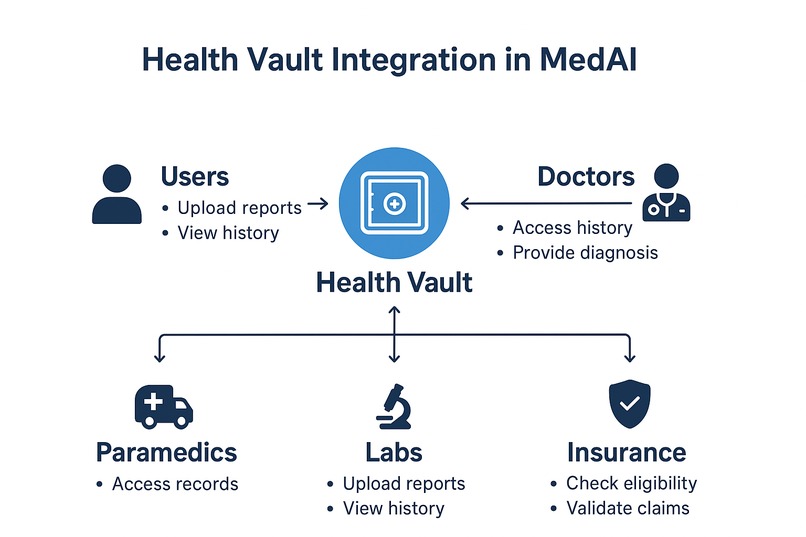
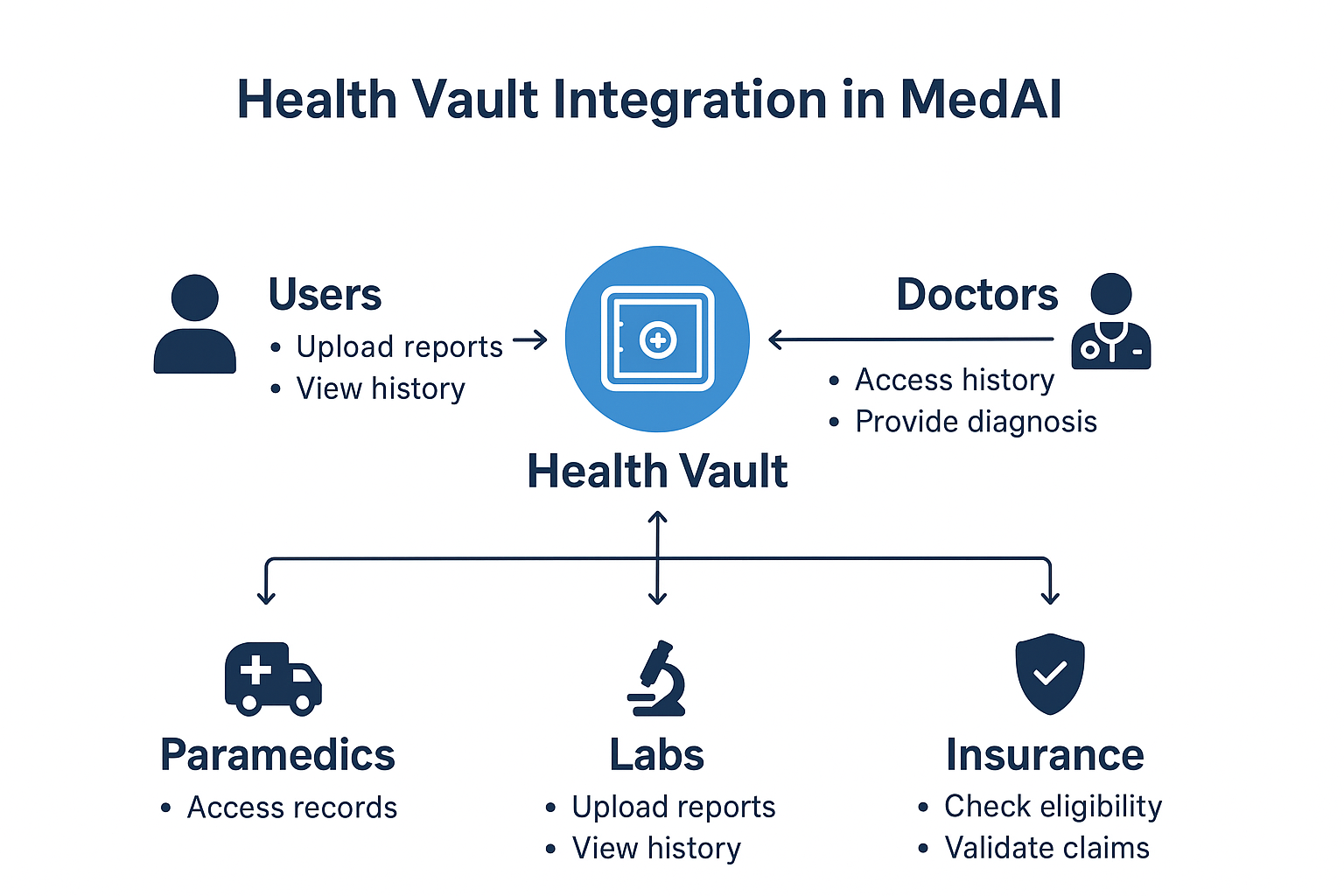
- A secure Health Vault to store medical reports and generate AI summaries and trends
- Nearby paramedics, clinics, and hospitals discovery using live location
- Medicine search with dosage, usage, side effects, pricing, and safer alternatives
- Dedicated portals for users, doctors, labs, and admins
MedAI helps users make better health decisions faster, while reducing unnecessary hospital visits.
How I built it
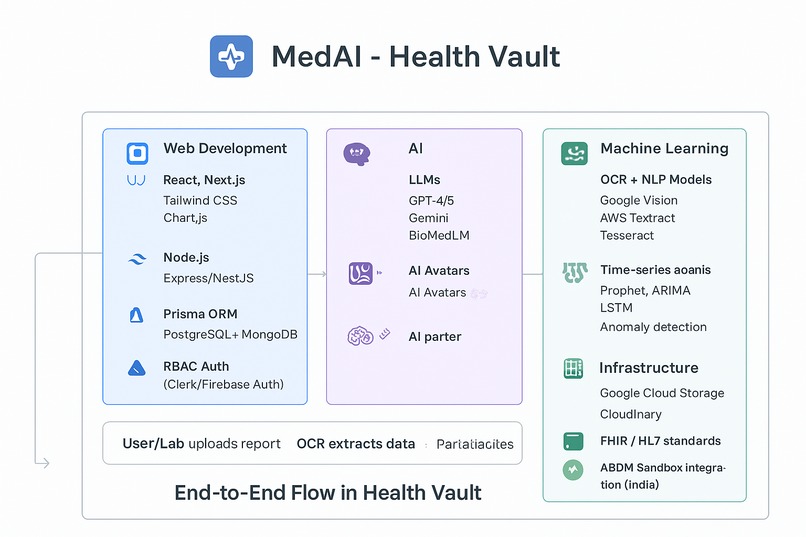
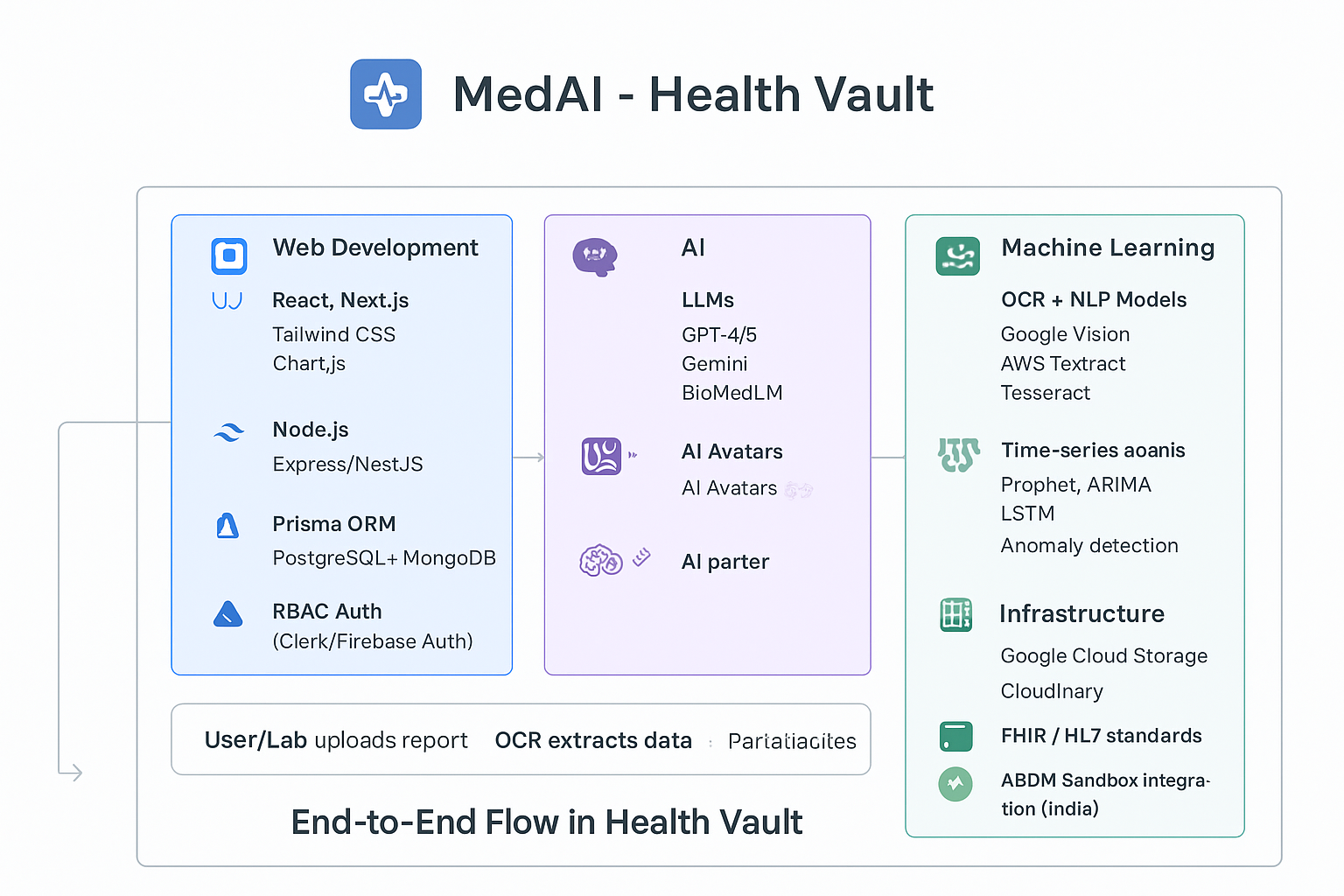
- Designed a multi-role web platform using modern web technologies
- Built separate portals for users, doctors, and admins with role-based access
- Integrated AI (MedAiLLM / GPT-based models) for symptom analysis and report summarization
- Implemented OCR to extract text from PDFs and images in the Health Vault
- Created workflows for report preview, AI summaries, and health trend visualization
- Used automation to handle notifications, reminders, and background tasks
The system was designed to be modular, scalable, and compliant with future digital health standards.
Challenges I ran into
- Handling different types of medical reports (PDFs, images, X-rays, MRIs) efficiently
- Maintaining medical accuracy while keeping explanations simple for patients
- Managing multilingual support without losing medical context
- Balancing storage costs with usability in the Health Vault
- Designing a clean UI/UX that feels trustworthy and not overwhelming
- Understanding healthcare regulations and ethical boundaries of AI diagnosis
Accomplishments that I'm proud of
- Successfully building a working prototype with AI chat diagnosis and Health Vault
- Designing a complete end-to-end healthcare workflow, not just a single feature
- Creating an India-first, multilingual healthcare solution
- Integrating AI, OCR, automation, and web technologies into one platform
- Clearly defining a roadmap from hackathon prototype to scalable startup
What I learned
- AI in healthcare must assist, not replace doctors
- User trust is as important as technical accuracy
- Clean data pipelines (OCR → AI → structured output) are critical
- Healthcare products require deep empathy, not just innovation
- Building scalable systems means thinking beyond MVP from day one
What's next for MedAI-Healthcare
- Introduce AI avatars for more interactive consultations
- Expand disease coverage with predictive AI models for chronic conditions
- Integrate wearable devices for real-time health monitoring
- Onboard doctors through invite-only plans to ensure quality care
- Align fully with ABDM and global health data standards
- Scale MedAI across India first, then globally as a virtual hospital ecosystem
MedAI’s vision is simple: make healthcare accessible, understandable, and intelligent for everyone.
Built With
- deepgram
- express.js
- fined-tunes
- google-gemini
- google-maps
- google-vision-api
- gpt-5
- llm
- models
- mongodb
- node.js
- openai
- prisma-orm
- rag
- react
- supabase
- tailwind
- tesseract.js


Log in or sign up for Devpost to join the conversation.