-
-
Title
-
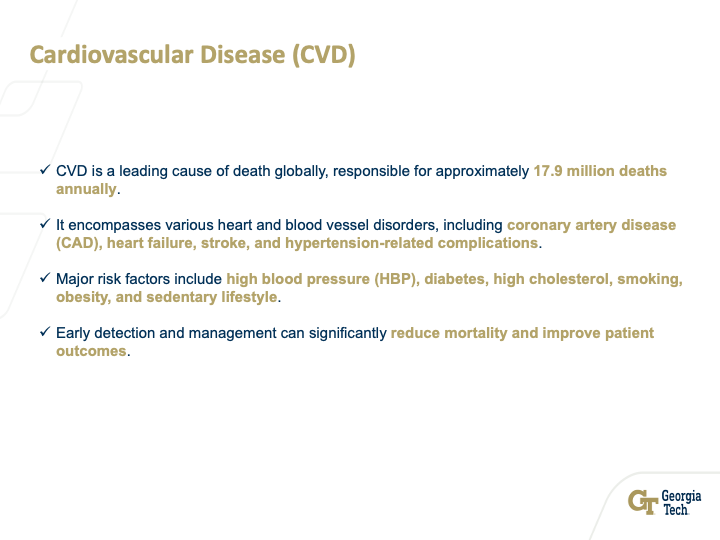
Cardiovascular Disease
-
XGBoost Model
-
Framework of CardioX AI
Inspiration
Cardiovascular diseases (CVDs) remain the leading cause of death worldwide, yet many cases are preventable with early risk detection and proactive management. We developed CardioX AI to empower individuals and healthcare providers with an AI-driven tool that not only predicts cardiovascular risk but also provides actionable insights through data visualization, intelligent reporting, and an interactive AI assistant.
What It Does
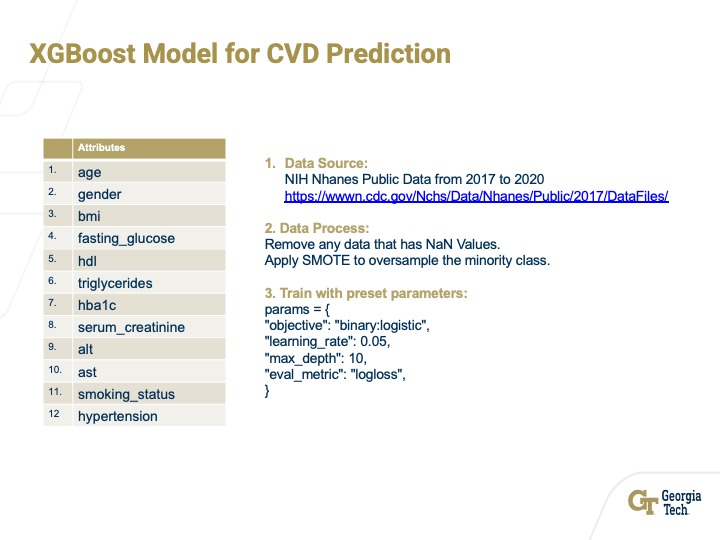
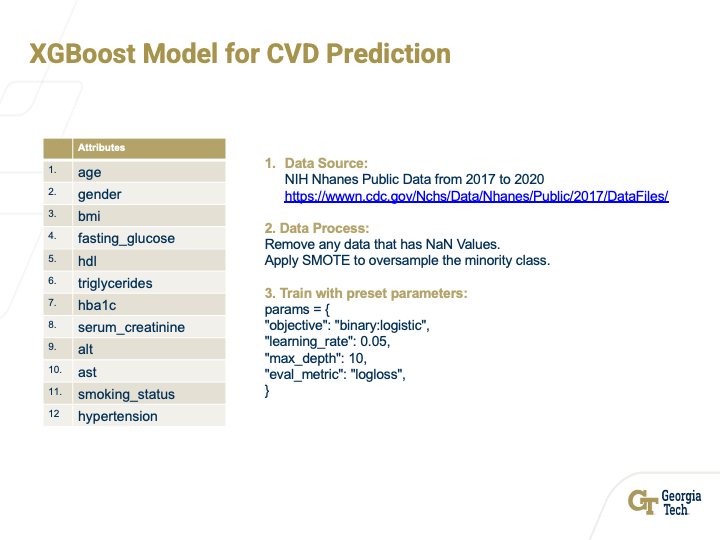
CardioX AI leverages XGBoost to predict cardiovascular disease risk based on 12 key factors such as age, hypertension, cholesterol levels, smoking status, and other lab test metrics. After generating a risk score, the app produces detailed charts and analytical reports powered by an LLM (Large Language Model). Users can also interact with an AI-powered agent to receive personalized explanations, insights, and recommendations for cardiovascular health management.
How We Built It
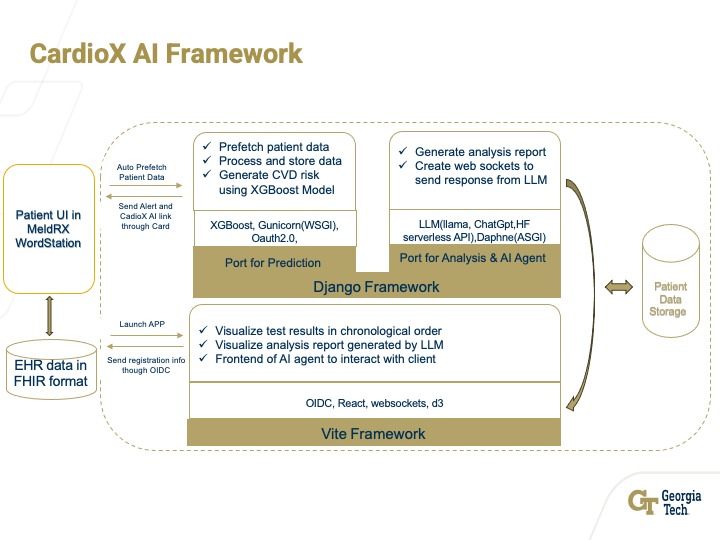
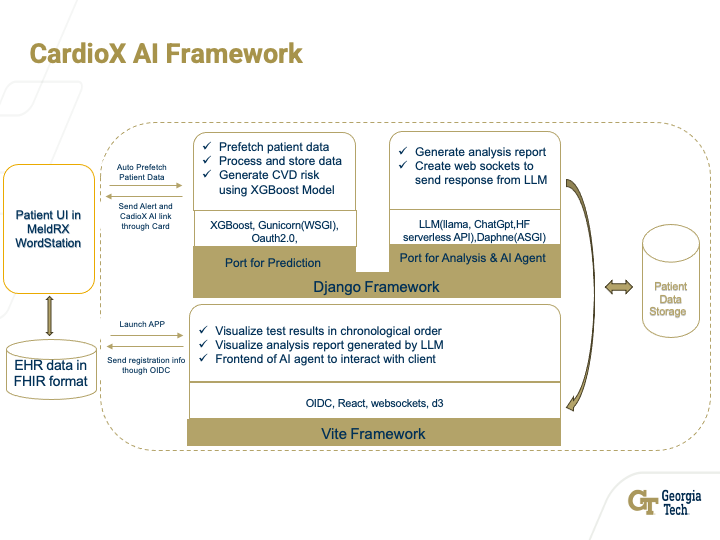
Backend for CDS Hooks (Django)
We built the backend using Django, integrating WSGI for handling prefetched chunked data and ASGI to support WebSockets for real-time AI interactions.
- Data Processing: Retrieves patient data from MeldX using CDS Hooks and the FHIR standard.
- AI for Prediction: Integrates an trained XGBoost model for machine learning-based cardiovascular risk assessment.
- CDS Hooks Cards: Sends risk prediction results as CDS Hooks Cards with alerts and information to MeldX.
- LLM Integration: Deploys Llama-3.2-1B to generate analytical reports and support conversational AI for the frontend.
Frontend for SMART App (Vite + React)
The frontend was developed using Vite and React for a fast and responsive user experience.
- SMART App Integration: Connects securely to MeldX via SMART on FHIR, using OIDC for authentication.
- Patient Data Visualization: Displays CVD-related patient data through interactive charts.
- AI-Generated Analysis Report: Presents LLM-generated reports summarizing patient health trends.
- Conversational AI Agent: Provides an interactive UI where users can ask questions and receive real-time responses.
Prediction Model
- Trained XGBoost model using NIH NHANES (2017-2020) data with 12 key attributes to assess cardiovascular risk.
Challenges We Ran Into
- Data Prefetching: Django does not natively support chunked data processing. We addressed this by using Gunicorn as a middleware with WSGI to handle prefetched data in chunks.
- WebSockets for AI Agent: Since the conversational AI requires a persistent connection, we implemented Daphne and ASGI to enable real-time message exchange asynchronously.
- FHIR Data Mapping: Converting FHIR patient data into a structured format suitable for machine learning required significant preprocessing.
- Seamless Frontend-Backend Communication: Ensuring real-time updates and smooth interactions between Django (backend) and Vite (frontend).
- Model Optimization: Fine-tuning the XGBoost model to balance accuracy, interpretability, and computational efficiency.
- LLM Performance: Optimizing response time and enhancing contextual understanding while running the model locally.
Accomplishments That We're Proud Of
✅ Integratoin CDS hooks with SMART App based on Django and Vite framework.
✅ Successfully trained and deployed an XGBoost model for cardiovascular risk prediction.
✅ Implemented dynamic report generation using an LLM for clear and actionable insights.
✅ Developed an AI-powered conversational assistant to improve user engagement and understanding.
✅ Achieved seamless integration between the ML model, report generation, and conversational AI.
What We Learned
- OAuth 2.0, FHIR 2.0, and SMART on FHIR protocols, and how to securely retrieve patient data via OIDC authentication.
- Integrating backend (Django) and frontend (React/Vite) frameworks for real-time data exchange.
- Optimizing AI models for local deployment while maintaining efficiency and accuracy.
- Best practices for handling FHIR data in a predictive analytics environment.
- User-centric design for healthcare applications to improve accessibility and real-world impact.
What's Next for CardioX AI
🔒 Secure Patient Data Storage: Explore privacy-preserving storage solutions (e.g., Canisters on ICP) for patient data.
☁️ Cloud Deployment: Deploy both the frontend and backend on cloud infrastructure for scalability.
👥 Multi-User Support: Enable simultaneous access for multiple users across different roles (e.g., patients, doctors).
📊 Expanding Predictive Capabilities: Incorporate ECG, imaging, and genetic data for a more comprehensive risk assessment.
🤖 Enhanced AI Recommendations: Improve the LLM-powered AI assistant to offer personalized lifestyle and treatment suggestions.


Log in or sign up for Devpost to join the conversation.