-
-
Title
-

Problem Statement
-
Solution
-

Tech Stack
-
Landing Page
-
Future Development




What it does
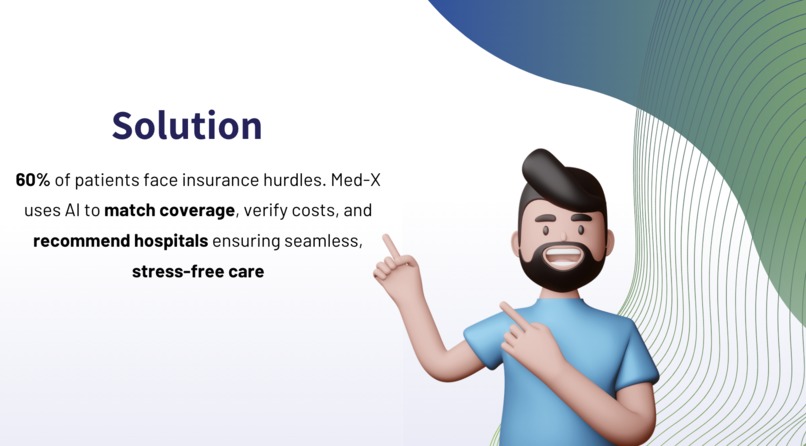
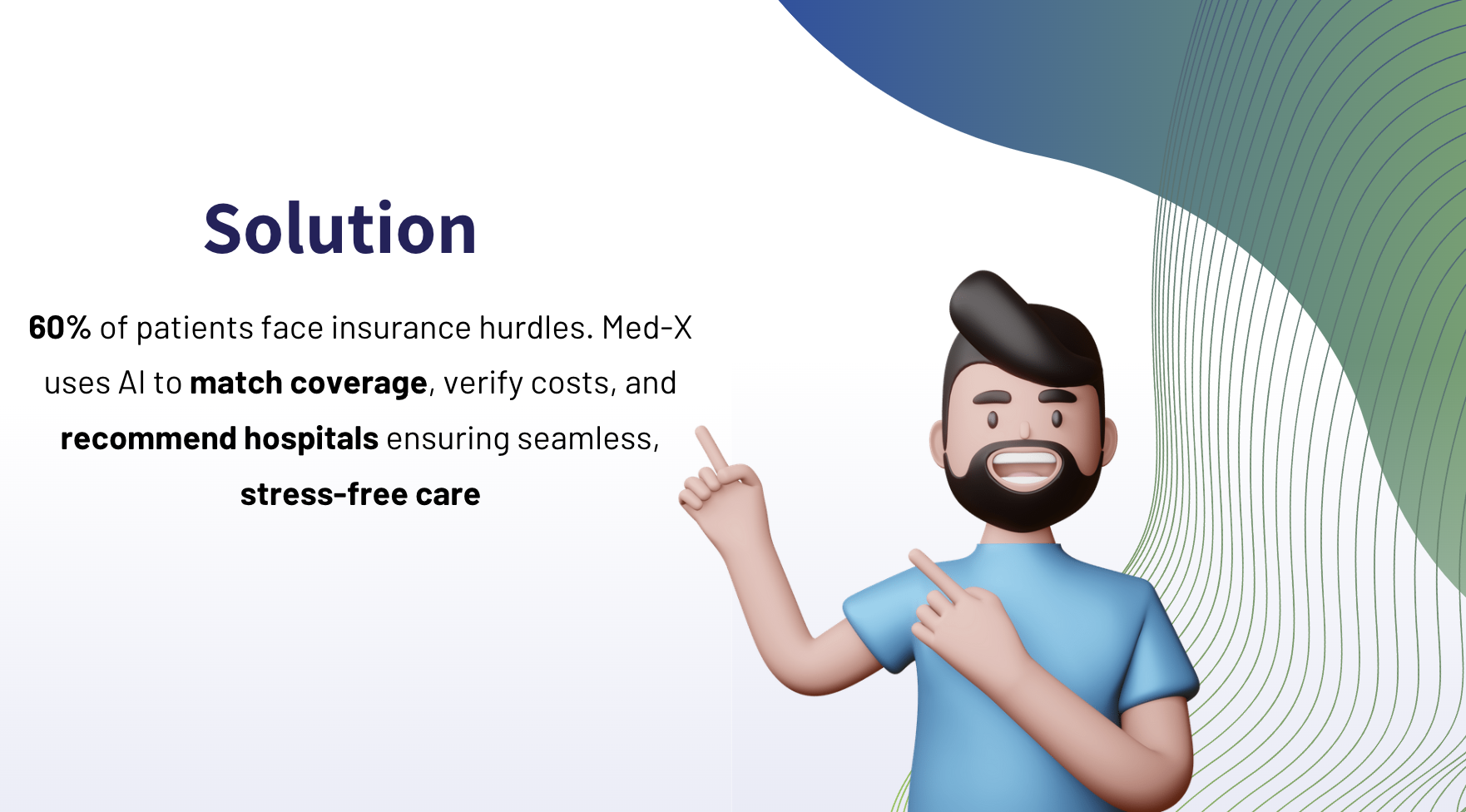
Navigating healthcare is often confusing, especially when it comes to understanding insurance coverage and finding the right hospital. Many people face unexpected medical bills and struggle to find hospitals that accept their insurance. Inspired by these challenges, we created MedX a platform that simplifies hospital selection by providing transparent information on cost, coverage, and accessibility. Our goal is to make healthcare decisions easier, faster, and stress-free.
🛠 How We Built It
MedX was developed using a combination of React.js for the frontend and Flask for the backend, ensuring a lightweight and efficient system. We integrated the Google Maps API to fetch hospital locations and provide users with a clear, interactive map view. The user flow is simple: they select their insurance, enter a medical procedure, and receive a list of hospitals filtered by price, distance, and ratings. This approach ensures that users can quickly find the best options based on their needs.
What we learned
Throughout the development of MedX, we gained valuable insights into API integration, data filtering, and user-centered design. Implementing the Google Places API taught us how to efficiently retrieve and process location-based data. We also learned the importance of optimizing search performance, ensuring that hospital listings are filtered quickly without lag. Additionally, designing an intuitive UI made us more aware of how users interact with healthcare platforms and what features they find most useful.
Achievements that we're proud of
One of our biggest achievements was building a custom API that connects insurance data with hospital searches, making it easier for users to find hospitals that accept their coverage. This involved handling user inputs, processing API requests, and ensuring accurate data retrieval. Additionally, we successfully optimized hospital search filters, allowing users to refine results based on factors like distance, rating, and price, all while keeping the interface responsive and easy to use. We are also proud of how we tackled performance and efficiency challenges, ensuring the platform remains lightweight while delivering fast results. Despite facing API rate limits and backend deployment challenges, we managed to build a functional system that improves healthcare decision-making.
Challenges we ran into
One of our biggest challenges was insurance data limitations. Since the Google Places API does not provide information on whether a hospital accepts a specific insurance plan, we had to develop workarounds and filtering methods. Optimizing search performance was another challenge, as we had to balance speed with accuracy when filtering hospitals by multiple factors. Lastly, deploying our Flask backend required troubleshooting CORS issues and handling API rate limits to ensure stable performance.
What's next for Med-X
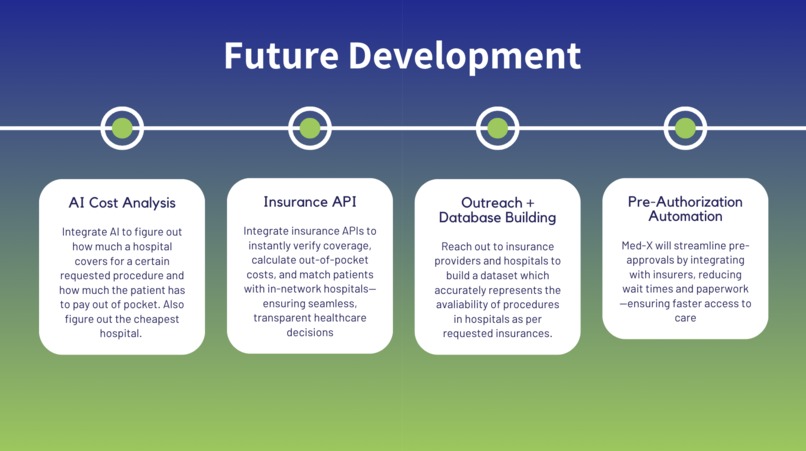
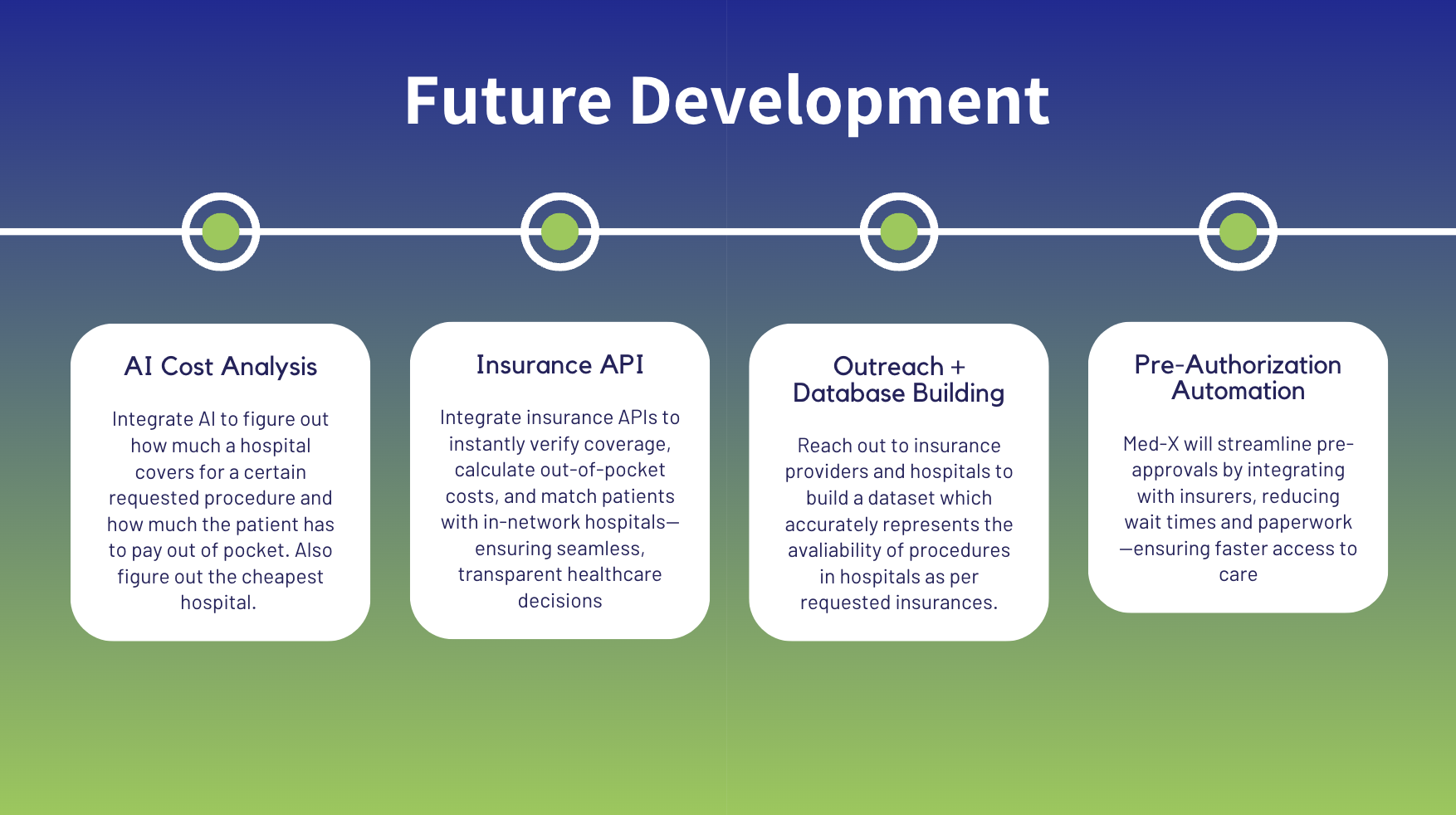
Looking ahead, we plan to enhance MedX with AI-powered recommendations that factor in injury severity and urgency. We aim to integrate real-time price estimates for medical procedures and expand coverage for more insurance providers. These improvements will make MedX even more valuable for users who need quick, reliable, and cost-effective healthcare solutions. MedX is just the beginning of a smarter, more transparent healthcare experience. Your health, your choice made simple.




Log in or sign up for Devpost to join the conversation.