-
-
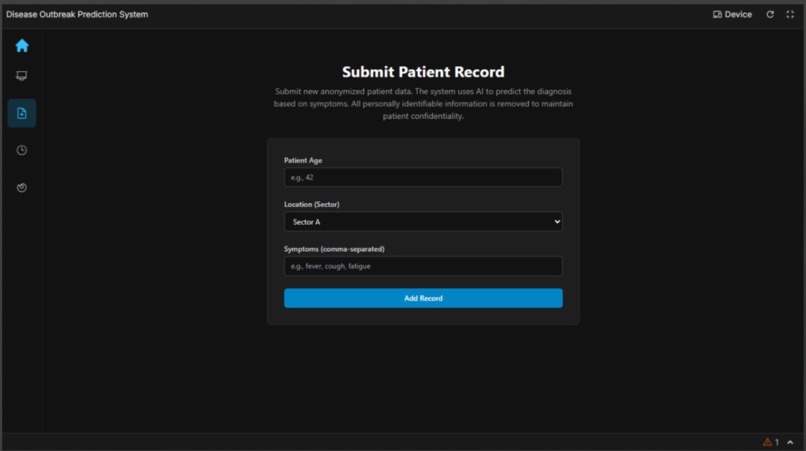
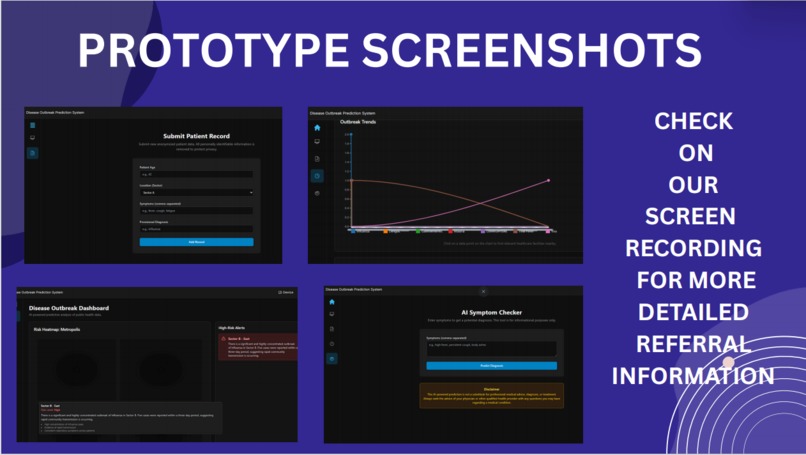
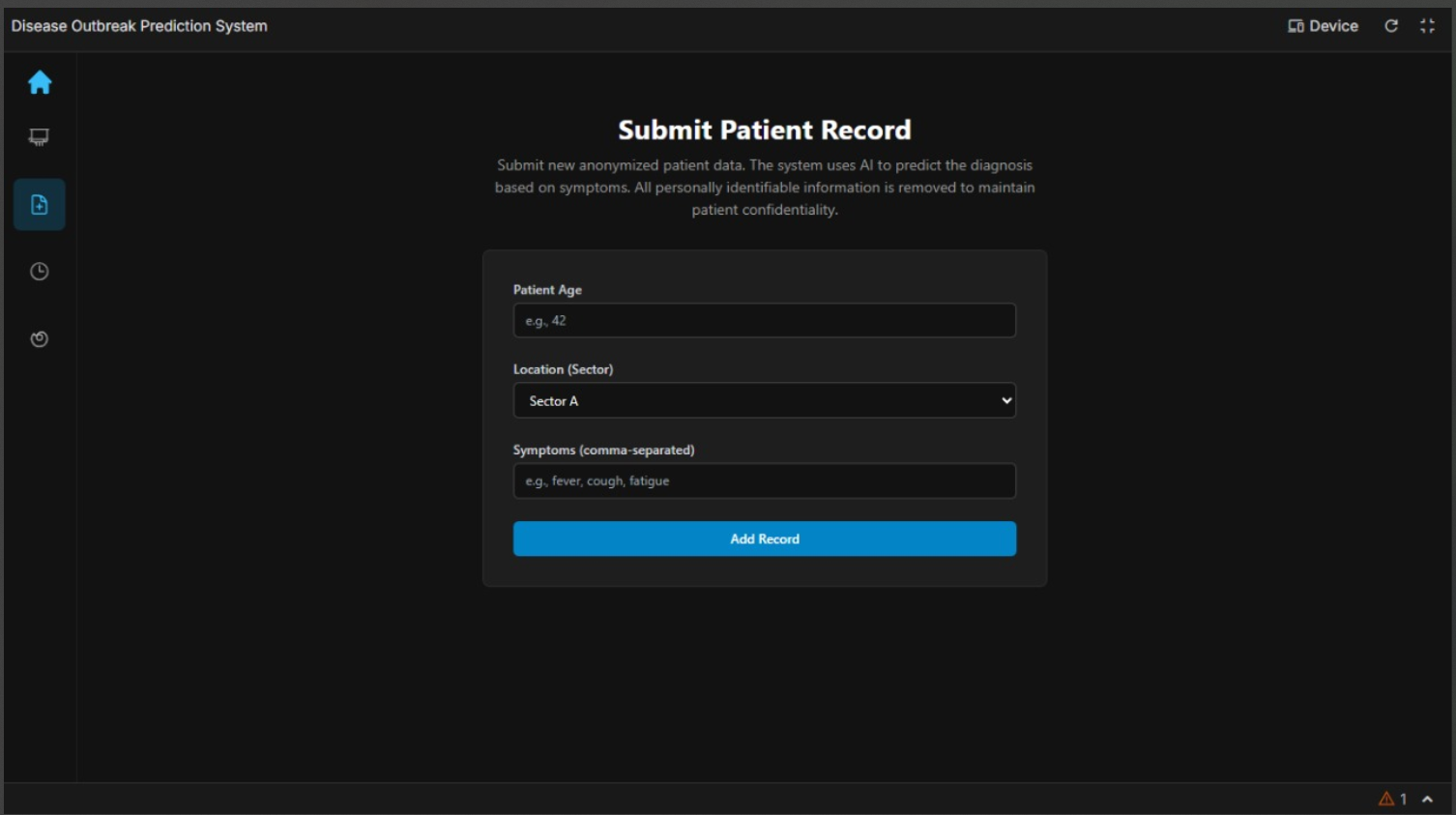
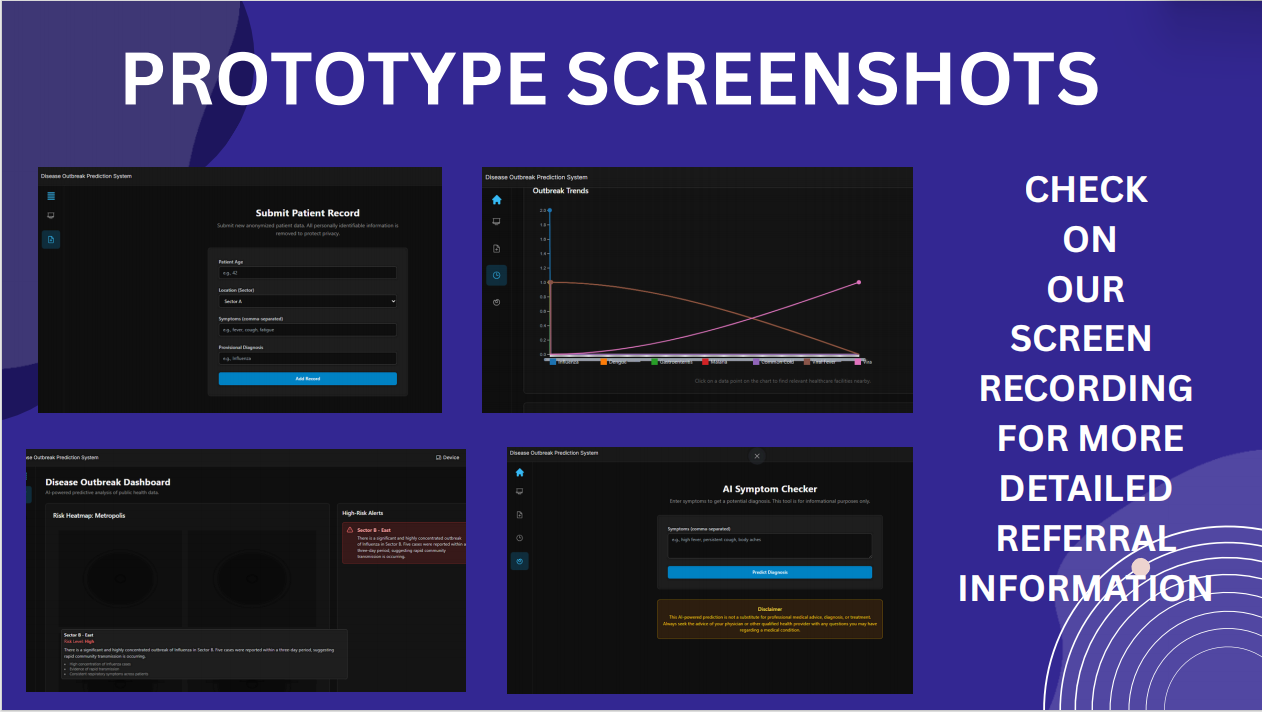
Start page to fill in the patients details to find the danger zone and to find the nearest hospitals through google-maps connected
-
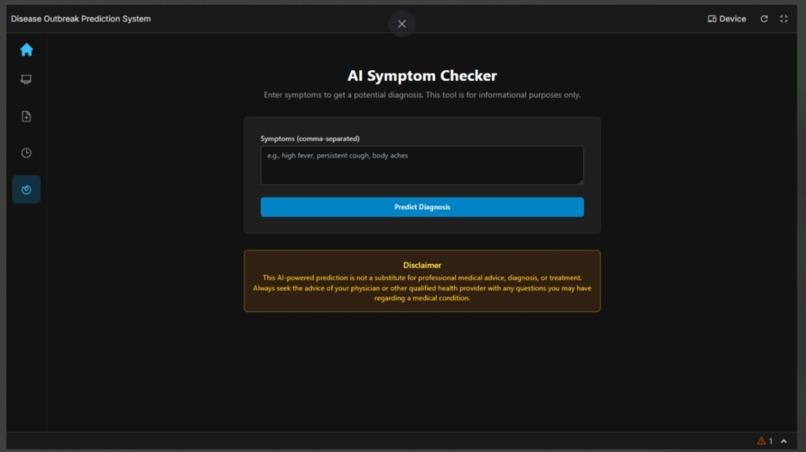
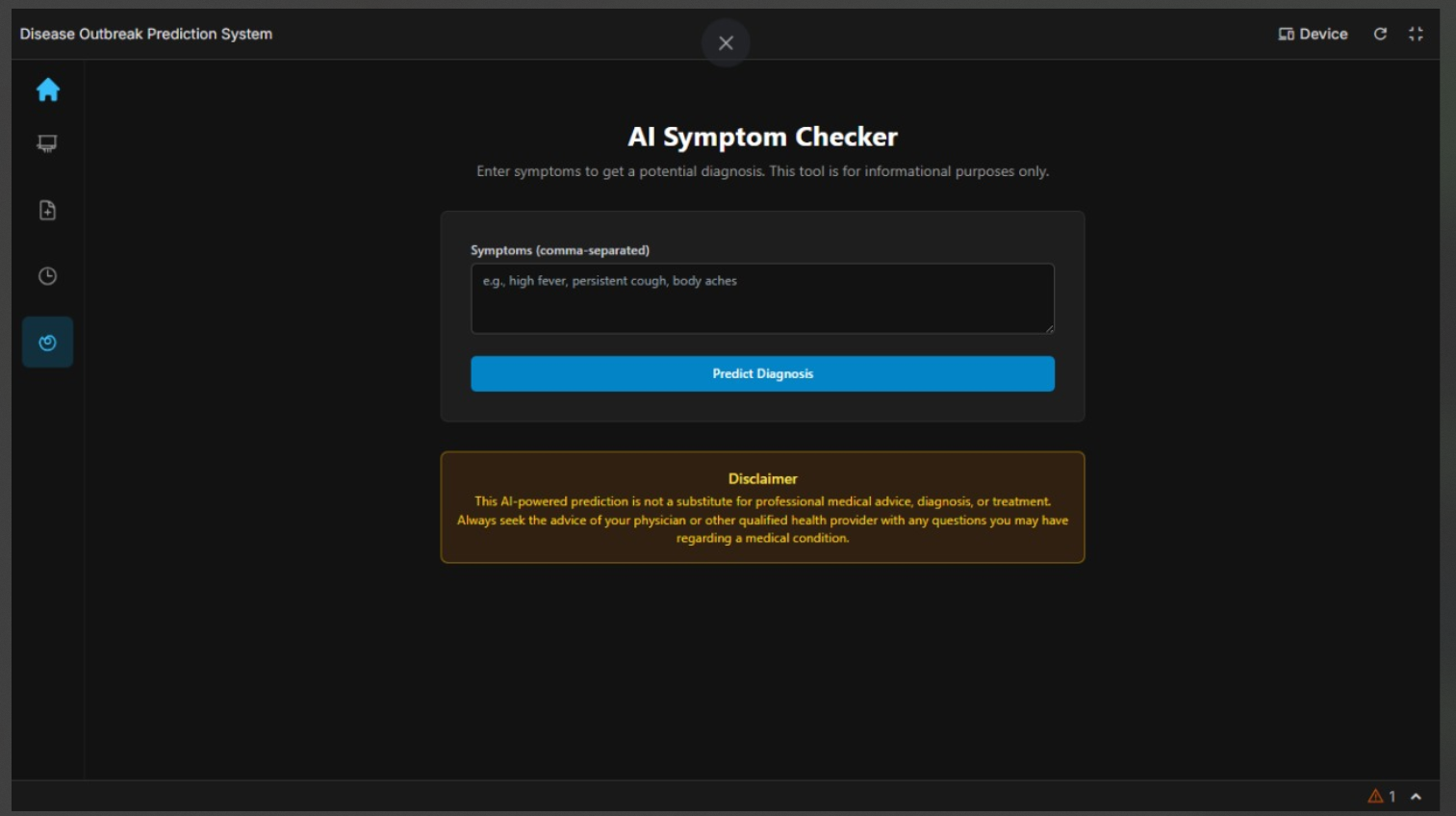
this predicts the symtoms of diseases by using AI analysis
-
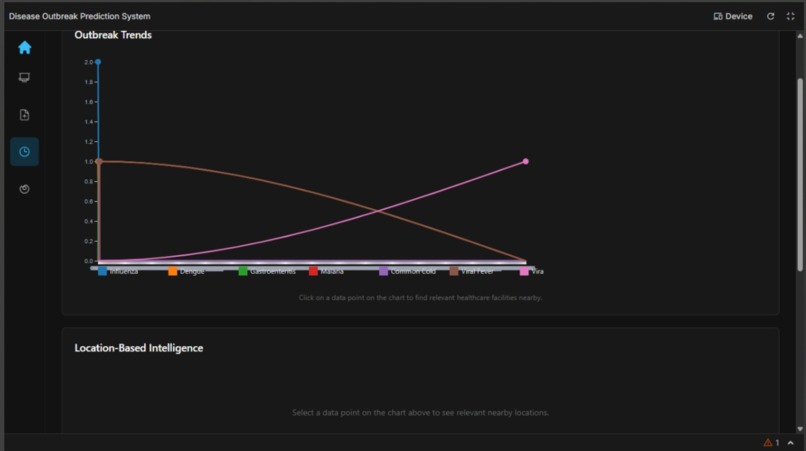
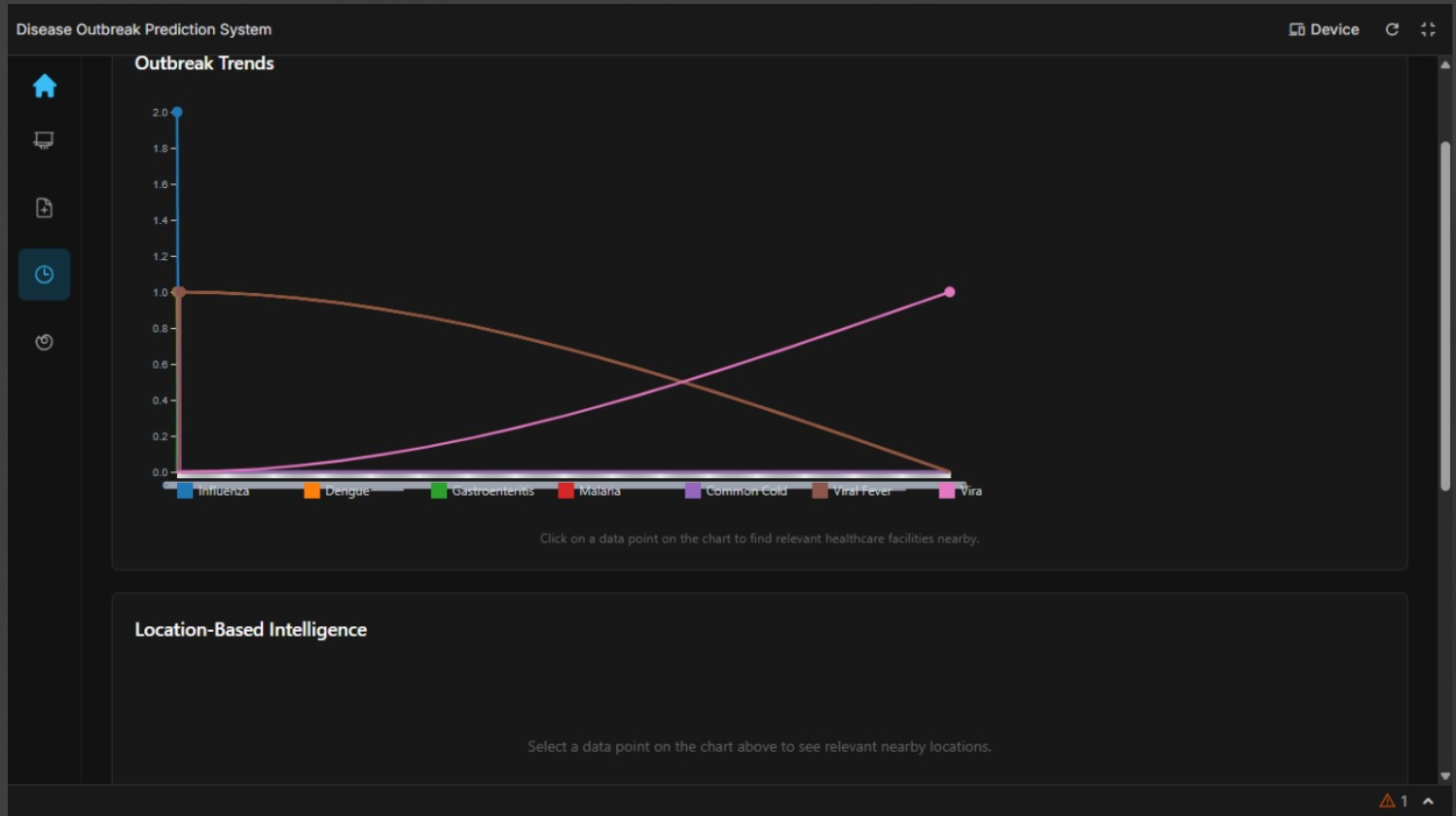
this is a histrogram of the diseases which are in trend and by clicking on each color the dangered place will be displayed
-
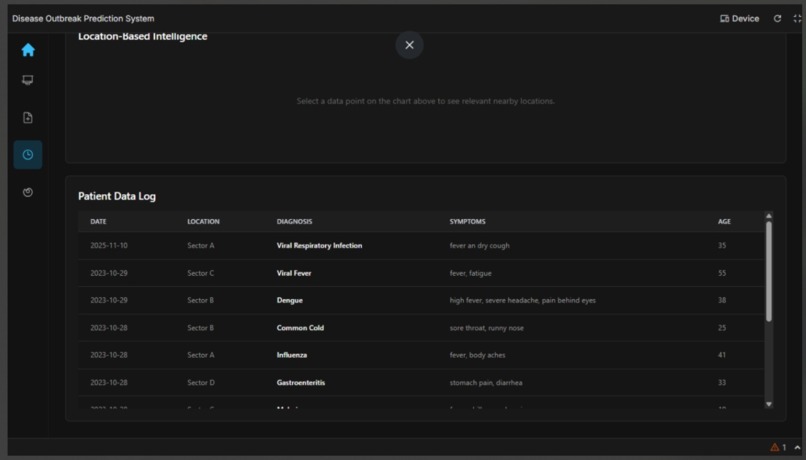
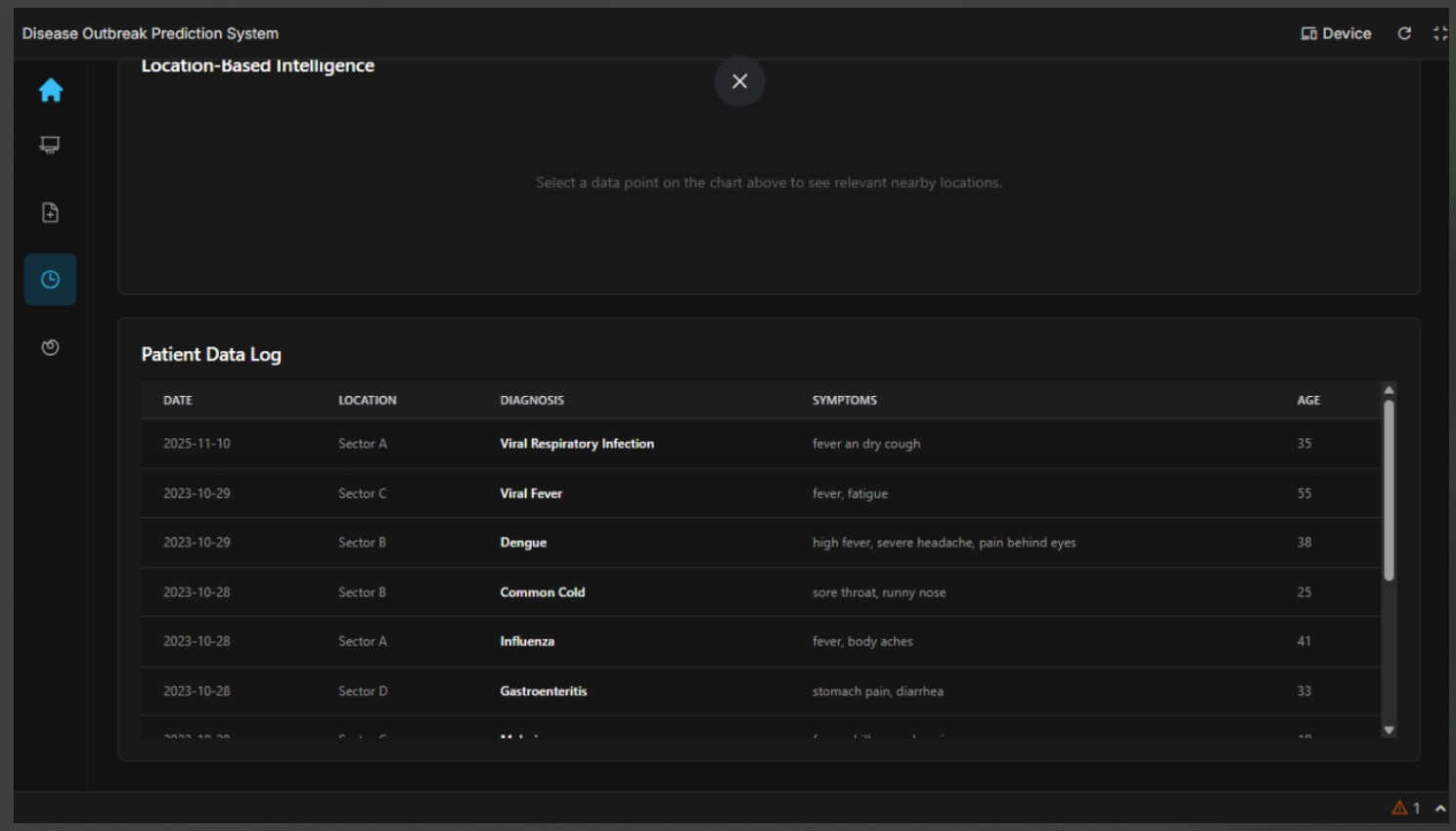
this is a demo dataset
-
-
-
-
-
-
-
-
-
-
Inspiration
Inspiration Behind Med-Track AI
The inspiration for creating Med-Track AI came from the difficult times of the COVID-19 pandemic. During the corona period, people were unaware of which areas were most affected by the virus. This lack of real-time information made it difficult to take preventive measures, and as a result, many were unknowingly exposed to the infection.
Witnessing this situation sparked the idea of developing an application that could track and predict disease outbreaks based on geographical data. Med-Track AI aims to bridge that gap by identifying the areas most affected by specific diseases, allowing people to stay informed, take precautions, and make smarter health decisions.
By using AI-driven insights, the project hopes to help individuals maintain a healthier and happier lifestyle while supporting communities in managing public health more efficiently.
What it does
Inspiration and Purpose of Med-Track AI
The idea of Med-Track AI was inspired by the challenging times of the COVID-19 pandemic. During that period, people were often unaware of which areas were more affected by the virus. Due to this lack of proper tracking and awareness, many individuals were unknowingly exposed to infection. This situation made me realize the importance of having a system that could monitor and predict disease outbreaks accurately.
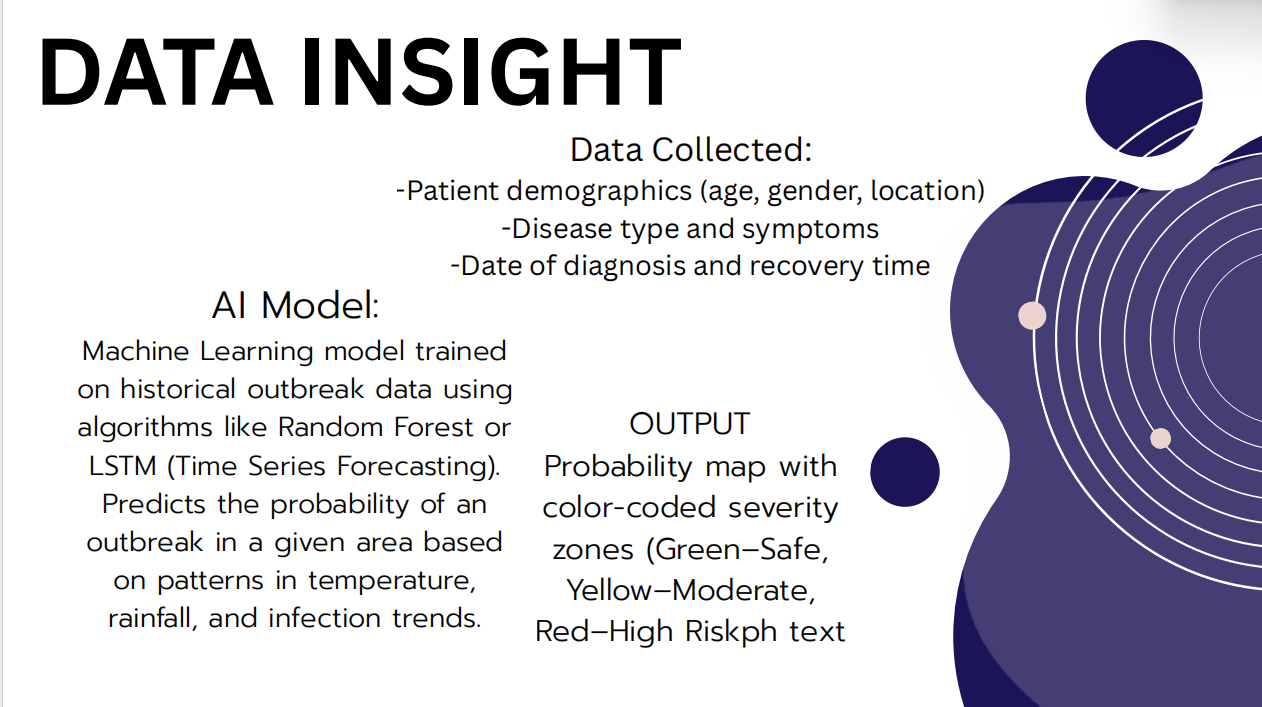
Med-Track AI is designed to solve that problem by using Artificial Intelligence and data analytics to track diseases based on geographical locations. The application collects and analyzes medical and environmental data to identify which areas are more prone to specific diseases. It provides real-time updates, predictive alerts, and health insights to help people take preventive measures on time.
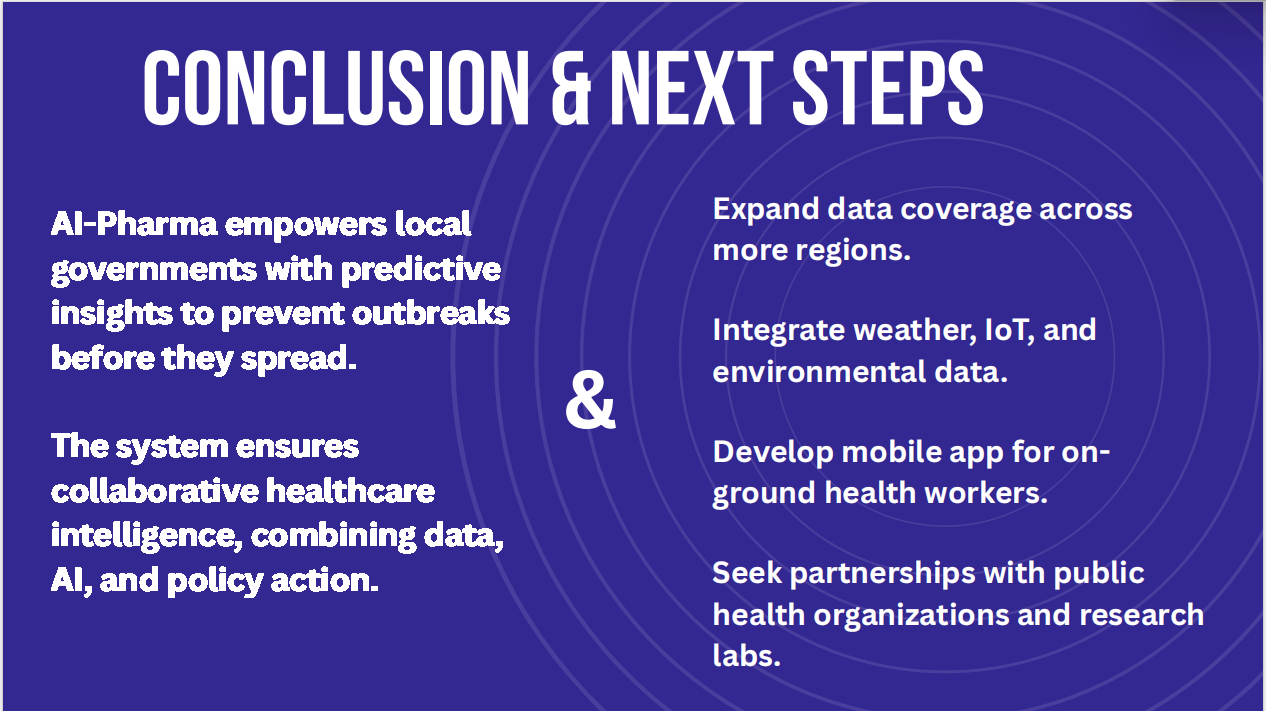
Through this innovation, Med-Track AI aims to create a world where communities can stay healthier, safer, and more aware, ultimately helping everyone maintain a better and happier lifestyle.
How we built it
How We Built It
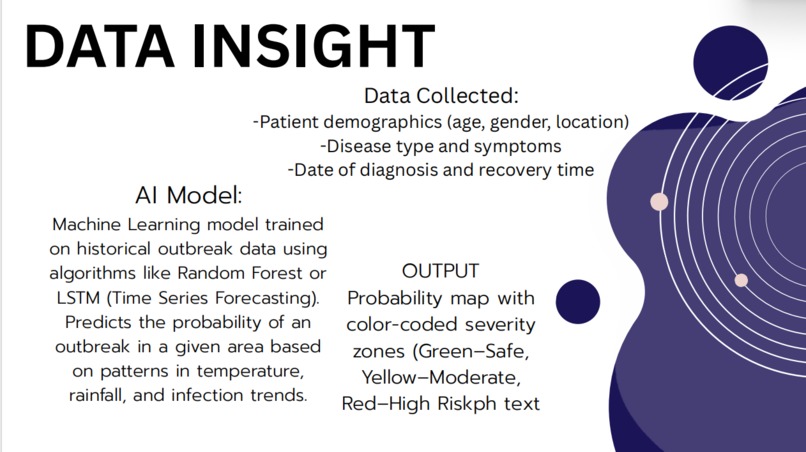
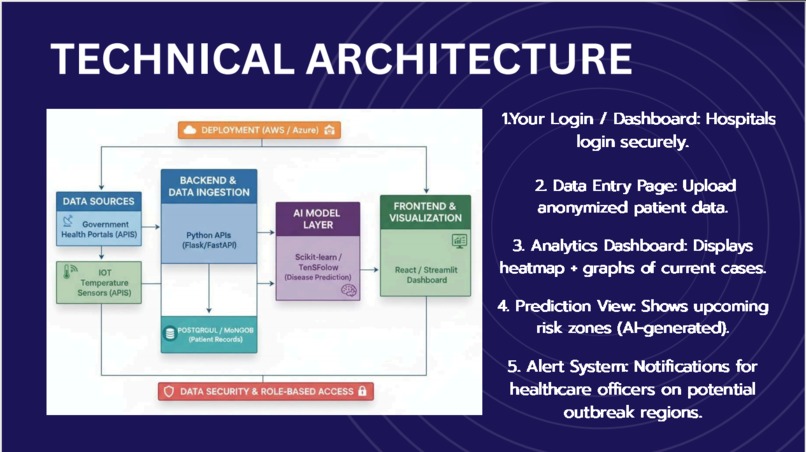
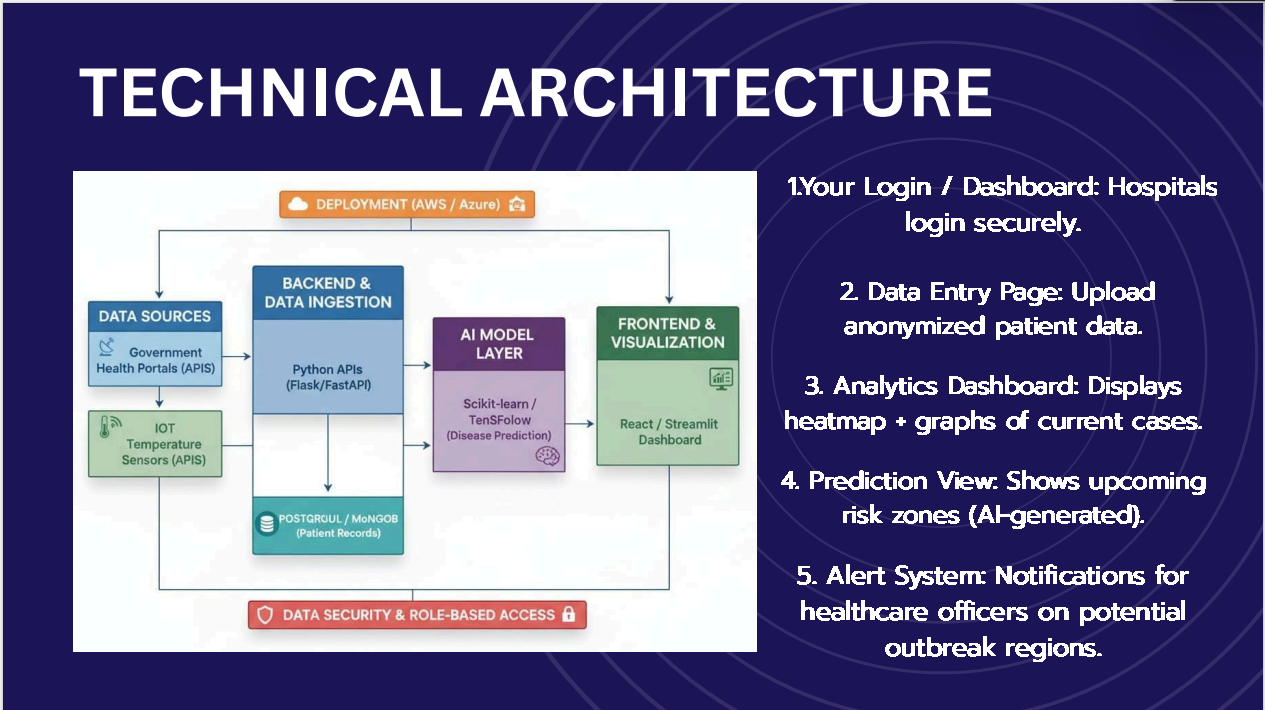
We built Med-Track AI by combining machine learning, data analytics, and geolocation technology to create an intelligent disease-tracking system. The process began with collecting datasets related to diseases, patient records, and regional health statistics. These datasets were then preprocessed and fed into an AI model that can identify patterns and predict possible outbreak zones.
We used Python for data processing and model building, along with libraries like Pandas, NumPy, and Scikit-learn for analysis and prediction. The frontend interface was designed to display interactive maps showing affected regions and disease trends in real-time.
By integrating all these components, Med-Track AI became a platform capable of providing real-time health insights, disease predictions, and preventive alerts to help people make safer lifestyle choices.
Challenges we ran into
Challenges We Ran Into
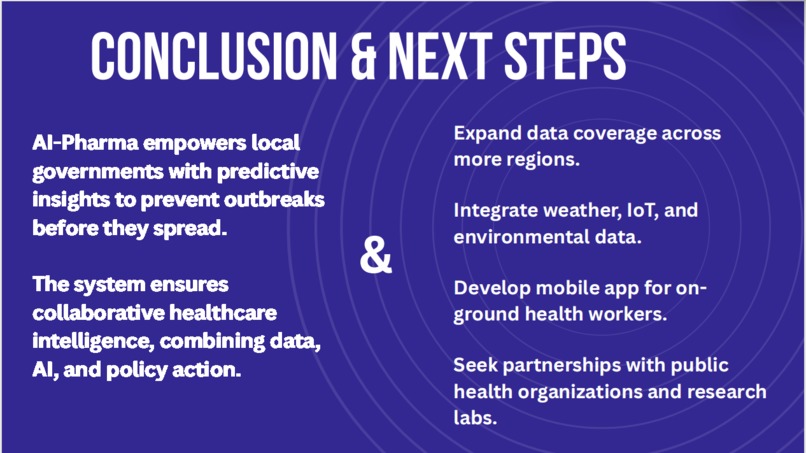
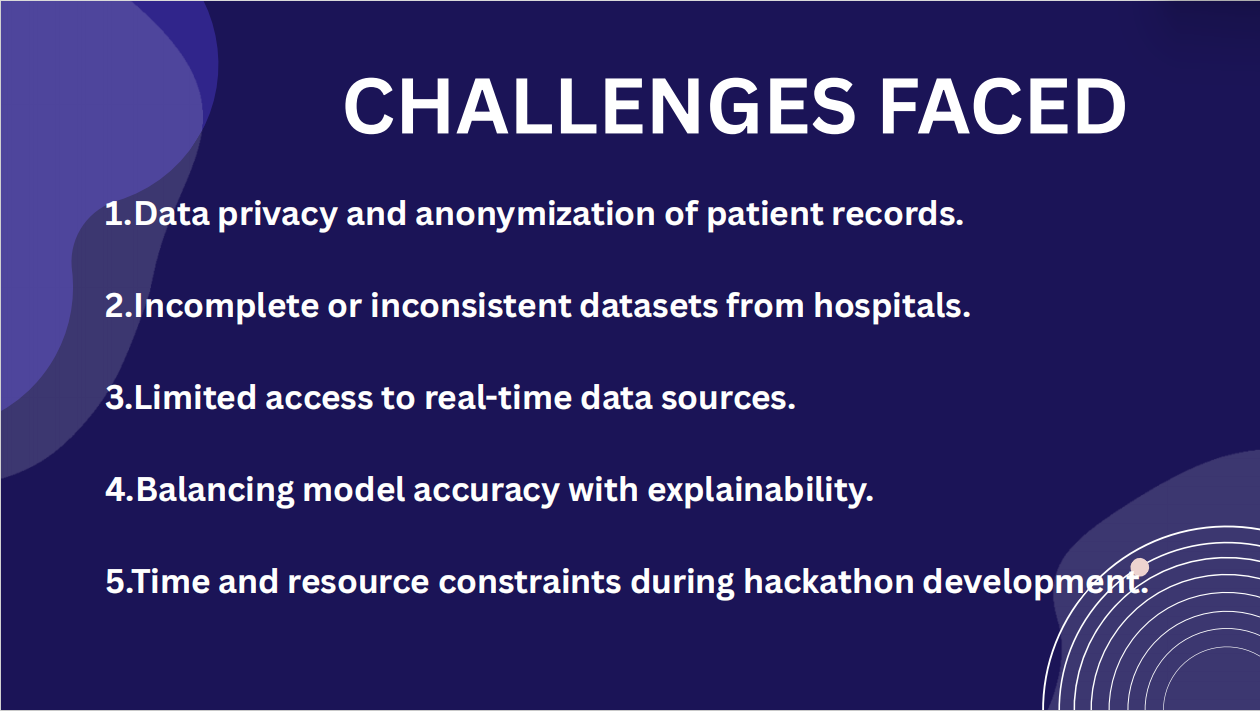
While building Med-Track AI, we faced several challenges. One major issue was collecting accurate and reliable health data, as many datasets were incomplete or unavailable for certain regions. Integrating real-time location-based data with AI models was also technically complex. Another challenge was ensuring data privacy and security, since medical information is highly sensitive.
Additionally, designing a user-friendly interface that presents disease data clearly and meaningfully required multiple iterations. Despite these difficulties, each challenge helped us improve our model and create a more efficient and practical solution.
Accomplishments that we're proud of
Accomplishments That We’re Proud Of
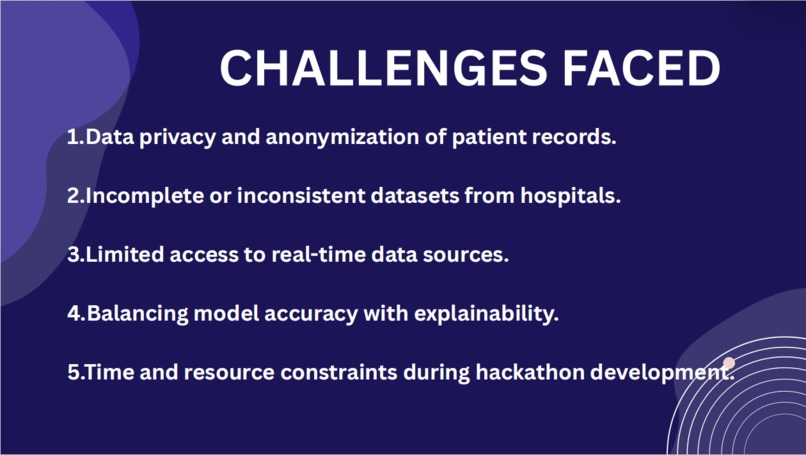
We’re proud to have successfully developed a working prototype of Med-Track AI that can track and visualize disease trends across different regions. Our biggest achievement was integrating AI-based prediction with real-time mapping, which helps users easily identify affected areas and take precautions.
We also managed to create a clean and interactive user interface that makes complex health data simple to understand. Overcoming data challenges and ensuring meaningful insights from limited datasets gave us valuable hands-on experience in AI, data science, and public health applications.
Most importantly, we’re proud that our project contributes to building a healthier and more informed society using the power of technology.
What we learned
What We Learned
Throughout the development of Med-Track AI, we learned a lot about how AI and data science can be used to solve real-world health problems. We gained hands-on experience in data collection, preprocessing, and building predictive models using machine learning techniques.
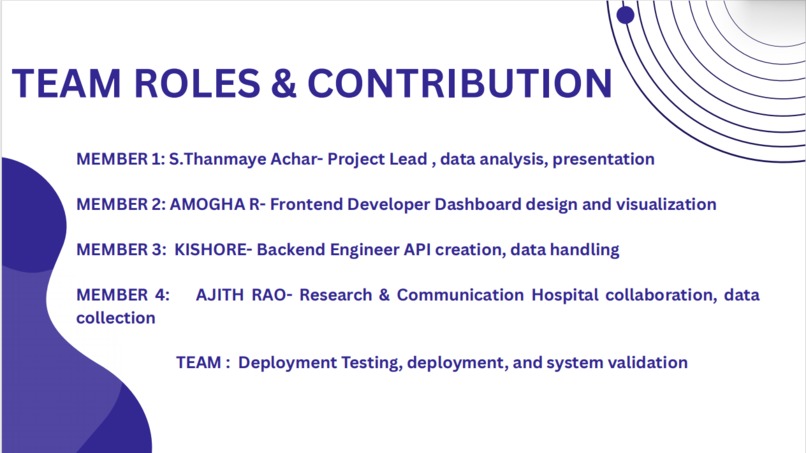
We also learned the importance of data accuracy, privacy, and ethical handling when dealing with health information. Working as a team helped us improve our collaboration, problem-solving, and time management skills.
Most importantly, this project taught us how technology can make a meaningful difference in people’s lives by promoting awareness and preventive healthcare.
What's next for MED-TRACK AI
What’s Next for Med-Track AI
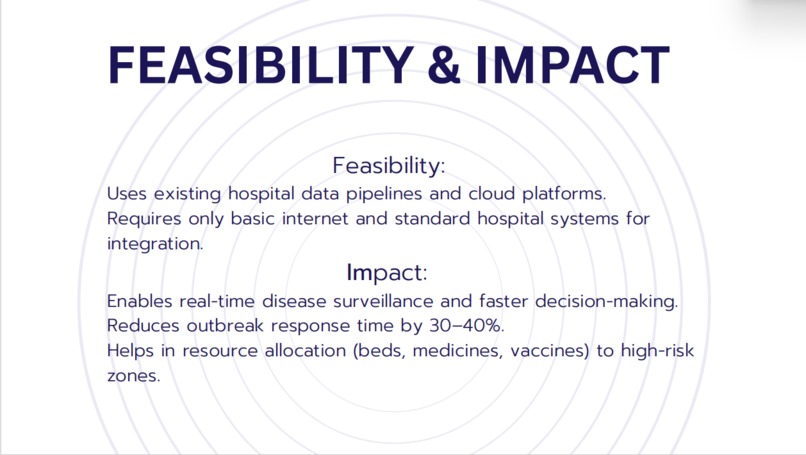
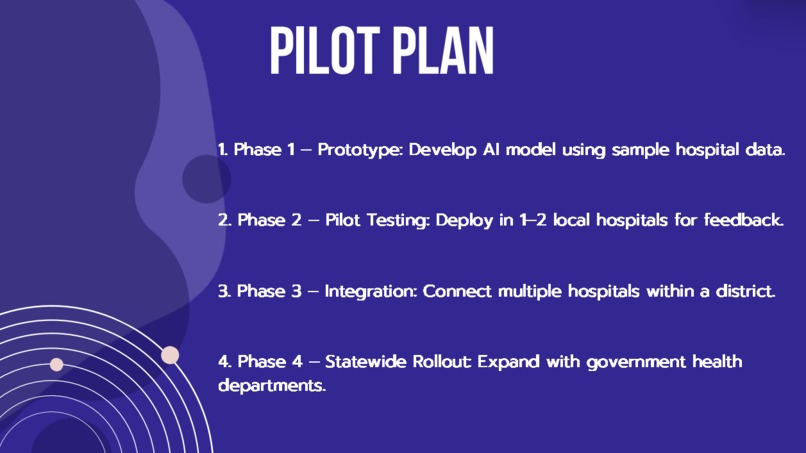
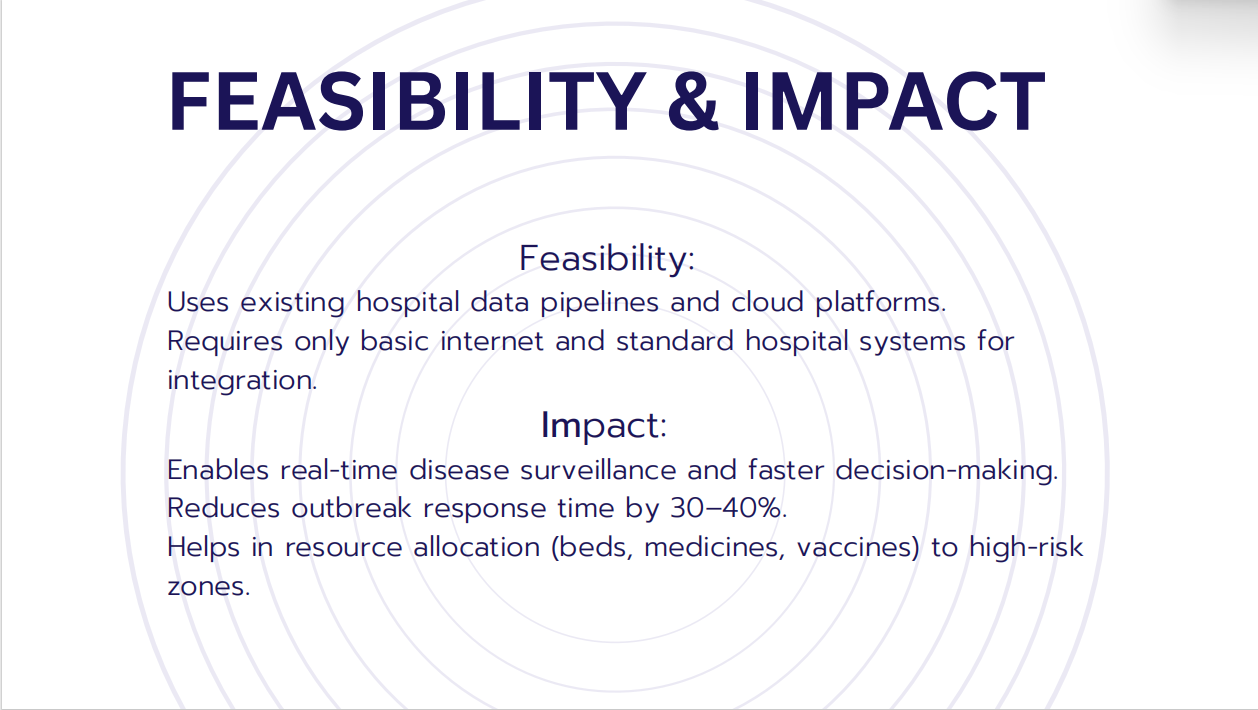
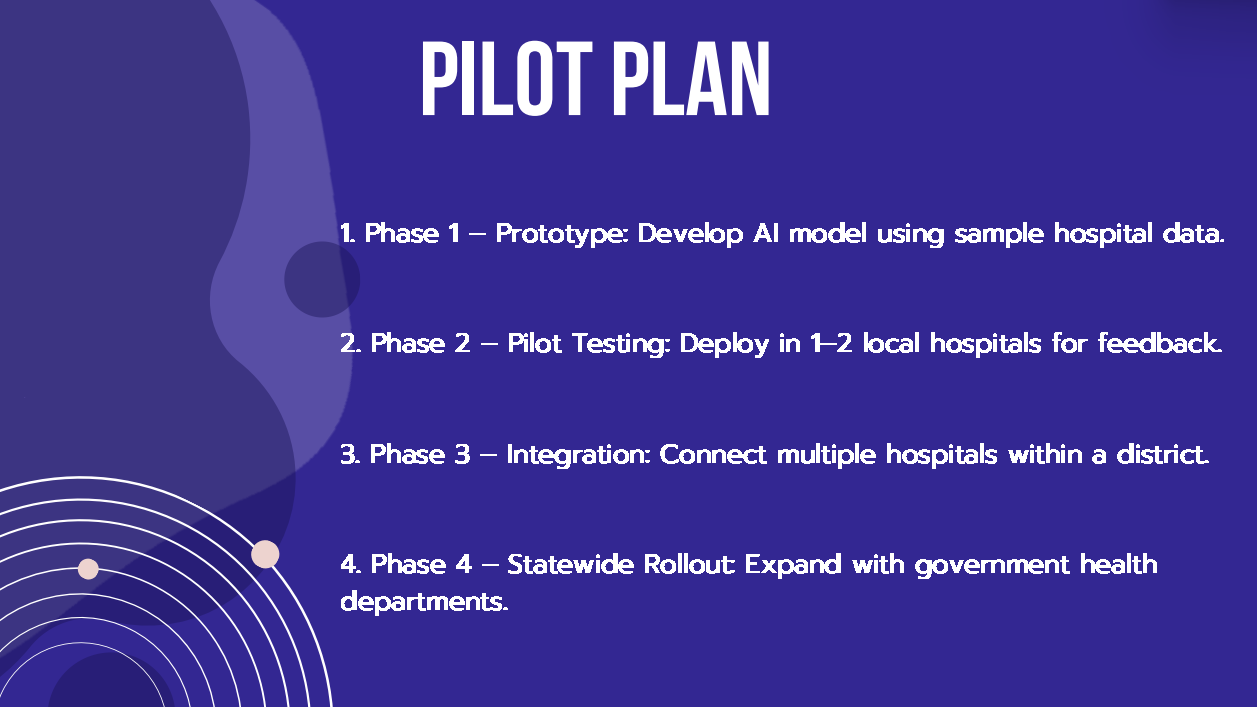
Moving forward, we plan to enhance Med-Track AI by integrating real-time data from hospitals, health departments, and wearable devices to improve prediction accuracy. We also aim to implement AI-driven alerts and recommendations that can guide users on preventive measures when a disease risk is detected in their area.
Another major goal is to expand the system’s capability to track multiple diseases simultaneously and display them through advanced visual dashboards. In the future, we hope to collaborate with government health agencies and NGOs to make Med-Track AI a large-scale public health monitoring platform that ensures safer and healthier communities.


Log in or sign up for Devpost to join the conversation.